PNDbotics Adam Robot
PNDbotics Adam is a full-size, developer-focused humanoid robot from Beijing-based PNDbotics, aimed at industrial pilots, research and embodied-AI data collection. Unlike many humanoids that are still "announced," Adam is genuinely available to buy, US resellers list it from around $99,999 for the Standard Plus up to about $145,000 for a Pro Max. There's also Adam-U, an upper-body teleoperation rig built specifically for collecting human-demonstration data.
US buyers: PNDbotics sells Adam in USD through US channels, but no pre-July 2026 authorization is on public record.
Adam and the Adam-U variant have been offered to US developers and researchers with USD pricing, which puts them squarely in the scope of the rule if no prior authorization exists. We could not confirm one. Units already in US labs are unaffected. Before ordering, ask which unit is being shipped, from where, and under what FCC ID — and treat a vague answer as an answer.
Unaffected outside the US.
As of 2026-08-30 · medium confidence — verify before you commit funds
What is the PNDbotics Adam Robot?
The Adam robot from PNDbotics is one of the few full-size humanoids with a published price and an order form behind it.
PNDbotics Adam sits in a useful spot: it's a real, buyable full-size humanoid rather than a render or a reservation page. That alone puts it ahead of a lot of the field. It's built for developers, research labs and companies running early industrial and service pilots.
The Adam family is modular, and it comes in a few flavors, a full-size biped, the Adam Lite, and Adam-U, an upper-body teleoperation platform. That last one matters more than it sounds: a lot of Adam's value is in gathering human demonstration data to train robot policies, not just walking around a demo floor.
Below we cover what Adam does, the pricing tiers US resellers actually publish, the teleop/imitation-learning angle, and how it stacks up. One honest note throughout: prices here come from third-party resellers and are quote-driven, so treat exact figures as a starting point, not gospel.
What is the PNDbotics Adam and what can it do?
Adam is a full-size bipedal humanoid from PNDbotics, a Beijing-based company. The full-size models stand roughly 1.6 to 1.67 m tall and weigh around 60 to 63 kg, depending on the variant, so it's genuinely human-scale.
Movement comes from up to 41 quasi-direct-drive, force-controlled joints. The newer Adam SP uses PND's own PSA actuators that the company says can peak around 360 N·m of torque, with variable-ratio transmissions in the limbs to cut weight while keeping the joints back-drivable (which helps with safe, compliant motion). It's been shown doing real-world stuff like navigating stairs and, memorably, synchronized dancing.
The intended jobs are industrial and logistics pilots, customer-service and demo/entertainment roles, and, crucially, R&D. A big selling point is an open-source SDK that lets developers control the robot at a low level, which is why research teams like it.
How much does the PNDbotics Adam cost?
Adam is officially sold by quote, but US resellers publish concrete numbers, which is helpful. Listings put the full-size Adam from about $99,999 for the Standard Plus configuration up to roughly $145,000 for a Pro Max build.
There's also the more affordable Adam Lite for developers on a tighter budget, and the Adam-U upper-body rig, which is priced separately as a data-collection tool rather than a walking robot. Exact figures shift by configuration, add-ons, and reseller.
One caveat worth stating plainly: these are third-party reseller prices, and the official channel still works on a quote basis. So budget the six-figure range as your baseline for a full-size Adam, and expect the final number to depend heavily on spec and support package.
Availability: can you actually buy an Adam?
Yes, and that's the main reason Adam is worth a look. It's listed for sale now through international resellers, not stuck at the reservation or "coming soon" stage that traps so many humanoids.
That said, keep expectations grounded. PNDbotics is a Chinese manufacturer, and much of the buying happens through resellers who handle import, integration and after-sales support, factor shipping, lead times and support logistics into your plans. Early customer trials have been running through the 2025-26 window, with scaled production to follow based on field feedback.
So the honest framing: Adam is available, but it's a developer/enterprise tool bought through a considered sales process, not an off-the-shelf consumer gadget you add to a cart and forget.
Adam-U and teleoperation: how the data-collection angle works
Adam-U is arguably the most interesting piece of the lineup. Unveiled at WAIC 2025 with partners Noitom Robotics and Inspire Robotics, it's a 31-DoF upper-body humanoid built as a data-collection platform for embodied AI, not a robot meant to walk anywhere.
The idea: a human operator wears a motion-capture/VR setup and teleoperates Adam-U, and the system records synchronized multimodal data, motion, force and tactile feedback, and binocular vision. That human-demonstration data then feeds imitation learning and reinforcement learning to train robot policies.
This is an honest reflection of where humanoids are today: a lot of "autonomy" starts as teleoperation plus recorded demonstrations. PNDbotics leaning into that with a purpose-built rig is pragmatic, and it's a reason research teams building their own manipulation datasets take Adam seriously.
PNDbotics Adam vs Unitree G1 and other humanoids
The obvious comparison is Unitree's humanoids, another buyable Chinese line. Unitree's G1 is far cheaper and smaller, aimed at accessible research and dev work, while a full-size H1 competes more directly on scale. Adam's pitch against them is its 41 force-controlled joints, the open SDK, and the dedicated Adam-U data pipeline.
Against Western platforms like Figure or Apptronik, Adam is generally more accessible to actually acquire and cheaper to boot, though those firms have deeper, better-publicized enterprise pilots.
So the trade-off is familiar for this category: with Adam you get real, available, developer-friendly hardware with a strong data-collection story, in exchange for the import/reseller logistics and the reality that its deployments are pilots and research rather than proven at-scale production.
Is the PNDbotics Adam worth it, and who is it for?
Adam is a strong fit for research labs, universities and companies doing embodied-AI development who want a real full-size humanoid now, and value the open SDK and the Adam-U data-collection workflow. If your work is training manipulation policies from human demonstration, that toolchain is a genuine draw.
It's a poor fit for consumers or anyone expecting a plug-and-play home helper. At roughly $99,999 to $145,000, bought via resellers, this is a serious capital-and-integration commitment, not an impulse purchase.
Bottom line: if you're a developer or enterprise team and you want buyable, hackable humanoid hardware with a clear data-collection purpose, Adam earns its place on the shortlist. Just go in knowing you're buying a research platform, with the import and support considerations that come with a Chinese manufacturer.
The PNDbotics Adam on video
Hands-on reviews and teardowns, picked for what they actually show rather than how loud the thumbnail is.
PNDbotics' flagship film for Adam, and the widest-seen footage of the robot moving
Goes into the biomimetic joint layout, which is the one genuinely distinctive thing about Adam
Show-floor look at Adam, the Adam-U variant and PNDbotics' own actuators side by side
Who the PNDbotics Adam is — and isn't — for
+Where it shines
- Open developer access (SDK/API) — good for builders and labs.
- Stated real-world payload (~5 kg).
!Watch-outs
- Some demos rely on teleoperation, not full autonomy.
- Sold to businesses only — not to private buyers.
How the PNDbotics Adam stacks up
Side by side with similar robots — the one you're reading about is highlighted.
| This robot PNDbotics PNDbotics Adam | 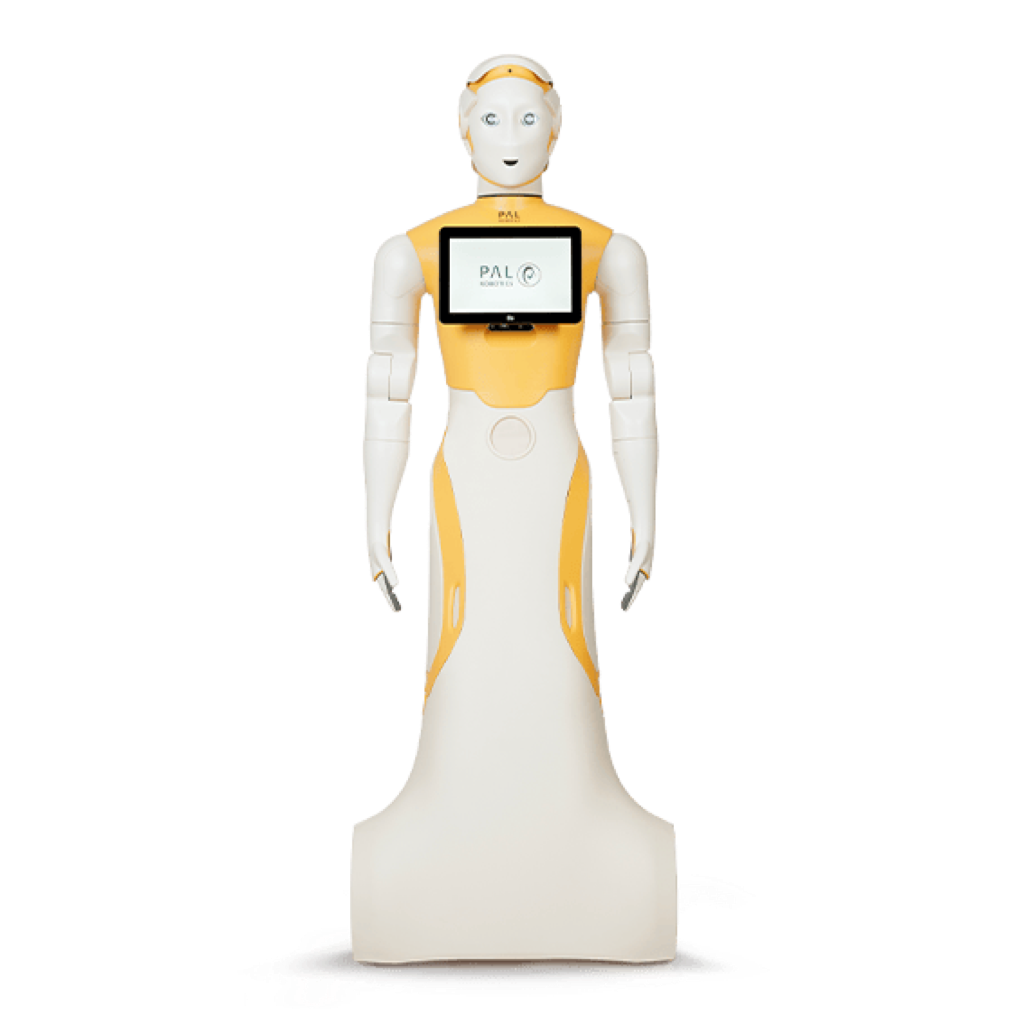 PAL Robotics PAL Robotics ARI | 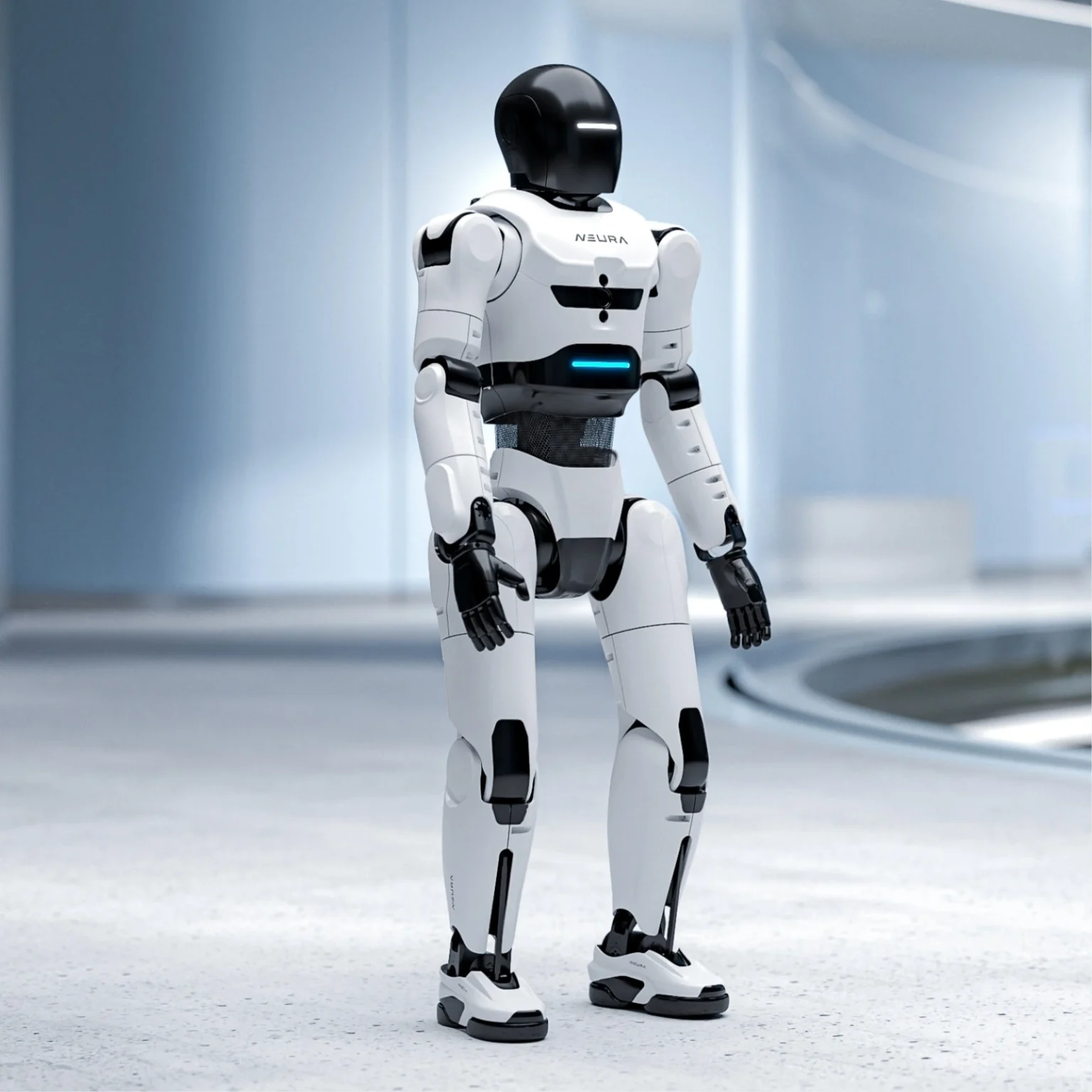 NEURA Robotics NEURA Robotics 4NE-1 | 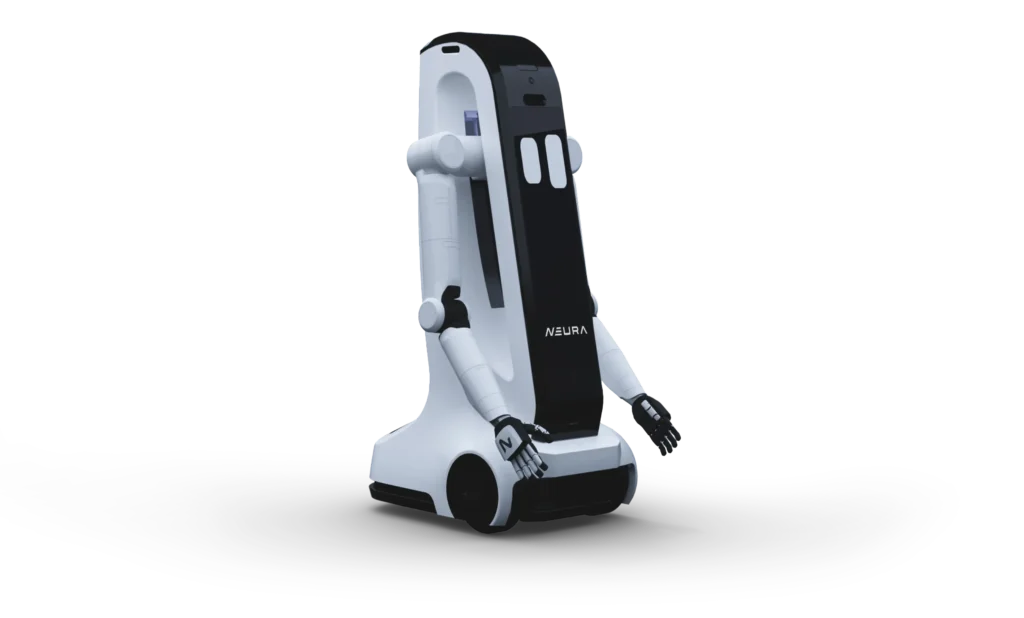 NEURA Robotics NEURA MiPA | |
|---|---|---|---|---|
| Price (US) | $99,999 – $145,000 | $35,000 – $90,000 | $65,000 – $105,000 | ~$10,800 |
| Availability | On the market | On the market | Reservations open | Reservations open |
| Height | 1.67 m | 1.65 m | 180 cm | Unknown |
| Payload | ~5 kg | ~0.5 kg per arm | Arms rated ~20 kg; up to 100 kg lifting in leg-supported/full-body configurations | 5 kg per arm; ~15 kg deadlift |
| DoF | Lite | ~12 | Hands | Unknown |
| Buyer | Enterprise | Individuals | Enterprise | Individuals |
| Made in | Other | Other | Other | Other |
What the PNDbotics Adam costs — and how to get one
Sold by quote; US lists full-size Adam $99,999 (Standard Plus) to $145,000 (Pro Max).
Open - configurable packages + PNDbotics
Leasing / RaaS: unknown
Every spec, grouped & sourced
Tap a group to expand. Values are labelled official vs third-party; unknowns are omitted, not guessed.
Body & movement▾
Power & endurance▾
Hands & senses▾
Brains & control▾
Claims vs evidence
RL control; WBC+MPC; supports NVIDIA deep-RL; autonomy developer-driven not turnkey
Where it's working
Public demos; sold to developers/research labs; industrial/customer-service pilots cited
Intended use cases: Industrial/logistics/customer-service pilots; developer/research; teleop & imitation-learning data collection (Adam-U); tool use, packaging, lab, demos, education
Should you consider the PNDbotics Adam?
PNDbotics Adam is one of the more compelling humanoids you can actually buy today, human-scale, 41 force-controlled joints, an open SDK, and a purpose-built Adam-U rig for collecting training data. At roughly $99,999 to $145,000 via resellers it's firmly a developer/enterprise tool, and pilots are still pilots. For research teams that want real, hackable hardware now, it's a strong pick.
Score reflects stated criteria (availability, data confidence, US relevance) — not hands-on testing or user ratings. We're an independent review & comparison site; we don't sell robots. *Financing figure is illustrative.
How we know this
Data confidence 65/100 · last verified 2026-06-23. Specs are labelled official vs third-party and dated; unknowns are omitted, not guessed.
PNDbotics Adam — your questions, answered in full
Can you buy the PNDbotics Adam right now?+
Yes. Unlike many humanoids still at the announcement stage, Adam is listed for sale through international resellers now, typically as a developer or enterprise purchase with import and support handled by the reseller.
How much does the PNDbotics Adam cost?+
US reseller listings run from about $99,999 for the Standard Plus configuration up to roughly $145,000 for a Pro Max. Official sales are quote-based, so exact pricing depends on configuration and add-ons.
What is the difference between Adam and Adam-U?+
Adam is the full-size walking humanoid. Adam-U is a 31-DoF upper-body teleoperation rig built purely for collecting human-demonstration data to train AI policies, it isn't meant to walk around.
Who makes the PNDbotics Adam?+
PNDbotics, a humanoid-robotics company based in Beijing, China. Much of its international sales run through resellers who manage import, integration and after-sales support.
What is the PNDbotics Adam used for?+
Mainly industrial, logistics and customer-service pilots, plus developer and research work and imitation-learning data collection. It's a developer/enterprise platform, not a consumer home robot.
Does Adam run autonomously or is it teleoperated?+
Both, depending on the task. It has an open SDK for autonomous development, but a lot of its value, especially via Adam-U, comes from teleoperated human demonstrations used to train policies. Many demos involve teleoperation.
How tall is the PNDbotics Adam?+
The full-size models are roughly 1.6 to 1.67 m tall and weigh around 60 to 63 kg, depending on the variant, putting it at genuine human scale.
Is the PNDbotics Adam good for home use?+
No. It's a six-figure research and enterprise platform bought through resellers. There's no consumer, plug-and-play home version, so it's not suited to everyday household buyers.
Peer-reviewed research on the PNDbotics Adam
Published academic work — peer-reviewed papers and preprints — involving this robot or its maker's systems, indexed in scholarly databases (OpenAlex, arXiv). Not blog posts or press write-ups.
- Whole-body Humanoid Robot Locomotion with Human ReferenceQiang ZhangPeter CuiDavid YanJingkai SunYiqun DuanGang HanWen ZhaoWeining ZhangYijie GuoArthur ZhangRenjing Xu · 2024 · IEEE-RAS International Conference on Humanoid Robots (Humanoids) 2024 / arXiv
Academic references are factual citations from open scholarly indexes; listing is not endorsement.