AiMOGA Mornine Robot
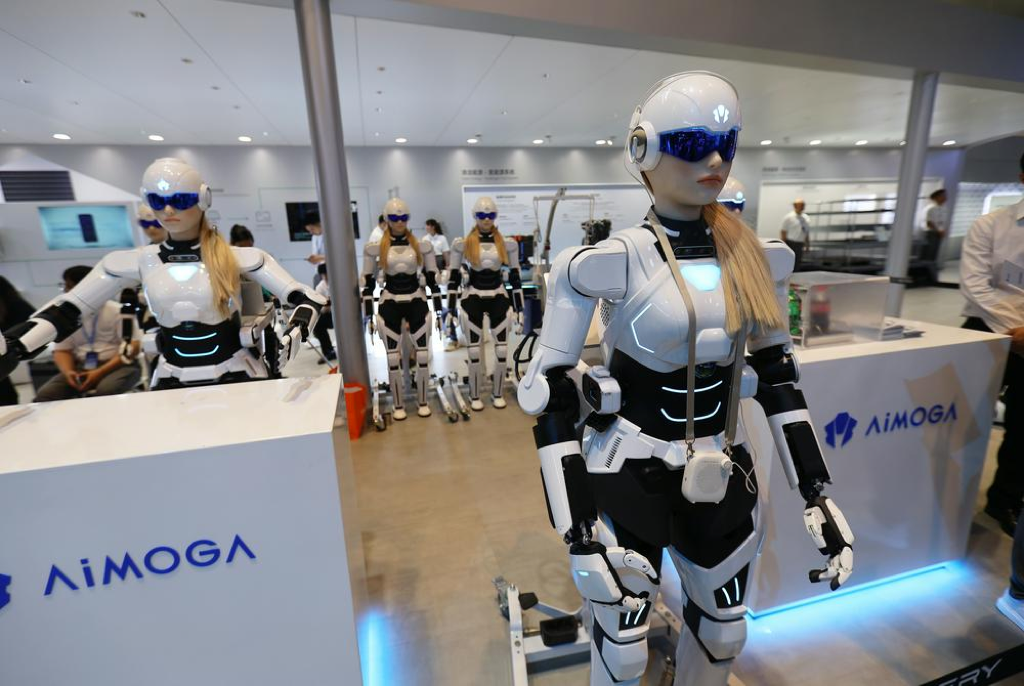
The Mornine M1 is a 167cm humanoid robot built by AiMOGA, a Chery-backed company, aimed at showroom reception, retail and light companion duties. It went on sale in China in April 2026 at roughly $41,400 (¥285,800), with US listings floating far higher around $77k. It's a real, purchasable product, but it's early-stage and mostly designed for greeting and simple assistance rather than doing your chores.
US buyers: no new imports — this model has no US authorization on record, and the July 2026 rule closes that route.
Mornine sells on Chinese e-commerce and has reached US buyers only via third-party resale at a large markup. No US authorization is on record, so that resale route is now the only one, and only for units already in the country.
Chinese e-commerce sales are unaffected.
As of 2026-08-30 · medium confidence — verify before you commit funds
What is the AiMOGA Mornine Robot?
Mornine is the AiMOGA robot, built with Chery money and sold mainly as a showroom host.
When Chery's robotics arm AiMOGA put the Mornine M1 up for sale online, it became one of the first consumer-facing humanoids you can actually add to a cart, at least if you're shopping on the JD marketplace. The pitch is a friendly silicone-faced robot that can greet visitors, speak multiple languages and hang around a showroom looking approachable.
At about $41,400 in China (the US-facing price is quoted much higher, near $77k), the Mornine sits in an odd middle zone. it costs as much as a car, but it isn't yet a domestic helper that folds laundry or cooks. Think of it more as a mobile, talking receptionist with a humanlike face.
This page walks through what the M1 actually does, what it costs, where you can buy it, and whether the price makes sense for a home buyer versus a dealership or retail floor, which is really who AiMOGA built it for.
What is the AiMOGA Mornine M1 and what can it do?
The Mornine M1 is a full-size humanoid robot standing 167 cm tall and weighing around 70 kg, with a distinctive silicone face meant to look warm and approachable. It has 40 degrees of freedom, walks at up to 1 m/s, and runs on a 0.7 kWh battery good for roughly two hours per charge.
Its headline tricks are social and service oriented. The robot supports multilingual conversation, dual-arm coordinated movement, and can even open a car door on its own, a nod to AiMOGA's roots inside Chery's automotive world. For perception it carries a 3D LiDAR, two depth cameras, a wide-angle camera and four ultrasonic sensors.
What it is not, at least today, is a general home helper. Payload at the hands tops out around 1.5 kg, so this is a greeter and demonstrator far more than a machine that hauls groceries or scrubs floors.
How much does the Mornine M1 cost?
In China, AiMOGA listed the Mornine M1 on the JD marketplace at ¥285,800, which works out to about $41,400 (some outlets round it to $41,860). Deliveries were slated to begin after late May 2026.
For US shoppers the picture is murkier. Import-focused listings have quoted the Mornine far higher, in the neighbourhood of $77,000, which reflects export markup, shipping and the fact that this is really a China-domestic launch. Treat any US figure as unconfirmed and expect it to move.
Either way, this is a premium purchase. You're paying humanoid-novelty prices for a robot whose core job is presence and conversation, not heavy labour.
Where can you buy it, and is it available now?
Yes, the Mornine M1 is genuinely on sale, which still separates it from most humanoids that are only 'announced'. In China it sells through JD, and AiMOGA has signed agreements with more than 300 distributors to build out a sales network across several product lines.
Outside China, availability is patchy and mostly runs through third-party import resellers rather than an official AiMOGA storefront. There's no Amazon listing or mainstream US retail channel as of mid-2026, so a Western buyer is essentially arranging an import.
If you're in North America or Europe, factor in shipping, customs, support gaps and the language of the software when you weigh it up.
How does the Mornine M1 actually work?
The M1 runs autonomously for its core social behaviours, navigating a space with LiDAR and depth cameras while handling voice interaction through onboard AI. For scripted showroom routines it can operate largely hands-off.
For trickier manipulation, though, AiMOGA also built in VR-based remote control, meaning a human operator can step in and puppet the robot's arms when needed. That teleoperation option is honest and useful, but it's worth knowing: some of the more impressive demo tasks may be operator-assisted rather than fully self-driven.
So the practical reality is a mix, autonomous for greeting and moving around, human-in-the-loop for anything delicate.
Mornine M1 vs Unitree G1: which makes more sense?
The Unitree G1 is the obvious comparison for anyone eyeing a sub-$50k humanoid. The G1 is smaller, cheaper and squarely aimed at developers and researchers who want a programmable platform to build on.
The Mornine M1 goes the other direction. It's taller, has a lifelike face, and is tuned for customer-facing presence, receptions, showrooms, retail. You pay more, and you get social polish rather than a raw research rig.
If you want to write code and experiment, the G1 is the better value. If you want a robot that looks the part standing at a front desk greeting people, the Mornine is built for that role.
Is the Mornine M1 worth it, and who is it for?
For a typical home buyer, honestly, it's hard to justify. At $41k-plus for a robot that greets and chats but can't meaningfully do chores, the value case just isn't there yet for households.
Where it makes more sense is business use: car dealerships, showrooms, hotels, retail spaces and events, where a walking, talking, humanlike greeter has real marketing and novelty pull. That's clearly the market AiMOGA is chasing with its distributor push.
So the M1 is worth it for the right commercial buyer who values presence and brand impact. For everyone else, it's a fascinating but pricey early adopter's toy.
The AiMoga Mornine M1 on video
Hands-on reviews and teardowns, picked for what they actually show rather than how loud the thumbnail is.
Covers the 2026 M1 release and the price, which is otherwise hard to pin down in English
Automotive press on Mornine's actual job — showroom sales assistant, not general labour
Background on why a carmaker built this at all, and how AiMOGA sits inside Chery
Who the AiMoga Mornine M1 is — and isn't — for
+Where it shines
- Stated real-world payload (1.5 kg per end-effector).
!Watch-outs
- Sold to businesses only — not to private buyers.
- Public data is thin; verify key figures before relying on them.
How the AiMoga Mornine M1 stacks up
Side by side with similar robots — the one you're reading about is highlighted.
| This robot AiMOGA (Chery) AiMoga Mornine M1 | 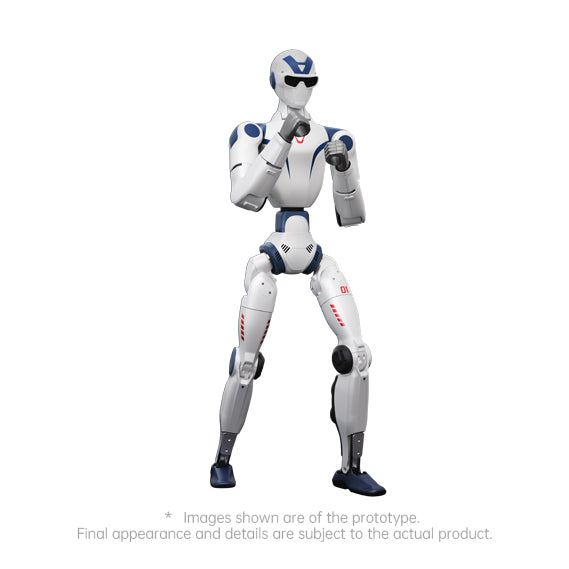 Unitree Robotics Unitree R1 | 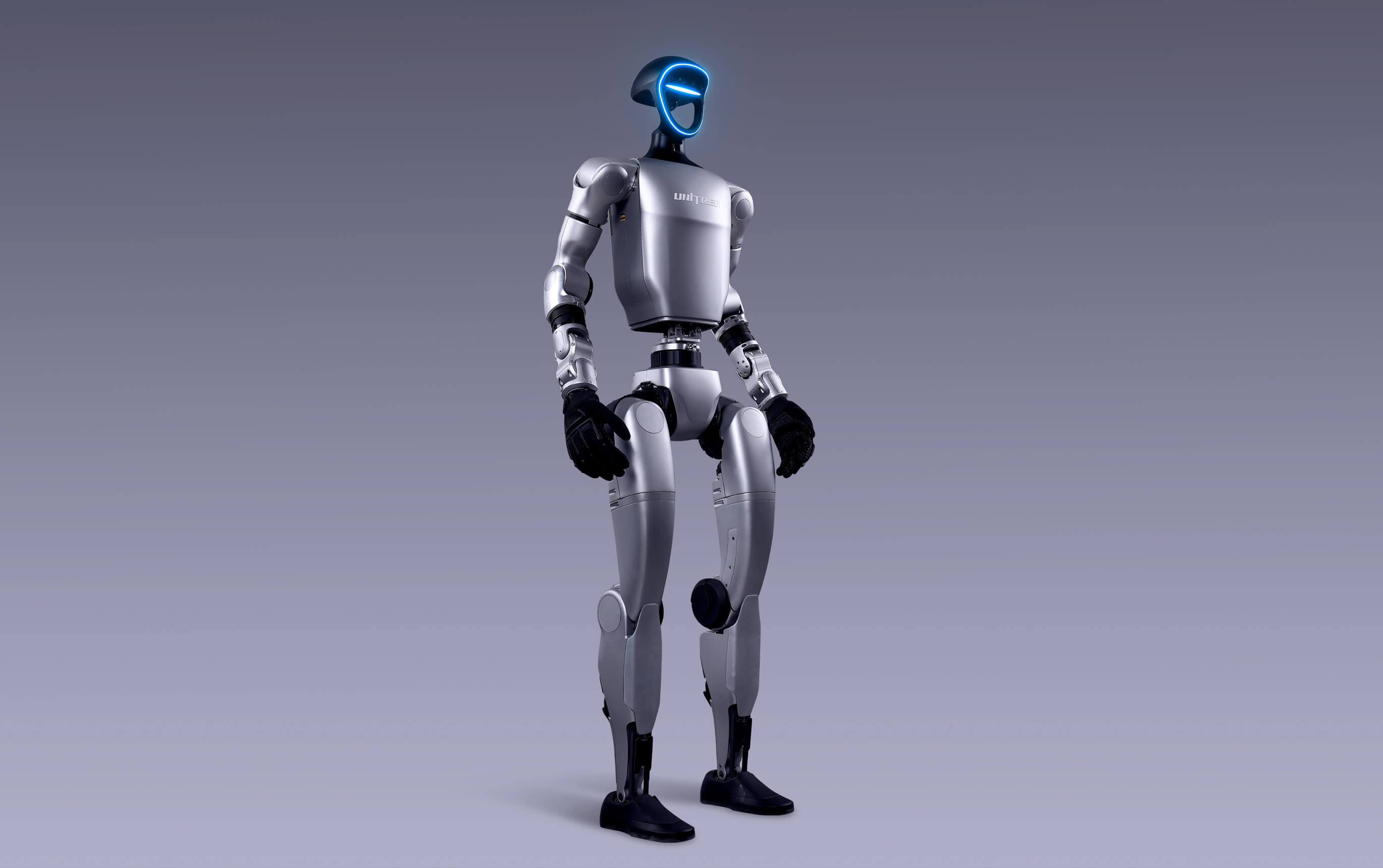 Unitree Robotics Unitree G1 | 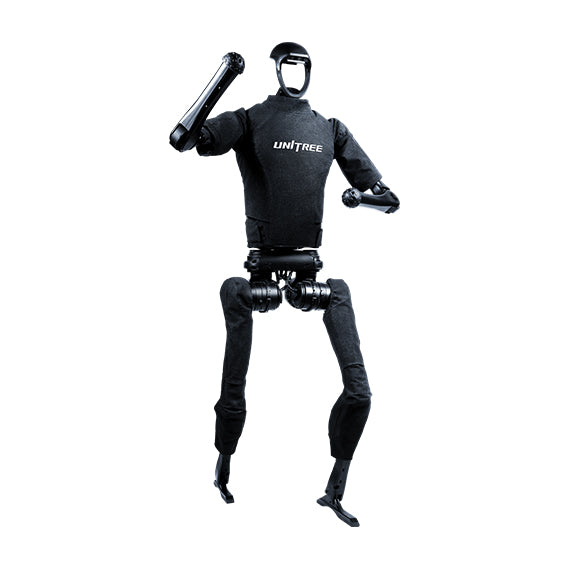 Unitree Robotics Unitree H1 | |
|---|---|---|---|---|
| Price (US) | ~$41,400 | $4,900 – $5,900 | $13,500 – $73,900 | ~$90,000 |
| Availability | On the market | On the market | On the market | On the market |
| Height | 1.67 m | 1.23 m | 1.32 m standing | ~1.80 m |
| Payload | 1.5 kg per end-effector | Unknown | Arm ~2 kg | Not rated for H1 |
| DoF | 40 | 20 | 23 | ~19 |
| Buyer | Enterprise | Individuals | Individuals | Enterprise |
| Made in | China | China | China | China |
What the AiMoga Mornine M1 costs — and how to get one
Mornine M1 ~$41,400 (¥285,800) on; US ~$77k.
China e-commerce; first humanoid sold via major Chinese retail
Leasing / RaaS: unknown
Every spec, grouped & sourced
Tap a group to expand. Values are labelled official vs third-party; unknowns are omitted, not guessed.
Body & movement▾
Power & endurance▾
Hands & senses▾
Brains & control▾
Claims vs evidence
Conversational companion AI
Where it's working
Retail/showroom use; early consumer
Intended use cases: Companion and general assistance; retail/showroom and home presence; silicone face
Should you consider the AiMoga Mornine M1?
The Mornine M1 is a genuine milestone, a humanlike humanoid you can actually buy, but it's priced and built for commercial greeting duties, not the home. For dealerships and retail floors it's an eye-catching brand asset; for households the $41k-plus price buys presence and conversation, not real chore help.
Score reflects stated criteria (availability, data confidence, US relevance) — not hands-on testing or user ratings. We're an independent review & comparison site; we don't sell robots. *Financing figure is illustrative.
How we know this
Data confidence 42/100 · last verified 2026-06-30. Specs are labelled official vs third-party and dated; unknowns are omitted, not guessed.
AiMoga Mornine M1 — your questions, answered in full
What can the AiMOGA Mornine M1 do?+
It can walk, hold multilingual conversations, use both arms in coordination, open a car door on its own, and greet or assist people in showrooms and retail settings. It's built for social presence and light assistance, not heavy household chores, and its hands carry only about 1.5 kg.
How much is the AiMOGA robot?+
In China it sells for ¥285,800, roughly $41,400. US-facing import listings have quoted it much higher, around $77,000, but treat those as unconfirmed since this is primarily a China-domestic launch.
Can you buy the Mornine M1 outside China?+
Not through an official channel yet. It sells on the JD marketplace in China, and any overseas purchase currently means going through third-party import resellers, with the added cost and support risk that implies.
Is there a $20,000 robot for home use?+
The Mornine M1 isn't it, it's well above $40k. Robots being targeted at roughly the $20k or under range for the home, like Sunday Robotics' Memo, are still pre-commercial and not yet on sale at that price.
What is Elon Musk's $5,000 robot that cooks?+
That refers to Tesla's Optimus, which Elon Musk has suggested could eventually reach a price in the $20k-$30k range at scale, not $5,000. The Mornine M1 is a separate product from a different company and is not a cooking robot.
Why was ASIMO discontinued?+
Honda retired ASIMO in 2018 because it had become a research and demonstration platform rather than a commercial product, and Honda shifted its focus toward more practical, task-specific robotics. It's unrelated to the Mornine, but people often ask when comparing humanoid history.
How long does the Mornine M1's battery last?+
The 0.7 kWh battery is rated for around two hours of operation per charge, which suits shift-based showroom or reception use more than an all-day continuous workload.