Ant Robbyant R1 Robot

The Robbyant R1 is Ant Group's first humanoid robot — a wheeled, LLM-powered service machine unveiled in Shanghai in September 2025. It weighs 110 kg, stands 1.6–1.75 m, has 34 degrees of freedom, and runs on Ant's Bailing and Ling AI models. It's pitched for tour guiding, pharmacy sorting, medical consultation and simple kitchen tasks. Crucially it's sold as an enterprise 'scenario solution', not a consumer product — there's no home price, and early units have gone to institutional clients in China.
US buyers: no new imports — this model has no US authorization on record, and the July 2026 rule closes that route.
Robbyant's R1 was announced into the Chinese market and has no US channel. A model launched after 28 July 2026 cannot obtain the FCC authorization US sale requires without a Department of War conditional approval.
Chinese availability is unaffected.
As of 2026-08-30 · medium confidence — verify before you commit funds
What is the Ant Robbyant R1 Robot?
The R1 is the Ant Group robot — Robbyant is the robotics arm the payments giant spun up for it.
When a fintech giant backed by Jack Ma builds a humanoid, people pay attention — and the Robbyant R1 is exactly that. Ant Group's robotics unit, Shanghai Ant Lingbo Technology (branded Robbyant), showed off the R1 at the 2025 Inclusion Conference on the Bund in Shanghai, its first swing at the humanoid market that Unitree and others already crowd.
The R1 is a wheeled, dual-arm humanoid rather than a walking biped, and its real story is the software. It's powered by Ant's own Bailing LLM plus the larger Ling-series models — genuinely large-scale multimodal AI — for perception, planning and interaction. That's Ant's angle: not the flashiest body, but serious AI brains behind it. It even cooked shrimp in a mock kitchen demo at IFA 2025 in Berlin.
Here's the grounding, though. Despite the 'R1' name that gets confused with cheaper consumer bots, this is an enterprise product bundled into 'scenario solutions' — not something you order for your kitchen. Reports say it reached mass production and shipped to institutional clients like the Shanghai History Museum, but pricing is a business conversation, and it's China-domestic. Let's break it down honestly.
What is the Ant Robbyant R1 and what can it do?
The Robbyant R1 is Ant Group's first humanoid robot — a wheeled, dual-arm machine (not a walking biped) built for service and public-facing roles. It weighs 110 kg, stands somewhere between 1.6 and 1.75 m, moves at under 1.5 m/s, and has 34 degrees of freedom. The wheeled base keeps it stable for indoor service work.
What sets it apart is the AI. The R1 is LLM-powered, running Ant's Bailing large model augmented by the trillion-parameter-scale Ling series for multimodal perception, planning and interaction. In demos it's shown acting as a tour guide, sorting medicine at pharmacies, giving basic medical consultation, and doing simple kitchen tasks — it famously cooked shrimp at IFA 2025 in Berlin.
So the pitch is a conversational, fairly intelligent service robot for institutional settings: museums, pharmacies, healthcare, hospitality-type roles. The body is competent; the differentiator Ant is selling is the brains.
How much does the Robbyant R1 cost?
There's no public consumer price, and honestly there isn't meant to be one. The R1 is sold as part of broader enterprise 'scenario solutions' — bundles that include the robot plus software, integration, support and customisation for a specific business use case.
That means pricing is a negotiated, deployment-specific figure rather than a sticker number, and Ant hasn't published one. Any dollar or yuan amount you find attached to the Robbyant R1 online should be treated as unconfirmed. (It's also worth flagging that 'Robbyant R1' shows up as an unrelated crypto token in some searches — that has nothing to do with the robot's price.)
If you're an institution interested in deploying one, the route is a direct business inquiry with Robbyant to scope your scenario and get a real quote. Expect enterprise, solution-level pricing.
Is the Robbyant R1 available to buy? (release and status)
The R1 was unveiled in September 2025 in Shanghai. Staff at the launch said it was already in mass production and had shipped to clients — including, notably, the Shanghai History Museum — so it's moved beyond pure prototype into real deployments.
But availability is narrow and specific. It's offered as enterprise scenario solutions to institutional and business clients, primarily in China, not as an off-the-shelf product with open ordering. There's no consumer waitlist or checkout, and international availability isn't established — this is very much a China-domestic enterprise play at this stage. Ant has also said a second-generation model is in development.
So 'available'? Yes, but only if you're a qualifying business or institution going through Robbyant's solutions process. For an individual buyer, or anyone outside China, it's effectively not obtainable right now.
How does the Robbyant R1 work, and how autonomous is it?
The R1's intelligence comes from Ant's own AI stack — the Bailing LLM plus the large Ling-series models — driving multimodal perception, task planning and natural interaction. That heavy AI investment is Ant's real bet: a robot that can understand requests, hold a conversation, and reason about tasks in service settings. The wheeled base handles indoor mobility.
On genuine autonomy, apply the usual caution. Impressive scenario demos — cooking shrimp, guiding tours, sorting medicine — show the platform's potential, but such demonstrations across the industry commonly involve teleoperation, scripting or close supervision, especially for delicate manipulation. Ant hasn't published independent data on how hands-off the R1 really is in daily operation, so it's reasonable to assume deployments are supervised and configured for specific, structured tasks.
The fair summary: strong conversational AI and solid indoor mobility, with task execution that's best understood as assisted and scenario-tuned rather than freely autonomous.
Robbyant R1 vs Unitree and other Chinese service humanoids
The R1 enters a market Unitree already leads on affordable humanoids, alongside UBTECH, AgiBot, Robot Era and more. So how does Ant differentiate? Not on being cheapest or most agile — it's wheeled and enterprise-only — but on AI depth. Ant's Bailing and Ling models are serious, large-scale systems, and that software heft is the R1's main edge.
Rivals like Unitree compete on price, mobility and an open developer ecosystem; the R1 instead pitches itself as an integrated, intelligent service solution backed by a fintech giant's AI and resources. For a business wanting a turnkey, conversation-heavy service deployment in China, that packaging is appealing. For a developer or a budget buyer, Unitree-type options make far more sense.
It's a bit apples-to-oranges: the R1 isn't really trying to win the spec-and-price race, it's selling AI-driven scenario solutions to institutions. Judge it on that, not on hobbyist metrics.
Is the Robbyant R1 worth it, and who is it for?
The R1 is squarely for institutions and businesses in China with a defined service scenario — museums, pharmacies, healthcare settings, public-service and hospitality roles — that value a conversational, AI-forward robot delivered as a supported solution. For that audience, Ant's AI muscle and the fact that units are already deployed (Shanghai History Museum, for instance) are genuine reassurances.
Whether it's 'worth it' comes down to fit and terms: you'd evaluate it like any enterprise deployment, scoping the scenario, the support, and how much of the task load is truly autonomous versus supervised.
Who it's absolutely not for: individual/home buyers, anyone wanting a fixed consumer price, or buyers outside China. It's enterprise-only, solution-priced, China-domestic, and its harder tasks are assisted rather than fully autonomous. If you're a qualifying institution, it's worth a conversation; if you're a consumer, look elsewhere — this one isn't aimed at you.
The Ant Robbyant R1 on video
Hands-on reviews and teardowns, picked for what they actually show rather than how loud the thumbnail is.
Show-floor footage of R1 cooking at IFA, filmed by a hardware publication rather than the vendor
Context on Ant Group's move into robotics and what the R1 debut actually announced
Who the Ant Robbyant R1 is — and isn't — for
+Where it shines
- Stated real-world payload (~6 kg).
!Watch-outs
- Not really on sale yet — availability is research / limited.
- No public list price — you'll need a quote.
- Sold to businesses only — not to private buyers.
How the Ant Robbyant R1 stacks up
Side by side with similar robots — the one you're reading about is highlighted.
| This robot Ant Group (Robbyant) Ant Robbyant R1 | 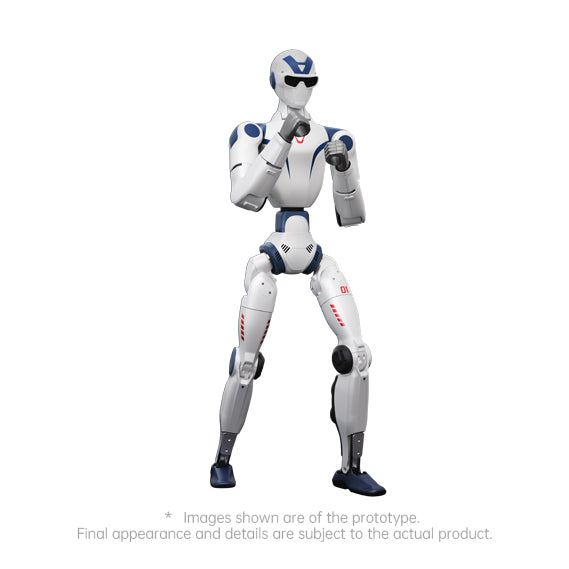 Unitree Robotics Unitree R1 |  Unitree Robotics Unitree G1 | 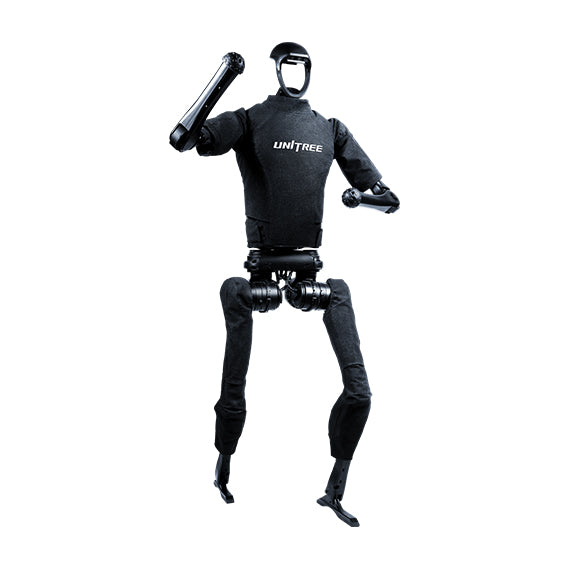 Unitree Robotics Unitree H1 | |
|---|---|---|---|---|
| Price (US) | Inquiry | $4,900 – $5,900 | $13,500 – $73,900 | ~$90,000 |
| Availability | Announced | On the market | On the market | On the market |
| Height | 1.6-1.75 m | 1.23 m | 1.32 m standing | ~1.80 m |
| Payload | ~6 kg | Unknown | Arm ~2 kg | Not rated for H1 |
| DoF | 34 | 20 | 23 | ~19 |
| Buyer | Enterprise | Individuals | Individuals | Enterprise |
| Made in | China | China | China | China |
What the Ant Robbyant R1 costs — and how to get one
Robbyant R1 home/service humanoid; announced (inquiry).
Unknown
Leasing / RaaS: unknown
Every spec, grouped & sourced
Tap a group to expand. Values are labelled official vs third-party; unknowns are omitted, not guessed.
Body & movement▾
Power & endurance▾
Hands & senses▾
Brains & control▾
Claims vs evidence
Ant embodied AI
Where it's working
No verified large-scale deployment
Intended use cases: Home and service assistance (wheeled dual-arm)
Should you consider the Ant Robbyant R1?
The Robbyant R1 is a credible, AI-forward service humanoid from a fintech heavyweight — wheeled, LLM-powered, and already deployed to institutions like the Shanghai History Museum. But it's an enterprise, China-domestic scenario solution with no consumer price and assisted (not fully autonomous) task execution. Worth a look for qualifying institutions; not aimed at home buyers.
Score reflects stated criteria (availability, data confidence, US relevance) — not hands-on testing or user ratings. We're an independent review & comparison site; we don't sell robots. *Financing figure is illustrative.
How we know this
Data confidence 33/100 · last verified 2026-06-30. Specs are labelled official vs third-party and dated; unknowns are omitted, not guessed.
Ant Robbyant R1 — your questions, answered in full
How much does the Robbyant R1 cost?+
Ant hasn't published a price. The R1 is sold as part of enterprise 'scenario solutions', so pricing is negotiated per deployment and includes software, integration and support. Any specific figure online is unconfirmed — and note an unrelated crypto token also uses the 'Robbyant R1' name.
Who makes the Robbyant R1?+
It's made by Robbyant, the robotics unit of Ant Group (the Jack Ma-backed fintech firm), formally Shanghai Ant Lingbo Technology. The company was founded in late 2024, and the R1 is its first humanoid robot, unveiled in September 2025.
Can I buy a Robbyant R1?+
Not as an individual. It's offered to businesses and institutions as bundled scenario solutions, primarily in China — there's no consumer checkout or established international availability. Early units have gone to clients like the Shanghai History Museum via that enterprise route.
Is the Robbyant R1 a walking robot?+
No, it's a wheeled dual-arm humanoid rather than a bipedal walker. It weighs 110 kg, stands 1.6–1.75 m, moves at under 1.5 m/s, and has 34 degrees of freedom. The wheeled base gives it stability for indoor service tasks.
What can the Robbyant R1 do?+
Ant has shown it acting as a tour guide, sorting medicine at pharmacies, providing basic medical consultation, and doing simple kitchen tasks — including cooking shrimp in a demo at IFA 2025. It's aimed at institutional service and public-facing roles.
What AI powers the Robbyant R1?+
It runs on Ant Group's own AI — the Bailing LLM augmented by the trillion-parameter-scale Ling-series models — for multimodal perception, planning and interaction. That heavy AI investment is the R1's main differentiator versus rivals.
Is the Robbyant R1 fully autonomous?+
It's not clearly proven to be. Its conversation and mobility are strong, but complex demo tasks across the industry often involve teleoperation or supervision, and Ant hasn't published independent autonomy data. Assume deployments are supervised and tuned for specific structured scenarios.