Apptronik Apollo Robot
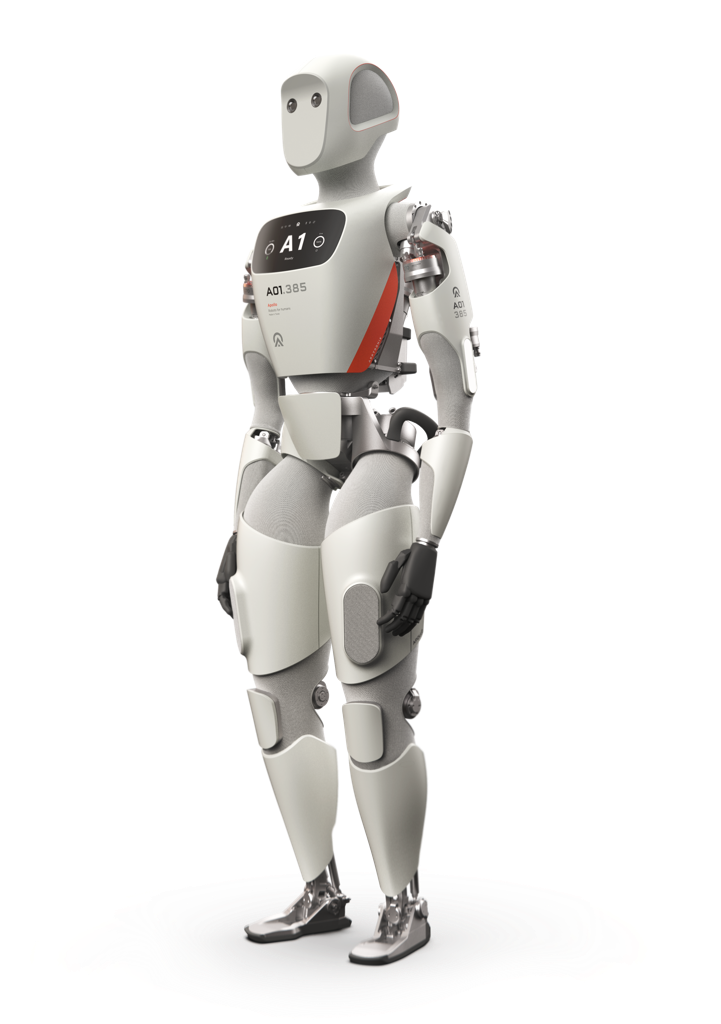
Apollo 2 is Apptronik's current humanoid, unveiled 30 June 2026 in bipedal and wheeled-base forms. It is a pilot and data-collection platform, not a purchasable product. Apptronik's own current cost statement is roughly $80,000 per robot-year at high volume from 2027; the commercial unit is Apollo 3.
This page covers Apollo 2, unveiled 30 June 2026 in bipedal and wheeled-base configurations, not the original Apollo introduced in August 2023 whose specifications still circulate widely. Apollo 2 is a pilot and data-collection platform; Apptronik has named Apollo 3, targeted at 2027, as its first commercial product, and has replaced its old sub-$50,000 at-scale target with a figure of roughly $80,000 per robot-year at volume.
US buyers: unaffected by the July 2026 import restriction — Apollo is built in Austin, Texas.
Apptronik is a US manufacturer, so Apollo sits outside the foreign-produced category the FCC listed. US pilot programmes continue exactly as before and federal buyers, who are exempt from the listing anyway, face no new hurdle. Pricing is still quote-based rather than published.
Apollo is sold and piloted mainly in North America; export to the EU or UK is a commercial and CE-marking matter, unaffected by the US rule.
As of 2026-08-30
What is the Apptronik Apollo Robot?
The Apollo robot from Apptronik is a warehouse-first humanoid, rented by the hour rather than sold outright.
If you searched for the Apptronik Apollo and landed on a page describing a 5-foot-8, 160-pound robot that lifts 55 pounds and runs four hours on a swappable battery, you found the 2023 machine. That robot is real and those numbers are real, but they belong to the first Apollo, introduced on 23 August 2023. Apptronik has since moved on twice: Apollo 2 was unveiled on 30 June 2026, and Apollo 3 has been named as the unit the company intends to actually sell.
This page covers Apollo 2, because that is the robot Apptronik is currently building, training and putting in front of customers — and it is the robot Google DeepMind used when it showed off Gemini Robotics 2 on 30 July 2026. It also covers Apollo 3 where the company has said something concrete, which is less often than the coverage suggests.
The other thing this page fixes is price. A great many robot listings still quote "under $50,000" for Apollo. That number is a target Apptronik's CEO Jeff Cardenas gave in 2023, before a single Apollo had shipped to anyone, and it was always framed as an at-scale ambition rather than a quote. The company's current public number is different, larger, and structured differently: roughly $80,000 per robot per year, at high volume, starting in 2027. We explain below why those two figures are not comparable at all.
What the Apptronik Apollo can — and can't — do today
+Does this out of the box
- Walk on two legs, or run on a wheeled base, in indoor industrial space designed for people
- Lift and move tote-scale loads — the 2023 Apollo was rated at 25 kg (55 lb); Apollo 2's figure is unpublished
- Work in Mercedes-Benz, GXO and Jabil facilities under pilot agreements, with reporting describing shift work rather than lab demos
- Run Google DeepMind's Gemini Robotics 2 whole-body control policy, demonstrated 30 July 2026 — walking, crouching, reaching and placing as one coordinated motion
- Swap battery packs to extend a working day without a fixed charge break
- Signal state to nearby humans through a chest display (status, battery, charging, task progress), an LED mouth, lighting and speech
- Operate with configurable safety zones and impact detection alongside trained staff
!Doesn't do, whatever the demo shows
- Be purchased — there is no list price, no order form and no reseller channel as of 30 August 2026
- Be quoted from published specs: Apollo 2 has no public height, weight, payload, speed, DOF or runtime figures
- Deliver the $50,000 price that still appears in older listings — that was a 2023 at-scale target, superseded
- Work outdoors, on rough ground, or in an unmapped environment
- Demonstrate a disclosed uptime, mean-time-between-failures or fleet-size number — none has been published
- Run Gemini Robotics 2 in a customer facility on the public record; the 30 July 2026 showing was a demonstration
- Be operated by an individual or a small business — engagement is enterprise pilot only
Apollo 2's capability list is unusually evidence-thin for a robot this well funded, because Apptronik publishes capability language rather than a datasheet. Everything above is either a company statement or something visible in a demonstration; nothing here is a measured third-party result.
Which Apollo is this page about — Apollo, Apollo 2, or Apollo 3?
There are three, and they get conflated constantly.
**Apollo (2023).** Unveiled 23 August 2023. This is the generation with published numbers: roughly 1.73 m (5 ft 8 in) tall, about 72.6 kg (160 lb), a 25 kg (55 lb) payload, and around four hours per swappable battery pack. Almost every spec table on the internet, including ours until this rewrite, is quoting this machine.
**Apollo 2 (2026).** Unveiled 30 June 2026 alongside Apptronik's Robot Park facility in Austin. Two mobility configurations: a bipedal version and a wheeled base. Apptronik describes the wheeled option as conforming with existing safety standards for industrial mobile robots — which is a regulatory shortcut as much as a mechanical one, since the standards for wheeled industrial robots already exist and the standards for legged ones largely do not. Apollo 2 is explicitly a scaled-pilot and data-collection platform.
**Apollo 3 (targeted 2027).** Cardenas told Forbes on 30 June 2026 that "Apollo 3 will be a product. It will be a mature, early product, but still a product." Reporting from that briefing described Apollo 3 as shipping in both wheeled and bipedal forms, with a much more scalable design, a reduced bill-of-materials cost, better end effectors, and an upgraded sensor and safety-perception stack. Apptronik's own line is that everything it learns through Apollo 2 feeds directly into Apollo 3.
So the honest summary as of 30 August 2026: Apollo 2 exists and works, Apollo 3 is the thing you would eventually buy, and the specs floating around belong to neither of them.
How much does an Apptronik Apollo cost?
There is no list price, no configurator, and no published rate card. As of 30 August 2026 you cannot get a number without talking to Apptronik's sales organisation about a pilot.
What exists is a statement from the CEO. In a CNBC interview published 11 February 2026, alongside the close of Apptronik's $520 million funding extension, Jeff Cardenas said he expects orders for $1 billion worth of robots starting in 2027, delivering Apollo in high volumes for roughly $80,000 a year — which he compared to the price of a luxury car.
Read that carefully, because the structure matters more than the number:
- It is **per year**, not per unit. An $80,000 annual figure over, say, a five-year service life is a $400,000 commitment, not an $80,000 purchase. - It is **at high volume**, which by the same interview means the 2027-and-later production ramp, not a 2026 pilot. - It is **a forward-looking statement by an executive**, not a signed price. Nothing about it is contractual.
It is still the most useful number available, and it is the one we now carry, because it is the company's current public position rather than a three-year-old aspiration. But anyone budgeting off it should treat it as the optimistic end of a range that has not yet been tested by a single arms-length transaction.
Whatever happened to the "$50,000 robot"?
It was a target, and it has quietly been replaced.
In August 2023, when Apollo was introduced, Cardenas talked about custom actuators keeping the cost down and about building a robot for less than the price of a car — a figure he put at $50,000. Forbes repeated the goal in August 2024. At that point Apollo had not been deployed with a paying customer, the bill of materials was a prototype bill of materials, and the number described where the company hoped to end up after volume manufacturing.
Three years on, the same executive is talking about roughly $80,000 a year. That is not a small revision. It is a different unit of measure, a different date, and a different order of magnitude in lifetime cost. It also tracks what has happened across the whole sector: nearly every humanoid maker that put out an early sub-$50k number has since either gone quiet on price or restructured the offer as a subscription, because a recurring fee hides the hardware cost and captures the software revenue at the same time.
Our previous entry presented "CEO target <$50k at scale" in the price field as if it were pricing guidance. It was not, and we have corrected it. If you see that figure elsewhere with a 2026 date attached, the date is decoration.
What are Apollo 2's specifications?
Mostly unpublished, and we are not going to invent them.
Apptronik's Apollo 2 product page, checked 30 August 2026, carries no height, no weight, no payload, no speed, no degrees-of-freedom count, and no runtime figure. What it does carry is capability language and a handful of design claims:
- Bipedal and wheeled base configurations on the same platform - Claimed 90%-plus energy efficiency in the actuation system - Swappable batteries supporting what the company calls 7x22 operation - An expressive LED mouth, plus coordinated lighting, speech and listening - A chest display showing robot status, battery level, charging state and task progress - Configurable safety zones with impact detection - Artemis, the coordination and control system, and Fleet Connect for fleet management
That is genuinely all of it. Several aggregator sites list Apollo 2 with the 2023 figures — 1.73 m, 72.6 kg, 25 kg payload, four-hour battery — and while those may well still be roughly right, nobody outside Apptronik can confirm that, and a robot that gained a wheeled variant and a redesigned head almost certainly did not keep every number intact.
Our position: the 2023 Apollo numbers are documented and we cite them as the 2023 Apollo numbers. Apollo 2's are undisclosed as of 30 August 2026. An empty cell is more useful to a buyer than a confident wrong one.
Legs, wheels and the safety standard nobody has written yet
Apollo 2 ships in two mobility configurations, and the reason is regulatory as much as mechanical.
Wheeled industrial mobile robots have an established safety-standards path. The machines have been in warehouses for years, the hazard analysis is understood, and a plant safety officer knows how to sign one off. Legged machines largely do not have that path. A humanoid that can fall over is a category the standards bodies are still working through, and "can this thing be allowed near people" is answered today by conservative site-specific risk assessment rather than by a certificate.
Apptronik describes its wheeled base as conforming with existing safety standards for industrial mobile robots. That single sentence removes the hardest question from a customer's deployment review, and it is why the wheeled variant will almost certainly reach revenue first, whatever the long-term argument about bipeds. Jeff Cardenas continues to make that long-term argument — legs go where infrastructure was built for humans, stairs included — and he is probably right about 2030. He is also shipping wheels in 2026, which tells you what customers are actually asking for.
What Apollo 2 has on the safety side, per Apptronik: configurable safety zones with impact detection, plus a deliberately legible interface — a chest display showing status, battery, charging state and task progress, an LED mouth, coordinated lighting and speech. That last group is not decoration. The main practical hazard around a mobile robot is a human misreading its intent, and a machine that broadcasts what it is about to do is easier to work beside.
What it does not have on the public record: a named certification, a third-party safety assessment, or a published incident record. That is true of every humanoid on the market, and it is a reason deployments stay small.
What is Robot Park, and why does Apptronik keep talking about it?
Robot Park is a nearly 90,000 sq ft (about 8,360 sq m) facility in Austin, Texas, announced on 30 June 2026 as an expansion of a site that had already been running for over a year. Inside it, Apollo robots perform logistics, manufacturing and retail tasks — some teleoperated, some autonomous — and the resulting data is used to train the models that are meant to run the commercial fleet.
The strategic point is that the bottleneck in humanoid robotics has moved. Building a machine that can stand up and carry a tote is now a solved-ish engineering problem for a well-funded team. Getting it to do a hundred different tasks reliably is a data problem, and real-world manipulation data is scarce, expensive and impossible to scrape. A 90,000 sq ft building full of robots doing repetitive warehouse work is, in effect, a data mine.
It also tells you something about where Apptronik is on the commercial curve. Companies that are selling robots talk about deployments and uptime. Companies that are still building the product talk about training infrastructure. Apptronik, right now, is doing the second thing, and is fairly candid about it — Apollo 3 is repeatedly described as the commercial product, in the future tense.
Did Google's Gemini Robotics 2 really run on Apollo?
Yes, and this is the single most substantive thing that happened to Apollo in 2026.
On 30 July 2026 Google DeepMind announced Gemini Robotics 2, and Apptronik's Apollo 2 was one of the two platforms it was demonstrated on (the other being a Franka Duo arm setup). The headline capability is whole-body control: a single policy driving legs, torso, arms and fingers together, so the robot can walk, crouch, reach and manipulate as one coordinated motion rather than as a navigation stack handing off to a manipulation stack. In the demonstration, Apollo 2 was given an instruction along the lines of putting a watering can into a specific bin on a bottom shelf, and it walked, retrieved, navigated and placed.
A few caveats that the coverage mostly skipped. Gemini Robotics ER 2, the embodied-reasoning model, is available through Google AI Studio and in private preview on Google's enterprise agent platform; the vision-language-action and on-device models went to early-access partners only. DeepMind's claim that the on-device model adapts to a new robot body in a few hours with under 200 examples is a research claim, measured on the tasks the researchers chose. And a demonstration is not a deployment: nothing in the announcement says Apollo 2 runs Gemini Robotics 2 on a customer site.
Still — being the humanoid Google picks up when it wants to show its newest robotics model is a real signal about who Apptronik is close to. Google has been an investor since the $350 million round in February 2025.
Where is Apollo actually working today?
Three named industrial relationships, plus the training facility.
**Mercedes-Benz.** The longest-running, from a pilot announced in March 2024. Coverage in June 2026 described Apollo working shifts at Mercedes-Benz rather than sitting in a lab, with the German carmaker's Berlin-Marienfelde campus named in reporting. Mercedes-Benz is also now an investor in Apptronik.
**GXO Logistics.** A proof-of-concept in warehouse logistics. GXO runs proofs of concept with several humanoid vendors at once, which is worth knowing before reading too much into any single one — it is a bake-off, not an exclusive.
**Jabil.** Both a customer and a manufacturing partner: Apollo units work in Jabil facilities, and Jabil is part of how Apptronik intends to build them at volume.
There is also a longer-horizon space thread. Apptronik's Apollo lineage traces back to NASA-connected work, and there was coverage in February 2026 about Apollo-type robots moving from factory work toward space applications. Treat that as roadmap, not deployment.
What you will not find, as of 30 August 2026: a customer who has bought Apollos, a published fleet count, or a disclosed uptime figure. Apptronik talks in partner names, not unit numbers.
Can you buy an Apollo 2 right now?
No. There is no purchase path for Apollo 2 — not for a business, and certainly not for an individual.
The route in is an enterprise pilot engagement negotiated directly with Apptronik. In practice that means a named contact at a company with a real warehouse or production line, a defined workflow, a site survey, and a commercial conversation that starts from Apptronik's side. There is no reseller channel, no distributor, no published lead time.
Apollo 3, when it arrives, is the unit intended to be sold. Cardenas' framing of $1 billion in orders starting in 2027 implies an order book opening at some point before that — but Apptronik has not announced a reservation program, a deposit, or a delivery queue. If you see a site offering to sell you an Apollo, it is either a reseller with no allocation or it is not selling you an Apollo.
One practical note for US buyers specifically: Apptronik is an Austin company and manufactures with a US partner, but a machine's regulatory position depends on how it is actually built and certified, not on where the head office is. Anyone planning a 2027 deployment should confirm the equipment-authorization status of the exact configuration they intend to import or operate, rather than assuming it from the company's nationality.
Does the July 2026 US import restriction affect Apollo?
No, and that is quietly one of the most valuable things about it right now.
On 28 July 2026 the FCC added foreign-produced advanced robotic devices to its Covered List, acting on a national security determination issued the day before. The framing in most coverage was "the US bans Chinese humanoid robots", which is wrong twice over. The text is country-neutral: a device counts as domestic only if it is manufactured in the United States with more than 65% domestic component cost, rising to 75% for deliveries from 2029. German, Japanese, British and Canadian machines fail that test as readily as Chinese ones, and US final assembly of imported parts does not clear it. The mechanism is also narrower than a ban — a covered device cannot obtain new FCC equipment authorization, and without authorization it cannot lawfully be imported, marketed or sold. Devices authorized before 28 July 2026 keep selling and keep receiving security and firmware updates until at least 1 January 2029. Nothing is recalled and federal purchases sit outside the listing altogether.
Apollo is built in Austin, Texas by a US company with a US manufacturing partner in Jabil, so it sits outside the foreign-produced category. Pilots continue exactly as before, and a federal buyer faces no new hurdle at all.
The more interesting effect is on the competitive field. Overnight, a large slice of the cheap end of the humanoid market lost its route into the United States, and the machines that remain buyable there are mostly the expensive Western ones. That is worth something to Apptronik commercially — but it is worth nothing to a buyer's budget, because Apollo still has no price. And one caution for anyone planning a 2027 deployment: regulatory position follows how a specific configuration is built and certified, not the flag on the head office. Confirm the equipment-authorization status of the exact unit you intend to operate, rather than inferring it from the company's nationality.
What does an Apollo pilot actually involve?
Apptronik has not published a pilot process, a rate card or a standard scope, so anything precise you read about "the Apollo programme" is someone guessing. What can be reconstructed from the three named relationships — Mercedes-Benz from March 2024, GXO Logistics, and Jabil as both customer and manufacturing partner — is the shape of it rather than the terms.
Every humanoid pilot to date has followed roughly the same sequence. A workflow is chosen that is repetitive, low-dexterity and physically unpleasant: tote moves, machine tending, kitting, trailer work. The site is surveyed and usually mapped. Safety zones get defined, and staff working near the machine are trained on what it does when a person enters one. The robot then runs a narrow task, supervised, with data collected on cycle time and intervention rate. Nobody publishes the intervention rate. That is the number that decides whether a pilot becomes a purchase, and no humanoid vendor has disclosed one.
A few things follow from this that are worth knowing before you ask for a meeting. The engagement starts from Apptronik's side — there is no self-serve entry point, no reseller and no published lead time. The commercial construction is a negotiated agreement rather than an order. And Apptronik's own framing is that Apollo 2 is a pilot and data-collection platform: the company is buying your workflow data as much as you are buying its robot's labour, which is a reasonable trade but should be priced as one.
GXO in particular runs proofs of concept with several humanoid vendors simultaneously. Being named in a GXO release means you are in the bake-off, not that you won it.
How does Apollo compare to Digit and Figure on the things that matter?
On the only axis that separates humanoid vendors right now — is there a paying order book — Apollo sits behind Agility Robotics and roughly level with Figure.
Agility has publicly contracted orders for Digit v5 and a stated monthly price. Apptronik has partner logos, a training facility, and an executive's forward-looking cost estimate. That is a meaningful gap in commercial maturity, and it is the gap Apollo 3 is meant to close in 2027.
On capital and technical partnership, the picture reverses. Apptronik has raised about $935 million in a Series A that closed in February 2026, at a reported $5 billion valuation, with Google, Mercedes-Benz, B Capital, PEAK6, AT&T Ventures, John Deere and the Qatar Investment Authority on the cap table. Its model partner is Google DeepMind, and its robot is the one DeepMind demonstrates on. Very few humanoid companies have both that balance sheet and that model access.
On form factor, Apptronik has hedged in a way its rivals mostly have not: offering a wheeled base next to the biped is an admission that legs are a cost, a safety-certification problem and a reliability risk in a flat warehouse. Cardenas still argues the biped has the higher ceiling. He is also shipping wheels. Both things can be true, and honestly the wheeled variant is probably the one that gets to revenue first.
What would have to be true for Apollo 3 to hit $80,000 a year?
Four things, none of them guaranteed.
**Volume.** The number is explicitly an at-scale figure. Humanoid actuators, harmonic drives and force-torque sensing are expensive in the hundreds and merely costly in the tens of thousands. Apptronik has a manufacturing partner in Jabil and is talking about $1 billion in orders from 2027, which at $80,000 a robot-year implies something on the order of a few thousand robot-years of committed demand. That order book does not publicly exist yet.
**Autonomy that reduces headcount rather than adding it.** A robot that needs a supervising operator does not replace a $30-an-hour worker; it adds a machine to one. Gemini Robotics 2 is the bet here, and it is a good bet, but the demonstrated tasks are still short-horizon.
**Uptime.** An annual price only makes sense if the robot is available most of the year. Apptronik's 7x22 swappable-battery claim is the right ambition; there is no published field data behind it.
**Bill-of-materials reduction in Apollo 3.** Reporting from the June 2026 briefing said this is exactly what Apollo 3 targets. Reduced BOM cost is the whole reason it is a seperate generation rather than a revision.
If all four land, $80,000 a robot-year is competitive with a single shift of fully burdened warehouse labor and cheaper than two. If any one of them slips, the number moves. It has moved before.
Apptronik's timeline, 2016 to 2027
The chronology explains the company's odd shape — enormous funding, prestigious partners, and no product to sell.
**2016** — Apptronik is founded in Austin, spun out of the Human Centered Robotics Lab at the University of Texas, with a lineage running back through NASA-connected humanoid work. It spends its first several years building actuators and one-off machines for other people.
**23 August 2023** — Apollo is unveiled. This is the generation with published numbers: about 1.73 m, 72.6 kg, a 25 kg payload, roughly four hours per swappable battery. Around the same time the CEO talks about eventually building a robot for under $50,000 at scale.
**March 2024** — the Mercedes-Benz pilot is announced.
**February 2025** — a $350 million round, with Google participating.
**11 February 2026** — a $520 million extension closes the Series A at $935 million total, reported at a $5 billion valuation, with total capital raised approaching $1 billion. In the same interview Cardenas gives the figure that replaces the old one: roughly $80,000 per robot-year at high volume from 2027, and an expectation of $1 billion in orders starting that year.
**30 June 2026** — Apollo 2 is unveiled in bipedal and wheeled configurations, alongside the expanded Robot Park training facility of nearly 90,000 sq ft in Austin. Apollo 3 is named as the first true commercial product.
**30 July 2026** — Google DeepMind demonstrates Gemini Robotics 2 whole-body control on Apollo 2.
**2027** — the year everything is pointed at: Apollo 3, volume production, and the order book that has not yet been announced.
Ten years from founding to first commercial product would be unremarkable in aerospace and is becoming normal in humanoids. It is worth holding in mind when you read that a competitor will be shipping at scale next year.
The Apptronik Apollo on video
Hands-on reviews and teardowns, picked for what they actually show rather than how loud the thumbnail is.
Goes through Apollo's swappable battery, payload and the DeepMind software tie-up in seven minutes
Apptronik's own look at the Apollo 2 test facility — the most current footage of the second generation
The original trade-press unveiling, which still explains the modular design intent better than anything since
Apptronik Apollo price ladder — and what the entry price leaves out
The headline number is almost never the number you pay. Here is each configuration, and what it does not include.
| Configuration | Price | What you get | What it excludes |
|---|---|---|---|
| Apollo 2 — bipedal, pilot engagement | Not published; negotiated per pilot | Robot, Artemis control software, Fleet Connect fleet management, Apptronik deployment support | Everything is negotiated — no published scope |
| Apollo 2 — wheeled base, pilot engagement | Not published; negotiated per pilot | Same platform on a wheeled base conforming with existing industrial mobile robot safety standards | No published scope |
| Apollo 3 — commercial unit, from 2027 | ~$80,000 per robot-year at high volume (CEO statement, Feb 2026) | Not specified — the figure is an annual cost estimate, not a quoted package | Not specified; assume integration, site work and training are additional |
| Historical — 2023 at-scale target | Under $50,000 per unit (superseded) | Nothing; this was an aspiration stated before any Apollo shipped | Not a quote, not current, and not comparable to a per-year figure |
USD throughout; no conversion applied.
Source: Apptronik publishes no MSRP and sells only through quote-based enterprise pilot agreements. The upper range is an industry estimate of bundled pilot cost — hardware plus engineering support plus software. The $80,000-per-robot-year figure is a CEO statement of a 2027 target reported in trade press, not a current price. — estimate, not an official list price · as of 2026-08-30
What owning one actually costs
| Cost | Typical | Notes |
|---|---|---|
| Robot cost | ~$80,000 per robot-year at volume from 2027 (company estimate) | CEO statement from February 2026. Not contractual, not a list price, and explicitly conditioned on high-volume production. |
| Pilot engagement | Not published | Apollo 2 access runs through a negotiated enterprise pilot. Expect a site survey, a defined workflow and a fixed evaluation window. |
| Fleet software (Artemis, Fleet Connect) | Not published | Named by Apptronik as part of the platform. Whether it is bundled or separately licensed has not been disclosed. |
| Battery packs and swap infrastructure | Not published | Swappable packs are core to the 7x22 operation claim, which implies buying spares and somewhere to charge them. |
| Integration and workflow setup | Not published | Every deployed humanoid to date has required mapping, workflow definition and safety-zone configuration. Budget for it even though no vendor itemises it. |
| Safety review and site modification | Not published | The wheeled variant exists partly because wheeled industrial robots already have a certification path. A bipedal deployment may carry more site-level safety work. |
| Service and spares | Not published | No published service level, warranty term or spares pricing as of 30 August 2026. |
Who the Apptronik Apollo is — and isn't — for
+Where it shines
- US-built, with local support and supply chain.
- Open developer access (SDK/API) — good for builders and labs.
- Stated real-world payload (25 kg).
- Specs are well-sourced — high data confidence.
!Watch-outs
- Sold to businesses only — not to private buyers.
How the Apptronik Apollo stacks up
Side by side with similar robots — the one you're reading about is highlighted.
| This robot Apptronik Apptronik Apollo | 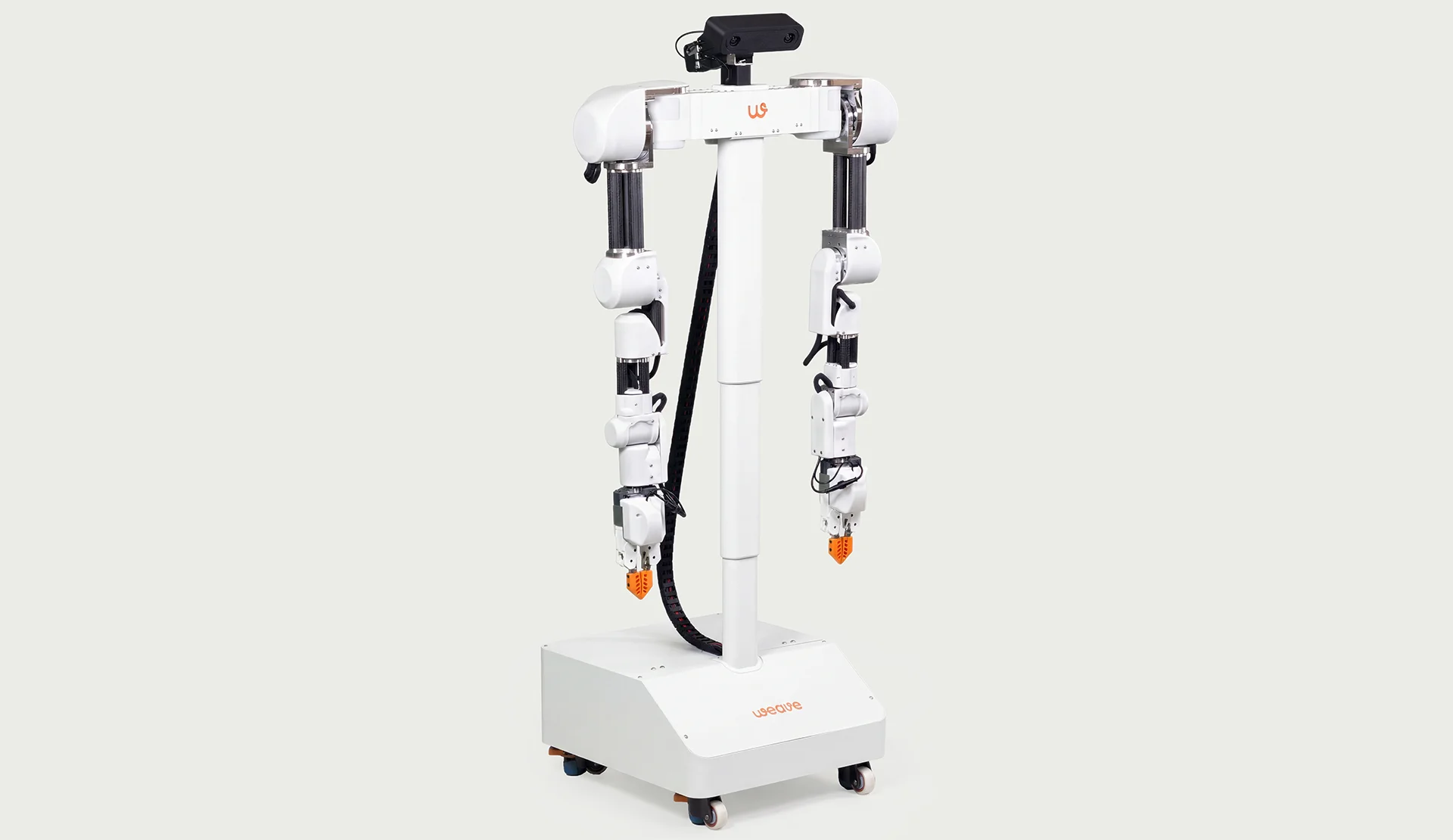 Weave Robotics Weave Isaac | 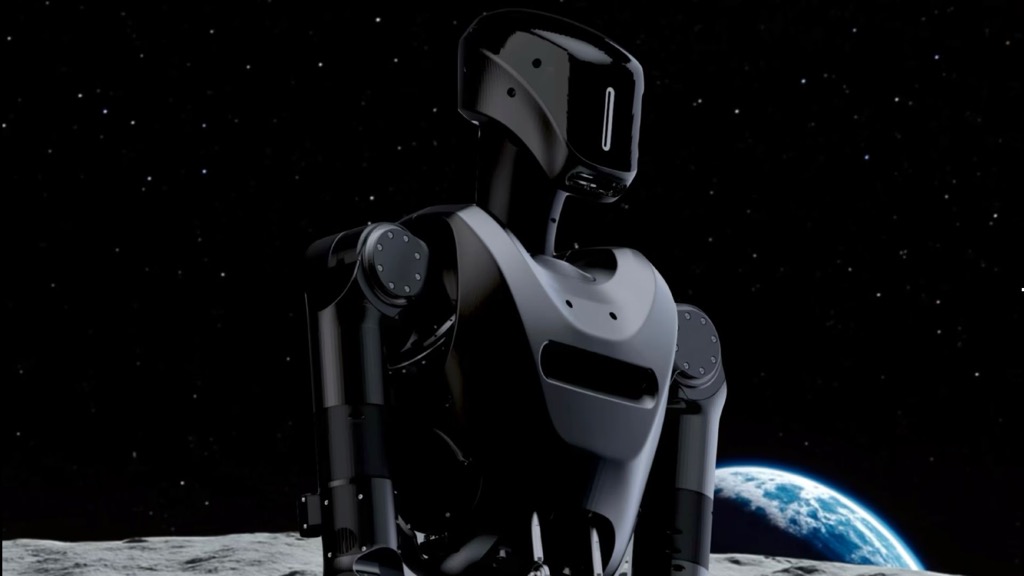 Foundation (Foundation Robotics) Foundation Phantom | 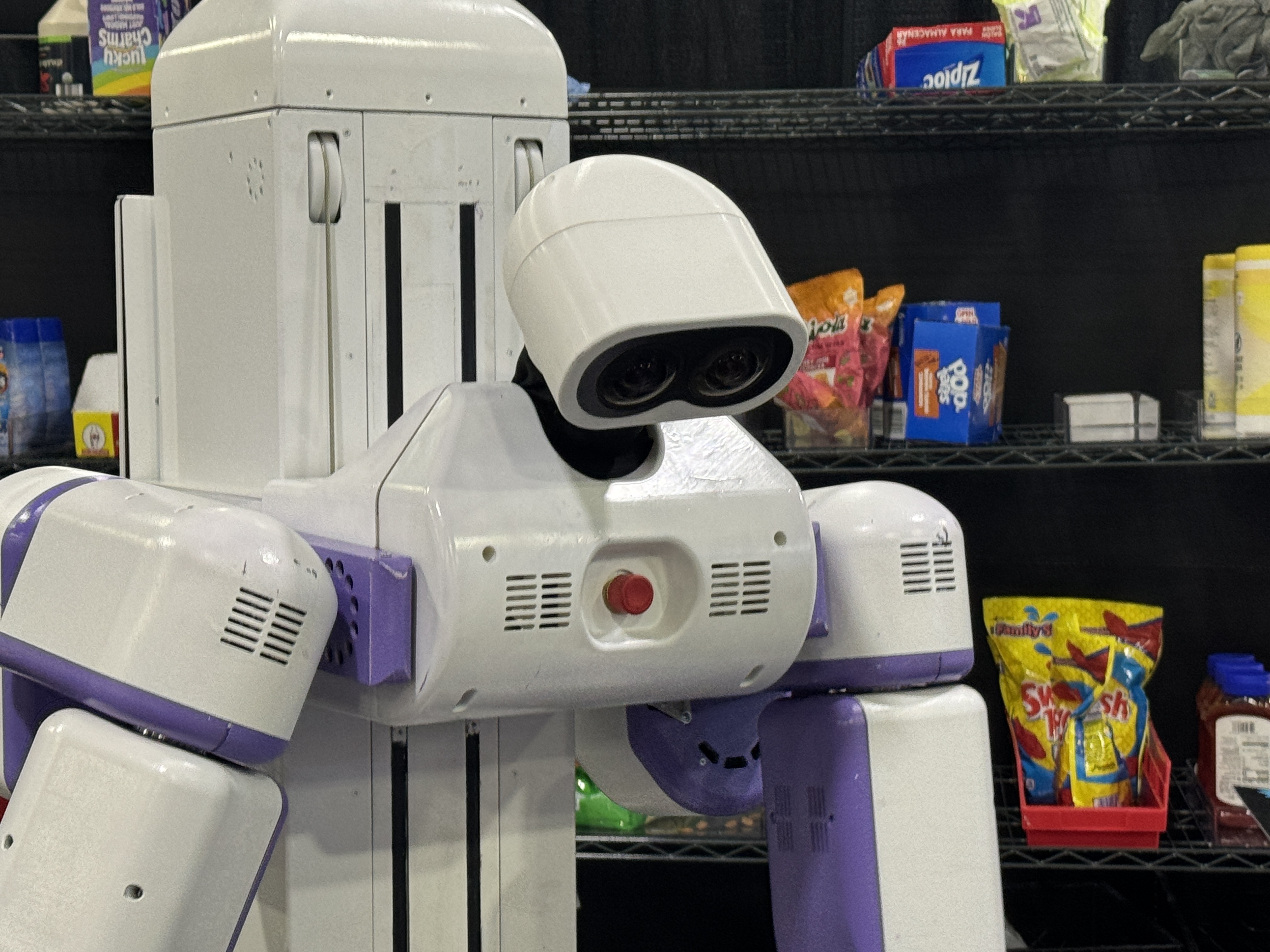 Reflex Robotics Reflex Robot | |
|---|---|---|---|---|
| Price (US) | $50,000 – $80,000 | $7,999 – $9,999 | $100,000 – $150,000 | ~$10,000 |
| Availability | Enterprise pilot and quote only — not purchasable by consumers or by businesses placing a standard order | On the market | Lease / RaaS | Pilot programs |
| Height | 1.73 m | Unknown | 1.75 m | Adjustable via spine |
| Payload | 25 kg | Unknown | 40 kg dual-arm | 25+ lb/arm |
| DoF | ~71 | Isaac | 29 | Unknown |
| Buyer | Enterprise | Individuals | Enterprise | Enterprise |
| Made in | US | US | US | US |
Every spec, grouped & sourced
Tap a group to expand. Values are labelled official vs third-party; unknowns are omitted, not guessed.
Body & movement▾
Power & endurance▾
Hands & senses▾
Brains & control▾
Claims vs evidence
NVIDIA GR00T + Google DeepMind partnership; learning from demonstration; largely roadmap
Where it's working
Mercedes-Benz (pilot from Mar 2024; reported working shifts by Jun 2026), GXO Logistics proof-of-concept, Jabil (customer and manufacturing partner), Robot Park Austin (~90,000 sq ft training facility, announced 30 Jun 2026). Google DeepMind demonstrated Gemini Robotics 2 whole-body control on Apollo 2 on 30 Jul 2026.
Intended use cases: Warehouse/manufacturing logistics: trailer unloading, case picking, palletization, machine tending
What owners, reviewers and the press say about the Apptronik Apollo
Ratings and reception gathered from where this machine is actually sold and discussed. We summarise the signal — we don't republish anyone's reviews.
Apollo is placed with enterprise customers under commercial agreements, never sold at retail, so no buyer rating exists.
- IEEE Spectrum — gave the 2023 introduction a straight technical treatment as a serious commercial humanoid attempt · 2026-08-30
- NASA Spinoff — profiled Apollo in 2026 as an assembly-line assistant still working toward genuinely useful work · 2026-08-30
+Reviewers consistently praise
- credible named industrial pilots rather than staged demos
- modular design with both bipedal and wheeled bases
- deep AI partnerships behind the control stack
!And consistently criticise
- pilots have not yet demonstrated an economic case
- capability shown publicly is narrow
- mass-market timeline sits at the end of the decade
What owners and developers actually say
Apollo is discussed as an industrial programme rather than a robot people meet, and the threads that get traction are about its customers — Mercedes-Benz, the Google DeepMind partnership, the training facility — rather than about the machine's behaviour. Robotics readers are broadly respectful and broadly unconvinced that any of the pilot deployments have yet proven economic. There is a small dedicated subreddit but it is largely news reposting, not owners.
r/robotics, r/Apptronik, r/singularity · as of 2026-08-30
Consensus drawn from two named outlet treatments and roughly eight company and trade videos, the largest at about 167K and 150K views.
Apptronik Apollo: the claims, checked
pilot
Apollo 2 works in Apptronik's own 90,000 sq ft Robot Park in Austin and under pilot agreements at Mercedes-Benz, GXO and Jabil. There is no purchase path, no list price, no published fleet count and no customer that has bought units. Apptronik itself describes Apollo 3, not Apollo 2, as the commercial product.
as of 2026-08-30
- misleading“Apollo costs under $50,000”
This was Jeff Cardenas' at-scale target from 2023, restated by Forbes in August 2024, made before any Apollo shipped. Apptronik's current public figure, given to CNBC on 11 February 2026, is roughly $80,000 per robot-year at high volume from 2027 — a different unit of measure and a much larger lifetime commitment.
- unverified“Apollo 2 is 1.73 m tall, weighs 72.6 kg and lifts 25 kg”
Those are the published figures for the original Apollo introduced 23 August 2023. Apptronik's Apollo 2 product page, checked 30 August 2026, publishes no height, weight, payload, speed, DOF or runtime. Aggregators carrying these numbers under an Apollo 2 heading are reusing 2023 data.
- true“Google DeepMind demonstrated Gemini Robotics 2 on Apollo 2”
Announced 30 July 2026. Apollo 2 was one of two platforms named, alongside a Franka Duo setup, in a demonstration of whole-body control covering walking, crouching, reaching and precise placement.
- misleading“Apollo is commercially deployed at Mercedes-Benz”
Apollo has worked at Mercedes-Benz since a pilot announced in March 2024, and June 2026 coverage described it working shifts rather than demonstrating. But Apptronik has published no unit count, no contract value and no purchase; it remains a pilot relationship, and Mercedes-Benz is also an investor.
- unverified“Apollo 3 launches in 2027 as a commercial product”
Cardenas described Apollo 3 to Forbes on 30 June 2026 as a real product — "a mature, early product, but still a product" — and told CNBC in February 2026 he expects orders for $1 billion of robots starting in 2027. No launch date, price, specification or order book has been published.
- true“Apollo 2 offers a wheeled version as well as a biped”
Confirmed on Apptronik's own Apollo 2 page and in trade coverage of the 30 June 2026 unveiling. The wheeled base is described as conforming with existing safety standards for industrial mobile robots.
- unverified“Apptronik is valued at $5.5 billion”
The February 2026 extension took the Series A to $935 million total and was reported by CNBC at a $5 billion valuation; some outlets have since used $5.5 billion. Apptronik has not published a valuation figure itself, so treat the exact number as approximate.
Apptronik in 2026
Apptronik is an Austin, Texas company spun out of the Human Centered Robotics Lab at the University of Texas, with a lineage that runs back through NASA-connected humanoid work. As of 30 August 2026 it is one of the two or three best-capitalised humanoid developers outside China. Its Series A closed in February 2026 at $935 million total after a $520 million extension, taking overall capital raised to nearly $1 billion at a valuation reported around $5 billion. The investor list is unusually strategic rather than purely financial: Google, Mercedes-Benz, B Capital, PEAK6, AT&T Ventures, John Deere and the Qatar Investment Authority. Google is the important one, because Apptronik's model partner is Google DeepMind, and Apollo 2 is the humanoid DeepMind reached for when it launched Gemini Robotics 2 on 30 July 2026. Commercially the company is earlier than its funding implies. It has partner relationships with Mercedes-Benz, GXO and Jabil rather than customers, no published price, and no order book. Its main 2026 investment was infrastructure — the expanded Robot Park training facility — which is a bet that data, not hardware, is the remaining constraint. The company's own roadmap is honest about the sequencing: Apollo 2 proves the platform, Apollo 3 is the product, and the revenue is expected to start in 2027.
What to watch next
- 2027 — Apollo 3, described by Apptronik as its first true commercial product, in both bipedal and wheeled configurations with a reduced bill of materials
- 2027 — the $1 billion order figure Jeff Cardenas cited to CNBC in February 2026; watch for whether any of it converts into a named, disclosed contract
- Ongoing — whether Apptronik publishes an actual Apollo 2 or Apollo 3 datasheet, which would be the first hard specification since August 2023
- Ongoing — whether Gemini Robotics 2 moves from a July 2026 demonstration onto a customer production line, and whether DeepMind's early-access program widens
- Watch — any disclosed unit count or uptime figure from Mercedes-Benz, GXO or Jabil; all three relationships are currently reported without numbers
Should you consider the Apptronik Apollo?
Apollo 2 is a serious machine from a serious company that is not yet selling anything. The Gemini Robotics 2 demonstration on 30 July 2026 makes it the most technically interesting humanoid outside Figure and Tesla, and the $935 million Series A means it will still be here in 2028. But a buyer should be clear about what is on offer today: a pilot engagement with no published specification, no list price and no disclosed field performance. The real product is Apollo 3 in 2027, and the real number is roughly $80,000 per robot-year at volume — which is credible as an ambition and unproven as a price. If you are evaluating humanoids for a 2026 deployment, Apollo is a conversation, not a purchase order. If you are planning for 2028, it belongs on the shortlist.
Score reflects stated criteria (availability, data confidence, US relevance) — not hands-on testing or user ratings. We're an independent review & comparison site; we don't sell robots. *Financing figure is illustrative.
How we know this
Data confidence 78/100 · last verified 2026-08-30. Specs are labelled official vs third-party and dated; unknowns are omitted, not guessed.
Apptronik Apollo — your questions, answered in full
Can I buy an Apptronik Apollo?+
No. As of 30 August 2026 there is no consumer or business purchase path for Apollo 2. Access is through a negotiated enterprise pilot. Apollo 3, targeted at 2027, is the unit Apptronik intends to sell.
How much does Apollo cost?+
There is no list price. The company's current public figure is roughly $80,000 per robot per year at high volume from 2027, given by CEO Jeff Cardenas to CNBC on 11 February 2026. The older sub-$50,000 figure was a 2023 at-scale target and should not be used.
Is the $50,000 price real?+
It was a real statement, but it was an aspiration from 2023 rather than a price, and it has been superseded by the company's own newer per-year figure. Listings still quoting it with a 2026 date are recycling old copy.
How tall is Apollo 2 and how much can it lift?+
Apptronik has not published Apollo 2's dimensions or payload. The original 2023 Apollo was 1.73 m (5 ft 8 in), about 72.6 kg (160 lb), with a 25 kg (55 lb) payload and roughly four hours per battery pack. Whether Apollo 2 keeps those figures is unknown.
What is the difference between Apollo 2 and Apollo 3?+
Apollo 2, unveiled 30 June 2026, is a pilot and data-collection platform in bipedal and wheeled forms. Apollo 3, targeted at 2027, is described by Apptronik as the first commercial product, with a more scalable design, lower build cost, improved end effectors and an upgraded sensor and safety stack.
Does Apollo run Google's Gemini?+
Google DeepMind demonstrated Gemini Robotics 2 whole-body control on Apollo 2 on 30 July 2026. That was a demonstration, not a shipped configuration — the vision-language-action and on-device models went to early-access partners only.
Why does Apollo 2 have a wheeled version?+
Wheels are cheaper, more stable and more energy-efficient in a flat warehouse, and — importantly — industrial mobile robots on wheels already have an established safety-standards path that legged machines largely do not. Apptronik's CEO still argues bipeds have the higher long-term ceiling.
Where is Apollo actually working?+
In Apptronik's own Robot Park in Austin, and under pilot agreements with Mercedes-Benz, GXO Logistics and Jabil. June 2026 reporting described the Mercedes-Benz work as shift work rather than demonstration. No unit counts have been disclosed.
Is Apollo affected by the US restriction on imported robots?+
No. The FCC's 28 July 2026 Covered List addition applies to foreign-produced devices — those not manufactured in the US with more than 65% domestic component content. Apollo is built in Austin, Texas, so US pilots are unaffected, and federal buyers are outside the listing in any case. Confirm the authorization status of your exact configuration rather than assuming it from the company's address.
How does Apollo compare to Tesla Optimus?+
Different bets. Tesla is building for its own factories first and has never sold a unit to an outside customer. Apptronik is building for third-party industrial customers and has partner deployments at Mercedes-Benz, GXO and Jabil, but also no sales. Neither has a public price you can act on. The practical difference today is that Apptronik's robot is the one Google DeepMind chose to demonstrate Gemini Robotics 2 on, on 30 July 2026.
Who has invested in Apptronik?+
The Series A closed in February 2026 at $935 million total, reported at around a $5 billion valuation, taking capital raised to near $1 billion. Named investors include Google, Mercedes-Benz, B Capital, PEAK6, AT&T Ventures, John Deere and the Qatar Investment Authority. The list is strategic rather than purely financial — several investors are also pilot customers, which is worth remembering when reading deployment announcements.
When can I actually order an Apollo?+
No order book has been announced. Apptronik has named Apollo 3, targeted at 2027, as its first commercial product, and the CEO told CNBC in February 2026 that he expects orders for $1 billion of robots starting that year. There is no reservation programme, no deposit and no delivery queue as of 30 August 2026.
Peer-reviewed research on the Apptronik Apollo
Published academic work — peer-reviewed papers and preprints — involving this robot or its maker's systems, indexed in scholarly databases (OpenAlex, arXiv). Not blog posts or press write-ups.
- Control and evaluation of a humanoid robot with rolling contact joints on its lower bodyBang, González, Ahn, et al. · 2023 · Frontiers in Robotics and AI · cited by 8 · DOI 10.3389/frobt.2023.1164660
Academic references are factual citations from open scholarly indexes; listing is not endorsement.