Astribot S1 Robot
The Astribot S1 sells on quotation at roughly $96,000 to $100,000 through importers and resellers - one reseller figure was refreshed at $100,000 on 17 August 2026 - while the China research edition is reported at about CNY 500,000, roughly $74,400 at 6.7209 CNY/USD as of 28 August 2026. Astribot publishes no price of its own. US buyers are the exception: no US authorisation is on record and the July 2026 FCC restriction closes that route, so new imports and sales are barred.
US buyers: no new imports — this model has no US authorization on record, and the July 2026 rule closes that route.
Astribot has high US media visibility and no US sales channel — a gap that predates the rule and is now fixed in place by it. No authorization is on record, so new imports and sales are barred. Listings you may see on US-facing resale sites are worth treating carefully.
Chinese sales are unaffected.
As of 2026-08-30 · medium confidence — verify before you commit funds
What is the Astribot S1 Robot?
Astribot builds for speed: the S1's arms move faster than almost anything else in this catalogue.
The Astribot S1 became famous in April 2024 on the strength of one video. Arms moving faster than they look like they should, a cloth whipped off a table without disturbing the glasses on it, a toast rack, a shaver, a bottle poured. It was played at real speed, which almost nothing in this industry is, and it made a Shenzhen startup nobody had heard of into a name.
Two years on, the S1 is a product rather than a demo - quoted, shipped, and delivered in volume inside China since late 2025, with importer-mediated sales into the US, Germany, Japan, South Korea, the UK, Canada, France, Australia and India. And it is still surrounded by two persistent errors that this page exists to correct.
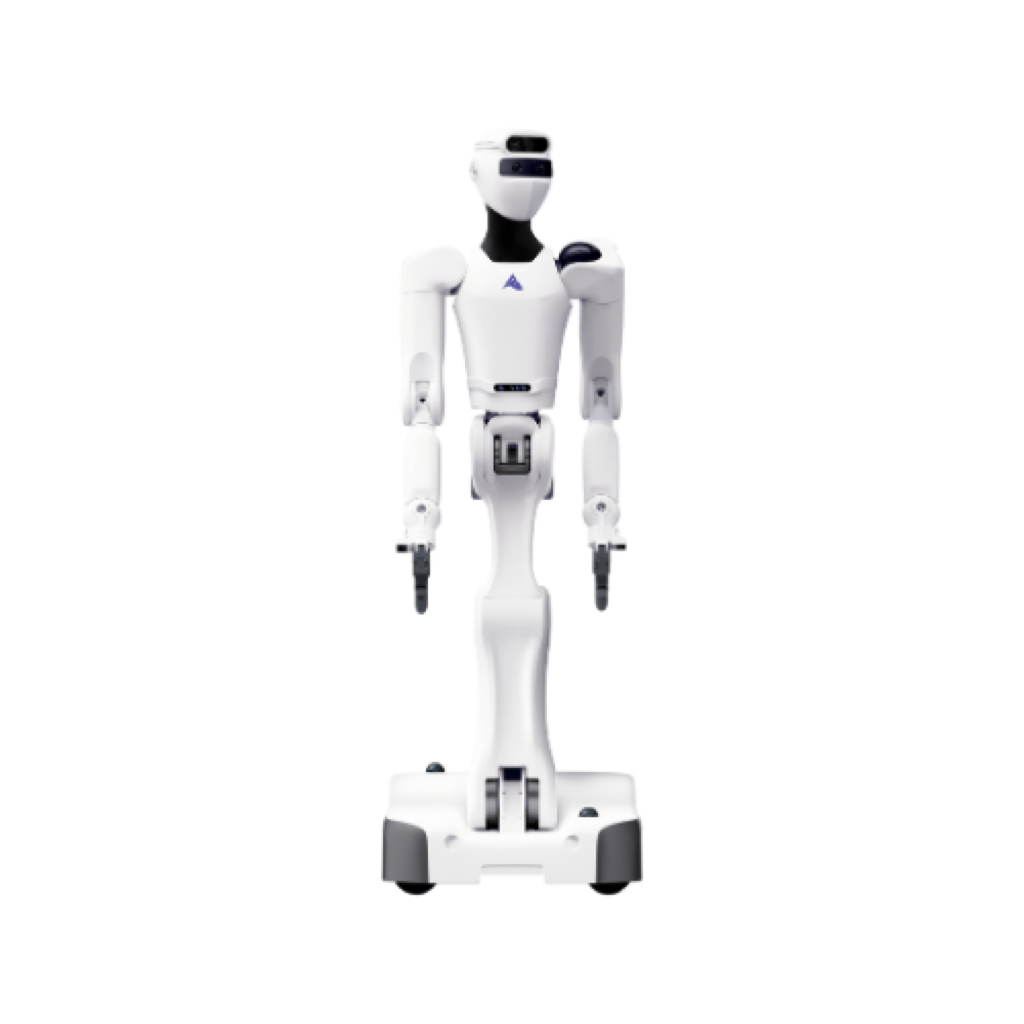
The first: the S1 is not a bipedal humanoid. It has no legs. It rolls on a three-degree-of-freedom omnidirectional wheeled base with a four-degree-of-freedom bending torso above it. Every comparison table that puts it next to Optimus or the Unitree G1 as a walking robot is describing something that does not exist. The second: the Astribot T1, launched May 2026, is not the S1's successor. It is a smaller, cheaper, cable-driven sibling aimed at accessibility, and the S1 remains in production and on sale. We carried the successor claim ourselves in June 2026, and it was wrong.
What the Astribot S1 can — and can't — do today
+Does this out of the box
- Perform fast bimanual manipulation - pouring, wiping, folding, tool use - with a quoted end-effector speed of 10 m/s or more and acceleration up to 100 m/s squared
- Carry 5 kg per arm at full horizontal reach, a figure measured where payload claims are hardest rather than close to the body
- Reach across a large workspace using seven degrees of freedom per arm plus a four-degree-of-freedom bending torso, moving on a three-degree-of-freedom omnidirectional base at up to 2 m/s
- Be teleoperated in VR for demonstration and training-data collection, a rig Astribot publishes openly rather than hiding
- Perceive with head stereo RGB plus an Orbbec Femto Bolt depth camera, RealSense D401 wrist cameras, an Orbbec Gemini 335 chest camera, a Livox MID-360 LiDAR and an IMU
- Run indefinitely at a fixed station - it charges by plug and can operate while plugged in, with roughly four to six hours on battery alone
!Doesn't do, whatever the demo shows
- Walk, climb a step or cross a threshold - it is a wheeled robot with no legs, restricted to flat indoor floors
- Use hands; each arm ends in a parallel-jaw gripper, which limits which objects are attemptable regardless of how good the control is
- Be legally imported into the United States as a new unit - no US authorisation is on record and the 28 July 2026 FCC restriction closes that route
- Demonstrate autonomy against any independent benchmark; every autonomy claim is maker-level, and no independent hands-on review of the S1 exists
- Arrive able to do your task - task capability is trained from teleoperated demonstrations, and policies learned that way generalise poorly beyond what was shown
- Be programmed against a verified public API or SDK; a research toolchain is advertised, but we could not confirm what a customer actually receives
The single most common error about this robot is treating it as a bipedal humanoid. It is a wheeled dual-arm manipulation platform, and its real peer set is other mobile manipulators rather than Optimus, Neo or the Unitree G1. Specifications verified against maker material and importer documentation on 30 August 2026; speed, acceleration and repeatability figures remain maker claims.
What is the Astribot S1?
The S1 is a mobile dual-arm manipulation robot built by Stardust Intelligence, a Shenzhen company trading as Astribot. It stands 170 cm and weighs about 90 kg with its battery.
The articulation breaks down as 23 degrees of freedom, excluding grippers: seven per arm, four in the torso, two in the head and three in the base. That torso is more important than it sounds. Four degrees of freedom in the trunk let the machine bend, twist and reach low without the arms doing all the work, which is how it reaches a floor-level shelf or leans over a kitchen counter. A fixed-torso dual-arm robot cannot do that.
The headline specification is speed. End-effector velocity is quoted at 10 m/s or more, with acceleration up to 100 m/s squared, and the company claims positioning repeatability of plus or minus 0.1 mm. The base moves at up to 2 m/s. Each arm is rated at 5 kg payload at full horizontal reach - a genuinely useful figure, because most robot payload claims are measured close to the body where they are easy.
End effectors are parallel-jaw grippers, one per arm, with interchangeable tooling shown in demonstrations. Not five-fingered hands. Sensing runs to a head stereo RGB pair plus an Orbbec Femto Bolt depth camera, RealSense D401 depth cameras at each wrist, an Orbbec Gemini 335 in the chest, a Livox MID-360 LiDAR and an IMU.
How much does an Astribot S1 cost?
Astribot publishes no price and sells on quotation, so every figure below comes from an importer, a reseller or Chinese press.
The working answer for an international buyer is $96,000 to $100,000 depending on configuration. The $96,000 end is the pre-order figure quoted most often; a reseller listing at $100,000 was refreshed on 17 August 2026, which makes it the freshest data point we have. Inside China, a research edition has been reported at about CNY 500,000 - roughly $74,400 at 6.7209 CNY/USD, rate as of 28 August 2026. Export and importer quotes are already denominated in dollars, so no conversion applies to them.
You will also see figures reaching $150,000. Those come from early enterprise deployment descriptions and are deployment-bundled - hardware plus integration, training and support - rather than hardware-only. We carried a $96,000-$150,000 band in June and the upper half of it is not corroborated by any current listing. Treat $100,000 as the realistic ceiling for a machine on its own.
One thing worth naming: the gap between the China research edition and the international quote is about $25,000, which is roughly what importer margin, freight, certification and support add. That is normal for this market and not evidence of anything sinister. It does mean that a buyer with a Chinese entity pays substantially less than one without.
The Astribot T1 is not the S1's successor
This correction is ours to make, because we published the error.
In May 2026 Astribot launched the T1, a cable-driven robot starting at CNY 89,900 - about $13,400 - and widely reported as the first high-precision machine of its kind under CNY 90,000. Coverage of the launch was read by a lot of catalogues, ours included, as the S1 being superseded. It was not. The T1 is a smaller, lower-cost sibling built to widen access to the category. It sits below the S1, not after it.
The S1 has not been discontinued, is still quoted by importers, is still shipping, and its international rollout widened through 2026 rather than winding down. The reseller price refresh in August 2026 is itself evidence of an active product.
Why this matters practically: if you are evaluating the S1 and you believe it is end-of-life, you will discount it against machines that are not. That is the wrong call. What is true is that the T1's existence changes the S1's positioning - if your requirement is data collection or light demonstration work rather than 5 kg per arm at full reach, the cheaper sibling may be the honest recommendation, and it is a fourteen-thousand-dollar decision versus a hundred-thousand-dollar one.
The autonomy question: how much of the video is teleoperated?
This is the argument that follows the S1 everywhere, and it deserves a straight answer rather than a defence or a debunking.
The sceptical case: the famous demonstrations contain frequent cuts, the tasks are staged, and Astribot itself has published VR teleoperation material showing an operator driving the machine. The company's autonomy claims - 'design for AI', imitation learning, machine-learned policies executing autonomously - are marketing-level statements with no independent benchmark behind them.
The counter-case, which is also honest: teleoperation is openly how the training data is collected. That is not a scandal; it is the standard method across the entire field. Astribot has been more transparent about it than most, publishing the teleoperation rig rather than hiding it.
Where that leaves a buyer: assume the S1's speed and mechanical precision are real - those are hardware properties, visible across many clips, and the 10 m/s end-effector figure is the sort of claim that would be trivially embarrassing to fake at length. Assume the autonomy is task-specific, trained per application, and requires demonstration data you or someone will have to collect. A secondary and more substantive criticism from the research community is that policies learned from teleoperated demonstrations generalise poorly beyond what was demonstrated. That is a real limitation of the method, not of this robot specifically.
Nobody in those discussion threads has actually used one. There is no independent hands-on review of the S1 in existence.
Specifications, and which of them are the maker's own claims
Our spec source quality for this entry is mixed and the confidence score is 62 out of 100, which is a middling rating for a reason worth explaining.
Well-supported: the physical dimensions - 170 cm, about 90 kg with battery - the degree-of-freedom breakdown, the sensor list down to specific part numbers, the wheeled base architecture, and the parallel-jaw grippers. Those are consistent across the maker's own material and multiple independent descriptions.
Maker-claimed and unverified: end-effector speed of 10 m/s or more, acceleration to 100 m/s squared, and repeatability of plus or minus 0.1 mm. These are impressive and plausible from the footage, but no third party has measured them. The comparison to an average adult's speed and precision, which appears in a lot of coverage, is Astribot's framing rather than an independent finding.
Soft: battery endurance at roughly four to six hours. The robot uses plug-in charging and can operate while plugged in, which is an underrated practical feature - a station-based deployment can run indefinitely. But four to six hours is a range wide enough to signal that it depends heavily on how hard the arms are working.
Unknown: there is no verified public API or SDK. Astribot advertises a research toolchain, and we could not confirm what is actually available to a customer. If your purchase depends on programmability, get that in writing before ordering.
What the S1 can do, and what it cannot
It can perform fast, smooth bimanual manipulation of everyday objects - pouring, wiping, folding, tidying, tool use - at speeds that read as human or better. It can carry 5 kg per arm at full horizontal reach. It can bend and reach across a large workspace thanks to that four-DOF torso. It can be teleoperated in VR for data collection and demonstration. It can work plugged in, indefinitely, at a fixed station.
It cannot walk, climb a step, or handle anything but flat indoor floors. It cannot use its hands the way a five-fingered humanoid can, because it does not have hands - it has grippers, and gripper geometry decides which objects are even attemptable. It cannot be bought in the United States as of 30 August 2026. It cannot be evaluated against independent benchmarks because none exist. And it cannot be assumed to arrive able to do your task autonomously; that capability is trained, per task, from demonstrations.
The 90 kg mass deserves its own line. That is a heavy machine to move between rooms, and the wheeled base means every threshold, cable run and floor transition in a building becomes a design constraint. Deployments are structured indoor environments for a reason.
Where are Astribot S1 robots actually deployed?
Here we have to be careful, because the deployment claims circulating about this robot are the least verifiable part of its story.
What we can support: the S1 has been sold commercially since 2024 and delivered in volume in China since late 2025, with importer-mediated availability across the US, Germany, Japan, South Korea, the UK, Canada, France, Australia and India through 2026.
What we cannot support: named customers. Aggregator pages list specific deployments - a major Chinese e-commerce group, a broadcaster, elder-care institutions, retail across several cities - and a thousand-unit commercial services deal with a Chinese software company. We could not corroborate any of those against a primary source, and our own catalogue records no verified named customers for this machine. They may well be real. They are not something we are willing to state as fact on a page people use to make purchasing decisions.
The funding picture is better documented. Astribot was reported in June 2026 to have closed a Series B of more than CNY 1 billion - about $149 million at 6.7209 CNY/USD, rate as of 28 August 2026 - with funding databases putting the post-round valuation near $1.4 billion. Earlier rounds included a pre-A led by Matrix Partners. Those numbers come from funding trackers and trade press rather than a filing, and the databases do not entirely agree with each other on cumulative totals, so treat the valuation as indicative.
Money is not deployment. But a company raising at that scale is not one about to abandon a shipping product.
Buying one outside China
There is no self-serve purchase route. Astribot sells through enterprise and research inquiry, and international buyers go through quote-based importers rather than an official retail channel. That structure has consequences worth pricing in before you start.
Lead time is unpredictable, because the order goes through an intermediary who is themselves ordering. Support is the importer's, not the maker's, unless you negotiate otherwise - and for a 90 kg machine with custom actuators, the question of who supplies spares and how quickly is not a detail. Documentation may arrive translated, or may not. And the research toolchain that appears in Astribot's marketing has no verified public API behind it, so 'can we program it for our task' is a question to answer during procurement rather than after delivery.
If you are a research group, the China research edition at about CNY 500,000 is materially cheaper than the export route, which is why some institutions buy through a Chinese partner entity. That has its own compliance implications in 2026 that are well beyond the scope of a robot page, but they are real and they are worth asking a lawyer about rather than a distributor.
We found listings for the S1 on US-facing resale sites. Given the certification position described below, those warrant more caution than usual.
Can US buyers get an Astribot S1?
No, and the reason is worth stating precisely because the press version of the rule is wrong.
On 28 July 2026 the FCC issued Public Notice DA 26-786, adding equipment to the Covered List. It was reported as a ban on Chinese robots. It is not. The text is country-neutral and turns on 'foreign-produced' - failing a Buy American test of US final assembly plus more than 65% domestic content - which is why British, EU and Japanese equipment is caught by the same wording. It blocks new FCC certification only. It is not a customs ban, not a recall, and anything certified before 28 July can be sold and updated until 1 January 2029.
For the S1 specifically, no US authorisation is on record. That means new imports and sales are barred. And note what preceded the rule: Astribot has had high US media visibility since April 2024 and has never had a US sales channel or support presence. The gap predates the restriction. What the July notice did was fix it in place.
Chinese sales are unaffected. So is the rest of the international rollout. If you see an S1 advertised to a US buyer today, ask for the FCC ID and expect not to get one.
Running one: power, floors and the practical stuff
A short section on the things that decide whether a deployment survives contact with a building.
Power first. The S1 runs four to six hours on battery and can operate while plugged in. For a fixed-station deployment - a kitchen counter, a bench, a demonstration cell - plug it in and endurance stops being a topic. For anything mobile, four hours is a half-shift and you will be planning around charging.
Floors. Flat, hard, indoor, continuous. The wheeled base has no capacity for a step, a raised threshold or a cable ramp of any consequence. Survey the route before you buy, not after.
Mass and safety. Ninety kilograms moving at up to 2 m/s with arms that accelerate at 100 m/s squared is a machine that needs a defined workspace and a considered safety case. This is not a domestic appliance regardless of how the kitchen demonstrations look, and treating it as one would be a serious mistake.
Data. Whatever autonomy you get will come from demonstrations somebody records. Budget the operator time for teleoperated data collection as a real project cost, because in practice it is the largest one after the hardware.
S1 versus the machines it competes with
Against bipedal general-purpose humanoids - Optimus, 1X Neo, Figure - the S1 is not really a competitor at all, and the comparison flatters nobody. Those machines are betting that legs are necessary. Astribot bet that for indoor structured work, legs are an expensive way to solve a problem flat floors have already solved. On current evidence that bet looks defensible: the S1's manipulation is more capable, today, than most walking humanoids' manipulation, and it costs less than most of them.
Against other wheeled dual-arm platforms - the Chinese manipulation robots aimed at research and service - the S1's differentiator is arm speed and the quality of its teleoperation toolchain. Its weakness is grippers rather than hands, which caps the object set it can address.
Against the Unitree G1 at a fraction of the price, the honest comparison is that they solve different problems. The G1 walks and is a locomotion research platform; the S1 does not walk and is a manipulation research platform. A lab that needs both needs two robots.
And against Astribot's own T1 at about $13,400: if you do not need 5 kg per arm at full reach, look hard at the cheaper machine first.
Who should buy an Astribot S1
Research groups working on manipulation, imitation learning and embodied AI who need a fast, well-instrumented bimanual platform with a working teleoperation rig for data collection. That is the core audience and the S1 serves it well.
Service and hospitality operators in China, where the sales channel, the support and the price are all substantially better than they are anywhere else.
Companies running structured indoor pilots - a demonstration kitchen, a fixed bench task, a retail or elder-care trial - who can accept that the autonomy will be trained per task and that the machine stays on one flat floor.
Not for: US buyers, who cannot legally import a new one. Not for households, despite the cooking and tidying demonstrations - a 90 kg machine costing as much as a house deposit, with no verified consumer support, is not a domestic product in 2026 no matter what the videos suggest. Not for anyone who needs stairs, uneven ground or outdoor work. And not for buyers who need a firm answer on programmability today, because the API position is unverified.
The Astribot S1 on video
Hands-on reviews and teardowns, picked for what they actually show rather than how loud the thumbnail is.
The reveal that made Astribot's name — fast bimanual manipulation, played at real speed
Astribot showing the teleoperation rig openly, which is more honest than most demos of this class
Sixteen minutes unpicking what the launch footage does and doesn't prove about autonomy
Astribot S1 price ladder — and what the entry price leaves out
The headline number is almost never the number you pay. Here is each configuration, and what it does not include.
| Configuration | Price | What you get | What it excludes |
|---|---|---|---|
| S1 commercial - importer quote | ~$96,000-$100,000 | The standard machine as sold internationally through quote-based importers. The $96,000 end is the commonly quoted pre-order figure; a reseller listing at $100,000 was refreshed on 17 August 2026, making it the freshest data point available. | Freight, duty, installation, operator training, spares, and any teleoperation data-collection effort. Support is generally the importer's rather than the maker's unless separately negotiated. |
| S1 research edition - China domestic | CNY 500,000 (~$74,400) | The China-domestic research configuration as reported in Chinese press. About $74,400 at 6.7209 CNY/USD, rate as of 28 August 2026. | Export, importer margin, international support and certification. The roughly $25,000 gap to the international quote is approximately what those add. |
| Early enterprise deployment figures | $96,000-$150,000 all-in | Deployment-bundled figures from early enterprise descriptions - hardware plus integration, training and support - not hardware alone. | The top of this band is not corroborated by any current listing. We carried it in June 2026 and are marking it down: $100,000 is the realistic ceiling for hardware. |
| Astribot T1 (sibling, for reference) | From CNY 89,900 (~$13,400) | The cable-driven sibling launched May 2026, reported as the first high-precision robot under CNY 90,000. Listed here only because it is routinely and wrongly described as the S1's successor. | It is a smaller, lower-capability machine - not a replacement for the S1, which remains in production and on sale. |
CNY 500,000 is about $74,400 at 6.7209 CNY/USD, rate as of 2026-08-28. Export and importer quotes are already denominated in USD.
Source: Importer and reseller quotes in the US and Europe, one of them refreshed on 17 August 2026 at $100,000, plus Chinese press reporting of a CNY 500,000 research edition. Astribot publishes no price of its own and sells on quote; international buyers go through quote-based importers. · as of 2026-08-30
What owning one actually costs
| Cost | Typical | Notes |
|---|---|---|
| Freight, duty and importer margin | Roughly $25,000 implied | The gap between the CNY 500,000 China research edition and the $96,000-$100,000 international quote. Normal for this market, and the reason buyers with a Chinese entity pay materially less. |
| Teleoperation data collection | Operator time - typically the largest cost after hardware | Autonomy on this machine is trained per task from demonstrations. Somebody has to record them. This is the project cost most buyers underestimate. |
| Spares and service | Not published | Custom high-speed actuators on a 90 kg machine, supported through an importer rather than the maker. Establish who supplies parts and on what timeline before ordering, not after a failure. |
| Site preparation | Varies | Flat, hard, continuous indoor floor with no steps or thresholds along the working route, plus mains power at the station. Survey first. |
| Safety case | Varies | A 90 kg robot moving at 2 m/s with arms accelerating at up to 100 m/s squared needs a defined workspace and a considered risk assessment. Not optional in any commercial setting. |
| Programming and integration | Unknown | No public API or SDK is verified. A research toolchain is advertised. If programmability is load-bearing for your project, make it a contractual question during procurement. |
Who the Astribot S1 is — and isn't — for
+Where it shines
- Open developer access (SDK/API) — good for builders and labs.
- Stated real-world payload (5 kg per arm at full horizontal reach).
!Watch-outs
- Some demos rely on teleoperation, not full autonomy.
- Sold to businesses only — not to private buyers.
How the Astribot S1 stacks up
Side by side with similar robots — the one you're reading about is highlighted.
| This robot Astribot (Stardust Intelligence) Astribot S1 | 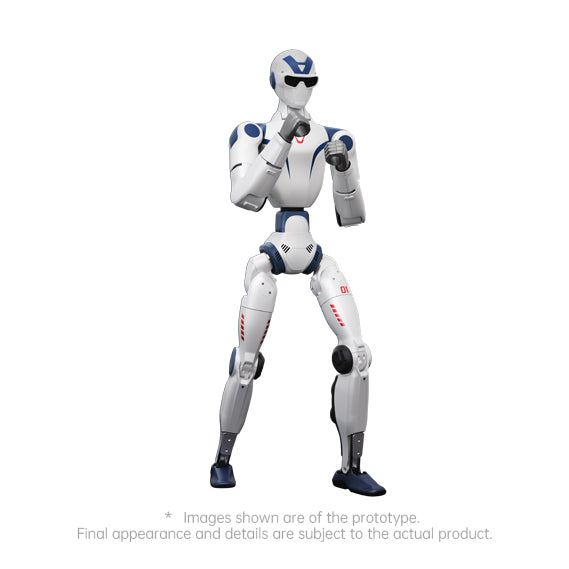 Unitree Robotics Unitree R1 | 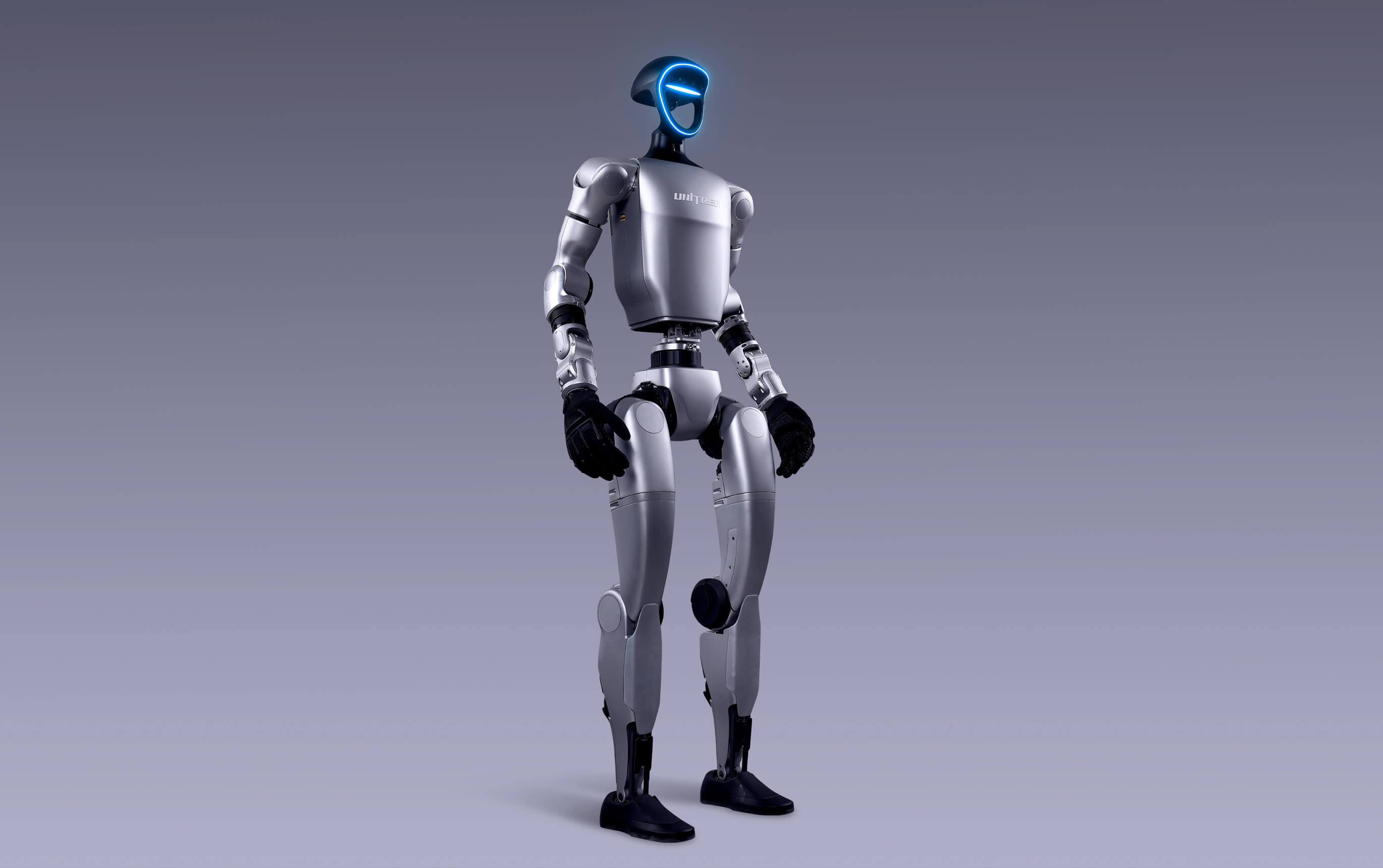 Unitree Robotics Unitree G1 | 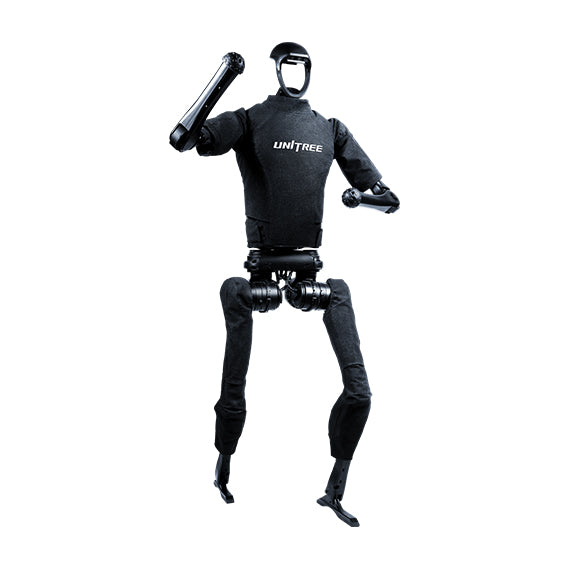 Unitree Robotics Unitree H1 | |
|---|---|---|---|---|
| Price (US) | $96,000 – $150,000 | $4,900 – $5,900 | $13,500 – $73,900 | ~$90,000 |
| Availability | Available for enterprise inquiry — quote-based, volume deliveries in China since late 2025 with importer-mediated sales into the US, Germany, Japan, South Korea, UK, Canada, France, Australia and India | On the market | On the market | On the market |
| Height | 170 cm | 1.23 m | 1.32 m standing | ~1.80 m |
| Payload | 5 kg per arm at full horizontal reach | Unknown | Arm ~2 kg | Not rated for H1 |
| DoF | 23 | 20 | 23 | ~19 |
| Buyer | Enterprise | Individuals | Individuals | Enterprise |
| Made in | China | China | China | China |
Every spec, grouped & sourced
Tap a group to expand. Values are labelled official vs third-party; unknowns are omitted, not guessed.
Body & movement▾
Power & endurance▾
Hands & senses▾
Brains & control▾
Claims vs evidence
'Design for AI'; imitation learning + ML policies for autonomous execution; marketing-level, no independent benchmarks
Where it's working
unknown - demo-driven visibility, no verified named customers
Intended use cases: Bimanual manipulation for household (cooking, pouring, tidying), service/hospitality, and embodied-AI research/data collection
What owners, reviewers and the press say about the Astribot S1
Ratings and reception gathered from where this machine is actually sold and discussed. We summarise the signal — we don't republish anyone's reviews.
S1 is sold to research customers by quotation and has no retail listing, so no buyer rating exists.
+Reviewers consistently praise
- arm speed and smoothness genuinely near human
- well-built teleoperation and data-collection toolchain
- clear research positioning
!And consistently criticise
- autonomy claims not independently verified
- heavy reliance on teleoperated demonstration data
- commercialisation repeatedly deferred
What owners and developers actually say
S1 discussion is a long-running argument about one claim: that the fast, fluid manipulation in its videos is autonomous rather than teleoperated. Sceptics point at the frequent cuts and at the company's own VR teleoperation material, and the counter-argument is that teleoperation is openly how the training data is collected. A secondary recurring criticism is that policies learned from teleoperated demonstrations do not generalise. Nobody in these threads has used one.
r/singularity, r/robotics · as of 2026-08-30
Consensus drawn from around eight overview videos, the largest a third-party reaction piece at roughly 226K views against the maker's own launch at about 119K; no independent hands-on exists.
Astribot S1: the claims, checked
In production and shipping; deployment claims largely unverified
Sold commercially since 2024, with volume deliveries inside China from late 2025 and importer-mediated availability across the US, Germany, Japan, South Korea, the UK, Canada, France, Australia and India through 2026. A reseller price was refreshed on 17 August 2026, which is direct evidence of an active product. Against that: no verified named customers, no independent hands-on review, no third-party benchmark of the autonomy or speed claims, and no US sales channel - a gap that predates the July 2026 FCC restriction and is now closed by it. Company funding is well documented, with a Series B of more than CNY 1 billion reported in June 2026.
as of 2026-08-30
- false“The Astribot S1 was succeeded by the Astribot T1”
The T1, launched May 2026 from CNY 89,900 (about $13,400), is a smaller cable-driven sibling aimed at broader accessibility, not a replacement. The S1 has not been discontinued: it is still quoted, still shipping, its international rollout widened through 2026, and a reseller price was refreshed on 17 August 2026. We published this error ourselves in June 2026 and are correcting it here.
- false“The Astribot S1 is a bipedal humanoid robot”
The S1 has no legs. It uses a three-degree-of-freedom omnidirectional wheeled base with a four-degree-of-freedom bending torso, and is restricted to flat indoor floors. This is the most common factual error made about the machine.
- unverified“The S1's demonstration videos show autonomous operation”
Astribot describes imitation learning and machine-learned policies executing autonomously, but the claims are marketing-level with no independent benchmark, and the company itself publishes VR teleoperation material. Teleoperation is the standard way training data is collected across the field, and Astribot is more open about it than most. What cannot be established from outside is how much of any given clip is autonomous. No independent hands-on review of the S1 exists.
- unverified“End-effector speed of 10 m/s and repeatability of plus or minus 0.1 mm”
These are the maker's own figures, consistent with what the footage shows but never independently measured. The widely repeated framing that the S1 exceeds an average adult in both speed and precision is Astribot's comparison, not a third-party finding.
- unverified“The Astribot S1 is deployed with named major customers”
Aggregator pages list a major Chinese e-commerce group, a broadcaster, elder-care institutions, multi-city retail and a thousand-unit services deal with a Chinese software company. We could not corroborate any of these against a primary source, and our catalogue records no verified named customers. Volume deliveries within China since late 2025 are supportable; the specific names are not.
- false“US customers can buy an Astribot S1”
No US authorisation is on record for the S1. FCC Public Notice DA 26-786 of 28 July 2026 blocks new certification for foreign-produced equipment - a country-neutral test of US assembly and domestic content - so new imports and sales are barred. Astribot has never had a US sales or support channel; the rule fixed an existing gap in place. Listings on US-facing resale sites warrant caution.
- true“Astribot raised over CNY 1 billion in Series B funding”
Reported June 2026 by Chinese trade press - more than CNY 1 billion, about $149 million at 6.7209 CNY/USD, rate as of 28 August 2026 - with funding databases putting the post-round valuation near $1.4 billion and earlier rounds including a pre-A led by Matrix Partners. The figures come from trackers and trade press rather than a filing, and cumulative totals differ between sources, so the valuation should be read as indicative.
Astribot (Stardust Intelligence) in 2026
Astribot is the brand of Stardust Intelligence, a robotics company founded in December 2022 and headquartered in Shenzhen. Its founder, Lai Jie, previously worked at Tencent's Robotics X laboratory, and his background also takes in Baidu and Hong Kong Polytechnic University - a research pedigree that shows in a product built around data collection and learned manipulation rather than around walking. The S1 was revealed on 29 April 2024 and made the company's name almost overnight on the strength of a single demonstration reel played at real speed. Funding has been substantial: a pre-A round led by Matrix Partners with industrial investors following, and a Series B of more than CNY 1 billion reported in June 2026, with trackers putting the valuation near $1.4 billion. In May 2026 Astribot broadened the line downward with the cable-driven T1 from CNY 89,900. What the company has not built is an international sales and support organisation - overseas customers go through quote-based importers, and there is no US presence at all.
What to watch next
- Whether Astribot publishes a real API or SDK, which is currently the largest unknown for any buyer intending to program the machine rather than teleoperate it
- Whether any named customer deployment is ever corroborated by a primary source; the aggregator claims are numerous and none of them is verifiable today
- Whether the Series B funding goes into an international support organisation, which is the S1's clearest structural weakness outside China
- Whether the cheaper T1 pulls research demand away from the S1, and how Astribot repositions the larger machine if it does
- Any change in US certification status - unlikely before 2029 given FCC Public Notice DA 26-786 of 28 July 2026, but it is the only thing that would open the largest media market for a robot that became famous there
Should you consider the Astribot S1?
The Astribot S1 is the best argument in this catalogue that legs are optional. It is a 170 cm, 90 kg wheeled dual-arm manipulator with genuinely exceptional arm speed, 5 kg of payload per arm at full reach, a well-built teleoperation and data-collection toolchain, and a price near $100,000 through importers that undercuts most walking humanoids while doing more useful work than they can. It is also a machine with no independent testing behind it, no verifiable customer list, no confirmed public API, no international support organisation and - for American buyers - no legal route in, since no US authorisation is on record and the July 2026 FCC restriction closed the door on getting one. For a manipulation research group outside the US that can live with flat floors and grippers, it is a strong buy. For anyone expecting an autonomous household robot, the video is doing more work than the product can.
Score reflects stated criteria (availability, data confidence, US relevance) — not hands-on testing or user ratings. We're an independent review & comparison site; we don't sell robots. *Financing figure is illustrative.
How we know this
Data confidence 62/100 · last verified 2026-08-30. Specs are labelled official vs third-party and dated; unknowns are omitted, not guessed.
Astribot S1 — your questions, answered in full
How much does an Astribot S1 cost?+
Roughly $96,000 to $100,000 through quote-based importers as of 30 August 2026, with a reseller figure refreshed at $100,000 on 17 August 2026. The China research edition is reported at about CNY 500,000, roughly $74,400 at 6.7209 CNY/USD as of 28 August 2026. Astribot publishes no price of its own.
Can I buy an Astribot S1 in the US?+
No. No US authorisation is on record for the S1, and FCC Public Notice DA 26-786 of 28 July 2026 blocks new certification for foreign-produced equipment, so new imports and sales are barred. Astribot also never had a US sales or support channel. Listings on US-facing resale sites should be treated carefully - ask for an FCC ID.
Is the Astribot S1 a bipedal robot?+
No, and this is the most common mistake made about it. The S1 rolls on a three-degree-of-freedom omnidirectional wheeled base with a four-degree-of-freedom bending torso above it. It has no legs and cannot manage a step, a threshold or any non-flat surface.
Did the Astribot T1 replace the S1?+
No. The T1, launched May 2026 from CNY 89,900 (about $13,400), is a smaller cable-driven sibling aimed at accessibility. The S1 remains in production, is still quoted by importers and had a reseller price refreshed in August 2026. We published the successor claim ourselves in June and it was wrong.
Are the Astribot S1 videos real or teleoperated?+
Both, in the sense that matters. The hardware speed is real - 10 m/s or more at the end effector, per the maker - and visible across many clips. The autonomy is trained per task from teleoperated demonstrations, and Astribot publishes its VR teleoperation rig openly. What nobody outside the company can establish is how much of any specific demonstration ran autonomously; there is no independent benchmark and no independent hands-on.
How much can the Astribot S1 lift?+
5 kg per arm at full horizontal reach. That is a meaningful specification because it is measured at the hardest point rather than close to the body, where most payload claims are made.
How long does the Astribot S1 run on a charge?+
Roughly four to six hours, by maker figures, with plug-in charging. It can also operate while plugged in, so a fixed-station deployment can run indefinitely. The width of that range suggests real endurance depends heavily on how hard the arms are working.
Does the Astribot S1 have hands?+
No. Each arm ends in a parallel-jaw gripper, with interchangeable end effectors shown in demonstrations. That caps which objects are attemptable regardless of how good the control is, and it is a real difference from five-fingered machines like the Hexagon AEON or Ameca.
Can the Astribot S1 work in a home?+
It was demonstrated doing household tasks and it is not a home product. Ninety kilograms, arms accelerating at up to 100 m/s squared, a price near $100,000, no verified consumer support and no legal US route. Treat the kitchen footage as a capability demonstration, not a product category.
Is there a public SDK or API for the Astribot S1?+
Not one we could verify. Astribot advertises a research toolchain but no public API or SDK is confirmed. If programming the robot yourself is essential to your project, make it a contractual question before you order.
Who are Astribot's customers?+
Unverified, honestly. Volume deliveries inside China since late 2025 are supportable, and international sales run through importers into nine or so countries. Specific customer names that circulate - a large e-commerce group, a broadcaster, elder-care operators, a thousand-unit services deal - could not be corroborated against a primary source, so we are not stating them as fact.
Does the Astribot S1 have any reviews or ratings?+
No buyer rating exists - it is sold to research and enterprise customers by quotation with no retail listing. There is also no independent hands-on review anywhere. What exists is roughly eight overview videos, the largest a third-party reaction piece, plus the maker's own material. Ratings essentially do not exist in this category, so distrust any page showing stars.
Peer-reviewed research on the Astribot S1
Published academic work — peer-reviewed papers and preprints — involving this robot or its maker's systems, indexed in scholarly databases (OpenAlex, arXiv). Not blog posts or press write-ups.
- Towards Human-level Intelligence via Human-like Whole-Body ManipulationGuang Gao, Jianan Wang, Jinbo Zuo, Junnan Jiang, Jingfan Zhang, et al. · 2025 · arXiv preprint · DOI 10.48550/arXiv.2507.17141
Academic references are factual citations from open scholarly indexes; listing is not endorsement.