Boston Dynamics Atlas Robot
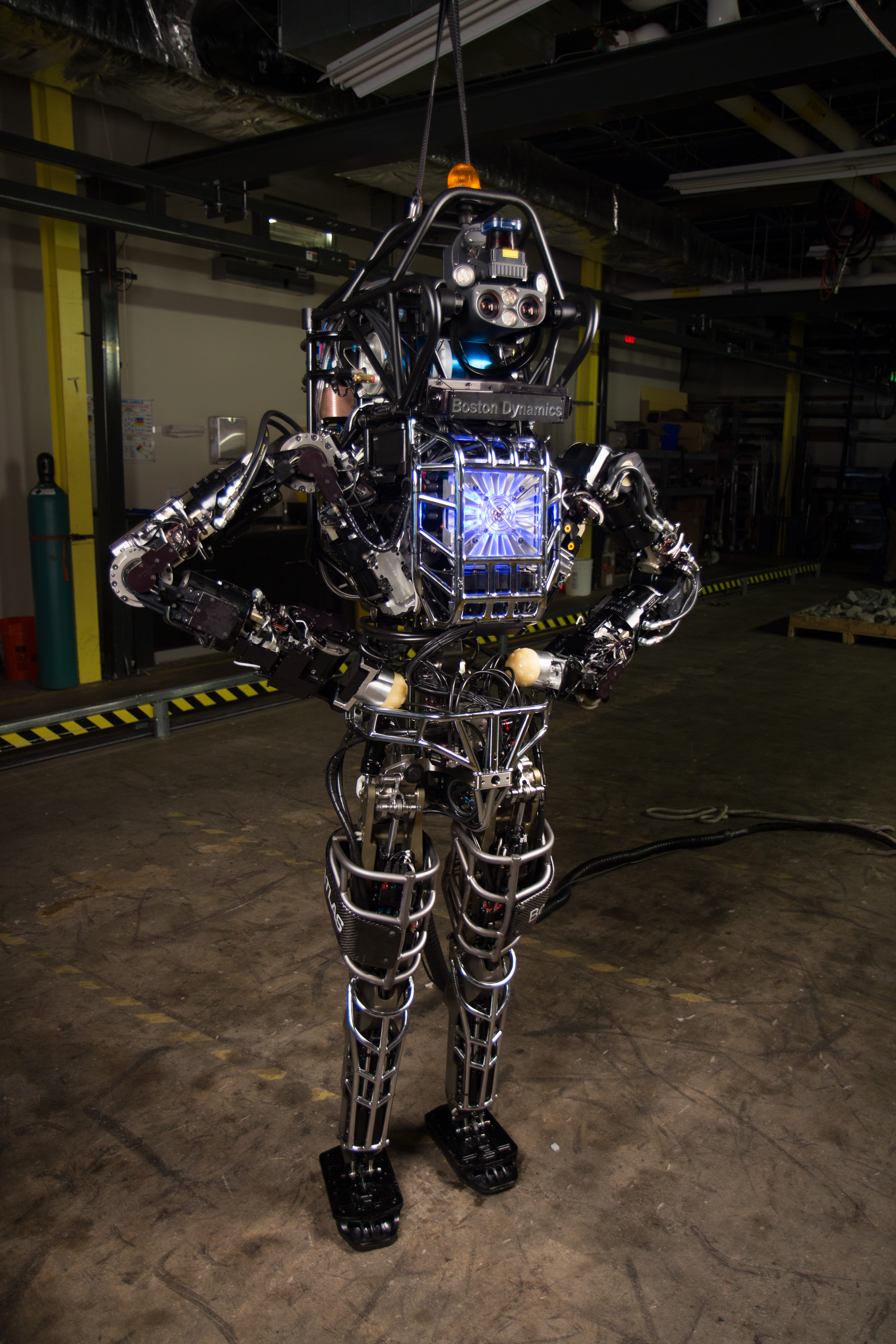
The Atlas robot is Boston Dynamics' all-electric industrial humanoid: 1.9 m, 90 kg, 56 degrees of freedom, 50 kg instantaneous payload. Boston Dynamics publishes no price. Based on reported unit costs and a leaked ceiling, a realistic 2027 early-adopter figure is roughly $180,000-$280,000. Every 2026 unit is already committed.
US buyers: unaffected by the July 2026 import restriction — Atlas is built in Waltham, Massachusetts.
The test in the FCC rule is where a machine is produced, not who owns the brand, so Hyundai's ownership of Boston Dynamics does not pull Atlas into the covered category. Atlas remains an enterprise-inquiry product with no consumer channel and no public price. Boston Dynamics' Spot quadruped, which does sell commercially, is likewise US-built.
Atlas is not on general sale in any region; enquiries run through Boston Dynamics directly wherever you are.
As of 2026-08-30
What is the Boston Dynamics Atlas Robot?
Atlas is the Boston Dynamics robot most people picture — now fully electric, and no longer the hydraulic parkour machine from the old videos.
Atlas is the humanoid robot most people can picture and almost nobody can buy. It has been doing parkour and backflips in videos since the mid-2010s, it got a complete all-electric redesign in April 2024, and on 5 January 2026 Boston Dynamics unveiled the production version at CES. That version is not a research toy. It is 1.9 m tall, 90 kg, rated IP67, and built in Massachusetts to work inside car plants.
The single most-searched question about it — how much does an Atlas cost — has no official answer. Boston Dynamics has never published a price for any Atlas generation, and the product page as of 30 August 2026 still ends in a contact form rather than a number. That silence is why so many pages quote a figure of $320,000 as if it were a price. It isn't; we'll come back to where that number really comes from.
What follows is what can actually be verified as of 30 August 2026: the specs from the official spec sheet, the cost anchors that make an estimate defensible, who has units today (two organisations, and you are almost certainly not one of them), how autonomous the robot genuinely is, and what the 2026 safety-standards picture looks like for a walking machine on a factory floor. Where something is unknown, it is marked unknown rather than filled in.
What the Boston Dynamics Atlas can — and can't — do today
+Does this out of the box
- Sequence automotive parts between bins, dollies and containers from a described end state
- Lift 50 kg instantaneously and handle around 30 kg sustained, with a 2.3 m reach
- Swap its own battery unattended at a station in under three minutes (demonstrated 9 Aug 2026)
- Work fenceless alongside people using onboard human detection and a padded shell
- Execute multi-stage manipulation policies learned from VR teleoperation demonstrations
- Operate at IP67 in -20 °C to +40 °C without a climate-controlled enclosure
- Be repaired fast: limbs field-replaceable in under five minutes, compute head swaps as a module
- Run about four hours per battery, or roughly two under heavy lifting
!Doesn't do, whatever the demo shows
- Be bought by an individual, or by any new commercial customer during 2026
- Be programmed by third parties — there is no public Atlas SDK or API
- Learn a genuinely novel task with no human teleoperated demonstration behind it
- Show a published success rate or cycle time for any industrial task
- Offer a published price, lease rate, service contract or warranty schedule
- Do household or consumer work — there is no consumer product line
- Be covered by a finished humanoid mobility safety standard (ISO/WD 25785-1 is still draft)
Atlas is currently the most capable humanoid hardware you can point at and the least accessible. Everything about its 2026 status is a supply story, not a technology story: the robot works, the units are spoken for.
What does the Atlas robot actually do out of the box?
The production Atlas is a general-purpose industrial manipulator that happens to walk. Boston Dynamics' own framing at the CES 2026 launch was "Enterprise Robotics, Redefined", and the first job it is being aimed at is parts sequencing: taking automotive components out of bins and dollies and putting them into the right container in the right order for an assembly line.
The hardware supports that in a way earlier humanoids didn't. Reach is 2.3 m, payload is 50 kg instantaneous and 30 kg sustained, and several joints rotate continuously rather than stopping at a human-like limit — Atlas can turn its torso or a wrist all the way round to reach a part instead of shuffling its feet. The hands are four-fingered with tactile sensing, and camera coverage is a full 360 degrees, so the robot doesn't have a blind side.
Out of the box there are three control modes: autonomous execution of learned skills, VR-style teleoperation, and simple tablet steering. In practice a deployment starts with a human teleoperating the task while the system records it, and the autonomous policy is trained from those demonstrations. That is the honest description of "out of the box" for every humanoid on the market in 2026, Atlas included — the robot arrives capable, not knowledgeable.
One genuinely new capability landed on 9 August 2026: Atlas demonstrated an unattended battery swap. It walked itself to a battery station, replaced the depleted pack and went back to work in under three minutes, with no human in the loop. Against a conventional recharge of roughly 90 minutes, that is the difference between a robot that works one shift and a robot that works around the clock.
How much does a Boston Dynamics Atlas cost?
There is no published price, so anyone quoting one exactly is guessing. But the guess can be bounded, and the bounds are reasonably tight.
The ceiling comes from KED Global, the Korea Economic Daily's English service, on 20 January 2026. Citing people briefed on the plan, it reported that Boston Dynamics intends to price Atlas below the cost of employing two US manufacturing workers for two years — "or about $320,000". Read carefully, $320,000 is the number Atlas is meant to come in under. It is not the price. It is also single-sourced and anonymous, and Boston Dynamics has never confirmed it.
The floor comes from the Korea Herald on 20 May 2026, which put the early mass-production unit cost at $130,000 to $140,000, falling toward roughly $30,000 per unit once cumulative production passes 50,000 units. Actuators are around 60% of material cost and there are more than ten of them per robot, which is why the curve is so steep. Selling below $140,000 in 2027 would mean selling at a loss.
Between a $140,000 cost floor and a $320,000 ceiling, a normal robotics hardware gross margin of 30-50% puts a first-wave list price somewhere around $185,000 to $280,000. Our working estimate is $180,000-$280,000 per unit for early-adopter deliveries from 2027, midpoint about $220,000, as of 30 August 2026. That is an estimate with a stated basis, not a quote.
Two other signals are worth knowing. Boston Dynamics' history with Spot is that configured real-world deployments land at two to five times the headline launch price — Spot launched online at $74,500 in June 2020 and no longer has a public price at all. And on 27-28 August 2026 Hyundai CEO José Muñoz told investors that Hyundai Capital is exploring financing for robots and that Hyundai's dealer network could one day sell them. Companies arrange financing for things people cannot pay for out of pocket.
Can you actually buy an Atlas in 2026?
No. Not as an individual, and not as a company either, unless you are one of two specific organisations.
Boston Dynamics said at the CES 2026 launch that manufacturing had begun and that every Atlas built in 2026 is already committed. The recipients are Hyundai's Robot Metaplant Application Center in Georgia and Google DeepMind. Additional customers are expected from early 2027, through what the company describes as a select group of early adopters.
The acquisition path is a contact form. You describe your application, Boston Dynamics decides whether you are a qualified prospect, and a conversation follows. There is no configurator, no price list, no lease page, no public waitlist, and no published lead time from first contact to delivery. Boston Dynamics' own policy language for its robot line is that these machines are not intended for purchase by individuals for non-commercial use, and nothing about Atlas softens that.
So when a page tells you Atlas is "available now" or offers a buy button, treat that as an affiliate page or an AI-generated listing rather than a real channel. The same goes for the phrase "Boston Dynamics Atlas stock price", which appears in Google's related searches for the robot. There is no such stock. Since 16 July 2026 Boston Dynamics has been a wholly-owned Hyundai Motor Group subsidiary — Hyundai bought out SoftBank's remaining stake, in a deal reported at around $325 million. The only listed exposure is Hyundai itself.
What does the price exclude, and what does owning one really cost?
Since there is no price, there is also no published bill of materials for what a purchase includes. What can be said is what a humanoid deployment costs beyond the robot, using Boston Dynamics' own Spot business as the closest available model.
For Spot, the recurring items are fleet software — the Orbit and Scout products are widely reported in the $15,000-$25,000 per year range — annual maintenance in the region of $6,000, a battery pair replacement around $9,240, and a manipulator arm at roughly $65,000 on its own. Those figures come from third-party price aggregators rather than a Boston Dynamics price list, so treat them as indicative for shape, not exact for Atlas.
The more predictable Atlas costs are integration and people. Somebody has to teleoperate the task enough times to train the policy, somebody has to define where parts live and what "done" looks like, and somebody has to own the robot's uptime. Boston Dynamics has engineered several of these costs down deliberately: limbs are field-replaceable in under five minutes, the compute head is a module that pulls out like a cartridge so the robot doesn't need redesigning when silicon improves, and the autonomous battery swap removes the swap crew entirely.
Facility cost is lower than people assume. Atlas is designed for fenceless guarding with built-in human detection, so the traditional caged safety cell isn't the default assumption. IP67 and a -20 °C to +40 °C rating mean no climate-controlled enclosure. A realistic all-in first-year figure, if the robot list price lands where we estimate, is somewhere in the $250,000-$400,000 range once software, spares, service and integration are counted. That is an extrapolation from Spot's cost structure — Boston Dynamics has disclosed none of it for Atlas.
How autonomous is Atlas really?
The clean answer: Atlas executes autonomously, but almost everything it knows was taught by a human wearing a VR rig.
Boston Dynamics and the Toyota Research Institute have been open about the pipeline in their Large Behavior Model work. A single language-conditioned policy handles multi-stage tasks — grasping, folding, placing, clearing parts from carts and bins, tying rope, flipping barstools, handling tyres. Training data comes from full-body VR teleoperation, hands and feet tracked, across around 50 degrees of freedom, on real hardware and in simulation. The policy emits action chunks of about 1.6 seconds and executes roughly half of each before re-planning. It runs at 1.5x to 2x demonstration speed without much degradation and recovers from a dropped part without extra training, which is a real result.
What has never been published is a success rate. The March 2025 parts-sequencing video shows Atlas working from a description of the end state and where the parts are; no cycle time and no reliability figure accompanied it, and coverage at the time did not establish whether the footage was autonomous throughout.
The CES 2026 stage demo, for the record, was teleoperated — the electric prototype stood, walked, waved and bent under human control while the production unit sat behind a curtain. Boston Dynamics ran both autonomous and teleoperated demos at its booth across the week without breaking down which was which.
So: no published evidence that Atlas performs a novel, never-demonstrated industrial task with zero human teaching. What it does have is the fastest teach-to-execute loop anyone has claimed. KB Securities, reported by the Korea Herald on 15 June 2026, said Boston Dynamics can now run the equivalent of millions of hours of robot training in a day, with learned capability transferring onto Atlas in about an hour. That is an analyst's assessment rather than a company disclosure.
Is there an Atlas SDK — can developers build on it?
No, and this is the sharpest difference between Atlas and the rest of Boston Dynamics' catalogue.
The developer site documents Spot and only Spot — SDK version 5.1.9 as of 30 August 2026, with conceptual guides, Python client libraries, a payload developer programme and protobuf API definitions published as installable packages. That ecosystem is why Spot ended up with third-party sensor payloads and university research built on top of it.
Atlas has none of it. There is no public Atlas API, no Atlas developer documentation, no payload spec, no simulation package a stranger can download. The controls that ship with the robot — tablet steering and teleoperation — are operator interfaces, not a programmable surface. If you want to build on Atlas in 2026, the entry requirement is being Hyundai or Google DeepMind.
Worth flagging for anyone searching old repositories: the DARPA-era hydraulic Atlas did have open research tooling, including a control, planning and perception distribution maintained by university teams. None of that applies to the electric robot. Different actuators, different compute, different everything.
Underneath, the production Atlas runs NVIDIA Jetson Thor compute, and Boston Dynamics works with NVIDIA's Isaac simulation and foundation-model stack. That tells you what the internal toolchain looks like. It does not give you access to it.
Where are Atlas units actually working today?
Two places, both of them inside the family.
Hyundai's Robot Metaplant Application Center opened in June 2026 at Hyundai Metaplant America in Bryan County, Georgia. It is the proving ground where Atlas is trained on real automotive work before wider rollout. On 28 August 2026 José Muñoz told Hyundai's investor day that RMAC would expand more than tenfold by the end of 2026. An earlier Atlas deployment at the Georgia metaplant dates to autumn 2025, per Boston Dynamics' own March 2026 write-up of the robot's evolution.
Google DeepMind is the second recipient, receiving units as part of the Gemini Robotics collaboration announced at CES 2026.
The scale plan is public even though the current numbers aren't. The Korea Herald reported on 20 May 2026 that Hyundai has committed to more than 25,000 Atlas units across Hyundai and Kia plants before external sales ramp, with full-scale parts sequencing at Metaplant America in 2028, Kia Georgia in 2029 and complex assembly by 2030. Manufacturing capacity is targeted at 30,000 Atlas per year by 2028, supported by a US actuator plant sized for 350,000 actuators annually, and Boston Dynamics announced a 323,000 sq ft Waltham facility on 24 June 2026 — roughly a $100 million project with more than 1,000 new jobs attached.
One appearance that gets mistaken for a deployment: Atlas featured in a live match environment at the 2026 FIFA World Cup during Norway-Brazil, as part of a Hyundai campaign. That was marketing. And Boston Dynamics has never disclosed how many Atlas units it has actually built — only that 2026's output is fully committed.
What did the Google DeepMind partnership actually deliver?
Announced 5 January 2026 at CES, the deal puts DeepMind's Gemini Robotics vision-language-action models onto the production Atlas, with an initial focus on manufacturing and automotive tasks. Research runs at both companies, and DeepMind is one of the two organisations receiving 2026 units.
What was not announced: any dollar value, any equity arrangement, any unit count, any technical milestone, any delivery date. Research was described as beginning "in the coming months".
DeepMind's robotics lead Carolina Parada described the mechanism plainly enough — the robot can learn nearly anything you can consistently demonstrate through teleoperation — which lines up exactly with the Large Behavior Model approach Boston Dynamics was already using. The partnership is best read as adding language grounding and general world knowledge to a control stack that already had the motor skills.
As of 30 August 2026, the only shipped product of the relationship is on the wrong robot: IEEE Spectrum reported a Gemini-enhanced Spot on 14 April 2026. No Gemini Robotics capability has been publicly attributed to a working Atlas. That may simply be a matter of timing, but if you are evaluating Atlas on its AI story rather than its hardware, this is the gap to press on.
Atlas vs Figure 03, Digit, Apollo and Optimus — who is actually shipping?
It depends what you mean by shipping, and the four rivals are each winning a different definition.
Agility Robotics' Digit leads on paid work done. Investor materials filed in June 2026 put Digit in nine customer facilities with more than 65,000 operating hours as of May 2026, at GXO, Schaeffler, Toyota Motor Manufacturing Canada and Mercado Libre, with over 100,000 totes moved at GXO alone. Digit is roughly $250,000 to buy or about $8,500 a month as robotics-as-a-service, which works out around $10-12 an hour across two shifts. Agility is going public through a SPAC valued at $2.5 billion.
Figure leads on fleet size — more than 350 third-generation robots delivered from its BotQ line as of April 2026, mostly into its own and partner operations. No public price, no way for an outsider to buy one.
Apptronik's Apollo leads on money raised: $520 million at a $5 billion valuation in February 2026, with pilots at Mercedes-Benz, GXO and Jabil. The "$50,000 humanoid" line attached to Apollo everywhere online is not a price — it is a 2023 statement by CEO Jeff Cardenas that a humanoid eventually needs to cost under $50,000. Current signalling is nearer $80,000 a year at volume from 2027.
Tesla's Optimus leads on nothing shipped. The Q1 2026 production target slipped, the July 2026 quarterly update gave no new date, and as of mid-August 2026 production had not been announced as started. The $20,000-$30,000 target price remains a target.
Atlas leads on hardware. Nothing else in the group carries 50 kg, reaches 2.3 m, holds an IP67 rating or swaps its own battery unattended. Whether that translates into commercial lead depends entirely on 2027.
What are the safety standards for putting a humanoid on a factory floor?
This is the part of humanoid procurement that gets skipped, and it is genuinely unsettled.
ISO 10218 parts 1 and 2 were revised in 2025, replacing the 2011 editions, and the new text does allow humanoid robots to fall within scope. But it explicitly excludes humanoid mobility hazards — that is, everything that follows from the robot walking. The standard that is meant to cover dynamically stable legged robots, ISO/WD 25785-1, is still a working draft as of 30 August 2026. In the US, the current industrial robot safety standard is ANSI/A3 R15.06-2025, published in September 2025.
What that means practically: there is no finished international safety standard for a walking humanoid working next to people. Deployments today rest on risk assessments done case by case, plus whatever the manufacturer builds in.
Boston Dynamics has built in a fair amount. Atlas is designed for fenceless guarding, with human detection, a padded shell and deliberately minimised pinch points, plus barcode and RFID integration so it can confirm what it is holding. That is a stronger safety posture than most humanoids offer, and it is one of the reasons a Hyundai plant is willing to run them near staff.
It is still a 90 kg machine that can move a 50 kg payload. Any serious buyer should plan for an independent risk assessment, an insurer conversation, and a written position on what happens when the standard finally lands and the assumptions change.
Does the July 2026 FCC restriction help Atlas?
A little, and less than the headlines implied.
On 28 July 2026 the FCC released Public Notice DA 26-786, adding foreign-produced advanced robotic devices to its Covered List. The wording matters more than most of the coverage suggested: the rule is country-neutral. "Foreign-produced" means failing the Buy American domestic-end-product test — US manufacture with more than 65% of component cost domestic — so British, European, Japanese and Korean machines fall inside its scope exactly as Chinese ones do.
It is also narrower than a ban. It blocks new FCC equipment authorisation rather than acting as a customs measure, and it is not a recall. Models authorised before 28 July 2026 remain legal to import, sell, own and resell, and firmware updates are permitted through at least 1 January 2029.
For Atlas the benefit is real but thin. Atlas is assembled in Massachusetts, so the rule does not touch it, and domestically produced humanoids gain ground in any procurement that follows domestic-content rules. But Atlas was never competing for the same purchase order as a $16,000 research biped, and there are two caveats on the made-in-America framing: Boston Dynamics is Korean-owned, and the Korea Herald reported on 29 June 2026 that Korean suppliers are being tapped for the Atlas rollout. Whether that supply chain clears the domestic-content threshold comfortably is not something any public source has addressed.
Which viral Atlas videos are fake?
Enough of them that it is worth learning the tells.
The most-shared fakes are the "robot uprising" and "fighting robot" clips, which are CGI. Snopes, Full Fact and Gizmodo have all debunked variants. Two reliable checks: real Boston Dynamics footage is published on the company's own channels, so a clip that only exists on aggregator accounts is suspect; and real Atlas units carry a blue logo on the chest, where the CGI robot is usually plain white and mechanically simpler than the real thing.
The backflip is real but constantly miscontextualised. The hydraulic Atlas first did one in 2017, and the electric Atlas performed one in a video published on 24 December 2024. Both were choreographed demonstrations. Neither was an autonomous decision, and acrobatics do not appear anywhere in the industrial product specification — a factory does not want a 90 kg robot improvising a flip near a parts cart.
The other durable confusion is "Atlas was retired in 2024". Boston Dynamics retired the hydraulic Atlas in April 2024 and revealed the all-electric replacement the following day. The programme was never cancelled; the company itself describes that moment as the start of Atlas's commercial phase.
And one from the search results rather than the videos: pages claiming Atlas "began autonomous shifts" at the Metaplant in January 2026 appear only on syndicated AI-written sites, and they contradict Boston Dynamics' own timeline, which has RMAC opening in June 2026 and full deployment in 2028.
Who should be looking at Atlas — and who definitely shouldn't?
Atlas makes sense for a narrow group: large manufacturers with repetitive, physically heavy material-handling work, an existing automation team, a multi-year capital horizon, and a tolerance for being an early adopter of something with no finished safety standard behind it. Automotive is the obvious fit, which is exactly where it is being proved out. Warehousing and heavy logistics are plausible next. If your line already runs fixed automation and the gap is the awkward, non-repeating tasks between the machines, this is the class of product aimed at you.
It makes no sense for almost everyone else. Researchers and universities should be looking at platforms with an SDK, because Atlas has none and you cannot publish on a robot you cannot program. Small businesses cannot reach the price. Developers and hobbyists have no path at all. Anyone wanting a home or service robot is looking at the wrong machine — Atlas has no consumer story whatsoever, and nothing in Boston Dynamics' 2026 messaging suggests one is coming soon.
And if you need a robot working this year, Atlas is out by definition: 2026 output is committed, and the earliest realistic delivery to a new customer is 2027. Agility's Digit is the only humanoid in the class with a purchase or subscription route open, real customers, and published operating hours behind it.
The Boston Dynamics Atlas on video
Hands-on reviews and teardowns, picked for what they actually show rather than how loud the thumbnail is.
60 Minutes got inside the lab; the best single explanation of why the electric Atlas replaced the hydraulic one
Sixteen minutes of a journalist actually testing Atlas against a human, and asking what it can't do
Close-up show-floor footage from CES 2026, useful for judging the build quality at arm's length
The manufacturer's own spec walk-through — dry, but it is the authoritative statement of what ships
Boston Dynamics Atlas price ladder — and what the entry price leaves out
The headline number is almost never the number you pay. Here is each configuration, and what it does not include.
| Configuration | Price | What you get | What it excludes |
|---|---|---|---|
| Atlas (production, all-electric) — official price | Not published | Robot, hot-swappable battery packs, teleoperation and tablet control; scope of a purchase agreement is not public | Everything else is undisclosed — no published software, service, spares or training pricing |
| Researched estimate, early-adopter list price (from 2027) | $180,000-$280,000 (midpoint ~$220,000) | Estimate for the robot itself at first-wave volumes | Integration, fleet software, spares, service contract, training and the teleoperation time needed to train task policies |
| Reported ceiling (KED Global, 20 Jan 2026) | Below ~$320,000 | Framed as less than two years of two US manufacturing workers; an upper bound, not a price | Anonymous single-source report, never confirmed by Boston Dynamics |
| Reported unit production cost, early mass production (Korea Herald, 20 May 2026) | $130,000-$140,000 per unit | Manufacturing cost, not a customer price; actuators are ~60% of material cost | Margin, distribution, software, support |
| Reported cost at scale (Korea Herald, 20 May 2026) | ~$30,000 per unit after 50,000+ cumulative units | Projected long-run manufacturing cost, plausibly 2029-2031 on Hyundai's stated capacity plan | Any implication about list price in that period |
What owning one actually costs
| Cost | Typical | Notes |
|---|---|---|
| Shipping & import duty | Not published | Built in Massachusetts, so US buyers avoid import duty; delivery terms are part of a private enterprise agreement |
| Fleet software / subscription | Estimate $15,000-$25,000 per year | No Atlas figure exists; this is the widely reported range for Boston Dynamics' Spot fleet software, used here as the closest analogue |
| Annual maintenance / service contract | Estimate — no Atlas figure published | Spot maintenance is commonly cited around $6,000 a year from third-party aggregators; an Atlas contract would be substantially higher |
| Battery packs and spares | Not published | Atlas uses hot-swappable packs; Spot battery pairs are reported around $9,240, which gives the order of magnitude only |
| Integration and task training | Significant, unpublished | Skills come from human VR teleoperation demonstrations, so budget operator time per task, not just install time |
| Safety assessment and insurance | Varies | No finished humanoid mobility standard exists as of 30 Aug 2026, so each site needs its own risk assessment |
| Facility changes | Often none | Designed for fenceless guarding; IP67 and -20 °C to +40 °C rating means no enclosure or climate control needed |
Who the Boston Dynamics Atlas is — and isn't — for
+Where it shines
- US-built, with local support and supply chain.
- Stated real-world payload (Up to 50 kg).
- Specs are well-sourced — high data confidence.
!Watch-outs
- Some demos rely on teleoperation, not full autonomy.
- Sold to businesses only — not to private buyers.
How the Boston Dynamics Atlas stacks up
Side by side with similar robots — the one you're reading about is highlighted.
| This robot Boston Dynamics Boston Dynamics Atlas | 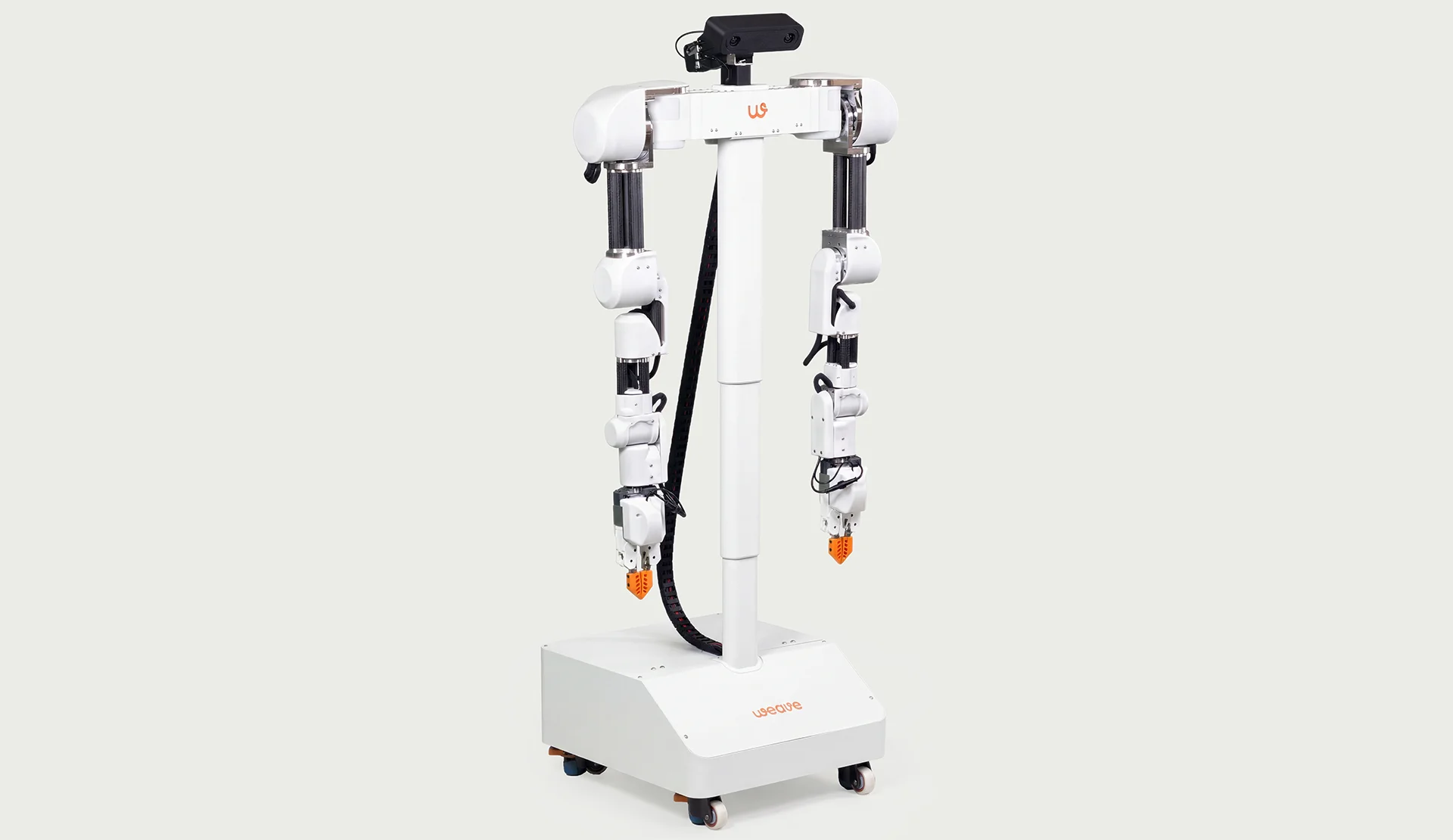 Weave Robotics Weave Isaac | 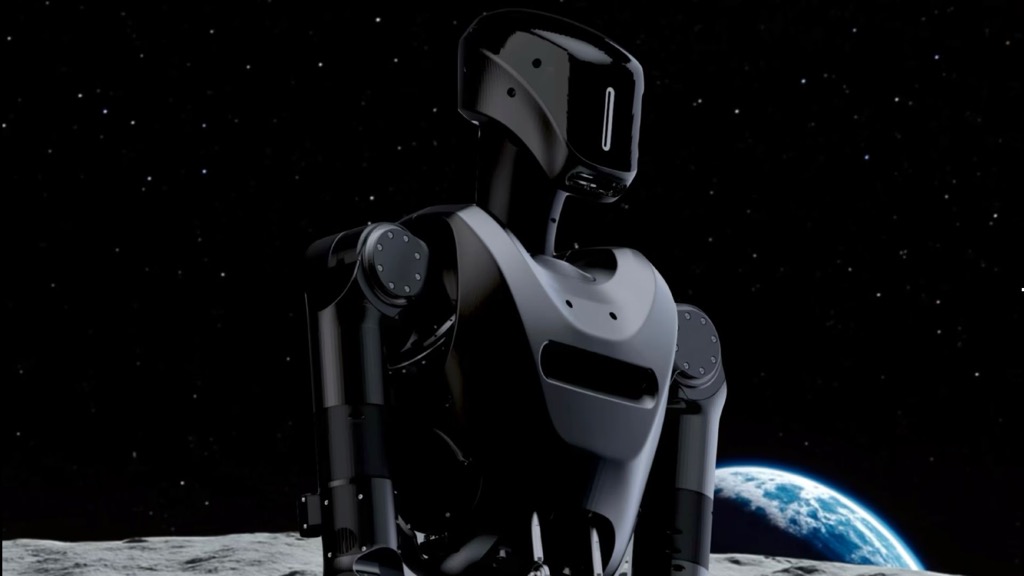 Foundation (Foundation Robotics) Foundation Phantom | 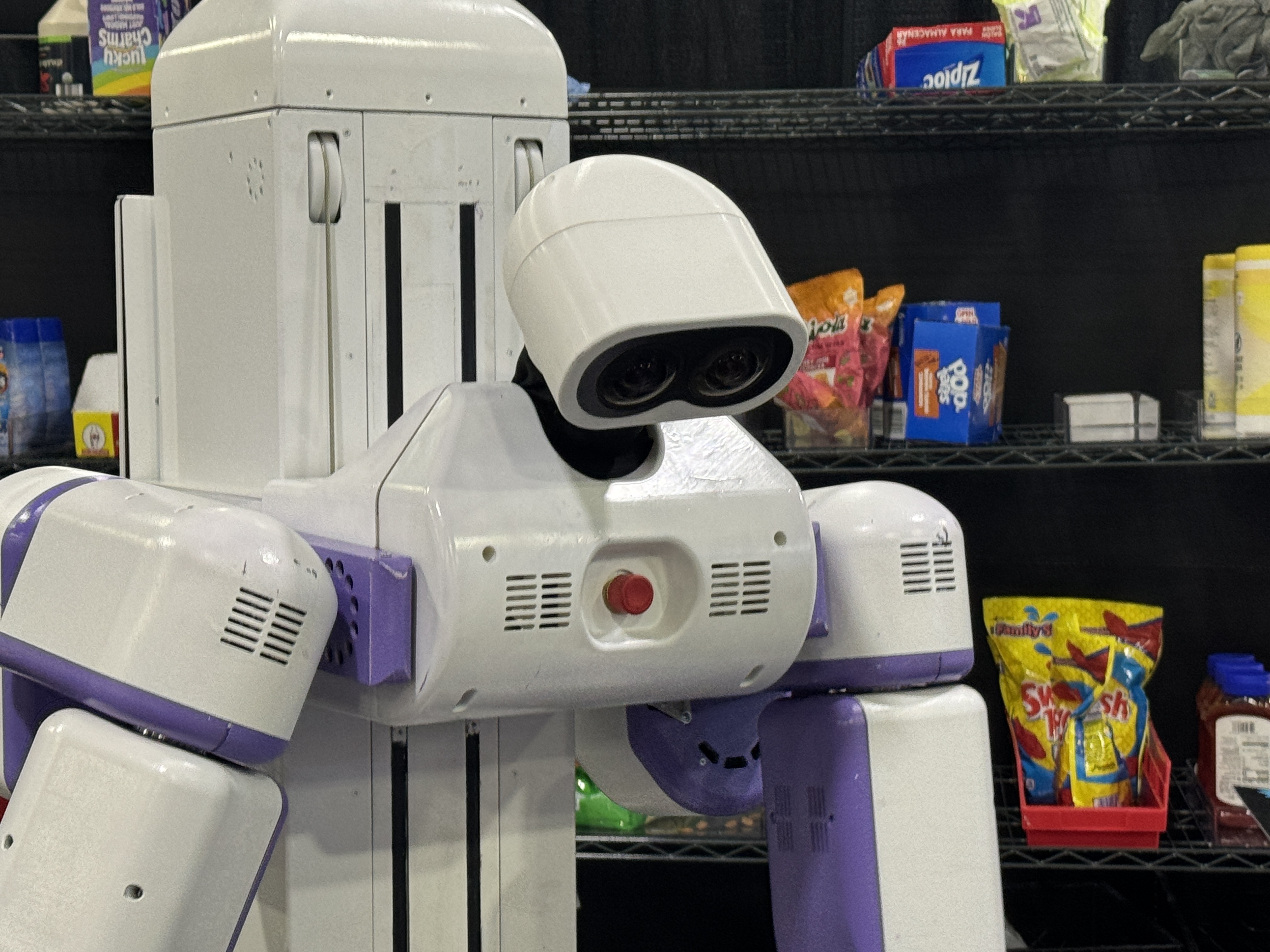 Reflex Robotics Reflex Robot | |
|---|---|---|---|---|
| Price (US) | $150,000 – $420,000 | $7,999 – $9,999 | $100,000 – $150,000 | ~$10,000 |
| Availability | Enterprise inquiry | On the market | Lease / RaaS | Pilot programs |
| Height | 1.9 m | Unknown | 1.75 m | Adjustable via spine |
| Payload | Up to 50 kg | Unknown | 40 kg dual-arm | 25+ lb/arm |
| DoF | 56 | Isaac | 29 | Unknown |
| Buyer | Enterprise | Individuals | Enterprise | Enterprise |
| Made in | US | US | US | US |
Every spec, grouped & sourced
Tap a group to expand. Values are labelled official vs third-party; unknowns are omitted, not guessed.
Body & movement▾
Power & endurance▾
Hands & senses▾
Brains & control▾
Claims vs evidence
Autonomous + AI fleet learning; CES 2026 Google DeepMind Gemini Robotics partnership; autonomy maturing
Where it's working
Hyundai Motor Group (RMAC), Google DeepMind (AI); 2026 units committed to these two
Intended use cases: Industrial/manufacturing: parts sequencing, automotive component handling, heavy/complex manipulation
What owners, reviewers and the press say about the Boston Dynamics Atlas
Ratings and reception gathered from where this machine is actually sold and discussed. We summarise the signal — we don't republish anyone's reviews.
Atlas is not for sale in any form and has no public developer kit, so no buyer, retailer or reseller rating exists or could exist.
- CNET — gave Atlas the Best Robot award in its Best of CES 2026 programme, calling it the strongest humanoid at the show · 2026-08-30
+Reviewers consistently praise
- athletic capability still considered unmatched
- demonstrations are trusted in a way no rival's are
- 360-degree joints and the inhuman motion vocabulary draw genuine expert admiration
- the electric redesign removed the hydraulic reliability problem
!And consistently criticise
- a research showpiece rather than a product
- the company's real business is its quadruped, not this
- some engineers argue the actuators are already dated
- unease about eventual military or policing framing
What owners and developers actually say
Atlas produces the largest raw discussion numbers of any robot in this catalog — one acrobatics clip reached tens of thousands of upvotes and thousands of comments in a general-interest community — but it has no developer base at all, because it cannot be bought and has no public SDK. Its distinctive asset is credibility: Boston Dynamics is the only maker here whose demonstrations are not routinely accused of being faked, and community members explicitly attribute that to the company publishing its failures and its training methodology. The standing criticism is commercial, not technical: that Atlas is a showpiece while the company's actual revenue comes from its quadruped.
r/robotics, r/BostonDynamics, general-interest subreddits, Hacker News · as of 2026-08-30
Consensus drawn from an awards verdict from a major consumer outlet, the maker's own films at roughly 9.6M to 17.2M views, a Hacker News thread of about 233 points and 215 comments on the electric debut, and community threads ranging from about 2,200 upvotes with 280 comments up to tens of thousands of upvotes on viral clips.
Boston Dynamics Atlas: the claims, checked
pilot
Production began after the CES 2026 unveiling on 5 January 2026, but all 2026 units are committed to Hyundai's Robot Metaplant Application Center (opened June 2026, Bryan County, Georgia) and Google DeepMind. No third party outside those two is publicly known to hold an Atlas, and Boston Dynamics has never disclosed how many have been built. New customers are expected from early 2027.
as of 2026-08-30
- misleading“An Atlas robot costs $320,000”
KED Global reported on 20 January 2026 that Boston Dynamics plans to price Atlas below the cost of two US manufacturing workers over two years, "or about $320,000". That is the ceiling the company is aiming to beat, sourced anonymously, and never confirmed by Boston Dynamics.
- false“You can buy a Boston Dynamics Atlas today”
Boston Dynamics stated at the CES 2026 launch that all 2026 Atlas production is committed to Hyundai's Robot Metaplant Application Center and Google DeepMind, with additional customers from early 2027. The only route is an enterprise enquiry form.
- misleading“Atlas does backflips autonomously”
The hydraulic Atlas backflipped in 2017 and the electric Atlas in a video published 24 December 2024; both were choreographed demonstrations. Acrobatics do not appear in the industrial product specification.
- misleading“Boston Dynamics retired Atlas in 2024”
The hydraulic Atlas was retired in April 2024 and the all-electric Atlas was revealed the next day. Boston Dynamics describes that changeover as the start of Atlas's commercial phase, not the end of the programme.
- false“Viral clips of Atlas fighting humans or rebelling are real”
Those clips are CGI and have been debunked by Snopes, Full Fact and Gizmodo. Real Atlas units carry a blue chest logo and are far more mechanically detailed than the animated versions.
- false“Atlas started autonomous shifts at Hyundai's Metaplant in January 2026”
This appears only on syndicated AI-written sites. Boston Dynamics' own timeline has the Robot Metaplant Application Center opening in June 2026, with full-scale parts sequencing at Metaplant America targeted for 2028.
- false“Atlas has an SDK developers can use”
Boston Dynamics' developer site documents Spot only, at SDK version 5.1.9 as of 30 August 2026. No Atlas API or developer documentation has been published.
- misleading“Atlas is fully autonomous and learns tasks by itself”
Boston Dynamics and the Toyota Research Institute train Atlas policies from full-body VR teleoperation demonstrations. Execution is autonomous; the knowledge is human-taught, and no success rates have been published.
- false“You can buy Boston Dynamics stock to invest in Atlas”
Since 16 July 2026 Boston Dynamics has been a wholly-owned subsidiary of Hyundai Motor Group after Hyundai bought out SoftBank's remaining stake. An IPO has been floated in Korean press reports but nothing is confirmed.
Boston Dynamics in 2026
Boston Dynamics has been a wholly-owned Hyundai Motor Group subsidiary since 16 July 2026, when Hyundai bought out SoftBank's remaining stake in a deal reported at roughly $325 million. Hyundai's original 2021 purchase of 80% valued the company at about $1.1 billion; Korean press now put it nearer ₩30 trillion, which would be an order of magnitude higher. The company remains loss-making: reported losses widened from ₩255.1 billion in 2022 to ₩440.5 billion in 2024, and CEO Robert Playter said plainly when cutting 45 jobs in December 2024 that cash burn was running ahead of commercial progress. There have been no 2026 layoffs; the direction has reversed. On 24 June 2026 Boston Dynamics announced a 323,000 sq ft Waltham facility, roughly $100 million with more than 1,000 jobs, and it is hiring hard against a target of 30,000 Atlas units a year by 2028. Hyundai is also weighing outside capital for the subsidiary as the Atlas rollout raises funding needs — a rights offering and an eventual listing have both appeared in Korean reporting, neither confirmed. At Hyundai's investor day on 27-28 August 2026, CEO José Muñoz described the group as transitioning into a physical AI company that will build, deploy and finance robotics at scale. Standing, as of 30 August 2026: technically dominant, commercially unproven, and very well funded.
What to watch next
- Early 2027 — first Atlas deliveries to customers outside Hyundai and Google DeepMind, via the select early-adopter programme
- End of 2026 — Hyundai's Robot Metaplant Application Center in Georgia expands more than tenfold, per the 28 August 2026 investor day
- 2028 — full-scale parts sequencing deployment at Hyundai Metaplant America, and the target of 30,000 Atlas units a year in manufacturing capacity
- 2028 — US actuator plant sized for 350,000 units a year comes online, the key input to the projected cost fall
- 2029 — Kia Georgia deployment; complex assembly work targeted by 2030
- Watch for ISO/WD 25785-1 moving out of draft — it is the first standard written for dynamically stable legged robots around people
- Watch for any Gemini Robotics capability actually shipping on an Atlas rather than on Spot
- Watch for a Boston Dynamics funding round, rights offering or listing — Hyundai was reported on 27-29 August 2026 to be weighing outside capital
Should you consider the Boston Dynamics Atlas?
Atlas is the best-engineered humanoid in the world and the hardest one to get. The hardware case is not really arguable — 50 kg payload, 2.3 m reach, IP67, fenceless operation, five-minute limb swaps and an unattended battery change demonstrated on 9 August 2026. The commercial case is entirely unproven: no published price, no SDK, no third-party owner, no success rates, and a safety standard for walking humanoids that is still a working draft. Our researched estimate of $180,000-$280,000 for first-wave 2027 units is derived from a reported $130,000-$140,000 unit cost and a leaked sub-$320,000 ceiling, not from Boston Dynamics. If you run a large plant with heavy repetitive material handling and can wait for 2027, get on the enquiry list now. If you need a humanoid working this year, or you need to program one, Atlas is the wrong answer and Agility's Digit is probably the right one.
Score reflects stated criteria (availability, data confidence, US relevance) — not hands-on testing or user ratings. We're an independent review & comparison site; we don't sell robots. *Financing figure is illustrative.
How we know this
Data confidence 78/100 · last verified 2026-08-30. Specs are labelled official vs third-party and dated; unknowns are omitted, not guessed.
Boston Dynamics Atlas — your questions, answered in full
How much does a Boston Dynamics Atlas cost?+
There is no published price as of 30 August 2026. Reported manufacturing cost is $130,000-$140,000 per unit at early volumes, and a leaked ceiling from January 2026 put the intended price under about $320,000. A defensible estimate for first-wave 2027 deliveries is $180,000-$280,000, with a midpoint near $220,000. Anyone quoting an exact figure is not quoting Boston Dynamics.
Can I buy a Boston Dynamics Atlas robot?+
Not in 2026. All units built this year are committed to Hyundai's Robot Metaplant Application Center and Google DeepMind. New customers are expected from early 2027 through a select early-adopter programme, and the only entry point is an enterprise enquiry. Boston Dynamics does not sell its robots to individuals for non-commercial use.
What can the Atlas robot do?+
It walks, lifts and manipulates. Payload is 50 kg instantaneous and 30 kg sustained, reach is 2.3 m, and several joints rotate continuously rather than stopping where a human arm would. Its first industrial job is sequencing automotive parts between bins and containers. Since 9 August 2026 it has also demonstrated swapping its own battery unattended in under three minutes.
How much weight can the Atlas robot lift?+
50 kg (110 lb) instantaneously and around 30 kg (66 lb) sustained, per Boston Dynamics' published specification as of 30 August 2026. That is well above most humanoid competitors, and it is the main reason Atlas is aimed at automotive parts handling rather than light logistics.
Is Atlas better than Tesla Optimus?+
On anything measurable today, yes — because Optimus is not in production. Tesla missed its Q1 2026 target and gave no new date in its July 2026 quarterly update; as of mid-August 2026 production had not been announced as started. Atlas is manufactured, deployed at Hyundai and specified in public. Optimus's advantage is a target price of $20,000-$30,000, which is a target.
How tall is the Atlas robot and how much does it weigh?+
1.9 m (6.2 ft) and 90 kg (198 lb), with 56 degrees of freedom, per the official specification as of 30 August 2026. Some CES coverage listed 1.8 m and a 2.2 m reach; the product page figures of 1.9 m and 2.3 m are the ones to use.
How long does the Atlas battery last?+
About four hours on a charge, dropping to roughly two hours under heavy lifting. The more useful number is the swap: Atlas demonstrated an unattended battery change at a station in under three minutes on 9 August 2026, versus roughly 90 minutes for a conventional recharge.
Is Boston Dynamics publicly traded?+
No. It has been a wholly-owned Hyundai Motor Group subsidiary since 16 July 2026, when Hyundai bought out SoftBank's remaining stake. The only listed exposure is Hyundai itself. Korean reporting in August 2026 mentioned a possible future listing, but nothing has been confirmed.
Is there an Atlas SDK for developers?+
No. Boston Dynamics' developer site covers Spot only, at SDK 5.1.9 as of 30 August 2026. There is no public Atlas API, no payload developer programme and no simulation package. Researchers who need to program a humanoid should be looking at platforms that publish an SDK.
Does the July 2026 FCC robotics restriction affect Atlas?+
No. Atlas is assembled in Massachusetts. FCC Public Notice DA 26-786, released 28 July 2026, blocks new US equipment authorisations for foreign-produced advanced robotic devices — a country-neutral test based on US manufacture and domestic component content, so it catches European and Asian makers alike. Models authorised before that date are grandfathered and it is not a recall. One caveat: Boston Dynamics is Korean-owned and reportedly sources Atlas components from Korean suppliers.
Are the videos of Atlas fighting people real?+
No. Those clips are CGI and have been debunked by Snopes, Full Fact and Gizmodo. Two quick tells: real footage appears on Boston Dynamics' own channels, and real Atlas units carry a blue logo on the chest where the fake robot is plain white and mechanically simpler.
What is the closest humanoid you can actually buy and deploy today?+
Agility Robotics' Digit. It was in nine customer facilities with more than 65,000 operating hours as of May 2026, priced around $250,000 to buy or about $8,500 a month as a service. It cannot do what Atlas does physically, but it can be ordered, which in 2026 counts for a lot.
Peer-reviewed research on the Boston Dynamics Atlas
Published academic work — peer-reviewed papers and preprints — involving this robot or its maker's systems, indexed in scholarly databases (OpenAlex, arXiv). Not blog posts or press write-ups.
- Optimization-based locomotion planning, estimation, and control design for the Atlas humanoid robotScott Kuindersma, Robin Deits, Maurice Fallon et al. · 2016 · Autonomous Robots 40(3):429-455 · DOI 10.1007/s10514-015-9479-3
- Optimization-based Full Body Control for the DARPA Robotics ChallengeSiyuan Feng, Eric Whitman, X. Xinjilefu et al. · 2015 · Journal of Field Robotics 32(2):293-312 · DOI 10.1002/rob.21559
- Optimization based full body control for the Atlas robotSiyuan Feng, Eric Whitman, X. Xinjilefu, Christopher G. Atkeson · 2014 · 2014 IEEE-RAS International Conference on Humanoid Robots · DOI 10.1109/HUMANOIDS.2014.7041347
Academic references are factual citations from open scholarly indexes; listing is not endorsement.