Booster K1 Robot

Distributors list the Booster K1 from $4,999 for the entry configuration and around $12,500 fully configured, with European resellers quoting EUR 7,500 excluding VAT (about $8,730), all as of 30 August 2026. Booster Robotics publishes no open MSRP, so every figure is a reseller price. It is one of the few humanoids you can genuinely order — but most US retailers now show it out of stock with a waitlist or special-order reservation and two-to-four week lead times, and we could not confirm an FCC equipment authorization predating 28 July 2026 for it. Ask for the FCC ID in writing before you pay.
This page covers the K1 as of 30 August 2026, after RoboCup 2026 (Incheon, 30 June-6 July 2026) and the CES 2026 sellout. Two things changed since our June snapshot: US availability moved from buy-now to waitlist and special-order reservation with 2-4 week lead times, and the FCC's 28 July 2026 Covered List addition raised an equipment-authorization question for new US imports that we could not resolve from public records.
US buyers: the K1's authorization status is not confirmable from public records — ask before ordering.
The K1 reached US buyers through a distributor rather than direct sale, and we could not confirm an FCC grant predating 28 July 2026 for it. If none exists, new units cannot lawfully be imported or sold in the US until Booster obtains a Department of War conditional approval. Existing units are unaffected. The honest answer for a buyer today is to require the FCC ID in writing before paying.
No equivalent restriction outside the US.
As of 2026-08-30 · medium confidence — verify before you commit funds
What is the Booster K1 Robot?
The K1 is the small Booster robot, sized for classrooms and RoboCup pitches rather than factory floors.
The Booster K1 is a 95 cm, 19.5 kg bipedal humanoid built for people who want to write the control code themselves. It is not a household robot, it does not do chores, and it will not fetch you a drink. What it does is walk, balance, get hit, get up, and run whatever policy you compile onto it — which is precisely why it has become the default hardware in the world's largest humanoid robot soccer competition.
That last part is the K1's real credential, and it is unusual in this market because it is externally verifiable. At RoboCup 2026, held at Songdo Convensia in Incheon from 30 June to 6 July 2026, 59 teams competed and 38 of them ran on Booster hardware. In the Middle division — the K1's class — the champion was B-Human, the runner-up HTWK Robots and third place Rhoban, all on K1s. In the Large division, Tsinghua Hephaestus took the title on the bigger Booster T1. Booster's own release of 9 July 2026 says teams on its robots claimed every championship title. Read that carefully: the teams won, on Booster hardware. But hardware that survives a week of competitive robot soccer, in the hands of research groups who did not build it and cannot fix it in the factory, has been tested in a way no demo video tests anything.
The price is the other reason people land here. Distributors list the K1 from $4,999, which puts a walking, force-controlled humanoid inside the budget of a university lab, a well-funded high school programme or a serious individual. That is real, and it is genuinely remarkable. It comes with three caveats — Booster publishes no price list of its own, availability tightened sharply after the machine sold out at CES 2026, and the US import position after 28 July 2026 is unresolved. All three are covered below.
What the Booster K1 can — and can't — do today
+Does this out of the box
- Walk on two legs at around 0.4 m/s with force-controlled joints, staying upright through physical contact
- Get itself back on its feet after a fall — repeatedly, which is what a week of competitive robot soccer requires
- Run team-written control policies compiled against Booster's Python and C++ SDK, proven by 38 of the 59 teams at RoboCup 2026 competing on Booster hardware
- Sense with an RGB-D camera, a nine-axis IMU and a microphone array, and respond through a speaker and a 2-DOF articulated head
- Play competitive humanoid soccer at championship level — K1s took the top three places in the Middle division at RoboCup 2026 (30 June-6 July 2026, Incheon)
- Perform choreographed motion sequences, including the dance routines that first made the K1 visible outside robotics
- Be carried, reset and repaired by one person, at 95 cm and 19.5 kg
!Doesn't do, whatever the demo shows
- Grasp or manipulate objects with any dexterity — the 4-DOF arms end in simple effectors, not hands
- Work a full day: about 80 minutes on the 5 Ah battery, less on the 2 Ah option
- State a rated payload; Booster has never published one
- Do anything useful out of the box without someone writing software for it — there is no published autonomous deployment of a K1
- Be bought at a manufacturer list price; there is no open MSRP, only distributor quotes
- Be ordered from US stock as of 30 August 2026 — most retailers show waitlist or special-order reservation with 2-4 week lead times
- Be confirmed as holding an FCC equipment authorization predating 28 July 2026; we could not verify one from public records
The K1's capability list is short and mostly verified, which is unusual in this category — the RoboCup 2026 results are an independent, adversarial test with published brackets. What is not verified is anything about manipulation, payload or autonomous work, because Booster does not claim those and no third party has demonstrated them.
What is the Booster K1 and who is it for?
The K1 is what the industry calls a KidSize humanoid: 95 cm tall, 19.5 kg, with 22 degrees of freedom — six per leg, four per arm, and two in the head. Its joints are force-controlled rather than position-controlled, which is the distinction that matters for anyone doing reinforcement-learning work, because it lets a policy command torques and lets the robot comply with contact instead of fighting it.
Sensing is deliberately modest and deliberately standard: an RGB-D camera, a nine-axis IMU, a microphone array and a speaker. Booster quotes a walking speed around 0.4 m/s and roughly 80 minutes of runtime on the 5 Ah battery, less on the smaller 2 Ah option. There are no dexterous hands — the arms end in simple effectors, and the K1 is not a manipulation platform in any meaningful sense.
Who it is for is unusually well defined. University robotics groups, RoboCup teams, embodied-AI researchers who need a real body to close the sim-to-real gap on, and hobbyists with enough software background to be productive in Python or C++ against an SDK. Who it is not for: anyone who wants a robot that does something out of the box. The K1 is a platform. It arrives able to walk and to be programmed, and the value you extract from it is a function of the engineering time you put in.
The size is a design choice, not a compromise. At 95 cm and under 20 kg, a K1 falling over does not damage the lab, does not injure a student, and can be picked up with one hand and put back on its feet. Anyone who has watched a 70 kg humanoid fail a controller test understands immediately why researchers like this class of machine.
How much does the Booster K1 cost?
Between about $4,999 and about $12,500 depending on configuration, as of 30 August 2026 — and every one of those figures comes from a distributor, not from Booster.
This is the first thing to understand about K1 pricing. Booster Robotics does not publish an open MSRP page. What exists is a network of authorised resellers in the US, Europe and Asia, each with its own list, its own bundled warranty terms and its own margin. Two sites quoting different numbers for the "same" K1 are usually both right.
The figures we can verify from distributor listings:
- **Entry configuration: from $4,999.** This is the number that put the K1 on every "cheapest humanoid" list. Some US listings show $5,999 as the standing price with $4,999 having been a launch-period offer, so treat $4,999 as the floor rather than the default. - **Fully configured: around $12,500.** US distributors quote this for the top education configuration, typically bundling more onboard compute and a US-serviced warranty. - **Europe: EUR 7,500 excluding VAT, EUR 9,000 including.** That ex-VAT figure is about $8,730 at 0.85889 EUR/USD, the rate on 28 August 2026. - **Education bundles:** quoted, not listed.
What separates the configurations is mostly compute. Reseller listings describe tiers running from roughly 48 TOPS at the entry end up to around 200 TOPS at the top, and some list a Pro configuration at quote-only pricing. Those TOPS numbers are reseller descriptions rather than Booster specifications, and we flag them as such — if the onboard compute matters to your work, get the exact module part number in writing before ordering, because "K1" alone does not determine it.
One more honest note on the headline. $4,999 buys the cheapest walking humanoid worth owning, and it is still a $5,000 research instrument with an 80-minute battery, no hands and no application software. The comparison people should be making is not against a household robot. It is against a used industrial arm or a fleet of quadrupeds.
Can you actually buy a K1 right now?
You can order one. Whether one arrives quickly is a different question, and for a US buyer there is a legal question underneath it.
On availability: the K1 sold out at CES 2026 — every unit on the stand was reserved and delivered against before the show ended — and supply has been tight since. As of 30 August 2026 several US retailers list the K1 out of stock with waitlist or special-order reservation, and quote two-to-four week lead times rather than shipping from stock. That is a change from our June snapshot, which recorded it as buy-now. It is not a supply failure so much as a small company's order book running ahead of a small company's line.
On the legal question: on 28 July 2026 the FCC added foreign-produced advanced robotic devices to its Covered List. The text is country-neutral — a device is domestic only if it is US-built with more than 65% domestic component cost, which catches European and Japanese machines too — but a Chinese-built research humanoid is squarely inside it. The mechanism is narrow: a covered device can no longer obtain new FCC equipment authorization, and without authorization it cannot lawfully be imported, marketed or sold in the US. Anything authorized before 28 July 2026 keeps selling, and the FCC waived its rules so those units keep getting security and firmware updates until at least 1 January 2029. Nobody's existing robot is affected.
We could not confirm from public records whether the K1 holds an FCC grant predating that date. If it does, US sales continue unimpeded. If it does not, new imports need a Department of War conditional approval that has not been reported for this model. That is not a reason to assume the worst — it is a reason to ask. Before paying a US distributor, require the FCC ID for the exact configuration in writing. A legitimate authorised reseller will have it. That single question is worth more than any amount of speculation about the rule.
The RoboCup record, and why it is the most useful thing about this robot
Almost nothing in the humanoid market can be independently verified. There are no consumer ratings worth the name — across the 77 robots we track, exactly one has any public consumer rating at all, and that is a single review. Spec sheets are manufacturer claims. Demo videos are edited. Deployments are announced and rarely quantified.
RoboCup is the exception, and it is why we lean on it here. It is an adversarial competition, run by an independent federation, with published brackets and results, in which teams that did not build the hardware push it for a week straight in front of witnesses.
The record: the K1 won the RoboCup 2025 KidSize Humanoid League, with Booster hardware taking both first and second place. At RoboCup 2026, held in Incheon from 30 June to 6 July 2026 — the first time the event was staged in South Korea — 59 teams competed and 38 ran on Booster robots. In the Middle division the top three were B-Human, HTWK Robots and Rhoban, all on K1s; the Large division went to Tsinghua Hephaestus on a Booster T1. Booster released a statement on 9 July 2026 describing teams on its robots as claiming all championship titles. The RoboCup Federation has also partnered with Booster on discounted pricing for competing teams, and Booster launched a K1 RoboCup Edition around the event.
Two caveats to keep this honest. First, the winners are research teams, and their software is the thing being ranked; the robot is a shared substrate. Second, the federation partnership and the team discounts mean Booster's dominance of the field partly reflects a commercial arrangement, not only technical merit — when a vendor subsidises the hardware for a competition, its hardware becomes what the competition runs on.
Even with both caveats, this is the strongest availble evidence in the compact-humanoid category. A machine that dozens of independent groups can get results out of, in a fixed week, without factory support, is a machine whose documentation and SDK actually work. That is not a small thing to be able to say.
What can the K1 actually do?
Walk, balance, recover, sense and be programmed. That is the honest list, and it is a fuller list than it sounds.
The K1 walks at roughly 0.4 m/s with force-controlled joints and stays upright through contact — which, in the RoboCup context, means being shoved by other robots at speed. It gets itself back on its feet after a fall. Its two-degree-of-freedom head tracks with an RGB-D camera. It hears through a microphone array and speaks through a speaker, and its most viral moment before the soccer results was a dance routine, which is a real demonstration of trajectory tracking even if it looks like a party trick.
What it cannot do is anything requiring hands. Four-DOF arms with simple end effectors will push, gesture and balance; they will not grasp a variable object, and Booster does not claim otherwise. There is no published payload rating for the K1 — the company has not disclosed one, and any number you see quoted is inferred.
Autonomy is where expectations need managing hardest. The K1 ships as a development platform with an SDK and, per reseller descriptions, a no-code interface for simple behaviours. Out of the box it is not an autonomous agent, and there is no published deployment of a K1 doing useful unsupervised work anywhere. Every impressive K1 behaviour you have seen was written by somebody. That is the product working as designed, but it is the opposite of what a buyer reading "embodied AI platform" might assume.
Runtime is the other constraint people underestimate. About 80 minutes on the 5 Ah pack means a working session, not a working day, and the practical answer in every lab that uses these is spare batteries.
Booster K1 vs Unitree G1 vs the rest of the shelf
The K1's only real competitor at this end of the market is the **Unitree G1**, and they are less alike than the price bracket suggests.
The G1 is bigger — 1.32 m, around 35 kg — with far more degrees of freedom, optional dexterous hands, and a much larger public software ecosystem. It is also the most widely owned research humanoid in the world, which cuts both ways: the ecosystem is deeper, and on 29 August 2026 two vulnerabilities were disclosed in the G1 EDU allowing root-level remote code execution, one of them over Bluetooth. That kind of finding lands on the G1 first because that is what security researchers can get their hands on. No comparable audit of the K1 has been published, which is not the same as the K1 being safer.
The K1's case against it is size, price and durability. At 95 cm and 19.5 kg it is a machine a student can carry, drop and reset alone. It is cheaper at entry. And it has the RoboCup evidence, which the G1 does not have in the same form.
Inside Booster's own line the K1 sits at the small end. The **T1** is the larger platform that won RoboCup 2026's Large division; **K2** and **T2** followed, with the T2 launched on 10 July 2026 as a flagship development platform in an NVIDIA Thor-based Professional edition. If you are buying for a lab that will still be running this hardware in 2029, look at the whole line before committing — the T1 is the one with the bigger competitive record above the KidSize class.
Against everything else on the shelf: a K1 costs less than a tenth of an entry Western industrial humanoid and does not pretend to compete with one. Digit is modelled at about $8,500 a month; Apollo is quote-only. Those are logistics machines with service contracts behind them. The K1 is a research instrument, and comparing them on price is a category error.
Who is Booster Robotics?
A Beijing embodied-AI company founded in 2023, reported to have been started by engineers out of Tsinghua's robot control work. Small, young, and — by the standards of this sector — commercially real: reseller material describes more than 700 units shipped to over 200 customers across more than 20 countries, a figure Booster has not itself broken down, and one worth treating as a company-sourced claim rather than an audited number.
The funding record is public in outline. Caixin reported an A+ round of more than CNY 100 million (about $13.9 million) in July 2025, backed by the Beijing Robot Industry Development Fund and the Beijing Artificial Intelligence Industry Investment Fund. In April 2026 the company completed a round of nearly CNY 1 billion — roughly $140 million at prevailing rates. That is a substantial step up, and it lands in a market where Chinese robotics firms are queuing for public listings; Unitree's Shanghai debut on 19 August 2026 opened more than 600% up before sliding into "bubble" coverage, and Booster's peers are all raising into that weather.
What this means for a buyer is mundane but important. Booster is well enough funded to still exist in three years and small enough that your order competes with everyone else's. Support is reseller-mediated outside China. Documentation is in English and demonstrably usable — RoboCup proves that much — but you are not buying an enterprise service relationship, and there is no published SLA, warranty term or spares price list from the manufacturer.
One quiet strength: Booster's strategy is visibly built around getting hardware into the hands of independent researchers, via competition partnerships and aggressive entry pricing. That is the same play that made certain drone and quadruped platforms into standards. It works when the SDK is good, and the evidence says this one is.
What we could not verify
Being specific about the gaps is more useful than filling them.
**Booster's own price list.** There isn't one in public. Every figure on this page is from an authorised distributor, and distributor prices move without announcement.
**The compute tiers.** The 48-to-200 TOPS ladder appears in reseller descriptions, not in a Booster datasheet we could locate. Get the module named in your quote.
**Payload.** No rated figure has ever been published.
**FCC status.** We could not find an equipment-authorization grant for the K1 predating 28 July 2026 in public records. That may mean it does not exist, or it may mean it is filed under a name or configuration we could not match. Ask the seller.
**Unit numbers.** The 700-units-to-200-customers figure is company-sourced.
**Any consumer rating.** There are none, for this or almost any humanoid. If you find a star rating for the K1 online it is a store rating, an unrelated product, or fabricated. The RoboCup brackets are the closest thing to an independent verdict that exists, and that is why this page spends a section on them.
The Booster K1 on video
Hands-on reviews and teardowns, picked for what they actually show rather than how loud the thumbnail is.
Twenty minutes of K1 outdoors on uneven ground, which is where cheap bipeds usually fall over
A researcher unboxing the Geek edition and documenting setup honestly, snags included
The launch video where the sub-$5,000 open platform positioning is set out
For developers: the Jetson Orin compute, ROS 2 stack and reinforcement-learning balance controller
Booster K1 price ladder — and what the entry price leaves out
The headline number is almost never the number you pay. Here is each configuration, and what it does not include.
| Configuration | Price | What you get | What it excludes |
|---|---|---|---|
| K1 entry configuration | From $4,999 (some US listings show $5,999 as the standing price) | 95 cm / 19.5 kg platform, 22 force-controlled joints, RGB-D camera, IMU, microphone array, speaker, SDK access | Higher compute tiers, dexterous hands (none exist for this platform), spare batteries, US-serviced warranty on some listings |
| K1 fully configured (US distributor) | About $12,500 | Top education configuration; distributors describe higher onboard compute and a US-serviced warranty | Manufacturer-published specification of what the tier contains — the contents are reseller-described |
| K1 (Europe) | EUR 7,500 ex-VAT / EUR 9,000 inc-VAT (about $8,730 ex-VAT) | European reseller list price | VAT on the ex-VAT figure; conversion at 0.85889 EUR/USD as of 28 August 2026 |
| K1 EDU / education bundle | Distributor quote | Bundled curriculum and support terms vary by reseller | No published figure |
| K1 RoboCup Edition | Discounted for competing teams; figure not public | Competition-oriented configuration launched around RoboCup 2026, under a RoboCup Federation partnership | Availability is tied to team participation, not general sale |
EUR 7,500 ex-VAT is about $8,730 at 0.85889 EUR/USD, rate as of 2026-08-28. US figures are already in USD.
Source: Authorised distributor listings in the United States and Europe. Booster Robotics publishes no open MSRP page, so every figure here is a reseller price. · as of 2026-08-30
What owning one actually costs
| Cost | Typical | Notes |
|---|---|---|
| Robot | $4,999-$12,500 depending on configuration | Distributor pricing; Booster publishes no MSRP. European buyers see EUR 7,500 ex-VAT / EUR 9,000 inc-VAT. |
| Spare batteries | Not published | About 80 minutes per 5 Ah pack. Every lab that runs these buys spares; treat it as a required line item, not an option. |
| Shipping and import duty | Not published | The K1 ships from China through regional distributors. Duty and freight vary by country, and US buyers should also settle the FCC authorization question before ordering. |
| Warranty | Included on some distributor configurations | Some US listings bundle a US-serviced warranty into the higher tier. Booster publishes no standard warranty term, so read the reseller's. |
| Spare parts and repairs | Not published | No manufacturer spares price list is public. Support outside China is reseller-mediated, and turnaround has not been documented. |
| Engineering time | The largest real cost | The K1 does nothing useful until somebody programs it. Budget a graduate student or an engineer, not a training afternoon. |
| Compute upgrade | Effectively the $4,999-to-$12,500 gap | Reseller descriptions place the difference between tiers mainly in onboard compute. Since the modules are not named in a manufacturer datasheet, get the part number in the quote. |
Who the Booster K1 is — and isn't — for
+Where it shines
- Among the most affordable humanoids on the market right now.
- Open developer access (SDK/API) — good for builders and labs.
!Watch-outs
- Sold to businesses only — not to private buyers.
- Public data is thin; verify key figures before relying on them.
How the Booster K1 stacks up
Side by side with similar robots — the one you're reading about is highlighted.
| This robot Booster Robotics Booster K1 | 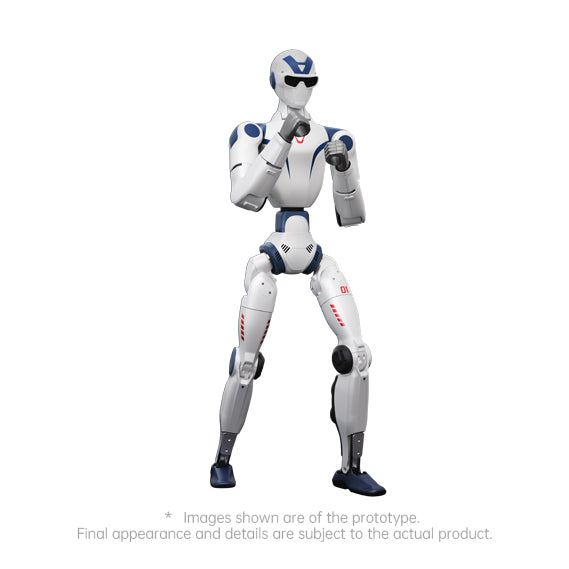 Unitree Robotics Unitree R1 | 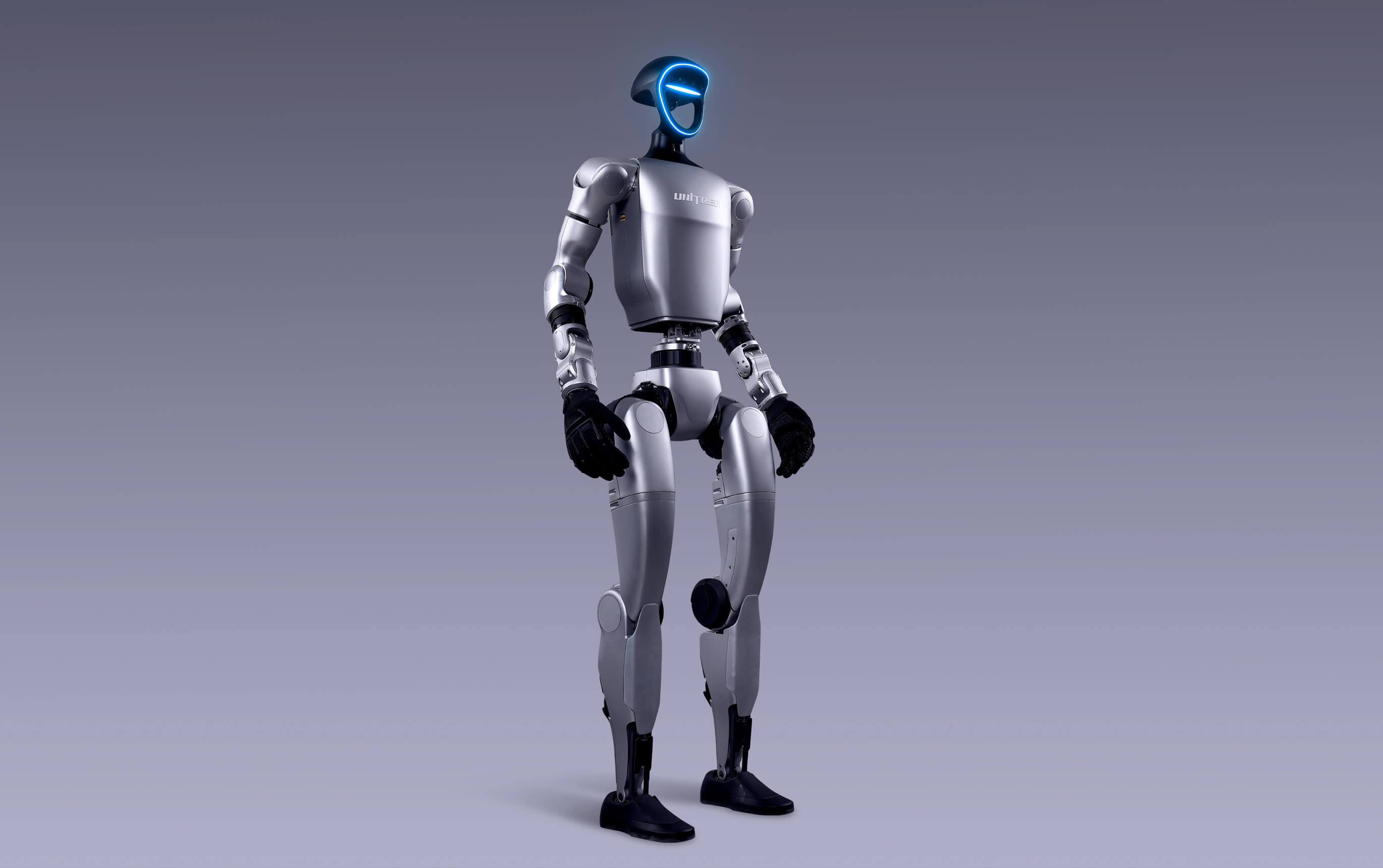 Unitree Robotics Unitree G1 | 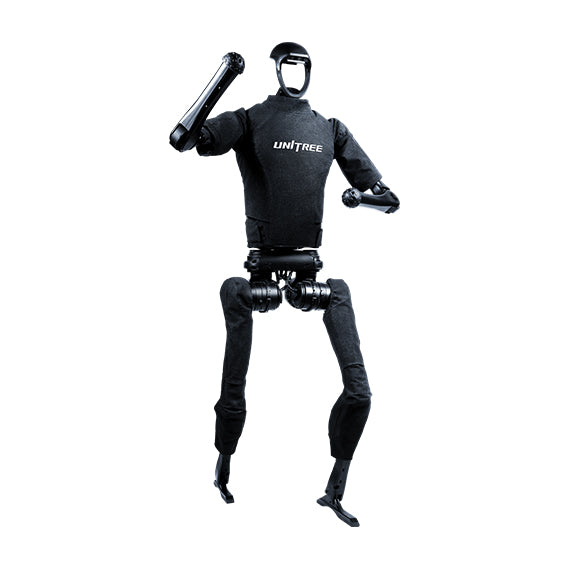 Unitree Robotics Unitree H1 | |
|---|---|---|---|---|
| Price (US) | $4,999 – $12,500 | $4,900 – $5,900 | $13,500 – $73,900 | ~$90,000 |
| Availability | Backorder / waitlist at most distributors — several US retailers show out of stock with special-order reservation, and 2-4 week lead times are quoted | On the market | On the market | On the market |
| Height | 95 cm | 1.23 m | 1.32 m standing | ~1.80 m |
| Payload | Unknown | Unknown | Arm ~2 kg | Not rated for H1 |
| DoF | 22 | 20 | 23 | ~19 |
| Buyer | Enterprise | Individuals | Individuals | Enterprise |
| Made in | China | China | China | China |
Every spec, grouped & sourced
Tap a group to expand. Values are labelled official vs third-party; unknowns are omitted, not guessed.
Body & movement▾
Power & endurance▾
Hands & senses▾
Brains & control▾
Claims vs evidence
Dev platform; embodied-AI research
Where it's working
Education/research
Intended use cases: Education, research and hobby; accessible bipedal platform for the home lab and classroom
What owners, reviewers and the press say about the Booster K1
Ratings and reception gathered from where this machine is actually sold and discussed. We summarise the signal — we don't republish anyone's reviews.
No retailer carries a customer rating for the robot. The only star score attached to Booster anywhere is a single rating of its control app on Apple's US App Store — one person's opinion of a piece of software, which is not a rating of the machine and should not be presented as one.
- RoboCup Federation — partnered with Booster Robotics for the humanoid league from 2025, and Booster-based teams took championship titles at RoboCup 2026 · 2026-08-30
+Reviewers consistently praise
- light enough at under 20 kg to carry and work with safely
- strong competition pedigree
- priced within reach of a university lab
- companion app and setup described as straightforward
!And consistently criticise
- small stature limits real-world tasks
- capability firmly educational rather than productive
- less third-party tooling than the Unitree ecosystem
What owners and developers actually say
K1 is one of the few units here with a real user base, and it is an educational one — university teams, competition entrants and hobbyist developers who post unboxings, code and playground testing rather than speculation. Discussion is practical: what the SDK exposes, how it survives being knocked over, whether it is worth its price against a Unitree unit. The RoboCup connection is what gives the platform credibility in these threads.
r/robotics, r/ROS, RoboCup humanoid league community · as of 2026-08-30
Consensus drawn from roughly eight reseller, educator and owner videos including unboxings, the largest at about 32K views; view counts across the platform are small, which itself indicates a niche audience.
Booster K1: the claims, checked
shipping
The K1 has been on sale since October 2025 through authorised distributors in the US, Europe and Asia, and is in active use by dozens of independent research teams — 38 of the 59 teams at RoboCup 2026 competed on Booster hardware. Availability has tightened since the machine sold out at CES 2026: most US retailers now show waitlist or special-order reservation with 2-4 week lead times rather than stock. The open question for US buyers is regulatory rather than commercial — we could not confirm an FCC equipment authorization predating 28 July 2026 for this model.
as of 2026-08-30
- misleading“The Booster K1 costs $4,999”
$4,999 is the entry figure from distributor listings and appears to have started as a launch-period offer; some US listings show $5,999 as the standing entry price, and a fully configured unit is around $12,500. Booster Robotics publishes no MSRP, so all of these are reseller prices as of 30 August 2026.
- misleading“The K1 won RoboCup”
Teams competing on K1 hardware won. At RoboCup 2026 in Incheon (30 June-6 July 2026) the Middle division top three — B-Human, HTWK Robots and Rhoban — all ran K1s, and the K1 won the KidSize league in 2025 taking first and second. The robot is a shared platform; the software being ranked belongs to the teams. Booster also has a federation partnership offering discounted hardware to competitors, which is part of why so much of the field runs on it.
- true“38 of 59 teams at RoboCup 2026 competed on Booster robots”
Stated in Booster Robotics' release of 9 July 2026 following the event, held at Songdo Convensia in Incheon from 30 June to 6 July 2026. It is a company-sourced count, but the bracket results it accompanies are published by the RoboCup Federation.
- misleading“You can buy a K1 off the shelf in the US”
The K1 is genuinely orderable, but as of 30 August 2026 several US retailers list it out of stock with waitlist or special-order reservation and 2-4 week lead times, following a complete sellout at CES 2026. Separately, we could not confirm an FCC equipment authorization predating the 28 July 2026 Covered List addition.
- misleading“The K1 is an autonomous embodied-AI robot”
It is a development platform with an SDK. There is no published deployment of a K1 performing useful autonomous work. Every notable K1 behaviour on record — soccer, dance, balance recovery — was programmed by the operating team.
- false“The K1 has dexterous hands”
The K1 has 4-DOF arms with simple end effectors and 22 total degrees of freedom (six per leg, four per arm, two in the head). Booster does not offer or claim dexterous hands on this platform.
- false“The K1 runs for hours on a charge”
Booster gives roughly 80 minutes on the 5 Ah battery at walking speed, and less on the 2 Ah option. It is a session-length machine, not a shift-length one.
Booster Robotics in 2026
Booster Robotics is a Beijing embodied-AI company founded in 2023, reported to have been started by engineers out of Tsinghua's robot control work. Its line runs from the 95 cm K1 through the K2 and the larger T1 and T2 development platforms, the last of which launched on 10 July 2026 with an NVIDIA Thor-based Professional edition. Funding is public in outline: Caixin reported an A+ round of over CNY 100 million (about $13.9 million) in July 2025 backed by the Beijing Robot Industry Development Fund and the Beijing Artificial Intelligence Industry Investment Fund, followed by a round of nearly CNY 1 billion — roughly $140 million — completed in April 2026. Reseller material describes more than 700 units shipped to over 200 customers in more than 20 countries; that is a company-sourced figure, not an audited one. Commercially the company's strategy is transparent and effective: price the hardware low enough that independent labs buy it, partner with the competitions those labs care about, and let other people's published results do the marketing. It worked. What Booster has not built is an enterprise support apparatus — outside China, service runs through resellers, and there is no published warranty term, SLA or spares price list from the manufacturer itself.
What to watch next
- RoboCup 2027 — the K1's competitive record is the single most useful independent signal about this robot, and the next event refreshes it
- Clarity on the K1's US regulatory status: an FCC ID predating 28 July 2026 would settle the import question outright, and no public record we could find does
- Whether Booster publishes an open price list or continues to price only through distributors
- The K2 and T2 lines — the T2 launched 10 July 2026 as a flagship development platform, and the K1's position in Booster's own range may shift as those mature
- Restocking: US availability has been waitlist-and-reservation since the CES 2026 sellout, and a return to buy-now would be a real change
- Any independent security review. The root-level vulnerabilities disclosed in Unitree's G1 EDU on 29 August 2026 apply to a category, not a brand, and no audit of the K1's firmware or update path has been published
Should you consider the Booster K1?
The Booster K1 is the best-evidenced cheap humanoid on the market, and the evidence is the reason to buy it rather than the price. At 95 cm and 19.5 kg with 22 force-controlled joints from about $4,999, it is the only machine in this bracket whose capability has been tested adversarially in public: 38 of the 59 teams at RoboCup 2026 ran Booster hardware, and K1s took the top three places in the Middle division. Set expectations accordingly. It has no hands, no payload rating, about 80 minutes of battery, and no autonomy until you write it — it is a research instrument, not a helper. Two practical cautions as of 30 August 2026: US availability is waitlist-and-reservation with 2-4 week lead times since the CES 2026 sellout, and we could not confirm an FCC authorization predating the 28 July 2026 Covered List addition, so get the FCC ID in writing before you pay a US distributor. With those settled, a lab getting into bipedal locomotion will not find a better-supported five-thousand-dollar starting point.
Score reflects stated criteria (availability, data confidence, US relevance) — not hands-on testing or user ratings. We're an independent review & comparison site; we don't sell robots. *Financing figure is illustrative.
How we know this
Data confidence 52/100 · last verified 2026-08-30. Specs are labelled official vs third-party and dated; unknowns are omitted, not guessed.
Booster K1 — your questions, answered in full
How much does the Booster K1 cost?+
Distributors list it from $4,999 for the entry configuration — some US listings show $5,999 as the standing price — up to about $12,500 fully configured. In Europe resellers quote EUR 7,500 excluding VAT or EUR 9,000 including, roughly $8,730 ex-VAT at the 28 August 2026 rate. Booster publishes no MSRP, so every figure is a reseller price as of 30 August 2026.
Can I buy a Booster K1 in the US?+
It is sold through US distributors, but as of 30 August 2026 most show it out of stock with a waitlist or special-order reservation and 2-4 week lead times, after it sold out at CES 2026. There is also an unresolved regulatory point: we could not confirm an FCC equipment authorization for the K1 predating the 28 July 2026 Covered List addition. Ask your seller for the FCC ID in writing before paying.
Did the Booster K1 win RoboCup?+
Teams running K1s did. At RoboCup 2026 in Incheon (30 June-6 July 2026) the Middle division's top three — B-Human, HTWK Robots and Rhoban — all competed on K1s, and 38 of 59 teams overall used Booster hardware. The K1 also won the 2025 KidSize league taking both first and second place. The robots are a shared platform; the winning software belongs to the teams.
What can the Booster K1 actually do?+
Walk at around 0.4 m/s, balance through contact, get up after falling, track with an RGB-D camera and 2-DOF head, hear through a microphone array, speak, dance, and run whatever control policy you write for it. It cannot grasp objects, has no rated payload and does nothing autonomously out of the box.
How tall is the K1 and how much does it weigh?+
95 cm tall and 19.5 kg — KidSize class. That is deliberate: one person can carry it, reset it after a fall and work on it without a lift or a safety cage.
How long does the battery last?+
About 80 minutes on the 5 Ah pack at walking speed, and less on the 2 Ah option. Spare batteries are effectively mandatory for anyone doing a full day of experiments.
What is the difference between the K1 editions?+
Mainly onboard compute and warranty terms. Reseller listings describe a ladder running from roughly 48 TOPS at entry to around 200 TOPS at the top, with the higher US configurations bundling a US-serviced warranty. Those tier descriptions come from distributors rather than a Booster datasheet, so get the compute module named explicitly in your quote.
Booster K1 or Unitree G1?+
The G1 is bigger (1.32 m, about 35 kg), has more degrees of freedom, offers dexterous hands and has the largest public software ecosystem in the category. The K1 is smaller, cheaper at entry, easier for one person to handle, and has the stronger independent competition record. Note also the root-level vulnerabilities disclosed in the G1 EDU on 29 August 2026 — no equivalent audit of the K1 has been published either way.
Is the K1 good for a beginner?+
For a beginner with software skills, yes — it is one of the gentlest routes into real bipedal robotics, and dozens of student teams get competitive results out of it. For someone who does not program, no. It arrives able to walk and be programmed, and nothing else.
Does the K1 come with hands?+
No. The arms are 4-DOF with simple end effectors and there is no dexterous hand option for this platform. If manipulation is your research topic, this is the wrong robot.
Who makes the Booster K1?+
Booster Robotics, a Beijing embodied-AI company founded in 2023. It raised an A+ round of over CNY 100 million in July 2025 with Beijing municipal industry funds, then a round of nearly CNY 1 billion in April 2026. Its range also includes the K2 and the larger T1 and T2 development platforms.
Is there a customer rating for the K1?+
No, and be sceptical of any you find. Public consumer ratings essentially do not exist in this category — of the 77 humanoids we track, one has a public rating, from a single review. Anything else is a store rating or an unrelated product. RoboCup brackets are the honest substitute here.
Peer-reviewed research on the Booster K1
Published academic work — peer-reviewed papers and preprints — involving this robot or its maker's systems, indexed in scholarly databases (OpenAlex, arXiv). Not blog posts or press write-ups.
- Booster Gym: An End-to-End Reinforcement Learning Framework for Humanoid Robot LocomotionYushi Wang, Penghui Chen, Xinyu Han, Feng Wu, Mingguo Zhao · 2025 · arXiv:2506.15132 (cs.RO)
- Booster Lab: A Data-Centric Pipeline for Learning Deployable Humanoid Locomotion PoliciesPenghui Chen, Tinglong Zheng, Yufeng Zhang, Mingguo Zhao · 2026 · arXiv:2606.27813 (cs.RO)
- PACE: Physics Augmentation for Coordinated End-to-end Reinforcement Learning toward Versatile Humanoid Table TennisMuqun Hu, Wenxi Chen, Wenjing Li, Falak Mandali, Zijian He, Renhong Zhang, Praveen Krisna, Katherine Christian, Leo Benaharon, Dizhi Ma, Karthik Ramani, Yan Gu · 2025 · arXiv preprint · DOI 10.48550/arXiv.2509.21690
Academic references are factual citations from open scholarly indexes; listing is not endorsement.