Booster T1 Robot
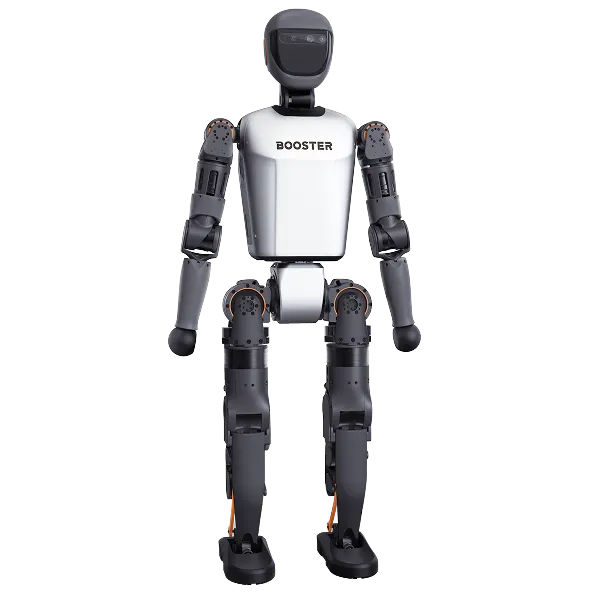
Yes - the Booster T1 is on sale now, but through authorised distributors rather than a checkout button. US distributor configurations run from about $29,800 for the T1 Basic to roughly $50,925 for a Standard build with grippers, with about $33,949 the figure quoted most often for a plain Standard, as of 30 August 2026. European resellers list configurations between EUR 9,000 and EUR 45,000. One caveat for US buyers: no pre-July 2026 FCC authorisation for the T1 appears in the public records we could check, which puts new imports in doubt.
US buyers: no pre-July 2026 authorization for the T1 is on public record — ask your distributor for the FCC ID.
The T1 has been a common choice for US universities and RoboCup teams, bought through authorized distributors rather than direct. It does not appear in the pre-cutoff authorization records we could check, which would mean new imports are barred, but absence from those records is not proof — the grant may sit under a manufacturer code we cannot match to the brand. Robots already delivered to US labs are unaffected and can keep running and receiving updates.
Unaffected in the EU, UK and Asia, where Booster continues to sell to research customers.
As of 2026-08-30 · medium confidence — verify before you commit funds
What is the Booster T1 Robot?
The T1 is the Booster robot that wins football matches — RoboCup is where this platform earned its reputation.
The Booster T1 is the robot that keeps winning the football. At RoboCup 2025 it took the AdultSize title under Tsinghua University's Hephaestus team, and at RoboCup 2026 in South Korea it did it again in the Large division - while Booster's smaller K1 took the Middle division under Germany's B-Human and a K1 Air took the Small. That is an unusual kind of proof. Nobody stages a RoboCup match; the robots fall over, get shoved, stand back up and keep playing, in front of judges, on video, for hours.
It is also a robot that gets miscategorised constantly. The T1 is 1.18 m tall and weighs about 30 kg. It is not a warehouse worker, not a household assistant and not a competitor to Figure or Optimus. It is a research and teaching platform - a machine you buy because you want to run your own reinforcement-learning locomotion policy on real hardware without fighting a closed system, and because at roughly 30 kg two people can carry it into a lab.
Price is where most pages about this robot fall apart. Figures between $22,000 and $75,000 circulate on aggregator sites and they are usually presented as competing claims about one MSRP. They aren't. Booster publishes no open price list, and those numbers are different configurations sold through different channels. Below is the configuration ladder as distributors actually quoted it in August 2026, plus the things that ladder does not include.
What the Booster T1 can — and can't — do today
+Does this out of the box
- Walk omnidirectionally at up to about 0.97 m/s and recover from pushes and falls without human intervention
- Run learned locomotion and perception policies onboard via an NVIDIA Jetson AGX Orin 32 GB (around 200 TOPS) plus an Intel Core i7-1370P on the Standard configuration
- Be programmed through documented Python and C++ APIs and ROS 2 Humble, with firmware upgrades and secondary development explicitly supported
- Close a sim-to-real loop using Isaac Sim, MuJoCo or Webots workflows the maker documents
- Perceive its surroundings with an Intel depth/RGB-D camera, 3D LiDAR, a nine-axis IMU and joint encoders, plus a six-microphone array and speaker for voice work
- Be teleoperated and taught by imitation, including reported VR rigs, and controlled from a mobile app over Wi-Fi 6 or Bluetooth 5.2
- Compete at a championship level - Booster hardware won across three RoboCup 2026 divisions and the T1 took AdultSize in 2025
!Doesn't do, whatever the demo shows
- Do physical work of any weight - the rated payload is about 0.5 kg per arm, roughly a full water bottle
- Manipulate anything in Basic trim; grasping requires the gripper option at around $50,925 total, or the dexterous-hand configuration
- Run unattended - every realistic deployment has a person in the room near a kill switch
- Operate outdoors or on uneven terrain; it is scoped for flat indoor lab, classroom and competition surfaces
- Work a full shift - about two hours walking and about four standing, on a swappable 9.5 Ah pack, and the walking figure is best-case
- Be bought at a published list price, or from a store - sales go through Booster and authorised distributors on quote
The T1 is a research and education platform, and comparing it to Figure 03, Apollo or Tesla Optimus is a category error. Its actual peer set is the Unitree G1, the smaller Booster K1 and university-scale bipeds. Specifications verified against maker documentation and distributor configuration sheets on 30 August 2026.
What is the Booster T1?
The Booster T1 is a full-body bipedal humanoid built by Booster Robotics, a Beijing company founded in 2023, and sold as a developer platform to universities, research institutes and competition teams. It stands 1.18 m, weighs about 30 kg, walks omnidirectionally at roughly 0.97 m/s - call it 3.5 km/h, a slow human stroll - and carries a payload of about 0.5 kg per arm.
The base machine has 23 degrees of freedom. Fit the optional grippers and that becomes 31; fit the dexterous hands and it becomes 41. That configurability is the whole design philosophy: the T1 is meant to be a chassis you extend, not an appliance you operate.
On the Standard configuration the compute is genuinely serious for the size class - an NVIDIA Jetson AGX Orin with 32 GB, quoted at around 200 TOPS, alongside an Intel Core i7-1370P. That combination is what lets teams run learned locomotion policies and vision models on the robot itself rather than tethering it to a workstation. Sensing covers an Intel depth/RGB-D camera, a 3D LiDAR, a nine-axis IMU, joint encoders throughout, and a six-microphone array with speaker for voice work. Networking is Wi-Fi 6 and Bluetooth 5.2.
What you have, in short, is a small adult-proportioned biped with lab-grade compute, open interfaces and a genuine competition record. It is a narrow product, and it knows it.
How much does a Booster T1 cost?
As of 30 August 2026, authorised distributor pricing in the US looks like this: about $29,800 for the T1 Basic, about $33,949 for the T1 Standard, and about $50,925 for a Standard with grippers. European distributors quote configurations spread between EUR 9,000 and EUR 45,000 - the top of that band converts to roughly $52,400 at 0.85889 EUR/USD, rate as of 28 August 2026, which lines up sensibly with the top US figure.
Booster itself does not publish an MSRP. Every one of these numbers comes from a reseller quote sheet, which means two things. First, they move. Second, the spread you see on aggregator sites - $22,000 at the bottom, $75,000 at the top - is mostly an artefact of people comparing a stripped Basic in one currency against a fully optioned Standard in another, then presenting the gap as controversy.
We carried the ~$33,949 Standard figure in June 2026 and it is still what distributors show in late August. So the honest headline is: no confirmed price move this year, better resolution on the ladder. If a page tells you the Booster T1 costs one specific number, ask which configuration and which continent - the answer changes by more than $20,000.
One more thing worth saying plainly, because price-comparison pages rarely do: at Basic trim the T1 is priced against a Unitree G1, and it is a different kind of purchase. You are paying for openness and support, not for headline specs.
What each configuration actually includes
T1 Basic, around $29,800, is the entry point. You get the biped, the standard 23-DOF joint set and simple end effectors - stubs, effectively. It walks, it balances, it recovers from pushes, it runs your controllers. It does not manipulate anything.
T1 Standard, around $33,949, is the configuration most US labs actually order and the one the published sensor and compute specs describe: Jetson AGX Orin 32 GB plus the Intel i7, the full sensor stack, the 9.5 Ah swappable battery.
Standard with grippers, around $50,925, takes the robot to 31 DOF and gives it something to grasp with. The jump of roughly $17,000 for grippers is steep, and it is the single largest decision on the order form. Dexterous hands take the machine to 41 DOF; that configuration is quoted individually and we could not pin a public figure to it, so we are not going to invent one.
What none of these include: shipping and customs, a spare battery, the charger beyond what ships in the box, extended warranty, training, or any of the lab infrastructure - a safety gantry, a padded floor, a harness - that you will want within a week of unboxing a 30 kg machine that falls over deliberately for a living.
The specs, and how well sourced they are
Booster publishes a real specification sheet and an SDK manual, which puts the T1 in a better position than most of this catalogue. The height, weight, DOF counts, battery capacity and compute are maker-published. Our confidence score for this entry is 82 out of 100 and the spec source quality is mixed rather than high, and the reason is specific: the runtime and speed figures are the soft ones.
Battery: 9.5 Ah, swappable, with a 10.5 Ah charging setup. Quoted endurance is about two hours walking and about four hours standing. Those are the numbers you should treat as best-case. A walking figure on a bipedal robot is enormously sensitive to gait, payload, ambient temperature and how often the controller is catching a fall. Competition teams plan around battery swaps, not around a two-hour block.
Speed: roughly 0.97 m/s. That is a published maximum for stable omnidirectional walking, not a sustained cruise.
Payload: about 0.5 kg per arm. This one is worth reading twice, because it is the number that tells you what the T1 is not. Half a kilo per arm is a water bottle. Any page describing the T1 as capable of physical work is describing a different robot.
Why RoboCup keeps mattering here
It is easy to be cynical about a robot's competition record. In this case it is the most valuable evidence on the page, and here is why.
RoboCup humanoid matches are adversarial, unscripted and continuous. Robots collide, get pushed off balance, fall on hard floor, and have to stand up and rejoin play without a human touching them. There is no cut, no retake and no operator off-camera. A robot that survives a tournament has demonstrated fall tolerance, self-righting, real-time perception under bad lighting and thermal endurance across repeated matches - all the boring, unglamorous properties that separate a demo from a machine.
Booster became a RoboCup humanoid league partner from 2025. At RoboCup 2025 the T1 took AdultSize with Tsinghua's Hephaestus team. At RoboCup 2026, in South Korea, Booster hardware won across divisions: the T1 in the Large division, the K1 in the Middle, a K1 Air in the Small. Beyond the podium, more than 40 teams brought Booster machines to the 2025 World Humanoid Robot Games, and 50-plus teams and institutes worldwide have adopted the platform.
The founder's background explains a lot of that. Booster's CEO, Cheng Hao, holds a bachelor's and master's degree from Tsinghua and worked on the university's robot soccer team. The company was built by people who knew exactly which failure modes cost you a match.
The software: ROS 2, the SDK and simulation
This is where the T1 earns its price against cheaper hardware. Booster ships Python and C++ APIs, ROS 2 Humble support, and documented workflows for Isaac Sim, MuJoCo and Webots. Firmware upgrades and secondary development are explicitly supported rather than tolerated.
What that means in practice is a sim-to-real loop you can actually close. You train a locomotion policy in Isaac Sim or MuJoCo, you deploy it to the onboard Jetson, and when it fails you can read why. There is no black-box motion controller sitting between your policy and the joints, which is the thing that makes a lot of otherwise-attractive humanoids useless for research.
Developer reception reflects this. The T1 has the healthiest developer signal of any robot in this catalogue: ROS 2 and open interfaces, company staff answering questions in the ROS community, and research groups publishing their own control stacks running on the hardware. The conversation around it is about integration and simulation tooling rather than hype - which, on the internet in 2026, is close to a miracle.
A caveat. Openness is not the same as maturity, and the community is small next to Unitree's. If you hit an obscure problem at 2am, there are fewer strangers awake who have hit it before you.
Living with one: batteries, floors and people
A few practicalities that the spec sheet does not cover.
The battery is swappable, and you will want at least one spare. Two hours of quoted walking endurance is, realistically, a morning of experiments with a charger running in parallel. Budget for a second pack in your first purchase order rather than your second.
Floor surface matters more than people expect. The T1 is designed for indoor lab, classroom and competition surfaces - flat, hard, predictable. It handles stairs and rough recovery in demonstrations, but a research programme that involves outdoor or uneven terrain is not what this machine was scoped for.
You need a person. Not a technician on call - a person in the room. Every serious deployment of a small biped involves someone standing by with a hand near the kill switch, because a 30 kg machine practising a new gait will find the floor. Fall recovery is good, and the push-recovery clips that circulate are genuinely impressive, but 'recovers from falls' and 'can be left alone' are different claims.
And allow lead time. Because sales go through distributors with international shipping rather than through a warehouse near you, delivery is measured in weeks, and customs paperwork on a Chinese-built robot is not what it was a year ago.
Booster T1 vs Booster K1 - and vs the Unitree G1
The T1 and the K1 are different robots from the same company, and they get confused constantly. The T1 is the larger, full-scale platform: 1.18 m, roughly 30 kg, Jetson AGX Orin, sold for high-end R&D. The K1 is the compact, portable, more affordable machine, and it has its own competition pedigree - it won the Middle division at RoboCup 2026 with B-Human, and the K1 Air took the Small division. If you are a teaching lab that needs several robots and a budget that survives contact with a purchasing committee, the K1 is the more sensible answer. If you need onboard compute for learned policies and adult-scale dynamics, it has to be the T1.
Against the Unitree G1, the comparison is less about specs than about posture. Unitree sells more units, has a far larger community and a lower entry price, and has also spent August 2026 dealing with two disclosed vulnerabilities in the G1 EDU that enabled root access, one of them over Bluetooth. Booster's pitch is narrower and quieter: open APIs, documented ROS 2, staff who answer, resellers in Europe with real documentation, and a competition record that is checkable.
Against Figure, Apptronik or Tesla: no comparison exists. Those are load-bearing work robots. The T1 lifts half a kilo per arm.
Can US buyers still get a Booster T1?
This needs care, because the press version of the rule is wrong and the correct version is more interesting.
On 28 July 2026 the FCC issued Public Notice DA 26-786, adding a category of equipment to the Covered List. The text is country-neutral. It turns on 'foreign-produced' - meaning a device that fails the Buy American test of US final assembly plus more than 65% domestic content - not on where a company is headquartered. British, EU and Japanese machines are caught by the same wording. What it blocks is new FCC certification. It is not a customs ban, not a recall, and units certified before 28 July keep selling and receiving updates until 1 January 2029.
For the T1 specifically: it has been a common choice for US universities and RoboCup teams, bought through authorised distributors. We could not find a pre-cutoff authorisation for it in the public records available to us. If that absence is real, new imports are barred. But absence is not proof - a grant can sit under a manufacturer code that does not obviously map to the brand name. Ask your distributor for the FCC ID before you raise a purchase order, and get the answer in writing.
Robots already delivered to US labs are unaffected. They can keep running, and keep taking firmware updates. Outside the US, in the EU, UK and Asia, nothing has changed.
What people who have used one say
There is no star rating for this robot, and you should be suspicious of any page that shows you one. The only star score attached to Booster anywhere is a single rating of its control app on Apple's US App Store, which tells you precisely nothing about the hardware.
What exists instead is better: public code, competition results and about eight reseller, developer and owner videos, the largest at roughly 36,000 views. A thread on r/robotics about the T1's push recovery carried around 354 upvotes and 175 comments - modest by internet standards, substantial for this niche.
What gets praised: genuine ROS 2 and open API support; robust push and fall recovery; the fact that it is a sensible research and education platform rather than a demo prop; European resellers who supply real documentation.
What gets criticised: it is not a general-purpose worker and is not sold as one, but buyers still arrive expecting one; the community is small relative to Unitree's; and the price is still significant for a teaching platform, particularly once grippers are on the order.
The recurring non-technical reaction to the push-recovery clips, incidentally, is unease - people find how fast it stands back up slightly unsettling. Make of that what you will.
Who should buy a Booster T1, and who shouldn't
Buy one if you are a robotics lab, a graduate programme, or a competition team that needs adult-scale bipedal dynamics with onboard compute and no locked motion layer. Buy one if your work is locomotion, whole-body control, sim-to-real transfer, or embodied AI where the robot has to run the policy itself. Buy one if you want a machine whose failure modes are documented and whose vendor answers questions in public.
Do not buy one if you want work done. Half a kilogram per arm, two hours of walking, flat indoor floors: that is a research instrument, not labour. Do not buy one as a marketing prop - a K1 costs less and photographs just as well. Do not buy one expecting a consumer support experience; this is distributor-mediated capital equipment with a purchase order and a lead time.
And if you are in the United States, resolve the certification question before anything else. It is the only issue on this page that can turn a funded purchase into a stranded one.
The Booster T1 on video
Hands-on reviews and teardowns, picked for what they actually show rather than how loud the thumbnail is.
Full unboxing and first-run review, which matters because T1 mostly sells to labs that need setup detail
A 2026 look at where T1 sits now that the cheaper K1 exists alongside it
Booster's RoboCup pitch, and the clearest statement of what the platform is actually built for
Booster T1 price ladder — and what the entry price leaves out
The headline number is almost never the number you pay. Here is each configuration, and what it does not include.
| Configuration | Price | What you get | What it excludes |
|---|---|---|---|
| T1 Basic | ~$29,800 | Entry configuration: the 1.18 m biped, 23 DOF standard joint set, simple end effectors, swappable 9.5 Ah battery, walking and balance controllers, SDK access. | Grippers or dexterous hands, spare batteries, shipping, customs and duty, extended warranty, training, lab safety infrastructure. |
| T1 Standard | ~$33,949 | The configuration most US distributors quote and the one the published sensor and compute specs describe: NVIDIA Jetson AGX Orin 32 GB plus Intel Core i7-1370P, Intel depth/RGB-D camera, 3D LiDAR, nine-axis IMU, six-microphone array and speaker, Wi-Fi 6 and Bluetooth 5.2. | Manipulation hardware, spare battery, freight and import charges, on-site setup, service contract. |
| T1 Standard with grippers | ~$50,925 | Standard configuration plus grippers, taking the robot to 31 DOF and giving it usable grasping. Top quoted US configuration. | Dexterous hands (quoted separately, no public figure), spares, freight and duty, warranty extension. |
| European distributor configurations | EUR 9,000-45,000 | The spread across accessory and compute options at European resellers. EUR 45,000 is about $52,400 at 0.85889 EUR/USD, rate as of 28 August 2026 - consistent with the top US figure. | VAT where applicable, delivery, training, spares. |
| T1 with dexterous hands (41 DOF) | Quoted individually - no public figure | The full 41-DOF manipulation configuration. | We could not source a published price for this build and are not going to estimate one. Ask a distributor. |
US distributor quotes are in USD. The top European configuration, EUR 45,000, is about $52,400 at 0.85889 EUR/USD, rate as of 2026-08-28.
Source: Authorised-distributor configuration pricing in the US and Europe. Booster publishes no open price list, and the figures circulating between $22,000 and $75,000 reflect different configurations and channels rather than competing claims about one MSRP. · as of 2026-08-30
What owning one actually costs
| Cost | Typical | Notes |
|---|---|---|
| Spare battery pack | Not published | Effectively mandatory. Quoted endurance is about two hours walking on the 9.5 Ah pack; a working day needs swaps. Order with the robot, not after it. |
| Grippers or dexterous hands | Roughly $17,000 for grippers, judging by the gap between the $33,949 Standard and the $50,925 gripper build | The single largest decision on the order form. Basic and Standard trims cannot grasp. |
| Freight, customs and duty | Not published | Sales are distributor-mediated with international shipping. On a Chinese-built robot entering the US in late 2026, treat customs handling as a real line item and a real schedule risk. |
| Lab safety setup | Varies | Padded flooring, a gantry or harness, and clear floor area. A 30 kg biped learning a new gait will hit the ground repeatedly and by design. |
| Staff time | Varies | This is a platform, not an appliance. Budget an engineer or graduate student who owns it. The open ROS 2 stack is the reason to buy it and also the reason it needs someone. |
| Compute for training | Varies | The onboard Jetson runs policies; it does not train them. Isaac Sim or MuJoCo work happens on workstations or a cluster you already have, or don't. |
Who the Booster T1 is — and isn't — for
+Where it shines
- Open developer access (SDK/API) — good for builders and labs.
- Stated real-world payload (~0.5 kg per arm).
- Specs are well-sourced — high data confidence.
!Watch-outs
- Some demos rely on teleoperation, not full autonomy.
- Sold to businesses only — not to private buyers.
How the Booster T1 stacks up
Side by side with similar robots — the one you're reading about is highlighted.
| This robot Booster Robotics Booster T1 | 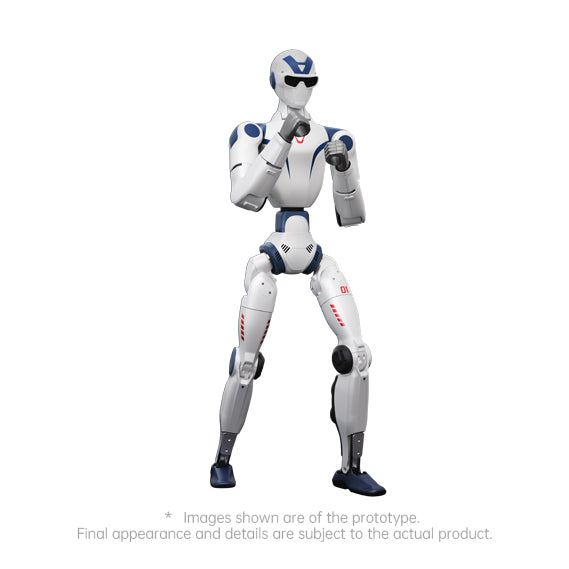 Unitree Robotics Unitree R1 | 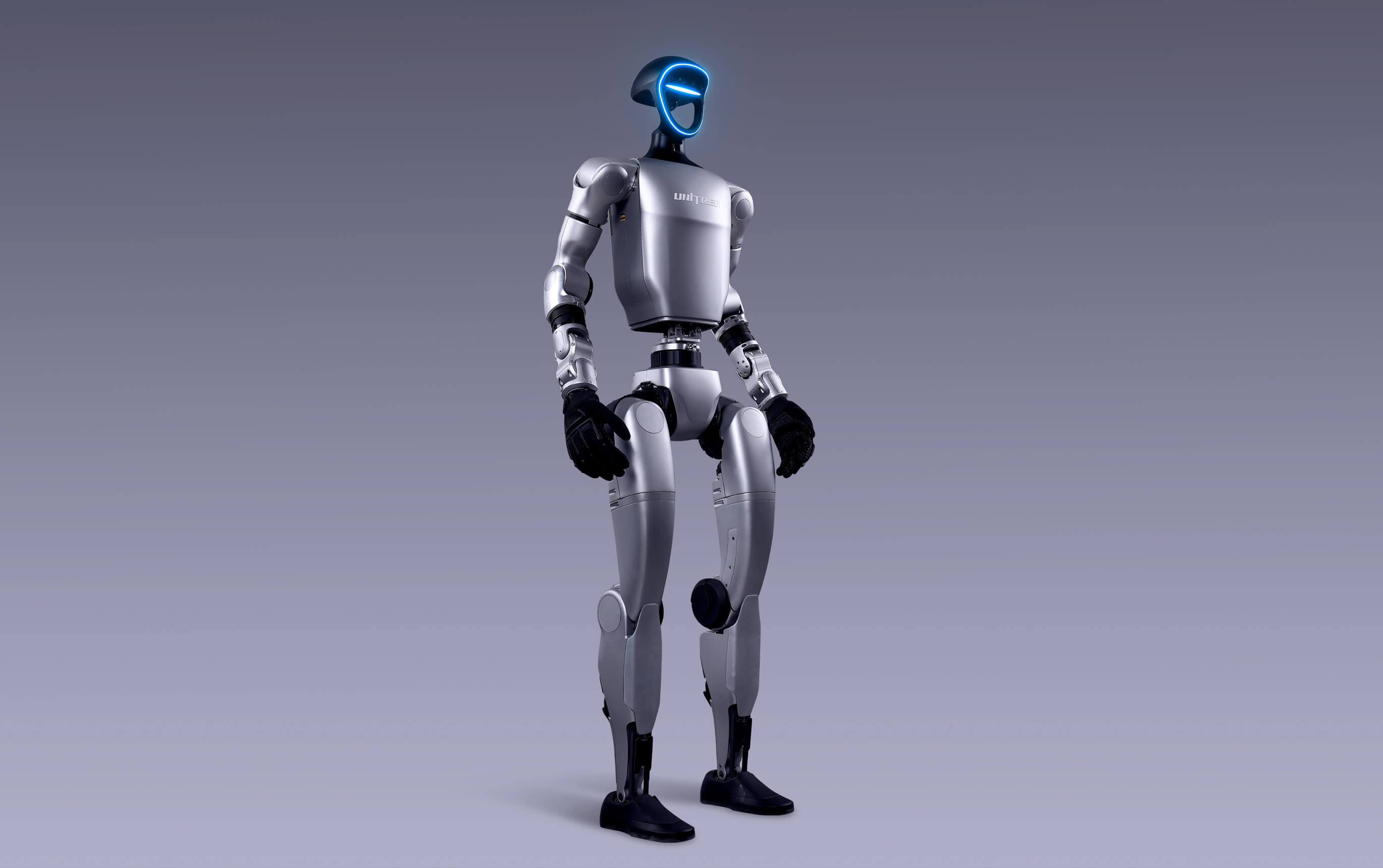 Unitree Robotics Unitree G1 | 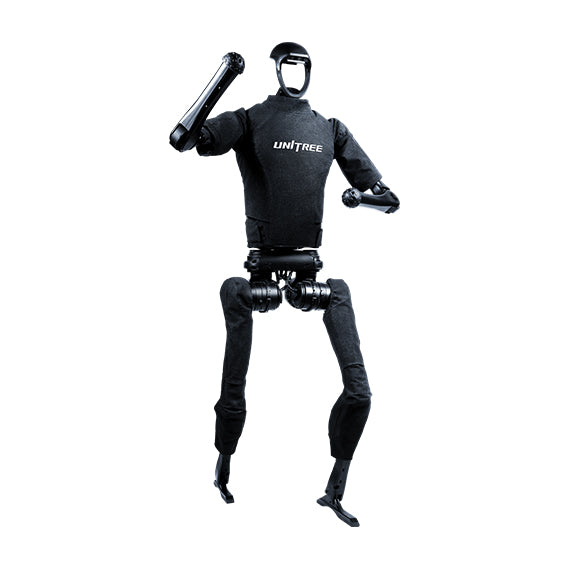 Unitree Robotics Unitree H1 | |
|---|---|---|---|---|
| Price (US) | $29,800 – $50,925 | $4,900 – $5,900 | $13,500 – $73,900 | ~$90,000 |
| Availability | Available to buy now through authorised distributors, with international shipping; US import exposed to the 30 July FCC restriction | On the market | On the market | On the market |
| Height | 1.18 m | 1.23 m | 1.32 m standing | ~1.80 m |
| Payload | ~0.5 kg per arm | Unknown | Arm ~2 kg | Not rated for H1 |
| DoF | 23 | 20 | 23 | ~19 |
| Buyer | Enterprise | Individuals | Individuals | Enterprise |
| Made in | China | China | China | China |
Every spec, grouped & sourced
Tap a group to expand. Values are labelled official vs third-party; unknowns are omitted, not guessed.
Body & movement▾
Power & endurance▾
Hands & senses▾
Brains & control▾
Claims vs evidence
Onboard NVIDIA Jetson AGX Orin 32GB (~200 TOPS) + Intel i7-1370P (Standard); edge AI/LLM, RL locomotion, sim (Isaac Sim/MuJoCo/Webots)
Where it's working
Won RoboCup 2025 AdultSize (Tsinghua 'Hephaestus'); 40+ teams at 2025 World Humanoid Robot Games; 50+ global teams/institutes
Intended use cases: Robotics research, embodied AI, bipedal locomotion research, RoboCup soccer, education, HRI, developer platform
What owners, reviewers and the press say about the Booster T1
Ratings and reception gathered from where this machine is actually sold and discussed. We summarise the signal — we don't republish anyone's reviews.
No retailer carries a customer rating for the robot. The only star score attached to Booster anywhere is a single rating of its control app on Apple's US App Store, which says nothing about the hardware.
- RoboCup Federation — named Booster Robotics a humanoid league partner from 2025; Booster-based teams claimed championship titles at RoboCup 2026 · 2026-08-30
+Reviewers consistently praise
- genuine ROS 2 and open API support
- robust push and fall recovery
- sensible research and education platform rather than a demo prop
- supported by resellers in Europe with real documentation
!And consistently criticise
- not a general-purpose worker, and not sold as one
- small community relative to Unitree
- price still significant for a teaching platform
What owners and developers actually say
The T1 has the healthiest developer signal of any robot in this catalog: ROS 2 support, open interfaces, staff from the company answering questions in the ROS community, and research groups posting their own control software running on it. Discussion is about integration and simulation tooling rather than hype. The most-shared clips are push-recovery tests, and the recurring non-technical reaction is unease at how quickly it stands back up.
r/robotics, r/ROS, RoboCup humanoid league community, GitHub · as of 2026-08-30
Consensus drawn from around eight reseller, developer and owner videos, the largest at about 36K views; one r/robotics thread on its push-recovery carried roughly 354 upvotes and 175 comments.
Booster T1: the claims, checked
Shipping and in active competitive use
In production and shipping to developers and research institutions through Booster Robotics and authorised distributors including K-Robotics and Generation Robots, with international shipping. More than 50 teams and institutes worldwide use the platform; over 40 teams brought Booster machines to the 2025 World Humanoid Robot Games; Booster hardware swept the RoboCup 2026 divisions in South Korea and the T1 took RoboCup 2025 AdultSize. Booster also exhibited at CES 2026. This is one of the small number of humanoids in this catalogue whose real-world use is independently observable rather than vendor-reported.
as of 2026-08-30
- true“The Booster T1 is a RoboCup champion robot”
T1 took the AdultSize title at RoboCup 2025 with Tsinghua University's Hephaestus team, and Booster hardware won across divisions at RoboCup 2026 in South Korea - the T1 in the Large division, the K1 in the Middle, a K1 Air in the Small. Booster has been a RoboCup humanoid league partner since 2025. Checked 30 August 2026.
- misleading“The Booster T1 costs about $22,000”
No US distributor configuration we found in August 2026 sits at that figure. The bottom of the actual ladder is a T1 Basic at about $29,800; the low numbers on aggregator sites appear to come from currency-converted European accessory-light configurations. Booster publishes no MSRP, so every figure is a channel quote.
- false“The T1 is a general-purpose humanoid worker”
The rated payload is about 0.5 kg per arm and the base configuration has no grasping hardware at all. Booster markets it as a research, education and competition platform. Every reviewer consensus we sampled makes the same point.
- misleading“The T1 runs for two hours on a charge”
Two hours is the quoted walking figure on a 9.5 Ah swappable pack, with about four hours standing. It is a best-case number; bipedal endurance varies sharply with gait, payload and how often the controller catches a fall. Competition teams plan around swaps.
- unverified“US buyers cannot import a Booster T1 after the July 2026 FCC rule”
FCC Public Notice DA 26-786 of 28 July 2026 blocks new certification of foreign-produced equipment - a country-neutral test based on US assembly and domestic content, not on company nationality. We found no pre-cutoff authorisation for the T1 in the records available to us, which would bar new imports, but absence from a searchable record is not proof; grants can sit under manufacturer codes that do not map to the brand. Ask the distributor for the FCC ID.
- false“The Booster T1 has a 4.5-star customer rating”
No retailer carries a customer rating for this robot. The only star score attached to Booster anywhere is a single rating of its control app on Apple's US App Store, which says nothing about the hardware. Ratings essentially do not exist in this product category.
Booster Robotics in 2026
Booster Robotics is a Beijing-based humanoid company founded in 2023. Its founder and CEO, Cheng Hao, holds bachelor's and master's degrees from Tsinghua University and worked on the university's robot soccer team - a background that shows in the product. Booster builds developer-facing humanoids and publishes SDKs and manuals for them rather than shipping sealed demonstrators, and it has been a RoboCup humanoid league partner since 2025. Its lineup splits between the full-scale T1, aimed at high-end R&D with onboard NVIDIA compute, and the compact, lower-cost K1 family aimed at accessibility and teaching, which competes in the smaller RoboCup divisions. The company sells through its own channel plus authorised distributors in Europe and elsewhere, and does not publish an open price list. Compared with its larger Chinese peers it is quiet: no IPO, no viral marketing campaign, a small community, and a habit of letting tournament results do the talking.
What to watch next
- Whether Booster secures or publicises a US FCC authorisation path for the T1 - the single most consequential open question for American labs, and one the company has not addressed publicly as of 30 August 2026
- A published price for the 41-DOF dexterous-hand configuration, which is currently quote-only
- RoboCup 2027 - a third consecutive T1 title would make the competition record hard for any rival research platform to argue with
- Whether the developer community grows enough to close the support gap with Unitree, which remains the main non-price reason buyers hesitate
- Any successor or refresh to the T1 line; Booster has expanded the K1 family, and distributors have begun listing additional model designations we could not verify against maker documentation
Should you consider the Booster T1?
The Booster T1 is one of the few humanoids in this catalogue that is exactly what it says it is. It is a 1.18 m, 30 kg research and competition platform with real onboard compute, an open ROS 2 stack, published documentation, and a tournament record you can verify on video rather than take on trust. At $29,800 to $50,925 depending on configuration it is not cheap for a teaching machine, and half a kilogram of payload per arm means it will never do work. Buy it to study locomotion, whole-body control and embodied AI on real hardware; do not buy it to move anything. The one thing that should stop a US purchase order in its tracks is the certification question - get the FCC ID from your distributor in writing before you commit funds, because on the public record we could check, it isn't there.
Score reflects stated criteria (availability, data confidence, US relevance) — not hands-on testing or user ratings. We're an independent review & comparison site; we don't sell robots. *Financing figure is illustrative.
How we know this
Data confidence 82/100 · last verified 2026-08-30. Specs are labelled official vs third-party and dated; unknowns are omitted, not guessed.
Booster T1 — your questions, answered in full
How much does a Booster T1 cost?+
About $29,800 for the T1 Basic, about $33,949 for a Standard, and about $50,925 for a Standard with grippers, from US distributors as of 30 August 2026. European resellers quote configurations between EUR 9,000 and EUR 45,000. Booster publishes no list price, so all figures are channel quotes and can move.
Can I buy a Booster T1 as an individual?+
In principle yes - it is sold to developers, not only institutions - but you buy through Booster or an authorised distributor on a quote, not from a store. Expect a purchase order, a lead time in weeks, and freight and customs on top. Most buyers are universities, research institutes and competition teams.
What is the difference between the Booster T1 and the Booster K1?+
They are different robots from the same company. The T1 is the full-scale platform - 1.18 m, about 30 kg, onboard NVIDIA Jetson AGX Orin, aimed at high-end R&D. The K1 is smaller, more portable and cheaper, aimed at teaching and accessibility, and it competes in the smaller RoboCup divisions. If you need adult-scale dynamics and onboard policy compute, you need the T1.
How much can a Booster T1 lift?+
About 0.5 kg per arm. That is the number that defines the product: it is a research and competition platform, not a machine that does physical work. Base and Standard configurations have no grasping hardware at all without the gripper or dexterous-hand option.
How long does the Booster T1 battery last?+
Around two hours walking and around four hours standing, on a swappable 9.5 Ah pack, per maker figures. Treat the walking number as best-case - real endurance depends on gait, payload and how hard the balance controller is working. Buy a spare pack with the robot.
Can US customers still import a Booster T1 in 2026?+
It is genuinely unclear, and you should ask the distributor for the robot's FCC ID before ordering. FCC Public Notice DA 26-786, issued 28 July 2026, blocks new certification for foreign-produced equipment, a test based on US assembly and domestic content rather than on nationality. We found no pre-cutoff authorisation for the T1 in the records we could check, but that absence is not proof. Units already in US labs are unaffected and keep receiving updates.
Does the Booster T1 come with ROS 2 support?+
Yes. Booster ships Python and C++ APIs, ROS 2 Humble support, and documented workflows for Isaac Sim, MuJoCo and Webots, with firmware upgrades and secondary development supported. Open interfaces are the main reason research groups pick it over cheaper hardware.
Is the Booster T1 fully autonomous?+
It runs autonomous locomotion, balance and fall recovery onboard, and it plays full RoboCup matches without a human touching it. But it is a platform: high-level autonomy is whatever you or your lab writes. Teleoperation and imitation learning, including reported VR rigs, are supported for data collection.
Has the Booster T1 been reviewed independently?+
There is no professional hands-on review of the kind you would find for a consumer product. What exists is about eight reseller, developer and owner videos - the largest an unboxing at roughly 36,000 views - plus research groups publishing code that runs on the hardware, and the RoboCup results. In this category, public code and tournament footage are far better evidence than reviews.
Does the Booster T1 have a customer rating?+
No, and be wary of pages that show one. No retailer carries a rating for the robot. The only star score connected to Booster is a single rating of its companion app on Apple's US App Store. Consumer ratings barely exist anywhere in the humanoid category.
Can the Booster T1 climb stairs?+
Stair navigation and fall recovery appear in maker demonstrations, along with dynamic moves like kung-fu sequences. But its operating envelope is indoor lab, classroom and competition floors - flat, hard and predictable. Do not scope a research programme around outdoor or uneven terrain.
Is the Booster T1 better than a Unitree G1?+
Different bets. Unitree ships more units, costs less at entry and has a much larger community - and in August 2026 it also dealt with two disclosed vulnerabilities in the G1 EDU that enabled root access, one over Bluetooth. Booster offers open APIs, documented ROS 2, responsive staff, European distribution with real documentation, and a checkable competition record. For a lab that intends to modify the control stack, the T1 is the safer purchase; for maximum hardware per dollar, it isn't.
Peer-reviewed research on the Booster T1
Published academic work — peer-reviewed papers and preprints — involving this robot or its maker's systems, indexed in scholarly databases (OpenAlex, arXiv). Not blog posts or press write-ups.
- Booster Gym: An End-to-End Reinforcement Learning Framework for Humanoid Robot LocomotionYushi Wang, Penghui Chen, Xinyu Han et al. · 2025 · arXiv preprint
Academic references are factual citations from open scholarly indexes; listing is not endorsement.