BYD Robot
BYD's humanoid now has a name and a body. Xiao Di was unveiled in early August 2026 at BYD's Di Space experience centre in Zhengzhou, and BYD describes it as a fully functional prototype rather than a concept. Its job is the showroom: greeting visitors, explaining cars, running demonstrations, with a stated ambition of two or three robots per store. What still does not exist is a price, a consumer product or a confirmed retail date — and the height, weight and joint-count figures circulating came from pre-launch reports, not from a BYD spec sheet.
US buyers: BYD's humanoid is at planning stage in China, and the July 2026 rule closes the US route before it opens.
There is no product, no price and no schedule, so nothing is being withheld from you today. What changed in July is the endpoint: a Chinese-built humanoid launched from here on cannot receive FCC authorization without a Department of War conditional approval, and BYD's existing friction with US regulators makes that an unlikely path. Treat US availability as absent rather than pending.
Chinese development and any domestic deployment are unaffected.
As of 2026-08-30 · medium confidence — verify before you commit funds
What is the BYD Robot?
The BYD robot is still a stated intention rather than a machine — which is itself the useful thing to know.
When a company that builds millions of electric cars says it is getting into humanoid robots, it is worth a look. BYD confirmed such a programme in mid-2026 — reportedly running quietly for about four years under the internal name "Yao-Shun-Yu" — and then, in early August 2026, actually put a robot in front of people.
That robot is Xiao Di, shown at BYD's Di Space experience centre in Zhengzhou. BYD's own framing is that it is not merely a concept but a fully functional prototype, built to welcome visitors, explain electric vehicles and handle product demonstrations. Executive vice-president Stella Li has said she hopes every BYD store will eventually have two or three of them, and expects robot sales advisers to be ready for real-world use within the next year or two.
So the honest 2026 position has moved: this is no longer a rumour, it is a working showroom machine with a name. It is also still not a product. There is no price, no order path, no consumer version and no confirmed retail schedule — and much of the spec sheet you'll find online was written before anyone had seen it.
What is the BYD robot (Xiao Di)?
Xiao Di is BYD's first humanoid robot, unveiled in early August 2026 at the company's Di Space network of offline experience and science-education venues, starting in Zhengzhou. BYD teased it with the line that a new friend wanted to meet you at the beginning of August, and pointedly said it would not turn up with a pile of specs and jargon.
Its role is commercial rather than industrial: welcoming visitors, explaining vehicle models, demonstrating features, and generally making a showroom feel like somewhere you'd linger. BYD frames it as intelligent support for customer interaction, not a replacement for human sales staff — a distinction worth taking at face value, since a greeter robot is a far easier engineering problem than a factory one.
Behind it sits a robotics programme BYD confirmed in mid-2026 and which had reportedly been running about four years. BYD's stated view is that the winning factors in this field are manufacturing, software and hardware — the three things its car business already does at scale.
What BYD confirmed, and what is only reported
This distinction matters more than usual here, because the unveiling was deliberately light on numbers.
BYD itself has confirmed: the name Xiao Di, the August 2026 unveiling at Di Space, that it is a fully functional prototype rather than a concept, the showroom role, and the ambition of two to three robots per store. Stella Li's timeline — robot sales advisers ready for real use in the next year or two — is on the record from June 2026.
Reported but not published by BYD as a spec sheet: a height of about 1.61 m, a weight around 58.5 kg, 31 degrees of freedom distributed across hands, legs, hips and neck with roughly seven of them in the hands, 360-degree panoramic vision, and real-time translation across six Chinese dialects and six foreign languages, with facial recognition, gesture recognition and lip-reading among the interaction tools. Those figures come from Chinese media reporting around the launch and from pre-launch leaks. They are plausible and consistent across outlets; they are not a manufacturer's datasheet, and we would not build a purchase decision on them.
Also reported rather than confirmed: mass production during 2026 and a global market push in 2027. BYD did not commit to a commercialisation schedule when it confirmed the programme, and it has not published one since.
How much does the BYD robot cost?
There is no price. BYD has not announced a figure for Xiao Di in any market, has not opened orders, and there is no consumer version to price.
That is not evasiveness on BYD's part — the robot's first deployment is internal. BYD said early on that it expects to be its own biggest customer, and a machine going into your own showrooms doesn't need a sticker. Any dollar amount you find attached to Xiao Di today was invented by whoever published it.
What can reasonably be said is directional. BYD's habit is scale-driven cost reduction, which is how it reshaped EV pricing, and it has a distribution channel most robotics startups would envy. If a consumer product ever arrives, aggressive pricing is a plausible strategy. "If" and "ever" are carrying the sentence, though, and there is no confirmed number for 2026.
When will the BYD humanoid be released?
Xiao Di is, in a sense, already released — into BYD's own venues, in August 2026. What has not been released is anything you could acquire.
BYD explicitly declined to give a commercialisation schedule, technical specifications, investment figures or production targets when it confirmed the programme. Stella Li's June 2026 framing was that robot sales advisers should be ready for real-world use in the next year or two. Reports of mass production in 2026 and a global rollout in 2027 exist, and they are reports.
A household product, if it ever comes, sits behind all of that. No timeframe has been given for one, and nothing about a greeter robot in a car showroom demonstrates readiness for a kitchen.
How would BYD sell a humanoid robot?
One of the few genuinely concrete strategic details is distribution. BYD has suggested that if humanoid robots eventually become household products, it could sell them through its existing car dealer network — a channel most robotics companies simply do not have and cannot build quickly.
Executives have also floated an open-platform approach: BYD building its own robots while co-operating with outside robotics firms rather than keeping everything in-house. That is a stance, not a commitment, but it hints at how BYD might scale faster than a pure startup if there is ever anything to scale.
The showroom deployment is the first real test of that machinery, and it is a clever one. Every Di Space venue is a test site, a data source and a marketing surface at the same time, staffed by a robot whose failures cost BYD an awkward moment rather than a customer's production line.
Can you get one outside China?
No, and for a US buyer the position is firmer than "no channel yet".
The FCC's Public Notice DA 26-786 of 28 July 2026 added foreign-produced advanced robotic devices to the Covered List, blocking new equipment authorisations for covered devices. Press coverage framed it as a ban on Chinese robots; the text is country-neutral, and "foreign-produced" means failing a Buy American test of US assembly plus more than 65% domestic content — which catches European, Japanese and Korean machines too. It is not a customs ban and not a recall: units authorised before 28 July keep selling and updating.
Xiao Di was unveiled days after that notice and has never held a US authorisation, because it has never been commercially launched anywhere. Without one, a radio-equipped robot cannot lawfully be marketed or sold in the US. BYD does not sell cars in America either, so the practical cost to BYD is small — but for an American reader the door is not ajar.
BYD Xiao Di vs Tesla Optimus
The comparison is irresistible — two carmakers, both leaning on shared AI and manufacturing know-how — but the two robots are not aimed at the same job. Optimus is pitched at general-purpose work including factory tasks. Xiao Di is a showroom host that talks, recognises faces and gestures, and explains a car.
On the narrow measure of "is there a machine doing a defined job in the real world", BYD has moved quickly: a named robot, a venue, a role, and a stated plan for two or three per store. On the broader measure of capability, a greeter is a much easier problem than a general-purpose worker, and nobody should read the August unveiling as BYD catching Tesla on humanoid autonomy.
Where BYD may genuinely differ is go-to-market. Dealer network, showroom fleet, and a habit of scale-driven pricing is a distribution story no humanoid startup can match. That is worth watching more closely than the spec comparison.
Is the BYD robot worth waiting for, and who is it for?
There is nothing to buy, so "worth it" is premature. What has changed since mid-2026 is that this is no longer purely speculative — there is a machine, in a building, doing a job.
Its customers, for now, are BYD's own venues and eventually its stores. If you are a household buyer imagining a BYD robot in your kitchen, that remains a distant and unconfirmed scenario with no date attached.
The right move is to watch two things specifically: whether the showroom fleet actually grows to the two-or-three-per-store BYD talks about, and whether BYD ever publishes a real spec sheet rather than letting reports fill the gap. Both would tell you far more than another render.
The BYD Humanoid on video
Hands-on reviews and teardowns, picked for what they actually show rather than how loud the thumbnail is.
August 2026 coverage of BYD's first real deployment, which is as concrete as this programme gets
BYD's executive vice president on the robot programme directly, rather than a leaked render
Who the BYD Humanoid is — and isn't — for
+Where it shines
!Watch-outs
- Not really on sale yet — availability is research / limited.
- No public list price — you'll need a quote.
- Sold to businesses only — not to private buyers.
How the BYD Humanoid stacks up
Side by side with similar robots — the one you're reading about is highlighted.
| This robot BYD BYD Humanoid | 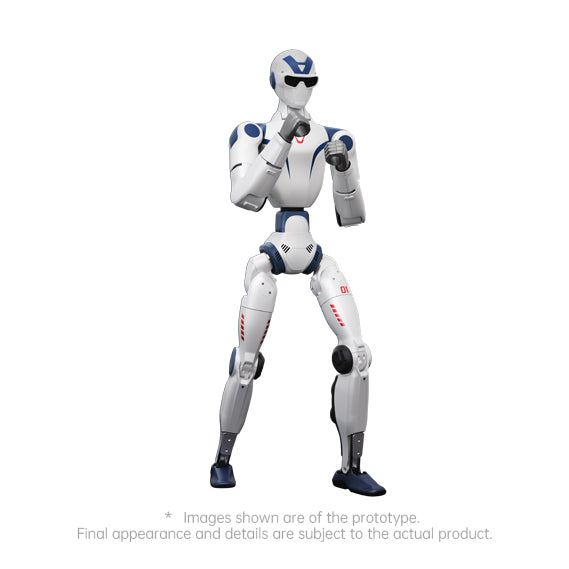 Unitree Robotics Unitree R1 | 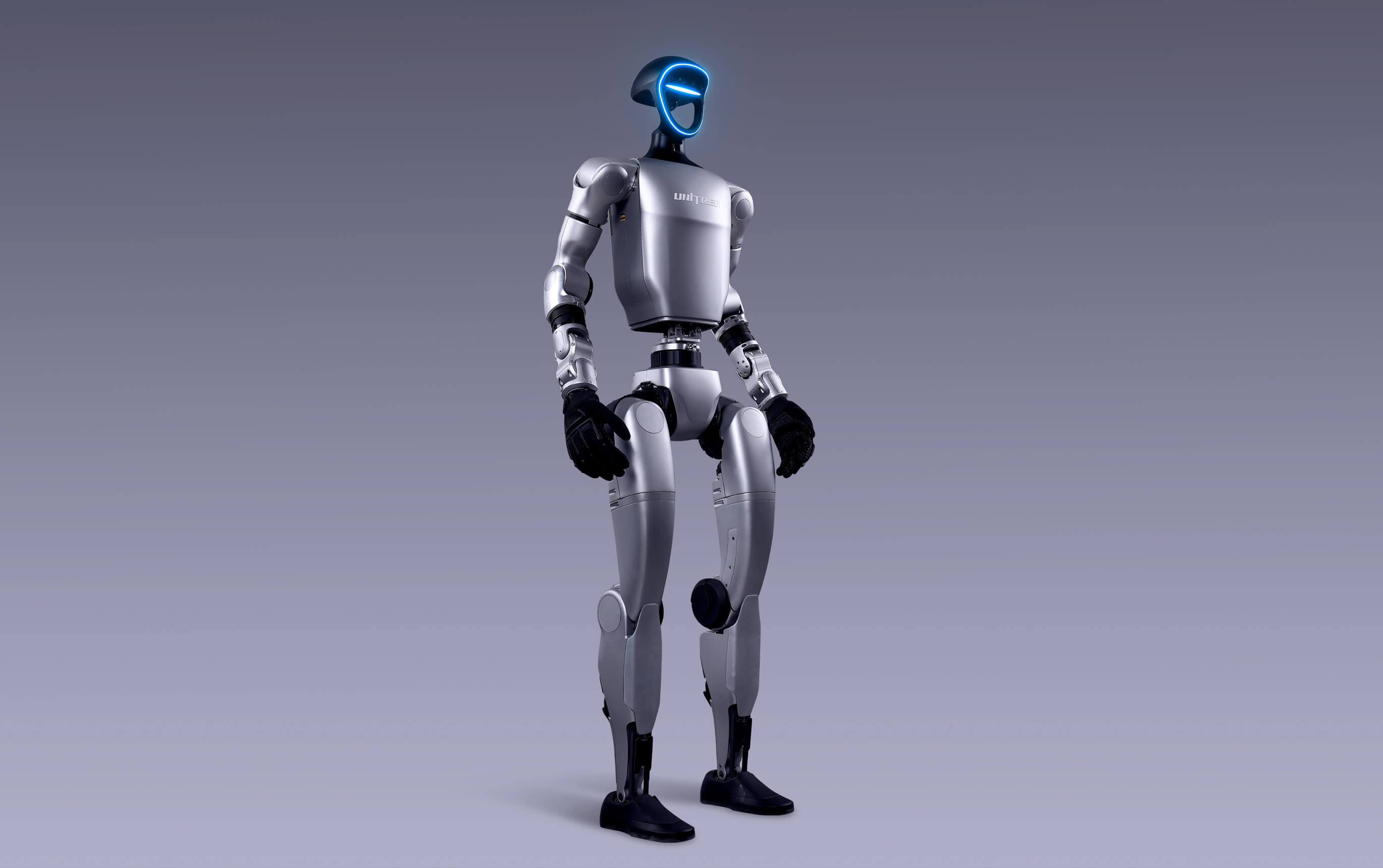 Unitree Robotics Unitree G1 | 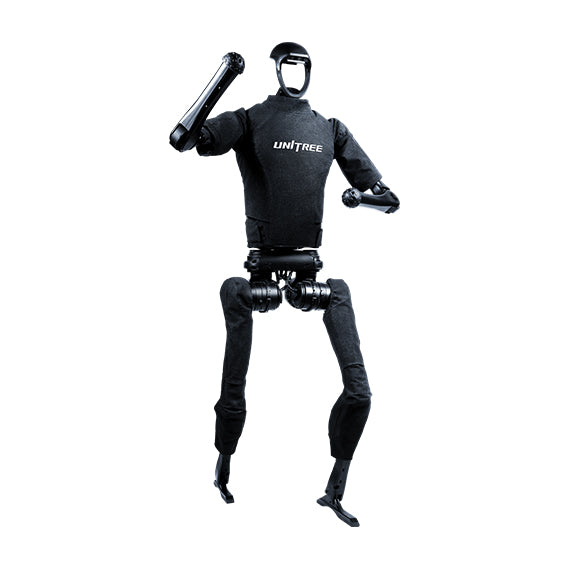 Unitree Robotics Unitree H1 | |
|---|---|---|---|---|
| Price (US) | Price on inquiry | $4,900 – $5,900 | $13,500 – $73,900 | ~$90,000 |
| Availability | Announced | On the market | On the market | On the market |
| Height | Unknown | 1.23 m | 1.32 m standing | ~1.80 m |
| Payload | Unknown | Unknown | Arm ~2 kg | Not rated for H1 |
| DoF | Unknown | 20 | 23 | ~19 |
| Buyer | Enterprise | Individuals | Individuals | Enterprise |
| Made in | China | China | China | China |
What the BYD Humanoid costs — and how to get one
BYD humanoid in planning stage; no price, specs or schedule announced (June 2026).
Planning stage; not orderable
Leasing / RaaS: unknown
Every spec, grouped & sourced
Tap a group to expand. Values are labelled official vs third-party; unknowns are omitted, not guessed.
Body & movement▾
Power & endurance▾
Hands & senses▾
Brains & control▾
Claims vs evidence
Undisclosed
Where it's working
None (planning stage)
Intended use cases: General-purpose humanoid; household scenarios under consideration
Should you consider the BYD Humanoid?
BYD's humanoid stopped being a rumour in August 2026: Xiao Di is a named, working showroom prototype at Di Space in Zhengzhou, doing a defined job with a plan for two or three per store. But there is still no price, no order path, no consumer version and no published spec sheet — the numbers circulating are reports, not BYD's. Watch whether the showroom fleet actually scales. That, not another render, is the signal.
Score reflects stated criteria (availability, data confidence, US relevance) — not hands-on testing or user ratings. We're an independent review & comparison site; we don't sell robots. *Financing figure is illustrative.
How we know this
Data confidence 26/100 · last verified 2026-06-30. Specs are labelled official vs third-party and dated; unknowns are omitted, not guessed.
BYD Humanoid — your questions, answered in full
Does BYD have a humanoid robot?+
Yes. BYD unveiled Xiao Di in early August 2026 at its Di Space experience centre in Zhengzhou, describing it as a fully functional prototype rather than a concept. Its role is greeting visitors and demonstrating cars in BYD's own venues.
How much does the BYD Xiao Di robot cost?+
No price has been announced in any market and there is no order path. BYD's first deployment is into its own showrooms and venues, so no consumer price exists. Any figure you see quoted was invented.
What are the BYD Xiao Di specs?+
BYD has not published a spec sheet. Reports around the launch give roughly 1.61 m in height, about 58.5 kg, 31 degrees of freedom across hands, legs, hips and neck, 360-degree vision and translation across six Chinese dialects and six foreign languages. Treat those as reported, not official.
What does the BYD robot actually do?+
It welcomes visitors, explains electric vehicle models, answers questions and runs product demonstrations in BYD's Di Space venues. BYD frames it as support for customer interaction rather than a replacement for sales staff.
When will the BYD humanoid be released to buyers?+
No date. BYD declined to give a commercialisation schedule, specifications or production targets when confirming the programme. Executive vice-president Stella Li said in June 2026 that robot sales advisers should be ready for real-world use in the next year or two.
Can I buy a BYD robot outside China?+
No. There is no sales channel anywhere, and for the US the FCC Covered List action of 28 July 2026 blocks new equipment authorisations for foreign-produced connected robots. Xiao Di has never held one.
Where would you buy a BYD humanoid if it launched?+
BYD has suggested that if the robots ever become household products, they could be sold through its existing car dealer network. That is a stated possibility rather than a live channel.
How does the BYD robot compare to Tesla Optimus?+
They target different jobs. Optimus is pitched at general-purpose work; Xiao Di is a showroom host. BYD has a working machine in a real role faster, but greeting visitors is a far easier problem than general-purpose labour.