Agility Digit Robot
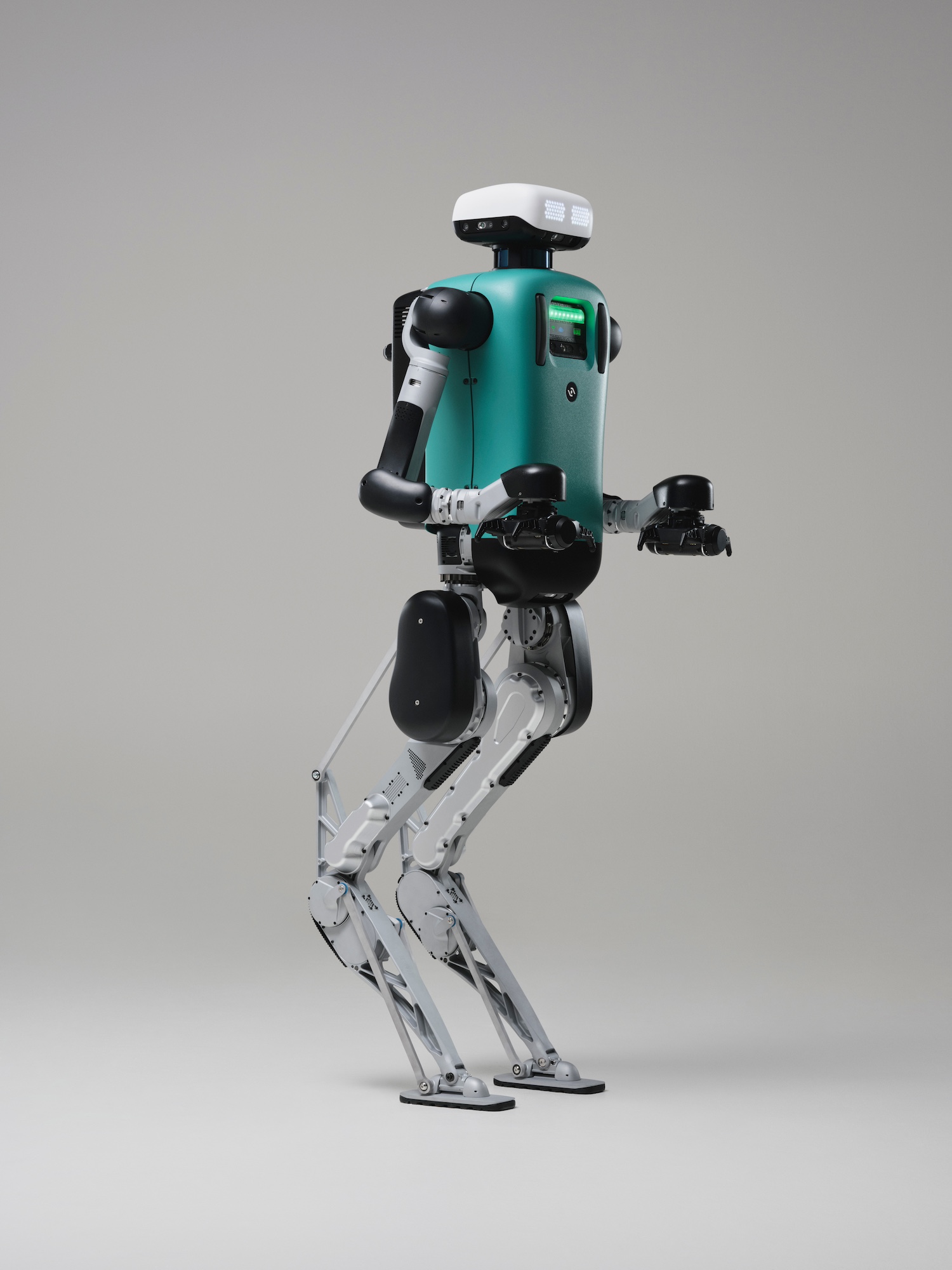
Digit v5 is Agility Robotics' fifth-generation warehouse humanoid and the model every current order is written against. It lifts 50 lb, reaches 7.2 ft, runs up to about 22 hours a day and is built to work without a safety fence. Agility's June 2026 investor filing prices it at $8,500 per robot per month.
This page covers Digit v5, the fifth-generation machine every current Agility order is written against, not the Digit v4 currently working at Schaeffler and GXO. Versus v4, v5 raises payload from 35 lb to 50 lb, vertical reach from 5.5 ft to 7.2 ft and daily work output from about 16 hours to about 22, adds swappable end effectors on an ISO-standard flange, and is designed to operate outside a safety cell. Pricing moves from the old ~$30/hour framing to $8,500 per robot per month in Agility's own June 2026 investor filing.
US buyers: unaffected by the July 2026 import restriction — Digit is built in Oregon.
Agility Robotics manufactures Digit domestically at its Salem facility, so the Covered List addition does not apply. Digit is offered on lease and robots-as-a-service terms rather than outright sale, and that has not changed. US logistics customers weighing an imported alternative now have fewer of them to weigh.
Deployments so far are overwhelmingly US; there is no equivalent European restriction to work around.
As of 2026-08-30
What is the Agility Digit Robot?
Digit, the warehouse robot from Agility Robotics, is one of the few humanoids that already clocks paid shifts.
Agility Robotics has been shipping humanoids longer than anyone else in the West, and the confusing consequence is that "Digit" now refers to at least two quite different machines. Digit v4 is the robot in customer facilities today — 35 lb payload, four-hour runtime, working inside a fenced cell. Digit v5 is the robot with the order book, and it is a substantially different animal: 50 lb payload, 7.2 ft vertical reach, swappable end effectors, and a safety architecture designed so it does not need the fence at all.
This page is about v5, because that is where the money is. All of Agility's disclosed order value — more than $300 million of multi-year commitments as of May 2026 — is for Digit v5, not for the machine currently working at Schaeffler and GXO. Anyone reading a generic "Digit" spec sheet is reading v4 numbers against a v5 contract.
The price picture changed too, and unusually for this industry it changed toward more disclosure rather than less. Agility went public via a SPAC merger announced 24 June 2026, which meant filing an investor presentation with the SEC. That document contains an explicit modelling assumption — $8,500 per Digit per month — which is the first firm, sourced, company-originated price number the humanoid sector has produced. It replaces the roughly $30-an-hour figure that has been circulating since 2024, including in our own entry.
What the Agility Robotics Digit can — and can't — do today
+Does this out of the box
- Lift up to 50 lb (v5 target; v4 is rated at 35 lb) and reach up to 7.2 ft vertically
- Produce up to about 22 hours of work in a 24-hour period, on Agility's stated 10:1 charge ratio, covering three shifts
- Swap end effectors via an ISO-standard flange — gripper changes were demonstrated in August 2026, with autonomous tool changes described as a future capability
- Detect and interpret people nearby using cameras, sensors and NVIDIA IGX Thor-based safe human detection, with an onboard safety PLC for redundancy
- Absorb an unexpected contact without dropping a payload, via cycloidal actuators in the hips and knees
- Work in real production environments — Digit v4 has logged 65,000+ hours across nine customer facilities including Schaeffler, GXO, Toyota Motor Manufacturing Canada and Mercado Libre
- Be managed as a fleet through Agility Arc, the cloud platform handling deployment, orchestration and operations
- Recharge itself autonomously without an operator
!Doesn't do, whatever the demo shows
- Be delivered yet — Digit v5 is a planned 2026 release with early customer deliveries targeted for December 2026
- Demonstrate any v5 figure in the field; the entire v4-to-v5 comparison is labelled management expectation in Agility's own SEC filing
- Operate unguarded with a completed certification — ISO 25785-1 and NRTL field certification of unguarded humanoids are the route, not a finished credential
- Work outdoors, on uneven ground, or in unmapped space
- Handle fine manipulation or assembly; Agility's own capability chart places those beyond v5, in the future-opportunity column
- Be bought without an integration project — Agility's stated pilot runs four to six months before conversion
- Interact with the general public; v5's stated envelope is trained adults, not open retail floors
The split above is unusually clean because Agility filed its own v4-versus-v5 table with a securities regulator rather than putting it in a press release. Everything in the canDo list for v5 carries the same caveat: it is a stated design target from a company that has not yet delivered the machine.
Which Digit is on sale — v4 or v5?
Both, in different senses, and the distinction matters commercially.
**Digit v4** is deployed. Agility's own materials describe deployment commitments across nine customer facilities and more than 65,000 hours of operation as of mid-2026. Its published characteristics are a 35 lb carrying capacity, a four-hour runtime with autonomous charging, 360-degree awareness of people and surroundings, and safety systems that are NRTL-approved and OSHA-recognised. Agility says v4 was the first humanoid to receive NRTL approval on a customer's commercial production line — a genuinely significant first, and one that is more useful to a risk-averse operations director than any capability demo.
**Digit v5** is the launch model. Agility's investor deck labels it "Planned 2026 Release"; co-founder Jonathan Hurst told the Association for Advancing Automation at the end of July 2026 that it would debut toward the end of the year; and press coverage on 9-10 August 2026 described early customer deliveries targeted for December. Every disclosed order is for v5.
The practical read: if you signed today, you would be buying v5 on a delivery schedule, while any near-term evaluation would probably run on v4 hardware. Agility's Customer Acceleration Program is built for exactly that — the deck describes a roughly four-to-six month RaaS pilot leading into an ongoing service or ownership arrangement, with early access to v5 as one of the carrots.
What does Digit v5 actually change?
Agility published a direct v4-versus-v5 comparison in its June 2026 investor presentation. This is the clearest generational spec table any humanoid company has put on the record, so it is worth setting out line by line — v4 first, then v5:
- **Deployment status:** deployed, versus planned 2026 release - **Safety systems:** confined to a workcell, versus built to work alongside humans under a newly approved ISO standard - **Lifting capacity:** up to 35 lb, versus up to 50 lb — about +40% - **Charge ratio:** 2:1, versus 10:1 — 2.5x better - **Max battery output in 24 hours:** up to ~16 hrs, versus up to ~22 hrs — about +35% - **Vertical reach:** up to 5.5 ft, versus up to 7.2 ft — about +30% - **End effectors:** task-specific and fixed, versus changeable and dynamic
Agility flags the v5 column as management expectation rather than measured result, and the ISO standard referenced is ISO 25785-1.
Three of those lines do more work than the others. **Charge ratio** going from 2:1 to 10:1 means the robot spends roughly ten minutes working for every minute charging instead of two — that is what turns a four-hour machine into something that covers three shifts. **Vertical reach** at 7.2 ft is the difference between working the middle of a rack and working the top of it, which changes how many warehouse tasks are addressable at all. And **changeable end effectors** — v5 uses an ISO-standard flange, with gripper swaps demonstrated in August 2026 and autonomous tool changes described as a future capability — converts Digit from a tote-handling robot into a platform.
There is also a change nobody put in the table. Hurst told the Association for Advancing Automation that v5 moves to forward-facing knees, ending the backward-bending leg geometry Digit inherited from the Cassie research platform in 2016. Agility describes proprietary cycloidal actuators in the hips and knees providing the strength and dynamic stability to absorb an unexpected contact without dropping a payload. That is a safety feature disguised as a mechanical one.
How much does a Digit v5 cost per month?
$8,500 per robot per month, under the robots-as-a-service model.
That figure comes from Agility's own investor presentation dated June 2026, filed with the SEC as an exhibit to the Churchill Capital Corp XI business-combination announcement. The relevant footnote is unambiguous: the customer-benefit modelling "assumes $8,500 monthly SaaS pricing per Digit." It works out to roughly $100,000 per robot-year and about $500,000 over the five-year useful life Agility assumes.
The same slide lays out the comparison Agility wants a buyer to make, and it is worth reproducing because the assumptions are stated rather than hidden:
- Fully burdened human labor rate: about $30.50 an hour, derived from the US Bureau of Labor Statistics published rate of $21.49 an hour for material movers in 2025, plus an assumed 35% benefits load and 5% annual wage inflation - Comparison basis: two ten-hour shifts a day, about 120 hours a week, 52 weeks a year - Annual fully burdened human labor cost: about $200,000 - Annual Digit cost under RaaS: about $100,000 - Potential annual customer saving: about $100,000, for a stated 2.0x return
There is also an ownership option modelled at about $400,000 of lifetime cost — an upfront purchase plus a one-time deployment fee plus annual Arc software subscription and maintenance — against about $1.1 million of equivalent labor over five years, giving about $670,000 of net saving, a 1.1-year payback and a stated 2.5x return. Digit's assumed service life in that model is around 31,000 hours.
These are the vendor's illustrative numbers, explicitly labelled as such, and they compare a robot against two full shifts of a human. That comparison flatters the robot, since it assumes the machine covers 120 hours a week of work that a business genuinely has. But the $8,500 is a real, sourced, company-originated figure — which is more than can be said for almost any humanoid price on the internet.
"ROI from day one" — examining the claim
Agility has been pitching Digit as delivering return on investment from day one, and versions of that phrase have appeared in interviews through 2026. It is the kind of claim that deserves arithmetic rather than agreement.
Start with the number in the filings: about $8,500 per robot per month, roughly $100,000 a year. A fully burdened US warehouse associate — wages plus payroll taxes, benefits, recruiting and turnover cost — lands in a broad band that varies by region and shift pattern, but a single shift is generally the same order of magnitude and two shifts are clearly more. So the claim is arithmetically available: if one Digit reliably replaces the labour content of more than one shift, it pays.
The conditions attached are where it gets hard.
The robot has to be **available**. A machine down for maintenance, waiting on a part, or stopped because a tote presented at the wrong angle is not producing. Agility has published operating hours in aggregate — over 65,000 across the fleet — but not a uptime percentage or a mean time between interventions.
The task has to be **narrow enough to work and broad enough to matter**. Humanoid economics fail in the middle: a task simple enough for a robot is often simple enough for a fixed conveyor at a tenth of the cost, while a task genuinely needing human flexibility is beyond current autonomy.
And the deployment carries costs the monthly figure does not include: mapping, workflow design, integration with the AMR fleet and the WMS, staff training, and the safety review. No vendor itemises these, Agility included.
The fair verdict is that "ROI from day one" is a defensible statement about the monthly fee versus a labour line, and a misleading one about a deployment's real first-year cost. Nine customer sites over several years is not the adoption curve you would expect if the sum were as easy as the phrase implies.
Where did the "$30 an hour" number come from, and is it still right?
It came from Agility's own leadership in 2024, in the context of the GXO robots-as-a-service agreement, and it is now the wrong shape.
At the time, framing Digit as an hourly cost was a good sales move: it put the robot directly next to a warehouse wage, and $30 an hour was a hair under a fully burdened US material handler. It also had an awkward implication that nobody dwelt on, which is that an hourly rate only bills for hours worked — and a four-hour-runtime robot does not work very many of them.
The monthly figure is more honest about the economics and, for a buyer, materially better. At $8,500 a month for a machine Agility now says can produce up to about 22 hours of work in 24, the effective hourly cost falls well below $30 — roughly $13 an hour against the deck's own 120-hour week, and lower still if you actually run three shifts. Our previous entry carried the $30/hr figure. It has been superseded and we have replaced it.
One number to treat with more caution: several resale and analyst sources put an outright Digit purchase near $250,000. Agility has never published a purchase price, and $250,000 sits above the roughly $400,000 five-year ownership total in the deck only if you assume very low recurring fees. Treat any purchase figure you see as third-party estimate, not price.
What is the $300 million order book, really?
One contract, with one undisclosed customer, for 1,000 robots over three years — and it is worth reading the footnote.
Agility's filings state more than $300 million of multi-year orders for Digit v5 as of May 2026. The accompanying note explains that this figure "relates to 1,000 Digit v5 robots with three-year term RaaS contract, which includes warrants issued to purchaser vesting proportionately to robots deployed," is "subject to the realization of certain contractual milestones," and is expressly "not a measure of current period revenue."
Unpack that:
- **The arithmetic checks out.** 1,000 robots x 36 months x $8,500 is about $306 million, or roughly $300,000 per robot across the term. The order figure and the price figure are internally consistent, which is reassuring. - **It is one customer.** Not thirty customers averaging thirty robots. Concentration risk is total. - **It is milestone-conditioned.** If v5 slips or fails a milestone, the number is contingent rather than contracted in any cash sense. - **The customer got warrants.** Equity in Agility, vesting as robots deploy. That is a real alignment mechanism and also a signal that the customer needed more than a price to sign.
Separately, Agility describes a pipeline of over 30 customers in active discussion or in its Customer Acceleration Program. None of that is contracted.
None of this makes the order fake — it is the largest disclosed humanoid commitment anywhere, and it is filed with a securities regulator, which is a different standard of claim than a press release. It is just not $300 million of revenue, and reporting that treats it as such is wrong.
Agility on Nasdaq: what the SPAC means for a customer
On 24 June 2026 Agility Robotics announced a merger with Churchill Capital Corp XI, valuing the combined company at $2.5 billion, expected to raise over $620 million, with a Nasdaq listing targeted by the end of 2026 under the ticker AGLT. Coverage through August 2026 has been steady rather than dramatic: further backing detail from the sponsor, and a management reshuffle in which the combined CFO-COO role was split as the company prepared to go public.
A SPAC is not an IPO, and the difference matters when you are reading the numbers. A traditional listing is priced by institutional demand; a SPAC merger is a negotiated valuation between two parties, and the projections that accompany one are permitted to be forward-looking in a way an IPO prospectus is not. Treat the growth curves accordingly.
What it does give a buyer is unusual: disclosure. Because these are securities filings, Agility had to put real numbers on the record — the roughly $8,500 per robot per month figure, the order book of more than $300 million in committed multi-year orders, a pipeline of 30-plus evaluating customers, nine live customer sites and over 65,000 operating hours. No other humanoid company has been forced to publish anything comparable. Every one of Agility's competitors is private and quotes on request.
The risks that come with it are equally real. A newly listed hardware company with a concentrated order book carries quarterly pressure that a private one does not, and there is a scenario in which a difficult first year of reporting reshapes pricing, support or the roadmap. If you are signing a three-year service contract, ask what happens to it under a change of control, and ask it before the listing rather than after.
What does "cooperatively safe" mean, and who certifies it?
It is Agility's term for a humanoid that can work outside a cage, and it is the company's entire strategic bet.
Today, essentially every industrial humanoid deployment segregates the robot from people. That is why humanoid pilots so often sit in a corner doing one task: the cell is the safety case. Agility argues that removing the barrier is the unlock for scale, and breaks cooperative safety into three requirements — detection (understanding people and surroundings), reaction (responding safely in real time), and anticipation (moving predictably enough that people can read the machine).
The certification picture, in order of how much weight it carries:
**Already done.** Digit v4 received NRTL approval on a customer's commercial production line — the first humanoid to do so, by Agility's account, and a real regulatory artifact rather than a marketing claim. Its safety systems are described as NRTL-approved and OSHA-recognised.
**In progress.** Agility says it proposed and leads the ISO working group writing safety requirements for dynamically stable industrial mobile robots, referencing ISO 25785-1, which is the path toward NRTL field certification of unguarded humanoids. Leading the working group that writes your own compliance route is a strong position and also, plainly, a conflicted one.
**Technical.** Digit v5 is the first launch partner for NVIDIA's Halos for Robotics platform, combining NVIDIA IGX Thor and Halos Core with onboard safe human detection, safe motion control and an onboard safety PLC for redundancy. NVIDIA invested in Agility in September 2025; the safety partnership was announced in June 2026.
What is not yet established: whether a v5 has been field-certified unguarded at a customer site. The standard exists, the architecture exists, the first deliveries are targeted for December 2026. The proof is the deployment.
Where is Digit working today?
Four named customers, nine facilities, 65,000-plus hours.
**Schaeffler** — the German motion-technology group, which invested in Agility in November 2024 and agreed to deploy Digit across its facilities. Agility's deck shows a v4 in Cheraw, South Carolina placing 25-pound baskets of bearing components from a stamp press into an industrial washing machine, which is about as unglamorous and as real as robotics gets.
**GXO Logistics** — the multi-year RaaS agreement signed in June 2024, the first of its kind in the industry, running tote handling in distribution.
**Toyota Motor Manufacturing Canada** — automotive manufacturing.
**Mercado Libre** — Latin American e-commerce logistics.
Agility's summary metrics as of the June 2026 filing: deployment commitments in nine customer facilities and more than 65,000 hours of operation. By August 2026 the figure being quoted was 65,000-plus hours across nine sites, feeding the AI models. Two things are notable about that number. It is real operating time in production environments, which almost no competitor can claim. And it is also, spread over nine facilities and a couple of years, roughly one shift-year per site — this is a fleet in the dozens, not the hundreds.
That is the correct scale to hold in your head when reading about 1,000-robot orders.
Can a company buy a Digit outright, or is it lease-only?
Both are offered. Agility's deck describes two adoption models and it is fairly clear about why.
**RaaS** — a one-time deployment fee plus an annual subscription that includes the hardware, access to the Agility Arc software platform and maintenance. Modelled at $8,500 a month, about $100,000 a year, roughly $500,000 across a five-year life. Agility's own realisation curve shows about 25% of lifetime revenue landing in year one.
**Ownership** — a one-time deployment fee plus an upfront purchase of the robot, then annual Arc subscription and maintenance services. Modelled at about $400,000 of lifetime cost to the customer, with about 65% of Agility's revenue recognised in year one.
The honest framing is that ownership is better for Agility's near-term cash and RaaS is better for a customer who is not yet sure the robot works. Given that no v5 has been delivered to a customer as of 30 August 2026, RaaS is the sensible way in — you are renting an unproven machine with the vendor carrying the maintenance risk.
One thing neither model removes: integration. Agility's own pilot timeline runs four to six months of on-site RaaS pilot before a customer converts, covering workflow replication and alignment on safety, infrastructure and uptime expectations. Budget for that time, and for the internal headcount it consumes, because it does not appear in any price table.
Does the July 2026 US import restriction affect Digit?
Not directly — Digit is built in Oregon — and indirectly it is the best news Agility got all year.
The rule: on 28 July 2026 the FCC added foreign-produced advanced robotic devices to its Covered List, following a national security determination issued the previous day. Despite the headlines, the text is country-neutral. A device is domestic only if it is manufactured in the United States with more than 65% domestic component cost, rising to 75% from 2029, and US assembly of imported parts does not qualify. What the listing does is block new FCC equipment authorization, without which a device cannot lawfully be imported, marketed or sold in the US. Units authorized before 28 July 2026 keep selling and keep receiving updates until at least 1 January 2029, nothing is recalled, and federal purchases are excluded.
Agility manufactures Digit domestically at its Salem, Oregon facility, so none of this touches it. The lease and robots-as-a-service structure is unchanged.
The competitive effect is larger than the compliance effect. A US logistics director evaluating humanoids in June 2026 could put a Chinese machine costing a quarter as much on the shortlist. From August 2026 that option is legally awkward at best for new units, and the field narrows to a handful of Western vendors — of which Agility is the only one with a real operating record, a real factory and a price it was willing to put in a securities filing. Whether that is good for buyers is a separate question; less competition rarely lowers a quote.
How many Digits can Agility actually build?
On paper, 10,000 a year. In practice, nothing close to that yet.
RoboFab, Agility's manufacturing facility in Salem, Oregon, is described as the world's first full-scale humanoid manufacturing plant and is designed for production of up to 10,000 Digits annually. Roughly 75% of Digit's parts are sourced within the United States, and Agility owns many of the highest-value hardware systems in the robot rather than buying them in — a deliberate choice that McKinsey's April 2026 work on humanoid supply chains identifies as where differentiation and cost actually live. The company also lists sites in Pittsburgh, Pennsylvania and Fremont, California, the latter opened in July 2026 as an AI training hub, and holds 34 issued patents with more than 60 pending applications.
"Designed for up to 10,000" is a nameplate figure, not a run rate. Against a fleet currently measured in dozens and a single 1,000-unit order spread over three years, the constraint on Agility in 2027 will not be floor space. It will be actuator supply, hiring, and whether v5 works as specified in a customer's building on the first attempt.
The US sourcing figure is worth holding onto for a different reason. A domestic supply chain is a genuine commercial asset in the current trade environment, and Agility is one of very few humanoid makers that can put a number on it.
What risks should a buyer price in?
Five, roughly in order of how much they should affect a decision.
**Digit v5 has not shipped.** Every performance figure in the comparison table is management expectation, labelled as such in an SEC filing. The 50 lb payload, the 22-hour day, the 10:1 charge ratio — none of it has been demonstrated at a customer site as of 30 August 2026.
**The order book is one customer.** More than $300 million from a single undisclosed buyer, milestone-conditioned, with warrants attached. If that customer pauses, Agility's commercial story changes overnight.
**The safety route is not finished.** Cooperative safety depends on a standard, ISO 25785-1, and on field certification of unguarded humanoids that has not yet happened. Agility leads the working group. That is an advantage and a dependency at the same time.
**Agility is a SPAC.** The Churchill Capital Corp XI merger was announced 24 June 2026 at a $2.5 billion pre-money equity value, with over $620 million in expected gross proceeds — $420 million of trust cash assuming no redemptions, plus about $200 million of PIPE at $10 a share led by Foxconn — closing expected in the fourth quarter of 2026 under the ticker AGLT. Redemptions can gut a SPAC's proceeds, and this financing is what funds the v5 ramp.
**The labor comparison is generous.** The $30.50-an-hour, 120-hour-week baseline assumes you have two full shifts of work for the robot and would otherwise hire two people for it. Occassionally that is true. Frequently it is not, and a robot at 40% utilisation costs the same $8,500 a month.
A buyer's checklist before signing
If you are the operations person who will actually own this decision, these are the questions worth asking, in roughly this order. None of them are answered in public.
**Which robot am I getting?** v4 or v5, and when. All the disclosed order value is for v5, first early-customer deliveries are targeted for December 2026, and v4 is the machine in facilities today. A contract signed now may run its first year on a different robot than the one in the pitch.
**What is in the $8,500?** Robot, Agility Arc cloud, mapping, support, spares, replacement on failure — get each line named. The figure comes from an investor deck, not a rate card, and it will not be the number on your quote.
**What is the committed uptime?** Ask for a service level with a remedy attached. If none is offered, the ROI case is your risk, not Agility's.
**Who does the integration, and at what cost?** AMR handoffs and WMS integration are where humanoid deployments actually stall.
**What is the safety evidence for a fenceless installation?** Agility's cooperative-safety architecture is the design intent for v5. Ask which standard it is assessed against, by whom, and what your own insurer and safety officer will require.
**What happens on change of control, or if the listing goes badly?** A three-year service contract with a newly public single-product company deserves an explicit clause.
**Can I see a reference site?** Nine exist. Agility names Schaeffler, GXO, Toyota and Mercado Libre. Ask to talk to one that is past its first year.
The Agility Robotics Digit on video
Hands-on reviews and teardowns, picked for what they actually show rather than how loud the thumbnail is.
The newest thing on Digit anywhere — v5 working without safety fencing, which is the whole commercial argument
A methodical run through Digit's bird-leg kinematics and what it can actually lift
Twenty minutes with the CEO on stage next to the robot, with the deployment economics spelled out
Filmed inside a paying customer's warehouse, so you see the real duty cycle rather than a demo loop
Agility Robotics Digit price ladder — and what the entry price leaves out
The headline number is almost never the number you pay. Here is each configuration, and what it does not include.
| Configuration | Price | What you get | What it excludes |
|---|---|---|---|
| Digit v5 — RaaS (robots as a service) | $8,500 per robot per month (~$100,000/year, ~$500,000 over 5 years) | Digit hardware, Agility Arc software access, maintenance services | One-time deployment fee (separate), site integration, customer-side operations headcount |
| Digit v5 — ownership | ~$400,000 total 5-year cost to customer (modelled) | Upfront robot purchase, one-time deployment fee, annual Arc subscription and maintenance | Purchase price is not published separately; site integration and operations excluded |
| Contracted order benchmark | ~$300,000 per robot over a three-year RaaS term | Derived from Agility's disclosed 1,000-robot, three-year, $300M+ order | Milestone-conditioned; includes warrants issued to the purchaser |
| Third-party purchase estimate | ~$250,000 outright (unverified) | Reseller and analyst estimate only | Not an Agility figure; no published purchase price exists |
| Superseded — hourly framing | ~$30 per hour (2024, no longer used) | Legacy framing from the GXO RaaS agreement era | Replaced by the monthly figure in Agility's June 2026 investor materials |
USD throughout; no conversion applied.
Source: Agility's own investor materials filed alongside its SPAC merger model roughly $8,500 per robot per month. Independently, the disclosed order book — over $300M of committed multi-year orders arising from a single three-year, 1,000-robot contract — works out near $300,000 per robot across the term, corroborating the monthly figure. Agility publishes no list price. — estimate, not an official list price · as of 2026-08-30
What owning one actually costs
| Cost | Typical | Notes |
|---|---|---|
| RaaS subscription | $8,500 per robot per month | From Agility's June 2026 investor presentation footnote. Bundles hardware, Arc software and maintenance. |
| One-time deployment fee | Not published as a price | Charged in both RaaS and ownership models. Agility's internal cost for it is modelled around $15,000; what the customer pays is not disclosed. |
| Annual software and maintenance delivery | Not published as a price | Agility models its own annual cost of delivering software and maintenance at roughly $15,000 per robot. Customer-facing pricing is bundled. |
| Integration and pilot period | Not published | Agility's own timeline is a four-to-six month RaaS pilot covering workflow replication and alignment on safety, infrastructure and uptime. This consumes customer engineering time regardless of who pays. |
| Assumed service life | ~31,000 operating hours / 5 years | Agility's modelling assumption. Replacement or refresh economics beyond that point are not disclosed. |
| Labor baseline for comparison | ~$30.50 per hour fully burdened | Agility's stated comparator, built from the BLS 2025 material-mover rate of $21.49/hour plus a 35% benefits load and 5% annual wage inflation. |
| Site safety work | Not published | Digit v4 requires a workcell. Digit v5 is designed to remove it, but unguarded field certification is not complete, so budget for a cell until it is. |
Who the Agility Robotics Digit is — and isn't — for
+Where it shines
- US-built, with local support and supply chain.
- Stated real-world payload (16 kg).
- Specs are well-sourced — high data confidence.
!Watch-outs
- Sold to businesses only — not to private buyers.
How the Agility Robotics Digit stacks up
Side by side with similar robots — the one you're reading about is highlighted.
| This robot Agility Robotics Agility Robotics Digit | 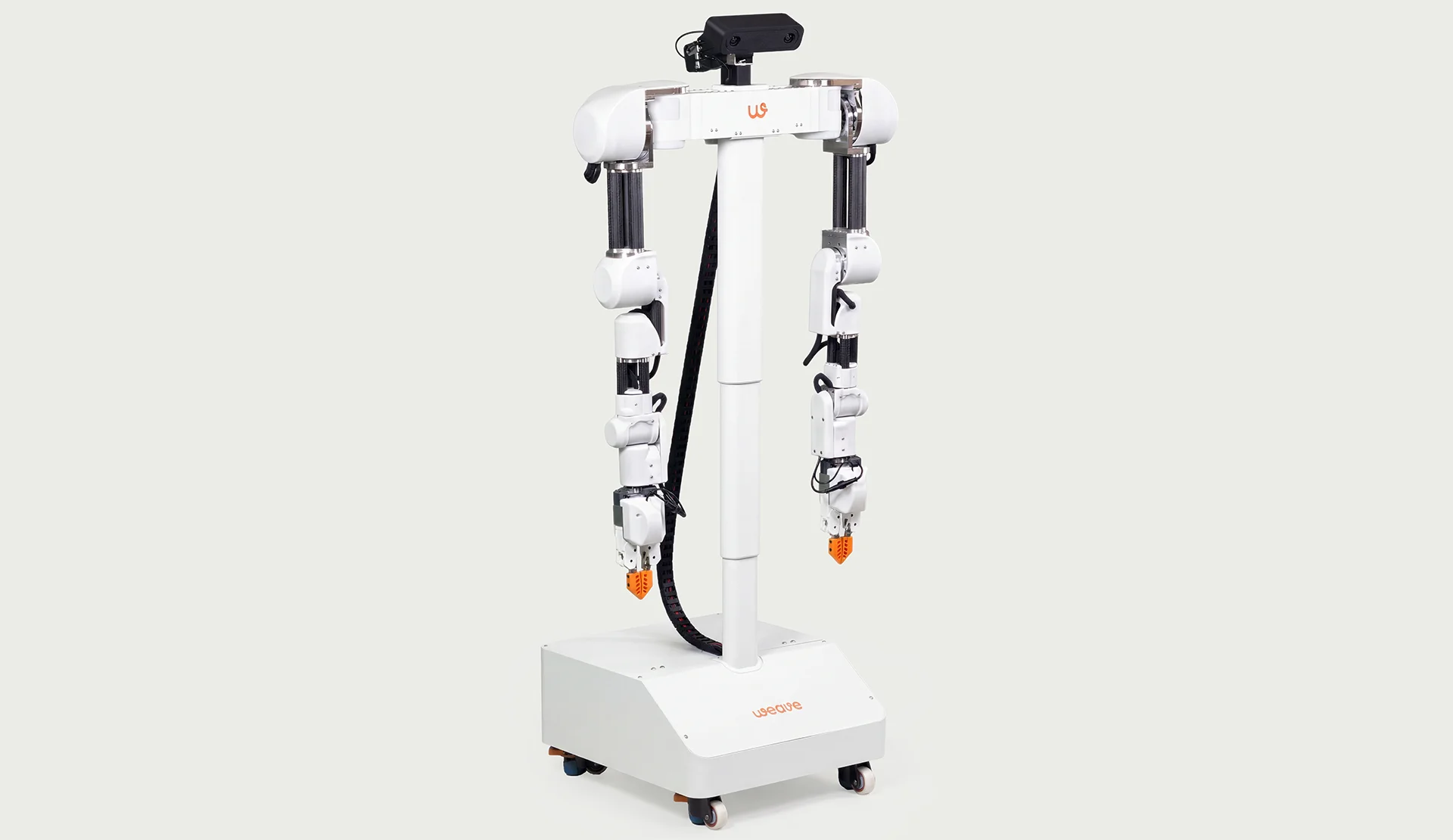 Weave Robotics Weave Isaac | 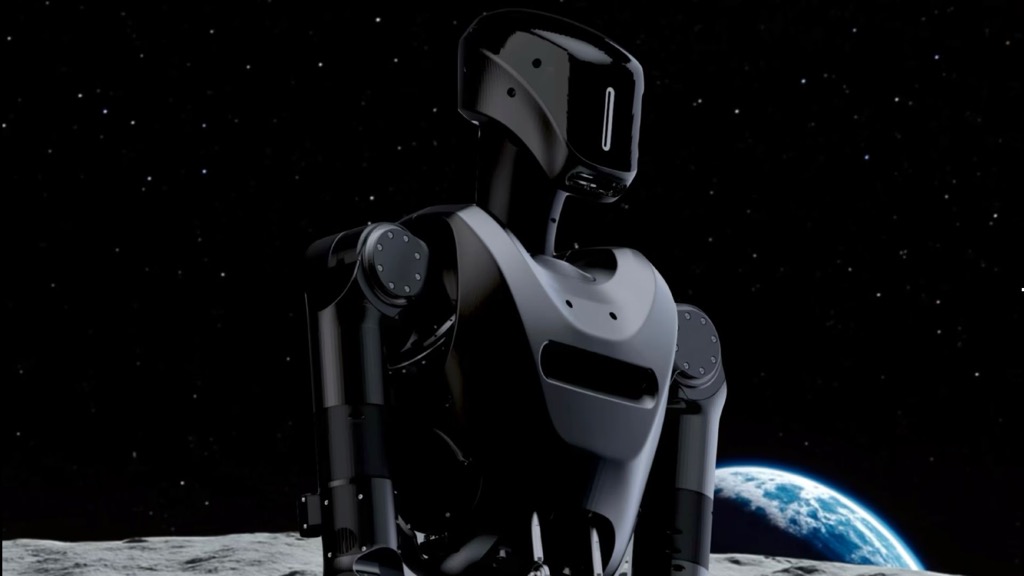 Foundation (Foundation Robotics) Foundation Phantom | 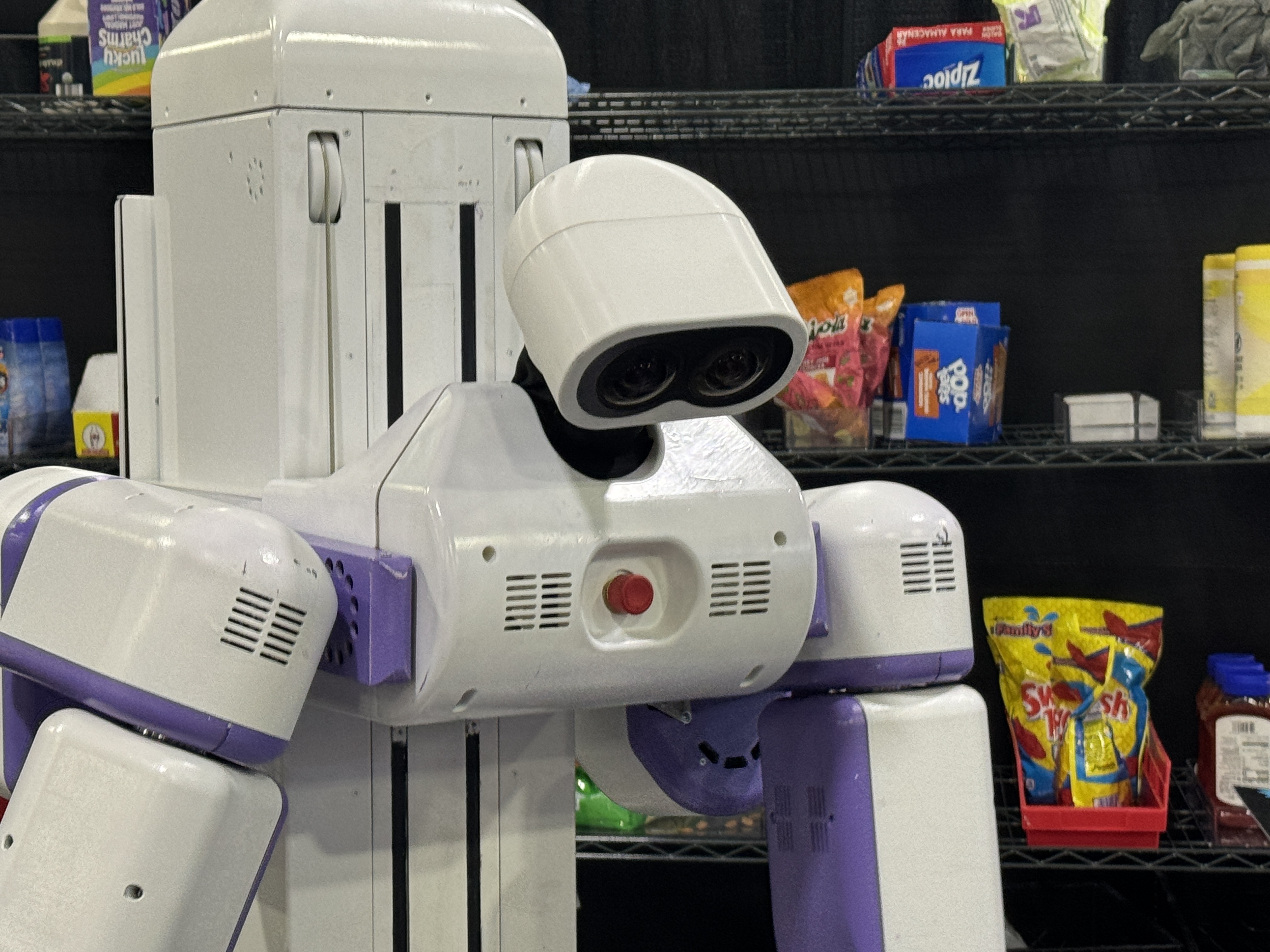 Reflex Robotics Reflex Robot | |
|---|---|---|---|---|
| Price (US) | ~$250,000 | $7,999 – $9,999 | $100,000 – $150,000 | ~$10,000 |
| Availability | Available by service contract only — Digit is not sold outright, customers pay per deployment | On the market | Lease / RaaS | Pilot programs |
| Height | 1.75 m | Unknown | 1.75 m | Adjustable via spine |
| Payload | 16 kg | Unknown | 40 kg dual-arm | 25+ lb/arm |
| DoF | 16 | Isaac | 29 | Unknown |
| Buyer | Enterprise | Individuals | Enterprise | Enterprise |
| Made in | US | US | US | US |
Every spec, grouped & sourced
Tap a group to expand. Values are labelled official vs third-party; unknowns are omitted, not guessed.
Body & movement▾
Power & endurance▾
Hands & senses▾
Brains & control▾
Claims vs evidence
Autonomous task execution via Agility Arc cloud; can self-stand after fall; autonomy level unverified
Where it's working
Schaeffler (incl. Cheraw, South Carolina), GXO Logistics (multi-year RaaS since Jun 2024), Toyota Motor Manufacturing Canada, Mercado Libre; deployment commitments across 9 customer facilities and 65,000+ operating hours as of Jun 2026
Intended use cases: Warehouse/factory logistics: tote handling, AMR-to-conveyor moves, bulk material handling, sortation
What owners, reviewers and the press say about the Agility Robotics Digit
Ratings and reception gathered from where this machine is actually sold and discussed. We summarise the signal — we don't republish anyone's reviews.
Digit is offered to logistics operators under a service contract rather than sold at retail, so there is no buyer star rating anywhere; the equivalent business-software directory page for the company holds zero reviews.
- TIME — named Digit to the 200 Best Inventions of 2024 · 2026-08-30
- The Robot Report — gave Digit the inaugural RBR50 Robot of the Year award · 2026-08-30
- Interesting Engineering — reported Digit passing 100,000 totes moved in live warehouse operation at a GXO site, 2025 · 2026-08-30
+Reviewers consistently praise
- actually deployed and doing paid work, with published throughput
- robots-as-a-service model lowers the buying barrier
- recovers from falls and gets back up unaided
!And consistently criticise
- legs may be unnecessary complexity for warehouse aisles
- narrow task envelope, essentially tote handling
- wheeled competitors are cheaper and quicker at the same job
What owners and developers actually say
Digit has the most grounded reception in the category because there is operational data to argue about rather than demo footage. Warehouse-automation readers debate whether a bipedal robot earns its complexity against wheeled bimanual machines that are simply faster at pick-and-place, and that scepticism is the dominant recurring theme. What almost nobody disputes is that it is genuinely working shifts, which is a different conversation from every other robot here.
r/robotics, r/Automate, r/singularity, LinkedIn logistics-automation discussion · as of 2026-08-30
Consensus drawn from two award citations, trade reporting on deployment milestones, and around eight company and broadcast videos, the largest at roughly 322K and 174K views.
Agility Robotics Digit: the claims, checked
preorder
Digit v4 is genuinely deployed — nine customer facilities, 65,000+ operating hours, named customers. Digit v5, the model every order is written against, has not been delivered: Agility's filings call it a planned 2026 release and August 2026 coverage targets early customer deliveries for December 2026. More than $300 million of multi-year v5 orders are committed but milestone-conditioned.
as of 2026-08-30
- misleading“Digit costs about $30 an hour”
That framing dates from 2024 and Agility's leadership at the time. Its June 2026 investor presentation, filed with the SEC, models $8,500 per Digit per month instead — roughly $13 an hour against the deck's own 120-hour week. The hourly number is superseded.
- misleading“Agility has $300 million in orders for Digit”
True in amount, misleading in shape. Agility's filing states the figure is for Digit v5 as of May 2026, relates to 1,000 robots on a three-year RaaS contract with a single purchaser who also received warrants, is subject to contractual milestones, and is expressly not a measure of current period revenue.
- unverified“Digit v5 lifts 50 lb and works 20-plus hours a day”
These are Agility's stated targets, labelled in its own SEC filing as based on management expectations. Digit v5 has not been delivered to a customer as of 30 August 2026, so no field data exists.
- unverified“Digit v5 works without a safety fence”
It is designed to. Agility calls this cooperative safety, cites ISO 25785-1, and has NVIDIA IGX Thor and Halos Core in the safety architecture. Field certification of unguarded humanoids is described as a path being created, not a credential already held.
- true“Digit is the first humanoid in commercial production deployment”
Digit v4 has deployment commitments across nine customer facilities and more than 65,000 operating hours, with Schaeffler, GXO, Toyota Motor Manufacturing Canada and Mercado Libre named. Agility also says v4 was the first humanoid to receive NRTL approval on a customer's commercial production line.
- misleading“Agility can build 10,000 Digits a year”
RoboFab in Salem, Oregon is designed for up to 10,000 units annually. That is nameplate capacity, not output. The deployed fleet as of mid-2026 is measured in dozens across nine facilities.
- unverified“You can buy a Digit for about $250,000”
Agility publishes no purchase price. The $250,000 figure comes from resellers and analysts. Agility's own ownership model shows roughly $400,000 of lifetime customer cost including deployment, software and maintenance.
- false“Agility Robotics is publicly listed”
As of 30 August 2026 the merger with Churchill Capital Corp XI, announced 24 June 2026 at a $2.5 billion pre-money equity value, is expected to close in the fourth quarter of 2026 under the ticker AGLT. It has not closed.
Agility Robotics in 2026
Agility Robotics was founded in 2015 by Jonathan Hurst, Damion Shelton and Mikhail Jones out of Oregon State University's Dynamic Robotics Laboratory, with early funding from DARPA. It is headquartered in Salem, Oregon, with sites in Pittsburgh and Fremont, California, and it has the strongest operational record in Western humanoid robotics — nine customer facilities, more than 65,000 hours of production operation, and named deployments at Schaeffler, GXO, Toyota Motor Manufacturing Canada and Mercado Libre. On 24 June 2026 it announced a merger with Churchill Capital Corp XI at a $2.5 billion pre-money equity value, expecting more than $620 million of gross proceeds and a listing under the ticker AGLT, with closing anticipated in the fourth quarter of 2026. The investor and partner list is heavy: DCVC, NVIDIA, Amazon, SoftBank Vision Fund 2, Foxconn, Schaeffler, Abico and Playground Global. Peggy Johnson, previously CEO of Magic Leap, runs the company; Hurst remains as Chief Robot Officer. Manufacturing is in-house at RoboFab in Salem, designed for up to 10,000 units a year with roughly 75% of parts sourced in the United States. Agility's whole position rests on being boring in the right way — certified, deployed, measured — while the sector around it sells demonstrations.
What to watch next
- December 2026 — first Digit v5 deliveries to early customers, per August 2026 coverage of the v5 briefing; this is the single most important date on the page
- Q4 2026 — expected close of the Churchill Capital Corp XI merger and start of trading under the ticker AGLT; watch the redemption rate, which determines how much of the $620 million actually arrives
- 2026-2027 — first NRTL field certification of an unguarded humanoid under ISO 25785-1; until this happens, cooperative safety is a design goal
- 2027 — whether the 1,000-robot order's contractual milestones are met and robots begin deploying, and whether the purchaser's warrants start vesting
- Ongoing — whether Agility discloses the identity of the customer behind the $300M+ order, or adds a second order of comparable size from its 30-plus pipeline
Should you consider the Agility Robotics Digit?
Digit v5 is the most credible humanoid purchase on the market, and it is still a purchase you make on faith. Credible, because Agility is the only Western humanoid company with a real operating record, a real certification history, a real factory, and a price it was willing to put in a securities filing — $8,500 a robot a month, roughly half a fully burdened two-shift human. On faith, because v5 itself has not been delivered to anyone: the 50 lb payload, the 22-hour day and the fence-free operation are all management expectations, and the order book that makes the story work is one customer with milestone conditions and warrants. Buy the pilot, not the projection. If you have two shifts of genuine tote-handling work, a RaaS pilot in 2027 is a defensible bet with the vendor carrying the hardware risk. If you have half a shift, the monthly fee does not care.
Score reflects stated criteria (availability, data confidence, US relevance) — not hands-on testing or user ratings. We're an independent review & comparison site; we don't sell robots. *Financing figure is illustrative.
How we know this
Data confidence 78/100 · last verified 2026-08-30. Specs are labelled official vs third-party and dated; unknowns are omitted, not guessed.
Agility Robotics Digit — your questions, answered in full
How much does an Agility Digit cost?+
$8,500 per robot per month under robots-as-a-service, from Agility's June 2026 investor presentation filed with the SEC. That is roughly $100,000 a year and about $500,000 over the five-year life Agility assumes. An ownership option is modelled at roughly $400,000 of total five-year cost. There is no published outright purchase price.
Is the $30-an-hour figure still accurate?+
No. It dates from 2024 and has been replaced by the monthly figure in Agility's own investor materials. At $8,500 a month for a machine rated at up to about 22 hours of work a day, the effective hourly cost is far lower — roughly $13 an hour on Agility's stated 120-hour week.
What is the difference between Digit v4 and Digit v5?+
Payload rises from 35 lb to 50 lb, vertical reach from 5.5 ft to 7.2 ft, daily work output from about 16 hours to about 22, and the charge ratio from 2:1 to 10:1. End effectors become swappable via an ISO-standard flange, and v5 is designed to work outside a safety cell rather than inside one. Reporting also describes a move to forward-facing knees.
Can I buy a Digit v5 now?+
You can order one. You cannot receive one yet — early customer deliveries are targeted for December 2026, and Agility's filings describe v5 as a planned 2026 release. Agility offers both a RaaS subscription and an ownership model, and runs a four-to-six month pilot program before conversion.
Does Digit really work without a safety fence?+
That is the design intent, which Agility calls cooperative safety, built on NVIDIA IGX Thor and Halos Core with onboard safe human detection and a safety PLC. The certification route runs through ISO 25785-1 toward NRTL field certification of unguarded humanoids. That certification has not been completed, so plan for a workcell until it is.
Who actually uses Digit today?+
Schaeffler, GXO Logistics, Toyota Motor Manufacturing Canada and Mercado Libre are the named customers, across nine committed facility deployments with more than 65,000 hours of operation as of mid-2026. Those are Digit v4 machines.
Is the $300 million order real?+
It is real and it is filed with a securities regulator, which is a higher standard than a press release. But it is one undisclosed customer, 1,000 robots over a three-year RaaS term, conditioned on contractual milestones, with warrants issued to the purchaser — and Agility states explicitly that it is not current revenue.
How many Digits exist?+
Agility has not published a fleet count. The disclosed figures — nine facilities, 65,000-plus operating hours — imply a fleet in the dozens rather than the hundreds. RoboFab is designed for up to 10,000 units a year, but that is nameplate capacity.
Is Digit affected by the US restriction on imported robots?+
No. Digit is manufactured at Agility's Salem, Oregon facility, so the FCC's 28 July 2026 Covered List addition — which applies to devices not built in the US with more than 65% domestic content — does not reach it. The indirect effect is competitive: several cheaper imported humanoids lost their route into the US market for new units.
Is Agility Robotics a public company?+
Not yet. On 24 June 2026 it announced a merger with Churchill Capital Corp XI at a $2.5 billion valuation, expected to raise over $620 million, with a Nasdaq listing under the ticker AGLT targeted by the end of 2026. Because the deal requires securities filings, Agility has disclosed more about pricing and order book than any other humanoid company.
Does Toyota use Digit?+
Yes. A robots-as-a-service agreement with Toyota was reported in February 2026, and Toyota Motor Manufacturing Canada appears among Agility's named customers alongside Schaeffler, GXO Logistics and Mercado Libre. Agility has disclosed nine customer facilities and more than 65,000 operating hours as of mid-2026, but no per-customer unit counts.
Is the 'ROI from day one' claim true?+
It is arithmetically defensible against a labour line — about $8,500 a month is roughly one fully burdened US warehouse shift — and misleading about total first-year cost, because mapping, integration, training and safety review are not in that figure and no vendor itemises them. Agility has also never published an uptime or intervention-rate number, which is what the claim really rests on.
Peer-reviewed research on the Agility Robotics Digit
Published academic work — peer-reviewed papers and preprints — involving this robot or its maker's systems, indexed in scholarly databases (OpenAlex, arXiv). Not blog posts or press write-ups.
- Reinforcement Learning for Robust Parameterized Locomotion Control of Bipedal RobotsZhongyu Li, Xuxin Cheng, Xue Bin Peng et al. · 2021 · IEEE ICRA 2021 · DOI 10.1109/ICRA48506.2021.9560769
- Sim-to-Real Learning of All Common Bipedal Gaits via Periodic Reward CompositionJonah Siekmann, Yesh Godse, Alan Fern et al. · 2021 · IEEE ICRA 2021 · DOI 10.1109/ICRA48506.2021.9561814
- Feedback Control For Cassie With Deep Reinforcement LearningZhaoming Xie, Glen Berseth, Patrick Clary et al. · 2018 · IEEE/RSJ IROS 2018 · DOI 10.1109/IROS.2018.8593722
- Real-World Humanoid Locomotion with Reinforcement LearningIlija Radosavovic, Tete Xiao, Bike Zhang et al. · 2024 · Science Robotics · DOI 10.1126/scirobotics.adi9579
Academic references are factual citations from open scholarly indexes; listing is not endorsement.