Dobot Atom Robot
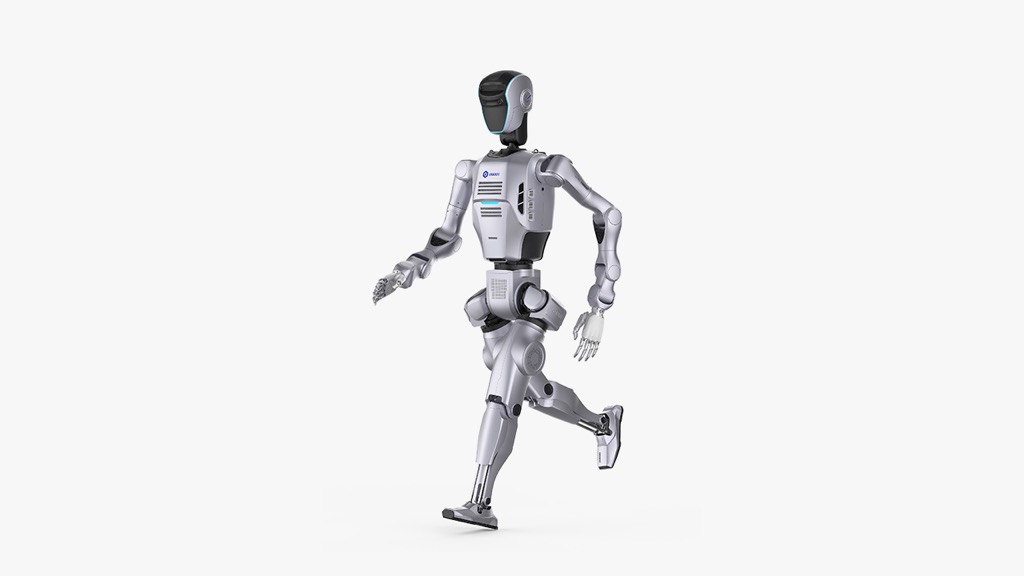
The Dobot Atom is a 1.53 m full-size humanoid robot from Shenzhen-based Dobot that is available to order in 2026. It launched in China at around 199,000 RMB (~$27,500), while the official US store lists it near $79,000. It's built mainly for industrial automation and service tasks, not as a plug-and-play home helper.
US buyers: Dobot sells Atom in the US, but we could not confirm a pre-July 2026 FCC authorization — verify before ordering.
Dobot has run an active US channel for Atom with US-facing pricing and support, which is exactly the kind of arrangement the July rule reaches if the model was not already authorized. We found no grant on record predating the cutoff, and Dobot has not published one. Units already imported can be used and resold. Given the price gap between the US and Chinese listings, a buyer should settle both the authorization question and the landed cost before committing.
Chinese and other international sales are unaffected; the US listing has always been the expensive one.
As of 2026-08-30 · medium confidence — verify before you commit funds
What is the Dobot Atom Robot?
The Atom robot comes from Dobot, a company with a long arm-manufacturing history behind it — which shows in the hands.
Dobot spent years selling robot arms and desktop automation kits before it jumped into full-size humanoids, so the Atom arrives with more manufacturing pedigree than most of the startups it now competes with. That heritage shows up in the details, precision joints, a tidy industrial design, and a pricing story that is genuinely competitive by 2026 standards.
But the Atom is a bit of a two-faced product, and we mean that in a good way. In China it's positioned as an affordable workhorse near 199,000 RMB. Cross into the US market and the official listing jumps to roughly $79,000, which is a very different conversation. Understanding that gap is the single most important thing before you get excited by the headline number.
This page walks through what the Atom actually is, what it costs where you live, how it moves and "thinks," how it stacks up against rivals, and who realistically should buy one.
What is the Dobot Atom and what does it do?
The Dobot Atom is a full-size bipedal humanoid standing 1.53 m tall and weighing about 62 kg. It has 28 degrees of freedom, which is enough articulation to walk, bend, and manipulate objects with two arms and hands.
Dobot pitches it at two audiences. The first is industrial, electronics and automotive assembly, soldering, calibration and other repetitive line work where its quoted ±0.05mm precision matters. The second is service and hospitality: pouring and serving beverages, carrying documents, light front-of-house duties.
That dual role is deliberate. Rather than promising a science-fiction house robot, Dobot leans into structured, semi-repetitive tasks where a humanoid form is genuinely useful. Its onboard ROM-1 AI system and edge computing are meant to let it adapt to slightly messy, unstructured environments without a datacenter behind it.
How much does the Dobot Atom cost in 2026?
Here's where you have to read the fine print. At its China launch the Atom was priced around 199,000 RMB, which converts to roughly $27,500, one of the more aggressive numbers in the full-size humanoid space.
The official US store listing, however, sits near $79,000. That's not a typo, cross-border logistics, import duties, support, and warranty all stack onto the domestic figure. So depending on which market you're buying in, the "same" robot can nearly triple in price.
For budgeting purposes, treat $79,000 as the realistic US entry point and the ~$27,500 figure as a China-domestic reference. Neither number includes the deployment, integration, or ongoing support costs that any commercial humanoid tends to rack up.
Is the Dobot Atom available to buy now?
Yes. Unlike a lot of humanoids that are still "announced" or stuck in reservation limbo, Dobot has moved the Atom into mass production and has been releasing it in batches, with synchronised units already shown working together on assembly demos.
That matters. A robot you can actually order and take delivery of is in a completely different category from a slick concept video. The Atom is genuinely purchasable in 2026, though lead times and regional availability still depend on the batch and on your local Dobot distributor.
One caveat, availability being real doesn't mean it's a consumer gadget. This is sold and supported as a commercial product, so expect a sales-and-integration process rather than a checkout button and next-day shipping.
How does the Atom walk and operate?
The most talked-about engineering detail is the Atom's "straight-knee" walking mechanism. Most bipedal robots walk with a permanently bent-knee crouch that burns energy, Dobot says its straighter gait cuts energy consumption by about 42%, which helps runtime and heat.
For perception, the Atom uses an Intel RealSense D455 depth camera plus a 60FPS Full HD RGB vision system and a multi-array microphone setup. That combination lets it see depth, track objects and localise sound in a workspace.
The brains are Dobot's proprietary ROM-1 AI running on edge compute. In practice that means the robot can do a meaningful amount of adaptation on-device. As with essentially every humanoid on the market though, complex or novel tasks may still involve human supervision or teleoperation during setup, so don't assume full hands-off autonomy out of the box.
Dobot Atom vs Fourier GR-3 and Unitree rivals
The Atom's closest competition depends on your use case. If you want industrial and service work, its ~$27,500 China price undercuts most Western humanoids dramatically, and even the $79,000 US figure is reasonable versus six-figure rivals.
Against something like the Fourier GR-3, which is a care-and-companion focused robot priced around $100k-$120k in the US, the Atom is clearly the more affordable and more task-oriented machine. The GR-3 is about warmth and interaction; the Atom is about getting jobs done on a line or in a venue.
Unitree's humanoids compete hard on price too, but Dobot's automation background and quoted sub-0.1mm precision give the Atom an edge for people who care about repeatable manipulation rather than raw mobility or acrobatics.
Is the Dobot Atom worth it and who is it for?
If you're a business, a factory, a systems integrator, a hospitality group, or a robotics lab, the Atom is one of the better-value full-size humanoids you can actually buy in 2026. The precision, the real availability, and the competitive pricing make it a sensible pilot platform.
If you're a consumer hoping for a robot that folds laundry and babysits the dog, this isn't it, and honestly nothing on the market truly is yet. The Atom is a commercial tool, and the US price reflects that.
Bottom line: strong pick for structured commercial tasks, weak fit for casual home buyers. Match the market you're buying in to the price you expect, and you won't be surprised.
The Dobot Atom on video
Hands-on reviews and teardowns, picked for what they actually show rather than how loud the thumbnail is.
Dobot's reveal, notable for the straight-knee walking gait it leads with
Eleven-minute independent review of the Atom Max variant and its manipulation range
Confirms the 2026 production and export status, which matters if you are trying to buy one
Who the Dobot Atom is — and isn't — for
+Where it shines
- You can actually buy or reserve it as an individual, at a consumer price.
- Open developer access (SDK/API) — good for builders and labs.
- Stated real-world payload (5-20 kg).
!Watch-outs
- Some demos rely on teleoperation, not full autonomy.
- Public data is thin; verify key figures before relying on them.
How the Dobot Atom stacks up
Side by side with similar robots — the one you're reading about is highlighted.
| This robot Dobot (Shenzhen Yuejiang) Dobot Atom | 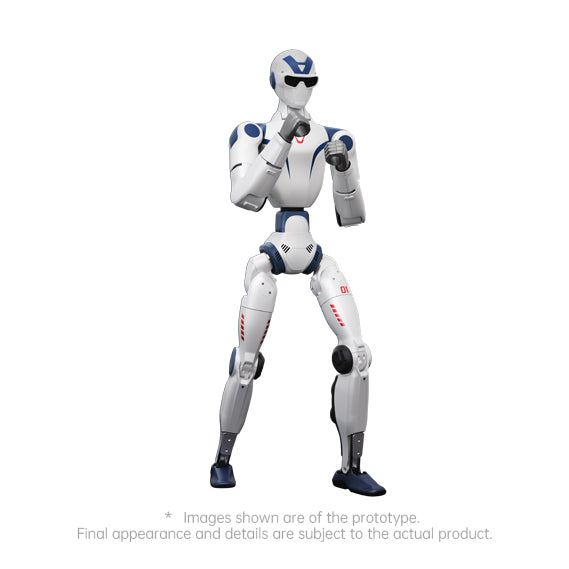 Unitree Robotics Unitree R1 | 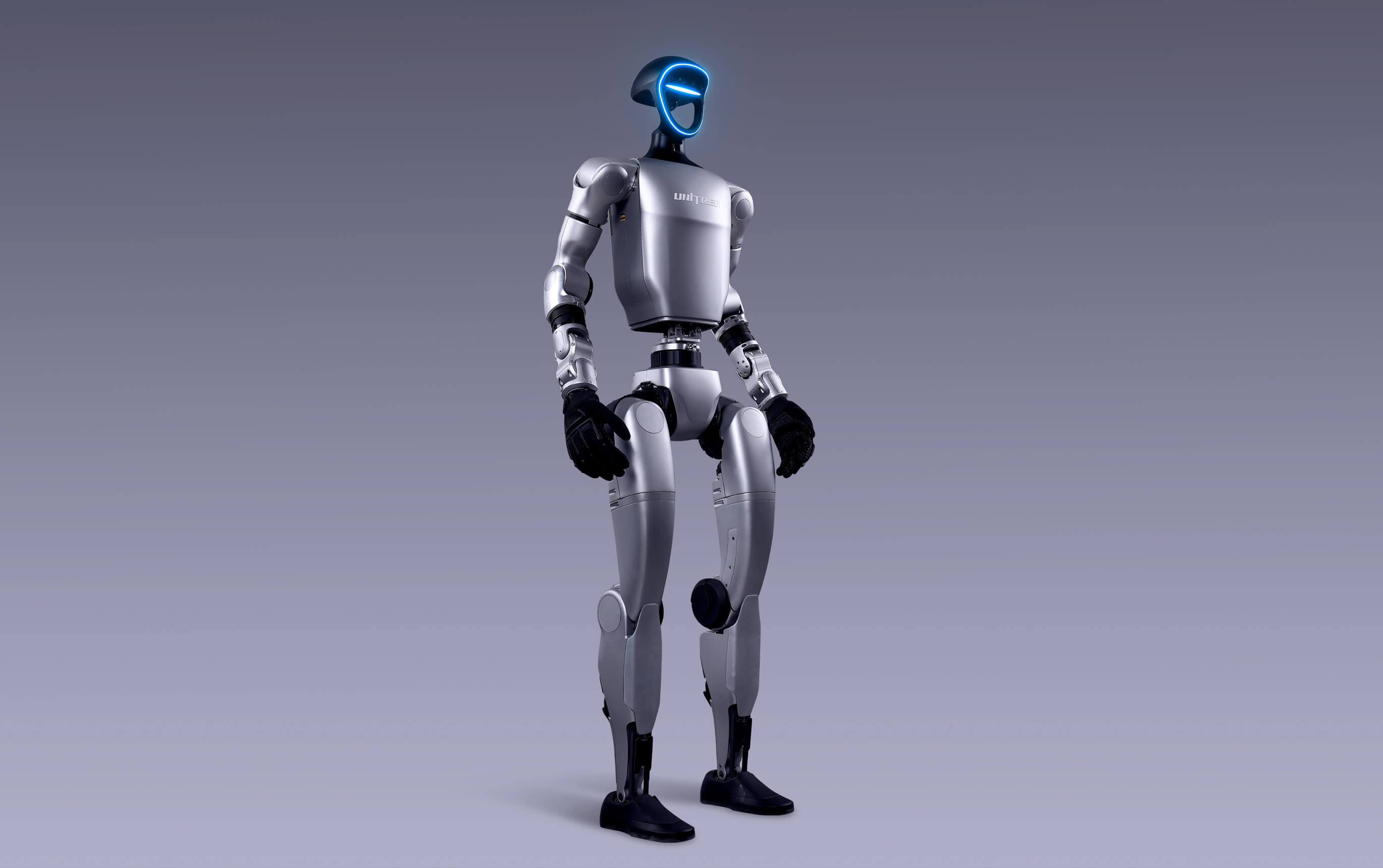 Unitree Robotics Unitree G1 | 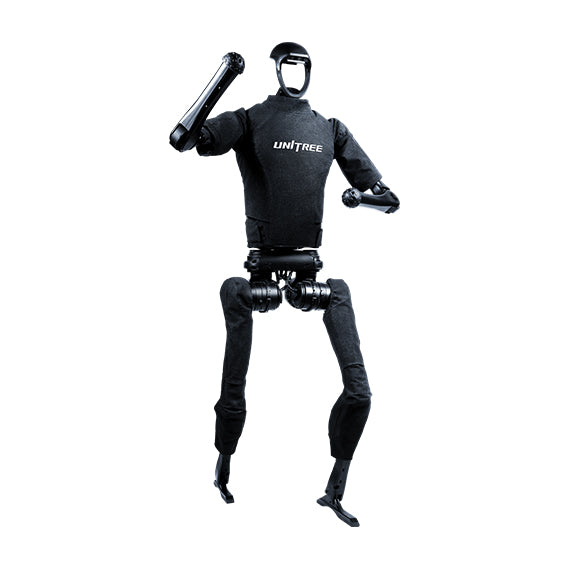 Unitree Robotics Unitree H1 | |
|---|---|---|---|---|
| Price (US) | $27,500 – $79,000 | $4,900 – $5,900 | $13,500 – $73,900 | ~$90,000 |
| Availability | On the market | On the market | On the market | On the market |
| Height | ~1.53 m | 1.23 m | 1.32 m standing | ~1.80 m |
| Payload | 5-20 kg | Unknown | Arm ~2 kg | Not rated for H1 |
| DoF | Atom | 20 | 23 | ~19 |
| Buyer | Individuals | Individuals | Individuals | Enterprise |
| Made in | China | China | China | China |
What the Dobot Atom costs — and how to get one
China launch ~$27,500 (199,000 RMB); official US store listing $79,000.
Yes - Dobot US phone + help desk; direct cart purchase
Leasing / RaaS: Available via US SVRC (Buy or Lease, Atom Max)
Every spec, grouped & sourced
Tap a group to expand. Values are labelled official vs third-party; unknowns are omitted, not guessed.
Body & movement▾
Power & endurance▾
Hands & senses▾
Brains & control▾
Claims vs evidence
Neuro-Driven System (NDS); ROM-1 ~100M-param transformer, 24 Hz end-to-end, 200 Hz servo; Atom Max 1,500 TOPS (vendor claims)
Where it's working
ASKA Corporation (Japan) partnership; 200+ Japanese partners at launch (Dobot overall 72,000+ robots, mostly arms)
Intended use cases: Industrial automation (electronics/automotive assembly, soldering, calibration) + service/hospitality (beverage, serving, delivery, pharmacy); 100+ tasks claimed
Should you consider the Dobot Atom?
The Dobot Atom is one of the most credible "you can actually buy it" humanoids of 2026, with real precision and aggressive pricing, at least in China. US buyers should budget around $79,000 and treat it as a commercial tool for industrial or service work, not a home robot.
Score reflects stated criteria (availability, data confidence, US relevance) — not hands-on testing or user ratings. We're an independent review & comparison site; we don't sell robots. *Financing figure is illustrative.
How we know this
Data confidence 58/100 · last verified 2026-06-24. Specs are labelled official vs third-party and dated; unknowns are omitted, not guessed.
Dobot Atom — your questions, answered in full
How much is the Dobot Atom?+
It launched in China around 199,000 RMB (~$27,500), while the official US store lists it near $79,000. The gap comes from import, logistics, and support costs, so your real price depends heavily on where you buy.
Can I buy a Dobot Atom right now?+
Yes. Dobot has moved the Atom into mass production and is shipping it in batches, which makes it one of the humanoids you can genuinely order in 2026 rather than just reserve.
How tall is the Dobot Atom and how much does it weigh?+
It stands 1.53 m tall and weighs about 62 kg, with 28 degrees of freedom for walking and two-handed manipulation.
Is the Dobot Atom a home robot?+
Not really. It's aimed at industrial automation and service/hospitality tasks. A private buyer could technically purchase one, but it's designed and supported as a commercial machine, not a household assistant.
How long does the Atom run on a charge?+
Dobot hasn't published a firm consumer-facing runtime figure we'd stake a claim on, so treat runtime as unconfirmed. Its straight-knee gait is said to cut energy use by about 42%, which helps operating time.
Is the Dobot Atom fully autonomous?+
It runs Dobot's ROM-1 AI on edge compute and can adapt to unstructured environments, but like most humanoids in 2026 it may still need human supervision or teleoperation during setup and for novel tasks.
What sensors does the Dobot Atom use?+
It uses an Intel RealSense D455 depth camera, a 60FPS Full HD RGB vision system, and a multi-array microphone array for depth perception, object tracking and sound localisation.