EngineAI PM01 & SE01 Robots
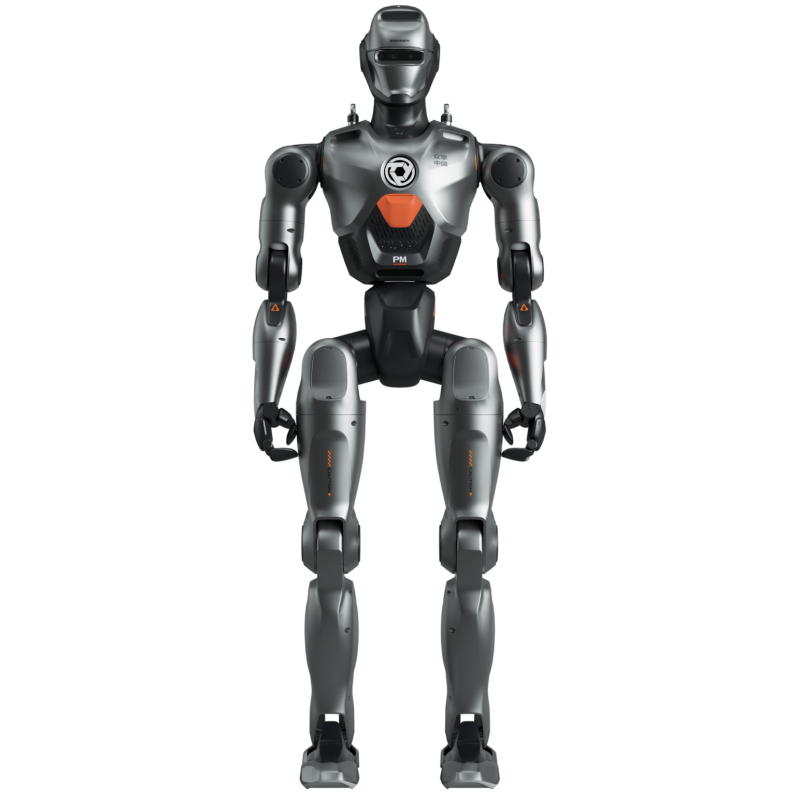
EngineAI makes two of the most affordable humanoid robots around: the compact, developer-focused PM01 (starting roughly $12,000-$13,700) and the larger, general-purpose SE01 (reported around $20,000-$30,000). They're aimed at education, research, robotics R&D and commercial/service work, with the PM01 standing out as an unusually open platform for developers. Both are China-based products, so US buyers are effectively importing.
US buyers: no new imports — this model has no US authorization on record, and the July 2026 rule closes that route.
A small number of research labs, including US ones, reportedly received SE01 units before the rule took effect, and those are unaffected. There is no official US distributor and no authorization on record, so new commercial imports are barred. Whether a lab could still bring one in under the general FCC exemptions for testing and evaluation is genuinely unsettled and should not be assumed.
Chinese sales and existing international research shipments are unaffected.
As of 2026-08-30 · medium confidence — verify before you commit funds
What is the EngineAI PM01 & SE01 Robots?
The PM01 is the small, cheap EngineAI robot; the SE01 is its full-size sibling.
If a lot of humanoid robots feel like six-figure moonshots, EngineAI is playing a different game. Its PM01 made headlines by launching at a price around $12,000-$13,700, which is startlingly cheap for a full bipedal robot, and it opened the platform up to developers and researchers instead of locking everything down.
The lineup splits into two. The PM01 is the smaller, lighter, hackable one, built for education, research and embodied-AI experimentation. The SE01 is the bigger, more capable 'general-purpose' platform that's still priced aggressively for its size. EngineAI's whole angle is making capable humanoid hardware reachable for teams that could never justify a $150k machine.
That accessibility is real, but so are the trade-offs. These are China-based products, and buying into an open, developer-first ecosystem means you're expected to bring some technical skill. For the right person, that's exactly the appeal.
What are the EngineAI SE01 and PM01?
The two robots serve different jobs. The SE01 is EngineAI's flagship full-size humanoid, roughly 170 cm and about 55 kg, with 32 degrees of freedom. EngineAI markets self-developed harmonic, planetary and ball-screw joints, a peak knee torque figure around 186 N·m, dual encoders, and quick-swap 10,000 mAh battery packs. It's pitched at a 'normal walking speed' near 2 m/s and a 10-year design life on its aluminum chassis.
The PM01 is the lighter, more open sibling, about 138 cm and roughly 40 kg, with 23 or more degrees of freedom and a 320-degree waist rotation. It runs a dual-compute setup pairing an Intel N97 (x86) chip with an NVIDIA Jetson Orin, and it can move at about 2 m/s. Crucially, it's an open platform, exposing hardware and software interfaces and supporting ROS, Isaac, MuJoCo and ONNX workflows.
EngineAI's headline technical claim across both is end-to-end, neural-network gait optimization intended to produce longer-stride, upright walking rather than the shuffly small steps you see on a lot of humanoids.
How much do the EngineAI SE01 and PM01 cost?
This is EngineAI's biggest draw. The PM01 launched at an accessible price point, quoted around $12,000, with a widely cited starting figure of $13,700. For a full bipedal humanoid with dual compute, that's remarkably low.
The larger SE01 is reported around $20,000-$30,000, and EngineAI has marketed it as an affordable large humanoid at roughly $20k with a quick-release lithium battery. Even at the top of that range, it undercuts most full-size competitors.
One honest note: these are China-market prices and figures can shift with configuration and exchange rates. There's no formal US retail listing, so an American buyer is realistically importing, which adds shipping, customs and support considerations on top of the sticker.
Who are the EngineAI robots for?
The PM01 is aimed squarely at education, academic research and robotics/embodied-AI developers. Its open hardware and software, plus support for standard tooling like ROS, Isaac and MuJoCo, make it a genuine research and teaching platform rather than a sealed appliance. If you're a university lab or a developer who wants to experiment with humanoid control, that openness is the selling point.
The SE01 leans more general-purpose and commercial/service, a bigger, stronger body for teams that need a full-size platform without a full-size budget.
What neither of these is: a plug-and-play consumer robot. There's no 'set it up and it does chores' experience here. You're buying capable, affordable hardware that expects you to bring the software ambition and the technical know-how.
How do the EngineAI robots actually walk and work?
EngineAI's technical identity centers on gait. The company uses end-to-end neural-network gait optimization, and the marketing pitch is straightforward: longer strides, upright posture, more human-looking walking instead of the cautious shuffle common to earlier humanoids. Whether it fully delivers that in every condition is something buyers should verify with current footage, but it's the clear focus.
On the compute side, the PM01's dual-brain setup (Intel N97 plus NVIDIA Jetson Orin) is designed to let developers run their own perception and control stacks, which fits the open-platform philosophy. The SE01 adds LiDAR-assisted 360-degree perception EngineAI calls 'Engine Sense,' along with a depth camera and mic array.
As with the rest of the field in 2026, treat polished demo videos with healthy skepticism, autonomy for real, unstructured tasks is still limited industry-wide, and an open developer platform in particular is only as capable as the software you or the community put on it.
Are the EngineAI SE01 and PM01 worth it?
For the right buyer, the value here is hard to argue with. A sub-$15k bipedal humanoid you can actually program (the PM01), or a full-size platform near $20k (the SE01), simply doesn't exist from most competitors. For universities, research labs and developers, that price-to-capability ratio is the whole point.
The trade-offs are equally clear. These are China-based products with no US retail channel, so importing, support and spare parts are on you. And the open, developer-first nature means you're not getting a finished consumer robot, you're getting a capable starting point.
If you want an affordable humanoid to build on and you have the technical chops, EngineAI is one of the most compelling options in 2026. If you want something that works out of the box for a home or a small business with no engineering support, look elsewhere.
The EngineAI SE01 / PM01 on video
Hands-on reviews and teardowns, picked for what they actually show rather than how loud the thumbnail is.
The SE01 launch film, where EngineAI's unusually natural knee-bend gait is easiest to see
An uncut outdoor walk over real ground rather than a lab floor — the honest version of the gait demo
Independent review that separates the SE01 research platform from the cheaper PM01
Who the EngineAI SE01 / PM01 is — and isn't — for
+Where it shines
- Among the most affordable humanoids on the market right now.
- Open developer access (SDK/API) — good for builders and labs.
- Stated real-world payload (SE01: ~15 kg).
!Watch-outs
- Sold to businesses only — not to private buyers.
How the EngineAI SE01 / PM01 stacks up
Side by side with similar robots — the one you're reading about is highlighted.
| This robot EngineAI Robotics EngineAI SE01 / PM01 | 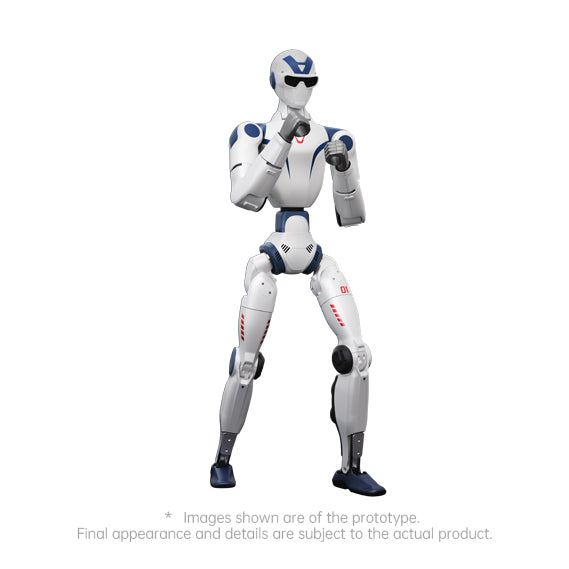 Unitree Robotics Unitree R1 | 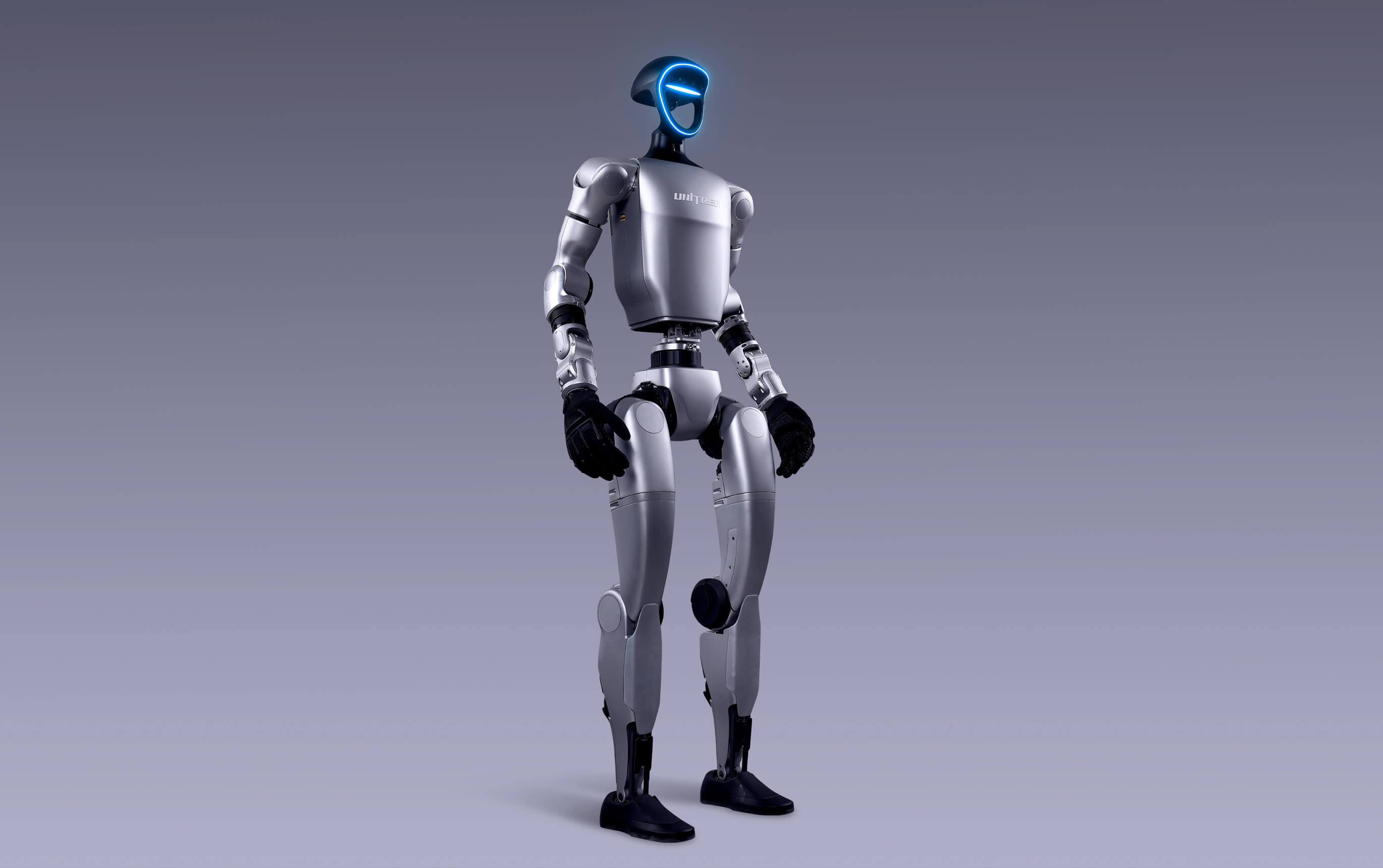 Unitree Robotics Unitree G1 | 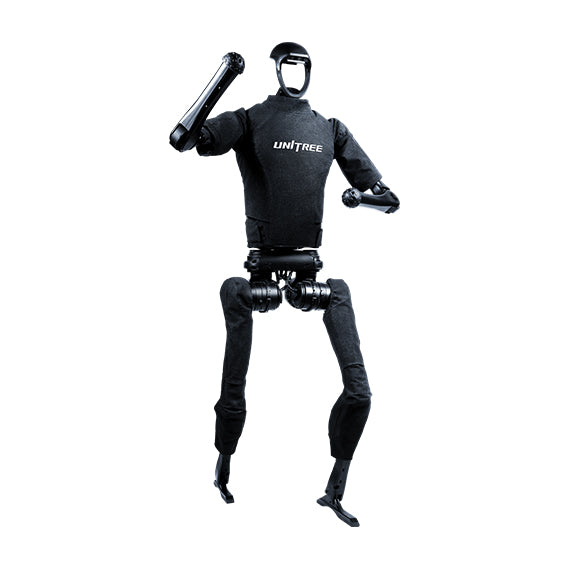 Unitree Robotics Unitree H1 | |
|---|---|---|---|---|
| Price (US) | $12,000 – $30,000 | $4,900 – $5,900 | $13,500 – $73,900 | ~$90,000 |
| Availability | Enterprise inquiry | On the market | On the market | On the market |
| Height | SE01: ~170 cm; PM01: 1.38 m | 1.23 m | 1.32 m standing | ~1.80 m |
| Payload | SE01: ~15 kg | Unknown | Arm ~2 kg | Not rated for H1 |
| DoF | SE01: | 20 | 23 | ~19 |
| Buyer | Enterprise | Individuals | Individuals | Enterprise |
| Made in | China | China | China | China |
What the EngineAI SE01 / PM01 costs — and how to get one
PM01 ~$12k–$13.7k; larger SE01 reported ~$20k–$30k.
Open - China retail + 'Purchase now' on site; enterprise/education supported
Leasing / RaaS: unknown
Every spec, grouped & sourced
Tap a group to expand. Values are labelled official vs third-party; unknowns are omitted, not guessed.
Body & movement▾
Power & endurance▾
Hands & senses▾
Brains & control▾
Claims vs evidence
Mocap + end-to-end NN + adversarial/RL sim for human-like gait; toward embodied intelligence; benchmarks unverified
Where it's working
~100 units in ~5 months (2024); SE01 to some Asia/US research labs (unverified)
Intended use cases: Commercial/service, education & academic research, robotics R&D / embodied-AI dev
Should you consider the EngineAI SE01 / PM01?
EngineAI's PM01 (around $12,000-$13,700) and SE01 (around $20,000-$30,000) are among the most affordable and, in the PM01's case, most open humanoids of 2026, ideal for labs, researchers and developers who want capable hardware to build on. The honest catch is that they're China-based, import-only for US buyers, and expect real technical ability rather than out-of-the-box convenience.
Score reflects stated criteria (availability, data confidence, US relevance) — not hands-on testing or user ratings. We're an independent review & comparison site; we don't sell robots. *Financing figure is illustrative.
How we know this
Data confidence 62/100 · last verified 2026-06-23. Specs are labelled official vs third-party and dated; unknowns are omitted, not guessed.
EngineAI SE01 / PM01 — your questions, answered in full
How much does the EngineAI PM01 cost?+
The PM01 launched at an accessible price point around $12,000, with a widely cited starting figure of $13,700. That's a China-market price with no formal US retail listing.
How much does the EngineAI SE01 cost?+
The larger SE01 is reported around $20,000-$30,000, and EngineAI has marketed it as an affordable large humanoid near $20k with a quick-release battery.
What's the difference between the SE01 and PM01?+
The SE01 is the larger flagship (about 170 cm, 55 kg, 32 DoF) aimed at general-purpose and commercial use. The PM01 is smaller (about 138 cm, 40 kg, 23+ DoF), cheaper, and an open developer platform built for education and research.
Is the EngineAI PM01 open for developers?+
Yes. The PM01 exposes hardware and software interfaces and supports ROS, Isaac, MuJoCo and ONNX workflows, plus a dual-compute setup with an Intel N97 and NVIDIA Jetson Orin. It's one of the more open humanoid platforms available.
Can I buy an EngineAI robot in the US?+
There's no formal US retail listing. EngineAI is a China-based company, so US buyers are effectively importing, which adds shipping, customs and support considerations. Availability is largely enterprise and developer inquiry.
How fast do the EngineAI robots walk?+
Both are quoted around 2 m/s, and EngineAI emphasizes neural-network gait optimization aimed at longer strides and more upright, human-like walking.
Are the EngineAI robots good for home use?+
Not really. They're aimed at education, research, developers and commercial/service work, not plug-and-play home chores. You're expected to bring technical skill and software.
What compute does the PM01 use?+
A dual-compute architecture pairing an Intel N97 (x86) processor with an NVIDIA Jetson Orin module, which lets developers run their own perception and control software.