EngineAI T800 Robot
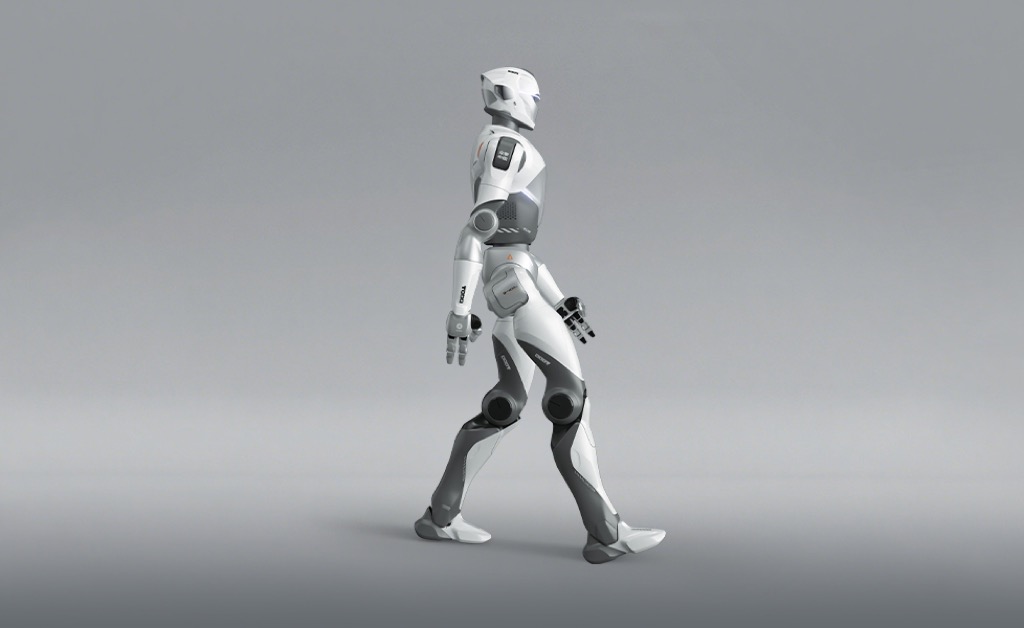
EngineAI sells the T800 through four factory tiers on its Chinese domestic storefront: CNY 180,000 for the Basic edition (about $26,800), CNY 240,000 for the open-source Eco edition, CNY 280,000 for the Pro edition with NVIDIA Jetson Thor, and CNY 360,000 for the Max edition (about $53,600), all as of 30 August 2026. There is no US or European price, no authorised international distributor, and after the FCC's 28 July 2026 Covered List addition a new US import has nowhere to land. The robot is real and shipping — it is just not shipping to you unless you are in China.
This page covers the T800 as of 30 August 2026, after it moved from preorder to mass delivery on 29 May 2026 with the opening of EngineAI's Honghualing manufacturing base in Shenzhen. Earlier descriptions of the T800 as a preorder-only machine at a flat $25,000 are out of date on both counts: it ships, and it is sold through four yuan-denominated tiers on a China-domestic storefront.
US buyers: no new imports — this model has no US authorization on record, and the July 2026 rule closes that route.
The T800 is on preorder in China with no US distributor. As a model launched after the cutoff it cannot obtain FCC authorization without a Department of War conditional approval, so a US preorder has nowhere to land. Preorder marketing aimed at international audiences should be read with that in mind.
Chinese preorders are unaffected.
As of 2026-08-30 · medium confidence — verify before you commit funds
What is the EngineAI T800 Robot?
The T800 is the full-size EngineAI robot, and the first here to ship with a solid-state battery.
The EngineAI T800 is the robot that made "a full-size humanoid for the price of a car" sound plausible. It is 1.73 m tall, weighs 75 kg with the battery in it, and the entry price on EngineAI's own Chinese storefront is CNY 180,000. At the exchange rate on 28 August 2026 that is roughly $26,800 — less than a fifth of what a Western industrial humanoid costs, and less than half of what Unitree charges for its own full-size machine in EDU configuration.
It is also the robot most likely to be misdescribed on the page you read before this one. The headline number everybody repeats is "$25,000", which was the dollar equivalent of that same CNY 180,000 at the rate prevailing when the T800 was unveiled in December 2025. The yuan price has not changed. The dollar has, so the widely quoted figure now understates the base tier by about seven percent. The other thing everybody repeats is that the T800 patrols the streets of Shenzhen with the police. It appeared alongside officers, in a publicity operation, once. That is not the same as a deployment and EngineAI has never claimed it was.
What actually happened in 2026 is more interesting than either of those stories. On 29 May 2026 EngineAI opened a roughly 12,000 m² assembly base in the Honghualing district of Shenzhen and rolled the first batch of T800s off the line, moving the machine from preorder into genuine mass delivery. The company claims a takt time of one robot every fifteen minutes and an annual capability in the ten-thousand-unit range. Two weeks later, Bloomberg reported that EngineAI had filed confidentially for a Hong Kong listing. This page is about what you can verify of all that, and what you cannot.
What the EngineAI T800 can — and can't — do today
+Does this out of the box
- Walk and run on two legs at speeds EngineAI gives as up to 3 m/s
- Perform martial-arts sequences with balance recovery, demonstrated in competitive robot fighting events from July 2026
- Absorb impacts and continue operating — coverage of the July 2026 fighting event described a machine continuing after losing head-mounted sensors
- Manipulate objects with optional 7-DOF dexterous hands, fitted from the Eco tier upward
- Run onboard AI compute on the NVIDIA Jetson Thor module, on the Pro and Max tiers only
- Operate for a claimed four to five hours on its solid-state battery pack
- Support secondary development on the open-source Eco edition, per EngineAI's own tier description
!Doesn't do, whatever the demo shows
- Be bought outside mainland China through any authorised channel — no international distributor exists as of 30 August 2026
- Be lawfully imported into the US as a new unit, following the FCC Covered List addition of 28 July 2026
- Carry a rated payload figure — EngineAI has never published one
- Demonstrate autonomous task work on the public record; every published demonstration is choreographed, teleoperated, or unlabelled
- Offer a published warranty, service level, spares price or support contact outside China
- Show a delivered-unit count, uptime figure or mean-time-between-failures — the Hong Kong filing is confidential and no numbers are public
- Claim any verified policing role; the Shenzhen appearance with officers was a demonstration
Almost every capability above rests on EngineAI's own material or on video of company-arranged events. No independent laboratory has measured the T800's torque, speed, runtime or payload, and no third-party security audit of its firmware exists. That is normal for a machine this new, but it is the difference between a spec sheet and a specification.
What is the EngineAI T800?
The T800 is EngineAI Robotics' full-size flagship humanoid: a 1.73 m, 75 kg bipedal machine aimed at industrial work, research labs and — unusually openly — at entertainment.
EngineAI itself is a Shenzhen company founded in 2023, which makes the T800 a remarkably fast piece of product development. Its earlier machines are smaller: the SA01 at the entry end, the PM01 that went viral doing a front flip, and the SE01. The T800 is the first one built at full adult scale and the first sold through a factory-tier price list rather than as a research curiosity.
The published hardware, as EngineAI describes it: 29 degrees of freedom in the body excluding hands, with optional seven-degree-of-freedom dexterous hands on the higher tiers; a claimed 450 Nm of peak joint torque; a walking speed given as up to 3 m/s; 360-degree LiDAR alongside stereo and RGB vision; and a solid-state battery pack, which EngineAI describes as supporting four to five hours of intense operation. NVIDIA's Jetson Thor compute module appears on the Pro and Max tiers.
A note on that spec list, because it matters. Nearly all of it traces to EngineAI's own launch material and to the press coverage of the 29 May 2026 factory opening. Third-party outlets have added figures EngineAI did not publish — a magnesium-aluminium alloy frame, a three-hour runtime that contradicts the company's own four-to-five hours, various payload numbers. We do not carry those. EngineAI has never published a rated payload for the T800, and as of 30 August 2026 no independent lab has measured any of the headline figures. Treat the whole spec sheet as manufacturer claim, not as a datasheet in the sense an industrial buyer would mean it.
How much does the EngineAI T800 cost?
EngineAI publishes a four-tier price list on its Chinese domestic marketplace storefront. As of 30 August 2026 the tiers are:
**Basic Edition — CNY 180,000 (about $26,800).** No dexterous hands. This is the machine behind every "$25,000 humanoid" headline.
**Eco Edition, open source — CNY 240,000 (about $35,700).** Adds dexterous hands and, per EngineAI, supports secondary development — meaning the buyer can build on top of the control stack rather than just running canned behaviours.
**Pro Edition — CNY 280,000 (about $41,700).** Adds the NVIDIA Jetson Thor compute module.
**Max Edition — CNY 360,000 (about $53,600).** Thor plus industrial-grade components.
A build slot is held with a CNY 5,000 deposit, roughly $740.
The dollar figures are conversions at 6.7209 CNY to the dollar, the rate on 28 August 2026, and they are ours rather than EngineAI's. The company does not quote in dollars because it does not sell in dollars. That is the single most important fact on this page and it survives every price comparison you will read: there is no US list price for a T800, because there is no US channel for a T800.
What the tiers tell you about the product is worth reading too. The gap between Basic and Eco — CNY 60,000, about $8,900 — is what dexterous hands and an open development path cost. The gap between Eco and Pro is the price of onboard AI compute. And the top tier's justification is "industrial-grade components", which is EngineAI conceding, quietly, that the cheaper tiers are not built to industrial duty. A CNY 180,000 humanoid is an astonishing thing to exist at all. It is not a CNY 360,000 humanoid with a discount.
Can anyone outside China actually buy a T800?
Not through an authorised route, and as of 30 August 2026 we could not find one.
EngineAI's English-language material has a buy path, and that path resolves to a Chinese domestic marketplace listing. There is no authorised international distributor, no published export price, no confirmed North American shipping date and no stated warranty terms for a unit outside mainland China. Several grey-market resellers will happily quote you a number. What they are selling is an import they have to arrange themselves, with no manufacturer support behind it, and usually at a markup that erases the entire reason you wanted a T800.
For a United States buyer there is a second, harder wall. On 28 July 2026 the FCC added foreign-produced advanced robotic devices to its Covered List, acting on a national security determination issued the day before. The rule is country-neutral in its text — a device counts as domestic only if it is built in the US with more than 65% domestic component cost, which catches German and Japanese machines as surely as Chinese ones — but the effect on the T800 is unambiguous. A covered device cannot obtain new FCC equipment authorization, and without authorization it cannot lawfully be imported, marketed or sold. The T800 has no US authorization on record and, having launched after the cutoff, cannot now obtain one absent a conditional approval from the Department of War.
What the rule does not do is confiscate anything. Models authorized before 28 July 2026 keep selling, and the FCC waived its own rules so those keep receiving firmware and security updates until at least 1 January 2029. If you already own a Chinese humanoid, nobody is coming for it. But a T800 ordered into the US today has, in the plainest terms, nowhere to land.
The Shenzhen police patrol — what really happened
In 2025 the T800 appeared on a Shenzhen street alongside uniformed officers, and the images went everywhere: a black, heavy-shouldered humanoid walking a beat, with a name borrowed from a killer robot in a 1984 film. "China deploys Terminator robocop" wrote itself.
What can be verified is that the appearance happened. What cannot be verified — because no police authority and no EngineAI release says it — is that the T800 has any operational policing role, any patrol schedule, any assigned duties or any autonomy in that context. It was a public demonstration in a country that runs a great many public robot demonstrations, and reading it as a procurement decision is exactly the mistake the imagery was designed to encourage.
The same discount applies to the combat footage. In late July 2026 the T800 took part in what organisers billed as the world's first freestyle humanoid robot fighting event, and in August a clip of one landing a head kick did the rounds again. Those events are real, they are genuinely hard on the hardware — coverage of the July event noted a machine continuing to fight after losing head-mounted sensors, which is a legitimate robustness signal — and they are also a marketing format. A humanoid that can throw a scripted spinning kick under a referee's supervision has told you something about its actuators and its balance controller. It has told you nothing about whether it can pick a box off a shelf for eight hours.
Is the T800 really in mass production?
More than most of its competitors, yes — and the claim is unusually specific, which is what makes it checkable in principle.
On 29 May 2026 EngineAI announced the launch of its intelligent manufacturing base at Honghualing, Shenzhen, spanning roughly 12,000 m², and said the first batch of T800s had come off the line with shipments beginning in early June. The company describes a closed-loop process running from incoming material inspection through component assembly test, final assembly, end-of-line test and after-sales maintenance; a stated cadence of one robot every fifteen minutes; 79 dimensional quality inspections and 46 working-condition simulation tests per unit before delivery; and a capability the company frames as ten-thousand-unit scalable delivery.
Here is the part to keep in mind. A line that can produce a robot every fifteen minutes is not the same as a line that does. "10,000-unit capability" is a capacity statement, not a shipment number, and EngineAI has published no delivered-unit count. The company filed confidentially for a Hong Kong IPO in June 2026, and a confidential filing keeps the revenue hidden — so as of 30 August 2026 there is no audited number that would tell you whether the factory is running at one an hour or one a week.
What is verifiable is that the building exists, the first batch left it, and paying Chinese customers have taken delivery. In a sector where most announced factories are renderings, that already puts EngineAI in a small group.
Who is EngineAI and can the company be trusted to still exist in 2029?
EngineAI Robotics was founded in Shenzhen in 2023 and is led by chief executive Zhao Tongyang, who according to reporting on the company's IPO filing previously founded the quadruped firm Dogotix and led XPENG's humanoid programme after the EV maker acquired it. That is an unusually operational background for a humanoid founder — most of this field comes out of research labs.
The funding record: a $200 million Series B in April 2026 valuing the company at $1.5 billion, led by Henan CICC Huirong Fund Management with Luxshare-ICT participating, taking total disclosed funding to at least $350 million. Luxshare is the interesting name there. It is a contract electronics manufacturer at genuine scale, and a manufacturer on the cap table of a company that just opened an assembly base is not a passive financial bet.
On 12 June 2026 Bloomberg reported that EngineAI had filed confidentially for a Hong Kong IPO, joining a queue of Chinese robotics firms heading for that market — Unitree's own listing in Shanghai on 19 August 2026 opened up more than 600% before sliding, and the "robot bubble" coverage that followed is now part of the context any of these listings trade into.
So: real money, real factory, real product, and a company barely three years old operating in the most crowded hardware market on earth at prices that leave very little margin. For a Chinese research buyer that risk profile is normal. For anyone outside China it compounds with the distribution problem — you would be buying an unsupported grey import from a young company you cannot reach, in a currency you do not hold.
T800 versus the other cheap full-size humanoids
The comparison everyone wants is against Unitree, and it is genuinely close.
Against the **Unitree G1**, the T800 is a different class of machine: the G1 is 1.32 m and about 35 kg, a desk-and-lab robot, while the T800 is adult-sized at 1.73 m and 75 kg. The G1's advantage is overwhelming on the things that are not spec sheet entries — a large public code ecosystem, thousands of units in the field, English documentation, and an actual international sales operation. Its disadvantage as of 29 August 2026 is a pair of disclosed vulnerabilities in the G1 EDU that allow root-level remote code execution, one of them over Bluetooth. That is a real finding and it deserves to be weighed, though it is also a reminder that the G1 gets security research done on it precisely because so many people own one. Nobody has published a comparable audit of a T800.
Against the **Unitree H1 and H2**, the T800 is roughly size-comparable and considerably cheaper.
Against Western industrial humanoids — Digit, Apollo, Figure — the comparison is not really a comparison. Those machines come with a fleet-management cloud, a safety certification argument, a service organisation and a customer support contract, and they are priced at five to ten times the T800 accordingly. Agility's Digit is modelled at about $8,500 per robot per month. You could buy three Max-edition T800s outright for one year of that. What you would not get is anyone to call.
The honest framing: the T800 is the cheapest credible route to a full-size, high-torque, walking humanoid in 2026 — if you are in China, have engineers who read Chinese documentation, and are buying a platform rather than a solution.
What can the T800 actually do today?
Verified by video and by manufacturer demonstration: it walks and runs, it performs martial-arts sequences with balance recovery, it takes impacts and stays upright, and it has been shown handling objects with the optional dexterous hands. The solid-state battery is a genuine engineering distinction rather than a marketing one — very few humanoids ship with one, and if the four-to-five hour claim holds up in the field it addresses the single most limiting property of this whole product category.
Not verified, and important: any autonomous task performance. EngineAI's demonstrations are choreographed or teleoperated, or the company has not said which, and there is no published deployment where a T800 executes useful work unsupervised. There is no published payload rating. There is no published mean-time-between-failures, no uptime figure, no fleet count, and no third-party integration case study. The teleoperation support field in our own database reads "unknown" because EngineAI has not documented it.
The T800 is at the stage where the hardware is impressively ahead of the demonstrated autonomy. That is not a criticism unique to EngineAI — it describes almost every humanoid in 2026 — but at this price point it is easy to read the number as "a worker for $27,000" when what is actually on offer is a very capable body waiting for someone to write the software.
What would make us upgrade this entry?
Four things, and none of them have happened as of 30 August 2026.
An **audited shipment number**. The Hong Kong listing, if it goes effective, would force disclosure of revenue and unit volumes. That would turn the "10,000-unit capability" statement into something a buyer could act on.
An **authorised international distributor** with a published price, warranty and spares path. Right now the entire non-Chinese market is served by grey imports.
A **rated payload and a duty cycle**. Two numbers, both trivially publishable, both absent. Their absence is the clearest signal of where the T800 sits on the research-versus-industrial line.
An **independent security review**. The Unitree G1 vulnerabilities disclosed on 29 August 2026 are a warning about the whole category, not about one vendor. A networked 75 kg machine with LiDAR, cameras and microphones is a serious device to put on a corporate network, and no public audit of the T800's firmware or update channel exists.
The EngineAI T800 on video
Hands-on reviews and teardowns, picked for what they actually show rather than how loud the thumbnail is.
Behind-the-scenes footage published to answer accusations the launch video was CGI — judge for yourself
The launch film that started the argument, and still the definitive look at the T800 body
In-person CES footage, which settles the CGI question better than any statement did
August 2026 deployment footage at a named contract manufacturer — the first real job for T800
EngineAI T800 price ladder — and what the entry price leaves out
The headline number is almost never the number you pay. Here is each configuration, and what it does not include.
| Configuration | Price | What you get | What it excludes |
|---|---|---|---|
| Basic Edition | CNY 180,000 (about $26,800) | Full-size 1.73 m T800 platform, 29 body DOF, solid-state battery | Dexterous hands; Jetson Thor compute; industrial-grade component set |
| Eco Edition (open source) | CNY 240,000 (about $35,700) | Dexterous hands; support for secondary development on the control stack | Jetson Thor compute module |
| Pro Edition | CNY 280,000 (about $41,700) | Everything in Eco plus the NVIDIA Jetson Thor compute module | Industrial-grade component set |
| Max Edition | CNY 360,000 (about $53,600) | Jetson Thor plus industrial-grade components — the only tier EngineAI positions for industrial duty | No published warranty, service level or spares pricing outside China |
| Pre-order deposit | CNY 5,000 (about $740) | Holds a build slot on the Shenzhen line | Not a price; applied against the tier chosen |
China-domestic pricing only. Converted at 6.7209 CNY/USD, rate as of 2026-08-28. Launch coverage quoted about $25,000 for the CNY 180,000 tier at the roughly 7.2 CNY/USD rate then prevailing — the yuan price has not moved, only the dollar equivalent, so the widely repeated '$25,000 T800' now understates it by about seven percent.
Source: The manufacturer's published four-tier price list on its Chinese domestic marketplace storefront, the only channel through which the T800 is sold · as of 2026-08-30
What owning one actually costs
| Cost | Typical | Notes |
|---|---|---|
| Robot | CNY 180,000-360,000 ($26,800-$53,600) | China-domestic storefront pricing only, converted at 6.7209 CNY/USD as of 28 August 2026. No US or EU list price exists. |
| Import and customs, if buying from outside China | Not published; buyer's problem entirely | There is no authorised export channel. A grey-market import carries freight, duty and — for US buyers — an FCC authorization problem that has no clean answer after 28 July 2026. |
| Dexterous hands | Included from the Eco tier; roughly CNY 60,000 ($8,900) as the Basic-to-Eco step | The Basic edition ships without them. That step also buys the open development path, so the two are not separable. |
| Onboard AI compute | CNY 40,000 ($5,900) as the Eco-to-Pro step | The NVIDIA Jetson Thor module. Below the Pro tier, heavy perception or policy inference has to run off-board. |
| Spares and service | Not published | EngineAI's after-sales operation is part of the Shenzhen base. No terms, prices or response times have been published for customers outside China. |
| Engineering time | Not published; the dominant real cost | The T800 is sold as a platform. Documentation is primarily Chinese-language and no application software is bundled, so budget for developer time rather than for a deployment package. |
| Battery replacement | Not published | Solid-state packs are new enough in this application that no cycle-life or replacement-cost figure has been published by anyone. |
Who the EngineAI T800 is — and isn't — for
+Where it shines
!Watch-outs
- Sold to businesses only — not to private buyers.
- Public data is thin; verify key figures before relying on them.
How the EngineAI T800 stacks up
Side by side with similar robots — the one you're reading about is highlighted.
| This robot EngineAI Robotics EngineAI T800 | 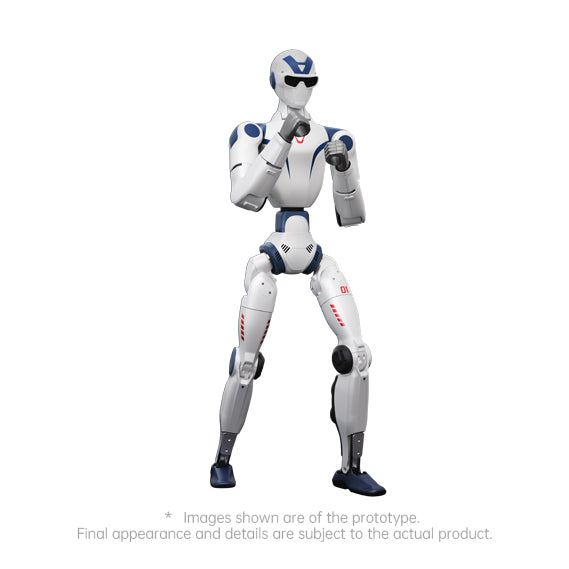 Unitree Robotics Unitree R1 | 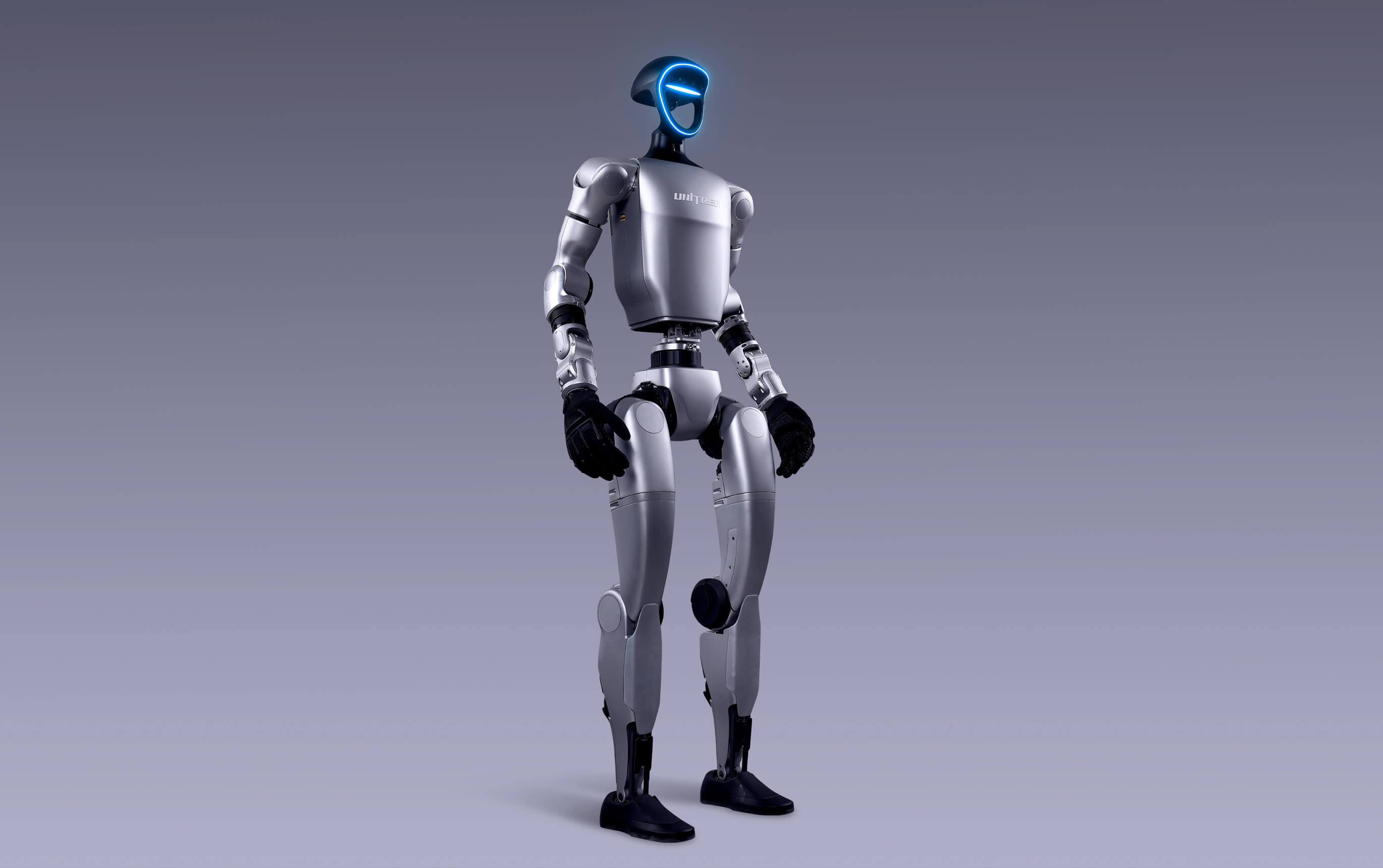 Unitree Robotics Unitree G1 | 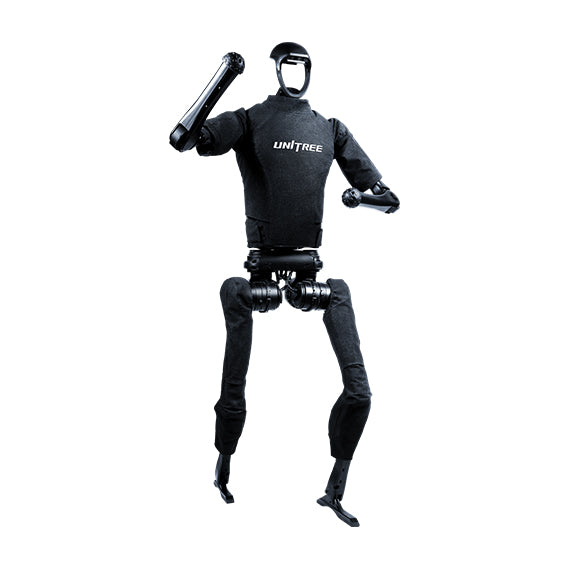 Unitree Robotics Unitree H1 | |
|---|---|---|---|---|
| Price (US) | ~$25,000 | $4,900 – $5,900 | $13,500 – $73,900 | ~$90,000 |
| Availability | In mass delivery in China; no US or European sales channel, no authorised international distributor, no confirmed North American shipping date | On the market | On the market | On the market |
| Height | 173 cm | 1.23 m | 1.32 m standing | ~1.80 m |
| Payload | Unknown | Unknown | Arm ~2 kg | Not rated for H1 |
| DoF | 29 | 20 | 23 | ~19 |
| Buyer | Enterprise | Individuals | Individuals | Enterprise |
| Made in | China | China | China | China |
Every spec, grouped & sourced
Tap a group to expand. Values are labelled official vs third-party; unknowns are omitted, not guessed.
Body & movement▾
Power & endurance▾
Hands & senses▾
Brains & control▾
Claims vs evidence
NVIDIA Jetson Thor; embodied AI
Where it's working
No verified large-scale deployment
Intended use cases: Industrial flagship (full-size)
What owners, reviewers and the press say about the EngineAI T800
Ratings and reception gathered from where this machine is actually sold and discussed. We summarise the signal — we don't republish anyone's reviews.
Sold direct by the manufacturer to research and commercial buyers; no marketplace or reseller listing with buyer ratings exists as of 30 August 2026.
- Interesting Engineering — reported in 2025 that EngineAI released raw unedited footage specifically to rebut CGI accusations · 2026-08-30
+Reviewers consistently praise
- motion quality at the top of the field
- company responded to doubt with evidence rather than silence
- aggressive price for the capability shown
!And consistently criticise
- credibility damage from the CGI accusations lingers
- no independent hands-on outside company events
- one video reviewer argued the price hides a significant catch
What owners and developers actually say
The T800's reception is a case study in what happens when a robot moves too well: the launch film was widely called computer-generated, EngineAI answered with behind-the-scenes footage and then had the CEO kicked on stage by the machine, and the argument still did not fully settle. Threads split between people reading motion-blur and lighting artefacts as proof of fakery and people pointing out the company demonstrated the unit publicly. Visual-effects professionals weighing in publicly said it did not read as fake to them.
r/robotics, r/EngineAI, r/singularity · as of 2026-08-30
Consensus drawn from one trade-outlet report on the authenticity dispute plus around eight videos, the largest at roughly 1.46M and 723K views, including one openly critical review.
EngineAI T800: the claims, checked
shipping
The T800 moved from preorder to mass delivery on 29 May 2026, when EngineAI opened its Honghualing assembly base in Shenzhen and the first batch left the line, with shipments from early June. Chinese customers have taken delivery through the company's domestic marketplace storefront at published prices. Outside China nothing has shipped through an authorised channel: no distributor, no export price, no warranty terms, and for US buyers no lawful import route after the FCC listing of 28 July 2026.
as of 2026-08-30
- misleading“The EngineAI T800 costs $25,000”
The base tier is CNY 180,000 and has not changed. $25,000 was its dollar equivalent at roughly 7.2 CNY/USD when the robot was unveiled in December 2025. At 6.7209 CNY/USD on 28 August 2026 the same tier is about $26,800, and the top tier is about $53,600. The price is also China-domestic; there is no dollar price because there is no dollar channel.
- misleading“The T800 patrols Shenzhen with the police”
A T800 appeared alongside uniformed officers in a public demonstration and the images circulated widely. No police authority and no EngineAI release describes an operational policing role, patrol schedule or assigned duty. It was a demonstration, not a deployment.
- true“The T800 is in mass production”
EngineAI opened a roughly 12,000 m² manufacturing base at Honghualing, Shenzhen on 29 May 2026 and announced that the first batch of T800s had rolled off the line with shipments from early June. Chinese customers have taken delivery. The separate claim of a 10,000-unit annual capability is a capacity statement — no delivered-unit count has been published.
- unverified“The T800 has a solid-state battery giving 4-5 hours of operation”
This is EngineAI's own figure, repeated in coverage of the 29 May 2026 factory launch. Several aggregator sites instead list about three hours. No independent measurement exists, and the operating conditions behind the claim have not been specified.
- false“You can preorder a T800 for delivery in the US”
There is no authorised US channel, no US price and no confirmed North American shipping date. Since the FCC's 28 July 2026 Covered List addition, a foreign-produced robot of this class cannot obtain new equipment authorization, without which it cannot lawfully be imported, marketed or sold in the US.
- misleading“The T800 is a combat robot”
The T800 competes in organised humanoid fighting events, the first of which was staged in late July 2026, and the footage is genuine. Those are refereed entertainment formats with choreographic and safety constraints. EngineAI markets the T800 as an industrial and research platform, not as a weapon, and no defence or security customer has been disclosed.
- misleading“EngineAI is a large established manufacturer”
EngineAI was founded in Shenzhen in 2023. It raised a $200 million Series B in April 2026 at a $1.5 billion valuation and filed confidentially for a Hong Kong IPO in June 2026, so it is well funded — but it is three years old, has published no revenue, and its total disclosed funding of at least $350 million is a fraction of what Apptronik or Figure have raised.
EngineAI Robotics in 2026
EngineAI Robotics is a Shenzhen humanoid developer founded in 2023 and led by chief executive Zhao Tongyang, who reporting on the company's IPO filing describes as the founder of the quadruped firm Dogotix and the former head of XPENG's humanoid programme after that company acquired his business. Its product line runs from the compact SA01 through the PM01 — the machine that went viral doing a front flip — and the SE01, up to the full-size T800. In April 2026 it raised a $200 million Series B at a $1.5 billion valuation, led by Henan CICC Huirong Fund Management with the contract electronics manufacturer Luxshare-ICT participating, bringing total disclosed funding to at least $350 million. On 12 June 2026 Bloomberg reported a confidential Hong Kong IPO filing. Its defining 2026 move was industrial rather than technical: the roughly 12,000 m² Honghualing manufacturing base, opened 29 May 2026, which the company says can turn out a humanoid every fifteen minutes and put 79 quality inspections and 46 working-condition simulations behind every unit. For a three-year-old company that is a serious statement of intent. What EngineAI has not built is a route to customers outside China — no international distributor, no export pricing, no English-first support organisation — and until it does, the T800's remarkable price is a fact about the Chinese market rather than about yours.
What to watch next
- The Hong Kong IPO — filed confidentially on 12 June 2026 per Bloomberg. If it goes effective, the prospectus would be the first audited look at T800 revenue and shipment volumes
- An authorised international distributor, with a published export price, warranty and spares path. Nothing of the kind exists as of 30 August 2026
- A published payload rating and duty cycle, the two numbers an industrial buyer needs and the two EngineAI has never given
- Whether the ten-thousand-unit annual capability turns into a disclosed delivered-unit count
- Whether any Department of War conditional approval route opens for foreign-produced humanoids in the US; without one, the T800's American market stays closed
- An independent security audit — the root-level vulnerabilities disclosed in Unitree's G1 EDU on 29 August 2026 are a category-wide warning, and no equivalent review of the T800 has been published
Should you consider the EngineAI T800?
The T800 is the most credible cheap full-size humanoid in the world right now, and it is not available to you. EngineAI has done the hard thing — a real 12,000 m² factory in Shenzhen, real deliveries from June 2026, a four-tier price list published in public starting at CNY 180,000 — while most of its Western competitors are still running pilots and quoting on request. The hardware is genuinely ahead of the price: 173 cm, 75 kg, a claimed 450 Nm of peak torque and one of the first solid-state battery packs in a humanoid. What it does not have is a rated payload, a published autonomy result, an audited shipment number, a security review, or any authorised way to buy it outside mainland China — and for a US buyer the FCC's 28 July 2026 Covered List addition closes that door legally as well as commercially. Judge the T800 for what it is: a fast-moving Chinese platform robot at a price that would be impossible anywhere else, sold into one market, with everything after the sale still unwritten.
Score reflects stated criteria (availability, data confidence, US relevance) — not hands-on testing or user ratings. We're an independent review & comparison site; we don't sell robots. *Financing figure is illustrative.
How we know this
Data confidence 40/100 · last verified 2026-08-30. Specs are labelled official vs third-party and dated; unknowns are omitted, not guessed.
EngineAI T800 — your questions, answered in full
How much does the EngineAI T800 cost?+
Four factory tiers, as of 30 August 2026: CNY 180,000 for Basic (about $26,800), CNY 240,000 for the open-source Eco edition (about $35,700), CNY 280,000 for Pro with NVIDIA Jetson Thor (about $41,700) and CNY 360,000 for Max with industrial-grade components (about $53,600). A CNY 5,000 deposit holds a build slot. Conversions use 6.7209 CNY/USD, the rate on 28 August 2026.
Why do some sites say the T800 costs $25,000?+
Because the base tier was about $25,000 when the yuan traded near 7.2 to the dollar at the December 2025 unveiling. The CNY 180,000 price has not moved; the exchange rate has. Every dollar figure for this robot is a conversion, not a price EngineAI quotes.
Can I buy an EngineAI T800 in the US or Europe?+
Not through an authorised channel. There is no international distributor, no export price and no confirmed North American shipping date. US buyers face an additional legal wall: since the FCC added foreign-produced advanced robotic devices to its Covered List on 28 July 2026, a machine like the T800 cannot get new equipment authorization, and without it cannot lawfully be imported or sold.
Is the T800 actually shipping, or is it still a preorder?+
Shipping, inside China. EngineAI opened its Shenzhen manufacturing base on 29 May 2026, the first batch came off the line that day and deliveries began in early June 2026. Our own June snapshot describing it as a preorder is out of date.
What are the T800's specs?+
1.73 m tall, 75 kg with the battery, 29 degrees of freedom in the body excluding hands, optional 7-DOF dexterous hands, a claimed 450 Nm peak joint torque, a stated top speed of 3 m/s, 360-degree LiDAR with stereo and RGB vision, and a solid-state battery EngineAI says supports four to five hours. All of that is manufacturer-published and none of it has been independently measured.
How much can the T800 lift?+
EngineAI has not published a payload rating. Any payload figure you find on an aggregator site is either extrapolated from the torque claim or invented. For an industrial buyer that missing number is a bigger problem than the price.
Is the T800 a police robot?+
No. It appeared alongside police officers in Shenzhen in a publicity demonstration, which is where the "robocop" coverage comes from. No policing role, patrol duty or procurement has been announced by any authority.
Does the T800 really have a solid-state battery?+
EngineAI says so and has said so consistently since the December 2025 unveiling, including in the material around the 29 May 2026 factory launch. It would be one of the first humanoids to ship with one. Nobody outside the company has verified the chemistry or the four-to-five-hour runtime, and some aggregator listings contradict it with a three-hour figure.
T800 or Unitree G1 — which should a lab buy?+
Different machines. The G1 is 1.32 m and about 35 kg with a big public code ecosystem, English documentation and a real international sales channel. The T800 is adult-sized at 1.73 m and 75 kg with far more torque and no route to buy it outside China. If you need full scale and you are in China, the T800. Anywhere else, the practical answer is usually the G1 — while noting the root-level vulnerabilities disclosed in the G1 EDU on 29 August 2026.
Who makes the T800 and how big is the company?+
EngineAI Robotics of Shenzhen, founded 2023, led by Zhao Tongyang. It raised a $200 million Series B in April 2026 at a $1.5 billion valuation and filed confidentially for a Hong Kong IPO in June 2026. Total disclosed funding is at least $350 million. It has not published revenue.
Is the T800 fully autonomous?+
No verified autonomous task work has been published. The demonstrations are choreographed, teleoperated, or unlabelled as to which. The Pro and Max tiers carry NVIDIA Jetson Thor compute, which is the hardware you would need for onboard policy inference, but hardware capable of autonomy is not the same as demonstrated autonomy.
What happens if my T800 breaks and I am not in China?+
You are on your own. There is no published warranty, service level, spares price or support contact outside mainland China, and no authorised distributor to escalate to. That is the real cost of the headline price, and it is why the T800 is a sensible purchase for a Chinese lab and a risky one for anyone else.