Fourier GR-1 & GR-2 Robots
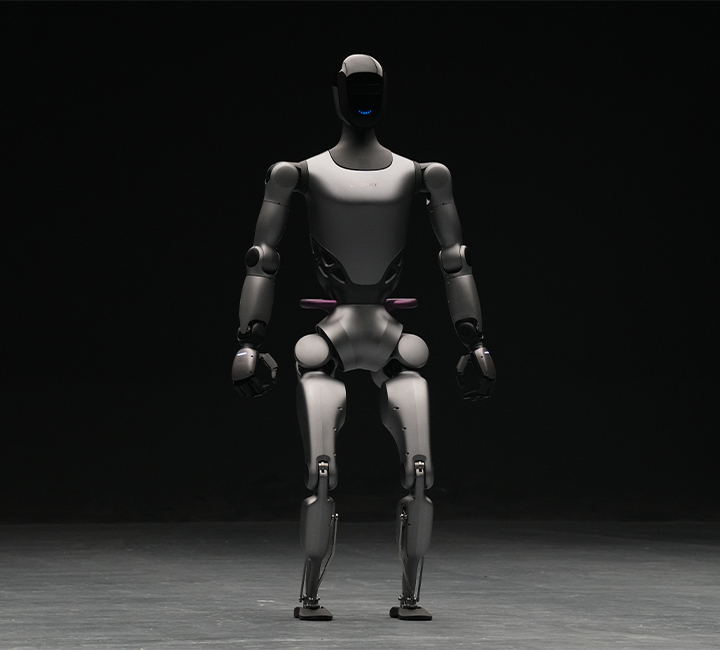
The Fourier GR-1 and GR-2 are full-size humanoid robots from Fourier Intelligence aimed at research, healthcare and industrial pilots, not consumers. There's no public list price; US quotes have been reported in the rough range of $150,000 to $220,000 depending on configuration. Both are enterprise-inquiry only, with no simple retail channel.
US buyers: the GR-1 holds a pre-July 2026 FCC authorization, so it remains importable and sellable.
Fourier's GR-1 appears in the pre-cutoff authorization records, which means US research and rehabilitation customers can still buy it and existing units are unaffected. It is quote-based rather than list-priced, and it has always moved through enterprise and research channels rather than retail. Confirm the FCC ID matches the exact configuration you are quoted, because variants are not automatically covered by another variant's grant.
The rule is US-only; Fourier's European and Asian sales are unchanged.
As of 2026-08-30 · medium confidence — verify before you commit funds
What is the Fourier GR-1 & GR-2 Robots?
The GR-1 robot from Fourier Intelligence started life in rehabilitation labs, which still shapes what the whole GR line is good at.
Fourier Intelligence comes at humanoids from an unusual angle, the company built its name in rehabilitation robotics, and that healthcare DNA runs right through its GR humanoid line. The GR-1 launched in late 2023, marketed as one of the first mass-produced humanoids, and the GR-2 followed in 2024 with a meaningful hardware upgrade.
These are serious, full-size machines built for institutions rather than living rooms. You'll find them pitched at research labs, rehab and senior-care settings, factories, and AI data-collection programs, places with budgets and engineers.
This page walks through what the GR-1 and GR-2 are, how they've evolved, the pricing that's been reported (there's no official list), how they work, and whether they make sense for your organisation.
What are the Fourier GR-1 and GR-2?
The GR-1 and GR-2 are Fourier Intelligence's flagship full-size humanoids. The GR-2, the newer of the two, stands about 175 cm tall and weighs roughly 63 to 65 kg, with a high 53 degrees of freedom, including 12-DOF hands for genuinely complex manipulation.
Power comes from Fourier's own FSA 2.0 actuators, delivering over 380 N·m of torque, and the GR-2 carries a detachable battery rated for up to about two hours of runtime, twice the capacity of the GR-1's. Its fingertips include array-type tactile sensors that can sense force and help identify object shapes and materials.
The GR-1 is the smaller, earlier model at around 165 cm and 55 kg. Together they represent a steady, iterative approach rather than a single flashy launch.
How much do the Fourier GR-1 and GR-2 cost?
There's no public list price for either robot, which itself tells you these are enterprise products. Reported US quotes for the GR-2 have landed roughly in the $150,000 to $170,000 range, with pilot configurations pushing toward around $220,000.
Treat all of those as estimates, not fixed prices. Because everything runs through direct sales and pilot agreements, the real figure depends on your configuration, support needs and volume. If a page quotes you an exact number with confidence, be a little skeptical, confirm it with Fourier's sales team.
Are the Fourier humanoids available to buy?
Not in any consumer sense. The GR-1 and GR-2 are available for enterprise inquiry only, sold through institutional channels and pilot programs. Reports note there's no established North American retail channel, so US buyers generally engage Fourier directly.
That matters for planning. You're not ordering a robot, you're entering a relationship, with lead times, integration support and likely a pilot phase. For the right institution that's normal; for an individual it's effectively a closed door.
How do the GR robots work and what are they used for?
Fourier leans on its rehabilitation-robotics heritage, and the GR line reflects that with an emphasis on safe, controlled, human-adjacent operation. The high DOF count and dexterous, tactile-sensing hands make the GR-2 well suited to manipulation research and data collection.
Use cases span research and education, healthcare and senior care, industrial and logistics pilots, concierge roles, inspection, and gathering AI training data. As with essentially every humanoid on the market today, polished demonstrations don't guarantee full autonomy, real-world deployments often involve heavy supervision, scripting or teleoperation. Ask what's autonomous before you assume.
Fourier GR-2 vs Unitree humanoids: how do they compare?
Fourier and Unitree play different games. Unitree competes hard on price and openness, the G1 starts around $13,500 and the H1 near $90,000, and they're readily purchasable as developer platforms.
Fourier's GR-2, by contrast, is an enterprise machine with no public price and reported quotes well into six figures, but it brings very high dexterity (53 DOF, 12-DOF tactile hands) and a healthcare-focused pedigree. If you want an affordable, hackable platform, Unitree wins. If you're an institution wanting dexterous manipulation and a care-oriented partner willing to run pilots, Fourier's proposition makes more sense despite the cost.
Is a Fourier humanoid worth it and who should consider one?
For research institutions, healthcare and rehab organisations, and industrial teams running funded pilots, the GR-2's dexterity and Fourier's domain expertise can justify the six-figure outlay. The tactile hands in particular are a real differentiator for manipulation work.
For everyone else, individuals, small teams, anyone wanting a turnkey worker, it's not the right fit. There's no retail path, no fixed price, and like all humanoids it's not a finished autonomous employee. Consider Fourier only if you're an institution ready to commit to an enterprise engagement.
The Fourier GR-1 / GR-2 on video
Hands-on reviews and teardowns, picked for what they actually show rather than how loud the thumbnail is.
Fourier's own mass-production announcement, the anchor claim for the whole GR line
Directly compares GR-1 and GR-2 spec for spec, which is the question most people arrive with
Who the Fourier GR-1 / GR-2 is — and isn't — for
+Where it shines
- Open developer access (SDK/API) — good for builders and labs.
- Stated real-world payload (GR-1: up to 50 kg whole-body).
- Specs are well-sourced — high data confidence.
!Watch-outs
- Some demos rely on teleoperation, not full autonomy.
- Sold to businesses only — not to private buyers.
How the Fourier GR-1 / GR-2 stacks up
Side by side with similar robots — the one you're reading about is highlighted.
| This robot Fourier Intelligence Fourier GR-1 / GR-2 | 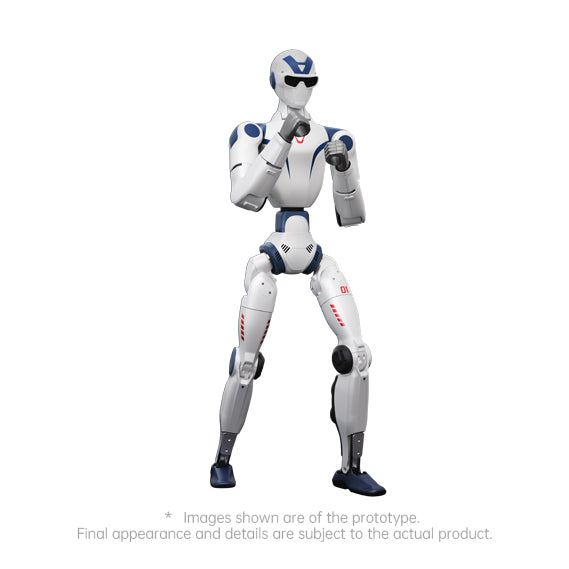 Unitree Robotics Unitree R1 | 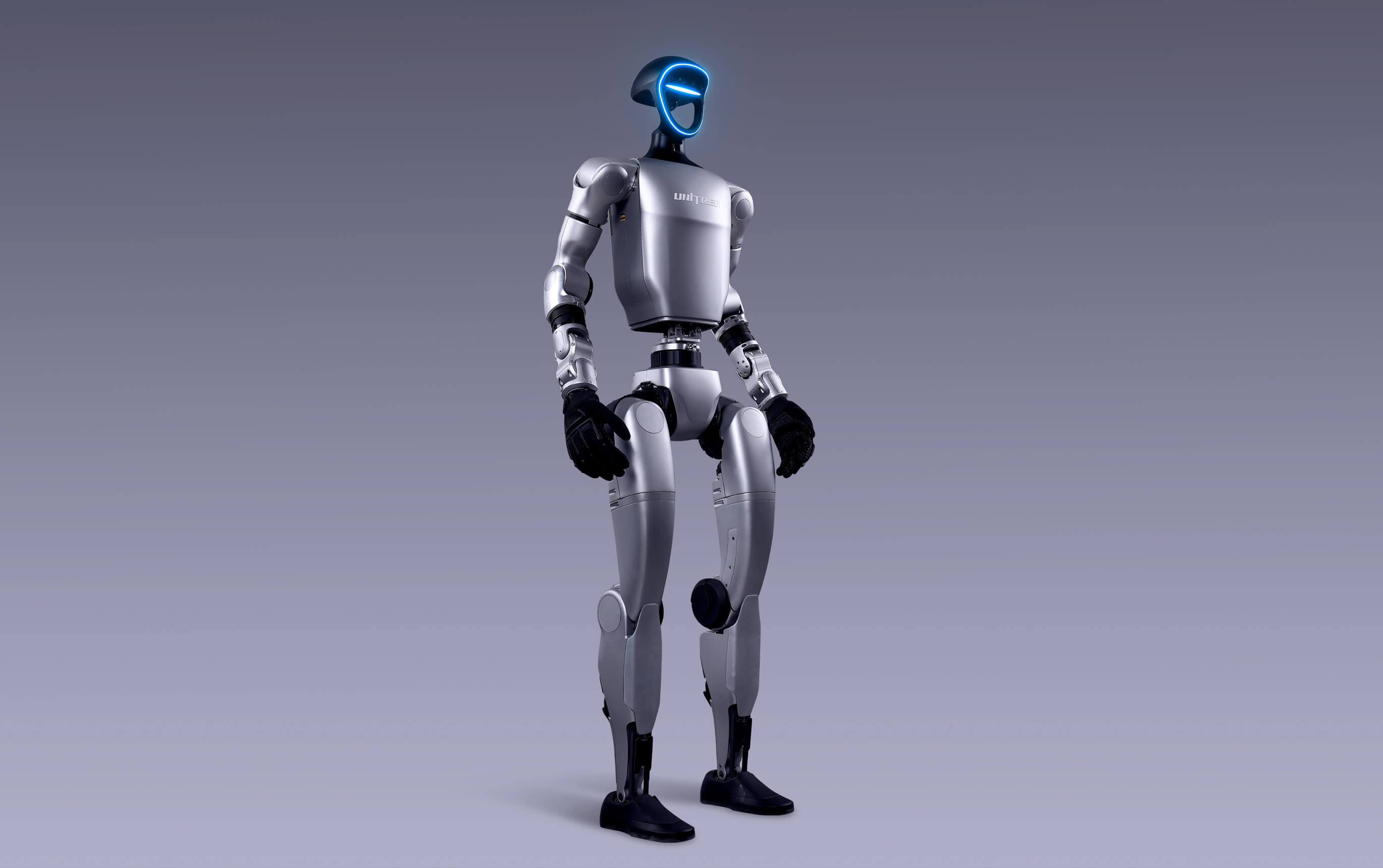 Unitree Robotics Unitree G1 | 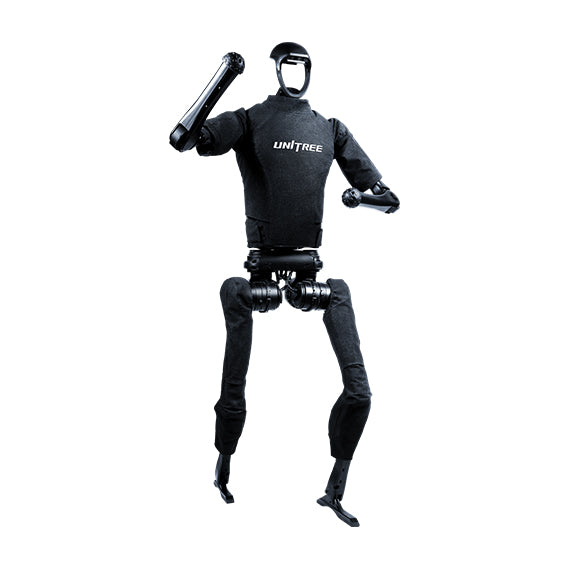 Unitree Robotics Unitree H1 | |
|---|---|---|---|---|
| Price (US) | $150,000 – $220,000 | $4,900 – $5,900 | $13,500 – $73,900 | ~$90,000 |
| Availability | Enterprise inquiry | On the market | On the market | On the market |
| Height | GR-1: 1.65 m; GR-2: 1.75 m | 1.23 m | 1.32 m standing | ~1.80 m |
| Payload | GR-1: up to 50 kg whole-body | Unknown | Arm ~2 kg | Not rated for H1 |
| DoF | GR-1: | 20 | 23 | ~19 |
| Buyer | Enterprise | Individuals | Individuals | Enterprise |
| Made in | China | China | China | China |
What the Fourier GR-1 / GR-2 costs — and how to get one
No public list price; US quotes ~$150k–$170k, pilot config to $220k.
Open - enterprise/academic via /
Leasing / RaaS: No official RaaS; a advertises 'Buy or Lease' (not official)
Every spec, grouped & sourced
Tap a group to expand. Values are labelled official vs third-party; unknowns are omitted, not guessed.
Body & movement▾
Power & endurance▾
Hands & senses▾
Brains & control▾
Claims vs evidence
Claims integrated multimodal LLM + emotion AI + motion library; no verified robust general autonomy
Where it's working
Early GR-1 units to some universities/AI firms; broad rehab-robotics reach; no verified large named deployments
Intended use cases: Research & education, healthcare/rehab & senior care, industrial/logistics, concierge, inspection, AI data collection
Should you consider the Fourier GR-1 / GR-2?
Fourier's GR-1 and GR-2 are capable, dexterous humanoids with genuine healthcare pedigree, but they're firmly enterprise tools, six-figure, quote-only, and pilot-driven. Worth serious consideration for institutions with the budget and a manipulation or care use case; not an option for individuals or bargain hunters.
Score reflects stated criteria (availability, data confidence, US relevance) — not hands-on testing or user ratings. We're an independent review & comparison site; we don't sell robots. *Financing figure is illustrative.
How we know this
Data confidence 78/100 · last verified 2026-06-23. Specs are labelled official vs third-party and dated; unknowns are omitted, not guessed.
Fourier GR-1 / GR-2 — your questions, answered in full
How much does the Fourier GR-2 cost?+
There's no public list price. Reported US quotes for the GR-2 fall roughly between $150,000 and $170,000, with pilot configurations toward around $220,000. Confirm any figure directly with Fourier.
What's the difference between the GR-1 and GR-2?+
The GR-2 is the newer, more capable model, taller and heavier (about 175 cm) with 53 degrees of freedom, upgraded FSA 2.0 actuators, tactile dexterous hands, and roughly double the battery capacity of the GR-1.
Can I buy a Fourier humanoid robot?+
Only through enterprise inquiry and pilot programs. There's no consumer retail channel, and reports note no established North American sales channel, so buyers engage Fourier directly.
What is the Fourier GR-2 used for?+
Research and education, healthcare and senior care, industrial and logistics pilots, concierge and inspection roles, and AI data collection, reflecting Fourier's rehabilitation-robotics background.
How many degrees of freedom does the GR-2 have?+
About 53 degrees of freedom, including 12-DOF hands with array-type tactile sensors that can sense force and help identify object shapes and materials.
How long does the GR-2's battery last?+
Up to roughly two hours on its detachable battery, which is about twice the capacity of the GR-1's, though real runtime depends on the task.
Is there a newer Fourier robot than the GR-2?+
Yes. Fourier has shown the GR-3, a care-focused variant emphasizing emotional interaction, which appeared at CES 2026. Availability and pricing details for it are still limited.
Is the Fourier GR-2 fully autonomous?+
Not necessarily in real deployments. Like most humanoids today, demonstrations may involve supervision, scripting or teleoperation, so confirm what runs autonomously before committing.
Peer-reviewed research on the Fourier GR-1 / GR-2
Published academic work — peer-reviewed papers and preprints — involving this robot or its maker's systems, indexed in scholarly databases (OpenAlex, arXiv). Not blog posts or press write-ups.
- GR00T N1: An Open Foundation Model for Generalist Humanoid RobotsNVIDIA: Johan Bjorck, Fernando Castañeda, Linxi Fan, Dieter Fox, Jan Kautz, Ajay Mandlekar, Yuke Zhu, et al. · 2025 · arXiv preprint (deployed on Fourier GR-1)
- Learning Humanoid Locomotion with Perceptive Internal ModelJunfeng Long, Junli Ren, Moji Shi, Zirui Wang, Tao Huang, Ping Luo, Jiangmiao Pang · 2024 · arXiv preprint (validated on Fourier GR-1 and Unitree H1)
Academic references are factual citations from open scholarly indexes; listing is not endorsement.