Fourier GR-3 Robot
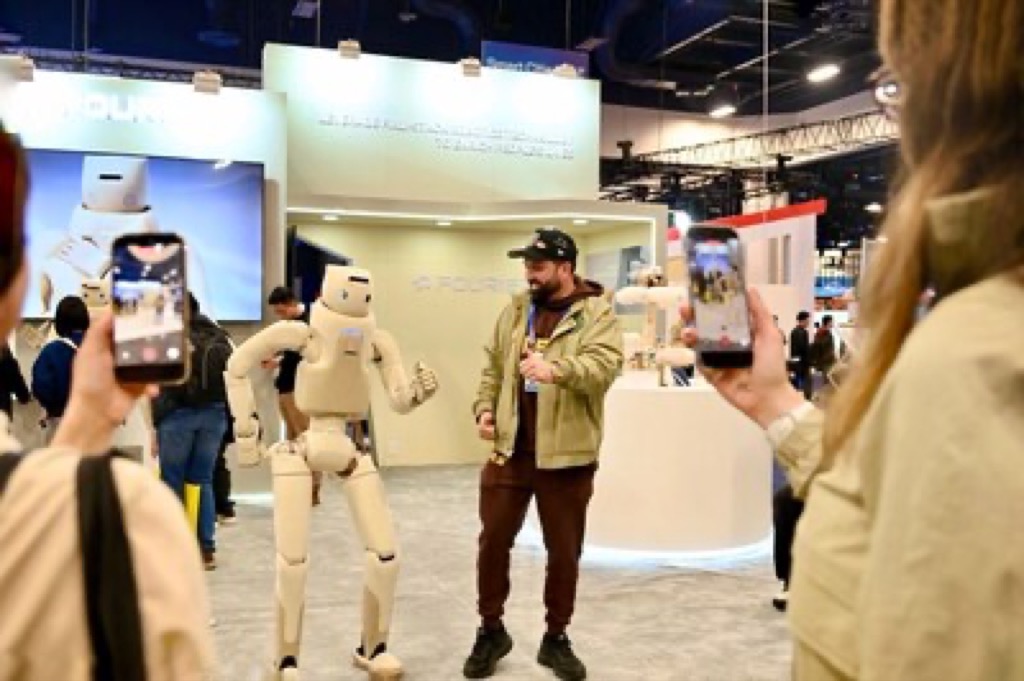
The Fourier GR-3 is a care and companion humanoid built for eldercare, emotional engagement and light home support. In the US it sells for roughly $100,000-$120,000 through importers, versus around $27,500 for B2B sales in China. At 165 cm and 71 kg with 55+ degrees of freedom, it's designed for warmth and interaction rather than heavy labour.
US buyers: the GR-1 is grandfathered, but we could not confirm the same for the GR-3 — confirm the model's own FCC ID.
Fourier appears among makers holding pre-cutoff authorizations, and the GR-1 is the model we can tie to one. Authorizations do not carry across to a successor, so the GR-3 needs its own grant dated before 28 July 2026. A US distributor listing it in stock may well be selling units imported before the cutoff, which is lawful; new imports would not be. Ask which of the two situations applies.
Fourier's sales outside the US are unaffected.
As of 2026-08-30 · medium confidence — verify before you commit funds
What is the Fourier GR-3 Robot?
The GR-3 is the Fourier robot built for company rather than labour — soft-covered, and designed to be around people all day.
Fourier Intelligence made its name in rehabilitation robotics before pivoting into full-size humanoids, so it's fitting that its first full-sized companion robot, the GR-3, is all about care. Fourier calls it a "Care-Bot," and the entire design language, soft surfaces, gentle proportions, is built to feel safe and reassuring rather than industrial.
The GR-3 made its CES 2026 debut in Las Vegas after first being unveiled in August 2025, and it's been positioned around "warm tech companionship." That's a very different pitch from the warehouse humanoids chasing factory contracts, and it aims squarely at hospitals, eldercare institutions and, eventually, homes.
The catch, as with many Chinese humanoids reaching the US, is price. What costs about $27,500 domestically balloons past $100,000 once it crosses to American buyers through importers. Let's get into what you're actually paying for.
What is the Fourier GR-3?
The GR-3 is a full-size companion humanoid standing 165 cm tall and weighing 71 kg, with 55+ degrees of freedom, a lot of articulation devoted to natural, expressive movement. Fourier designed it for companionship and care: elder and child interaction, emotional engagement, and light home support.
At its core is Fourier's Full-Perception Multimodal Interaction System, which blends visual, audio and tactile sensing. In plain terms, the GR-3 can localise voices, track a person's movement, recognise subtle touch, and respond in a way that's meant to feel attentive rather than robotic.
The emphasis is on "affinity" and a "sense of security." This isn't a robot pitched on payload or speed, it's pitched on being pleasant and safe to be around, which is exactly what care settings need.
How much does the Fourier GR-3 cost?
Pricing splits sharply by market. For B2B sales in China, the GR-3 is around $27,500. In the US, listings from importers cluster between roughly $100,000 and $125,000, with most landing near the $120,000 mark.
That's a big markup, and it reflects import, logistics, support and dealer margins on a specialised machine. So if you saw the low China figure quoted somewhere, know that it's not the number a US buyer will actually pay.
For US budgeting, treat $100k-$120k as the realistic range. This firmly places the GR-3 in enterprise and institutional territory, care facilities and well-funded research programs, rather than typical household budgets.
Is the GR-3 available and when did it launch?
The GR-3 was first unveiled on August 6, 2025 and made its US trade-show debut at CES 2026. It's being sold, and US importers list it for purchase, so it's more available than a pure concept, but the six-figure US price and care-institution focus mean this is not a mass-market consumer launch.
Realistically, the buyers here are eldercare institutions, hospitals, and organisations that can justify a $100k+ companion robot. If you're an individual, importing one is possible but expensive and comes with the usual support and warranty questions that follow cross-border robotics purchases.
So: available, yes. Broadly accessible, not yet. Consider it an enterprise-and-institution product first, with home use as an aspirational edge case.
How does the GR-3 work and how long does it run?
Runtime is one of the GR-3's standout practical features. It uses a dual hot-swappable battery system that allows up to 3 hours of continuous operation without powering down, you swap one pack while the other keeps it running. In a hospital or care home where downtime is a problem, that's a genuinely useful design choice.
Interaction runs through the Full-Perception Multimodal system combining vision, audio and tactile input. The GR-3 can follow voices, track people and sense touch, then respond with its 55+ DoF for expressive, natural-feeling movement.
As with all companion humanoids, be realistic about autonomy. It's built for interaction and light support, not complex unsupervised chores, and sophisticated tasks may still involve human oversight. The strength here is presence and engagement, not heavy independent work.
Fourier GR-3 vs Dobot Atom and UBTech U1
The GR-3's rivals depend on what you want. Against the Dobot Atom, the split is clear: the Atom is a task-and-industry robot (and much cheaper in the US at ~$79,000), while the GR-3 is a care-and-companion robot built for emotional engagement. Different jobs entirely.
Against UBTech's U1, another companion-focused humanoid, the comparison is closer in spirit but the U1 is a China-domestic presale around $30,000, whereas the GR-3 is already sold into the US at a much higher price. If you're in the US and want a companion robot you can actually import today, the GR-3 is the more available option, just far pricier.
Bottom line, the GR-3 wins on care design and battery-swap uptime, but its US price is its biggest limitation versus cheaper China-market companions.
Is the Fourier GR-3 worth it and who's it for?
The GR-3 makes the most sense for eldercare institutions, hospitals, and organisations investing in emotional-AI and care robotics. Its warmth-first design, tactile sensing and 3-hour hot-swap runtime are tailored to exactly those environments.
For individual home buyers, the ~$100k-$120k US price is the wall. Unless money is no object, this is hard to justify as a personal companion when the same robot is a fraction of the price in its home market.
Our take: an impressive, purpose-built care companion that's genuinely available in the US, but priced for institutions and enterprises, not everyday households. If you're a care provider, it's worth a serious look; if you're a consumer, wait for prices to come down.
The Fourier GR-3 on video
Hands-on reviews and teardowns, picked for what they actually show rather than how loud the thumbnail is.
Fourier's GR-3 launch, aimed squarely at rehabilitation and care rather than factory work
Independent review of how GR-3 differs from the industrial GR-1 and GR-2
Close show-floor footage of GR-3 moving, filmed by a robotics retailer rather than an ad agency
Who the Fourier GR-3 is — and isn't — for
+Where it shines
- Stated real-world payload (~3 kg per hand).
!Watch-outs
- Sold to businesses only — not to private buyers.
- Public data is thin; verify key figures before relying on them.
How the Fourier GR-3 stacks up
Side by side with similar robots — the one you're reading about is highlighted.
| This robot Fourier Intelligence Fourier GR-3 | 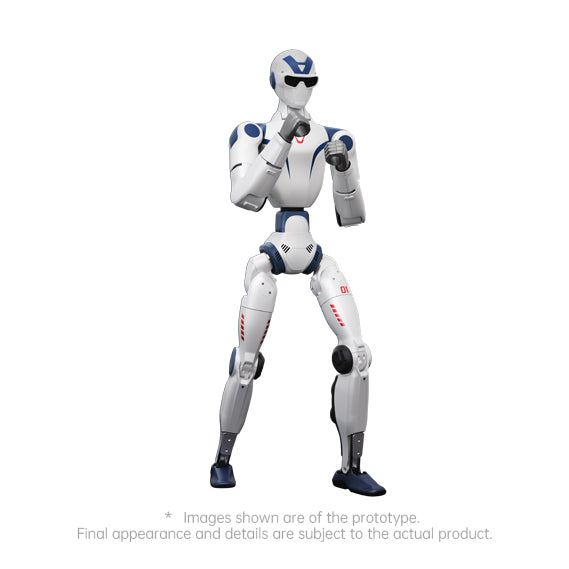 Unitree Robotics Unitree R1 | 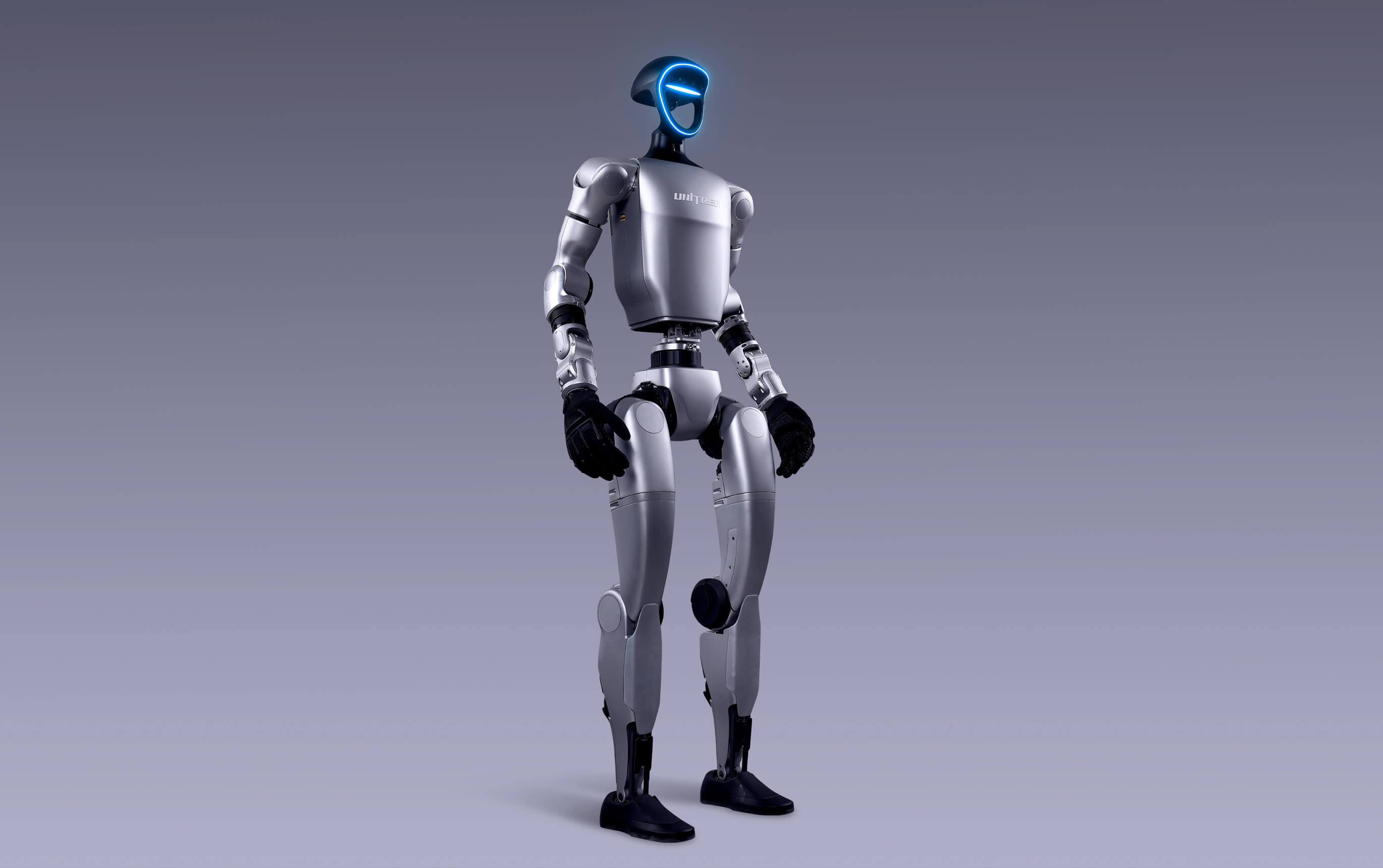 Unitree Robotics Unitree G1 | 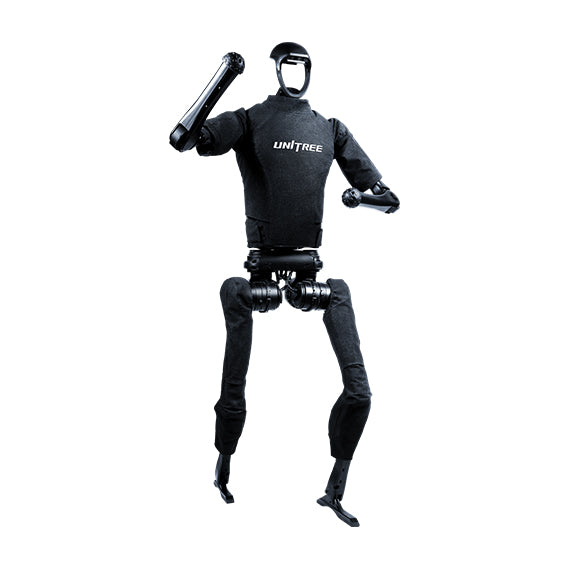 Unitree Robotics Unitree H1 | |
|---|---|---|---|---|
| Price (US) | $100,000 – $120,000 | $4,900 – $5,900 | $13,500 – $73,900 | ~$90,000 |
| Availability | On the market | On the market | On the market | On the market |
| Height | 165 cm | 1.23 m | 1.32 m standing | ~1.80 m |
| Payload | ~3 kg per hand | Unknown | Arm ~2 kg | Not rated for H1 |
| DoF | 55 | 20 | 23 | ~19 |
| Buyer | Enterprise | Individuals | Individuals | Enterprise |
| Made in | China | China | China | China |
What the Fourier GR-3 costs — and how to get one
GR-3 Care-bot ~$100k-$120k via US; price-prohibitive for most homes.
Sold; price-prohibitive for most homes
Leasing / RaaS: unknown
Every spec, grouped & sourced
Tap a group to expand. Values are labelled official vs third-party; unknowns are omitted, not guessed.
Body & movement▾
Power & endurance▾
Hands & senses▾
Brains & control▾
Claims vs evidence
Conversational/affective AI; care-focused interaction
Where it's working
Care/companion demos; no verified large-scale home deployment
Intended use cases: Companion and care: elder/child interaction and assistance, emotional engagement, light home support
What owners, reviewers and the press say about the Fourier GR-3
Ratings and reception gathered from where this machine is actually sold and discussed. We summarise the signal — we don't republish anyone's reviews.
Sold by quotation to institutional and clinical buyers, with no retail listing and therefore no buyer rating.
+Reviewers consistently praise
- high degree-of-freedom count and smooth motion
- hot-swap power for continuous operation
- genuine clinical-robotics heritage behind the company
!And consistently criticise
- companion and care framing read as gimmicky to robotics readers
- unclear what it usefully does beyond conversation
- price expectations unsettled
What owners and developers actually say
Reaction to the GR-3 has been noticeably mixed, and the split is about framing rather than hardware: the 'care bot' positioning with expressive eyes and emotional conversation drew a fair amount of mockery in robotics threads, while the underlying specification was received as serious. Fourier's rehabilitation-robotics background gives it more credibility in healthcare contexts than a general-purpose humanoid pitch would earn.
r/robotics, r/singularity · as of 2026-08-30
Consensus drawn from robotics-community discussion and trade coverage of the 2025 unveiling; no independent hands-on review exists.
Should you consider the Fourier GR-3?
The Fourier GR-3 is a thoughtfully designed care companion with real strengths, tactile sensing, expressive movement, and 3-hour hot-swap battery uptime. But its US price of roughly $100k-$120k makes it an institutional and enterprise buy, not a household one, especially given it's far cheaper in China.
Score reflects stated criteria (availability, data confidence, US relevance) — not hands-on testing or user ratings. We're an independent review & comparison site; we don't sell robots. *Financing figure is illustrative.
How we know this
Data confidence 42/100 · last verified 2026-06-30. Specs are labelled official vs third-party and dated; unknowns are omitted, not guessed.
Fourier GR-3 — your questions, answered in full
How much does the Fourier GR-3 cost?+
In the US it runs roughly $100,000-$125,000 through importers, most commonly near $120,000. For B2B sales in China it's around $27,500, so the market you buy in matters enormously.
What is the Fourier GR-3 used for?+
It's a care and companion humanoid for eldercare, child and elder interaction, emotional engagement and light home support, with a strong focus on feeling safe and reassuring.
How tall is the GR-3 and how much does it weigh?+
It stands 165 cm tall, weighs 71 kg, and has 55+ degrees of freedom for expressive, natural movement.
How long does the Fourier GR-3 run on a charge?+
Up to 3 hours of continuous operation, thanks to a dual hot-swappable battery system that lets you replace one pack while the other keeps it running, useful for care settings that can't tolerate downtime.
When was the GR-3 released?+
It was first unveiled on August 6, 2025 and made its US trade-show debut at CES 2026 in Las Vegas.
Can I buy a Fourier GR-3 in the US?+
Yes, US importers list it for sale, but at roughly $100k-$120k it's aimed at care institutions and enterprises rather than typical home buyers.
Is the GR-3 fully autonomous?+
It's built for interaction and light support using its multimodal perception system, but it's not designed for complex unsupervised chores, and sophisticated tasks may still involve human oversight.
How is the GR-3 different from Fourier's GR-2?+
The GR-3 is Fourier's first full-sized care and companion humanoid, emphasising warmth, tactile sensing and emotional engagement, a different focus from Fourier's earlier, more general-purpose GR-series robots.
Peer-reviewed research on the Fourier GR-3
Published academic work — peer-reviewed papers and preprints — involving this robot or its maker's systems, indexed in scholarly databases (OpenAlex, arXiv). Not blog posts or press write-ups.
- GR00T N1: An Open Foundation Model for Generalist Humanoid RobotsNVIDIA (Johan Bjorck, Fernando Castañeda, Nikita Cherniadev, Linxi Fan, Yuke Zhu, et al.) · 2025 · arXiv preprint · DOI 10.48550/arXiv.2503.14734
Academic references are factual citations from open scholarly indexes; listing is not endorsement.