GAC GoMate Robot
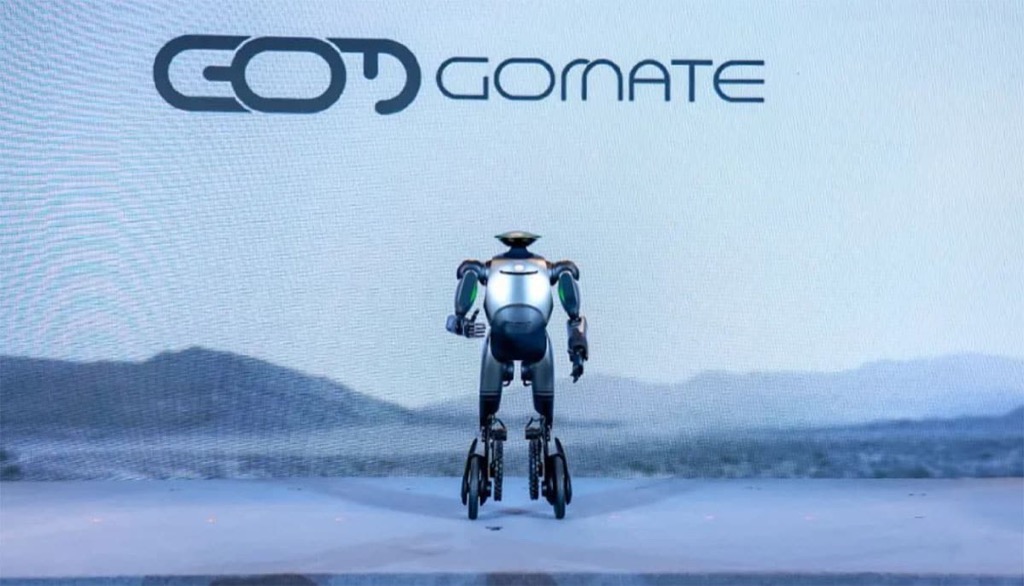
GoMate is a wheel-leg humanoid robot from Chinese automaker GAC Group, first shown in December 2024 as its third-generation embodied-AI robot. It has 38 degrees of freedom and can switch between a four-legged wheeled mode and a taller bipedal mode. GAC targets small-scale production in 2026, so for now it's announced-and-piloting rather than something you can buy, and no official price has been confirmed.
US buyers: no new imports — this model has no US authorization on record, and the July 2026 rule closes that route.
GoMate is heading for small-scale Chinese production in 2026 with no US plan announced. The rule closes the US import route for a newly launched Chinese model. Nothing is orderable from the US.
Chinese production plans are unaffected.
As of 2026-08-30 · medium confidence — verify before you commit funds
What is the GAC GoMate Robot?
GoMate is the GAC robot — a carmaker's machine that changes between four legs and two depending on the ground.
GoMate is what happens when a carmaker builds a robot. GAC Group — the Guangzhou automaker behind brands like Aion and its ventures with Toyota and Honda — unveiled GoMate in Shanghai in December 2024 as its third-generation humanoid, and it borrows a lot of thinking from vehicle engineering.
The headline trick is that it isn't a pure biped. GoMate uses a wheel-leg design: it can roll around on wheels in a lower quadrupedal stance for stability and efficiency, then stand up into a taller two-legged mode when it needs the reach. GAC says that shapeshifting approach cuts energy use dramatically versus a conventional walking humanoid.
Here's the honest framing though — this is still an early-stage product. GAC's own plan was experimental use in 2025 and small-scale production in 2026. So treat GoMate as a promising announced platform, not a shipping product you can order today.
What is the GAC GoMate?
GoMate is a full-size, wheeled humanoid robot with 38 degrees of freedom. Its defining feature is a convertible body: in wheeled quadruped mode it sits around 1.4 meters tall for stability and speed, and it can rise to about 1.75 meters in bipedal mode when it needs to work at human height.
GAC frames it as an embodied-AI robot for commercial and industrial roles — think security patrol, delivery and logistics-style tasks rather than folding your laundry. The wheel-leg layout is the whole pitch: wheels for efficient movement on flat ground, legs for stairs, curbs and reaching. GAC also claims the design cuts energy consumption by more than 80% compared to similar walking-only robots, which if it holds up is a meaningful runtime advantage.
How much will the GoMate cost?
GAC hasn't confirmed a price. Any figure you see for GoMate right now is unconfirmed, and since the robot is only entering small-scale production in 2026, pricing will likely start as enterprise-quoted rather than a fixed retail number.
What we can say is that GAC has talked about mass production and broader sales as goals, which suggests it eventually wants competitive pricing. But until there's an official announcement, we won't put a number on it. If cost is your deciding factor, this one is a wait-and-see.
GoMate release date and availability
The timeline GAC laid out is experimental deployment in select industries during 2025, then small-scale production in 2026, with ambitions for wider mass production and sales after that.
So as of 2026, availability is best described as announced with a waitlist / pilot phase. It's not on open sale, and it's very much a China-domestic program at this stage. International buyers shouldn't assume easy access — import, support and homologation would all be unknowns. If you're outside China, keep this on a watchlist rather than a shopping list.
How does the wheel-leg system work?
The clever part is the mode switching. On smooth floors, GoMate stays low and rolls on wheels, which is faster and far more energy-efficient than lifting each foot. When it hits stairs, uneven ground, or needs to reach up, it reconfigures into a legged stance.
That adaptability is meant to make it more stable and practical in messy real environments than a robot that only walks. The catch: convertible mechanisms add complexity, and GAC hasn't published a lot of independent, third-party validation of how autonomous the robot is across real tasks. Early demos and automaker claims are encouraging but shouldn't be read as proof of unsupervised, general-purpose autonomy yet.
GoMate vs other Chinese humanoids
Most rivals — Unitree, UBTech, Fourier and the like — commit to bipedal or fixed-wheel designs. GoMate's convertible wheel-leg body is genuinely differentiated, and the energy-efficiency angle is a real selling point for jobs like patrolling or delivery where uptime matters.
The flip side is maturity. UBTech and Unitree already have robots you can actually buy and that are deployed at scale; GoMate is still ramping to small-scale production. So the comparison is 'interesting design that's early' versus 'more conventional design that's shipping.' For a buyer today, the shipping robots win; for someone betting on where the tech goes, GoMate's approach is worth watching.
Is the GoMate worth waiting for and who is it for?
GoMate is aimed at businesses — security, delivery, logistics and industrial settings — not homes or consumers. The wheel-leg efficiency story is compelling for commercial fleets that care about battery life and mixed terrain.
But it isn't a product you can rely on yet. It's early-stage, China-domestic, unpriced, and still proving its autonomy. If you're a commercial operator in China, it's worth reaching out to GAC to track the pilot. Everyone else should file it as one of the more interesting 2026 announcements and revisit once real units, prices and independent reviews exist.
The GAC GoMate on video
Hands-on reviews and teardowns, picked for what they actually show rather than how loud the thumbnail is.
Nine minutes on GoMate's variable wheel-leg mechanism and why a carmaker built it
The third-generation unveiling, which supersedes most of the English write-ups still in circulation
Automotive trade press, useful because GoMate's roadmap is tied to GAC's vehicle production plans
Who the GAC GoMate is — and isn't — for
+Where it shines
!Watch-outs
- Not really on sale yet — availability is research / limited.
- No public list price — you'll need a quote.
- Sold to businesses only — not to private buyers.
How the GAC GoMate stacks up
Side by side with similar robots — the one you're reading about is highlighted.
| This robot GAC GAC GoMate | 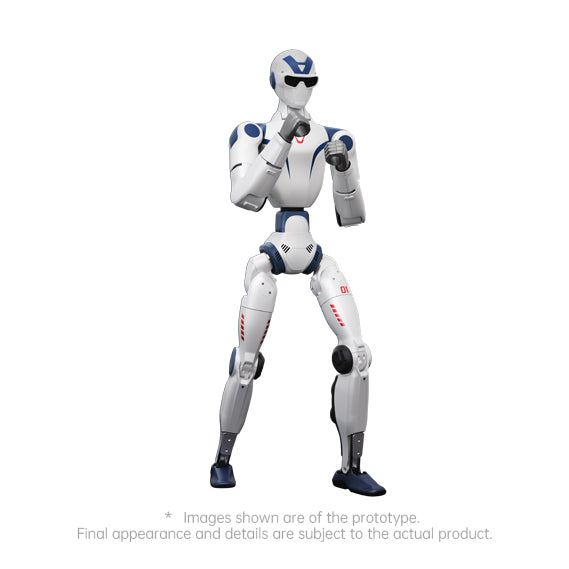 Unitree Robotics Unitree R1 | 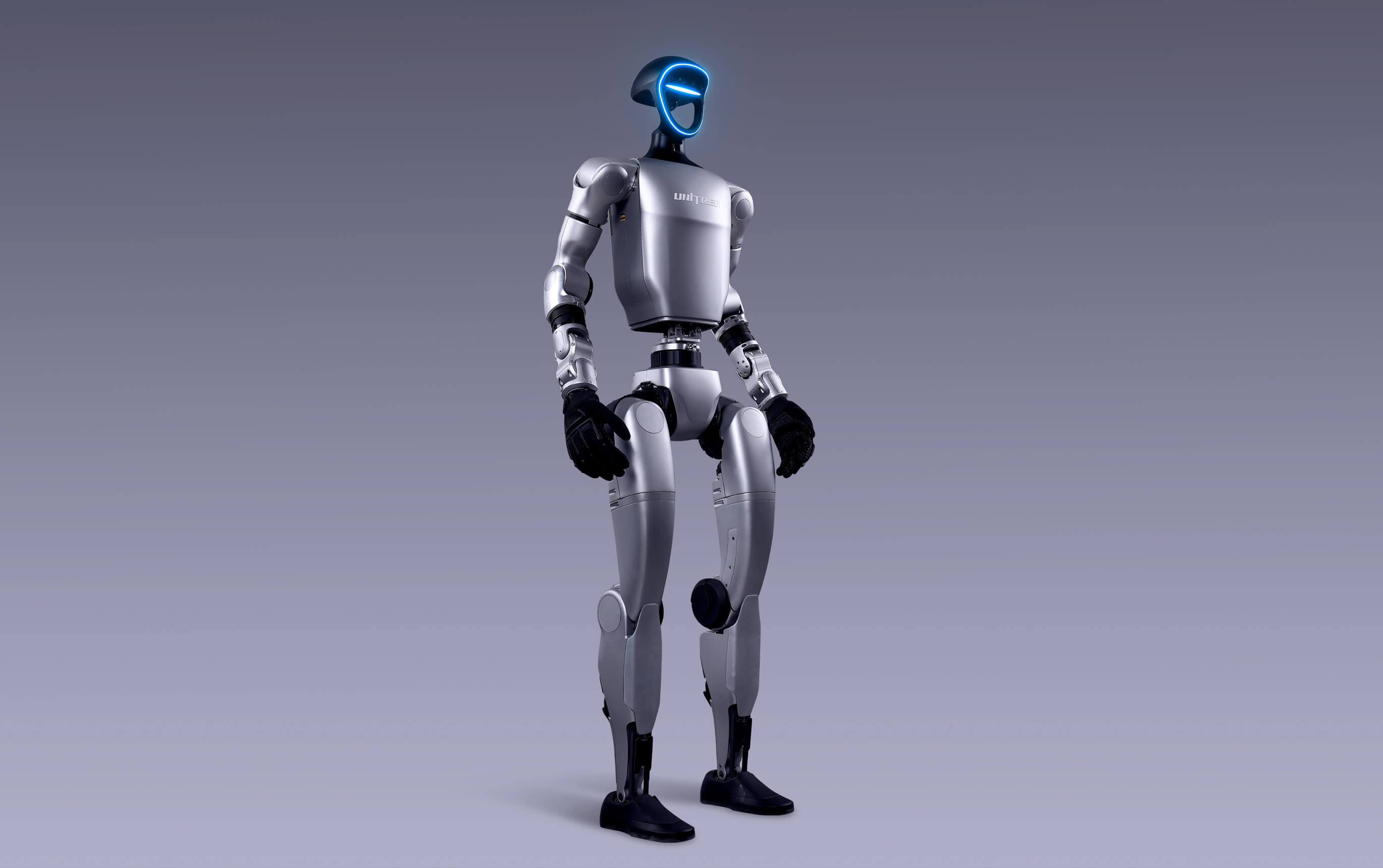 Unitree Robotics Unitree G1 | 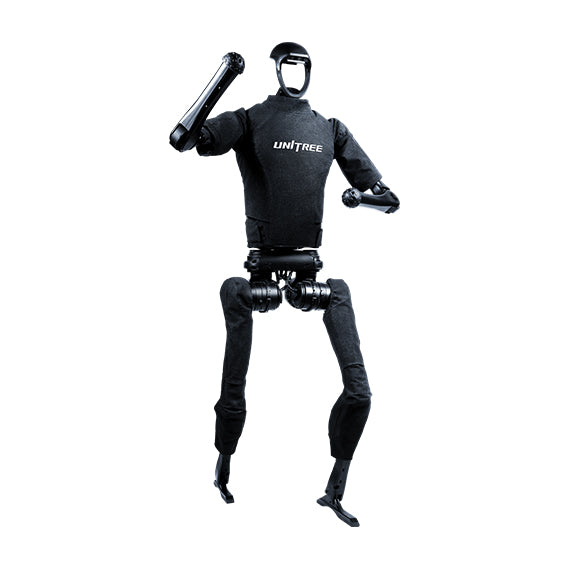 Unitree Robotics Unitree H1 | |
|---|---|---|---|---|
| Price (US) | Price on inquiry | $4,900 – $5,900 | $13,500 – $73,900 | ~$90,000 |
| Availability | Announced | On the market | On the market | On the market |
| Height | 1.75 m | 1.23 m | 1.32 m standing | ~1.80 m |
| Payload | Unknown | Unknown | Arm ~2 kg | Not rated for H1 |
| DoF | 38 | 20 | 23 | ~19 |
| Buyer | Enterprise | Individuals | Individuals | Enterprise |
| Made in | China | China | China | China |
What the GAC GoMate costs — and how to get one
GAC GoMate wheel-leg humanoid; small-scale production 2026.
Unknown
Leasing / RaaS: unknown
Every spec, grouped & sourced
Tap a group to expand. Values are labelled official vs third-party; unknowns are omitted, not guessed.
Body & movement▾
Power & endurance▾
Hands & senses▾
Brains & control▾
Claims vs evidence
GAC embodied AI
Where it's working
No verified large-scale deployment
Intended use cases: Industrial and commercial (security/delivery, wheel-leg)
Should you consider the GAC GoMate?
GoMate is one of the more original humanoid concepts around, and coming from a serious automaker gives it real engineering weight. But in 2026 it's still an early, China-domestic program with no confirmed price and only small-scale production — promising to watch, not something to buy.
Score reflects stated criteria (availability, data confidence, US relevance) — not hands-on testing or user ratings. We're an independent review & comparison site; we don't sell robots. *Financing figure is illustrative.
How we know this
Data confidence 34/100 · last verified 2026-06-30. Specs are labelled official vs third-party and dated; unknowns are omitted, not guessed.
GAC GoMate — your questions, answered in full
What is the GAC GoMate?+
GoMate is a wheel-leg humanoid robot from Chinese automaker GAC Group, shown in December 2024. It has 38 degrees of freedom and switches between a wheeled quadruped mode (~1.4 m) and a bipedal mode (~1.75 m).
How much does the GoMate cost?+
GAC has not confirmed a price. Any number you see now is unconfirmed. Since it's only entering small-scale production in 2026, expect enterprise quotes before any retail pricing.
When will GoMate be available?+
GAC planned experimental use in 2025 and small-scale production in 2026, with wider production hoped for later. It's not on open sale yet.
Can it walk on two legs?+
Yes. GoMate can stand up into a bipedal mode around 1.75 meters tall, and it can also move in a lower wheeled quadrupedal mode for stability and efficiency.
Why does GoMate use wheels and legs?+
The wheel-leg design lets it roll efficiently on flat ground and switch to legs for stairs, uneven terrain or reaching. GAC claims it cuts energy use by over 80% versus comparable walking robots.
Is GoMate available outside China?+
Not really. It's a China-domestic program in its pilot and small-scale-production phase. International availability, support and import are all unconfirmed.
What will GoMate be used for?+
GAC positions it for commercial and industrial work — things like security, delivery and logistics — rather than home or companion use.