Galaxea Kengo Robot
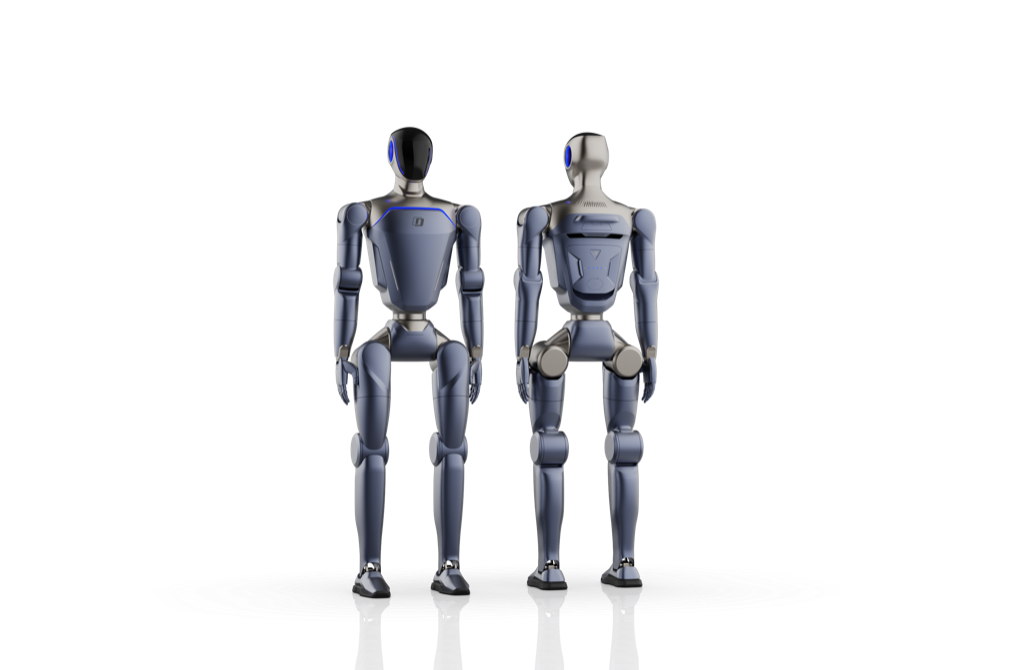
Kengo is Galaxea Dynamics' first bipedal humanoid robot, unveiled in June 2026 and aimed at industrial, commercial-service and domestic use. It's a high-torque, lightweight design with single-joint torque over 130 N·m, but here's the important part: Galaxea has not released full specifications, pricing, or a shipping date. As of mid-2026 it's an announced product, not something you can buy — so treat any 'price' you see elsewhere as unconfirmed.
US buyers: no new imports — this model has no US authorization on record, and the July 2026 rule closes that route.
Kengo was announced without a price or schedule, and there is no US channel. As a post-cutoff Chinese model it cannot obtain US authorization by the ordinary route.
Chinese plans are unaffected.
As of 2026-08-30 · medium confidence — verify before you commit funds
What is the Galaxea Kengo Robot?
Kengo is the walking Galaxea robot, arriving after a run of wheeled research platforms.
Galaxea Dynamics (also styled Galaxea AI) is a Beijing-based startup that's raised serious money — reportedly around $100 million at a roughly $700 million valuation — on the thesis that humanoids will enter homes within the decade. Kengo is their statement piece, and importantly their first move from wheeled robots into a true bipedal machine.
The reveal itself was slick. Kengo comes in three colour schemes and has a curved screen with lit contours on its head, going for that human-but-futuristic look a lot of Chinese makers are chasing right now. Underneath the styling, Galaxea talks up a high-dynamic, high-torque build on a lightweight frame, and a design where just two core joint modules cover the whole body — a clear nod toward eventual mass production.
But I want to set expectations honestly up front. This is an announcement, not a product launch. Galaxea has shown Kengo dancing and moving, and described its architecture, yet has not published detailed specs, a price, or a delivery schedule. So most of this page is about what's real, what's claimed, and what we simply don't know yet.
What is the Galaxea Kengo?
Kengo is a bipedal humanoid robot from Galaxea Dynamics, unveiled in June 2026. It's the company's first legged humanoid, marking an expansion beyond the wheeled and robotic-arm systems they'd built before. Galaxea frames it as a general-purpose platform, with intended applications spanning industrial manufacturing, commercial services and domestic environments.
The headline design points Galaxea has shared: a high-performance motor 'cerebellum' handling low-level motion, an embodied AI 'brain' for higher-level reasoning and navigation, and single-joint torque exceeding 130 N·m on a deliberately lightweight frame. Galaxea says this lets Kengo pull off dynamic moves like dancing and expressive interaction. For manufacturability, the whole body reportedly uses just two standardised joint modules.
What's missing is nearly everything a buyer would want to nail down — height, weight, full degree-of-freedom count, battery life, payload. Those weren't disclosed at reveal, so anyone quoting them right now is guessing.
How much will the Galaxea Kengo cost?
There's no confirmed price. Galaxea did not release pricing at the June 2026 unveiling, and hadn't as of this writing.
That's genuinely all that can be said honestly. If you see a specific dollar or yuan figure for Kengo on a listing site, it's an estimate or a placeholder, not an official number. Given Kengo's stated focus on mass-producible design, Galaxea clearly wants to hit an aggressive price eventually, but 'eventually' and 'aggressive' aren't a number you can plan a purchase around.
For context, other Chinese general-purpose humanoids in 2026 range from roughly $6,000 for stripped-down developer units up past $50,000 for fuller systems — but applying that band to Kengo would be speculation. We'll update this section when Galaxea publishes real figures.
When is the Galaxea Kengo release date?
Kengo was unveiled in June 2026. A commercial release date, however, has not been announced, and there's no public waitlist or pre-order with a confirmed ship window as of mid-2026.
Galaxea's emphasis on a two-module, mass-production-friendly architecture signals intent to scale, and the company's stated mission is getting humanoids into homes within the decade — not next quarter. Reading between the lines, a wide availability is likely still some way out, with early units more plausibly going to pilots and partners first.
If getting on an early list matters to you, the practical step is to contact Galaxea Dynamics directly or watch their channels; just don't bank on a specific delivery date until they give one.
How does Kengo work, and how capable is it really?
Architecturally, Galaxea splits Kengo into a motor 'cerebellum' for real-time balance and movement and an embodied AI 'brain' for perception, planning and navigation. That brain-plus-cerebellum framing is common across the industry now, and it's a sensible way to build a general-purpose robot. The high single-joint torque (130+ N·m) on a light frame is what enables the agile, dynamic motion Galaxea showed off.
Here's the honesty check, though: unveiling demos — dancing, smooth gestures — show off a platform's potential, not its day-to-day autonomous reliability. Galaxea hasn't published data on how independently Kengo performs real tasks, so it's fair to assume, as with most humanoids at reveal stage, that complex demonstrations may be partly guided or teleoperated. That's not a knock specifically on Galaxea, it's just where the field is.
Until there's third-party testing or detailed spec disclosure, treat Kengo's capabilities as promising-but-unproven.
Galaxea Kengo vs Unitree and other Chinese humanoids
Kengo enters a very busy field. Unitree is the established leader in affordable Chinese bipeds and already ships product; AgiBot, UBTECH, Robot Era and others are all pushing general-purpose humanoids too. Against that, Kengo's advantage is less about being on sale — it isn't yet — and more about Galaxea's funding, AI focus, and clean manufacturable design.
The honest comparison today is lopsided: rivals like Unitree's G1 have real prices, real delivery, and real user communities, while Kengo has a reveal and a roadmap. That could change quickly given Galaxea's backing, but right now if you need a humanoid you can order, competitors are the answer and Kengo is the one to watch.
Where Kengo could differentiate down the line is embodied-AI performance and home-readiness, which is squarely Galaxea's stated ambition. We'll know more once it ships.
Is the Galaxea Kengo worth waiting for?
If you're a robotics researcher, an integrator, or just an enthusiast tracking the frontier, Kengo is absolutely worth keeping on your radar — Galaxea is well-funded and clearly serious, and the design choices point toward a real product rather than a one-off demo.
But 'worth buying' isn't a question you can answer yet, because you can't buy it and there's no price or date. For anyone who needs a working humanoid in the near term, waiting on Kengo isn't practical; look at machines that actually ship. For those who can be patient and want to see how Galaxea's home-robot vision plays out, following its progress costs nothing.
Bottom line, it's a promising announcement from a credible company — file it under 'watch closely, decide later'.
The Galaxea Kengo on video
Hands-on reviews and teardowns, picked for what they actually show rather than how loud the thumbnail is.
The clearest English summary of Kengo's June 2026 reveal; coverage of this robot is still thin
Galaxea's own August 2026 clip of Kengo taking a competition win — the most recent footage there is
Who the Galaxea Kengo is — and isn't — for
+Where it shines
!Watch-outs
- Not really on sale yet — availability is research / limited.
- No public list price — you'll need a quote.
- Sold to businesses only — not to private buyers.
How the Galaxea Kengo stacks up
Side by side with similar robots — the one you're reading about is highlighted.
| This robot Galaxea AI Galaxea Kengo | 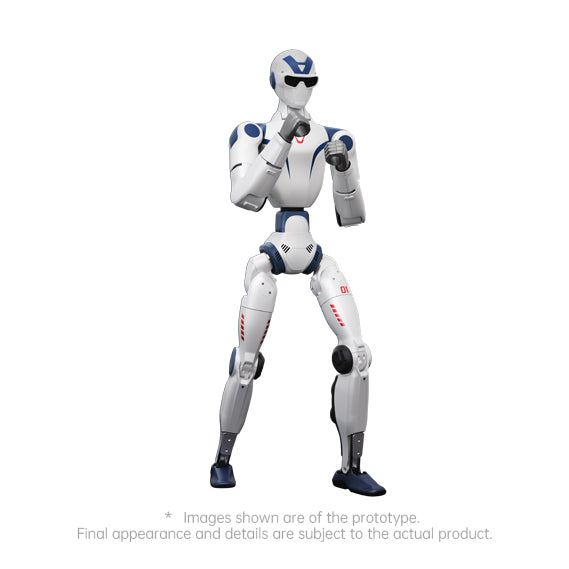 Unitree Robotics Unitree R1 | 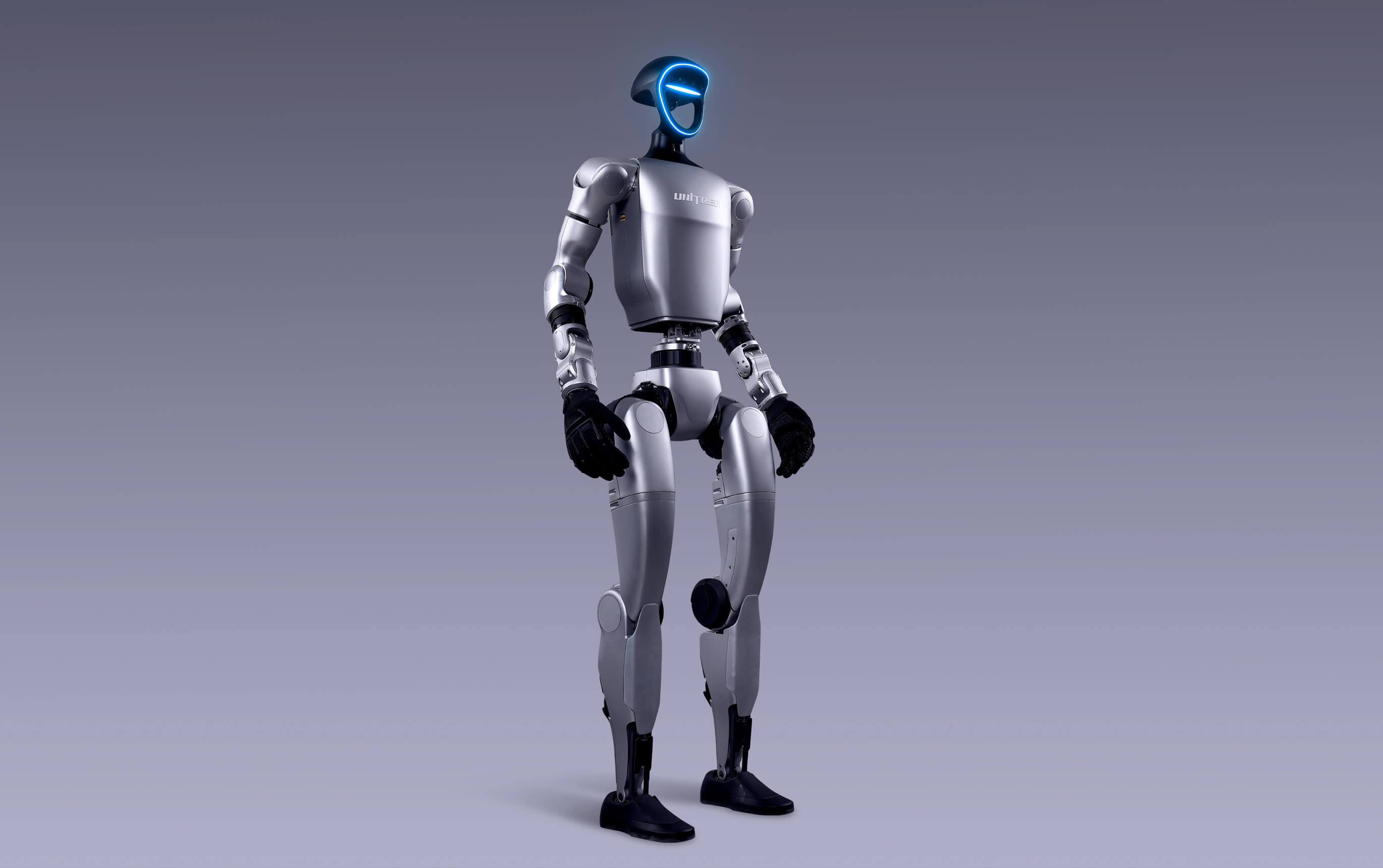 Unitree Robotics Unitree G1 | 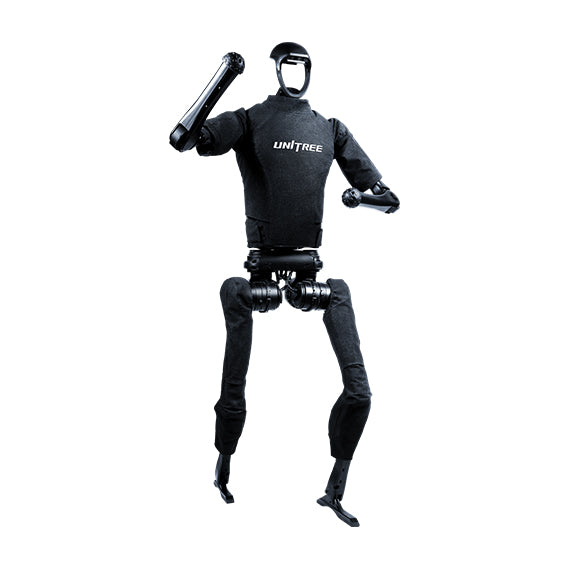 Unitree Robotics Unitree H1 | |
|---|---|---|---|---|
| Price (US) | Price on inquiry | $4,900 – $5,900 | $13,500 – $73,900 | ~$90,000 |
| Availability | Announced | On the market | On the market | On the market |
| Height | Unknown | 1.23 m | 1.32 m standing | ~1.80 m |
| Payload | Unknown | Unknown | Arm ~2 kg | Not rated for H1 |
| DoF | Unknown | 20 | 23 | ~19 |
| Buyer | Enterprise | Individuals | Individuals | Enterprise |
| Made in | China | China | China | China |
What the Galaxea Kengo costs — and how to get one
Galaxea Kengo announced June 2026; no price/schedule.
Announced; not orderable
Leasing / RaaS: unknown
Every spec, grouped & sourced
Tap a group to expand. Values are labelled official vs third-party; unknowns are omitted, not guessed.
Body & movement▾
Power & endurance▾
Hands & senses▾
Brains & control▾
Claims vs evidence
Embodied AI (Galaxea)
Where it's working
Announced
Intended use cases: General-purpose humanoid including domestic/home use (announced)
Should you consider the Galaxea Kengo?
Kengo is a promising first bipedal humanoid from a well-funded, credible startup — but it's an announcement, not a product. With no confirmed price, specs or release date, it's one to watch closely rather than buy. Serious folks should track Galaxea; anyone needing a robot now should look elsewhere.
Score reflects stated criteria (availability, data confidence, US relevance) — not hands-on testing or user ratings. We're an independent review & comparison site; we don't sell robots. *Financing figure is illustrative.
How we know this
Data confidence 33/100 · last verified 2026-06-30. Specs are labelled official vs third-party and dated; unknowns are omitted, not guessed.
Galaxea Kengo — your questions, answered in full
When was the Galaxea Kengo announced?+
Galaxea Dynamics unveiled Kengo in June 2026. It's the company's first bipedal humanoid, following its earlier wheeled robots and robotic-arm products.
How much does the Galaxea Kengo cost?+
Galaxea has not announced a price. Any figure you see for Kengo right now is unconfirmed. The company's mass-production-oriented design hints at an eventual competitive price, but no official number exists yet.
Can I buy the Galaxea Kengo now?+
No. As of mid-2026 Kengo is an announced product without a public release date, pre-order, or price. If you're interested, contact Galaxea Dynamics directly, but don't expect an immediate ship date.
What are the Galaxea Kengo's specs?+
Galaxea has confirmed single-joint torque over 130 N·m on a lightweight frame and a body using just two standardised joint modules. Full specs like height, weight, battery life and degrees of freedom weren't disclosed at the reveal.
What is Galaxea Kengo used for?+
Galaxea positions Kengo as general-purpose, targeting industrial manufacturing, commercial services and domestic/home environments. Real-world deployment details haven't been published, so these are stated intentions rather than proven use cases.
Who makes the Kengo robot?+
Kengo is made by Galaxea Dynamics, also known as Galaxea AI, a Beijing-based startup reportedly valued around $700 million after raising roughly $100 million. Kengo is its first bipedal humanoid.
Is the Galaxea Kengo fully autonomous?+
It's not yet clear. Galaxea describes a 'brain and cerebellum' AI architecture, but hasn't released autonomy data. As with most humanoids at unveiling, complex demos may be partly guided, so treat its independence as unproven for now.
Peer-reviewed research on the Galaxea Kengo
Published academic work — peer-reviewed papers and preprints — involving this robot or its maker's systems, indexed in scholarly databases (OpenAlex, arXiv). Not blog posts or press write-ups.
- Galaxea Open-World Dataset and G0 Dual-System VLA ModelGalaxea Team · 2025 · arXiv preprint (arXiv:2509.00576)
Academic references are factual citations from open scholarly indexes; listing is not endorsement.