Galbot G1 Robot
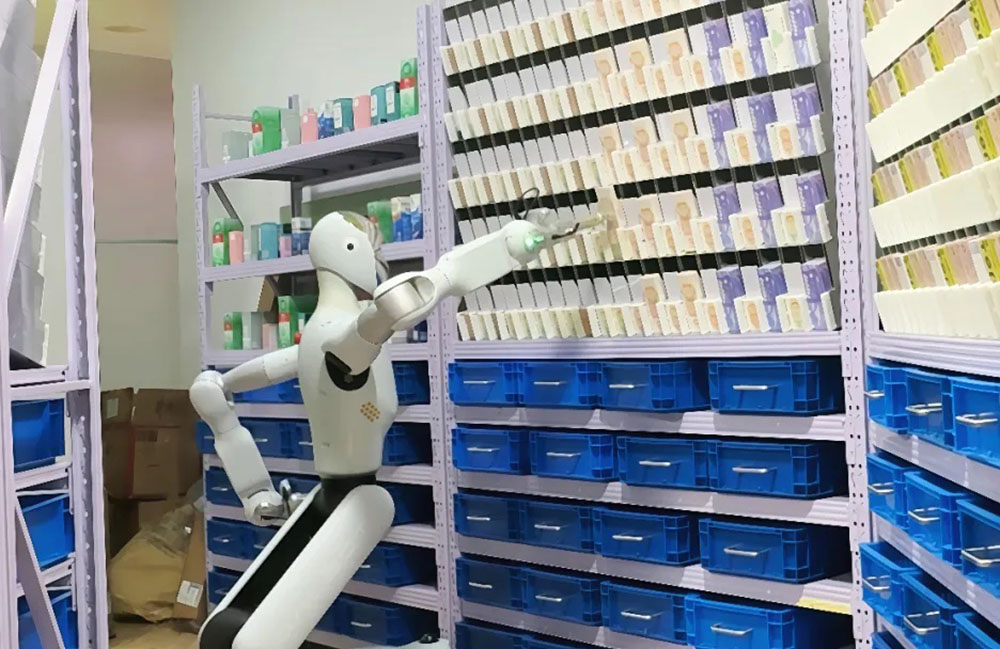
The Galbot G1 is a wheeled semi-humanoid robot from Galbot (Galaxy General) that's already doing real commercial work in China, running autonomous retail stores, pharmacy dispensing and factory tasks. It pairs a human-scale upper body and two dexterous arms with a 360-degree wheeled base instead of legs. It sells for roughly ¥699,700 (about $87,000) on the JD marketplace in China; there's no public US retail price, and it's deployed mostly through enterprise partnerships.
US buyers: no new imports — this model has no US authorization on record, and the July 2026 rule closes that route.
Galbot's deployments are entirely within China and there is no verified US sales channel. No US authorization is on record, so the July rule also forecloses one from being created. Nothing here is orderable from the US.
Chinese retail and logistics deployments are unaffected.
As of 2026-08-30 · medium confidence — verify before you commit funds
What is the Galbot G1 Robot?
Galbot builds wheeled retail robots rather than walkers, and the G1 is the one already minding shop shelves.
Most humanoid-robot headlines are about legs, walking, backflips, that sort of thing. Galbot went a different way. The G1 skips bipedal legs entirely and rolls around on an omnidirectional wheeled base, which is arguably the more sensible choice for a robot whose job is to work indoors all day.
That practicality is the whole pitch. While a lot of competitors are still perfecting stage demos, Galbot has quietly put G1 units into more than a hundred autonomous stores and a growing list of pharmacies across China. It's one of the few humanoids you can point to and say, yeah, that's doing paid work right now.
The catch, and there's always a catch, is that nearly all of this is happening inside China. For a US audience the G1 is a fascinating preview of where retail and pharmacy automation is going, but it's not a robot you can casually buy stateside.
What is the Galbot G1 and what does it do?
The Galbot G1 is a semi-humanoid mobile manipulator, human-scale from the waist up, wheeled from the waist down. It first appeared publicly in March 2025. Physically it's about 173 cm tall and around 85 kg, with 47 degrees of freedom and two highly dexterous arms. Galbot markets a grasping success rate in the 95-97% range across more than 5,000 object types, which is the kind of number that actually matters for retail work.
Battery life is a real strength here: roughly 10 hours per charge, which is enough to cover a shop's operating day. The brain is Galbot's proprietary AstraBrain system, described as a 'brain-cerebellum-neural control' architecture that coordinates the whole body and both hands.
As for jobs, the G1 runs unmanned retail stores (locating products, picking, restocking), handles pharmacy operations like sorting, dispensing, inventory and 24/7 service, and does logistics, replenishment and packaging. It's a service-and-fulfilment robot, not a heavy industrial lifter.
How much does the Galbot G1 cost?
In China, the G1 has been listed at approximately ¥699,700, which works out to somewhere around $87,000 depending on the exchange rate. That's a Chinese domestic price on the JD marketplace, not a US quote.
There is no public US retail price. Most real-world G1 deployments happen through enterprise leases and partnerships rather than a straight one-off purchase, so what a business actually pays likely depends on fleet size, the service contract and support terms.
Context helps: Galbot raised around $153 million to commercialize the G1, and it's clearly chasing volume commercial deals over individual sales. If you're a US shopper hoping for a sticker price, this one just isn't set up for you yet.
Where is the Galbot G1 available and deployed?
This is where the G1 stands out, its already working, not just demoing. Galbot reports deployments in more than 100 autonomous retail stores across roughly 20 Chinese cities, along with 24/7 operation in Beijing pharmacies. In March 2026, G1 units went into service in Beijing's Haidian District pharmacies, where the robot finds medicine on the shelf, picks it, packages it and drops the order into a smart pickup cabinet.
On the industrial side, Galbot cites production-line partnerships with big names, and the company has referenced work involving manufacturers like CATL and Bosch. So the footprint spans retail, pharmacy and some factory settings.
The honest limitation: this is a China-domestic story. There's no established US sales channel, and import or support for American buyers is unconfirmed. Impressive traction, narrow geography.
How does the Galbot G1 work without legs?
The G1's omnidirectional wheeled base is a deliberate design decision, not a shortcut. For indoor retail and pharmacy floors, wheels are faster, more stable, more energy-efficient and far less likely to fall over than bipedal legs. It can pivot and move in any direction, which is handy in tight aisles.
The intelligence sits in AstraBrain, Galbot's AI stack, which handles perception, planning and the fine motor control of those two arms. The high grasp-success rate across thousands of object types suggests the manipulation side is genuinely production-grade, this is the hard part of retail automation and the G1 seems to have put serious work into it.
As with essentially every humanoid in 2026, you should assume some deployments involve human oversight or remote assistance for edge cases. But the sustained, multi-city, 24/7 operation Galbot points to implies a meaningful level of day-to-day autonomy for its core tasks.
Is the Galbot G1 worth it, and who is it for?
The G1 is built for businesses, full stop. If you run retail locations, pharmacies, or fulfilment operations in a market where Galbot operates, it's one of the more proven commercial humanoids you can actually deploy, and the wheeled design keeps it practical and reliable.
It is not for consumers, and it's not really for US buyers right now. The China-domestic focus, enterprise-partnership sales model and lack of a US support network make it a poor fit for anyone outside that ecosystem.
Compared with bipedal general-purpose robots like Figure 03 or Tesla Optimus, the G1 trades versatility and human-like form for reliability at a specific job. That's a smart trade for retail, less so if you wanted a do-everything humanoid that walks around a home.
The Galbot G1 on video
Hands-on reviews and teardowns, picked for what they actually show rather than how loud the thumbnail is.
The reveal that explains G1's wheeled base and folding torso, a design most rivals didn't take
The Premium variant on Jetson Thor, which is where Galbot's real compute story starts
Covers the unmanned store deployment — the only G1 use case with paying customers walking through it
Who the Galbot G1 is — and isn't — for
+Where it shines
- Stated real-world payload (Up to 5 kg per arm; ~10 kg dual-arm).
!Watch-outs
- No public list price — you'll need a quote.
- Sold to businesses only — not to private buyers.
How the Galbot G1 stacks up
Side by side with similar robots — the one you're reading about is highlighted.
| This robot Galbot (Galaxy General) Galbot G1 | 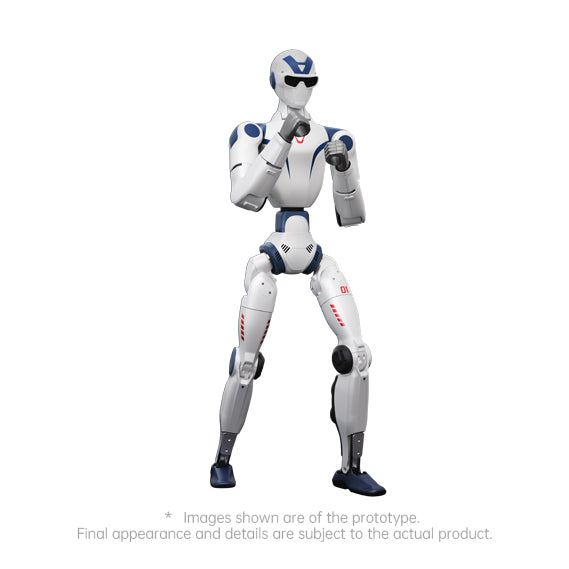 Unitree Robotics Unitree R1 | 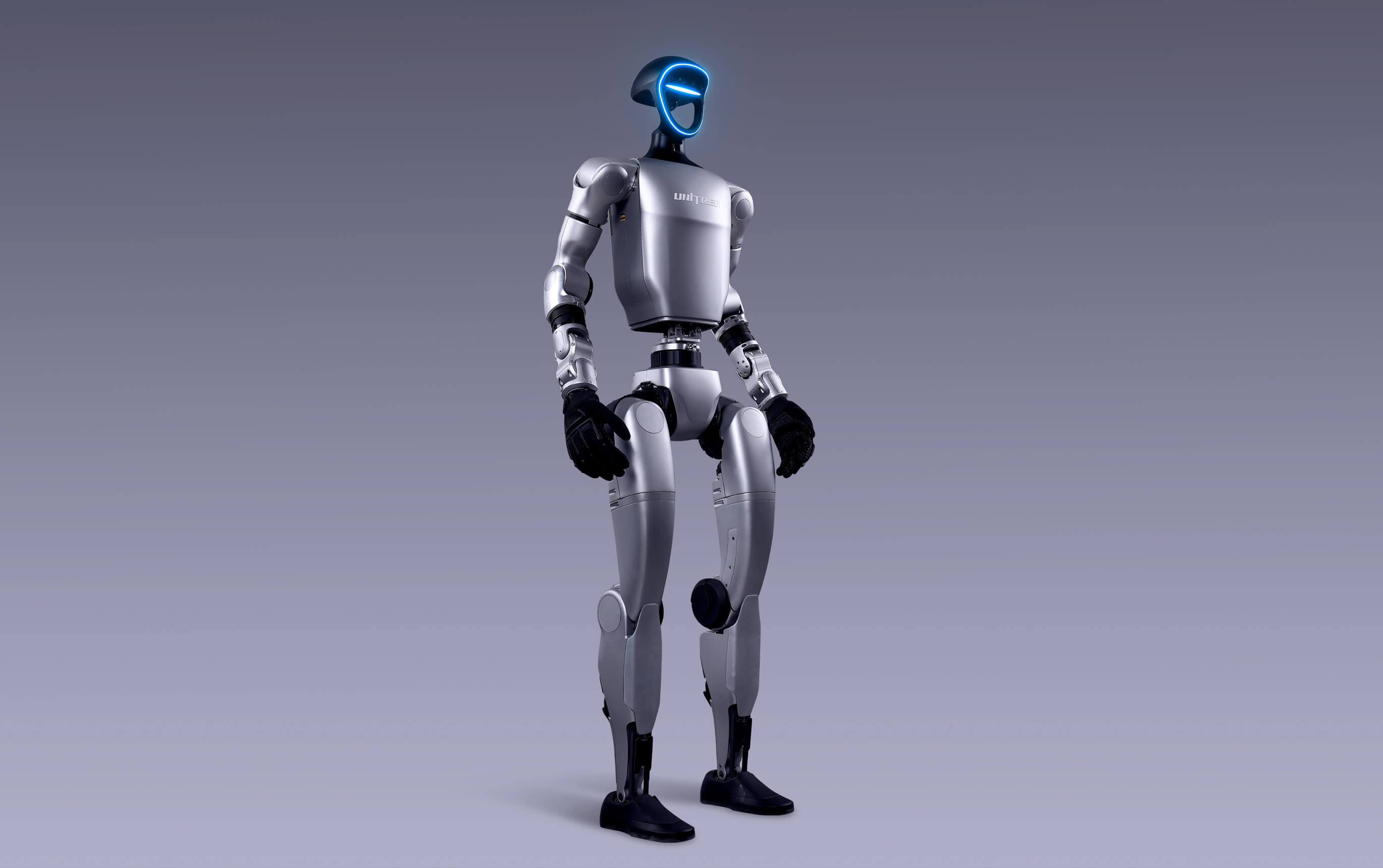 Unitree Robotics Unitree G1 | 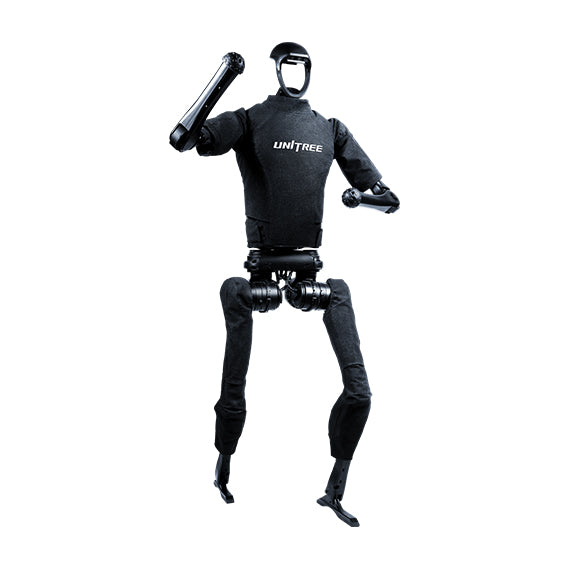 Unitree Robotics Unitree H1 | |
|---|---|---|---|---|
| Price (US) | Price on inquiry | $4,900 – $5,900 | $13,500 – $73,900 | ~$90,000 |
| Availability | Enterprise inquiry | On the market | On the market | On the market |
| Height | ~173 cm | 1.23 m | 1.32 m standing | ~1.80 m |
| Payload | Up to 5 kg per arm; ~10 kg dual-arm | Unknown | Arm ~2 kg | Not rated for H1 |
| DoF | 47 | 20 | 23 | ~19 |
| Buyer | Enterprise | Individuals | Individuals | Enterprise |
| Made in | China | China | China | China |
What the Galbot G1 costs — and how to get one
No public US price; deployed via enterprise lease/partnership.
Available via manufacturer/enterprise inquiry; thousands of units ordered (CATL, Bosch, Toyota, BAIC, SAIC)
Leasing / RaaS: unknown
Every spec, grouped & sourced
Tap a group to expand. Values are labelled official vs third-party; unknowns are omitted, not guessed.
Body & movement▾
Power & endurance▾
Hands & senses▾
Brains & control▾
Claims vs evidence
'AstraBrain'; GraspVLA/GroceryVLA/TrackVLA; claims autonomous NL task execution; not independently benchmarked
Where it's working
10+ unmanned Beijing pharmacies (24/7); Xuanwu Hospital; 30+ city store network; FamilyMart (Apr 2026)
Intended use cases: Retail/unmanned stores, pharmacy ops (sorting/dispensing/inventory/24-7 service), logistics, replenishment, packaging, manufacturing
Should you consider the Galbot G1?
The Galbot G1 is one of the most genuinely deployed humanoids of 2026, its wheeled design and 95%+ grasp rate make it a practical, working retail and pharmacy robot rather than a demo. The big caveat for US readers is geography: this is a China-domestic, enterprise-sold machine with no confirmed stateside availability.
Score reflects stated criteria (availability, data confidence, US relevance) — not hands-on testing or user ratings. We're an independent review & comparison site; we don't sell robots. *Financing figure is illustrative.
How we know this
Data confidence 62/100 · last verified 2026-06-23. Specs are labelled official vs third-party and dated; unknowns are omitted, not guessed.
Galbot G1 — your questions, answered in full
How much does the Galbot G1 cost?+
In China the G1 has been listed around ¥699,700, roughly $87,000, on the JD marketplace. There's no public US retail price, and most deployments happen through enterprise leases or partnerships rather than a single purchase.
Is the Galbot G1 a real humanoid robot?+
It's a semi-humanoid, sometimes called a wheeled humanoid. It has a human-scale upper body with two dexterous arms but uses a 360-degree omnidirectional wheeled base instead of legs.
What is the Galbot G1 used for?+
It runs autonomous retail stores, pharmacy operations (sorting, dispensing, inventory, 24/7 service), plus logistics, replenishment and packaging. It's a service and fulfilment robot rather than a heavy industrial one.
Where is the Galbot G1 deployed?+
Mainly in China, Galbot reports more than 100 autonomous retail stores across about 20 cities, plus Beijing pharmacies where G1 units entered service in March 2026. There's no established US deployment channel yet.
Can I buy a Galbot G1 in the US?+
Not through any established channel. The G1 is a China-domestic product sold largely via enterprise partnerships. US availability, import paths and support are unconfirmed.
How long does the Galbot G1's battery last?+
About 10 hours per charge, which is enough to cover a typical retail or pharmacy operating day.
How good is the Galbot G1 at picking up objects?+
Galbot claims a 95-97% grasping success rate across more than 5,000 object types, which is a strong figure for retail and pharmacy picking tasks.
Who makes the Galbot G1?+
It's made by Galbot, also known as Galaxy General (Beijing Galbot AI), which raised around $153 million to commercialize the G1.
Peer-reviewed research on the Galbot G1
Published academic work — peer-reviewed papers and preprints — involving this robot or its maker's systems, indexed in scholarly databases (OpenAlex, arXiv). Not blog posts or press write-ups.
- GraspVLA: a Grasping Foundation Model Pre-trained on Billion-scale Synthetic Action DataShengliang Deng, Mi Yan, Songlin Wei, Haixin Ma, Jiayi Chen, Zhizheng Zhang, He Wang, et al. · 2025 · arXiv preprint (Galaxy General / Galbot manipulation model)
- DexGraspNet 2.0: Learning Generative Dexterous Grasping in Large-scale Synthetic Cluttered ScenesJialiang Zhang, Haoran Liu, Danshi Li, Xinqiang Yu, Haoran Geng, Yufei Ding, Jiayi Chen, He Wang · 2024 · Conference on Robot Learning (CoRL) 2024
- DexGraspNet: A Large-Scale Robotic Dexterous Grasp Dataset for General Objects Based on SimulationRuicheng Wang, Jialiang Zhang, Jiayi Chen, Yinzhen Xu, Puhao Li, Tengyu Liu, He Wang · 2023 · IEEE ICRA 2023
Academic references are factual citations from open scholarly indexes; listing is not endorsement.