Haier HIVA Haiwa Robot
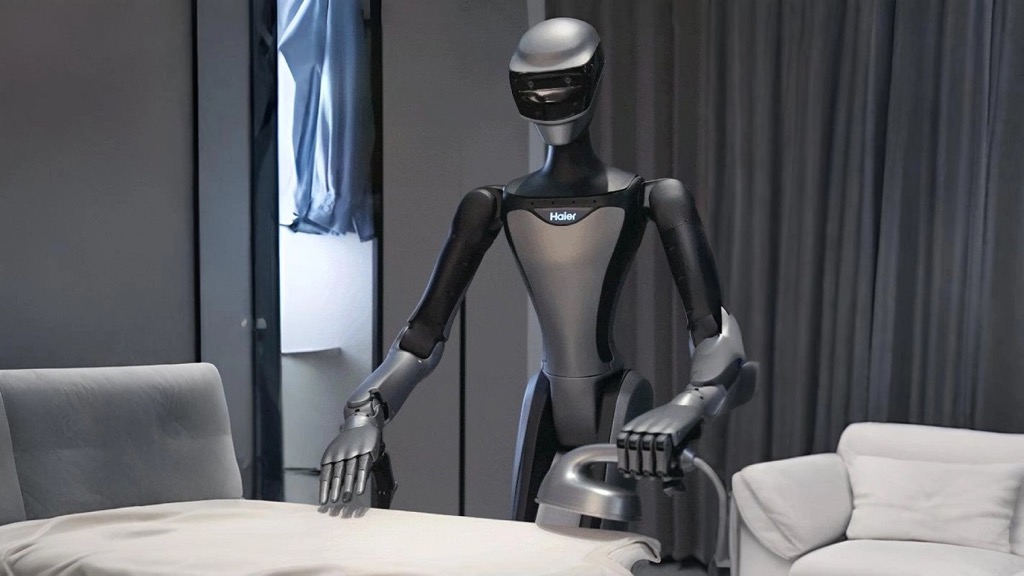
The Haier HIVA Haiwa is a 165 cm wheeled home humanoid introduced on 26 July 2025 and pitched as a "housework terminator" for cooking, cleaning and laundry. It remains a prototype: the tasks in the demonstrations are completed by remote human operators, not by autonomy. It is not on sale anywhere, Haier has never published a price, and the ~$80,000 figure repeated across robot catalogues is an aggregator's estimate rather than a Haier number.
US buyers: no new imports — this model has no US authorization on record, and the July 2026 rule closes that route.
Haier's humanoid is a prototype shown domestically, not a product on sale. Even if it became one, a Chinese-built model would need an authorization the July rule prevents it from obtaining. There is no US channel and no announced plan for one.
Chinese development is unaffected.
As of 2026-08-30 · medium confidence — verify before you commit funds
What is the Haier HIVA Haiwa Robot?
HIVA Haiwa is the Haier robot for the home — from an appliance maker that already owns the kitchen it's meant to work in.
When a company that already builds your fridge, washer and oven decides to build the thing that loads them, it is worth a look. That is the story of the Haier HIVA Haiwa, a home humanoid Haier introduced on 26 July 2025. It is tall, it is wheeled, and its entire reason for existing is household chores.
Haier leaned hard into the household angle. The demonstrations show HIVA Haiwa pulling clothes from a washing machine, ironing and folding them, sweeping and mopping, and doing light kitchen work like heating and stirring. Because Haier makes the appliances too, the robot is designed to talk to your oven, hob and fridge rather than fumble at them like a confused guest. Its working envelope is genuinely domestic: 165 cm tall, about 70 kg, 44 degrees of freedom, and a reach from the floor up to about 2 m.
But — and this is the important part — HIVA Haiwa is early. It is a prototype in a data-collection phase, and a lot of what you see in the clips is done through remote operation by engineers. That doesn't make it fake. It makes it an honest snapshot of where home robotics actually is in 2026.
What is the Haier HIVA Haiwa and what can it do?
HIVA Haiwa is a domestic humanoid from Haier, one of the world's largest appliance makers. It stands 165 cm, weighs about 70 kg, and instead of walking on two legs it rolls on a wheeled base. For a home helper that is a deliberate and sensible choice: wheels are stable, cheaper, and far less likely to topple near a staircase.
Up top it is built for manipulation — a reported 44 degrees of freedom, dexterous hands, and a reach that covers floor level up to roughly 2 m, which is what you need if you want something that empties a washing machine and also reaches a cupboard. The demonstrated job list is sweeping, mopping and picking up rubbish including awkward corners; removing laundry from the machine, then ironing, folding and putting it away; and basic kitchen work like heating and stirring.
The real differentiator is integration. Because Haier already owns the smart-home ecosystem, HIVA is meant to operate appliances natively — opening the fridge, running the washer, using the hob — rather than treating them as obstacles. Very few humanoid projects have that home-turf advantage.
How does HIVA Haiwa actually work today? (the teleop caveat)
Here is the honest bit. HIVA Haiwa's tasks are currently completed through remote operation by Haier engineers. When you watch it iron a shirt smoothly, a person is generally in the loop. That is not unusual at this stage of humanoid development, but it matters a great deal if you are picturing an autonomous butler.
Haier's stated plan is to use this phase to accumulate data. Every teleoperated chore becomes training material, and the long-term goal is autonomy powered by cloud-assisted AI. Teleoperation is the scaffolding, not the finished building.
So the mental model for 2026 is: plausible hardware, genuine appliance integration, and a brain that is still learning from human hands. Haier has not published an autonomy rate, an intervention rate, or a single unsupervised run — and until it does, the gap between the demo and an autonomous machine remains unmeasured.
How much does the Haier HIVA Haiwa cost?
There is no price. Haier has not put HIVA Haiwa on sale to consumers and has not published a figure in any market.
The ~$80,000 number that appears everywhere deserves tracing, because it is instructive. It shows up on robot spec-aggregator and catalogue listings, attached to a "prototype / early commercial rollout" label, and from there it spreads. No Haier statement, launch event or document supports it. It is a placeholder that became a fact by repetition, and we are not going to build a comparison table on top of it.
What you can say without inventing anything: this robot is not purchasable, and a first-generation domestic humanoid with dexterous hands and an appliance-integration stack would not be a mass-market appliance whatever the number turned out to be. Anyone quoting you a price for one today cannot deliver it.
When can you buy HIVA Haiwa, and is it available in the US?
As of 2026 you cannot. HIVA Haiwa was introduced on 26 July 2025 and remains a research and limited-access prototype. There is no announced consumer release date, and no confirmed US availability.
Haier is a global brand, so eventual international ambitions are reasonable to assume. But nothing about timing, pricing or a sales model has been confirmed, and a near-term Western launch would be a guess. A US buyer should also note the FCC Covered List action of 28 July 2026, which blocks new equipment authorisations for foreign-produced connected robots — the test is US assembly plus domestic content, not nationality, and a machine like this has never held an authorisation.
If you want a home robot you can actually receive, HIVA Haiwa is not an option. It is a preview of where a major appliance maker thinks the category is heading.
HIVA Haiwa vs other home humanoids: is it worth watching?
Against the wave of walking humanoids from Tesla, Figure or 1X, HIVA Haiwa's differentiator is obvious: appliances. Most humanoid makers have to teach a robot to use somebody's random kitchen. Haier can design the kitchen and the robot to co-operate, which is a genuine edge for domestic work.
The trade-off is autonomy, and it is not a small one. Rivals are pushing hard on learned, self-directed behaviour and publishing at least some evidence for it. HIVA is still leaning on teleoperation and data collection with nothing published on how far along that is.
Who should care? Nobody can buy it, so "worth it" is about attention rather than money. If you follow smart-home tech or humanoid robotics, HIVA Haiwa is one of the more interesting entrants precisely because it comes from an appliance giant. If you want a helper you can order, look elsewhere for now.
The Haier HIVA Haiwa on video
Hands-on reviews and teardowns, picked for what they actually show rather than how loud the thumbnail is.
Effectively the only English coverage of Haier's Haiwa; everything else on this robot is Chinese-language
Who the Haier HIVA Haiwa is — and isn't — for
+Where it shines
!Watch-outs
- Not really on sale yet — availability is research / limited.
- No public list price — you'll need a quote.
- Some demos rely on teleoperation, not full autonomy.
How the Haier HIVA Haiwa stacks up
Side by side with similar robots — the one you're reading about is highlighted.
| This robot Haier Haier HIVA Haiwa | 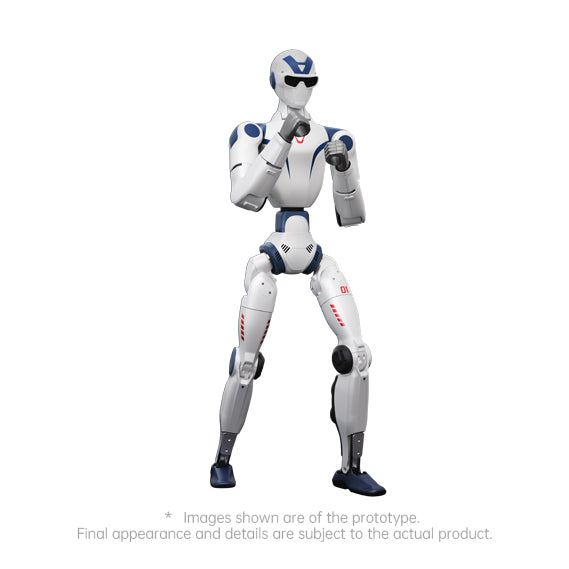 Unitree Robotics Unitree R1 | 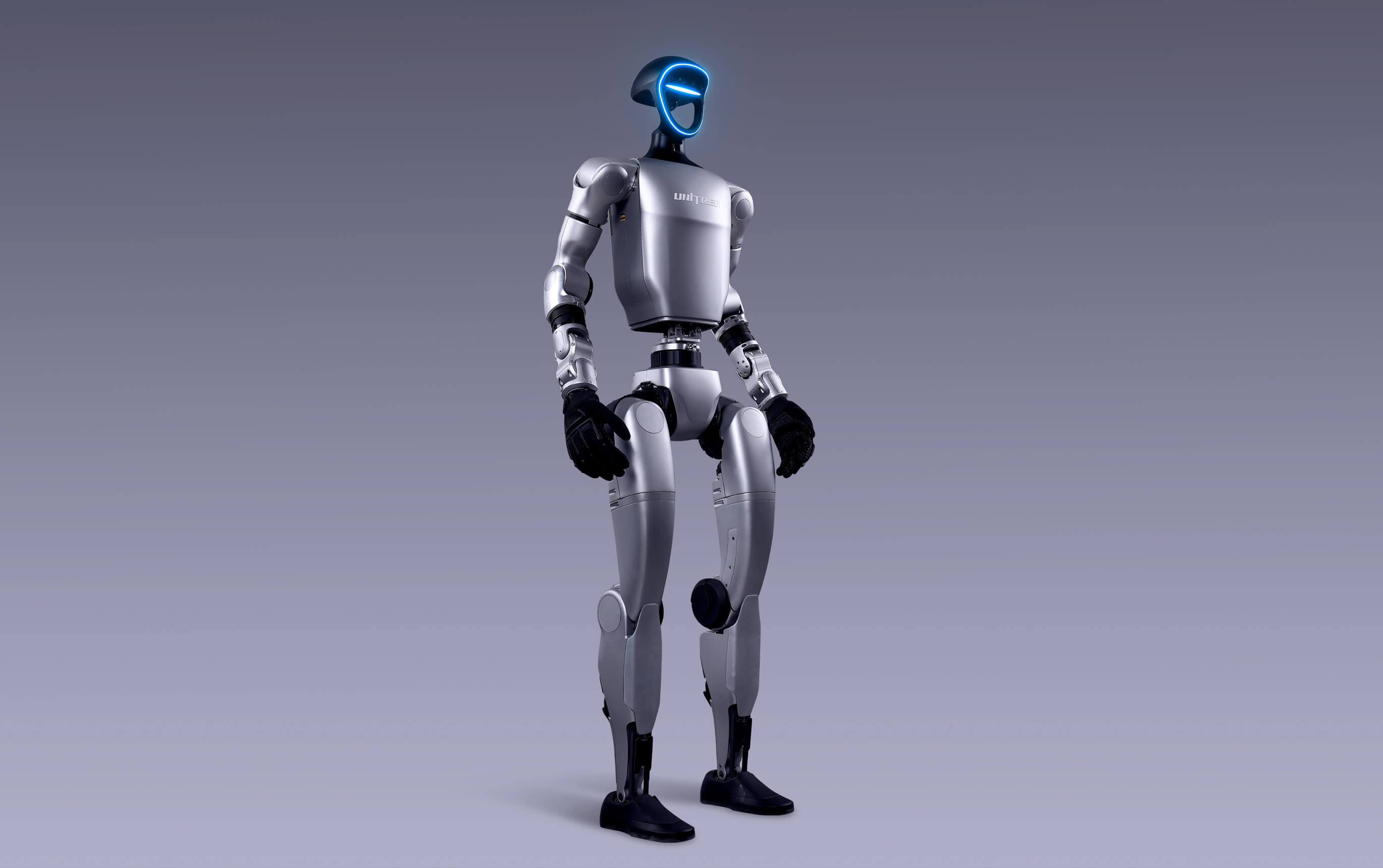 Unitree Robotics Unitree G1 | 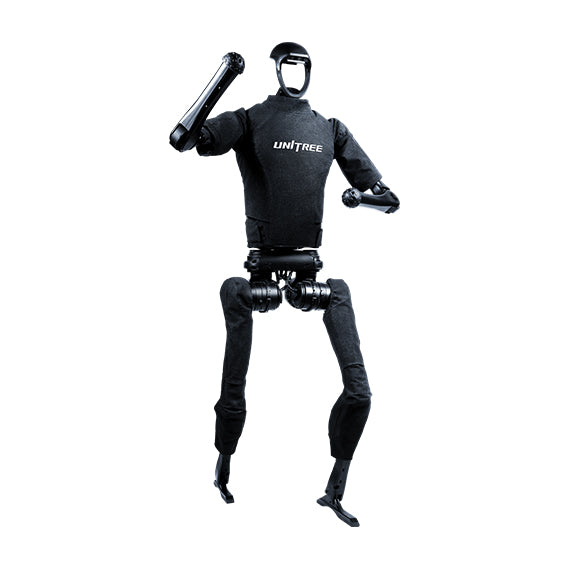 Unitree Robotics Unitree H1 | |
|---|---|---|---|---|
| Price (US) | Price on inquiry | $4,900 – $5,900 | $13,500 – $73,900 | ~$90,000 |
| Availability | Research / limited | On the market | On the market | On the market |
| Height | 1.65 m | 1.23 m | 1.32 m standing | ~1.80 m |
| Payload | Unknown | Unknown | Arm ~2 kg | Not rated for H1 |
| DoF | 44 | 20 | 23 | ~19 |
| Buyer | Enterprise | Individuals | Individuals | Enterprise |
| Made in | China | China | China | China |
What the Haier HIVA Haiwa costs — and how to get one
HIVA Haiwa home/companion humanoid; prototype.
Unknown
Leasing / RaaS: unknown
Every spec, grouped & sourced
Tap a group to expand. Values are labelled official vs third-party; unknowns are omitted, not guessed.
Body & movement▾
Power & endurance▾
Hands & senses▾
Brains & control▾
Claims vs evidence
Haier smart-home AI
Where it's working
No verified large-scale deployment
Intended use cases: Home and companion assistance (smart-home integration)
Should you consider the Haier HIVA Haiwa?
The HIVA Haiwa is one of the more credible home-humanoid concepts around, mostly because Haier controls the appliances it is meant to operate, and its 165 cm wheeled body with 44 degrees of freedom and a 2 m reach is built for the job. But it is a teleoperated prototype you cannot buy, Haier has never published a price, and the $80k everyone quotes is an aggregator's placeholder. Admire it as a preview, not a product.
Score reflects stated criteria (availability, data confidence, US relevance) — not hands-on testing or user ratings. We're an independent review & comparison site; we don't sell robots. *Financing figure is illustrative.
How we know this
Data confidence 32/100 · last verified 2026-06-30. Specs are labelled official vs third-party and dated; unknowns are omitted, not guessed.
Haier HIVA Haiwa — your questions, answered in full
How much does the HIVA Haiwa cost?+
Haier has never published a price. The ~$80,000 figure comes from robot catalogue and aggregator listings labelled "prototype / early commercial rollout", not from Haier, and no company statement supports it.
Where does the $80,000 HIVA Haiwa price come from?+
From third-party spec-aggregator pages, which is why it appears identically across many sites. There is no Haier source, no launch event and no document behind it. Treat it as a placeholder, not an estimate.
Is the Haier HIVA Haiwa autonomous or remote-controlled?+
Currently remote-controlled for the most part. Household tasks in the demonstrations are completed by Haier engineers via teleoperation, and this phase is being used to collect training data. Full autonomy is the goal, not the present state.
Can I buy a Haier HIVA Haiwa in 2026?+
No. It is a research and limited-access prototype with no announced consumer release date and no confirmed US availability.
What tasks can HIVA Haiwa do?+
Demonstrations show sweeping, mopping and picking up rubbish; removing laundry from the washer, then ironing, folding and storing it; and basic kitchen work such as heating and mixing. It is designed to operate Haier smart-home appliances directly.
How tall is the HIVA Haiwa and does it walk?+
It is 165 cm tall and about 70 kg, and it does not walk — it rolls on a wheeled base. It has a reported 44 degrees of freedom and can reach from floor level to roughly 2 m.
When was HIVA Haiwa announced?+
Haier introduced it on 26 July 2025, describing it as a "housework terminator" for cooking, cleaning and laundry. It has remained a prototype since.
Who makes HIVA Haiwa?+
Haier, the Chinese multinational best known for washing machines, fridges and air conditioners. That appliance background is central to the robot's smart-home integration pitch.