Hexagon AEON Robot
You cannot buy an AEON, and Hexagon has never published a price for it. It is sold into manufacturing through enterprise partnerships and quotations - no store, no research channel, no consumer availability, and no disclosed contract values, including for Schaeffler's commitment to deploy at least 1,000 units by 2032. By comparison with industrial humanoids of similar specification we would put a unit somewhere between $100,000 and $250,000, but that is a comparable-band estimate and not an AEON figure; no AEON-specific price exists in any primary source as of 30 August 2026.
US buyers: AEON is built in Europe, so the July 2026 rule reaches it on its wording — pilots are unaffected so far.
Hexagon runs AEON through industrial pilots rather than open sale, and no disruption has been reported. Still, a European-manufactured mobile robot meets the FCC's foreign-produced definition, and Hexagon has not published an authorization position. Because the listing also covers autonomous mobile robots generally, industrial buyers should treat this as a question for procurement rather than an academic point.
European industrial pilots are unaffected.
As of 2026-08-30 · medium confidence — verify before you commit funds
What is the Hexagon AEON Robot?
AEON is the Hexagon robot — a metrology company's humanoid, which is why it carries more sensors than anything else here.
AEON is the humanoid robot most people in robotics have never heard of and most people in manufacturing have. It has almost no grassroots following - the maker's own fifteen-minute engineering talk has been watched a few thousand times, which for a humanoid in 2026 is nothing. And yet it is working inside a BMW plant in Leipzig, it has a commitment from Schaeffler covering at least 1,000 units by 2032, and it took a CES Innovation Award as a 2026 Honoree in robotics.
That inversion is the whole story of this machine. Most humanoids have enormous public visibility and thin deployment. AEON has thin visibility and genuine deployment. If you are trying to judge which humanoid programmes are real, that ratio is the most useful thing on this page.
The second thing to know is that Hexagon is not a robotics startup. It is a Swedish measurement and metrology company - the sort that sells coordinate measuring machines and industrial sensing to the same automotive and aerospace plants it now sells a robot into. AEON is not a general-purpose worker chasing a labour-shortage narrative. It is an inspection and measurement instrument that happens to have legs, wheels and hands, sold by a firm whose customers already trust its numbers. People routinely get Hexagon's nationality wrong in online discussion, which is a small thing, but it tells you how little the robotics audience knows about the company building one of Europe's most deployed humanoids.
What the Hexagon AEON can — and can't — do today
+Does this out of the box
- Move across factory floors at up to 2.4 m/s on a wheeled-legged hybrid drive, faster than most bipedal humanoids
- Carry and manipulate a rated 15 kg payload using two five-fingered hands across 34 degrees of freedom
- Perform dimensional inspection and measurement with a package of more than 22 sensors - LiDAR, RGB, depth and time-of-flight, infrared, SLAM cameras, microphones and force-torque
- Swap its own batteries without human help, running roughly 3.1 hours per charge
- Be taught new operations by demonstration; Hexagon states around 20 demonstrations suffice to train an autonomous operation in an industrial setting
- Work inside a live automotive production environment - two units have been performing production tasks at BMW Group Plant Leipzig since June 2026
!Doesn't do, whatever the demo shows
- Be bought by anyone outside an enterprise partnership - no store, no research edition, no developer kit, no reseller
- Be priced from public information; Hexagon has disclosed no price and no contract value in any currency
- Climb stairs or cross rubble the way a true biped can - the wheeled-leg design trades that away deliberately for speed and endurance on flat floor
- Be independently benchmarked; every performance figure traces to Hexagon or a partner announcement, and no third party has had hands-on access
- Do general-purpose household, retail or logistics work - the scope is industrial inspection, measurement and machine tending
AEON is best understood as a mobile metrology instrument with hands, not as a general-purpose humanoid worker. Its real peer set is Digit, Apollo and other plant-deployed industrial humanoids, not Optimus or Neo. Specifications and deployment status verified 30 August 2026; no independent hands-on assessment exists.
What is the Hexagon AEON?
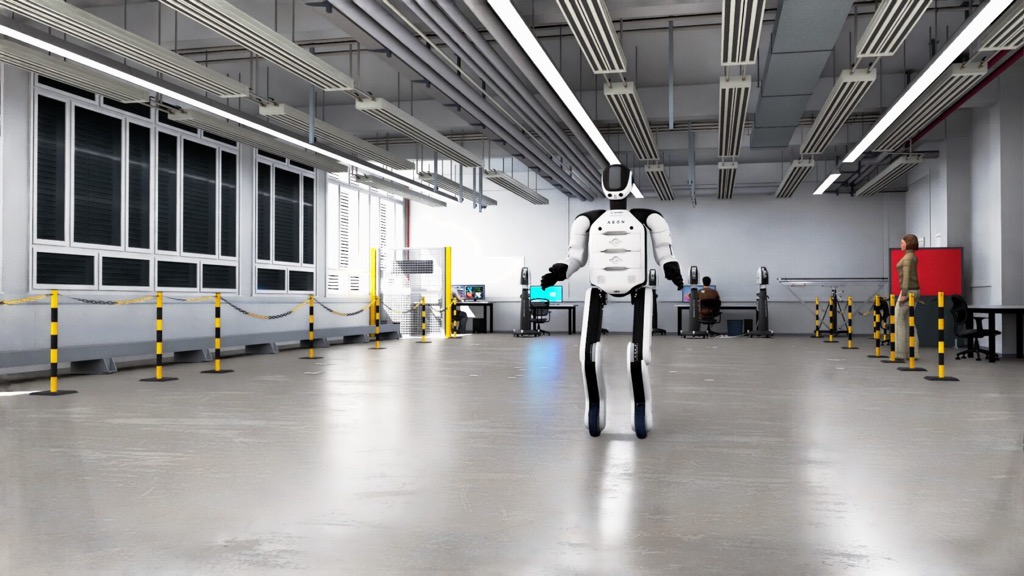
AEON is an industrial humanoid built by Hexagon for measurement, inspection and manipulation work inside factories. It stands about 1.65 m, weighs about 60 kg, carries a rated payload of 15 kg, and has 34 degrees of freedom including two five-fingered hands.
The unusual choice is the locomotion. AEON is not a biped. It uses a wheeled-legged hybrid - legs with wheels at the ends - which lets it move at up to 2.4 m/s on flat factory floor while retaining articulated legs for height changes and stability. On a shop floor that is close to the correct answer: bipedal walking buys you stairs and rubble, which factories do not have, at the cost of speed, endurance and reliability, which factories care about enormously. Battery endurance is around 3.1 hours, and the batteries are self-swapping, so the robot does not need a human to keep it running.
Sensing is where the metrology heritage shows. AEON carries more than 22 sensors: LiDAR, RGB cameras, depth and time-of-flight sensors, infrared cameras, SLAM cameras, microphones and force-torque sensing. That is a far denser sensor package than a general-purpose humanoid carries, and it exists because AEON's actual job is producing trustworthy measurements, not merely avoiding obstacles.
Hexagon describes the software stack as industrial spatial AI, built in layers, with imitation learning at the top - the company's claim is that around 20 demonstrations are enough to train an autonomous operation.
How much does a Hexagon AEON cost?
There is no published price. Not a starting price, not a range, not a lease rate. Hexagon deploys AEON exclusively through enterprise partnerships, has no online store and no research or education channel, and has disclosed no contract value for any deployment - including the Schaeffler commitment, which is the largest confirmed humanoid fleet deal in European manufacturing and whose financial terms neither party released.
Our estimate of $100,000 to $250,000 per unit is exactly that: an estimate, and a weak one. It is the published band for comparable industrial humanoids of similar specification - roughly 1.6 m, 60 kg, 34 degrees of freedom, five-fingered hands - used as a proxy. We give it low confidence, and we would rather you knew that than saw a confident-looking number.
Hexagon reports its financials in Swedish krona and has disclosed no AEON figure in any currency, so no conversion has been performed on anything above.
Why does it matter that we say this plainly? Because 'Inquiry' or 'contact sales' is the weakest possible answer on a page people arrive at wanting a price, and the temptation to invent one is enormous. Several sites have. A comparable-band estimate with its reasoning attached is the strongest defensible substitute, and the reasoning is the part that matters.
Why there is no price, and probably won't be one
It would be easy to read Hexagon's silence as a startup hiding an uncomfortable number. It is more likely to be ordinary industrial practice.
AEON is not really sold as a unit. It is sold as a capability inside a plant: a defined inspection or machine-tending task, integrated with the customer's existing systems, commissioned by engineers, supported under a contract. The price of that is the price of a project, and it varies by site, by task count, by integration depth and by how many units the customer eventually takes. Hexagon has been selling coordinate measuring machines and metrology systems into these same plants for decades on exactly this basis. Nobody publishes a price for a CMM installation either.
Which means two practical things for a reader. First, if you are a manufacturer, the number you should be asking for is cost per inspected part or cost per shift covered, not the unit price - the unit price is the least informative figure in the deal. Second, if you are not a manufacturer, there is no route in. There is no research edition, no developer kit and no path for a university to buy one, which is unusual for a humanoid this prominent and explains the near-total absence of community around it.
The BMW Leipzig deployment, in order
This is the best-documented humanoid deployment in Europe and worth setting out as a timeline, because 'deployed at BMW' is doing a lot of work in a lot of headlines.
It started with a theoretical evaluation phase, then laboratory testing. A first test deployment ran at BMW Group Plant Leipzig in December 2025. In March 2026 BMW showed the programme publicly at its Munich campus. Then on 12 June 2026, Hexagon and BMW announced that AEON had begun performing production tasks at Plant Leipzig while simultaneously being trained on future manufacturing applications - reported as the first humanoid robot deployed in production in Germany. Two AEON units work across two use cases, with BMW expecting both to be in production by the end of the year.
What makes this credible is the shape of it. Eighteen months from evaluation to production tasks, with a test phase in between, is what an actual industrial integration looks like. It is not a launch video. The work is inspection and measurement rather than heavy handling, which matches both the 15 kg payload and Hexagon's core competence.
What it is not: proof of scale. Two units on two use cases in one plant is a pilot that graduated, not a fleet.
Schaeffler's 1,000 units - what is and isn't confirmed
In April 2026 Schaeffler, the German bearings and precision components manufacturer, committed to deploying at least 1,000 AEON units across its global factory network by 2032. On the numbers available, that is the largest confirmed humanoid fleet commitment in European manufacturing.
Here is what is confirmed: the commitment itself, the unit count, the 2032 horizon, and that the rollout is multi-site. Reporting has put the start of that rollout at the end of 2026.
Here is what is not: the money. Neither Hexagon nor Schaeffler disclosed the financial terms, which is why we cannot back into a unit price from a contract value the way you sometimes can with public procurement. Nor is a commitment a delivery. Six years is a long horizon, the number is a target rather than a purchase order, and industrial automation commitments of this shape get revised - upward and downward - as pilots produce data.
Still, treat it seriously. Schaeffler is not a venture-funded believer in humanoids; it is a components manufacturer with a large plant estate and a long history of automating it. A firm like that committing to a fleet is a different signal from a technology company buying two robots for a press release.
Pilatus, and the other named partners
Beyond BMW and Schaeffler, Hexagon has named Pilatus, the Swiss aircraft manufacturer, as a partner. Aerospace is an obvious fit for a robot built around measurement: aircraft assembly is a world of dimensional tolerance, documented inspection, and parts too large or too awkward for a fixed measuring machine. A mobile robot that carries a metrology-grade sensor package to the part instead of the reverse is a genuinely interesting proposition there.
Trade press has also reported a 2026 factory deployment with an Austrian machine builder, covering inspection and machine tending - the two tasks that recur across every AEON deployment described so far.
What is missing from all of this is independent performance data. Every figure about how well AEON does its job comes from Hexagon or from a partner announcing a partnership. There is no third-party benchmark, no independent hands-on, and no owner community publishing results, because the owners are manufacturers with confidentiality agreements. That is normal for industrial equipment and it is still a real limit on what anyone outside those plants can honestly say.
Physical AI and the 20-demonstration claim
Hexagon describes AEON's autonomy as four layers of physical AI, with imitation learning as the mechanism for teaching new tasks, and states that roughly 20 demonstrations are enough to train an autonomous operation.
Twenty is a striking number, and it deserves an asterisk rather than a dismissal. In constrained industrial settings - a fixed station, consistent lighting, the same part arriving in the same orientation - small-sample imitation learning genuinely works, and the constraint is doing most of the work. The same claim about an unstructured environment would be extraordinary. Hexagon is careful to make it about factory operations, and the deployments described so far are exactly the sort of repeatable, well-lit, fixtured tasks where it is plausible.
What has not been published is the definition. Twenty demonstrations to what success rate, on what task complexity, with how much engineering setup around it? Those numbers exist inside Hexagon and inside BMW. They are not public, and until they are, the claim sits in the category of credible-but-unverified.
The honest summary: AEON's autonomy story is more believable than most, because its task domain is narrower than most. Narrowness is the feature.
What AEON can do, and what it cannot
It can move quickly across a factory floor - 2.4 m/s is faster than most humanoids manage - on wheeled legs that suit flat industrial surfaces. It can carry and handle up to 15 kg. It can perform dimensional inspection and measurement using a sensor package denser than anything else in this class. It can swap its own batteries, which removes the most common reason a mobile robot stops being useful. It can be taught new operations by demonstration, within limits. And it has been integrated into a live automotive production environment, which almost nothing else in this catalogue can claim.
It cannot be bought by an individual, a university, a developer or a small business - there is no channel. It cannot climb stairs or handle rubble in the way a true biped can, by design. It cannot be independently benchmarked, because no independent party has had one. It cannot be priced from public information. And it cannot do the general-purpose household or logistics work that dominates humanoid marketing, because that was never the brief.
The list of things AEON cannot do is longer than for a general-purpose humanoid. That is because Hexagon made choices, and choices exclude things.
Does the July 2026 US rule affect a Swedish robot?
This is the point where most coverage gets the law wrong, so it is worth being precise.
On 28 July 2026 the FCC issued Public Notice DA 26-786, adding equipment categories to the Covered List. The press reported it as a ban on Chinese humanoid robots. The text is not about China. It turns on 'foreign-produced' - failing a Buy American test of US final assembly plus more than 65% domestic content. Law firms reading the notice have been consistent that British, EU and Japanese equipment is caught by the same wording. It blocks new FCC certification only; it is not a customs ban and not a recall, and equipment certified before 28 July can keep being sold and updated until 1 January 2029.
So: yes, on its wording the rule reaches AEON. A European-manufactured mobile robot meets the foreign-produced definition, and the listing also covers autonomous mobile robots as a category. Hexagon has published no authorisation position and no disruption has been reported, which is unsurprising given that AEON runs through industrial pilots rather than open sale and its announced deployments are in Europe.
For a US manufacturer considering AEON, this is a procurement question rather than an academic one. Ask Hexagon directly about US certification status before scoping a deployment. European industrial pilots are unaffected.
AEON versus the humanoids it is actually competing with
AEON is not competing with Tesla Optimus or 1X Neo, whatever the comparison tables say. Its rivals are the industrial humanoids being placed in plants right now: Agility's Digit in logistics, Apptronik's Apollo in materials handling, Figure's machines in automotive pilots, and the wheeled dual-arm platforms from Chinese manufacturers.
Against those, AEON's differentiators are specific. Metrology - nobody else brings a measurement company's sensor stack or its credibility with quality departments. Wheeled legs - faster and more enduring than bipeds on the floors that actually exist in factories. Self-swapping batteries - a genuinely underrated feature that decides whether a robot covers a shift. And an existing customer relationship: Hexagon is already in these plants selling measurement systems, which is a shorter path to a purchase order than any amount of demo footage.
Its weaknesses against that field are equally specific. The scope is narrow - inspection and machine tending, not general handling. Payload at 15 kg is mid-pack. There is almost no independent visibility into performance. And the total absence of a developer or research channel means the ecosystem effects that help Unitree and Booster simply don't apply here.
If your problem is measuring and inspecting things in a factory, AEON is arguably the best-aimed humanoid on the market. If your problem is anything else, it is the wrong machine.
Who AEON is for
It is for large manufacturers - automotive, aerospace, precision components - with existing quality and metrology infrastructure, a plant estate big enough to make a multi-site rollout worth the integration effort, and a defined inspection or machine-tending problem they can measure the cost of today.
It is not for anybody else, and there is no polite way around that. There is no research edition, no developer programme, no reseller, no price and no store. If you are a university lab, a startup, a systems integrator without an enterprise relationship, or an individual, AEON is not available to you at any price, and the closest equivalents you can actually buy are wheeled dual-arm platforms from Chinese makers at a fraction of the estimated cost.
For the manufacturers it is aimed at, the buying process is a conversation with Hexagon about a task, not a product comparison. The relevant questions are cost per inspected part, integration timeline, who owns the training data from your demonstrations, and what happens to support if the programme is restructured. None of those appear on a spec sheet.
The Hexagon AEON on video
Hands-on reviews and teardowns, picked for what they actually show rather than how loud the thumbnail is.
Fifteen engineering minutes from Hexagon's own team, far more substantial than the launch reel
Independent read on AEON's metrology-first design, which makes it odd next to general-purpose rivals
A journalist's floor recording of the AEON introduction, without Hexagon's edit
Hexagon AEON price ladder — and what the entry price leaves out
The headline number is almost never the number you pay. Here is each configuration, and what it does not include.
| Configuration | Price | What you get | What it excludes |
|---|---|---|---|
| AEON - published price | None exists | Hexagon has never published a price, a starting price, a range or a lease rate for AEON, in any currency. There is no store, no research channel and no reseller network. | Everything - there is no list to read anything off. |
| AEON - enterprise partnership deployment | Quotation only, terms undisclosed | Deployment is scoped as a project: defined tasks, integration with the customer's systems, commissioning, training and support. This is how Hexagon has sold metrology systems into these plants for decades. | No contract value has been disclosed for any AEON deployment, including BMW Leipzig and the Schaeffler multi-site commitment. Neither party released financial terms. |
| AEON - our comparable-band estimate | ~$100,000-$250,000 per unit (low confidence) | The published band for industrial humanoids of comparable specification - roughly 1.6 m, 60 kg, 34 degrees of freedom, five-fingered hands - used as a proxy in the total absence of an AEON figure. | Integration, commissioning, training, service contract and software. And any claim to accuracy: this is a proxy, not a quote, and no AEON-specific price appears in any primary source. Hexagon reports in Swedish krona and disclosed no figure in any currency, so no conversion was performed. |
Estimate expressed in USD. Hexagon reports in Swedish krona and has disclosed no AEON figure in any currency, so no conversion was performed.
Source: Hexagon deploys AEON exclusively through enterprise partnerships and has disclosed no price, no contract value and no store. The range is the published band for comparable industrial humanoids of similar specification (roughly 1.63 m, 60 kg, 34 degrees of freedom, five-fingered hands), used as a proxy. No AEON-specific figure exists in any primary source, and neither Hexagon nor its partners disclosed the financial terms of the 1,000-unit Schaeffler commitment. — estimate, not an official list price · as of 2026-08-30
What owning one actually costs
| Cost | Typical | Notes |
|---|---|---|
| Integration and commissioning | Not disclosed | The dominant cost line in any industrial humanoid deployment, and the one Hexagon's model is built around. BMW's path ran from theoretical evaluation through lab testing to a December 2025 test deployment before production tasks in June 2026. |
| Task training | Not disclosed | Imitation learning reduces but does not remove the engineering effort. Hexagon's 20-demonstration figure describes the demonstrations, not the setup, fixturing and validation around them. |
| Service and support contract | Not disclosed | Standard for industrial capital equipment. Assume it is priced as a percentage of the deployment rather than of a unit price. |
| Spare batteries and charging infrastructure | Not disclosed | AEON swaps its own packs, which implies a charging station on the floor. Endurance is around 3.1 hours per pack, so shift coverage depends on that infrastructure existing. |
| Data and IP terms | Not a cash cost | Worth negotiating explicitly. Demonstration-trained policies encode how your plant does a job; who owns the resulting model is a question a quality department should ask before commissioning, not after. |
Who the Hexagon AEON is — and isn't — for
+Where it shines
- Stated real-world payload (15 kg).
!Watch-outs
- Sold to businesses only — not to private buyers.
- Public data is thin; verify key figures before relying on them.
How the Hexagon AEON stacks up
Side by side with similar robots — the one you're reading about is highlighted.
| This robot Hexagon Hexagon AEON | PNDbotics PNDbotics Adam | 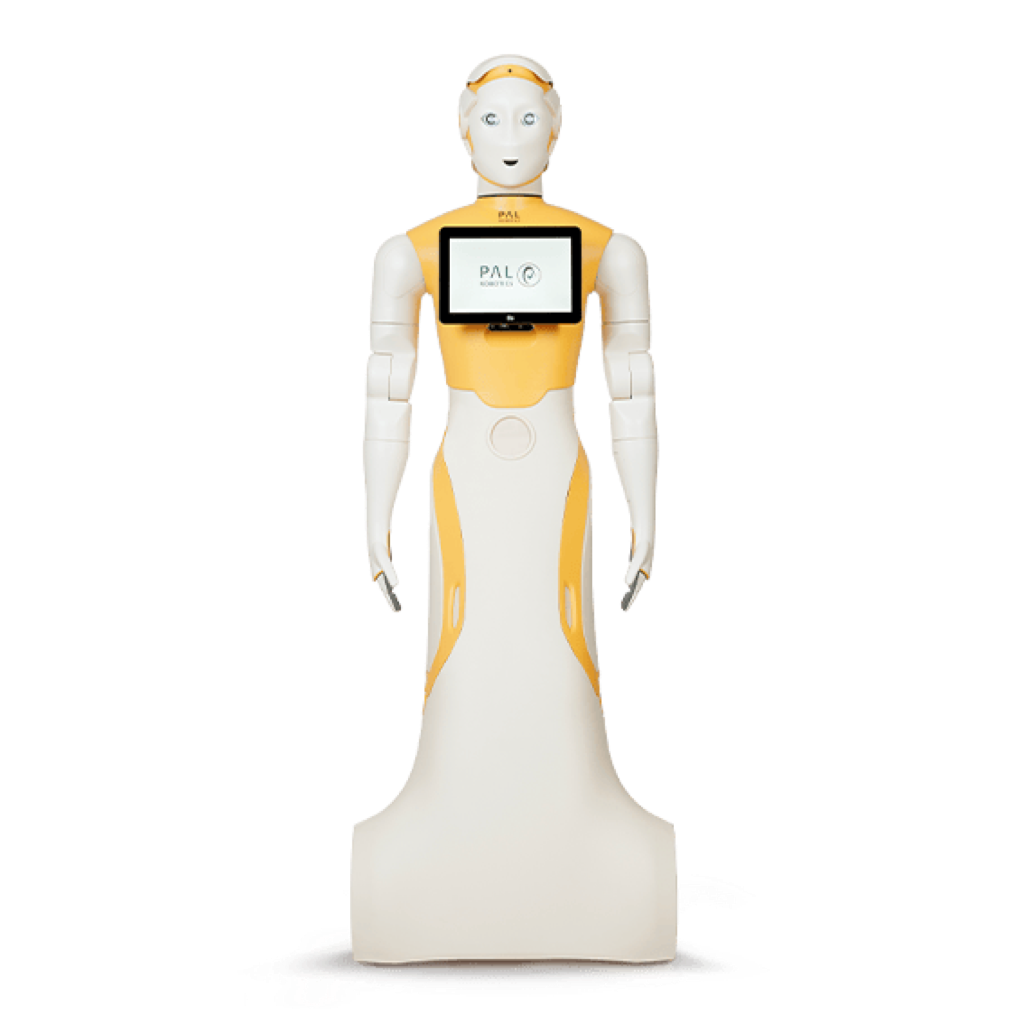 PAL Robotics PAL Robotics ARI | 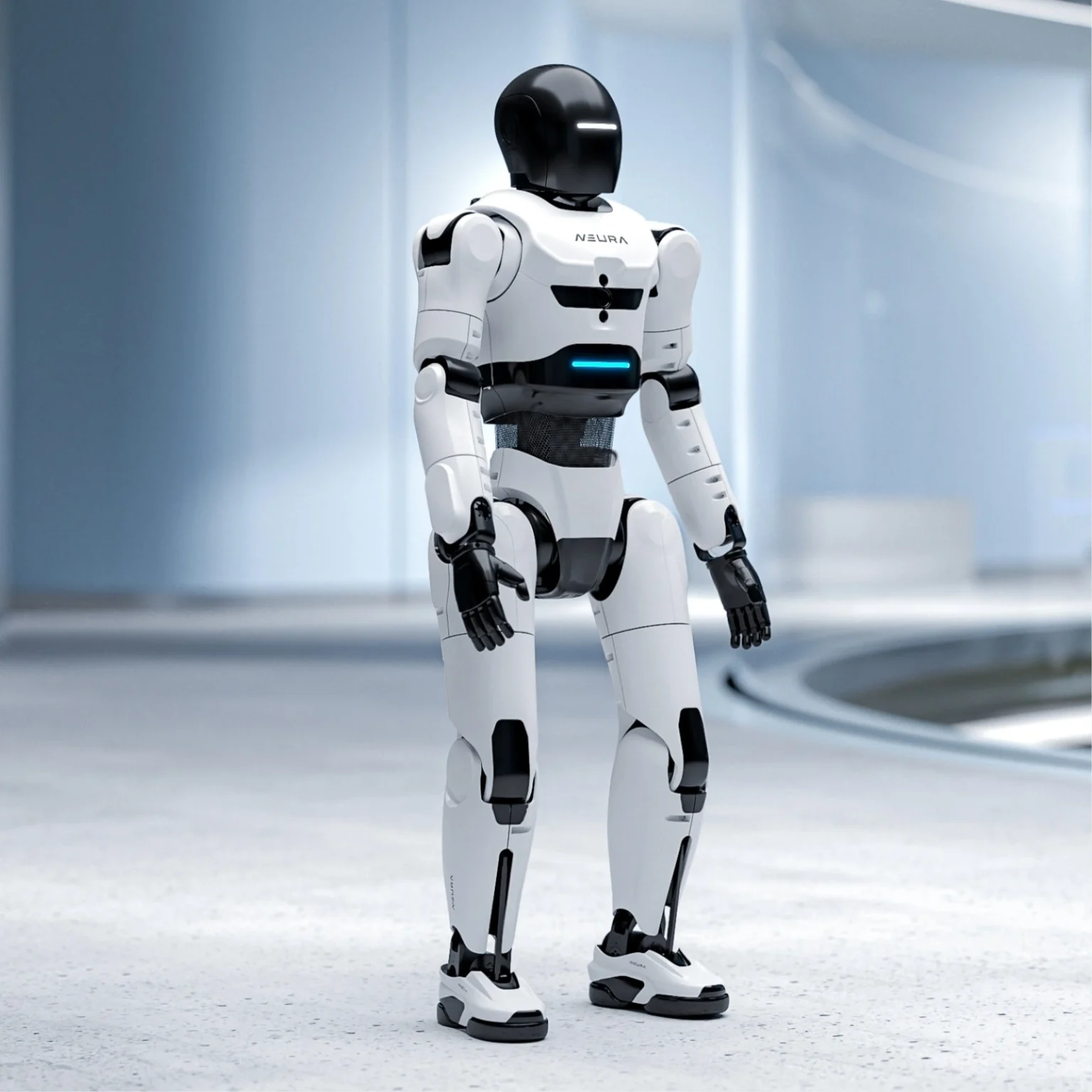 NEURA Robotics NEURA Robotics 4NE-1 | |
|---|---|---|---|---|
| Price (US) | No published price | $99,999 – $145,000 | $35,000 – $90,000 | $65,000 – $105,000 |
| Availability | Enterprise partnership deployment only — no published price, no online store, no consumer or research availability | On the market | On the market | Reservations open |
| Height | 1.65 m | 1.67 m | 1.65 m | 180 cm |
| Payload | 15 kg | ~5 kg | ~0.5 kg per arm | Arms rated ~20 kg; up to 100 kg lifting in leg-supported/full-body configurations |
| DoF | 34 | Lite | ~12 | Hands |
| Buyer | Enterprise | Enterprise | Individuals | Enterprise |
| Made in | Other | Other | Other | Other |
Every spec, grouped & sourced
Tap a group to expand. Values are labelled official vs third-party; unknowns are omitted, not guessed.
Body & movement▾
Power & endurance▾
Hands & senses▾
Brains & control▾
Claims vs evidence
Industrial spatial AI
Where it's working
No verified large-scale deployment
Intended use cases: Industrial: measurement, inspection, manipulation
What owners, reviewers and the press say about the Hexagon AEON
Ratings and reception gathered from where this machine is actually sold and discussed. We summarise the signal — we don't republish anyone's reviews.
AEON is an industrial unit sold into manufacturing contracts by quotation. No retailer lists it and no owner community rates it.
- CES Innovation Awards — named AEON a 2026 Honoree in the Robotics category · 2026-08-30
- The Robot Report — covered the 2025 launch as an industrial humanoid aimed at automotive, aerospace and logistics inspection work · 2026-08-30
- Interesting Engineering — reported a 2026 factory deployment with an Austrian machine builder covering inspection and machine tending · 2026-08-30
+Reviewers consistently praise
- metrology and inspection focus plays to Hexagon's actual strengths
- self-service battery swapping
- real named factory deployments rather than staged demos
!And consistently criticise
- very little independent visibility into performance
- narrow industrial scope
- almost no public developer or owner presence
What owners and developers actually say
AEON has almost no grassroots following. What discussion exists sits in industrial-automation and investor contexts rather than robotics hobbyist forums, and a recurring detail in those threads is that people repeatedly misidentify Hexagon's nationality. The signal that matters here is not community volume but the named factory deployments and the CES honour, which is a different kind of validation from upvotes.
r/robotics, r/BasicIncome, LinkedIn industrial-automation discussion · as of 2026-08-30
Consensus drawn from one award citation, two trade-press reports, and the maker's own videos, which run only in the hundreds to low thousands of views — a telling indicator of how small the public audience is.
Hexagon AEON: the claims, checked
Deployed in production, scaling through partnerships
Two AEON units have been performing production tasks at BMW Group Plant Leipzig since 12 June 2026, following a first test deployment there in December 2025 - reported as the first humanoid in production in Germany. Schaeffler committed in April 2026 to at least 1,000 units across its global plants by 2032, with rollout reported to start at the end of 2026. Pilatus is a named aerospace partner, and trade press reported a 2026 deployment with an Austrian machine builder covering inspection and machine tending. AEON was named a CES 2026 Innovation Award Honoree in robotics. Countering all of that: no independent performance data exists, every figure traces to Hexagon or a partner, and there is no open sales channel of any kind.
as of 2026-08-30
- true“AEON is deployed in a BMW factory”
Hexagon and BMW announced on 12 June 2026 that AEON had begun performing production tasks at BMW Group Plant Leipzig while being trained on further applications, reported as the first humanoid robot in production in Germany. It followed a first test deployment at the same plant in December 2025. Two units cover two use cases, both expected in production by year-end.
- misleading“Schaeffler has ordered 1,000 AEON robots”
In April 2026 Schaeffler committed to deploying at least 1,000 units across its global factory network by 2032, with rollout reported to begin at the end of 2026. A commitment over a six-year horizon is not an order, and no financial terms were disclosed by either party. The commitment itself is real and is the largest of its kind in European manufacturing; the framing as a placed order is not supported.
- unverified“The Hexagon AEON costs around $150,000”
No AEON price exists in any primary source. Hexagon has published nothing and disclosed no contract value in any currency. Our own $100,000-$250,000 figure is a comparable-band proxy carrying low confidence, and any site quoting a specific number is doing the same thing with less disclosure.
- false“AEON is a Chinese humanoid robot”
Hexagon is a Swedish measurement and metrology company. Misidentifying its nationality is a recurring error in online discussion of this robot, and it matters in 2026 because it changes what people assume about the July FCC restriction - which, being country-neutral, reaches European equipment anyway.
- false“AEON is a bipedal humanoid”
AEON uses a wheeled-legged hybrid - articulated legs with wheels - giving it 2.4 m/s on flat industrial floor. The design deliberately trades stair and rough-terrain capability for speed, endurance and reliability on the surfaces factories actually have.
- unverified“Twenty demonstrations are enough to teach AEON a new task”
This is Hexagon's own stated figure for its imitation-learning layer. It is plausible in constrained industrial settings, where fixed stations and repeatable parts do much of the work. But the definition has not been published - 20 demonstrations to what success rate, on what task complexity, with how much surrounding engineering - and no independent party has tested it.
Hexagon in 2026
Hexagon AB is a Swedish measurement and metrology group - coordinate measuring machines, industrial sensing, design and manufacturing software - with decades of relationships inside exactly the automotive and aerospace plants AEON is now entering. That heritage explains the robot better than any spec sheet does. AEON was launched in 2025 and covered by trade press as an industrial humanoid aimed at automotive, aerospace and logistics inspection work; it was named a CES 2026 Innovation Award Honoree in the robotics category. The company sells it through enterprise partnership only, publishes no price, and runs no research, developer or reseller channel, which is why a machine deployed in a BMW plant has almost no public community around it. Discussion of AEON sits in industrial-automation and investor contexts rather than robotics forums, and one recurring detail in those threads is that people keep getting Hexagon's nationality wrong. The validation that matters here is not upvotes but named factory deployments - a rarer commodity in this catalogue than any specification.
What to watch next
- Whether the Schaeffler rollout actually begins at the end of 2026 as reported - the first real test of whether a 1,000-unit commitment converts into deliveries
- Whether BMW takes both Leipzig use cases into full production by the end of 2026, as it said it expected to
- Any disclosure of a price, a contract value or a lease structure; six years of published financials from a listed company may eventually force some visibility that press releases do not
- Whether Hexagon opens any research or developer channel - currently the largest structural difference between AEON and every other humanoid with public visibility
- Whether Hexagon publishes a US certification position following FCC Public Notice DA 26-786 of 28 July 2026, which on its country-neutral wording reaches European-produced equipment
Should you consider the Hexagon AEON?
AEON is one of the few humanoids in this catalogue whose deployment story is stronger than its marketing story - two units doing production work inside BMW Leipzig since June 2026, a 1,000-unit commitment from Schaeffler by 2032, a CES 2026 Innovation Award, and a maker video with a few thousand views. Hexagon built a mobile metrology instrument with hands rather than a general-purpose worker, chose wheeled legs over bipedal walking because factories have flat floors, and sells it the way it has sold measuring machines for decades: as a project, on quotation, with no published price. That makes it credible and unbuyable at the same time. If you run precision manufacturing and have an inspection problem you can cost today, it may be the best-aimed humanoid on the market. If you are anyone else, there is no door.
Score reflects stated criteria (availability, data confidence, US relevance) — not hands-on testing or user ratings. We're an independent review & comparison site; we don't sell robots. *Financing figure is illustrative.
How we know this
Data confidence 42/100 · last verified 2026-08-30. Specs are labelled official vs third-party and dated; unknowns are omitted, not guessed.
Hexagon AEON — your questions, answered in full
How much does a Hexagon AEON cost?+
Hexagon has never published a price. AEON is deployed through enterprise partnerships with no disclosed contract values, including for the Schaeffler commitment. By comparison with industrial humanoids of similar specification we would estimate $100,000-$250,000 per unit as of 30 August 2026, but that is a proxy band with low confidence, not an AEON figure.
Can I buy a Hexagon AEON?+
Not unless you are a manufacturer entering an enterprise partnership. There is no online store, no reseller network, no research or education edition and no developer kit. For individuals, universities and small businesses, AEON is unavailable at any price.
Where is the Hexagon AEON actually deployed?+
Two units have been performing production tasks at BMW Group Plant Leipzig since June 2026, after a test deployment there in December 2025. Schaeffler has committed to at least 1,000 units across its global factories by 2032. Pilatus is a named aerospace partner, and trade press has reported a 2026 deployment with an Austrian machine builder covering inspection and machine tending.
Is AEON a Chinese robot?+
No. Hexagon is a Swedish measurement and metrology company. This is one of the most common errors made about the machine, and it matters in 2026 because people assume the July FCC restriction is about China - it is not, and its country-neutral wording reaches European equipment too.
Does the AEON walk on two legs?+
No. It uses a wheeled-legged hybrid: articulated legs ending in wheels. That gives it up to 2.4 m/s on flat factory floor and better endurance than a biped, at the cost of stairs and rough terrain - a trade that makes sense for the environments it works in.
What can the Hexagon AEON lift?+
It is rated at 15 kg, handled through two five-fingered hands across 34 degrees of freedom. That places it mid-pack among industrial humanoids; the machine's differentiator is the measurement sensor package, not the payload.
How long does the AEON battery last?+
Around 3.1 hours per charge, with self-swapping batteries so the robot can restore its own endurance without a human. On a factory floor that battery-swap capability matters more than the raw runtime figure.
Is the AEON affected by the US robot restriction?+
On its wording, yes. FCC Public Notice DA 26-786 of 28 July 2026 blocks new certification for foreign-produced equipment - a test of US assembly and domestic content, not nationality - and the listing also covers autonomous mobile robots generally. A European-built AEON meets that definition. Hexagon has published no authorisation position and no disruption has been reported; European pilots are unaffected. US manufacturers should raise it with procurement.
How does AEON compare to Agility Digit or Apptronik Apollo?+
They target different jobs. Digit and Apollo are aimed at logistics and materials handling; AEON is aimed at inspection, measurement and machine tending, and carries a much denser sensor package for it. AEON's advantages are metrology credibility, wheeled-leg speed, self-swapping batteries and existing customer relationships in the plants. Its disadvantages are narrow scope and near-zero independent visibility.
Has anyone independently tested the AEON?+
No. Every performance claim traces to Hexagon or a partner announcement. No third party has had hands-on access, no owner community publishes results because the owners are manufacturers under confidentiality, and the maker's own videos run in the hundreds to low thousands of views. This is normal for industrial equipment and still a genuine limit on what can be said about it.
Does AEON have a customer rating or reviews?+
No. It is sold into manufacturing contracts by quotation, no retailer lists it, and no owner community rates it. Consumer ratings essentially do not exist anywhere in the humanoid category, and anything presented as one for AEON is fabricated or belongs to something else.
Can AEON really learn a task from 20 demonstrations?+
That is Hexagon's own claim for its imitation-learning layer, and it is plausible in constrained factory settings where the environment does much of the work. What has not been published is what it means precisely - 20 demonstrations to what success rate, on what task, with how much engineering setup. Treat it as credible but unverified.