Kawasaki RHP Friends Robot
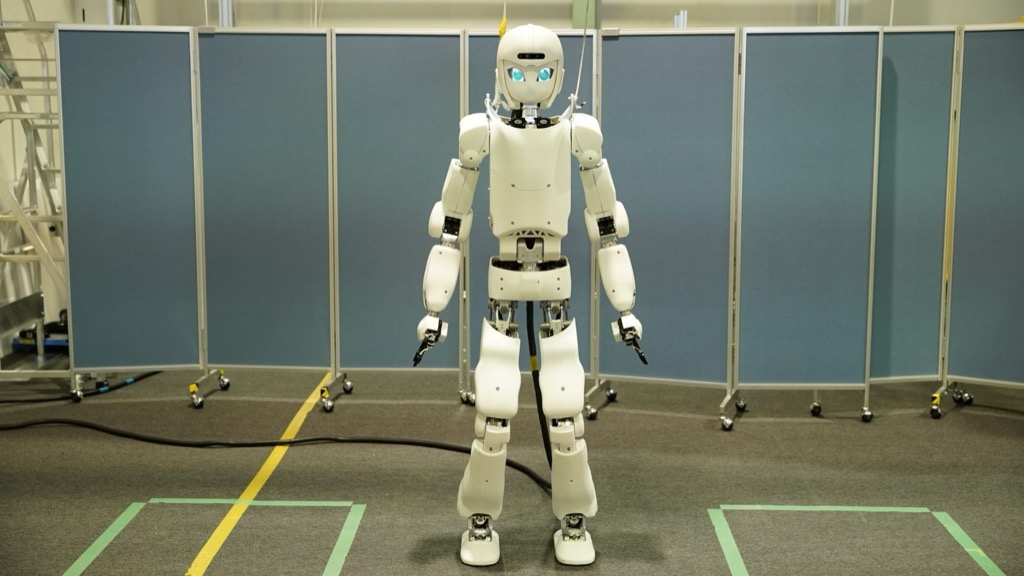
The Kawasaki RHP Friends is a slim, human-coexistence research humanoid derived from the company's Kaleido platform, aimed at nursing and eldercare tasks in homes and care settings. It has around 30 degrees of freedom and deliberately combines autonomous behavior with teleoperation, so a human can remotely assist with harder jobs like patient transfer. Importantly, it's a research concept, not a product for sale — there's no consumer price or release date.
US buyers: this is a Japanese research concept, not a product — and Japanese production is inside the rule's wording.
RHP Friends is a rideable research concept shown at exhibitions, not something sold to anyone in any country, so the July rule is not what stops you buying it. If Kawasaki ever commercialised it in the US, the same foreign-produced analysis would apply as to any Japan-built machine. Confirm the current status directly with Kawasaki before making any commitment — our reading of the register is public evidence, not proof of how the rule is being applied.
Not for sale in Japan or Europe either; this is a demonstrator.
As of 2026-08-30 · low confidence — verify before you commit funds
What is the Kawasaki RHP Friends Robot?
RHP Friends is the Kawasaki robot built for care wards rather than production lines.
Japan has one of the world's oldest populations and a real, pressing shortage of care workers, so it's no surprise that a heavy-industry giant like Kawasaki is building humanoids aimed squarely at eldercare. The RHP Friends is one result of that effort.
"Friends" is a slim, gentle-looking humanoid designed to work alongside people in tight, human spaces — narrow hallways, cramped rooms — where a bulky industrial arm would be a hazard. It's a derivative of Kawasaki's Kaleido research platform, tuned for coexistence and assistance rather than raw factory strength.
One thing to be clear about from the start: RHP Friends is a research concept. This isn't a robot you can order for grandma's house. Below we'll cover what it does, how the autonomy-plus-teleoperation model works, and who it's really for.
What is the Kawasaki RHP Friends?
RHP Friends is a social, human-coexistence humanoid robot built by Kawasaki Heavy Industries as part of its Robust Humanoid Platform (RHP) research. It's a slim-type derivative of the Kaleido humanoid, with a body narrow enough to move along tight paths and a design chosen to read as gentle and non-threatening.
Technically it carries roughly 30 degrees of freedom, uses linear actuators on critical joints for stiffness (so it can withstand impulsive forces), and runs an onboard real-time control system based on Linux. Kawasaki has emphasized safety features such as not trapping a person's hand when someone comes close.
The whole robot is engineered around locomanipulation and multi-contact motion — in plain terms, moving and using its body to manipulate the world in the messy, contact-rich way a caregiver does.
How does RHP Friends work — autonomy or teleoperation?
This is the key design idea, and it's an honest one: RHP Friends blends autonomous behavior with human teleoperation. For routine tasks the robot can act on its own using object detection and tracking, but for harder or non-routine jobs a human operator can step in remotely and guide it.
A Kawasaki-linked research paper demonstrated this in a nursing context — the robot handling a daily task like patient transfer, and a non-routine task like operating a circuit breaker, by seamlessly switching between autonomous and teleoperated modes. So if you're picturing a fully independent robot nurse, adjust that: teleoperation is a core, intended part of how Friends gets useful work done, at least at this research stage.
Can you buy the Kawasaki RHP Friends?
No — and this is important. RHP Friends is a research concept, not a commercial product. There is no consumer price, no release date, and no way to purchase one for a home or a care facility today.
Kawasaki is a serious industrial-robotics company, so the underlying tech is credible, but the RHP program is about developing and proving capabilities, not filling online carts. Any eventual deployment would likely start in institutional or pilot settings, probably in Japan first, long before anything resembling a consumer offering. For now, treat it as a look at the future of care robotics rather than a buyable device.
What eldercare and nursing tasks can it do?
The whole point of Friends is assistance in human-coexisting environments. Kawasaki's research points to daily caregiving tasks — patient transfer being the headline example — plus non-routine chores such as operating devices and tools around a facility (that circuit-breaker demo again).
Because it's slim and safety-focused, it's meant to operate close to people without being frightening or dangerous. But keep expectations realistic: these are demonstrated research capabilities, often with teleoperation in the loop, not a proven, always-on care worker. The gap between "shown in a paper" and "reliable in a real care home for months" is still substantial.
RHP Friends vs other eldercare humanoids
Against consumer-focused or general-purpose humanoids, RHP Friends stands out for its deliberate, safety-first, care-specific design and its explicit embrace of teleoperation as a feature rather than a dirty secret. It's not trying to be a do-everything home robot; it's trying to solve nursing tasks in coexistence with people.
That focus is a strength for its target use, but also a reminder that it's narrower and more research-bound than something like a wheeled home helper you can (at least in theory) buy. If you're comparing shopping options, Friends isn't one — it's a benchmark for what serious care robotics looks like, from a major industrial player.
Who is the RHP Friends for?
In its current form, RHP Friends is for researchers, care-technology developers, and institutions collaborating with Kawasaki — not for individual consumers or families. Its value right now is in advancing safe, human-coexistence robotics for an aging society.
If you're a family caregiver hoping to buy help, this isn't it yet, and it may be years before anything like it reaches everyday care settings. But if you want to understand where credible, safety-minded eldercare robots are heading, RHP Friends is one of the more grounded examples out there.
The Kawasaki RHP Friends on video
Hands-on reviews and teardowns, picked for what they actually show rather than how loud the thumbnail is.
Kawasaki's own retrospective covering both RHP machines and how Friends grew out of Kaleido
Unedited iREX 2025 floor footage, the most recent public sighting of Friends
Short clip of the sign-language and dance routines Kawasaki built Friends to demonstrate
Who the Kawasaki RHP Friends is — and isn't — for
+Where it shines
!Watch-outs
- Not really on sale yet — availability is research / limited.
- Sold to businesses only — not to private buyers.
- Public data is thin; verify key figures before relying on them.
How the Kawasaki RHP Friends stacks up
Side by side with similar robots — the one you're reading about is highlighted.
| This robot Kawasaki Heavy Industries Kawasaki RHP Friends | PNDbotics PNDbotics Adam | 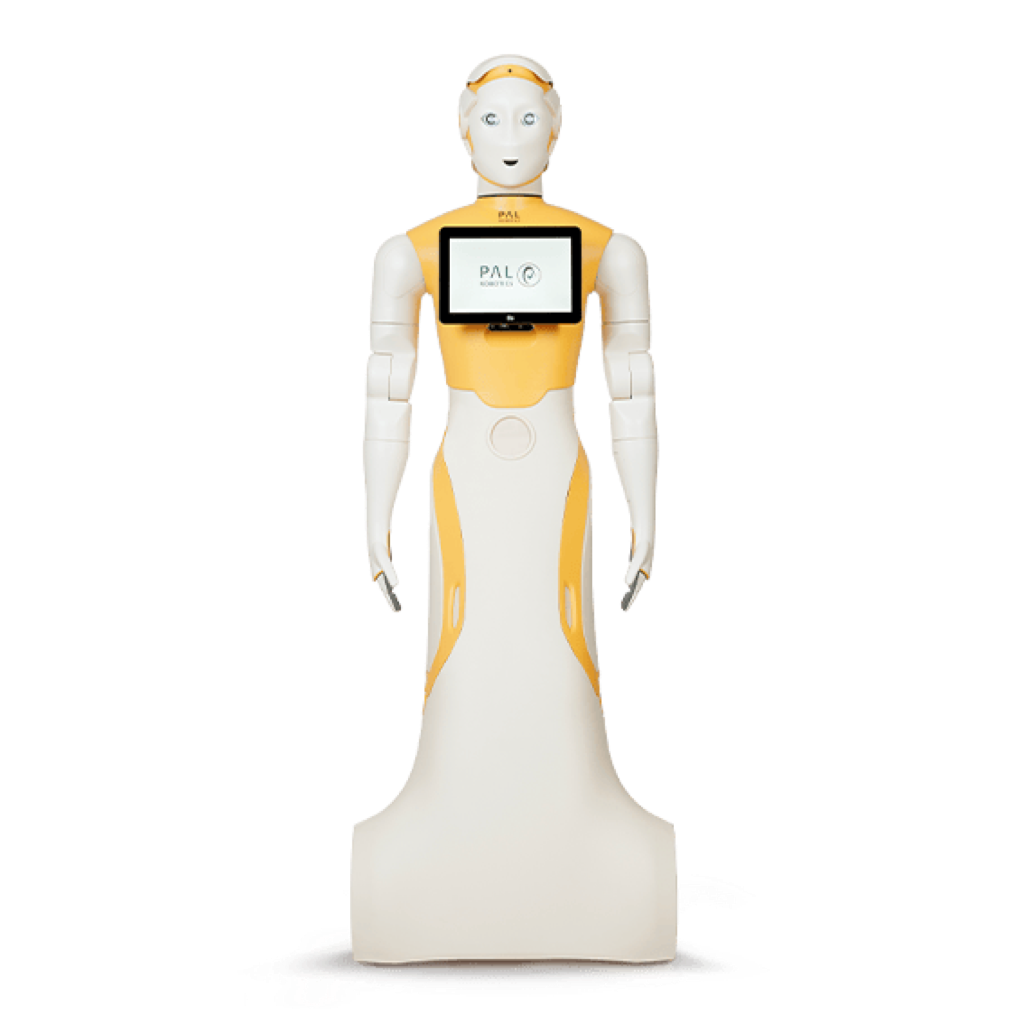 PAL Robotics PAL Robotics ARI | 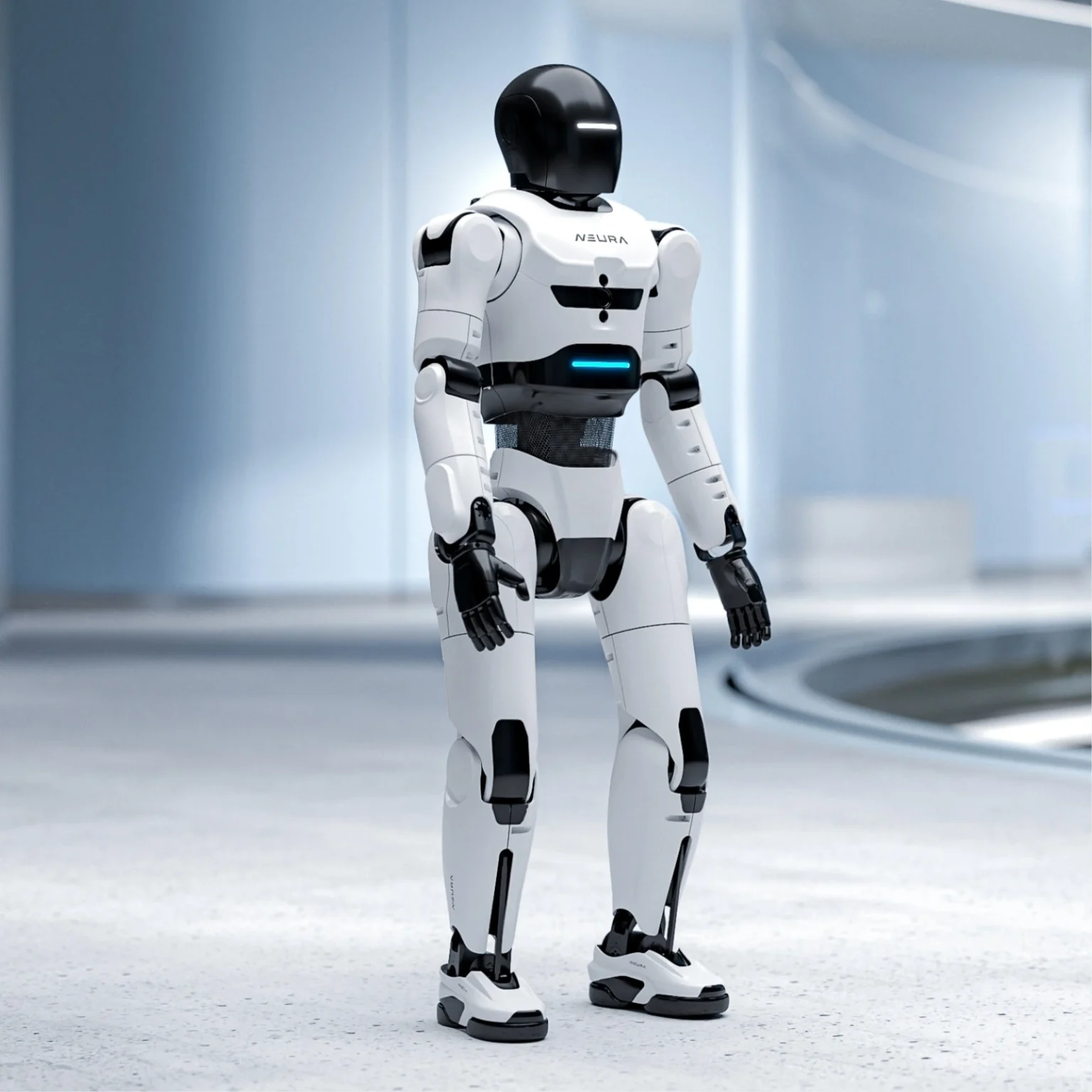 NEURA Robotics NEURA Robotics 4NE-1 | |
|---|---|---|---|---|
| Price (US) | Not for sale | $99,999 – $145,000 | $35,000 – $90,000 | $65,000 – $105,000 |
| Availability | Research / limited | On the market | On the market | Reservations open |
| Height | 1.68 m | 1.67 m | 1.65 m | 180 cm |
| Payload | Unknown | ~5 kg | ~0.5 kg per arm | Arms rated ~20 kg; up to 100 kg lifting in leg-supported/full-body configurations |
| DoF | 30 | Lite | ~12 | Hands |
| Buyer | Enterprise | Enterprise | Individuals | Enterprise |
| Made in | Other | Other | Other | Other |
What the Kawasaki RHP Friends costs — and how to get one
RHP Friends: research concept, not for sale.
Research only
Leasing / RaaS: unknown
Every spec, grouped & sourced
Tap a group to expand. Values are labelled official vs third-party; unknowns are omitted, not guessed.
Body & movement▾
Power & endurance▾
Hands & senses▾
Brains & control▾
Claims vs evidence
Research platform (whole-body control)
Where it's working
Research demos
Intended use cases: Companion and eldercare in homes/care settings (research concept)
Should you consider the Kawasaki RHP Friends?
The Kawasaki RHP Friends is a thoughtful, safety-first take on eldercare robotics from a major industrial player, notable for openly building teleoperation into its design. But it's a research concept, not a product — no price, no release date, and real deployment likely years away. Watch it as a credible glimpse of future care robots, not as something you can buy in 2026.
Score reflects stated criteria (availability, data confidence, US relevance) — not hands-on testing or user ratings. We're an independent review & comparison site; we don't sell robots. *Financing figure is illustrative.
How we know this
Data confidence 35/100 · last verified 2026-06-30. Specs are labelled official vs third-party and dated; unknowns are omitted, not guessed.
Kawasaki RHP Friends — your questions, answered in full
Can I buy the Kawasaki RHP Friends?+
No. It's a research concept, not a commercial product. There's no consumer price or release date, and no way to purchase one for home or facility use today.
What is RHP Friends used for?+
It's aimed at nursing and eldercare tasks in human-coexisting settings — things like patient transfer, plus non-routine jobs such as operating devices and tools.
Is RHP Friends autonomous or teleoperated?+
Both. It combines autonomous behavior for routine tasks with human teleoperation for harder ones, switching between the two — teleoperation is a core part of the design.
How many degrees of freedom does it have?+
Around 30 degrees of freedom, with linear actuators on critical joints for stiffness and an onboard real-time Linux control system.
Who makes the RHP Friends?+
Kawasaki Heavy Industries, as part of its Robust Humanoid Platform (RHP) research. It's a slim-type derivative of the company's Kaleido humanoid.
Is RHP Friends safe to be around people?+
It's designed for human coexistence, with a slim body and safety features like not trapping a person's hand when they come close. Still, it remains a research platform, not a certified care worker.
When will RHP Friends be available?+
No release date has been given. Any real deployment would likely start in institutional or pilot settings — probably in Japan first — rather than as a consumer product.
Peer-reviewed research on the Kawasaki RHP Friends
Published academic work — peer-reviewed papers and preprints — involving this robot or its maker's systems, indexed in scholarly databases (OpenAlex, arXiv). Not blog posts or press write-ups.
- Humanoid Robot RHP Friends: Seamless Combination of Autonomous and Teleoperated Tasks in a Nursing ContextMehdi Benallegue, Guillaume Lorthioir, Antonin Dallard, Rafael Cisneros-Limon, Iori Kumagai, Mitsuharu Morisawa, Hiroshi Kaminaga, Masaki Murooka, Antoine Andre, Pierre Gergondet, Kenji Kaneko, Guillaume Caron, Fumio Kanehiro, Abderrahmane Kheddar, et al. · 2025 · IEEE Robotics & Automation Magazine (arXiv:2412.20770)
Academic references are factual citations from open scholarly indexes; listing is not endorsement.