Kepler Forerunner K2 'Bumblebee' Robot
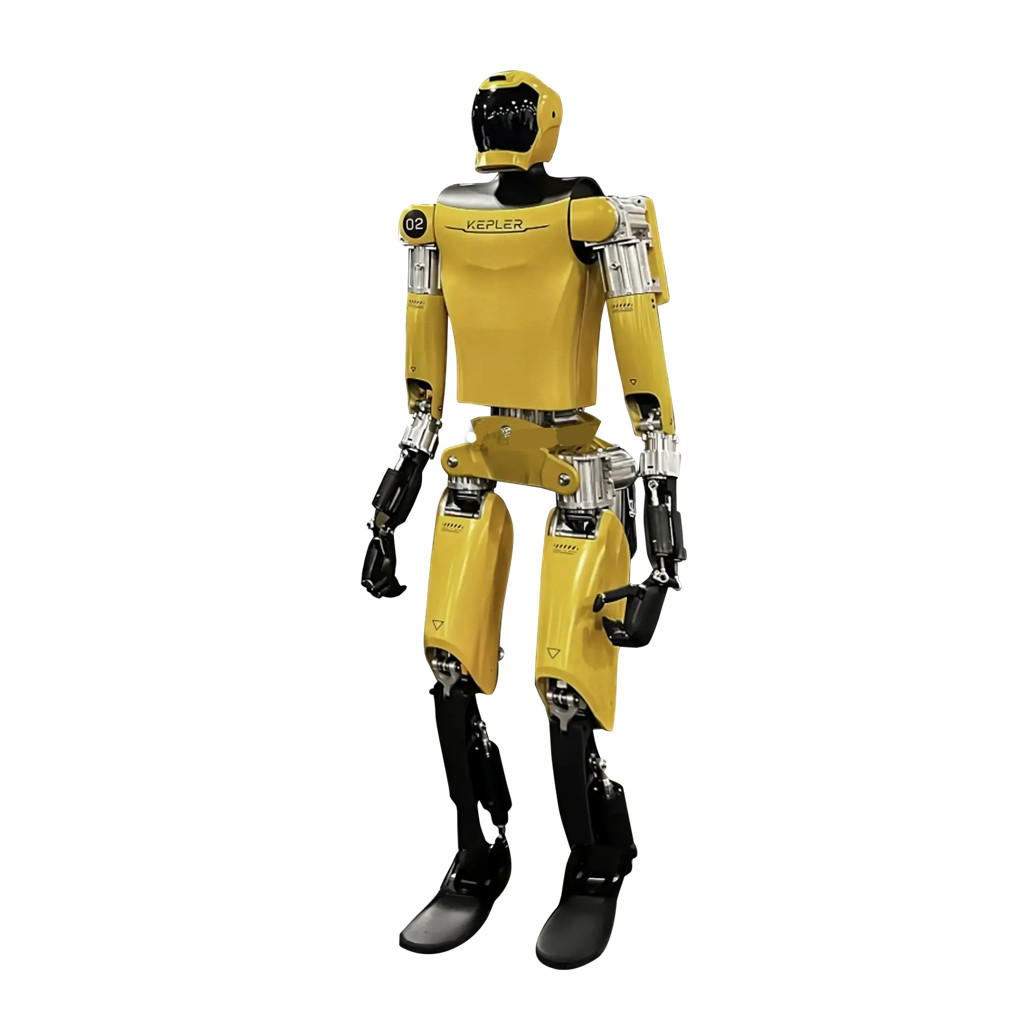
The Kepler Forerunner K2 'Bumblebee' is an industrial humanoid robot from China's Kepler Robotics, built for factories and warehouses rather than homes. It's notable for hitting mass production with a hybrid AI architecture and an aggressive price: a base unit reported around $30,000, with some listings near $34,000. Kepler is fulfilling thousands of pre-orders and positioning the K2 as an affordable Optimus alternative for real industrial work.
US buyers: no new imports — this model has no US authorization on record, and the July 2026 rule closes that route.
Kepler runs a China-domestic presale with no announced US distribution, and a Chinese model without a pre-cutoff authorization cannot obtain one now. The published price is a Chinese-market figure and should not be read as a US price. There is no US purchase path.
China-domestic presales are unaffected.
As of 2026-08-30 · medium confidence — verify before you commit funds
What is the Kepler Forerunner K2 'Bumblebee' Robot?
The Kepler Forerunner K2 is the yellow-and-black machine most people just call the Bumblebee robot.
Kepler is going after the least glamorous, most valuable part of the humanoid market: repetitive factory and warehouse labor. The Forerunner K2, nicknamed 'Bumblebee', isn't trying to fold your laundry or greet shoppers. It's built to sort, carry and handle materials on an industrial floor.
What makes the K2 interesting in 2026 is that it's actually shipping. Kepler announced mass production and says it's working through thousands of pre-orders, which puts it ahead of a lot of humanoids still stuck at the prototype-and-promises stage. And it's doing it at a price, around $30,000, that undercuts most of the field.
There's the usual asterisk though. It's a China-based industrial product, the specs are largely company-stated, and 'available' here means available to businesses placing orders, not a consumer walking into a store. Still, as a signal of where affordable industrial humanoids are going, the K2 is one of the clearest ones out there.
What is the Kepler Forerunner K2 Bumblebee?
The K2 Bumblebee is a full-size industrial humanoid, roughly 175 cm tall and about 75 kg. It carries 52 degrees of freedom and tactile hands, Kepler cites a large number of fingertip sensors for touch feedback, and each hand can lift up to 15 kg (33 lb). That lifting capacity is the point: this robot is meant to move tools and parts around, not perform delicate party tricks.
Power comes from a 2.33 kWh battery good for up to about 8 hours per charge, and onboard compute reaches up to roughly 100 TOPS. There are more than 80 integrated sensors feeding its perception system.
Kepler's target jobs are squarely industrial: manufacturing and part handling, warehousing and logistics sorting, material handling, automotive work, hazardous-environment tasks, patrol and inspection, and quality control. It's a work robot first and foremost.
How much does the Kepler K2 cost?
The K2 is one of the cheaper full-size humanoids you'll find quoted. Kepler has put the starting price at around $30,000, with some listings around $34,000 (about 248,000 RMB). Earlier projections floated the $20,000-$30,000 range, so the shipping price landed near the top of that band.
Kepler frames the value proposition around payback rather than sticker shock, the company claims a return-on-investment period of roughly 1.5 to 1.8 years in industrial settings. For a business replacing or supplementing repetitive labor, that math is the actual selling point.
As always, there's no formal US retail listing, and what a buyer pays will depend on volume and configuration. But even as a rough number, a ~$30k industrial humanoid is a striking figure in 2026.
Can you buy the Kepler K2, and is it available now?
Kepler announced mass production of the K2 in late 2025 and says it's moving thousands of pre-orders into the delivery phase, with the company billing it as the world's first commercially available hybrid-architecture humanoid. So on paper this is one of the few humanoids that's genuinely transitioned from 'coming soon' to 'we're building and shipping these.'
That said, availability is via reservations and enterprise ordering, not a shelf you can grab from. And it's a China-based product, US import paths, warranty and support are unconfirmed, so an American buyer shouldn't assume easy access or local service.
If you're an industrial operator, the K2 is worth a direct inquiry. If you're a consumer or a US small business hoping to click 'buy now', this isn't that kind of product.
How does the Kepler K2 work?
The K2 uses what Kepler calls a hybrid architecture, combining a cloud-based cognitive model with an onboard embodied control system. In practice that means higher-level reasoning can lean on the cloud while the robot's local system handles real-time balance, movement and manipulation. Kepler trains it with a mix of imitation learning and reinforcement learning.
That approach has drawn comparisons to Tesla's Optimus, and Kepler hasn't shied away from the parallel, part of the K2's pitch is being an affordable alternative with a broadly similar hybrid design philosophy.
Realistically, for the near term, expect industrial K2 deployments to be focused on structured, repetitive tasks where the environment is predictable. That's exactly where current humanoids are most reliable, and it's a sensible place for a work robot to start.
Kepler K2 vs Tesla Optimus: which is the better industrial robot?
The K2 is explicitly pitched against Optimus, so the comparison is fair game. On price and availability, Kepler has a clear edge right now, a roughly $30,000 robot that's actually shipping to pre-order customers versus Optimus, which Tesla has mostly kept inside its own facilities and hasn't put on open sale.
Where Tesla's long game looks strong is scale, data and integration, thousands of Optimus units running in Tesla plants, plus the AI and manufacturing muscle behind them. Kepler can't match that resource base, but it doesn't need to in order to sell affordable industrial units to third-party factories.
Bottom line: for a business that wants a purchasable industrial humanoid today at a low price, the K2 is the more concrete option. For long-term platform bets, Optimus still carries Tesla's considerable weight behind it.
The Kepler Forerunner K2 'Bumblebee' on video
Hands-on reviews and teardowns, picked for what they actually show rather than how loud the thumbnail is.
Kepler's own introduction to the K2 'Bumblebee', including the 52-DOF claim in context
Covers the eight-hour live endurance run, which is a far better test than any staged demo
Production-line footage for anyone weighing up whether K2 is a prototype or a product
Who the Kepler Forerunner K2 'Bumblebee' is — and isn't — for
+Where it shines
- Among the most affordable humanoids on the market right now.
- Open developer access (SDK/API) — good for builders and labs.
- Stated real-world payload (15 kg per arm; up to 30 kg both arms).
!Watch-outs
- Sold to businesses only — not to private buyers.
How the Kepler Forerunner K2 'Bumblebee' stacks up
Side by side with similar robots — the one you're reading about is highlighted.
| This robot Kepler Robotics Kepler Forerunner K2 'Bumblebee' | 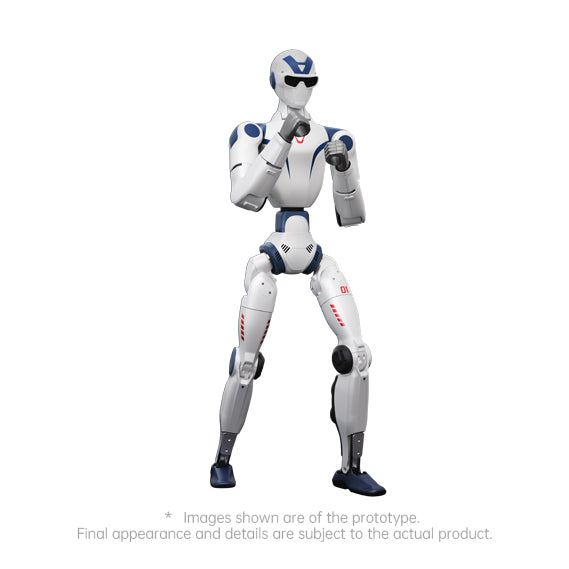 Unitree Robotics Unitree R1 | 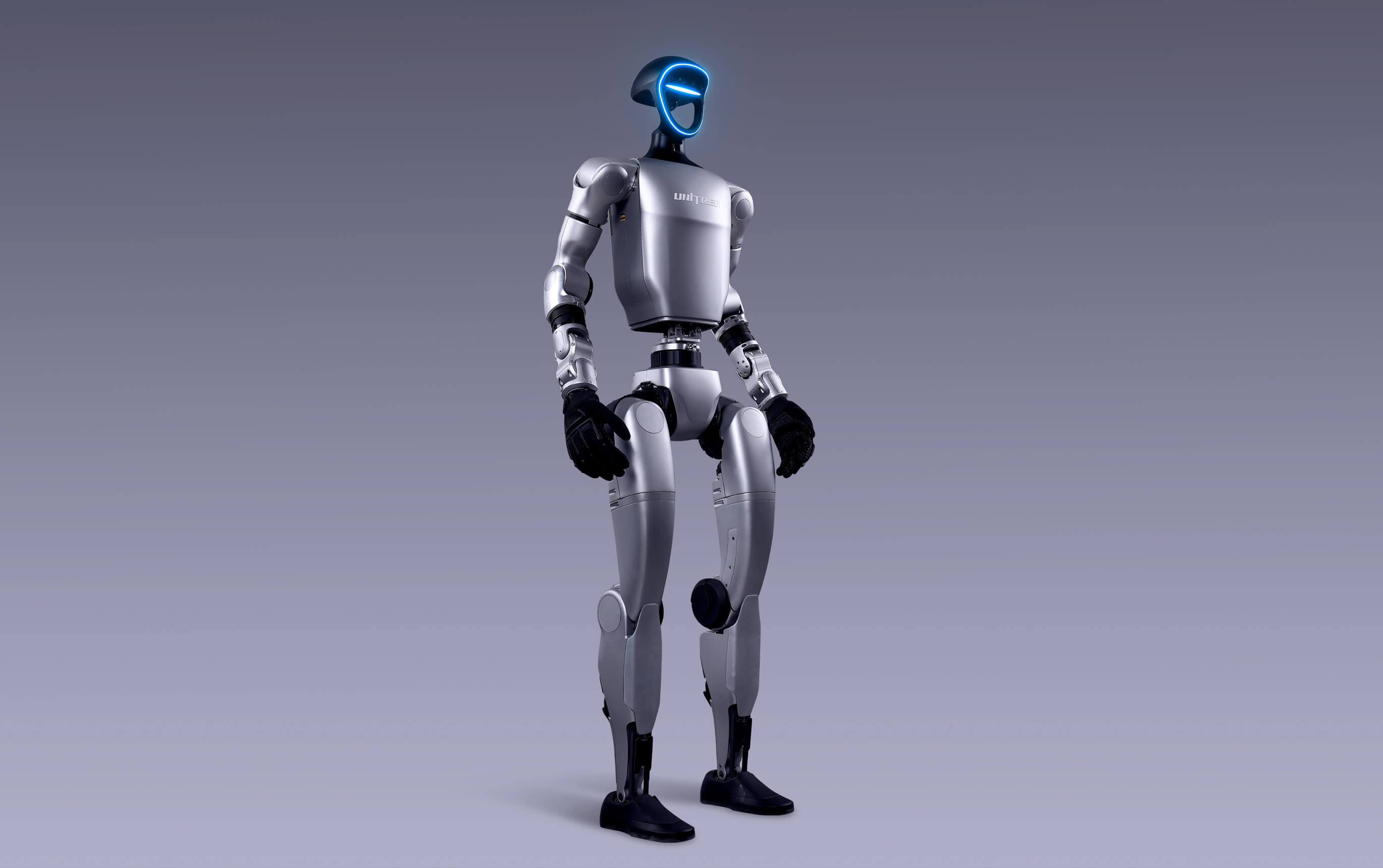 Unitree Robotics Unitree G1 | 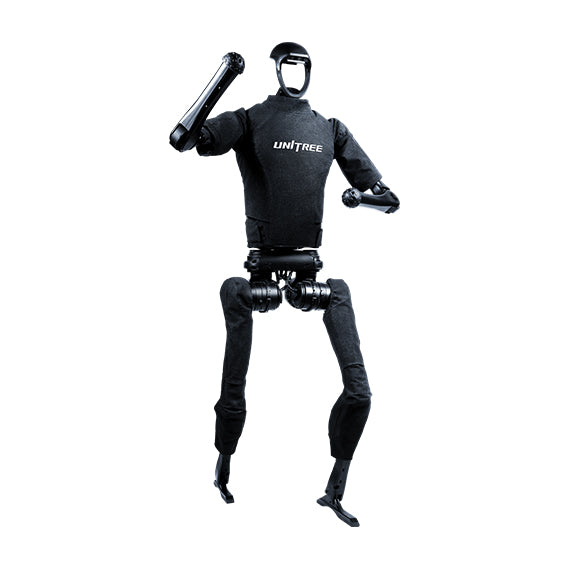 Unitree Robotics Unitree H1 | |
|---|---|---|---|---|
| Price (US) | $20,000 – $30,000 | $4,900 – $5,900 | $13,500 – $73,900 | ~$90,000 |
| Availability | Reservations open | On the market | On the market | On the market |
| Height | 175 cm | 1.23 m | 1.32 m standing | ~1.80 m |
| Payload | 15 kg per arm; up to 30 kg both arms | Unknown | Arm ~2 kg | Not rated for H1 |
| DoF | 52 | 20 | 23 | ~19 |
| Buyer | Enterprise | Individuals | Individuals | Enterprise |
| Made in | China | China | China | China |
What the Kepler Forerunner K2 'Bumblebee' costs — and how to get one
Reported target/base ~$20k–$30k; no formal US retail listing.
Open - pre-sales/reservations via official (China-domestic); customer trials ongoing
Leasing / RaaS: unknown
Every spec, grouped & sourced
Tap a group to expand. Values are labelled official vs third-party; unknowns are omitted, not guessed.
Body & movement▾
Power & endurance▾
Hands & senses▾
Brains & control▾
Claims vs evidence
Cloud cognitive model + embodied control; imitation+RL; 100 TOPS; 'nearly mastered' some structured tasks
Where it's working
Pilot/evaluation trials at unnamed customer facilities; 8-h WAIC livestream; no named customers confirmed
Intended use cases: Manufacturing, warehousing/logistics sorting, material handling, automotive, hazardous ops, patrol/inspection, QC, research/education
Should you consider the Kepler Forerunner K2 'Bumblebee'?
The Kepler K2 Bumblebee is one of the most credible affordable industrial humanoids of 2026, mass production, a ~$30,000 price and thousands of pre-orders in delivery put it ahead of many rivals still stuck at the demo stage. Just remember it's a China-based, enterprise-ordered work robot, so US buyers should confirm import and support before counting on it.
Score reflects stated criteria (availability, data confidence, US relevance) — not hands-on testing or user ratings. We're an independent review & comparison site; we don't sell robots. *Financing figure is illustrative.
How we know this
Data confidence 60/100 · last verified 2026-06-23. Specs are labelled official vs third-party and dated; unknowns are omitted, not guessed.
Kepler Forerunner K2 'Bumblebee' — your questions, answered in full
How much does the Kepler K2 Bumblebee cost?+
Kepler lists a starting price around $30,000, with some listings near $34,000 (about 248,000 RMB). Earlier projections put it in the $20,000-$30,000 range. There's no formal US retail listing.
Can you buy the Kepler K2 right now?+
Kepler has started mass production and says it's fulfilling thousands of pre-orders, so it's available for enterprise ordering and reservations. It's a China-based industrial product, though, so US import, warranty and support are unconfirmed.
What is the Kepler K2 used for?+
Industrial tasks: manufacturing and part handling, warehousing and logistics sorting, material handling, automotive work, hazardous operations, patrol and inspection, and quality control.
How much can the Kepler K2 lift?+
Each hand can lift up to 15 kg (33 lb), which is enough to move tools and parts around a factory floor.
How long does the Kepler K2 run on a charge?+
Up to about 8 hours per charge from its 2.33 kWh battery.
How many degrees of freedom does the Kepler K2 have?+
It has 52 degrees of freedom, along with tactile hands using a high number of fingertip sensors and more than 80 sensors overall.
Is the Kepler K2 like the Tesla Optimus?+
Kepler markets the K2 as an affordable Optimus alternative and uses a hybrid architecture that draws comparisons to Tesla's approach. The biggest difference is that the K2 is actually being sold to pre-order customers at around $30,000.
What's the payback period for a Kepler K2?+
Kepler claims a return-on-investment period of roughly 1.5 to 1.8 years in industrial settings, though that's a company figure and will vary by deployment.