Leju Kuavo Robot
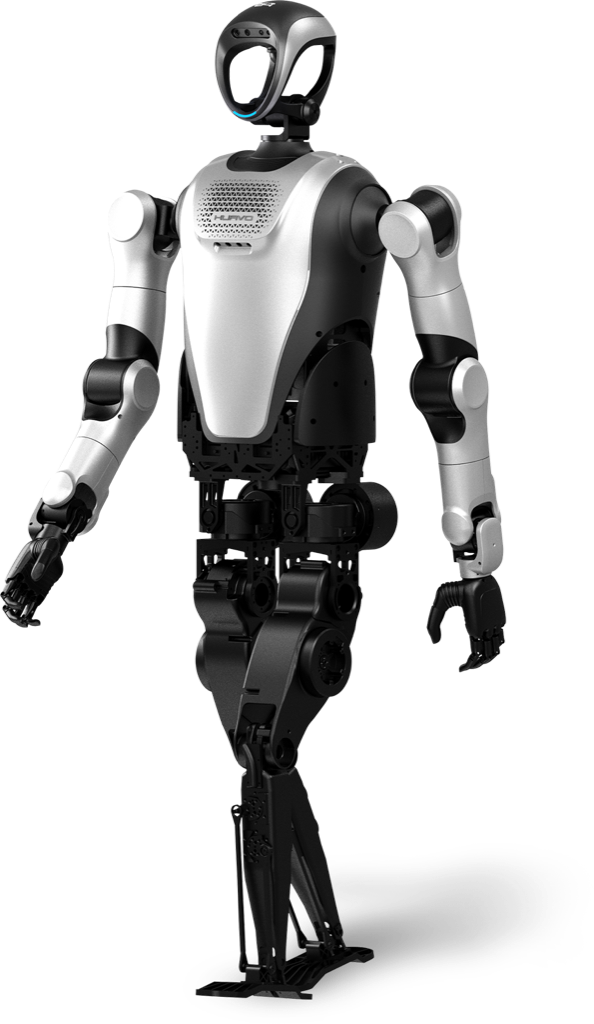
The Leju Kuavo is a full-size humanoid robot from Chinese maker Leju Robotics, aimed at embodied-AI research, education and commercial service work. Newer models like the Kuavo 4 Pro run 41+ degrees of freedom and use KaihongOS, based on Huawei's HarmonyOS. There's no official USD pricing, aggregator listings put a Kuavo-5 near $50,000, but that's unverified, and it's largely a China-domestic or import-only proposition for Western buyers.
US buyers: Leju's Kuavo appears in the pre-July 2026 authorization records.
Kuavo shows up among the models authorized before the cutoff, so it is not blocked from US import. The practical obstacle is unchanged and non-regulatory: Leju sells mainly into China, there is no established US distributor or support line, and the software stack is built around Huawei's ecosystem, which enterprise buyers in the US tend to treat as its own problem. The open ROS repository is what gives most US labs their contact with it.
Unaffected outside the US; Kuavo's home market is China.
As of 2026-08-30 · medium confidence — verify before you commit funds
What is the Leju Kuavo Robot?
Kuavo is the Leju robot, and one of the few humanoids running a Chinese-built OS rather than a ROS stack.
Leju Robotics is one of the more research-focused names in China's crowded humanoid scene. Its Kuavo line has been around long enough to go through several generations, and it's become a fairly popular platform for embodied-AI work, the kind of robot universities and labs use to actually run experiments, not just film demos.
The current family spans a few configurations. The KUAVO-MY variant is a 26-DoF service-oriented build, while the Kuavo 4 Pro is a full-size 5'8" humanoid with 41+ degrees of freedom and 7-DoF arms. Across the line you get respectable hardware, 360 Nm torque joints, omnidirectional walking around 4.6 km/h, and a full sensor suite of RGB and depth cameras, LiDAR, IMU and force/torque sensing.
The wrinkle for a US reader is that Kuavo is very much a Chinese-market product. It runs KaihongOS (built on Huawei's HarmonyOS), pricing is quoted in yuan domestically, and there's no clean official USD price. Treat it as research/import-focused, and be skeptical of any dollar figure you find on a listing site.
What is the Leju Kuavo and what does it do?
Kuavo is a full-sized humanoid built primarily as an embodied-AI research and education platform, with a secondary push into commercial service roles, guidance, retail and bank assistance, that sort of customer-facing work, plus industrial use in automotive, 3C and logistics.
The research angle is the strongest part of its identity. Kuavo supports imitation learning, large-model AI integration and real-time control, which is exactly what a lab wants when it's testing new manipulation or locomotion algorithms. Leju has leaned into being an industrialization partner for humanoid research rather than a consumer-gadget maker.
In service settings, Kuavo-my is pitched for intelligent guidance and information in places like shopping centers and exhibition halls, greeting people, answering questions, pointing the way. It's a sensible, low-risk deployment for a humanoid that's still maturing.
Leju Kuavo specs: how capable is it?
Specs vary by model, which is worth keeping straight. The KUAVO-MY runs 26 degrees of freedom, while the Kuavo 4 Pro is a full-size 5'8" humanoid with 41+ degrees of freedom, including 7-DoF arms. Joints deliver up to 360 Nm of torque, and the robot walks omnidirectionally at around 4.6 km/h with a modular frame.
The sensor package is comprehensive: RGB cameras, a depth camera, LiDAR, an IMU, force/torque sensors, plus gyroscope, accelerometer and joint encoders. That's a rich enough set for serious navigation and manipulation research.
Software is where Leju stands apart. Kuavo runs KaihongOS, which is based on Huawei's HarmonyOS, and supports imitation learning and large-model integration. For a research buyer that OS choice can be a plus (tight ecosystem integration) or a friction point (less familiar than a ROS-first Western stack), depending on your workflow.
Leju Kuavo price: how much does it cost?
There's no official USD price, so caution is warranted. Aggregator listings quote a Kuavo-5 at around $50,000, but that figure is unverified and should be treated as an estimate, not a confirmed quote.
What we can say with more confidence is that Chinese humanoid prices are falling fast. Leju's larger "Kuafu" series reportedly sold for about 414,000 yuan per unit in 2024 and dropped to roughly 308,000 yuan in 2025, a decline of about 25% in a single year. That trend matters more than any single sticker number, because it means quotes date quickly.
Bottom line: for a firm price, contact Leju or an authorized channel directly, and expect a yuan-based quote plus import costs if you're overseas. Any tidy USD number online is best treated as indicative only.
Availability and release: can Western buyers get one?
Kuavo is real and shipping into the Chinese market, mostly to research institutions, universities and commercial-service pilots. It's sold through enterprise and research inquiry rather than an open consumer store.
For US and European buyers the honest picture is import-only and uncertain. There's no clean official Western sales channel that we can point to, and buying a Chinese humanoid abroad brings the usual questions, lead times, spare parts, software support in English, and warranty. The KaihongOS/HarmonyOS software base may also add integration considerations for some Western labs.
So yes, you can potentially acquire a Kuavo, but expect to do it as an import or research procurement, with the extra diligence that implies. This isn't a robot with a US delivery button.
Leju Kuavo vs Unitree and other research humanoids
Kuavo's most obvious rival is Unitree, whose humanoids dominate the affordable research segment. Unitree tends to win on price and sheer ubiquity in labs. Kuavo counters with a comprehensive sensor suite (LiDAR plus depth and force/torque) and its HarmonyOS-based software stack, which appeals to buyers wanting a more integrated, service-ready platform.
Against Western research humanoids, Kuavo is usually cheaper but comes with the import and support caveats already noted. If your lab is comfortable with a Chinese supply chain and non-Western OS, the value can be strong; if not, the friction adds up.
The multi-generation history is a real point in Kuavo's favour, though. A platform that's iterated across several versions tends to be more mature and better documented than a brand-new entrant, which matters a lot for research reliability.
Is the Leju Kuavo worth it, and who is it for?
Kuavo makes most sense for research labs, universities and embodied-AI teams, especially those in or near the Chinese market, who want a capable, sensor-rich humanoid to run real experiments on. Its imitation-learning and large-model support are aimed right at that crowd.
It can also suit commercial operators wanting a service humanoid for guidance and reception roles, again primarily within China where support is straightforward. For Western buyers, the import friction and unverified pricing mean you should go in with realistic expectations and firm quotes.
As a consumer product it isn't one, and as a Western commercial purchase it's more complicated than a local option. But as a research platform from an established, iterating Chinese maker, Kuavo is a legitimate contender, just do your homework on price, OS and support before you commit.
The Leju Kuavo on video
Hands-on reviews and teardowns, picked for what they actually show rather than how loud the thumbnail is.
The only independent English-language review of the current Kuavo-5 generation
Explains the swappable leg and hand modules, which is Kuavo's actual differentiator
Kuavo doing a full parcel-delivery shift, filmed as a working day rather than a highlight reel
Who the Leju Kuavo is — and isn't — for
+Where it shines
- Open developer access (SDK/API) — good for builders and labs.
- Stated real-world payload (Unknown).
!Watch-outs
- Some demos rely on teleoperation, not full autonomy.
- Sold to businesses only — not to private buyers.
- Public data is thin; verify key figures before relying on them.
How the Leju Kuavo stacks up
Side by side with similar robots — the one you're reading about is highlighted.
| This robot Leju Robotics Leju Kuavo | 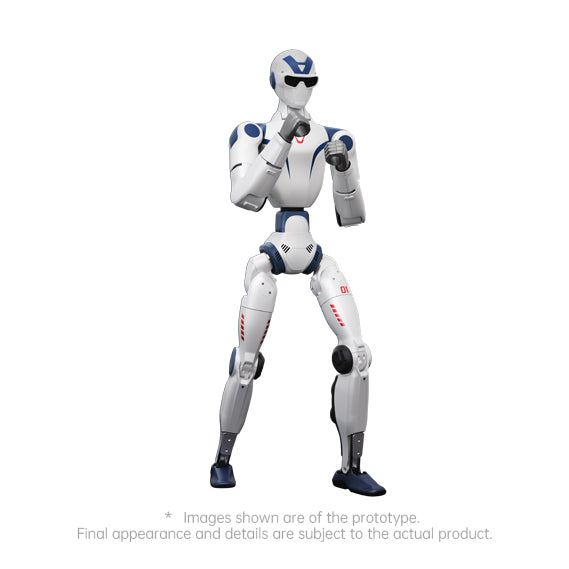 Unitree Robotics Unitree R1 | 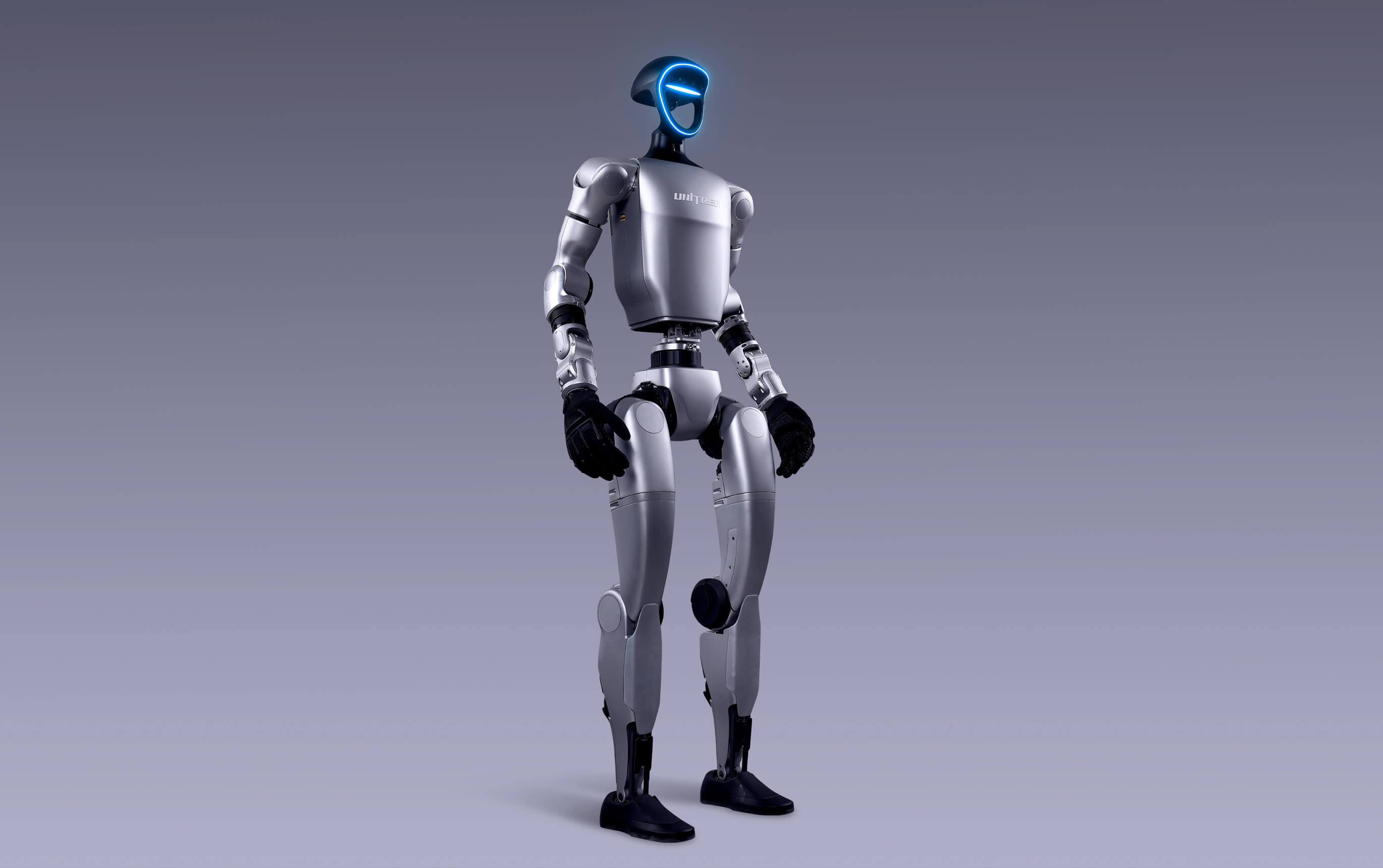 Unitree Robotics Unitree G1 | 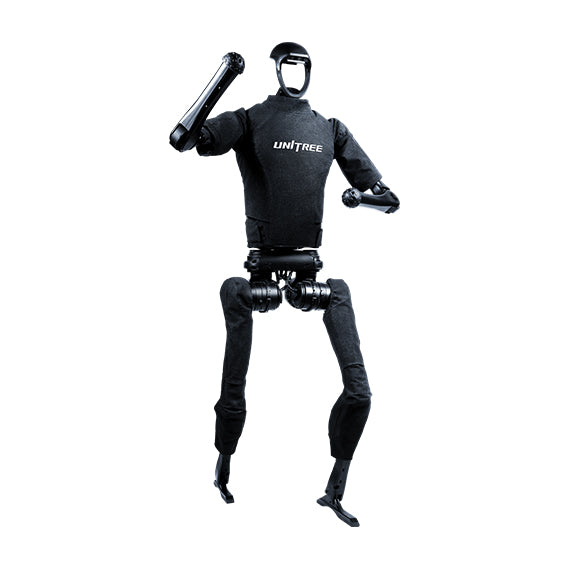 Unitree Robotics Unitree H1 | |
|---|---|---|---|---|
| Price (US) | No official USD | $4,900 – $5,900 | $13,500 – $73,900 | ~$90,000 |
| Availability | Enterprise inquiry | On the market | On the market | On the market |
| Height | ~1.5-1.75 m | 1.23 m | 1.32 m standing | ~1.80 m |
| Payload | Unknown | Unknown | Arm ~2 kg | Not rated for H1 |
| DoF | 26 | 20 | 23 | ~19 |
| Buyer | Enterprise | Individuals | Individuals | Enterprise |
| Made in | China | China | China | China |
What the Leju Kuavo costs — and how to get one
No official USD pricing; aggregator estimates only (unverified).
Yes in China; no US-facing sales contact found
Leasing / RaaS: unknown
Every spec, grouped & sourced
Tap a group to expand. Values are labelled official vs third-party; unknowns are omitted, not guessed.
Body & movement▾
Power & endurance▾
Hands & senses▾
Brains & control▾
Claims vs evidence
Huawei Pangu embodied model; imitation learning + external LLM; autonomous gait modes
Where it's working
Torchbearer at China 15th National Games (Nov 2025) via 5G-A teleop; school (Sichuan); university labs, automotive plants
Intended use cases: Research/embodied-AI platform, business services (guidance, retail/bank assist), industrial (automotive, 3C, logistics), education
Should you consider the Leju Kuavo?
The Leju Kuavo is a capable, sensor-rich humanoid from an established Chinese maker, and a legitimate choice for embodied-AI research, particularly within China. For Western buyers it's an import-only proposition with no verified USD price, so it's best for labs and operators willing to do the extra diligence on cost, OS and support.
Score reflects stated criteria (availability, data confidence, US relevance) — not hands-on testing or user ratings. We're an independent review & comparison site; we don't sell robots. *Financing figure is illustrative.
How we know this
Data confidence 42/100 · last verified 2026-06-24. Specs are labelled official vs third-party and dated; unknowns are omitted, not guessed.
Leju Kuavo — your questions, answered in full
How much does the Leju Kuavo cost?+
There's no official USD price. Aggregator listings estimate a Kuavo-5 around $50,000, but that's unverified. Chinese pricing is quoted in yuan and has been falling fast, so contact Leju directly for a real quote.
What operating system does the Kuavo run?+
Kuavo runs KaihongOS, which is based on Huawei's HarmonyOS, and it supports imitation learning, large-model AI integration and real-time control.
What is the Leju Kuavo used for?+
Mainly embodied-AI research and education, plus commercial service roles like guidance and reception in malls and exhibition halls, and some industrial use in automotive, 3C and logistics.
How many degrees of freedom does the Kuavo have?+
It depends on the model. KUAVO-MY has 26 degrees of freedom, while the full-size Kuavo 4 Pro has 41+ degrees of freedom, including 7-DoF arms.
Can I buy a Leju Kuavo in the US?+
Not through a clean official US channel. It's largely a China-domestic or import-only product, so Western buyers should expect an import or research procurement with the usual support and warranty questions.
How fast does the Kuavo walk?+
It walks omnidirectionally at around 4.6 km/h, with joints delivering up to 360 Nm of torque and a modular frame.
Is the Leju Kuavo good for research?+
Yes, it's positioned as a research and education platform, with a rich sensor suite (RGB, depth, LiDAR, IMU, force/torque) and support for imitation learning and large-model integration. Its multi-generation history adds maturity.
Peer-reviewed research on the Leju Kuavo
Published academic work — peer-reviewed papers and preprints — involving this robot or its maker's systems, indexed in scholarly databases (OpenAlex, arXiv). Not blog posts or press write-ups.
- Path and Motion Optimization for Efficient Multi-Location Inspection with Humanoid RobotsJiayang WuJiongye LiShibowen ZhangZhicheng HeZaijin WangXiaokun LengHangxin LiuJingwen ZhangJiayi WangSong-Chun ZhuYao Su · 2025 · arXiv preprint (validated on Leju Kuavo 4Pro)
- PR2: A Physics- and Photo-realistic Humanoid Testbed with Pilot Study in Competitionet al. · 2024 · arXiv preprint (built on Leju KUAVO v1.0 platform)
Academic references are factual citations from open scholarly indexes; listing is not endorsement.