LimX Dynamics Oli Robot

The LimX Oli is a full-size, general-purpose bipedal humanoid from China's LimX Dynamics, aimed at researchers, developers and universities. It stands about 165 cm, weighs around 55 kg, and comes in Lite, EDU and Super versions, with the Lite starting near RMB 158,000 (about $21,800). It's notable for reinforcement-learning-based walking and an open SDK, though it's sold mainly as a research platform.
US buyers: LimX platforms appear in the pre-July 2026 authorization records, so sales can continue.
LimX Dynamics shows up among makers with authorizations granted before the cutoff, which keeps existing Oli configurations importable and sellable in the US. The company had been planning a wider US push during 2026; that expansion is now constrained to already-authorized models unless it obtains a conditional approval. Pricing stays quote-based.
China-first sales are unaffected, as is any EU or UK distribution.
As of 2026-08-30 · medium confidence — verify before you commit funds
What is the LimX Dynamics Oli Robot?
Oli is the LimX Dynamics robot aimed at university labs, priced well under the usual full-size bracket.
LimX Dynamics has built a reputation for locomotion, its earlier work leaned hard into robots that walk, climb and recover on rough ground. The Oli is the company's full-size, general-purpose humanoid, and it lands at a price point that's aggressive for something this size.
Starting around $21,800 for the Lite tier, the Oli undercuts a lot of full-size humanoids by a wide margin. It's explicitly aimed at AI researchers, robotics developers, universities and early industrial pilots, backed by a fully open SDK that exposes low-level joint control and high-level task scheduling.
Here's the rundown: what the Oli is, how the Lite/EDU/Super versions differ, the pricing, how autonomous it really is, and whether it's the right platform for your work in 2026.
What is the LimX Oli and what does it do?
The Oli is a full-size bipedal humanoid platform. It stands about 165 cm and weighs roughly 55 kg, with 31 degrees of freedom (excluding end effectors) in the Lite and EDU trims and 33 active DoF in the Super. It can walk at up to about 1.5 m/s.
Perception and compute are modular. LimX pairs a self-developed 6-axis IMU with head- and chest-mounted Intel RealSense D435i depth cameras, and offers compute options like an RK3588 for motion control plus NVIDIA Orin NX for perception, with an optional AGX Orin backpack on higher trims. The EDU is quoted with a 3 kg single-arm payload and up to ~150 N·m joint torque.
The intended jobs are broad: object manipulation, payload carrying, tool operation, and use as a research and integration base for logistics, manufacturing and service-robotics work.
How much does the LimX Oli cost?
The Oli Lite starts at RMB 158,000, which is roughly $21,800 — genuinely low for a full-size humanoid. The EDU version sits above that (reported around twice the base), and pricing for the top Super trim hasn't been publicly disclosed in the sources we found.
That starting figure is what makes the Oli interesting, it puts a full-size, RL-driven research humanoid within reach of university labs and smaller developer teams that could never justify a six-figure machine. Just remember the entry price is the Lite, a serious EDU or Super build with the bigger compute backpack will cost meaningfully more, and Super pricing remains unconfirmed.
LimX Oli versions and availability
The Oli comes in three tiers. Lite is the entry research configuration, EDU is the education/development build (with the payload and torque figures noted above), and Super is the top trim, 33 active DoF, higher-end perception compute, optional end effectors and the fullest developer toolchain.
On availability: the Oli launched in mid-2025 (announced late July 2025) and is listed by LimX plus a number of international resellers such as RobotShop and others, so it's more reachable than some China-first humanoids. It's still fundamentally a research/enterprise platform sold through inquiry and resellers rather than a consumer product, and if you're importing, confirm support and lead times first.
How autonomous is the LimX Oli?
Locomotion is the Oli's strong suit. Its walking is driven by a reinforcement-learning-trained controller that handles uneven ground, slopes and stairs without pre-mapped paths, adapting in real time to surfaces it hasn't seen before. LimX has shown the robot autonomously getting up off the floor and performing dance routines and ball pickups.
So the autonomy story is real on the movement side. For higher-level manipulation and task work, though, this is a developer platform, the open SDK gives you status, sensor data, low-level joint control and task scheduling precisely because you're expected to build and train those behaviors yourself. Out of the box it's a very capable body; the brains for your specific application are largely your project.
LimX Oli vs Unitree G1 and other research humanoids
The Oli's natural comparison is against other affordable research humanoids like the Unitree G1. The Oli is a taller, full-size platform (about 165 cm vs the G1's smaller stature), which matters if you need human-scale reach and workspace, and LimX's locomotion pedigree is a genuine selling point.
Where rivals may pull ahead is ecosystem maturity and sheer install base, Unitree has shipped a lot of units and built out its community. The Oli counters with an openly documented SDK, modular compute, and that RL-driven walking. If your research is locomotion- or full-size-manipulation-heavy, the Oli is compelling; if you want the biggest existing user community, weigh that too.
Is the LimX Oli worth it and who is it for?
The Oli is a strong value pick for AI researchers, robotics developers, universities and early industrial pilots that want a full-size, RL-capable humanoid without a six-figure price tag. The open SDK and modular compute make it a real development platform, not a sealed appliance.
It's not a consumer robot and not a finished autonomous worker, you supply the application-level intelligence. For a lab or integrator that wants to prototype locomotion and manipulation on a human-scale body, the Oli's price-to-capability ratio is one of the better ones on the market right now. For someone wanting a plug-and-play helper, it's the wrong tool.
The LimX Oli on video
Hands-on reviews and teardowns, picked for what they actually show rather than how loud the thumbnail is.
Nine minutes with the person who specced Oli, going through the design trade-offs directly
Crate to standing, unedited — a rare official video that shows the boring parts
Independent read on where Oli sits against the Unitree line at a similar size
The launch film, and the best footage of Oli's terrain and stair work
Who the LimX Oli is — and isn't — for
+Where it shines
- Among the most affordable humanoids on the market right now.
- Open developer access (SDK/API) — good for builders and labs.
- Stated real-world payload (3 kg max single-arm).
- Specs are well-sourced — high data confidence.
!Watch-outs
- Some demos rely on teleoperation, not full autonomy.
- Sold to businesses only — not to private buyers.
How the LimX Oli stacks up
Side by side with similar robots — the one you're reading about is highlighted.
| This robot LimX Dynamics LimX Oli | 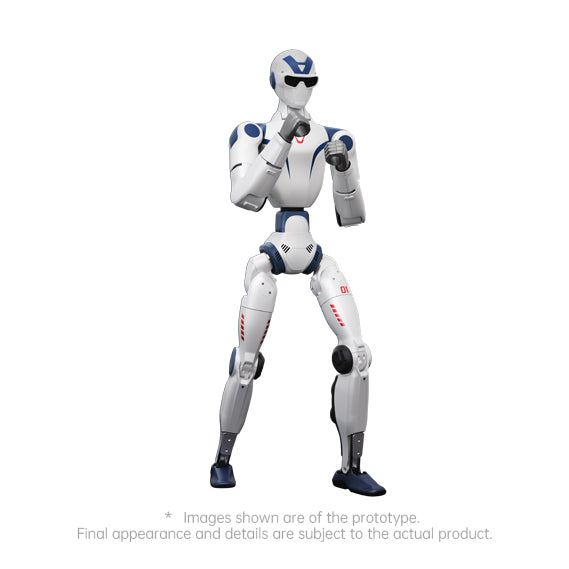 Unitree Robotics Unitree R1 |  Unitree Robotics Unitree G1 | 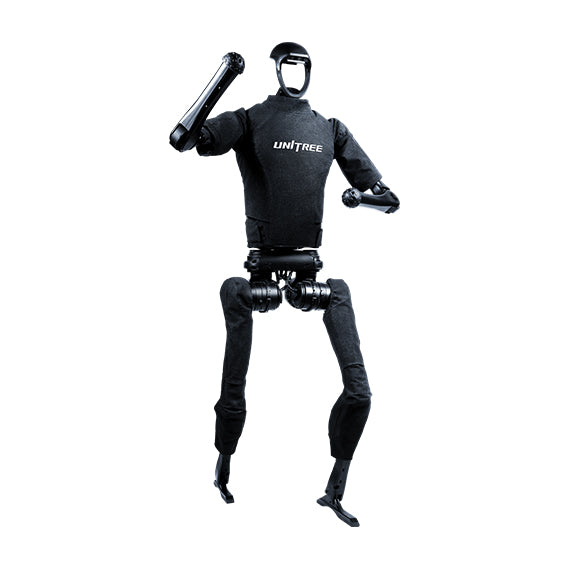 Unitree Robotics Unitree H1 | |
|---|---|---|---|---|
| Price (US) | $21,800 – $44,000 | $4,900 – $5,900 | $13,500 – $73,900 | ~$90,000 |
| Availability | Enterprise inquiry | On the market | On the market | On the market |
| Height | 165 cm | 1.23 m | 1.32 m standing | ~1.80 m |
| Payload | 3 kg max single-arm | Unknown | Arm ~2 kg | Not rated for H1 |
| DoF | 31 | 20 | 23 | ~19 |
| Buyer | Enterprise | Individuals | Individuals | Enterprise |
| Made in | China | China | China | China |
What the LimX Oli costs — and how to get one
Base (Lite) ~RMB 158k (~$21.8k); EDU ~2x base; Super not disclosed.
Direct purchase/pre-order in China + enterprise inquiry; listings ( US, )
Leasing / RaaS: unknown
Every spec, grouped & sourced
Tap a group to expand. Values are labelled official vs third-party; unknowns are omitted, not guessed.
Body & movement▾
Power & endurance▾
Hands & senses▾
Brains & control▾
Claims vs evidence
Bilingual voice + custom knowledge bases; onboard LLM deployment; positioned as research/dev platform, no full task autonomy claim
Where it's working
No named end-customers verified; Middle East backer + 3-year multi-thousand-unit R&D plan
Intended use cases: General-purpose research/integration platform; scientific research, performance, event guidance, inspection, industrial ops, property management
Should you consider the LimX Oli?
The LimX Oli is one of the better-value full-size research humanoids in 2026: a Lite starting near $21,800, strong RL-driven walking, and an open SDK make it a real development platform for labs and integrators. Treat it as a capable body you build intelligence on top of, not a turnkey autonomous worker, and confirm Super pricing and import support before committing.
Score reflects stated criteria (availability, data confidence, US relevance) — not hands-on testing or user ratings. We're an independent review & comparison site; we don't sell robots. *Financing figure is illustrative.
How we know this
Data confidence 78/100 · last verified 2026-06-24. Specs are labelled official vs third-party and dated; unknowns are omitted, not guessed.
LimX Oli — your questions, answered in full
Who makes the LimX Oli?+
LimX Dynamics, a Chinese robotics company known for reinforcement-learning-based legged locomotion. The Oli is its full-size general-purpose humanoid, launched in 2025.
How much does the LimX Oli cost?+
The Lite version starts at RMB 158,000, about $21,800. The EDU trim costs more (reported around twice the base), and Super-tier pricing hasn't been publicly disclosed.
What are the LimX Oli versions?+
Three: Lite (entry research build), EDU (education/development, with ~3 kg single-arm payload and up to ~150 N·m joint torque), and Super (top trim, 33 active DoF, higher-end compute and fuller toolchain).
How tall is the LimX Oli and how many DoF?+
About 165 cm tall and roughly 55 kg, with 31 degrees of freedom (excluding end effectors) on Lite/EDU and 33 active DoF on the Super version.
How fast can the LimX Oli walk?+
Up to about 1.5 m/s. Its RL-trained controller handles uneven ground, slopes and stairs without pre-mapped paths, adapting to new surfaces in real time.
Is the LimX Oli autonomous?+
Its locomotion is genuinely autonomous, including getting up off the floor. Higher-level manipulation and tasks are developer-driven: the open SDK lets you build and train those behaviors yourself.
Can you buy the LimX Oli internationally?+
Yes, it's listed by LimX and several international resellers like RobotShop. It's still a research/enterprise platform sold through inquiry and resellers rather than a consumer product.
What is the LimX Oli used for?+
Scientific research, algorithm development, education, and early pilots in logistics, manufacturing and service robotics, plus performance, guidance and inspection use cases.
Peer-reviewed research on the LimX Oli
Published academic work — peer-reviewed papers and preprints — involving this robot or its maker's systems, indexed in scholarly databases (OpenAlex, arXiv). Not blog posts or press write-ups.
- FastStair: Learning to Run Up Stairs with Humanoid RobotsYan Liu, Tao Yu, Haolin Song, Hongbo Zhu, Nianzong Hu, Yuzhi Hao, Xiuyong Yao, Xizhe Zang, Hua Chen, Jie Zhao · 2026 · arXiv preprint (deployed on the LimX Oli humanoid robot) · DOI 10.48550/arXiv.2601.10365
Academic references are factual citations from open scholarly indexes; listing is not endorsement.