NEURA Robotics 4NE-1 Robot
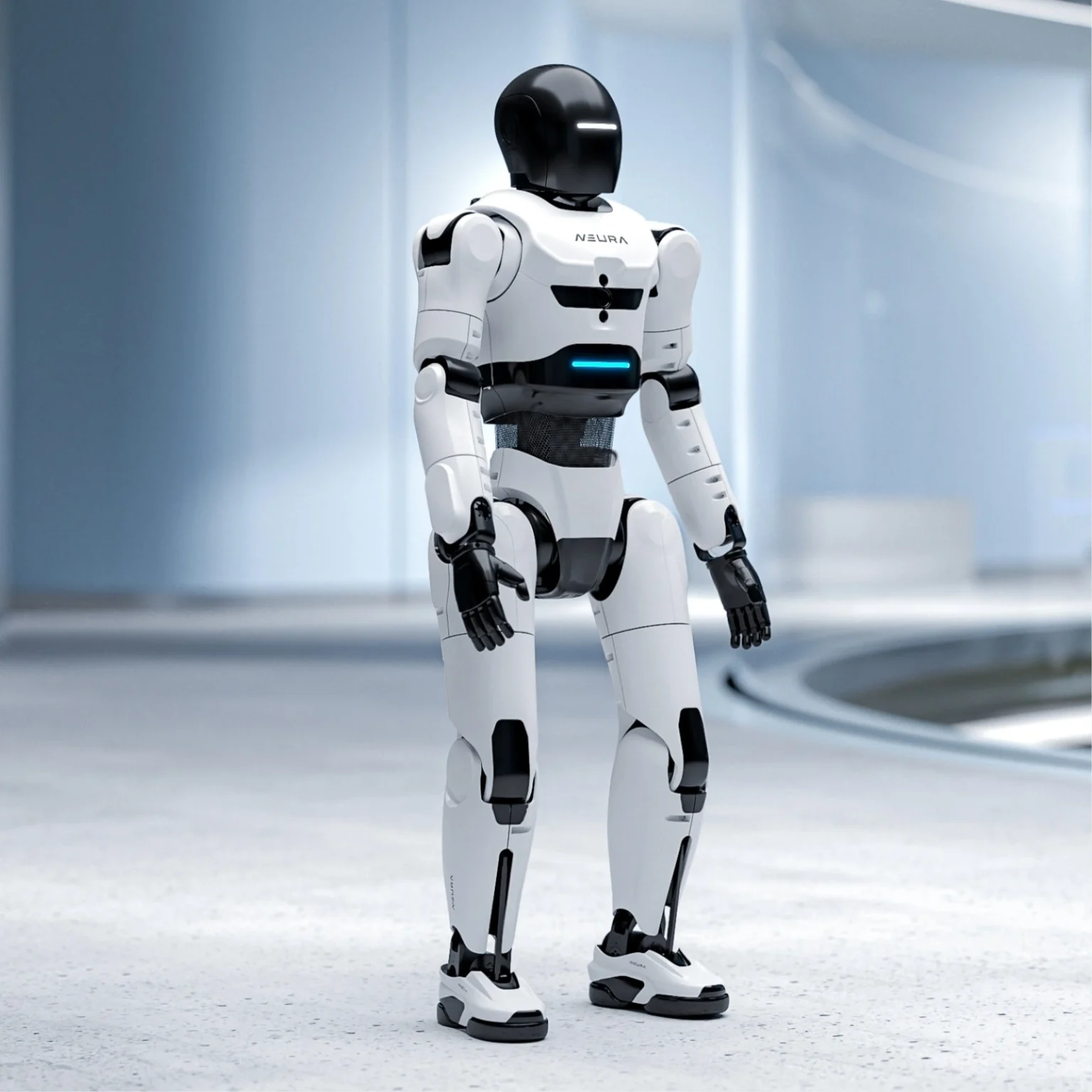
The NEURA Robotics 4NE-1 is Germany's flagship humanoid, a cognitive robot designed for industry, service and home tasks, notable for being co-designed with Studio F.A. Porsche. NEURA has opened reservations with unusually transparent pricing: around EUR 98,000 (roughly $105,000) for 1-19 units, dropping toward EUR 60,000 (about $65,000) at fleet scale. A EUR 100 refundable deposit holds a spot, with the Gen 3.5 expected to be available around the end of 2026.
US buyers: 4NE-1 is built in Germany and India, so the July 2026 rule applies on its wording — US delivery terms are unresolved.
NEURA takes reservations globally, but the FCC test does not care that Germany is an ally: a robot not made in the US with more than 65% domestic content is foreign-produced. NEURA has US-linked partners and has named the US a target market, yet no US sales channel or authorization has been confirmed. Anyone holding a reservation should ask NEURA directly how it plans to clear US equipment authorization before shipping.
German and wider European reservations and deliveries are unaffected.
As of 2026-08-30 · medium confidence — verify before you commit funds
What is the NEURA Robotics 4NE-1 Robot?
The 4NE-1 is the flagship NEURA robot — Europe's most visible answer to the American and Chinese humanoid programmes.
Europe doesn't have many humanoid contenders that can go toe-to-toe with the American and Chinese heavyweights, which is exactly why NEURA Robotics gets so much attention. The German company's 4NE-1 (say it "for-none-one") is positioned as the continent's most technically ambitious humanoid.
Two things make it stand out beyond geography. First, it's genuinely handsome, it was co-designed with Studio F.A. Porsche, the design house behind the 911, which is unusual in a field that mostly ignores looks. Second, NEURA publishes actual reservation prices, a refreshing break from the "contact us" wall most rivals hide behind.
This page covers the 4NE-1's specs, that transparent reservation pricing, the end-of-2026 timeline, and how the cognitive robotics and Neuraverse fleet-learning ideas fit together. Where things are still a reservation rather than a shipping product, we'll say so plainly.
What is the NEURA 4NE-1 and what can it do?
The 4NE-1 is a full-size "cognitive" humanoid from NEURA Robotics, based in Germany. The Gen 3.5 version stands roughly 180 cm tall, is quoted with a 100 kg lift capacity, and walks at about 5 km/h. It's built for a broad sweep of tasks: industrial work (an automotive-assembly concept has been shown), service roles, and eventually household help, all with human-robot collaboration in mind.
Safety around people is a design theme. NEURA highlights patented artificial skin meant to make close human collaboration safer, plus around 45 degrees of freedom for dexterous movement. Runtime is quoted at roughly 6 to 8 hours using hot-swappable batteries.
On the brains side, the Gen 3.5 runs on NVIDIA's platform (Isaac GR00T is cited, with a Thor-class processor onboard) and NEURA's own AURA AI. As always with humanoids, the industrial and household task lists reflect the design intent, real deployments will show how much lands.
How much does the NEURA 4NE-1 cost?
NEURA is one of the few humanoid makers to publish transparent pricing, which deserves credit. For the 4NE-1 Gen 3.5, reservation pricing is about EUR 98,000 (roughly $105,000) for orders of 1-19 units, falling to around EUR 60,000 (about $65,000) once you're buying at fleet scale.
There's also a smaller sibling. The 4NE-1 Mini, at about 132 cm tall, is listed at EUR 19,999, a much lower entry point for lighter or research use.
To reserve, NEURA takes a EUR 100 deposit that's fully refundable and credited toward the final price. A note on the currency conversions: the dollar figures are approximate and move with exchange rates, so treat them as ballpark, not fixed. Even so, published tiers like these are rare and genuinely useful for budgeting.
NEURA 4NE-1 release date and reservations
As of now the 4NE-1 Gen 3.5 is a reservation, not a shipping product. NEURA says it's expected to be available around the end of 2026, so anyone reserving today is booking a spot in a future delivery queue rather than buying stock on hand.
The reservation process itself is straightforward: a EUR 100 fully refundable deposit that gets credited toward your purchase. That low, refundable figure keeps the commitment light, which is fair given the product isn't out yet.
Our honest read: the transparent pricing and clear reservation flow are strong positives, but end-of-2026 is a target, and humanoid timelines across the whole industry have a habit of slipping. Reserve if you're keen, but plan for the possibility of delay.
How the 4NE-1 works: cognitive robotics and the Neuraverse
NEURA describes the 4NE-1 as a cognitive robot, meaning the emphasis is on perception, understanding and learning, not just pre-scripted motion. The Gen 3.5 pairs NVIDIA's robotics stack (Isaac GR00T, a Thor-class T5000 processor) with NEURA's in-house AURA AI to handle sensing and decision-making.
The more distinctive idea is Neuraverse, a fleet-learning operating system. The concept is that robots learn skills and share them across the fleet, so improvements on one unit can propagate to others, a bit like an app ecosystem for robot abilities.
On the hardware side, the patented artificial skin is central to the safety story, letting the robot sense contact and work more closely alongside people. It's a coherent, thoughtfully integrated approach, though as with every humanoid, how well the learning and collaboration hold up in the messy real world is the part still to be proven at scale.
NEURA 4NE-1 vs Tesla Optimus and Figure
Against Tesla Optimus and Figure, the 4NE-1's clearest edge today is transparency: NEURA actually publishes prices and a reservation path, while Optimus pricing remains largely aspirational and Figure focuses on undisclosed enterprise deals. That openness makes NEURA far easier to evaluate as a buyer.
It also has genuinely differentiated hardware ideas, the Porsche-designed body, patented safety skin, and the Neuraverse fleet-learning concept, plus the distinction of being Europe's leading independent contender rather than another US or Chinese entry.
Where the US rivals may lead is raw deployment momentum and demo cadence, both Tesla and Figure generate a steady stream of high-profile capability showcases. So the 4NE-1's case rests on being buyable-on-paper, safety-focused and European, versus competitors that are louder but often less transparent about price and availability.
Is the NEURA 4NE-1 worth reserving, and who is it for?
The 4NE-1 makes most sense for industrial and service businesses in Europe, and researchers, who want a humanoid with clear pricing, a safety-first design and a credible local manufacturer. The fleet-scale pricing down toward EUR 60,000 is aimed squarely at buyers thinking in quantity.
For individual or home buyers, it's premature. This is enterprise-oriented hardware that isn't shipping yet, and the household use case is more direction-of-travel than current reality. The 4NE-1 Mini at EUR 19,999 is a cheaper entry, but still not a consumer appliance.
Overall: the transparent, tiered pricing and the low refundable deposit make reserving low-risk if you're a serious prospective buyer. Just remember you're backing an end-of-2026 target, industry-wide, those dates tend to move, so keep some flexibility.
The NEURA Robotics 4NE-1 on video
Hands-on reviews and teardowns, picked for what they actually show rather than how loud the thumbnail is.
A named German robotics analyst weighing 4NE-1 against the American programmes, sceptically
Thirty-six minutes on the reverse-knee design — the most technical 4NE-1 analysis available
Independent 2026 review of the third-generation machine and its cognitive-AI claims
NEURA's original reveal, kept for the baseline it sets against the current generation
Who the NEURA Robotics 4NE-1 is — and isn't — for
+Where it shines
- Open developer access (SDK/API) — good for builders and labs.
- Stated real-world payload (Arms rated ~20 kg; up to 100 kg lifting in leg-supported/full-body configurations).
!Watch-outs
- Sold to businesses only — not to private buyers.
How the NEURA Robotics 4NE-1 stacks up
Side by side with similar robots — the one you're reading about is highlighted.
| This robot NEURA Robotics NEURA Robotics 4NE-1 | PNDbotics PNDbotics Adam | 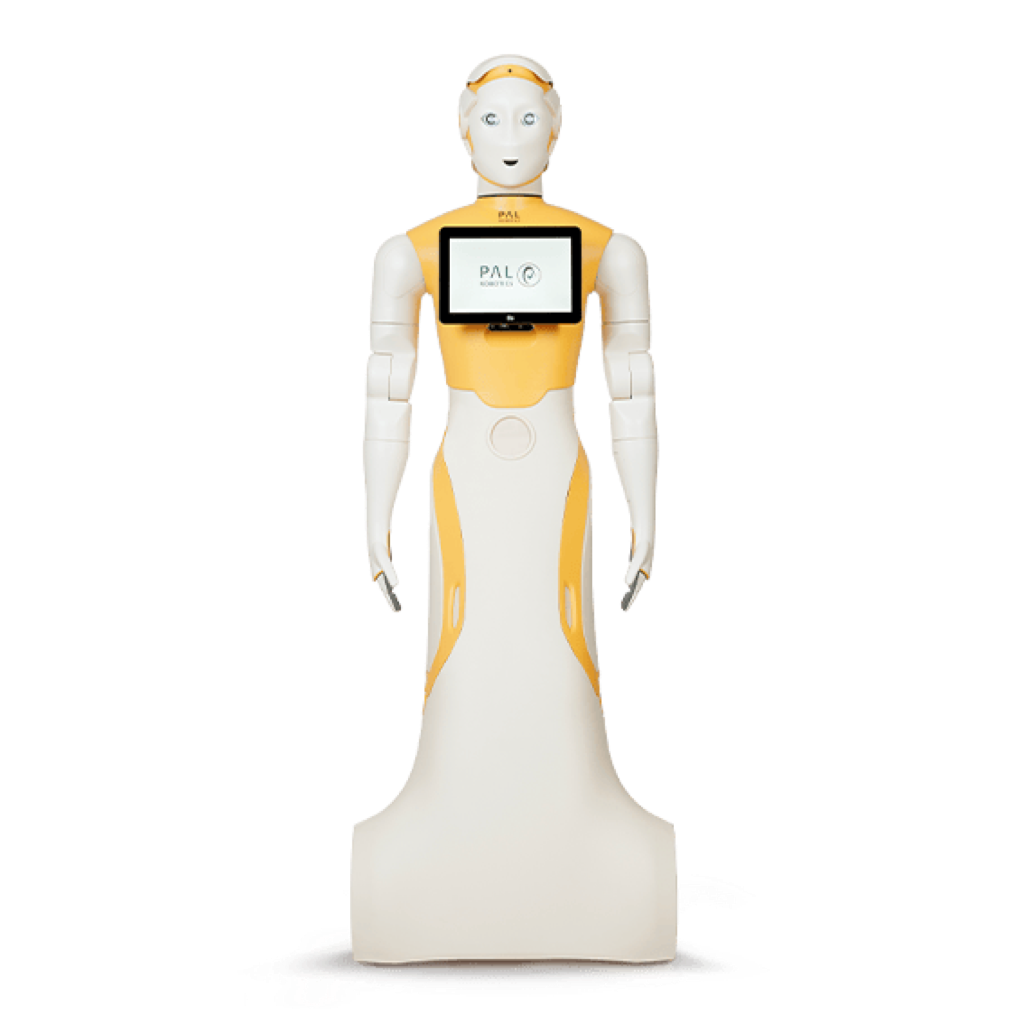 PAL Robotics PAL Robotics ARI | 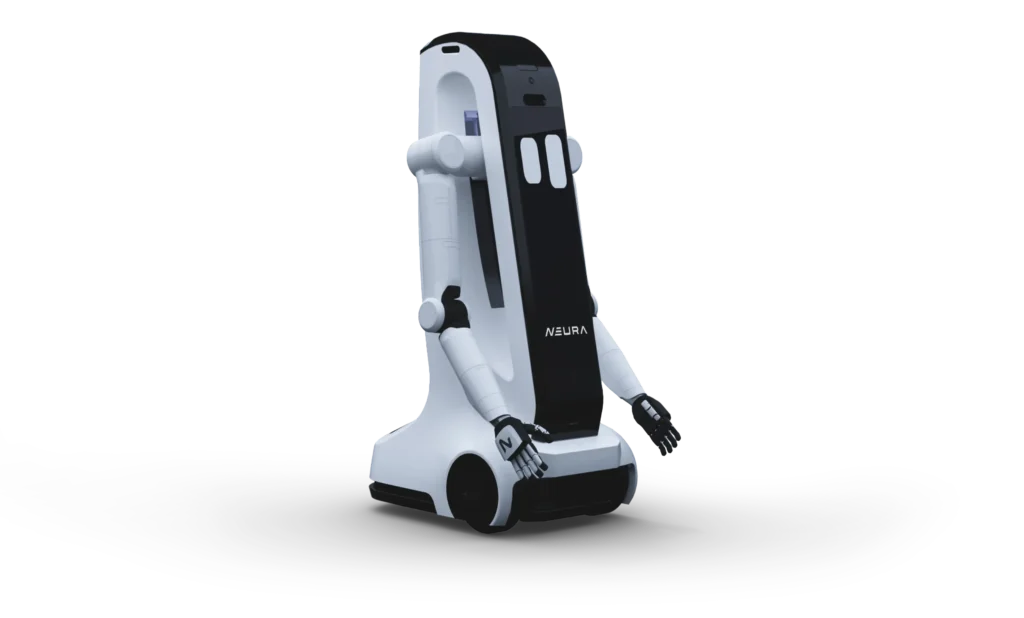 NEURA Robotics NEURA MiPA | |
|---|---|---|---|---|
| Price (US) | $65,000 – $105,000 | $99,999 – $145,000 | $35,000 – $90,000 | ~$10,800 |
| Availability | Reservations open | On the market | On the market | Reservations open |
| Height | 180 cm | 1.67 m | 1.65 m | Unknown |
| Payload | Arms rated ~20 kg; up to 100 kg lifting in leg-supported/full-body configurations | ~5 kg | ~0.5 kg per arm | 5 kg per arm; ~15 kg deadlift |
| DoF | Hands | Lite | ~12 | Unknown |
| Buyer | Enterprise | Enterprise | Individuals | Individuals |
| Made in | Other | Other | Other | Other |
What the NEURA Robotics 4NE-1 costs — and how to get one
Gen 3.5 reservation ~EUR 98k (~$105k) for 1-19 units, ~EUR 60k (~$65k) at fleet scale.
Reservations open (refundable ~EUR 100); enterprise inquiry; claimed >$1B pipeline (unverified)
Leasing / RaaS: unknown
Every spec, grouped & sourced
Tap a group to expand. Values are labelled official vs third-party; unknowns are omitted, not guessed.
Body & movement▾
Power & endurance▾
Hands & senses▾
Brains & control▾
Claims vs evidence
Claims perception/decision/learning via NVIDIA GR00T N1; demo-stage, no independent real-world autonomy verification
Where it's working
None confirmed; Bosch/Kawasaki/Qualcomm//NVIDIA/Schaeffler are strategic/investor, not deployments
Intended use cases: Industrial (automotive assembly concept), service, household; human-robot collaboration
What owners, reviewers and the press say about the NEURA Robotics 4NE-1
Ratings and reception gathered from where this machine is actually sold and discussed. We summarise the signal — we don't republish anyone's reviews.
Sold on reservation rather than through retailers, so no buyer star rating exists. Reservation prices have been published but no customer has rated a delivered unit.
+Reviewers consistently praise
- European-built alternative in a field dominated by the US and China
- cognitive-robotics and safety framing is substantive
- the Mini variant brings the price within reach
!And consistently criticise
- repeated announcements without visible deliveries
- capability demonstrations remain modest
- release dates have slipped more than once
What owners and developers actually say
European robotics watchers follow NEURA closely and the tone has hardened over time: the recurring complaint is a pattern of large trade-fair stands and successive generations announced without units reaching customers. Reservation prices have been published — a five-figure sum in euros for the full robot and a much smaller one for the Mini — which keeps the buyer discussion alive. Sightings at trade shows doing laundry sorting get a fairer hearing than the announcements do.
r/robotics, r/singularity · as of 2026-08-30
Consensus drawn from trade-fair reporting and robotics-community discussion; no independent hands-on review exists.
Should you consider the NEURA Robotics 4NE-1?
The NEURA 4NE-1 stands out for what most humanoids hide, actual pricing (about EUR 98,000, falling toward EUR 60,000 at scale) and a clear, refundable reservation path. Add Porsche-designed styling, safety-focused artificial skin and the Neuraverse fleet-learning idea, and it's Europe's most credible contender. Just remember it's a reservation targeting end of 2026, so build in room for delay.
Score reflects stated criteria (availability, data confidence, US relevance) — not hands-on testing or user ratings. We're an independent review & comparison site; we don't sell robots. *Financing figure is illustrative.
How we know this
Data confidence 60/100 · last verified 2026-06-23. Specs are labelled official vs third-party and dated; unknowns are omitted, not guessed.
NEURA Robotics 4NE-1 — your questions, answered in full
How much does the NEURA 4NE-1 cost?+
Reservation pricing for the Gen 3.5 is about EUR 98,000 (roughly $105,000) for 1-19 units, dropping toward EUR 60,000 (about $65,000) at fleet scale. The smaller 4NE-1 Mini is listed at EUR 19,999.
When will the NEURA 4NE-1 be available?+
NEURA says the 4NE-1 Gen 3.5 is expected to be available around the end of 2026. For now it's a reservation, so buyers are booking a future delivery slot rather than buying available stock.
How do I reserve a 4NE-1?+
Through NEURA with a EUR 100 deposit that's fully refundable and credited toward your final purchase price, keeping the commitment low while the robot is still pre-release.
Is the NEURA 4NE-1 really designed by Porsche?+
It was co-designed with Studio F.A. Porsche, the design studio associated with the Porsche 911, which is why it's often called one of the most aesthetically refined humanoids around.
What can the 4NE-1 do?+
It's aimed at industrial tasks (an automotive-assembly concept has been shown), service roles and eventually household help, with a lift capacity quoted around 100 kg and a focus on safe human collaboration.
What is the Neuraverse?+
It's NEURA's fleet-learning operating system, the idea that skills learned by one robot can be shared across the fleet, so the whole group improves together like an app ecosystem for robot abilities.
Who makes the 4NE-1?+
NEURA Robotics, a company based in Germany, widely seen as Europe's leading independent humanoid developer.
How long does the 4NE-1's battery last?+
NEURA quotes roughly 6 to 8 hours of runtime, with hot-swappable batteries so units can keep working while packs are changed.