Foundation Phantom MK-1 Robot
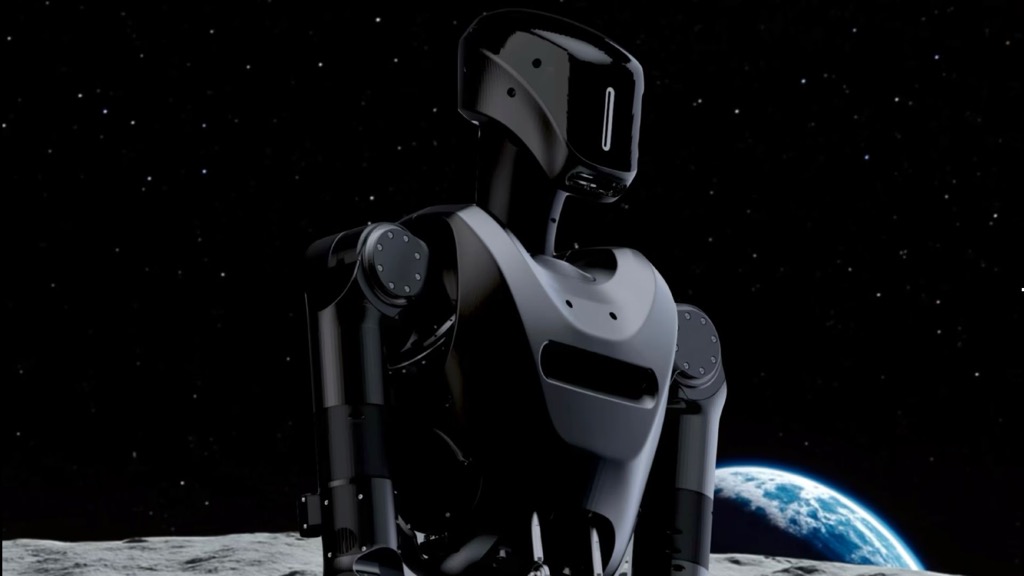
The Foundation Phantom MK-1 is a full-size humanoid built by San Francisco startup Foundation, aimed at both industrial labor and defense. As of 2026 it is still a prototype in factory pilots, not a mass-market product, though a pair of units were sent to Ukraine in February 2026 for battlefield testing. Press figures put it near $150,000 per unit or roughly $100,000/year on a lease, but those numbers are unconfirmed.
US buyers: unaffected by the July 2026 import restriction — Phantom is a US-built industrial and defense humanoid.
Foundation builds in San Francisco and positions Phantom for US industrial and defense work, which is precisely the demand the July rule is designed to redirect toward domestic makers. Access is by lease or service agreement rather than open sale. Defense-adjacent procurement also brings its own supply-chain rules, separate from the FCC listing.
Foundation has not announced sales outside the US.
As of 2026-08-30 · medium confidence — verify before you commit funds
What is the Foundation Phantom MK-1 Robot?
The Phantom MK-1 is the Foundation robot built for defence work rather than warehouses, and the claims around it deserve careful reading.
Foundation Robotics is one of the louder new names in the humanoid race, and the Phantom MK-1 is its first machine. The pitch is unusual: instead of picking a single lane, Foundation wants the same robot to work factory floors and, controversially, military environments. That dual-use ambition is basically the whole story here.
On paper the Phantom MK-1 is a credible platform. It stands about 175 cm, weighs around 80 kg, and carries roughly 20 kg of payload while moving near 1.7 m/s. Foundation leans on proprietary cycloidal actuators (torque up to 160 Nm, but back-drivable so it stays safe around people) and a camera-first vision stack driven by large language models, so you can in theory say "pick that up" and the robot works out the motion.
Where things get complicated is the gap between the demo reel and reality. Phantom is a prototype. It's been tested, it's landed government research money, and it went to an active war zone, all impressive milestones, and yet you can't just order one and expect a delivery date. Treat everything below as an early-stage picture, not a spec sheet for a finished consumer good.
What is the Foundation Phantom MK-1 and what does it do?
The Phantom MK-1 is a bipedal, human-scale robot with 19 upper-body degrees of freedom and five-fingered hands, designed for tasks that mix mobility and manipulation. Foundation unveiled it in 2025 and has demoed box and parts handling, tool use, and general logistics work, the sort of repetitive material-handling that automotive and warehouse operators keep saying they can't fully staff.
Unlike a lot of rivals it skips bulky LiDAR and relies on cameras plus an LLM-based control layer. That keeps the head clean and, Foundation argues, makes natural-language commands more practical. The five-fingered hands are the interesting bit for defense customers too, because a human-shaped hand can operate human tools and, per the company, human-compatible weapons.
That last point is the uncomfortable part of the story. Foundation has openly said Phantom can wield pistols, shotguns and rifles, with a human required to give the "green light" for any engagement. Whether you find that reassuring or alarming is up to you, but it's central to what this robot is being built for.
Foundation Phantom MK-1 price: how much does it cost?
There is no clean public price. The figure that circulates in press coverage is roughly $150,000 per unit, with a lease-style option around $100,000 per year. We'd flag both as unconfirmed, they come from reporting and early positioning rather than a published order page.
The honest read: this isn't a robot you buy the way you'd buy a car. Early humanoids like this go out through pilots, partnerships and (in Phantom's case) government contracts, where the real cost includes support, teleoperation infrastructure, and a lot of hand-holding. Sticker price is almost beside the point at this stage.
If pricing matters to your decision, wait for Foundation to publish an actual commercial rate. Anything you see quoted today should be taken as a ballpark, not a quote.
Availability and release: can you buy Phantom in 2026?
Not really, not as a normal customer. As of early 2026 Foundation classifies Phantom MK-1 as a prototype undergoing factory pilots. The company has stated aggressive production targets, something like 40 units in 2025, 10,000 in 2026, and 50,000 by the end of 2027, with a steady-state goal near 30,000 a year. Those are targets, and humanoid roadmaps have a long history of slipping.
Foundation has also picked up around $24 million in U.S. government research contracts spanning the Army, Navy and Air Force, covering feasibility work in inspection, logistics and weapons handling. So the near-term "customer" is as much the Pentagon and select industrial partners as it is any open market.
For most readers the practical answer is: you can follow it, you can maybe pilot it if you're a large enterprise or a defense-adjacent org, but you can't casually order one this year.
The Ukraine deployment and battlefield testing
In February 2026 Foundation sent a pair of Phantom MK-1 units to Ukraine for frontline reconnaissance and logistics support, which appears to be the first time a humanoid robot has been placed in an active combat theatre. It got a lot of headlines, and it's genuinely a milestone.
The results were more sober than the hype. Reporting out of Ukraine described limited battlefield suitability: the robot can carry only about 20 kg, it isn't waterproof, and battery life falls short for sustained deployment. Foundation's response has been to promise a Phantom 2 with roughly double the payload and "superhuman" abilities, but that is a future machine, not the one that shipped.
So the fair summary is that Phantom proved a humanoid can physically show up in that environment, while also proving how far these systems still are from being dependable in it.
Phantom MK-1 vs other humanoids: how it compares
Against warehouse-focused humanoids like Agility's Digit or Figure's machines, Phantom's differentiator is the defense angle and the camera-only, LLM-driven approach. Most industrial rivals are laser-focused on logistics and studiously avoid the military conversation; Foundation runs straight at it.
On raw specs Phantom is roughly in line with the pack, human-ish height, ~20 kg payload, walking speed a bit under 2 m/s, so it doesn't obviously out-muscle competitors that are further along commercially. Where it's arguably behind is deployment maturity: several rivals already have paying pilots in real warehouses, while Phantom is earlier in that curve.
If your interest is purely industrial, more established platforms may be the safer bet today. If your interest is dual-use or defense, there are very few comparable options, which is exactly the niche Foundation is trying to own.
Is the Phantom MK-1 worth it, and who is it for?
For the average business, and certainly the average person, this isn't a buy-now product, it's a company to watch. The tech is promising and the funding is real, but Phantom is a prototype whose own battlefield tests exposed clear limits.
The people it's genuinely for are large industrial operators willing to run early pilots, and government or defense organizations exploring dangerous-task automation. Those groups can absorb the immaturity and get value from the R&D relationship.
Everyone else should keep expectations grounded. Foundation is moving fast and swinging big, and both of those can be true while the robot still needs another generation or two before it's something you'd depend on.
The Foundation Phantom on video
Hands-on reviews and teardowns, picked for what they actually show rather than how loud the thumbnail is.
The only structured independent review of the Phantom MK-1's specs and intended defence role
Broadcast access to Foundation's Houston facility, which is otherwise closed
Foundation's own explanation of the perception stack, the part of Phantom least covered elsewhere
Who the Foundation Phantom is — and isn't — for
+Where it shines
- US-built, with local support and supply chain.
- Stated real-world payload (40 kg dual-arm).
!Watch-outs
- Sold to businesses only — not to private buyers.
- Public data is thin; verify key figures before relying on them.
How the Foundation Phantom stacks up
Side by side with similar robots — the one you're reading about is highlighted.
| This robot Foundation (Foundation Robotics) Foundation Phantom | 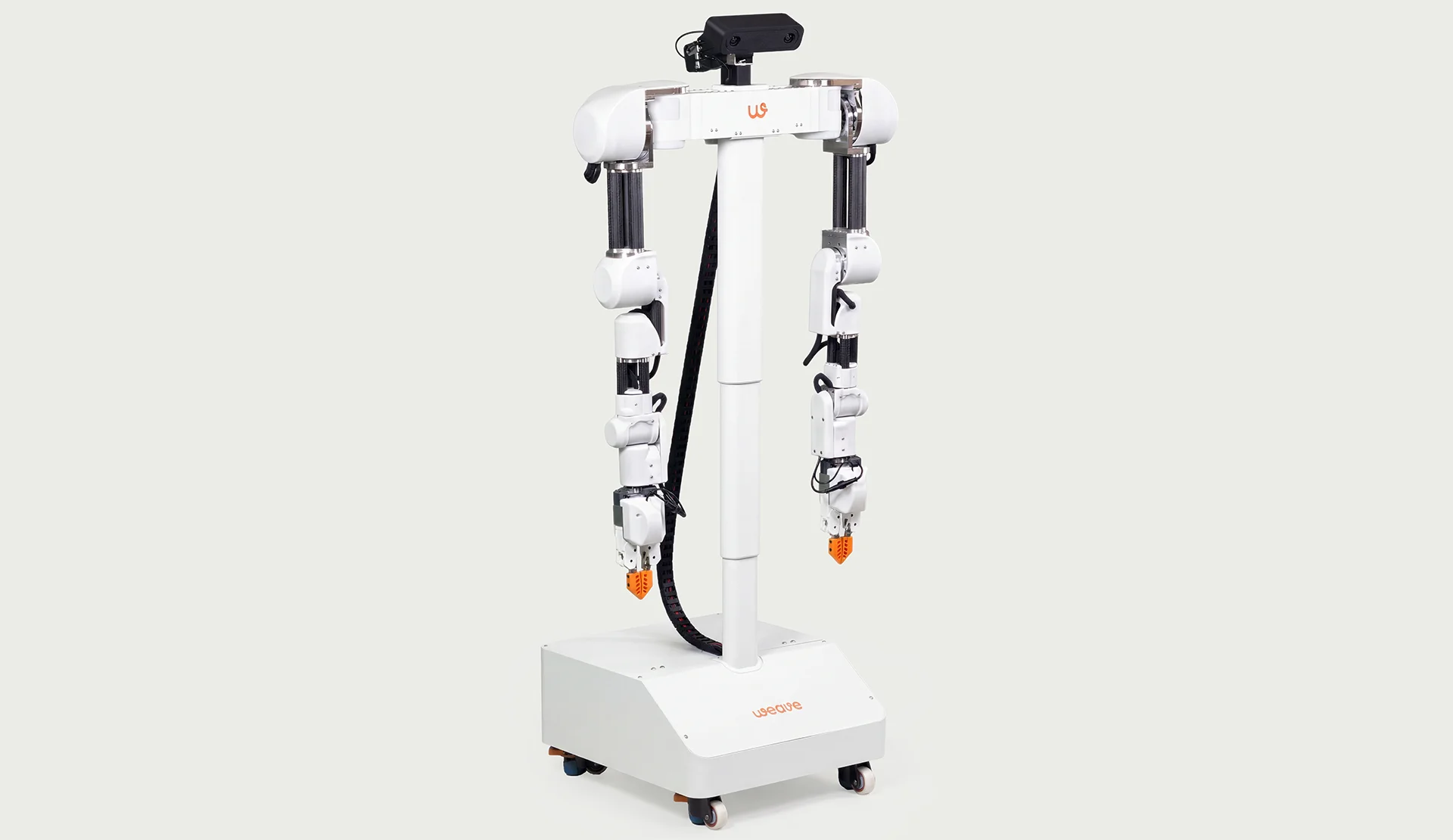 Weave Robotics Weave Isaac | 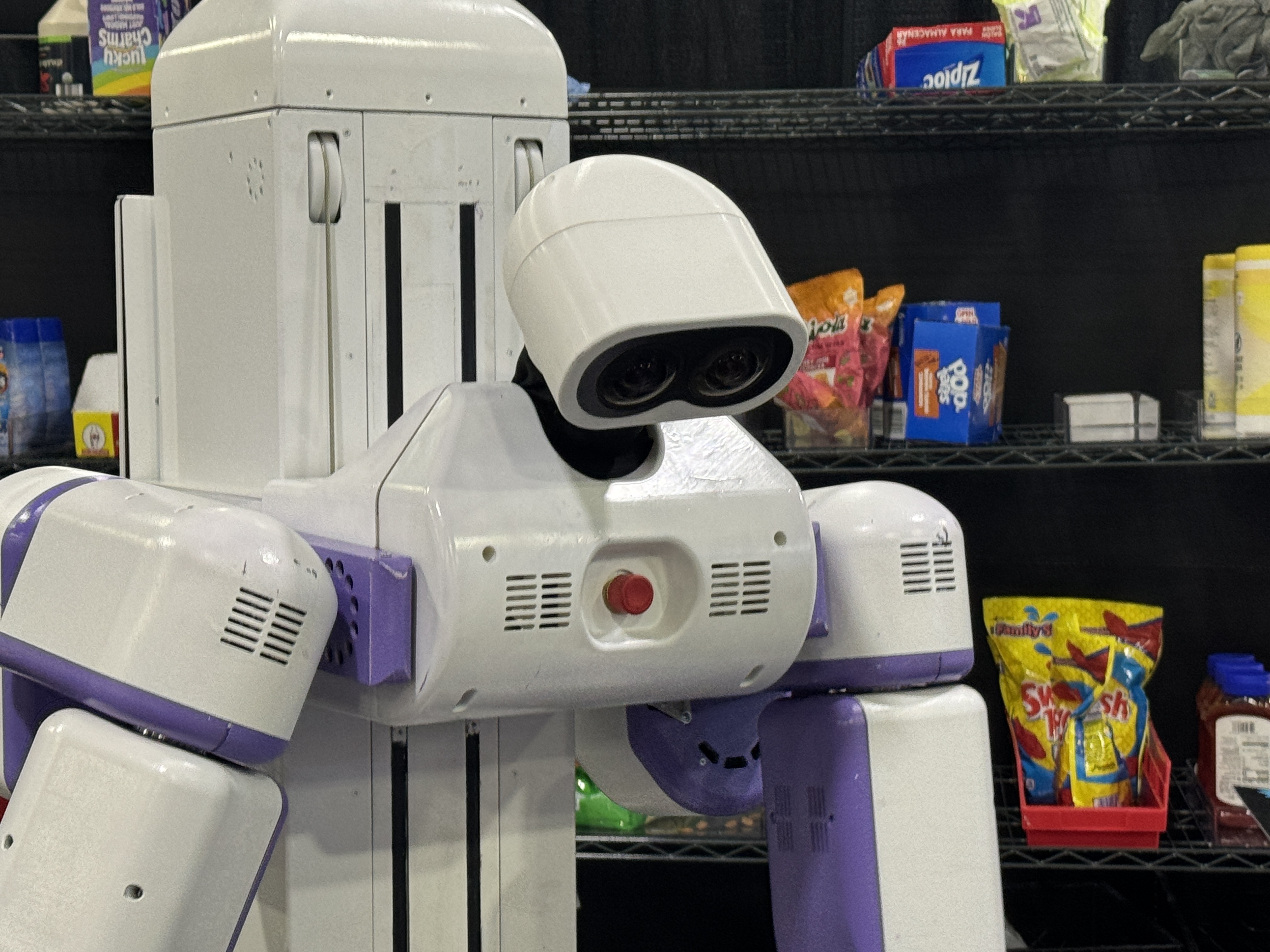 Reflex Robotics Reflex Robot | 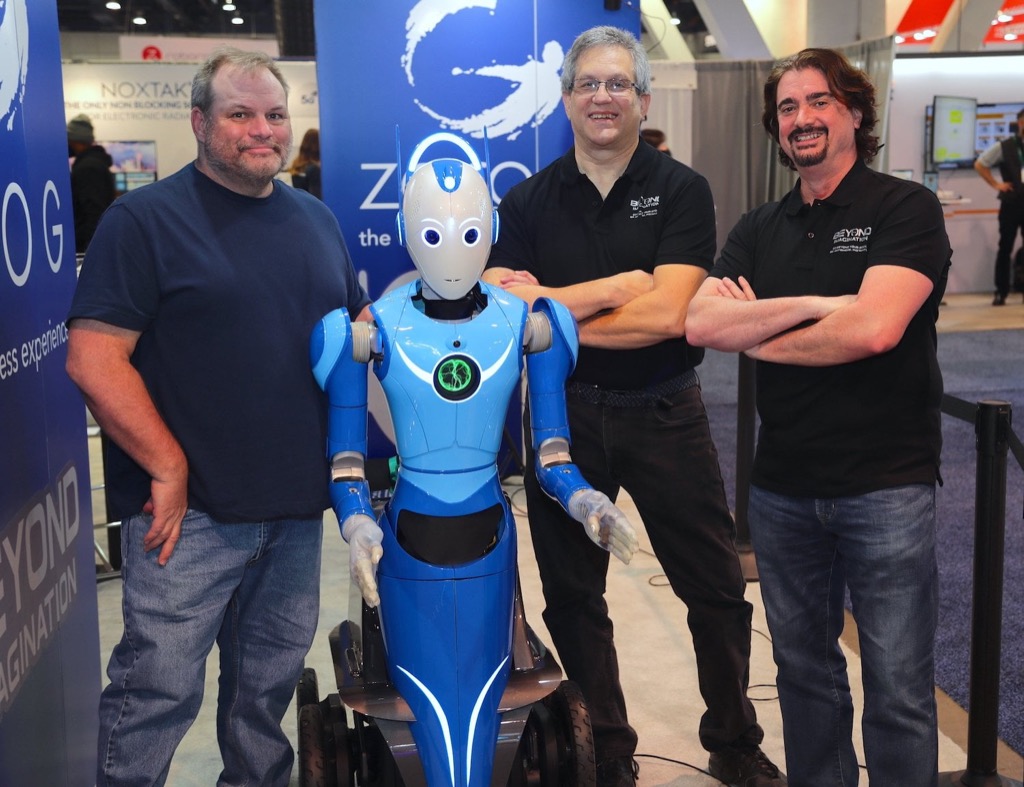 Beyond Imagination Beyond Imagination Beomni | |
|---|---|---|---|---|
| Price (US) | $100,000 – $150,000 | $7,999 – $9,999 | ~$10,000 | ~$150,000 |
| Availability | Lease / RaaS | On the market | Pilot programs | Pilot programs |
| Height | 1.75 m | Unknown | Adjustable via spine | up to 1.8 m |
| Payload | 40 kg dual-arm | Unknown | 25+ lb/arm | ~16 kg per arm |
| DoF | 29 | Isaac | Unknown | 12 |
| Buyer | Enterprise | Individuals | Enterprise | Enterprise |
| Made in | US | US | US | US |
What the Foundation Phantom costs — and how to get one
~$100k/yr lease (low); ~$150k/unit press figure (high) - unconfirmed.
No clear public ordering; pilots only; contact direct
Leasing / RaaS: Yes - states it will lease not sell (RaaS ~$100k/yr)
Every spec, grouped & sourced
Tap a group to expand. Values are labelled official vs third-party; unknowns are omitted, not guessed.
Body & movement▾
Power & endurance▾
Hands & senses▾
Brains & control▾
Claims vs evidence
Hybrid: imitation learning + physics models, RL locomotion, LLM commands; claims simple tasks in ~30 min (unverified)
Where it's working
Automotive/manufacturing pilots (company claims); 2 units reportedly to Ukraine Feb 2026 (unverified); ~$24M US military research contracts (reported, unverified)
Intended use cases: Industrial labor (automotive, logistics, box/parts handling) and defense (recon, bomb disposal, logistics, high-risk ground ops)
Should you consider the Foundation Phantom?
The Phantom MK-1 is one of the most ambitious humanoids around and, thanks to Ukraine and the Pentagon, one of the most talked about, but it is still an early prototype whose own field tests revealed real limits. Watch it closely; don't count on it as a finished product in 2026.
Score reflects stated criteria (availability, data confidence, US relevance) — not hands-on testing or user ratings. We're an independent review & comparison site; we don't sell robots. *Financing figure is illustrative.
How we know this
Data confidence 38/100 · last verified 2026-06-24. Specs are labelled official vs third-party and dated; unknowns are omitted, not guessed.
Foundation Phantom — your questions, answered in full
How much does the Foundation Phantom MK-1 cost?+
Press coverage points to roughly $150,000 per unit or about $100,000 per year on a lease, but Foundation hasn't published an official commercial price, so treat both figures as unconfirmed.
Can I buy a Phantom MK-1 in 2026?+
Not as an ordinary customer. It's a prototype in factory pilots as of 2026. Access is mostly through enterprise pilots and government contracts rather than an open order page.
Is the Phantom MK-1 a military robot?+
It's dual-use. Foundation markets it for industrial labor and for defense, and has said it can operate human-compatible weapons with a required human "green light." It also holds U.S. defense research contracts.
Were Phantom robots really used in Ukraine?+
Yes. Foundation sent two units to Ukraine in February 2026 for logistics and recon testing, reportedly the first humanoid deployment to an active combat theatre. Testing showed limited battlefield suitability.
What can the Phantom MK-1 actually do?+
Box and parts handling, tool use, and general logistics, plus reconnaissance-style tasks in the defense context. It has five-fingered hands and 19 upper-body degrees of freedom for human-tool manipulation.
How tall and strong is the Phantom MK-1?+
About 175 cm tall and around 80 kg, with a payload near 20 kg and a top speed close to 1.7 m/s. Its actuators reach up to 160 Nm of torque.
Who is behind Foundation Robotics?+
Foundation is a San Francisco based startup building the Phantom line. It has raised government research contracts totaling about $24 million across the Army, Navy and Air Force.
What is Phantom 2?+
Phantom 2 is the announced next-generation model, promised with roughly double the payload of Phantom 1 and improved capabilities. As of 2026 it's a future product, not something that has shipped.