Reflex Robotics Robot
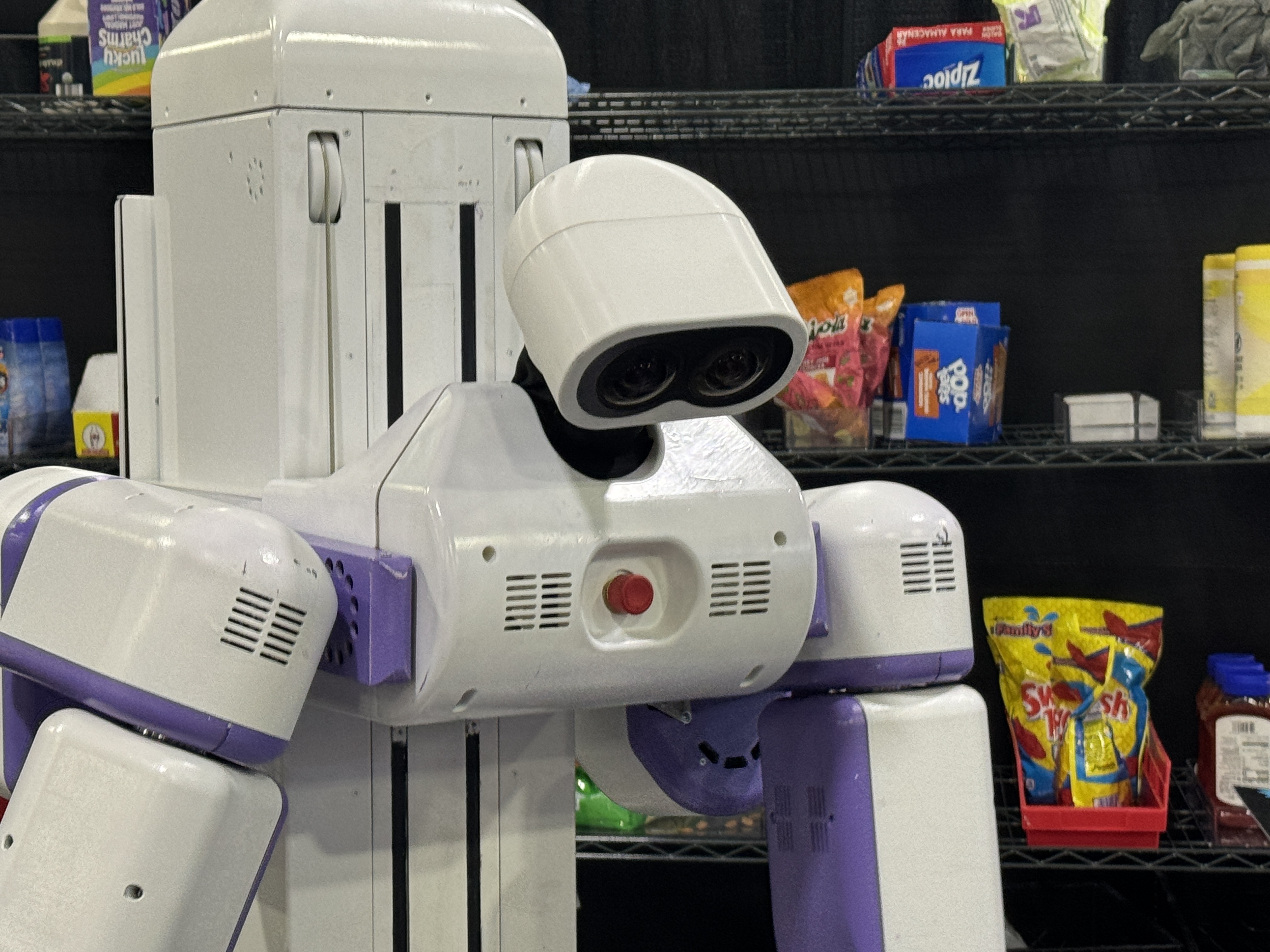
The Reflex robot is a wheeled humanoid built by Reflex Robotics for warehouse and factory material handling. Unlike bipedal humanoids it rolls on a compact base and, crucially, it works today mainly through human teleoperation, an operator can drive it from thousands of miles away, while its AI learns toward future autonomy. There's no public list price; Reflex targets a low-cost machine (it has cited figures well under other humanoids) sold via a Robots-as-a-Service model, and it's currently in pilot deployments like GXO's.
US buyers: unaffected by the July 2026 import restriction — Reflex Robotics builds in the US.
Reflex is a New York and San Francisco company, so its wheeled humanoid falls outside the covered foreign-produced category. Access runs through pilot programmes with warehouse operators rather than a purchase page, and pricing is not published. Nothing about the July rule changes the path a US operator takes to get one.
Reflex has announced no European or Asian deployments; the US rule is irrelevant to those markets in any case.
As of 2026-08-30 · medium confidence — verify before you commit funds
What is the Reflex Robotics Robot?
Reflex Robotics builds a wheeled robot rather than a walker, and it is driven by a remote operator far more often than the demos suggest.
Most humanoid-robot hype is about legs. Reflex Robotics made a different bet: skip the walking, put the robot on wheels, and get real work done now instead of chasing perfect autonomy first. The result is a wheeled humanoid aimed straight at warehouses.
The honest, defining detail is that Reflex leans on teleoperation. A human operator, potentially thousands of miles away, drives the robot through tasks, with a control experience the company compares to a video game. Meanwhile the AI watches those demonstrations and learns, the idea being autonomy grows over time.
That approach is why Reflex is already in real warehouses on pilot programs, notably with logistics giant GXO. This page explains what Reflex is, how the teleop-plus-RaaS model works, what it costs, and where the limits are, without the usual over-promising.
What is the Reflex robot?
Reflex is a compact wheeled humanoid designed for warehouse automation. Instead of legs it uses a wheeled base with a footprint smaller than 2 ft × 2 ft, which lets it do zero-degree turns and thread through tight aisles that would trouble a bulkier machine.
Up top it has dual high-strength arms that can lift 25+ lbs each, plus a clever telescoping "spine" that changes the robot's height on the fly, from floor level up to high shelves. That combination targets exactly the repetitive stuff warehouses need: picking, packing, tote transfers, box closing and palletizing.
Reflex also emphasizes uptime, quoting 16+ hours of battery life, enough for two full shifts, and a fast, roughly 60-minute deployment. The philosophy is stability and reliability over acrobatics.
How does the Reflex robot work? (the teleop truth)
This is the most important section, so no sugar-coating. Reflex is not a fully autonomous robot today. Its core control model is human-in-the-loop teleoperation: a remote operator drives the robot through tasks, and Reflex says this can be done from up to 3,000 miles away over Wi-Fi with low-latency, game-like controls.
The strategy is that this teleop lets the robot handle messy, unpredictable warehouse work immediately, while the AI system learns from those human demonstrations to build toward autonomy over time. It's a "deploy now, automate gradually" model.
So if you're evaluating Reflex, understand you're partly buying a very capable remotely-operated robot, not a machine that thinks entirely for itself yet. That's a legitimate approach, but it's a different value proposition from an autonomous humanoid.
How much does the Reflex robot cost?
There's no official public list price. Reflex has aimed at being dramatically cheaper than typical humanoids, coverage has referenced a target price point under $50,000, with some reporting a goal in the low-cost, roughly ~$10k class of wheeled humanoid, and it's been described as costing far less than rival humanoids. Exact current pricing is unconfirmed.
More relevant than a sticker is the business model. Reflex is deployed through Robots-as-a-Service (RaaS): typically a one-time hardware cost plus a monthly fee. In GXO's case the monthly fee has been described as roughly half of current labor costs for the equivalent work.
That structure matters because it reframes the buy. You're not just purchasing a robot, you're subscribing to worked hours, which for a warehouse operator can pencil out very differently than a big up-front capital purchase.
The GXO pilot and real-world status
Reflex's flagship proof point is GXO, a major global logistics provider, which has begun operational testing of Reflex humanoids in a real warehouse. Reporting frames it as GXO's second Robots-as-a-Service agreement.
The pilot integrates the wheeled humanoids into daily workflows, starting with teleoperated control by staff to handle tasks like tote transfers and product picking, plus box closing and palletizing. That's a genuine deployment, but the word "pilot" is doing real work here, this is early-stage, operational-testing territory, not fleet-wide rollout.
So the accurate status in 2026 is: promising, in real warehouses, available through pilot programs, and still proving itself, rather than a mature, widely shipping product.
Reflex vs bipedal humanoids like Figure or Digit
Against bipedal warehouse humanoids, Reflex trades legs for wheels on purpose. Wheels give it stability, a tiny turning footprint and long uptime, and sidestep the hard, expensive problem of dynamic walking. For flat warehouse floors, that's a very practical call.
The flip side: stairs, curbs and uneven terrain aren't Reflex's world the way they might be for a legged robot, and its telescoping spine, not legs, is how it reaches different heights.
The other big contrast is autonomy. Some rivals push hard on autonomous operation; Reflex openly builds on teleoperation first and automates over time. Neither is automatically "better", it depends whether you value working reliability now (Reflex) or maximum hands-off autonomy later.
Is the Reflex robot worth it, and who's it for?
Reflex is for warehouse and logistics operators who want humanoid-style material handling working now, and who are comfortable with a teleoperation-led, Robots-as-a-Service model. If that's you, the compact footprint, long battery life and labor-cost-competitive monthly fee are attractive.
It's not for consumers, and it's not a set-it-and-forget-it autonomous system yet. Anyone expecting a robot that fully thinks for itself, or one that walks on legs over rough ground, should look elsewhere or wait.
Given the pilot-stage status, the sensible move is to engage Reflex about a pilot for your specific operation and judge it on your own tasks and numbers. The concept is strong and real deployments exist, just go in knowing it's early and teleop-driven.
The Reflex Robot on video
Hands-on reviews and teardowns, picked for what they actually show rather than how loud the thumbnail is.
A press visit inside the workshop, the most recent look at where Reflex has actually got to
Shows the wheeled-torso design doing the picking job it was built for, at working speed
Reflex running alongside a Boston Dynamics Stretch, which is a fair test of how it slots into an existing fleet
Who the Reflex Robot is — and isn't — for
+Where it shines
- Among the most affordable humanoids on the market right now.
- US-built, with local support and supply chain.
- Stated real-world payload (25+ lb/arm).
!Watch-outs
- Some demos rely on teleoperation, not full autonomy.
- Sold to businesses only — not to private buyers.
- Public data is thin; verify key figures before relying on them.
How the Reflex Robot stacks up
Side by side with similar robots — the one you're reading about is highlighted.
| This robot Reflex Robotics Reflex Robot | 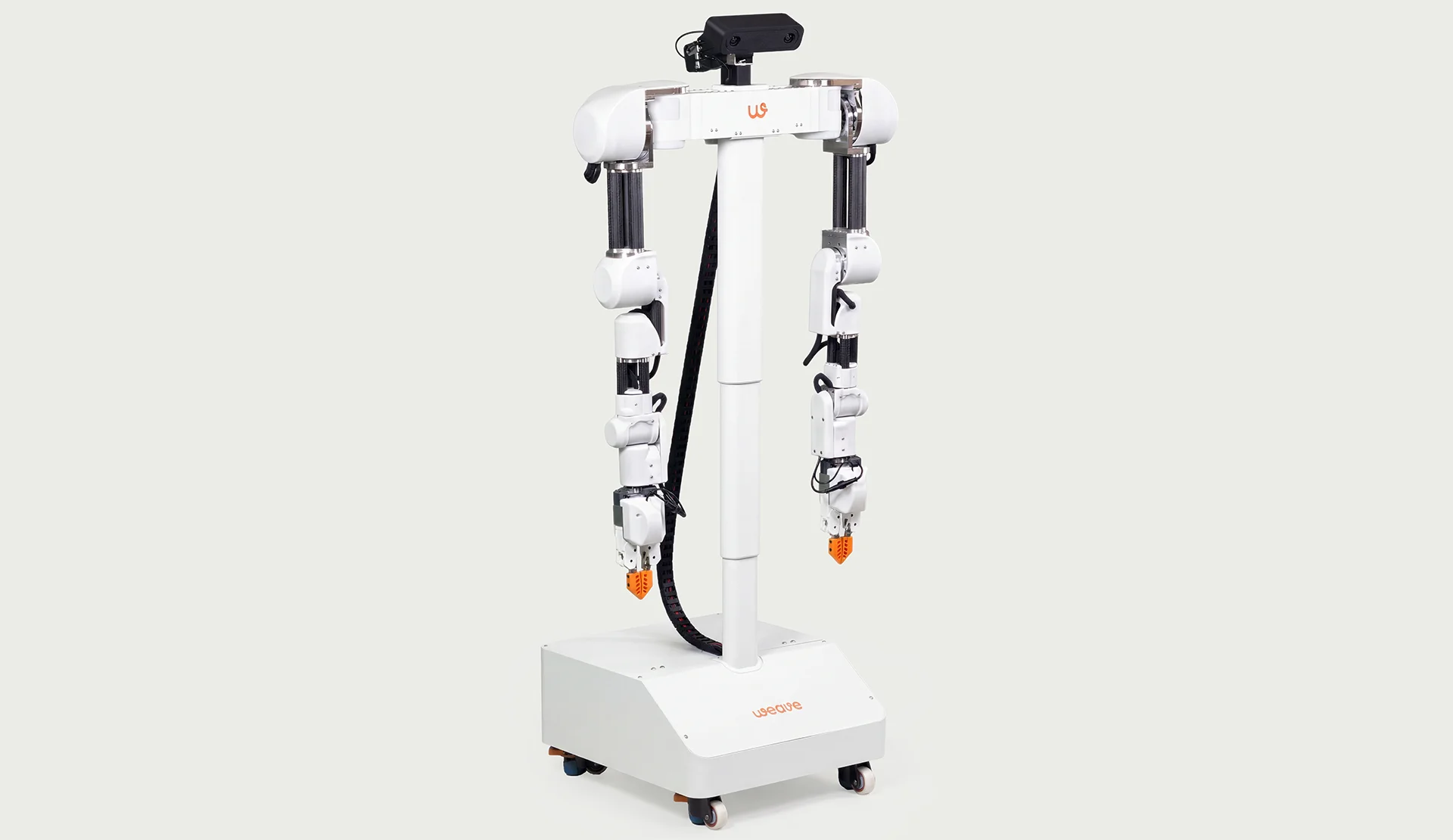 Weave Robotics Weave Isaac | 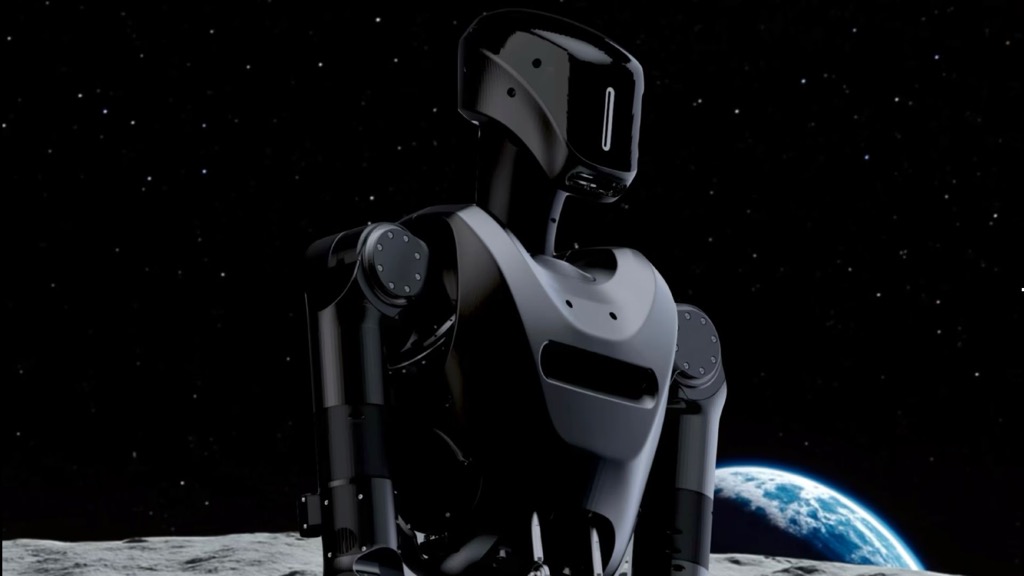 Foundation (Foundation Robotics) Foundation Phantom | 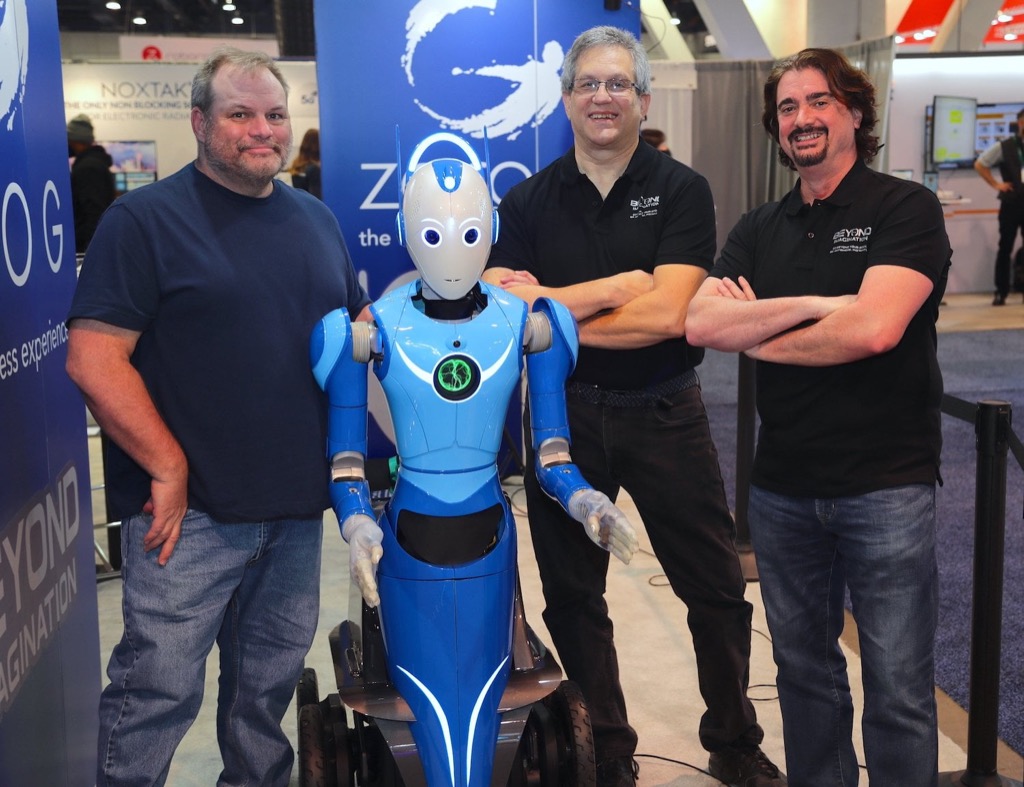 Beyond Imagination Beyond Imagination Beomni | |
|---|---|---|---|---|
| Price (US) | ~$10,000 | $7,999 – $9,999 | $100,000 – $150,000 | ~$150,000 |
| Availability | Pilot programs | On the market | Lease / RaaS | Pilot programs |
| Height | Adjustable via spine | Unknown | 1.75 m | up to 1.8 m |
| Payload | 25+ lb/arm | Unknown | 40 kg dual-arm | ~16 kg per arm |
| DoF | Unknown | Isaac | 29 | 12 |
| Buyer | Enterprise | Individuals | Enterprise | Enterprise |
| Made in | US | US | US | US |
What the Reflex Robot costs — and how to get one
No official list price; Reflex targets ~$10k wheeled humanoid, deployed via teleop/RaaS.
Open for pilots/RaaS; backed by Khosla Ventures
Leasing / RaaS: Yes - RaaS; GXO Logistics RaaS pilot
Every spec, grouped & sourced
Tap a group to expand. Values are labelled official vs third-party; unknowns are omitted, not guessed.
Body & movement▾
Power & endurance▾
Hands & senses▾
Brains & control▾
Claims vs evidence
Currently teleoperated (human-in-loop); claims ramp to autonomy via learning from demonstrations - not yet autonomous
Where it's working
GXO Logistics warehouse pilot (GXO's second RaaS humanoid partnership)
Intended use cases: Warehouse/factory material handling: carton disposal, palletizing, tote transfers/picking, box closing; roadmap shelf picking/replenishment/QA
Should you consider the Reflex Robot?
Reflex is one of the more pragmatic humanoids around, wheels over legs, teleoperation now with autonomy later, and real warehouse pilots like GXO to show for it. The honest caveat is that it's still early and human-driven, not fully autonomous, so it's a compelling deploy-today option for warehouses, not a finished, hands-off product.
Score reflects stated criteria (availability, data confidence, US relevance) — not hands-on testing or user ratings. We're an independent review & comparison site; we don't sell robots. *Financing figure is illustrative.
How we know this
Data confidence 55/100 · last verified 2026-06-23. Specs are labelled official vs third-party and dated; unknowns are omitted, not guessed.
Reflex Robot — your questions, answered in full
How much does the Reflex robot cost?+
There's no official public list price. Reflex targets a low cost, coverage has cited a sub-$50,000 point and even a roughly ~$10k class of wheeled humanoid, and it's sold via a Robots-as-a-Service model (hardware cost plus a monthly fee). Exact current pricing is unconfirmed.
Is the Reflex robot autonomous?+
Not fully, not yet. Reflex works mainly through human teleoperation today, with an operator driving it remotely, while its AI learns from those demonstrations to build toward autonomy over time.
Can the Reflex robot be controlled remotely?+
Yes. Reflex says operators can control it from up to 3,000 miles away over Wi-Fi, with low-latency controls the company likens to a video game interface.
What tasks can the Reflex robot do?+
It handles warehouse material handling: picking, packing, tote transfers, box closing and palletizing. It has dual arms lifting 25+ lbs each and a telescoping spine to reach from floor level to high shelves.
Why does Reflex use wheels instead of legs?+
Wheels give stability, a footprint under 2 ft × 2 ft for tight aisles and zero-degree turns, plus long uptime, and they avoid the cost and difficulty of dynamic walking. It's optimized for flat warehouse floors.
What is the GXO Reflex pilot?+
Logistics giant GXO has begun operational testing of Reflex humanoids in a real warehouse, its second Robots-as-a-Service agreement, starting with teleoperated tasks like tote transfers and picking. It's an early-stage pilot, not a full rollout.
How long does the Reflex robot's battery last?+
Reflex quotes 16+ hours of battery life, engineered to cover two full shifts, along with a roughly 60-minute deployment time.
Can I buy a Reflex robot now?+
It's available through pilot programs rather than off-the-shelf retail, and it's delivered via a Robots-as-a-Service model. The best route is to contact Reflex about a pilot for your own operation.