RobotEra L7 Robot
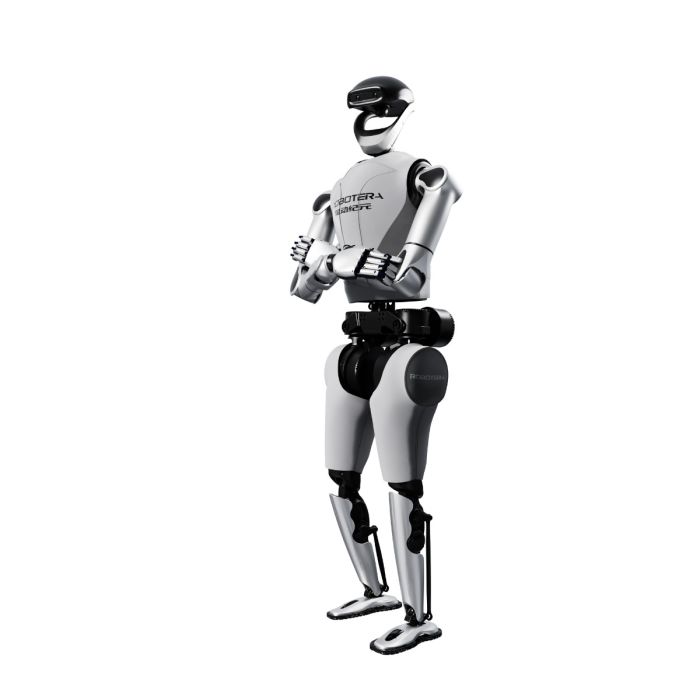
The RobotEra L7 is a fast, athletic full-size humanoid from Chinese company RobotEra, built for industrial assembly, sorting, logistics and demo work. It's genuinely quick, quoted at a 4 m/s top speed, and drew crowds at CES 2026 with backflips and sword dances. There's no official MSRP; US resellers list it in the roughly $99,999 to $120,000 range, and it's currently offered mainly through pilot programs rather than open consumer sales.
US buyers: no new imports — this model has no US authorization on record, and the July 2026 rule closes that route.
RobotEra's L7 has gone into pilots and a few international placements, but nothing that amounts to US distribution or support. With no US authorization on record, new imports and sales are barred. Support would be the bigger practical problem even if the paperwork existed.
Chinese and other international pilots are unaffected.
As of 2026-08-30 · medium confidence — verify before you commit funds
What is the RobotEra L7 Robot?
The L7 is the fastest RobotEra robot, and one of the quickest humanoids anyone has put on video.
Speed is the L7's calling card. Where most humanoids shuffle along carefully, RobotEra's flagship is quoted at a 4 m/s top speed, that's around 14 km/h, and it pairs that with genuinely acrobatic party tricks: 360-degree spin jumps, break-dance moves, even sword dances that lit up CES 2026.
Behind the showmanship is a serious industrial pitch. RobotEra positions the L7 for assembly, sorting, pharma handling, logistics and retail, backed by claims of shipping over 200 humanoids in 2025 and a March 2026 funding round that pushed its valuation past RMB 10 billion. This is not a hobby project.
That said, buying one is not like ordering a laptop. It's a Chinese-made robot offered largely through pilot programs, with pricing that varies by reseller. Below we sort the impressive-but-real specs from the demo hype, and lay out what purchasing actually looks like.
What is the RobotEra L7 and what can it do?
The L7 is a full-size bipedal humanoid from RobotEra, revealed in July 2025 as the company's second big biped after Star1. It stands about 171 cm tall and weighs around 65 kg, so, human-scale, and athletic with it.
The hardware is built for both speed and work. A 55-DoF frame drives 12-DoF hands that RobotEra says can manage both clothes-folding finesse and payloads up to 20 kg. Proprietary direct-drive actuators enable the explosive moves, spin jumps and break-dance spins, without giving up more mundane industrial tasks like drilling and sorting. For perception it carries binocular cameras, 3D lidar and a microphone array for 360-degree spatial awareness.
The target jobs are industrial assembly, sorting, pharma handling, logistics and retail, plus R&D and eye-catching demo/entertainment work. Its brain is ERA-42, RobotEra's end-to-end embodied AI model that fuses vision, proprioception and language to sequence tasks.
How much does the RobotEra L7 cost?
There's no official MSRP from RobotEra, which is the honest starting point. What you can find are US reseller listings, and those put the L7 in roughly the $99,999 to $120,000 range depending on configuration and source.
Because there's no published list price direct from the maker, expect the real number to be quote-driven and to shift with spec, support and import arrangements. Some listings anchor around $120,000; others start closer to the $99,999 mark.
So budget six figures, and treat any single quoted figure as indicative rather than fixed. If exact cost is critical to your decision, you'll need a direct conversation with RobotEra or an authorized partner, the public numbers are reseller estimates, not a firm catalog price.
Availability: how you actually get an L7
The L7 isn't a straightforward add-to-cart purchase. It's offered primarily through pilot programs and direct/partner sales, with initial pilots focused on logistics, retail and advanced R&D labs. A wider production run is planned after field validation of things like safety, battery life and ingress protection.
In practice, buyers typically go through a pilot engagement: site assessment, integration, and after-sales support arranged with RobotEra or an authorized reseller. RobotEra claims it shipped over 200 humanoids in 2025 and says it has orders from nine of the world's ten largest tech firms, so there's real deployment happening, but it's structured, enterprise-style deployment.
Worth stating plainly: RobotEra is a Chinese manufacturer, so for buyers elsewhere, import, support and integration logistics are part of the deal. This is an enterprise/pilot product, not a consumer robot you casually order.
How the L7 works: speed, actuators and ERA-42
Two things make the L7 tick, its actuators and its AI. The proprietary direct-drive actuators are what let it hit that quoted 4 m/s top speed and pull off spin jumps and break-dance spins, while still having the torque and control for drilling and sorting. Direct-drive designs trade some gearing for responsiveness, which suits explosive, athletic motion.
On perception, the binocular cameras, 3D lidar and microphone array give it 360-degree spatial awareness so it can navigate and manipulate in cluttered spaces.
The decision-making layer is ERA-42, RobotEra's end-to-end embodied large model that merges visual, proprioceptive and language inputs to autonomously sequence tasks. It's a modern, integrated stack. As always, the caveat is that headline speed and viral acrobatics are demonstrations, sustained, reliable autonomous work in a real facility is the harder bar, and that's what the pilots are for.
RobotEra L7 vs Unitree H1 and other humanoids
The natural rival is Unitree's H1, another fast, athletic, buyable Chinese humanoid famous for its own dynamic moves. The L7 counters with a higher DoF count (a 55-DoF body, 12-DoF hands), a stated 20 kg payload, and a full sensor suite plus the ERA-42 model, positioning it as more dexterous and work-capable, not just quick.
Against Western industrial humanoids like Agility's Digit or Figure, the L7's edge is athletic performance and, generally, easier access via pilots, whereas those rivals lean on deeper, better-documented logistics deployments with named customers.
The honest summary: the L7 is one of the most physically capable and fastest humanoids you can realistically engage with, and RobotEra's shipment claims are encouraging. But like its peers, its industrial usefulness at scale is still being proven through pilots rather than settled, and the flashiest demos are exactly that, demos.
Is the RobotEra L7 worth it, and who is it for?
The L7 fits enterprises and research labs in logistics, manufacturing, pharma or retail that want a fast, dexterous, genuinely capable humanoid and are ready to run a structured pilot. If athletic performance and hand dexterity matter to your use case, it's one of the strongest options out there.
It's not for consumers or home users. At roughly $99,999 to $120,000, sold through pilots and partners, with Chinese-manufacturer import and support to manage, this is a serious enterprise commitment, not a personal robot.
Our take: the L7 is one of the more impressive humanoids on capability and speed, and RobotEra's funding and shipment numbers lend it credibility. Just separate the CES backflips from the day-to-day work, evaluate it on the industrial tasks you actually need, ideally via a pilot, before committing budget.
The Robot Era L7 on video
Hands-on reviews and teardowns, picked for what they actually show rather than how loud the thumbnail is.
Twelve minutes of actually being handled by the L7 at CES, force control and all
A close engineering look at the XHAND, which is the part of RobotEra's stack other firms want to buy
Short, independent summary of L7's payload and reach for anyone comparing full-size Chinese platforms
Who the Robot Era L7 is — and isn't — for
+Where it shines
- Open developer access (SDK/API) — good for builders and labs.
- Stated real-world payload (20 kg dual-arm).
!Watch-outs
- Some demos rely on teleoperation, not full autonomy.
- Sold to businesses only — not to private buyers.
How the Robot Era L7 stacks up
Side by side with similar robots — the one you're reading about is highlighted.
| This robot RobotEra Robot Era L7 | 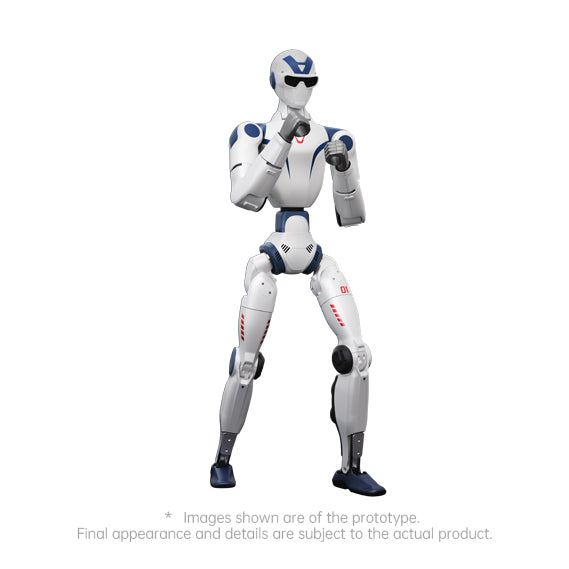 Unitree Robotics Unitree R1 | 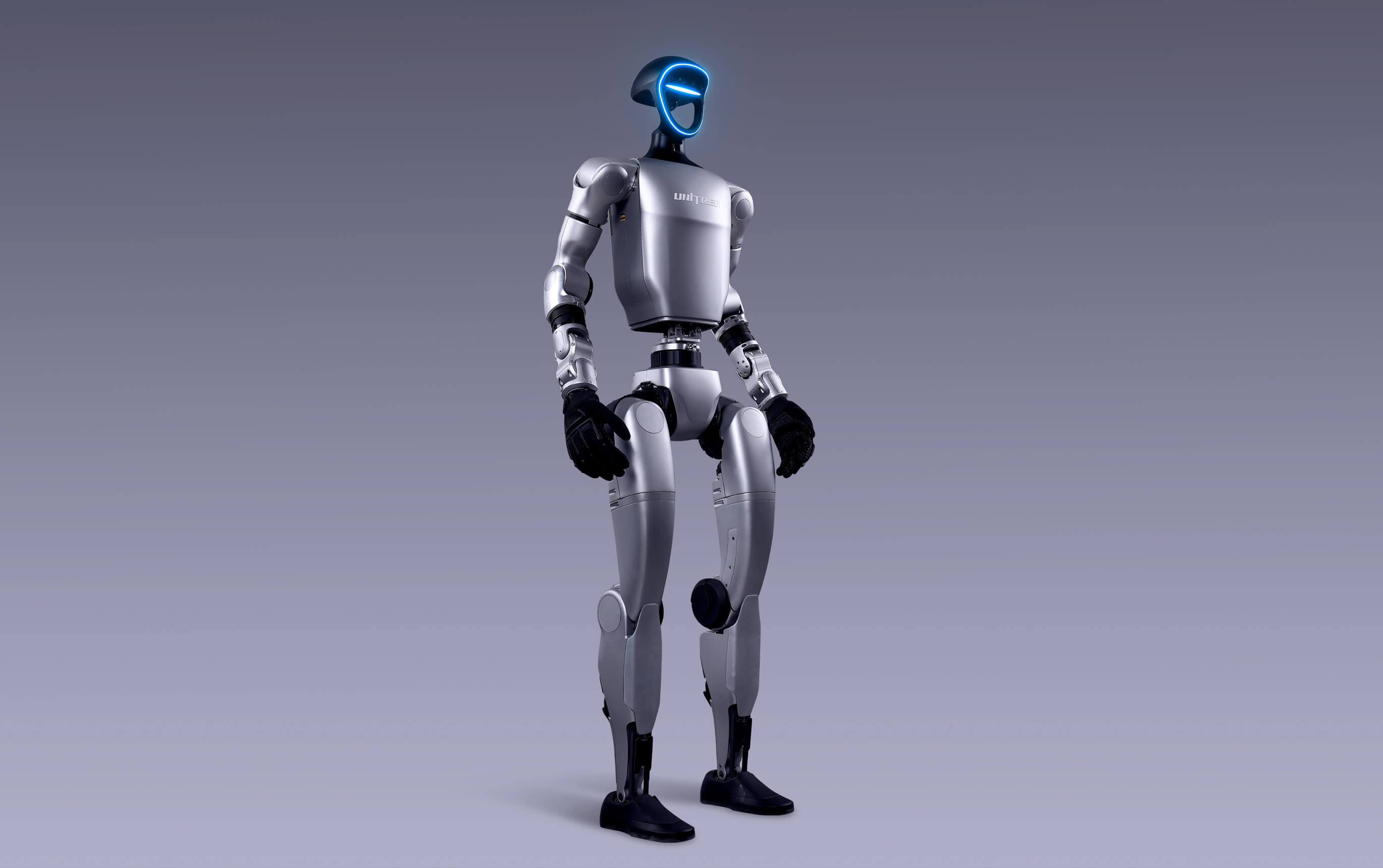 Unitree Robotics Unitree G1 | 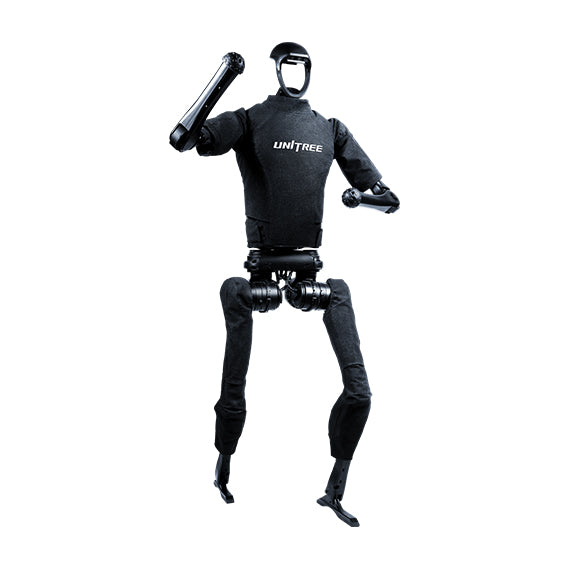 Unitree Robotics Unitree H1 | |
|---|---|---|---|---|
| Price (US) | $99,999 – $120,000 | $4,900 – $5,900 | $13,500 – $73,900 | ~$90,000 |
| Availability | Pilot programs | On the market | On the market | On the market |
| Height | 171 cm | 1.23 m | 1.32 m standing | ~1.80 m |
| Payload | 20 kg dual-arm | Unknown | Arm ~2 kg | Not rated for H1 |
| DoF | 55 | 20 | 23 | ~19 |
| Buyer | Enterprise | Individuals | Individuals | Enterprise |
| Made in | China | China | China | China |
What the Robot Era L7 costs — and how to get one
No official MSRP; US listings $99,999–$120,000.
Open - direct booking for business demos/sales via partners
Leasing / RaaS: unknown
Every spec, grouped & sourced
Tap a group to expand. Values are labelled official vs third-party; unknowns are omitted, not guessed.
Body & movement▾
Power & endurance▾
Hands & senses▾
Brains & control▾
Claims vs evidence
ERA-42 end-to-end VLA model; claims 'group intelligence' + ~85% human efficiency - company demos, not independently verified
Where it's working
No named verified deployments; claims orders from '9 of top-10 tech firms' + 200+ units 2025 (unverified); STAR1 set humanoid running-speed record
Intended use cases: Industrial assembly, sorting, pharma handling, logistics, retail, R&D; demo/entertainment
Should you consider the Robot Era L7?
The RobotEra L7 is one of the fastest, most athletic humanoids you can realistically engage, quoted at 4 m/s, with a 55-DoF body, 20 kg payload hands and the ERA-42 AI behind it. RobotEra's shipment and funding numbers add credibility. But there's no official price (reseller listings run about $99,999-$120,000), it's sold via pilots, and the viral backflips aren't the day job, evaluate it on real industrial tasks.
Score reflects stated criteria (availability, data confidence, US relevance) — not hands-on testing or user ratings. We're an independent review & comparison site; we don't sell robots. *Financing figure is illustrative.
How we know this
Data confidence 72/100 · last verified 2026-06-23. Specs are labelled official vs third-party and dated; unknowns are omitted, not guessed.
Robot Era L7 — your questions, answered in full
How fast is the RobotEra L7?+
RobotEra quotes a top speed of about 4 m/s, roughly 14 km/h, making it one of the faster full-size humanoids. It's also known for spin jumps and break-dance-style moves.
How much does the RobotEra L7 cost?+
There's no official MSRP. US reseller listings place it in roughly the $99,999 to $120,000 range, with the final figure being quote-driven and dependent on configuration and support.
Can I buy a RobotEra L7?+
It's available mainly through pilot programs and direct or partner sales rather than open consumer purchase. Buyers typically go through a site assessment, integration and after-sales support process.
What is the RobotEra L7 used for?+
It targets industrial assembly, sorting, pharma handling, logistics and retail, plus R&D and demo/entertainment. The athletic acrobatics are largely showcases, not the core job.
How much can the L7 lift or carry?+
RobotEra says its 12-DoF hands can handle payloads up to about 20 kg, alongside finer tasks like folding clothes, thanks to a 55-DoF body and proprietary direct-drive actuators.
Who makes the RobotEra L7?+
RobotEra, a Chinese embodied-AI and humanoid company. It revealed the L7 in July 2025 and secured RMB 1 billion in strategic funding in March 2026.
What AI does the L7 run?+
It uses ERA-42, RobotEra's end-to-end embodied large model that combines visual, proprioceptive and language inputs to autonomously plan and sequence tasks.
Is the RobotEra L7 suitable for home use?+
No. It's a six-figure enterprise and research platform sold through pilots, with import and support logistics for buyers outside China. It isn't a consumer home robot.
Peer-reviewed research on the Robot Era L7
Published academic work — peer-reviewed papers and preprints — involving this robot or its maker's systems, indexed in scholarly databases (OpenAlex, arXiv). Not blog posts or press write-ups.
- Humanoid-Gym: Reinforcement Learning for Humanoid Robot with Zero-Shot Sim2Real TransferXinyang Gu, Yen-Jen Wang, Jianyu Chen · 2024 · ICRA 2024 Workshop on Agile Robotics (arXiv preprint); framework verified on RobotEra XBot-S and XBot-L humanoids · DOI 10.48550/arXiv.2404.05695
Academic references are factual citations from open scholarly indexes; listing is not endorsement.