RobotEra Q5 Robot
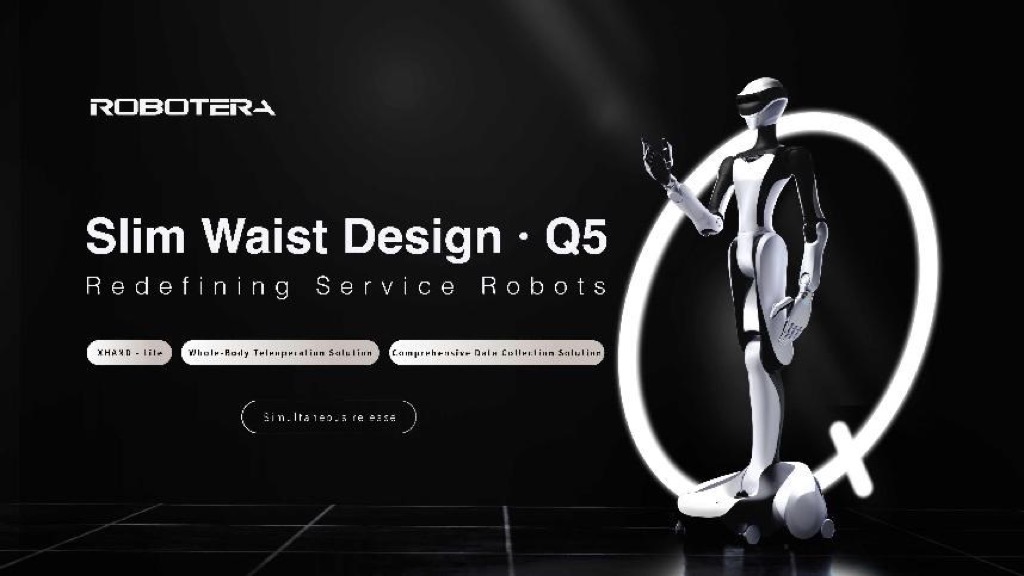
The Robot Era (ROBOTERA) Q5 is a slim, 1.65-meter service humanoid built for public-facing roles — reception, retail, healthcare, tourism and education. It packs 44 degrees of freedom, 7-DoF arms, dexterous XHAND hands, and LiDAR-plus-vision navigation. It's aimed at enterprise deployment via inquiry, so there's no public price and you'll request a quote. It's capable and shipping to businesses, but complex tasks rely on ROBOTERA's ERA-42 model with full-body teleoperation — so keep autonomy expectations measured.
US buyers: no new imports — this model has no US authorization on record, and the July 2026 rule closes that route.
The Q5 is a China-market service and home robot with no confirmed US reach and no US authorization on record. It cannot be newly imported or sold in the US. There is no announced plan to change that.
Chinese availability is unaffected.
As of 2026-08-30 · medium confidence — verify before you commit funds
What is the RobotEra Q5 Robot?
The Q5 is the service-floor RobotEra robot, built for lobbies rather than the speed records the L7 chases.
The Q5 earned itself the nickname 'tiny-waisted' humanoid, and it's not just marketing — the slim, agile build is central to what it's for. ROBOTERA designed it to move smoothly through tight indoor spaces where a bulky industrial robot would be awkward: lobbies, shop floors, clinics, museums.
ROBOTERA is one of China's more technically serious humanoid outfits, and the Q5 shows it. You get 44 degrees of freedom, expressive 7-DoF arms that reach up to about 1.38 m, and each arm tipped with the company's XHAND Lite 11-DoF dexterous hand rated for a 10 kg payload. On top of that it runs their EraAI platform and the proprietary ERA-42 embodied model. The whole thing is pitched squarely at service and light-assistance work.
It's a real product going into real deployments — but it's an enterprise product. There's no consumer price, you buy through inquiry, and ERA-42 explicitly supports full-body teleoperation, which tells you how a lot of the harder tasks actually get done today. Below, the honest rundown of what Q5 is, costs, and who it's for.
What is the Robot Era Q5 and what does it do?
The Q5 is a full-size bipedal service humanoid: 1.65 m tall, about 70 kg, with a deliberately slim 'tiny-waisted' form factor and a compact base footprint. That slim design is functional — it lets Q5 operate in tight, people-filled indoor environments without feeling like a forklift in the room.
Capability-wise it's well-specced. There are 44 total degrees of freedom, 7-DoF anthropomorphic arms reaching up to roughly 1.38 m, and each arm carries an XHAND Lite 11-DoF dexterous hand with fast response and up to 10 kg payload per hand. For getting around, Q5 fuses LiDAR with stereo vision for autonomous navigation and obstacle avoidance. It also has a natural-language voice engine for multilingual, context-aware conversation.
ROBOTERA targets it at service and light-assistance roles: reception, retail, healthcare support, tourism/guiding, and education. In short, a customer-facing robot meant to interact, guide and manipulate objects in structured indoor settings.
How much does the Robot Era Q5 cost?
There's no public price for the Q5. ROBOTERA sells it through an enterprise inquiry process, so pricing is quote-based and depends on configuration, deployment scope and support.
I'm not going to invent a number here, because ROBOTERA hasn't published one and the honest answer is 'it depends on your deal.' A full-size, high-DoF humanoid with dexterous hands and a LiDAR-vision stack, sold with enterprise support, is not going to be cheap — but any specific figure floating around online for the Q5 is unconfirmed.
If you need real pricing, contact ROBOTERA or an authorised distributor directly, specify your use case and unit count, and ask what's bundled (hardware config, the EraAI software, training, spares, on-site support). Expect enterprise-grade pricing rather than consumer numbers.
Is the Robot Era Q5 available, and how do you get one?
The Q5 is available for enterprise inquiry rather than open sale. ROBOTERA has been actively showing it — including bringing 'real-world-ready' humanoids to CES 2026 — and positioning it for deployment, so this is a shipping-to-business product, not just a concept.
The practical route is to reach out to ROBOTERA (or a regional distributor) and go through a sales conversation. It's a China-based company, so international buyers should factor in the usual import, support and lead-time considerations, and confirm what after-sales coverage looks like in their region.
What you won't find is a consumer checkout or a fixed retail price. This is procurement, not a shopping cart — appropriate for the museums, clinics, retailers and institutions it's aimed at, less so for an individual wanting one at home.
How autonomous is the Q5? (ERA-42 and teleoperation)
This is the section to read carefully. The Q5 runs ROBOTERA's EraAI platform and its proprietary ERA-42 embodied AI model, which handles context-aware motion, and it navigates autonomously using fused LiDAR and stereo vision. For getting around a space and basic interaction, it's genuinely autonomous.
But ROBOTERA is upfront that ERA-42 enables full-body teleoperation using human-generated motion data. In practice that means many of the more complex, dexterous manipulation tasks can be performed or trained via a human operator remotely piloting the robot, rather than the robot deciding everything itself. That's completely normal in the industry right now, and arguably honest of ROBOTERA to build in — but it means you shouldn't picture Q5 improvising complex chores fully on its own.
So: reliable autonomous navigation and interaction, plus teleoperation-assisted manipulation and skill-learning. Capable, but supervised — plan deployments accordingly. Runtime, for what it's worth, is quoted at over 4 hours.
Robot Era Q5 vs UBTECH Walker: which service humanoid?
Among service humanoids, a natural comparison is UBTECH's Walker series, another China-made biped targeting commercial and public-facing roles. Both are full-size, both aim at reception/retail/service-type work, and both come from technically credible companies selling to enterprises.
Q5's calling cards are its slim, agile 'tiny-waisted' form for tight spaces, its high 44-DoF articulation, and the dexterous XHAND hands with solid payload — a strong manipulation and interaction package. UBTECH brings a longer commercial track record and broader deployment history, which matters for enterprise buyers who value proven support.
Honestly, both are inquiry-based, enterprise-priced, and both lean on teleoperation for the hard stuff. The decision usually comes down to specific task fit, dexterity needs (where Q5's hands are a highlight), local support, and which vendor gives you the better deployment terms. Trial both against your actual use case if you can.
Is the Robot Era Q5 worth it, and who is it for?
The Q5 is clearly built for organisations, not households — and for the right organisation it's a strong option. It fits businesses and institutions wanting a capable, expressive, customer-facing robot: museums and tourism sites, retail, healthcare and reception settings, and education. The slim design, dexterous hands and multilingual voice make it a good fit for interactive service roles.
Its value is real if you have a genuine use case and the budget and process for enterprise robotics. The dexterity and navigation are legitimately good, and ROBOTERA's engineering pedigree is reassuring.
Who it's not for: individuals or anyone expecting a low-cost, fully autonomous helper. There's no consumer price, procurement is via inquiry, and meaningful tasks involve teleoperation and supervision. If you're a business that can work with that reality, Q5 is worth evaluating; if you wanted a plug-and-play home robot, this isn't it.
The Robot Era Q5 on video
Hands-on reviews and teardowns, picked for what they actually show rather than how loud the thumbnail is.
Independent CES footage showing Q5 alongside the larger L7, useful for judging its size class
Explains where Q5 stops and L7 begins, which RobotEra's own material rather blurs
Pairs Q5 with the XHand it ships with, which is the part other manufacturers actually buy
Who the Robot Era Q5 is — and isn't — for
+Where it shines
- Stated real-world payload (10 kg per arm/hand).
!Watch-outs
- No public list price — you'll need a quote.
- Sold to businesses only — not to private buyers.
- Public data is thin; verify key figures before relying on them.
How the Robot Era Q5 stacks up
Side by side with similar robots — the one you're reading about is highlighted.
| This robot Robot Era Robot Era Q5 | 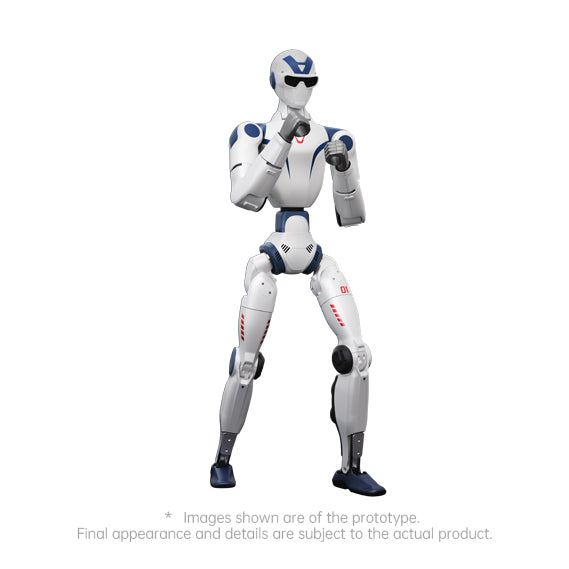 Unitree Robotics Unitree R1 | 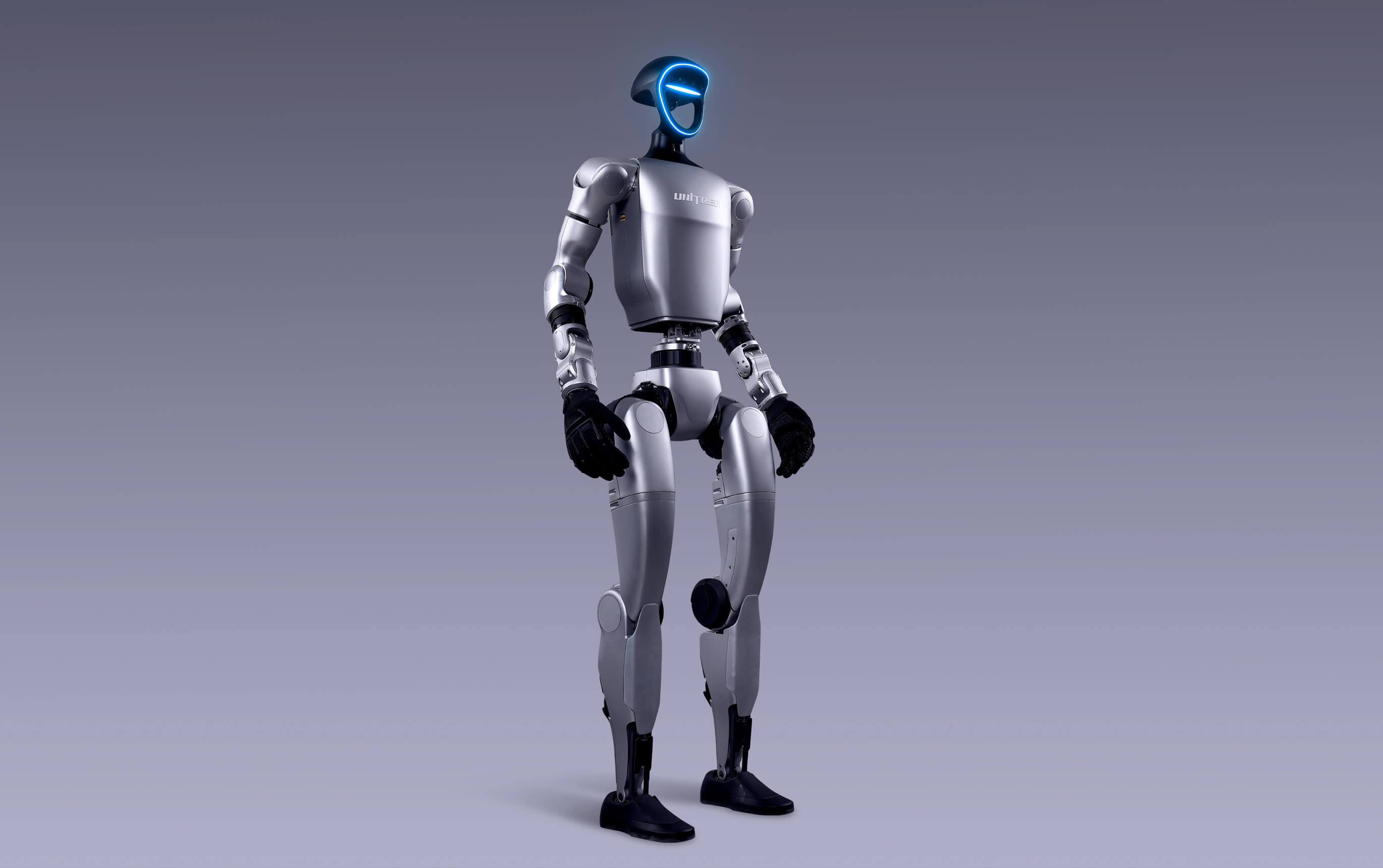 Unitree Robotics Unitree G1 | 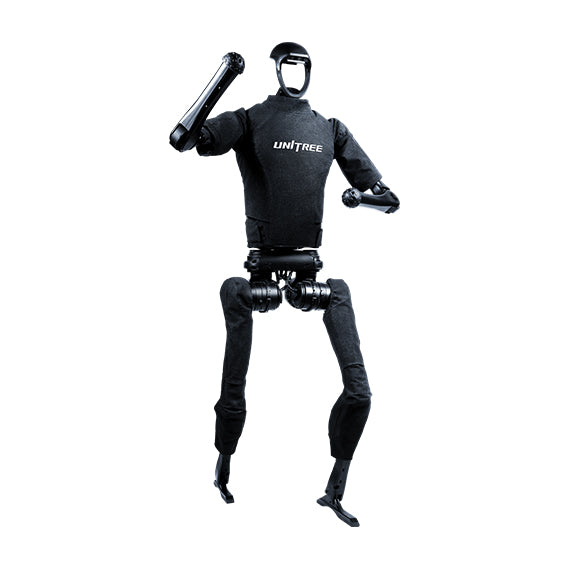 Unitree Robotics Unitree H1 | |
|---|---|---|---|---|
| Price (US) | Inquiry | $4,900 – $5,900 | $13,500 – $73,900 | ~$90,000 |
| Availability | Enterprise inquiry | On the market | On the market | On the market |
| Height | 1.65 m | 1.23 m | 1.32 m standing | ~1.80 m |
| Payload | 10 kg per arm/hand | Unknown | Arm ~2 kg | Not rated for H1 |
| DoF | 44 | 20 | 23 | ~19 |
| Buyer | Enterprise | Individuals | Individuals | Enterprise |
| Made in | China | China | China | China |
What the Robot Era Q5 costs — and how to get one
Q5 service/home humanoid; no public price (inquiry).
Unknown
Leasing / RaaS: unknown
Every spec, grouped & sourced
Tap a group to expand. Values are labelled official vs third-party; unknowns are omitted, not guessed.
Body & movement▾
Power & endurance▾
Hands & senses▾
Brains & control▾
Claims vs evidence
Service AI
Where it's working
No verified large-scale deployment
Intended use cases: Service and home assistance: reception, healthcare, retail, tourism, education
Should you consider the Robot Era Q5?
The Q5 is a capable, well-engineered service humanoid — slim, dexterous, and clearly built for reception, retail, healthcare and tourism roles. It's an enterprise, inquiry-priced product, and its harder tasks lean on ERA-42 teleoperation, so it's best for businesses with a real use case and realistic autonomy expectations, not home buyers.
Score reflects stated criteria (availability, data confidence, US relevance) — not hands-on testing or user ratings. We're an independent review & comparison site; we don't sell robots. *Financing figure is illustrative.
How we know this
Data confidence 36/100 · last verified 2026-06-30. Specs are labelled official vs third-party and dated; unknowns are omitted, not guessed.
Robot Era Q5 — your questions, answered in full
How much does the Robot Era Q5 cost?+
ROBOTERA hasn't published a public price — the Q5 is sold via enterprise inquiry, so pricing is quote-based and depends on configuration, deployment and support. Any specific figure you see online is unconfirmed. Contact ROBOTERA directly for a real quote.
How tall is the Robot Era Q5?+
The Q5 stands 1.65 meters (about 5 feet 5 inches) tall and weighs around 70 kg. It has a deliberately slim, 'tiny-waisted' form factor and a compact base so it can move through tight indoor spaces.
What is the Robot Era Q5 used for?+
It's a service humanoid aimed at public-facing roles: reception, retail, healthcare support, tourism and guiding, and education. Its dexterous XHAND hands, expressive arms and multilingual voice make it suited to interactive, customer-facing indoor work.
Is the Robot Era Q5 fully autonomous?+
Partly. It navigates autonomously using LiDAR and stereo vision, but ROBOTERA's ERA-42 model supports full-body teleoperation, so complex manipulation tasks are often piloted or trained by a human operator. Expect capable but supervised operation, not full independence.
How many degrees of freedom does the Q5 have?+
The Q5 has 44 degrees of freedom in total, including 7-DoF arms. Each arm is fitted with an XHAND Lite 11-DoF dexterous hand rated for up to 10 kg of payload, giving it strong, humanlike manipulation ability.
Can I buy a Robot Era Q5?+
It's available through enterprise inquiry rather than open retail — you go through a sales/quote process with ROBOTERA or a distributor. It's a China-based company, so international buyers should account for import, support and lead-time factors. There's no consumer checkout.
How long does the Q5's battery last?+
ROBOTERA quotes a runtime of over 4 hours on a 60V supply. As with most service humanoids, real-world endurance depends on how demanding the tasks are and how much the robot is moving and manipulating.
Peer-reviewed research on the Robot Era Q5
Published academic work — peer-reviewed papers and preprints — involving this robot or its maker's systems, indexed in scholarly databases (OpenAlex, arXiv). Not blog posts or press write-ups.
- Humanoid-Gym: Reinforcement Learning for Humanoid Robot with Zero-Shot Sim2Real TransferXinyang Gu, Yen-Jen Wang, Jianyu Chen · 2024 · arXiv preprint (arXiv:2404.05695); verified on RobotEra XBot-L/XBot-S
- Advancing Humanoid Locomotion: Mastering Challenging Terrains with Denoising World Model LearningXinyang Gu, Yen-Jen Wang, Xiang Zhu, Chengming Shi, Yanjiang Guo, Yichen Liu, Jianyu Chen · 2024 · arXiv preprint · DOI 10.48550/arXiv.2408.14472
Academic references are factual citations from open scholarly indexes; listing is not endorsement.