Sanctuary AI Phoenix Robot
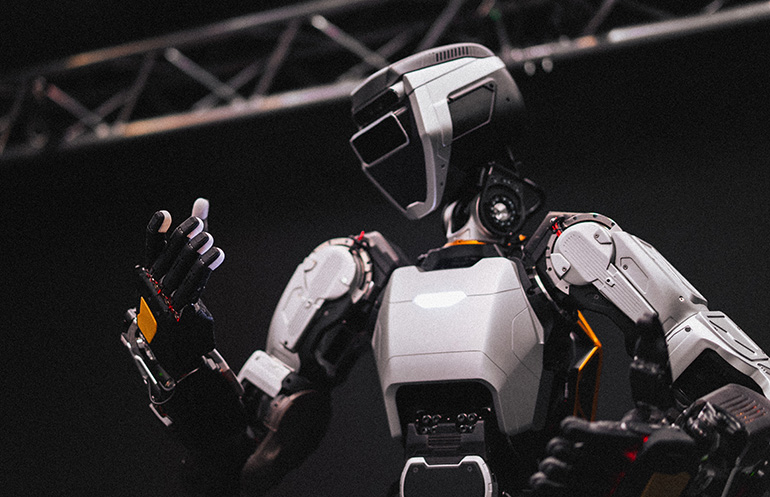
Phoenix is the general-purpose humanoid from Vancouver's Sanctuary AI, built around unusually dexterous hydraulic hands with tactile sensing down to roughly 5 millinewtons. The 8th generation arrived in December 2024. What changed in 2026 is what Sanctuary sells: its Physical AI is now offered hardware-agnostically, running on existing industrial robots and arms rather than requiring the humanoid. Sanctuary has never published a price for Phoenix, and the $65,000 and $100,000–$250,000 figures circulating online come from third-party catalogues, not from the company.
US buyers: Phoenix is Canadian-built, which the July 2026 rule's wording reaches despite Canada being an ally.
The listing is country-neutral — the test is US manufacture plus more than 65% domestic content, and Sanctuary builds in Vancouver. Roboticists reacting to the rule specifically warned that Canadian and European robots could be caught. In practice Phoenix has never been sold outright to US buyers; it goes into partner pilots, and whether those arrangements need an FCC-authorized model depends on details Sanctuary has not made public. Existing installations are not affected.
Canadian and European work is unaffected; the measure is US-only.
As of 2026-08-30 · medium confidence — verify before you commit funds
What is the Sanctuary AI Phoenix Robot?
Phoenix is the Sanctuary AI robot — a general-purpose humanoid whose whole argument is its hands.
Most humanoid robots stumble on the same thing — hands. Fine manipulation is brutally hard, and it is exactly where Sanctuary AI chose to compete. Phoenix puts sensor-packed hydraulic hands front and centre, and they remain among the most advanced in any commercial humanoid.
Sanctuary AI, based in Vancouver, framed Phoenix as a general-purpose robot designed for work, paired with its Carbon control software. Rather than chasing viral acrobatics, the pitch was useful manipulation and, importantly, capturing the data needed to teach robots more.
In 2026 the company changed the shape of that pitch. Under chief executive Daniel Friedmann it is selling Physical AI that runs on whatever hardware a factory already has — arms, grippers, industrial cells — rather than requiring anyone to buy a humanoid. That reframes the whole "how much does Phoenix cost" question, and this page answers it honestly: there is no price, and there may never be a consumer-visible one.
What is the Sanctuary AI Phoenix robot?
Phoenix is a general-purpose humanoid built by Sanctuary AI for industrial and manufacturing work, including automotive sub-assembly-style tasks. It stands around 170 cm (5 ft 7 in), weighs roughly 70 kg, and runs the company's Carbon control software.
Data capture was always half the point. By having Phoenix perform real tasks — often with a human piloting early on — Sanctuary gathered the manipulation data it believes is required for broader autonomy. Phoenix has therefore always been as much a learning platform as a labour unit.
That framing turns out to have been the durable part of the strategy. The data and the dexterity survived into 2026; the humanoid-as-product part did not, at least not as the thing being sold.
Phoenix's robot hands — why they matter
The hands are the headline. Phoenix's hydraulic hands carry around 20–21 degrees of freedom with tactile sensors reported sensitive to about 5 millinewtons, fine enough to register a very light touch. Each fingertip uses a small array of micro-barometer pressure sensors — essentially the miniaturised tech in a phone, repurposed for touch.
Sanctuary has demonstrated in-hand object reorientation while resisting disturbance, including an unexpected 500 g load, which it says makes Phoenix the first commercial humanoid to manage that particular feat. In a field where most robots grip clumsily, that is a real differentiator, even if it still falls short of a human hand.
And those hands are now the transferable asset. Sanctuary offers both off-the-shelf and custom end effectors to sit on other people's robots — the dexterity travels even when the humanoid stays home.
What's new in Phoenix Generation 8?
Generation 8 launched in December 2024 and kept getting upgrades through 2025. In February 2025 Sanctuary integrated a new generation of tactile sensors into the finger pads, sharpening the sense of touch.
Just as importantly, Gen 8 was engineered with manufacturing in mind: reduced bill-of-materials cost, a simpler design, faster to build and commission. That was a telling shift even at the time, from capability demonstrations toward something producible.
Gen 8 is still the current hardware. There has been no Generation 9 announcement as of 31 August 2026, which fits a company that has moved its commercial energy elsewhere.
What changed in 2026: Sanctuary now sells the brain, not the body
This is the update that most pages about Phoenix are missing. Rather than waiting for the humanoid to be commercially ready, Sanctuary pivoted in 2026 to a hardware-agnostic offer: its Physical AI deployed onto existing commercial industrial robots for dexterity-heavy tasks. Chief executive Daniel Friedmann — previously at MDA in space robotics and at Carbon Engineering — put it as function mattering more than form.
The proof point the company leads with is a wire-plugging job for an unnamed Tier 1 automotive supplier: inserting flexible wired plugs into targets moving on a conveyor, a task conventional automation could not do. Sanctuary reports a 99.5% success rate and a 2.54-second cycle time across 313 insertion trials in 40 minutes. That is a narrow benchmark, and it is a real one, published with counts and a duration rather than a highlight reel.
The company reached this point the hard way, coming through a difficult 2024–25 that included reported layoffs and a change of chief executive. The method underneath has not changed: skilled human operators teleoperate the robot through real work, and repeated tasks are progressively automated from what that produces. Teleoperation is the on-ramp, not the destination.
For a buyer, this is genuinely good news and slightly disappointing news at once. Good, because you can get Sanctuary's manipulation capability onto a line without buying a humanoid. Disappointing, if what you wanted was the humanoid.
How much does the Sanctuary AI Phoenix cost?
Sanctuary AI has never published a list price for Phoenix, and as of 31 August 2026 it still hasn't. Engagements are quote-only, and since the 2026 pivot the thing being quoted is more likely to be an AI and end-effector deployment on your own robots than a humanoid on a pallet.
The numbers you will find elsewhere do not come from Sanctuary. A figure around $65,000 and a range of roughly $100,000 to $250,000 both circulate on robot catalogue and aggregator sites; neither traces to a company statement, a customer, or a purchase order. We are not going to repeat them as though they were estimates of anything — they are placeholders that acquired authority by repetition.
The honest answer for 2026 is that Phoenix has no price because Phoenix is not what's for sale. If you want to know what Sanctuary's technology would cost you, the question to ask is what a Physical AI deployment on your existing cell costs — and that comes back as a quote, not a number on a page.
Sanctuary Phoenix vs other humanoids — where it stands now
On manipulation, Phoenix's hands and tactile sensing remain arguably best in class among commercial humanoids. If your bottleneck is dexterous handling of varied or awkward objects, that capability is worth taking seriously.
On deployment scale it trails. Agility's Digit and Apptronik's Apollo have more public, paid work to point at; Figure has published a sustained autonomous run. Sanctuary's public evidence is a narrow, well-documented task benchmark rather than fleet hours.
And on strategy it has now diverged from the field entirely. Where everyone else is racing to put a humanoid on a factory floor, Sanctuary is selling the intelligence and the hands into floors that already have robots on them. Whether that is a retreat or the smarter route to revenue is the open question of 2026, and it will be answered by customer count, not by demos.
The Sanctuary AI Phoenix on video
Hands-on reviews and teardowns, picked for what they actually show rather than how loud the thumbnail is.
Sanctuary's clearest claim-and-proof clip: manipulation running at human tempo, unedited
Trade press on the tactile-sensing upgrade, which is the part of Phoenix that genuinely differs from rivals
Who the Sanctuary AI Phoenix is — and isn't — for
+Where it shines
- Stated real-world payload (25 kg).
!Watch-outs
- No public list price — you'll need a quote.
- Some demos rely on teleoperation, not full autonomy.
- Sold to businesses only — not to private buyers.
How the Sanctuary AI Phoenix stacks up
Side by side with similar robots — the one you're reading about is highlighted.
| This robot Sanctuary AI Sanctuary AI Phoenix | PNDbotics PNDbotics Adam | 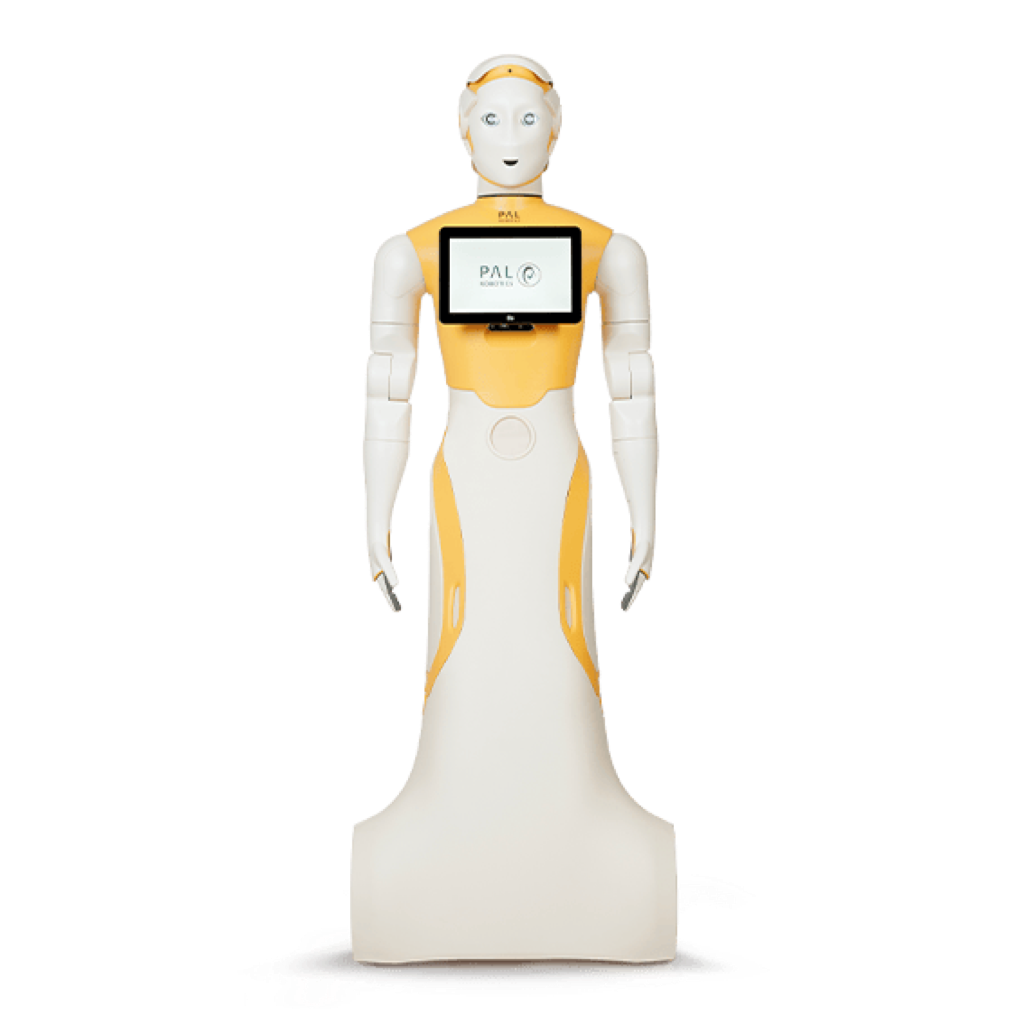 PAL Robotics PAL Robotics ARI | 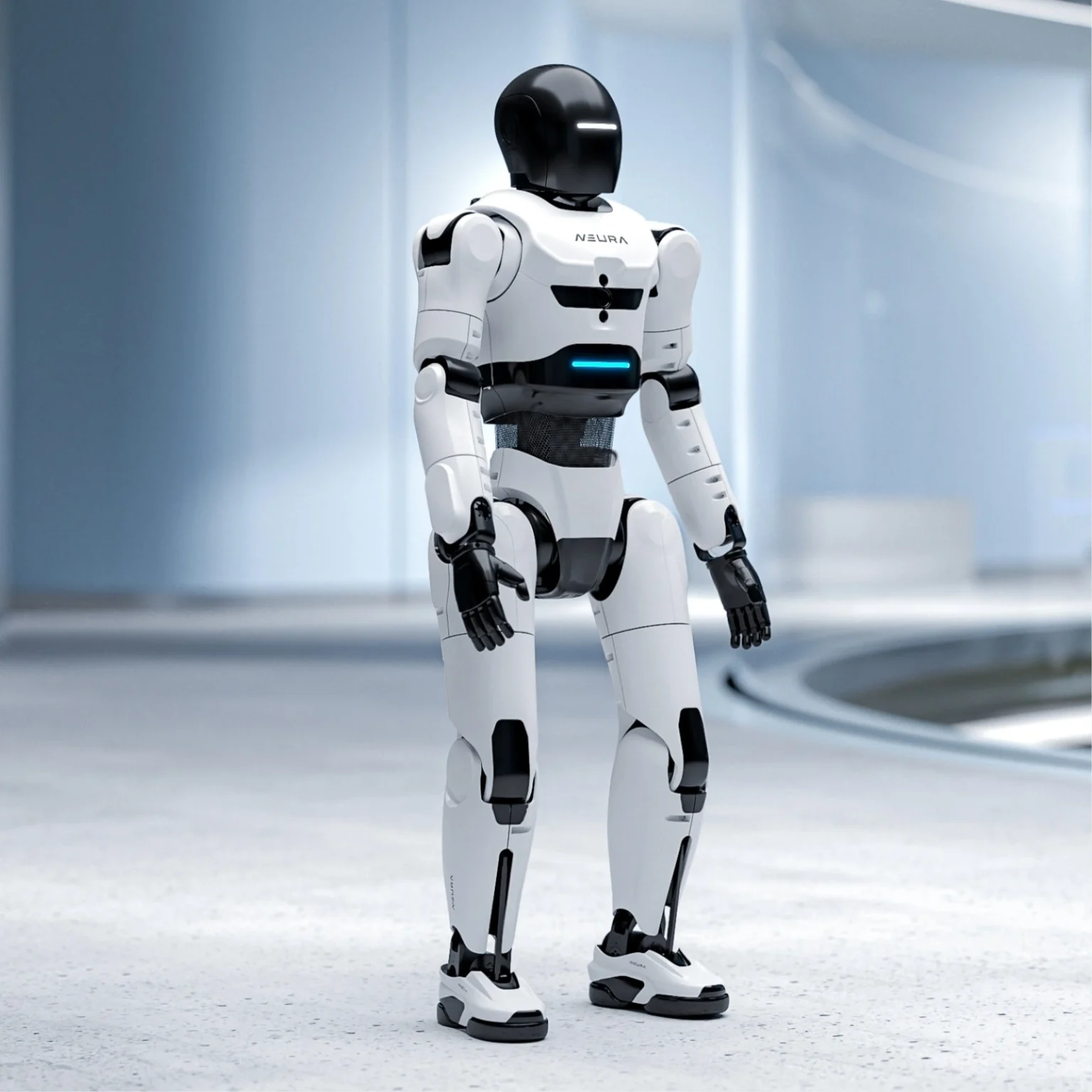 NEURA Robotics NEURA Robotics 4NE-1 | |
|---|---|---|---|---|
| Price (US) | Price on inquiry | $99,999 – $145,000 | $35,000 – $90,000 | $65,000 – $105,000 |
| Availability | Pilot programs | On the market | On the market | Reservations open |
| Height | 1.70 m | 1.67 m | 1.65 m | 180 cm |
| Payload | 25 kg | ~5 kg | ~0.5 kg per arm | Arms rated ~20 kg; up to 100 kg lifting in leg-supported/full-body configurations |
| DoF | ~20 | Lite | ~12 | Hands |
| Buyer | Enterprise | Enterprise | Individuals | Enterprise |
| Made in | Other | Other | Other | Other |
What the Sanctuary AI Phoenix costs — and how to get one
No public list price; enterprise/pilot quote-only.
Available - direct contact form
Leasing / RaaS: No official lease/RaaS
Every spec, grouped & sourced
Tap a group to expand. Values are labelled official vs third-party; unknowns are omitted, not guessed.
Body & movement▾
Power & endurance▾
Hands & senses▾
Brains & control▾
Claims vs evidence
'Carbon' architecture (symbolic + LLM + deep/RL); 'explainable'; limited independent verification
Where it's working
Magna International (investor, contract mfr, end-user); first commercial deployment completed
Intended use cases: General industrial/manufacturing labor incl. automotive sub-assembly; data capture focus
Should you consider the Sanctuary AI Phoenix?
Phoenix is the dexterity specialist of the humanoid world, and its sensor-rich hydraulic hands are genuinely among the best built. But in 2026 Sanctuary stopped trying to sell the robot and started selling the intelligence and the hands to run on other people's machines — with one well-documented result, 99.5% on a wire-plugging task no conventional automation could do. There is no Phoenix price because Phoenix is no longer the product. Judge Sanctuary on customer count from here, not on the humanoid.
Score reflects stated criteria (availability, data confidence, US relevance) — not hands-on testing or user ratings. We're an independent review & comparison site; we don't sell robots. *Financing figure is illustrative.
How we know this
Data confidence 72/100 · last verified 2026-06-23. Specs are labelled official vs third-party and dated; unknowns are omitted, not guessed.
Sanctuary AI Phoenix — your questions, answered in full
How much does the Sanctuary AI Phoenix cost?+
There is no published price and never has been. Engagements are quote-only. The $65,000 and $100,000–$250,000 figures found on catalogue sites do not come from Sanctuary and are not supported by any company statement or customer.
Can you buy a Sanctuary AI Phoenix?+
Not at retail, and as of 2026 the humanoid is not really the product. Sanctuary now sells its Physical AI and end effectors to run on a customer's existing industrial robots. Phoenix Gen 8 still exists but is no longer the commercial focus.
What is Sanctuary AI selling in 2026?+
Hardware-agnostic Physical AI for dexterity-intensive industrial tasks, plus off-the-shelf and custom end effectors, deployed onto existing commercial robots rather than requiring its humanoid.
What makes Phoenix's hands special?+
Hydraulic hands with about 20–21 degrees of freedom and tactile sensors reported sensitive to roughly 5 millinewtons, using micro-barometer arrays in the fingertips. Sanctuary has shown in-hand reorientation while resisting a surprise 500 g load.
What generation is the current Phoenix?+
Generation 8, released December 2024, with tactile-sensor and manufacturability upgrades through 2025. No Generation 9 has been announced as of 31 August 2026.
What are Phoenix's specifications?+
About 170 cm (5 ft 7 in) tall and roughly 70 kg, running Sanctuary's Carbon software, with its signature high-dexterity hydraulic hands and tactile feedback.
Is Phoenix fully autonomous?+
No. Sanctuary's method is a teleoperation-to-autonomy pipeline: skilled operators drive the robot through real work, and frequently repeated tasks are progressively automated from the data that produces.
Has Sanctuary AI proven anything measurable?+
Yes, on a narrow task. For an unnamed Tier 1 automotive supplier it reports inserting flexible wired plugs into moving conveyor targets at a 99.5% success rate and a 2.54-second cycle time across 313 trials in 40 minutes.
Who runs Sanctuary AI?+
Daniel Friedmann is chief executive, previously at MDA in space robotics and at Carbon Engineering. The company is based in Vancouver, Canada, and came through a difficult 2024–25 that included reported layoffs and a leadership change.
How does Phoenix compare to Digit or Apollo?+
Phoenix leads on hand dexterity and tactile sensing; Digit and Apollo have more public paid deployment. Since 2026 the comparison is also uneven in kind — Sanctuary is selling intelligence for other robots rather than competing humanoid against humanoid.