Tesla Optimus Robot
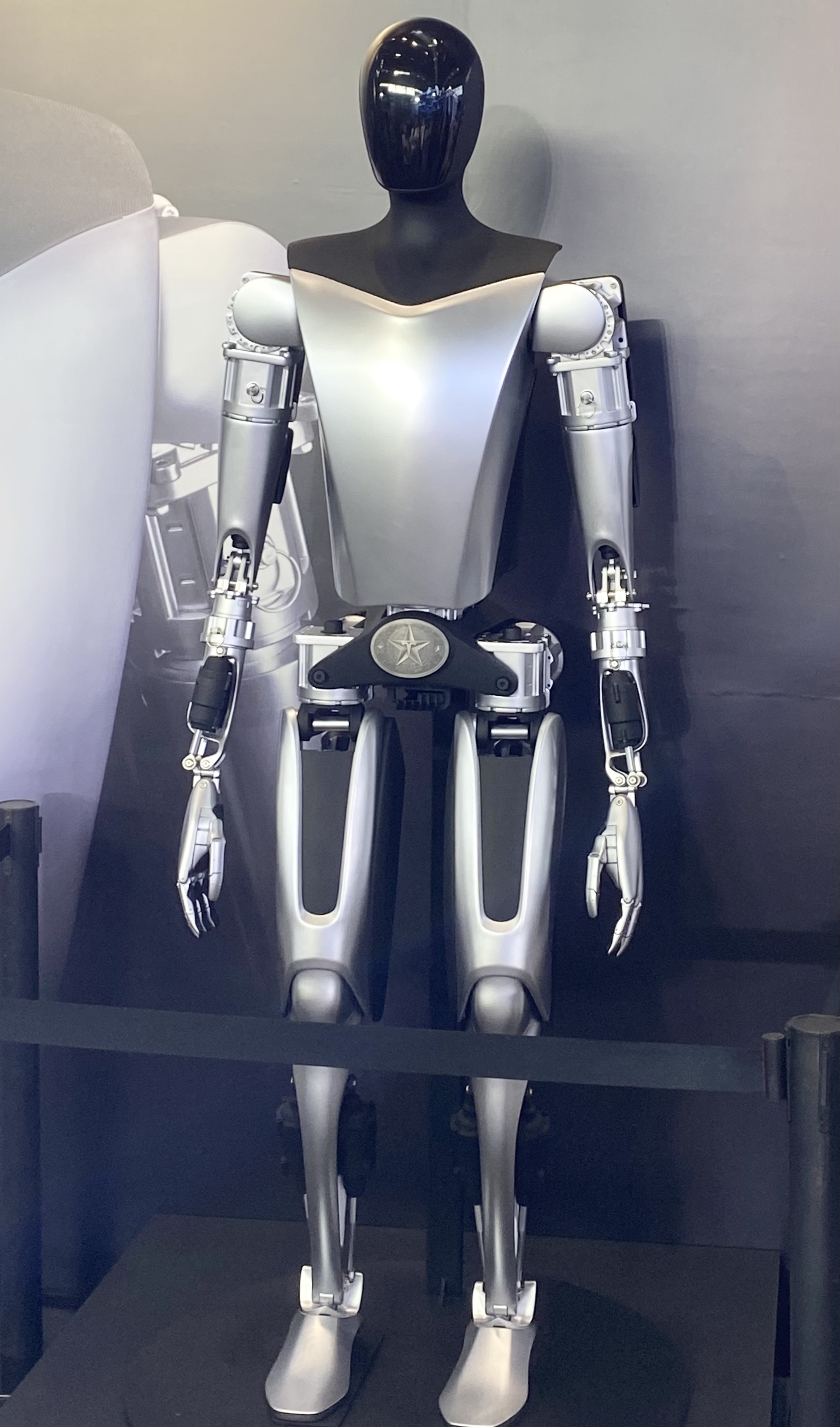
You cannot buy a Tesla Optimus. As of 30 August 2026 there is no price, no preorder and no configurator. Elon Musk has repeatedly floated $20,000-$30,000 at high volume, but Tesla told JPMorgan analysts in August 2026 that external sales start no earlier than the second half of 2027.
US buyers: unaffected by the July 2026 import restriction — Optimus is built in the United States.
The FCC rule gates foreign-produced robots, and Tesla builds Optimus at Fremont and Giga Texas, so nothing about it changed on 28 July 2026. What still limits a US buyer is Tesla itself: Optimus is not sold to the public, has no order page and no published consumer price. In practice the restriction helps Tesla more than it hinders it, since several of the cheap imported humanoids it would have been compared against can no longer enter the market as new models.
Availability is the same everywhere, which is to say there is none yet — Tesla has not opened outside sales in the EU, UK or Asia either.
As of 2026-08-30
What is the Tesla Optimus Robot?
Optimus is the Tesla robot — a bipedal humanoid Tesla builds to work its own factory floors before anyone else gets one.
Tesla Optimus is the most searched humanoid robot on the planet and one of the least buyable. Roughly 43,000 people a month type some version of "optimus robot" into Google, and the overwhelming majority of them want one number: the price. That number does not exist. Tesla has never published one, has never opened a reservation queue, and as of 30 August 2026 has never sold a single unit to anyone outside the company.
What does exist is a long, well-documented trail of promises with dates attached to them, and that trail is far more useful than a spec sheet. Musk said Tesla would build roughly 10,000 Optimus units in 2025. Independent shipment tracking published by CNN on 29 July 2026 put Tesla's actual 2025 output in the low hundreds - behind Unitree and AGIBOT by roughly a factor of ten. On the 28 January 2026 earnings call Musk himself said Optimus is "still in the R&D phase" and "not in usage in our factories in a material way."
This page is the version of the Optimus story with the marketing removed. What the robot demonstrably does, which viral demos had a human inside them, what a realistic first price actually looks like against 2025-26 component-cost research, and the dated milestones worth watching before you take any 2027 promise seriously.
What the Tesla Optimus can — and can't — do today
+Does this out of the box
- Walk and balance autonomously, including recovering from uneven ground
- Operate untethered inside Tesla's Fremont and Austin facilities for R&D
- Collect training data for Tesla's end-to-end neural network stack
- Perform scripted or human-teleoperated manipulation in public demos
- Serve as a physical testbed for Tesla's FSD-derived AI and AI5 silicon
!Doesn't do, whatever the demo shows
- Be purchased, reserved or leased by anyone outside Tesla
- Perform dexterous manipulation autonomously - every public demo has been human-driven
- Do material productive work in Tesla's own factories, per Musk on 28 January 2026
- Be programmed by third parties - there is no SDK, API or developer documentation
- Clean, cook or perform any household task without a remote human operator
Tesla has published no verified capability metrics for Optimus - no cycle times, no error rates, no throughput. Everything in the 'can do' column above is observable from public demonstrations or stated by Tesla; nothing has been independently measured. Verified 30 August 2026.
What does the Tesla Optimus actually do today?
Two things are genuinely autonomous on Optimus: walking and balancing. The gait is driven by neural networks descended from Tesla's Full Self-Driving stack, and it works well enough that Optimus units walk unaided around Fremont and Giga Texas. Fortune reported in December 2025 that units also fell over during an autonomous demonstration, which is a fair snapshot of where the locomotion actually sits - real, but not solved.
Everything above the ankles is a different story, though. Tesla has never published a cycle time, an error rate or a throughput figure for any Optimus factory task. The lists of jobs you see circulating - sorting 4680 battery cells, kitting parts, quality inspection - come from content farms rather than from Tesla, and none of them carry a measurement.
The most authoritative description of what Optimus does comes from Musk on the 28 January 2026 earnings call: the units deployed inside Tesla are there for learning and data collection rather than for productive work. The 22 July 2026 shareholder update repeated the same framing for the first production units - they go to training-data collection and further functionality development, not to customers and not to productive work.
So the honest answer, as of 30 August 2026: Optimus walks, it balances, and it generates training data. It does not yet hold down a job, and Tesla is the source for that statement, not a critic.
How much does a Tesla Optimus cost?
There is no official price. Tesla has never published one, and no leaked enterprise price sheet exists. Every figure you have seen is either a Musk aspiration or somebody's estimate.
The Musk numbers, dated: at Tesla's 2022 AI Day he said Optimus would cost "less than a car." After the We, Robot event in October 2024 he gave the figure that has stuck to the robot ever since - $20,000 to $30,000, explicitly contingent on production running into the millions of units per year. He reaffirmed that range publicly in January 2026. Then it went quiet. It appears in no 2026 earnings call, no shareholder deck, and it was not given to JPMorgan analysts during their Fremont site visit around 20 August 2026. Tesla has not retracted $20,000-$30,000; it has simply stopped saying it.
For a defensible estimate you have to look at what a humanoid actually costs to build. Morgan Stanley's Robot Almanac, published 7 December 2025, put a 2025 humanoid bill of materials at roughly $131,800 for non-China manufacture and about $45,500 for China-built. Bank of America's humanoid research note of 12 March 2026 put China-built BOM around $35,000 in 2025, falling below $17,000 by 2030. Optimus is a US-built robot with a US-built cost structure and, so far, no volume at all.
Our estimate, and we are labelling it as an estimate: a first external Optimus realistically prices between $50,000 and $100,000. The basis is the non-China BOM range above, plus the fact that Musk's $20,000-$30,000 assumes a scale Tesla has not achieved by a factor of thousands. As of 30 August 2026, treat $20,000 as a target, not a price.
Can you buy a Tesla Optimus in 2026?
No. Not through Tesla, not through a dealer, not through a waitlist. There is no order page, no deposit, no configurator and no commercial inquiry channel of any kind.
The clearest dated statement on this came from Tesla itself, relayed by JPMorgan analysts after a Fremont site visit around 20 August 2026: external commercial sales begin "as early as H2 2027." Note the hedge in "as early as." The Q2 2026 shareholder update of 22 July 2026 was even blunter - the first units off the line are going to data collection, not customers.
A useful outside read on the odds: a crypto prediction market was pricing the probability of an Optimus commercial launch during 2026 at around 3% as of late August 2026, reported by Benzinga on 28 August. That's roughly the market's confidence, and it matches the evidence.
One warning worth stating plainly. Because search demand for Optimus is enormous and supply is zero, a large number of sites publish confident spec tables, "pre-order" pages and delivery dates for a robot that Tesla has never shown. Anybody taking money for a Tesla Optimus is not selling you a Tesla Optimus. There is no authorised reseller because there is no product to resell.
Why has the Gen 3 Optimus reveal kept slipping?
This is the single most informative thing about the programme, and most coverage skips it.
The current publicly shown generation is still Gen 2, unveiled in December 2023. Gen 3 - variously called V3 - has never been publicly unveiled. Not at an event, not in a spec sheet, not in a photo release. As of 30 August 2026 the general public has still not seen it.
The slip chain, with dates: the original target was Q1 2026. On 31 March 2026 Musk said Optimus 3 was "walking around" but not ready, and pushed the reveal to "probably middle of this year," citing competitors analysing his demos frame by frame. Mid-year passed. It moved to late July or early August 2026. That passed too.
Meanwhile the manufacturing side did move. Model S and Model X production ended in early May 2026 and the Fremont line was torn down in roughly 46 days. The 22 July 2026 shareholder update confirmed Tesla was "installing the first-generation lines for Optimus" with production anticipated later in the year. Several outlets reported at the end of August 2026 that production had actually begun at Fremont, but none of them cited a Tesla announcement, a date or a unit count - the quotes were recycled from the July call. Tesla has not formally announced a production start.
What we can say with confidence is that Tesla is building a line for a robot it has not shown, and that the reveal has slipped three times. A fourth slip past 31 December 2026 would tell you more than any spec sheet.
How many Optimus robots has Tesla actually built?
Tesla has never published a unit count. That silence is itself a data point, because the targets were extremely public.
At the June 2024 shareholder meeting Musk said Tesla would have "a thousand to a couple thousand robots working in its factories" during 2025. On the January 2025 earnings call he raised it to "roughly 10,000 Optimus robots" built in 2025, and said he was confident several thousand of them would be doing useful things by the end of the year. An internal target of 5,000 units for 2025 was widely reported. A 50,000-unit figure for 2026 circulated and was later abandoned, with Musk calling 2026 output impossible to predict.
The best independent anchor for what actually happened comes from CNN's 29 July 2026 reporting on the US import restrictions: of roughly 15,000 humanoid robots shipped worldwide in 2025, Unitree and AGIBOT each shipped more than 5,000, while Tesla and Figure AI each shipped no more than a few hundred. The research firm Omdia put Tesla below 500 units for 2025.
Against a 10,000-unit target that is a miss of well over 90%. Estimates of the total Optimus population in mid-2026 - somewhere around a thousand units across Fremont and Giga Texas - circulate widely but trace back to a single research outfit rather than to Tesla, so treat them loosely.
External sales to date: zero. That one is not an estimate.
Is the Tesla Optimus autonomous, or is a human driving it?
Both, depending on which part of the robot you are watching, and the distinction is where most of the public confusion lives.
Locomotion is autonomous. The walking, the balance recovery, the gait over uneven ground - that is neural-network driven, inherited from the same end-to-end architecture Tesla uses for driving. Nobody is puppeteering the legs.
Manipulation is where the humans come in. The January 2024 shirt-folding video that went around the world was teleoperated, and Musk said so himself at the time, noting Optimus could not yet do it autonomously. A telepresence glove is visible in the frame. At the We, Robot event on 10 October 2024 the robots that poured drinks, played rock-paper-scissors and held conversations with attendees were human-assisted; this was established by attendees on the night rather than disclosed by Tesla on stage. A 2025 hand-dexterity demo was confirmed teleoperated by Tesla.
The Tesla Diner in Hollywood, which opened 21 July 2025, has a single Optimus serving popcorn. Staff confirmed a human operator, positioned within about nine metres. On 23 July 2025 the operator lost connection and the robot stopped working mid-service, on camera.
This isn't really a scandal so much as a category error that Tesla has been happy to leave uncorrected. If you see an Optimus doing something dexterous and impressive, the default assumption should be that a person is doing it.
Can a Tesla robot clean your house or cook?
This question appears in the People Also Ask box on virtually every Optimus search, so it deserves a direct answer: no, and not soon.
Household work is the hardest category in robotics, not the easiest. A kitchen is unstructured, cluttered, full of deformable objects and unforgiving of a 57 kg machine getting it wrong. Tesla has never demonstrated an Optimus completing a household task autonomously. The closest thing to a domestic demo was the folded shirt in January 2024, and that was hand-driven.
Tesla's own roadmap does not point at your house first either. The 22 July 2026 shareholder update has first production units doing data collection. Tesla's briefing to JPMorgan in August 2026 pointed at external commercial sales - industrial buyers - from the second half of 2027 at the earliest. A consumer household product sits somewhere beyond that, with no date attached by anyone at Tesla.
If you want a robot in your home this decade, the honest comparison set is 1X NEO, which does take consumer orders and openly relies on remote human operators for chores, and the growing category of cheaper single-purpose machines. Optimus is not competing in that race yet, whatever the rendering on your feed suggests.
Is there an Optimus SDK or developer program?
No. There is no Optimus SDK, no API, no developer documentation, no simulator release, no accessory ecosystem and no third-party module program. We checked, and the absence is complete.
Tesla does run a developer program - the Fleet API, launched in October 2023 - but that is for vehicles and has nothing to do with the robot. No public interface to Optimus exists in any form.
You will find claims of an "Enterprise SDK" arriving in Q4 2026 and a consumer module marketplace in 2027. Those originate entirely from AI-generated content sites and have no Tesla source behind them. They contradict Tesla's own 22 July 2026 filing, which describes lines still being installed for a robot with no announced customers.
For developers this matters more than the price. Even if Optimus ships in 2027, nothing published so far suggests Tesla intends to let anyone else write code for it. The Optimus stack is being built as an extension of Tesla's own vertically integrated AI programme - the same silicon, the same training pipeline, the same closed model. If you need a humanoid you can actually program this year, that market belongs to Unitree, and the entry point is the G1 EDU.
What would it actually cost to own and run one?
Nothing can be said here honestly, and the reason for that is instructive.
Nobody outside Tesla owns an Optimus. Tesla has published no battery capacity officially confirmed for the shipping configuration, no runtime per charge, no charging specification, no service plan, no warranty terms, no spare-parts pricing and no consumables cost. There is no dealer network, no repair channel and no published maintenance interval.
The specification figures that circulate - a 2.3 kWh pack at roughly 52 V, about 5 hours of runtime, a top speed near 2.2 m/s - are drawn from Gen 2 teardowns, presentations and unofficial estimates, and Gen 3 has not been shown at all. Applying them to an ownership model would be arithmetic on top of guesswork.
So the correct entry in a total-cost-of-ownership table for Optimus, as of 30 August 2026, is "not applicable." Any site presenting you with a five-year running cost for a Tesla Optimus has invented every number in it. That is not a rhetorical flourish - there is no source material from which those numbers could be derived.
For comparison, the reason we can publish real running costs for the Unitree G1 is that batteries, chargers, hands, LiDAR modules and even a repair deposit all have live listed prices. Optimus has none.
What are the security, supply and regulatory exposures?
Three worth knowing about, and one of them has a hard deadline.
Rare earths. China imposed export controls on seven rare-earth elements and magnets on 4 April 2025. On Tesla's Q1 2025 earnings call, 22 April 2025, Musk said Optimus production was affected and that Tesla was seeking an export licence, describing Beijing's condition as assurance the components would not go into weapons systems. Tesla has never publicly confirmed the licence was granted. Two of the toughest Chinese measures are paused only until 10 November 2026. Optimus needs neodymium and dysprosium in every actuator; this is the most concrete near-term risk to the programme.
Trade policy, which cuts Tesla's way - though not for the reason most coverage gives. FCC Public Notice DA 26-786, released 28 July 2026, added foreign-produced advanced robotic devices to the Covered List. The text is country-neutral rather than China-specific: 'foreign-produced' means a device fails the Buy American domestic-end-product test, which requires US manufacture plus more than 65% domestic component cost, so UK, EU, Japanese, Korean and Canadian robots are caught alongside Chinese ones, and US assembly of imported parts does not clear the bar. The mechanism is also narrower than the headlines suggest: it blocks new FCC equipment authorisation, which then blocks import, marketing and sale. It is not a customs seizure order and not a recall. Models authorised before 28 July 2026 are grandfathered - import, sale, ownership and resale all continue - and a waiver lets them keep receiving firmware and security updates until at least 1 January 2029. Optimus is designed and built in the United States, so it is unaffected, and Tesla gains a protected runway into a market it does not yet sell into.
Safety regulation, which is a vacuum. No federal humanoid-robot safety standard exists in the US. ISO 25785, the humanoid-specific standard, is still in development. OSHA's General Duty Clause technically applies but there is no accepted compliance methodology and no incident dataset. Tesla does internal testing; no independent third-party safety validation of Optimus has been reported. One correction while we are here: the widely shared "Tesla robot attacks engineer" story refers to a Kuka industrial arm at Giga Texas in November 2021, not to Optimus.
Where are Optimus robots actually working right now?
Three named sites — and that is the complete verified list as of 30 August 2026.
Tesla Fremont Factory, Fremont, California. R&D units plus the first Optimus assembly line, built on the floor the Model S and Model X vacated in May 2026.
Gigafactory Texas, Austin. R&D and data-collection units, with a dedicated Optimus factory under construction on the North Campus - steel was visible in drone footage on 27 May 2026. Higher-volume production there is expected around summer 2027.
Tesla Diner, Hollywood, Los Angeles. One teleoperated unit serving popcorn since 21 July 2025. This is the only place a member of the public can reliably see an Optimus in person.
What is not on the list matters more: no customer sites, no partner factories, no pilot deployments, no third-party installations anywhere in the world. Compare that with Figure, which has BMW's Spartanburg plant and a signed agreement with Catalyst Brands, or with Unitree, whose robots sit in hundreds of university labs. Optimus has the largest search demand in the category and the smallest real-world footprint of any robot on this list.
Tesla Optimus vs Figure 03 vs 1X NEO
These three get compared constantly, and they are at genuinely different stages.
On ordering, 1X leads and nobody is second. NEO has an open consumer preorder, a published price - $20,000 outright or $499 a month - a $200 deposit and reportedly more than 10,000 orders in its first week. It is also the only one of the three that has publicly promised delivery and not yet delivered.
On demonstrated autonomy, Figure leads. In May 2026 Figure ran a package-sorting livestream that its CEO said involved no teleoperation whatsoever, reported at around 101,000 packages over 81 continuous hours. That is a controlled demo in Figure's own facility, and observers noted barcode-orientation errors, but it is still the strongest public autonomy evidence any Western humanoid has produced.
On deployment, Figure also leads. BMW's own press release of 25 June 2026 places Figure 03 in Assembly Hall 52 at Plant Spartanburg on logistics sequencing, described as a production use case. Tesla has no external deployment at all.
On manufacturing, the picture is more even than the share prices suggest. Figure claims one robot per hour off its BotQ line as of April 2026; Tesla is installing its first line. On 2025 shipments, both were in the low hundreds and both were roughly ten times behind Unitree.
Where Optimus wins is capital, silicon and vertical integration. Tesla designs its own AI chips, runs its own training clusters and owns its factories. That is a real long-run advantage. It is just not a 2026 advantage.
Who should watch Optimus, and who should look elsewhere?
Watch it if you are an investor, an industry analyst, a manufacturing strategist, or a competitor. The programme is genuinely consequential - Tesla is the only Western company with the silicon, the capital and the factory footprint to attempt humanoids at automotive volume, and the AI5 chip that taped out on 15 April 2026 is slated to reach Optimus early.
Look elsewhere if you actually need a robot. If you are a university lab, a research group or an AI team that needs a bipedal platform this year, buy a Unitree G1 EDU or an R1 EDU and start work; they cost real money and they exist. If you want a humanoid in a home, 1X NEO is the only one taking consumer orders, with all the caveats that come with it. If you want an expressive interaction robot for a museum or an event, Ameca has been shipping since 2021.
And if you are a journalist, a procurement officer or anyone writing a plan around Optimus availability, anchor on two dates rather than on the narrative. Tesla told JPMorgan external sales start no earlier than H2 2027. Tesla's CEO said in January 2026 that the robot is not doing material work in Tesla's own factories. Everything else is forecast.
The Tesla Optimus on video
Hands-on reviews and teardowns, picked for what they actually show rather than how loud the thumbnail is.
Tesla's own Gen 2 reveal, still the cleanest uncut look at the gait, hands and neck articulation
Bloomberg's floor footage of the live demo, useful if you want the machine without the launch-event soundtrack
Side-by-side against Atlas, which is the comparison most buyers actually have in their head
A 2026 walk-through of the price claim and the factory-deployment story, sceptical where it should be
Tesla Optimus price ladder — and what the entry price leaves out
The headline number is almost never the number you pay. Here is each configuration, and what it does not include.
| Configuration | Price | What you get | What it excludes |
|---|---|---|---|
| Tesla Optimus (any configuration) | No price published | Nothing is offered for sale. No order page, no configurator, no deposit, no waitlist exists as of 30 August 2026. | Not applicable - the robot has never been sold or leased to a party outside Tesla. |
| Musk's stated at-scale target | $20,000-$30,000 | A target price given publicly in October 2024 and reaffirmed in January 2026, explicitly contingent on production reaching millions of units per year. | This figure has not appeared in any 2026 Tesla earnings call, shareholder deck or analyst briefing. It is an aspiration, not an offer. |
| Realistic early-unit estimate (our modelling) | $50,000-$100,000 | Estimated first external commercial unit, based on published 2025-26 humanoid bill-of-materials research for non-China manufacture and on Tesla's current build volume. | Tesla has never confirmed, hinted at or briefed any figure in this range. It is our estimate and is labelled as such. |
| First external commercial availability | Not before H2 2027 | Timing given by Tesla to JPMorgan analysts during a Fremont site visit around 20 August 2026, phrased as 'as early as'. | No price accompanied this timing. No consumer availability date has ever been given by Tesla. |
What owning one actually costs
| Cost | Typical | Notes |
|---|---|---|
| Shipping & import duty | Not applicable | No unit has ever been shipped to an external buyer. Tesla manufactures at Fremont with Giga Texas being prepared, so a US buyer would face no import step - but there is nothing to import. |
| Warranty & service plan | Unknown | Tesla has published no warranty terms, no service intervals and no repair channel for Optimus. Its vehicle service network has no announced robot capability. |
| Spare parts & consumables | Unknown | No parts catalogue, no battery replacement price, no actuator pricing. By contrast, Unitree G1 batteries, hands and LiDAR modules all carry live listed prices. |
| Electricity | Unknown | Gen 2 is widely reported to carry a 2.3 kWh pack at roughly 52 V, with unofficial runtime estimates near 5 hours. Tesla has not confirmed a runtime figure and Gen 3 has never been shown. |
| Software & licensing | Unknown | There is no published software licence, subscription tier or cloud service for Optimus, because there is no external product. |
| Insurance & compliance | Unknown | No US federal humanoid safety standard exists. ISO 25785 is still in development. No independent third-party safety validation of Optimus has been reported, which would complicate any commercial insurance placement. |
Who the Tesla Optimus is — and isn't — for
+Where it shines
- Among the most affordable humanoids on the market right now.
- US-built, with local support and supply chain.
- Stated real-world payload (~20 kg).
!Watch-outs
- Not really on sale yet — availability is research / limited.
- Some demos rely on teleoperation, not full autonomy.
- Sold to businesses only — not to private buyers.
How the Tesla Optimus stacks up
Side by side with similar robots — the one you're reading about is highlighted.
| This robot Tesla Tesla Optimus | 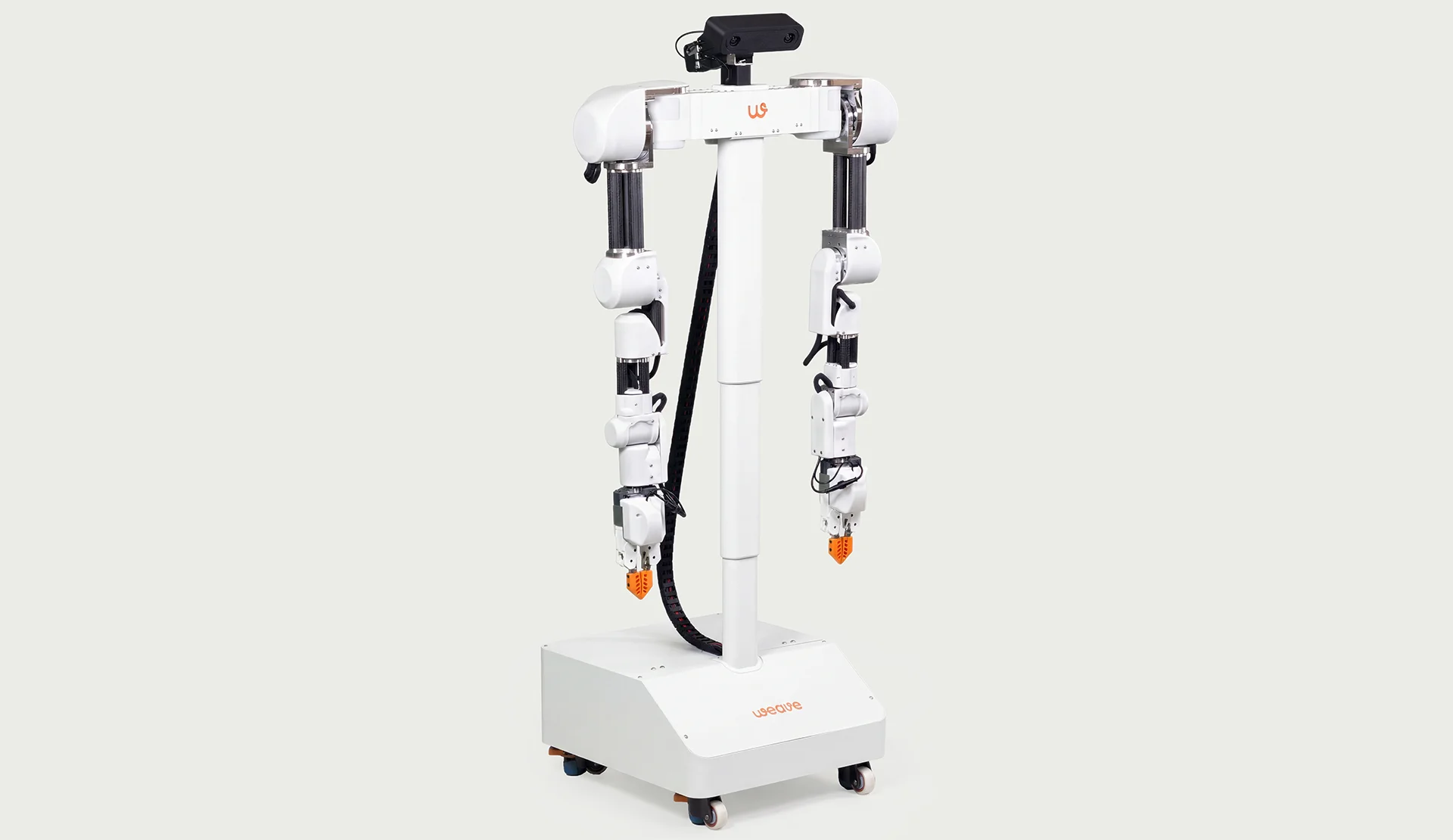 Weave Robotics Weave Isaac | 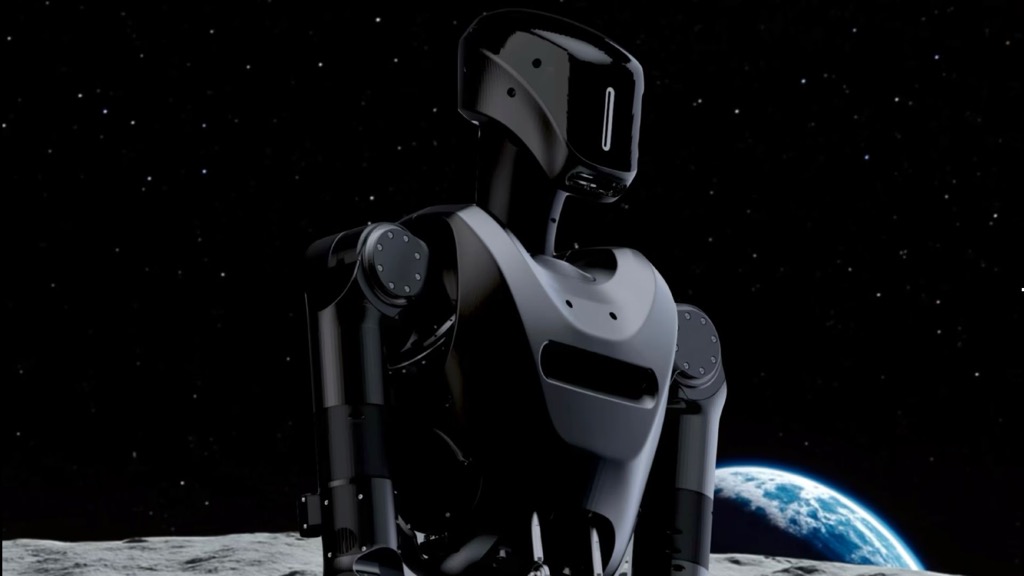 Foundation (Foundation Robotics) Foundation Phantom | 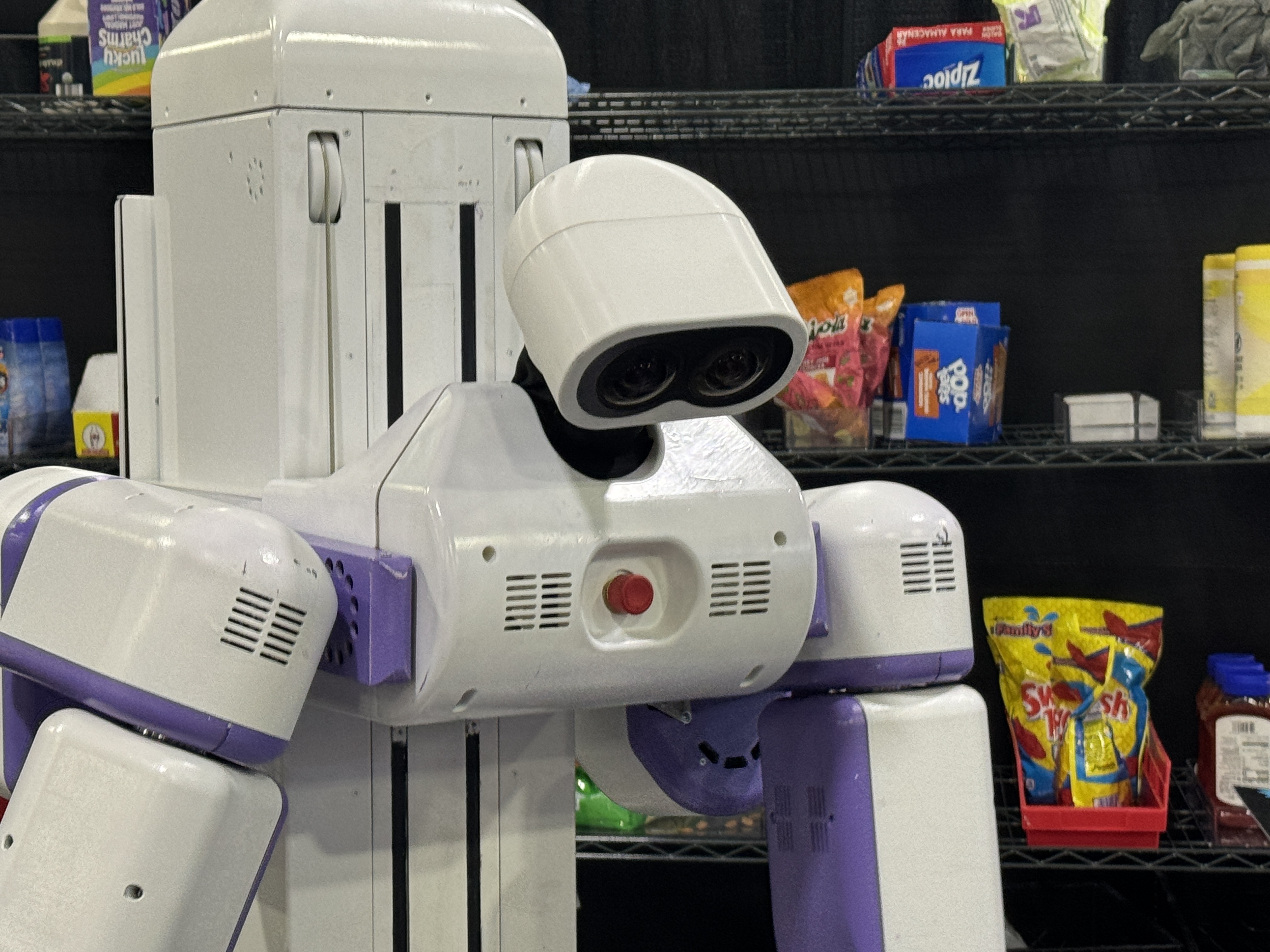 Reflex Robotics Reflex Robot | |
|---|---|---|---|---|
| Price (US) | $20,000 – $30,000 | $7,999 – $9,999 | $100,000 – $150,000 | ~$10,000 |
| Availability | Research / limited | On the market | Lease / RaaS | Pilot programs |
| Height | 1.73 m | Unknown | 1.75 m | Adjustable via spine |
| Payload | ~20 kg | Unknown | 40 kg dual-arm | 25+ lb/arm |
| DoF | ~28 | Isaac | 29 | Unknown |
| Buyer | Enterprise | Individuals | Enterprise | Enterprise |
| Made in | US | US | US | US |
Every spec, grouped & sourced
Tap a group to expand. Values are labelled official vs third-party; unknowns are omitted, not guessed.
Body & movement▾
Power & endurance▾
Hands & senses▾
Brains & control▾
Claims vs evidence
Vision/planning AI (FSD lineage); some demos teleoperated; Musk admits no useful factory work yet
Where it's working
Internal Tesla factories only; no external customer deployments verified
Intended use cases: General-purpose factory labor (initially Tesla's own factories); aspirational household chores
What owners, reviewers and the press say about the Tesla Optimus
Ratings and reception gathered from where this machine is actually sold and discussed. We summarise the signal — we don't republish anyone's reviews.
Optimus has never been sold to anyone outside Tesla, so no marketplace, reseller or owner community carries a star rating for it. Nothing that looks like a consumer score for this robot is real.
- IEEE Spectrum — polled working roboticists in 2024, who credited the team's speed but were largely unimpressed by the design itself · 2026-08-30
- Robohub — judged the 2022 prototype well short of the field's state of the art · 2026-08-30
+Reviewers consistently praise
- cost-reduction ambition and Tesla's manufacturing scale
- visible iteration between generations
- in-person encounters at Tesla's own venues reported as pleasant
!And consistently criticise
- demos widely believed to be teleoperated and not disclosed as such
- the quoted price treated as fiction
- slow, loud and clumsy next to the marketing
- repeatedly missed timelines
- hands and dexterity seen as the real unsolved problem
What owners and developers actually say
Optimus generates enormous argument and zero ownership. The single recurring theme across every venue is suspicion that demonstrations are teleoperated without being labelled as such, and threads run unusually hot — comment counts often rival or exceed upvote counts, which is the signature of a fight rather than an appreciation. Robotics-literate posters focus on the hands as the genuinely unsolved part; the wider Tesla subreddits treat the robot as a proxy for arguments about the company itself.
r/RealTesla, r/teslamotors, r/robotics, r/singularity, r/Futurology, Hacker News · as of 2026-08-30
Consensus drawn from no hands-on review by any independent party exists; drawn from explainer and analysis videos (largest around 10.7M, 6.8M and 5.6M views), published expert commentary, and community threads reaching about 1,500 upvotes with 191 comments.
Tesla Optimus: the claims, checked
demo only
No external sale, lease or delivery has ever occurred. First production lines were being installed at Fremont as of Tesla's 22 July 2026 shareholder update, with production 'anticipated later this year'; several outlets reported a production start in late August 2026 but none cited a Tesla announcement, date or unit count. Tesla told JPMorgan analysts around 20 August 2026 that external sales begin no earlier than H2 2027. Units exist only at Tesla Fremont, Gigafactory Texas and the Tesla Diner in Hollywood.
as of 2026-08-30
- false“The Tesla Optimus is fully autonomous”
Musk on Tesla's 28 January 2026 earnings call described Optimus as "still in the R&D phase" and "not in usage in our factories in a material way." Walking and balance are autonomous; every widely circulated manipulation demo has been human-driven.
- false“You can buy or pre-order a Tesla Optimus in 2026”
There is no order page, deposit, configurator or waitlist. Tesla told JPMorgan analysts around 20 August 2026 that external commercial sales begin no earlier than H2 2027. Any site accepting payment for one is not authorised by Tesla.
- false“The bartender robot at the We, Robot event was autonomous”
At the 10 October 2024 event, attendees established that the robots serving drinks and conversing were human remote-assisted. Tesla did not disclose this during the presentation.
- false“Optimus folded laundry by itself”
The January 2024 shirt-folding video was teleoperated, and Musk confirmed at the time that Optimus could not yet perform the task autonomously. A telepresence glove is visible in the footage.
- misleading“A Tesla Optimus costs $20,000”
That is a target Musk gave in October 2024 for production at millions of units per year, not a price. Published 2025-26 humanoid bill-of-materials research puts non-China build cost far higher. Note that $20,000 is a real current price - for the 1X NEO, not for Optimus.
- false“Tesla built 10,000 Optimus robots in 2025”
That was the target Musk stated on the January 2025 earnings call. Independent shipment reporting published by CNN on 29 July 2026 put Tesla's actual 2025 humanoid output at a few hundred units or fewer; the research firm Omdia estimated below 500.
- false“Gen 3 Optimus was unveiled in 2026”
As of 30 August 2026 Gen 3 has never been publicly shown. The reveal slipped from Q1 2026, to mid-2026 on Musk's 31 March 2026 statement, to late July or August 2026, and has not happened.
- false“There is an Optimus SDK you can develop against”
No SDK, API, developer documentation or simulator exists. Tesla's only public developer programme is the vehicle Fleet API, launched October 2023, which is unrelated to the robot.
- false“Optimus is doing real work in Tesla's factories”
Contradicted by Tesla's own CEO on 28 January 2026. The 22 July 2026 shareholder update states that first production units go to training-data collection and functionality development rather than productive tasks.
- unverified“Optimus has a 22-degree-of-freedom hand”
A hand with 25 actuators and 22 degrees of freedom, with actuation moved into the forearm, appears in Tesla patent filings surfaced during 2026. That is a design filing, not a demonstrated or shipped capability.
Tesla in 2026
Tesla is the only Western company attempting humanoid robots with automotive-scale manufacturing behind it, and that remains the strongest argument for the programme. It designs its own AI silicon - the AI5 chip taped out on 15 April 2026, with Optimus named as an early deployment target - runs its own training clusters, and converted the Fremont Model S and Model X line to Optimus production in about 46 days after ending those programmes in early May 2026. A dedicated Optimus factory is under construction at Gigafactory Texas, with steelwork visible from late May 2026 and higher-volume production expected around summer 2027.
The programme has also been unusually turbulent. Milan Kovac, who led Optimus engineering, left the company on 6 June 2025; Ashok Elluswamy, Tesla's Autopilot and AI lead, took over and still runs it, which is why Optimus and FSD share a stack. Optimus AI team lead Ashish Kumar departed for Meta in September 2025, and both Forbes and Electrek reported meaningful AI attrition through late 2025. Mass-production preparation was reported paused in October 2025 over an unresolved hand and forearm design. Musk stated on the January 2026 earnings call that the robot remains in R&D and is not doing material factory work. Tesla has never disclosed an Optimus unit count, a build rate or a price.
What to watch next
- Late October 2026 - Tesla's Q3 2026 earnings call, the first chance for Tesla to confirm on the record that Fremont production actually started and to give any unit number
- 10 November 2026 - China's paused rare-earth export measures expire; Optimus actuators depend on neodymium and dysprosium and Musk confirmed in April 2025 that controls affected production
- By 31 December 2026 - the Gen 3 reveal Tesla still describes as 'later this year'; it has already slipped three times and a fourth slip would be the clearest signal available
- End of 2026 - Musk's stated goal of Optimus doing useful work inside Tesla factories, directly testable against his January 2026 admission that it is not
- H2 2027 - the earliest date Tesla has given anyone for external commercial sales, per its August 2026 briefing to JPMorgan analysts
- Summer 2027 - planned start of Optimus production at the dedicated Gigafactory Texas facility
- Ongoing - AI5 silicon rollout, with Optimus listed among the first deployment targets after the 15 April 2026 tape-out
Should you consider the Tesla Optimus?
Tesla Optimus is the most-searched humanoid robot in the world and, right now, the least real. Three named sites, roughly a few hundred units built against a 10,000-unit target, a generation that has never been publicly shown, no price, no SDK, no customer, and a CEO who said in January 2026 that it is not doing material work in his own factories. None of that means the programme fails - Tesla has silicon, capital and factory floor space that no other Western humanoid company can match, and the Fremont line is genuinely being built. But if you are making a decision this year, make it on the two dates Tesla has actually put on the record: H2 2027 for the first external sale, and 'later this year' for a reveal that has already moved three times. Everything else is a forecast wearing a spec sheet.
Score reflects stated criteria (availability, data confidence, US relevance) — not hands-on testing or user ratings. We're an independent review & comparison site; we don't sell robots. *Financing figure is illustrative.
How we know this
Data confidence 62/100 · last verified 2026-08-30. Specs are labelled official vs third-party and dated; unknowns are omitted, not guessed.
Tesla Optimus — your questions, answered in full
How much does a Tesla Optimus cost?+
Tesla has never published a price. Musk has said $20,000-$30,000 at high volume, most prominently in October 2024 and again in January 2026, but that figure assumes production of millions of units per year and has not been repeated in any official 2026 Tesla communication. Based on published 2025-26 humanoid component-cost research for non-China manufacture, we estimate a realistic first external unit at $50,000-$100,000. As of 30 August 2026 that is an estimate, not a quote.
Can you buy a Tesla Optimus?+
No. There is no order page, no reservation, no deposit and no dealer. Tesla told JPMorgan analysts around 20 August 2026 that external commercial sales begin no earlier than the second half of 2027, and its 22 July 2026 shareholder update says first production units go to data collection rather than customers.
When will the Tesla Optimus be available?+
The earliest date anyone at Tesla has given is the second half of 2027, and it was phrased as 'as early as'. There is no consumer availability date at all. Given that the Gen 3 reveal has already slipped three times during 2026, treat 2027 as a floor rather than a plan.
Can a Tesla robot clean a house?+
No. Tesla has never demonstrated an Optimus completing a household task autonomously. The one domestic-looking demo - folding a shirt in January 2024 - was teleoperated, and Musk said so at the time. Tesla's stated roadmap points at industrial buyers first, from H2 2027 at the earliest, with no consumer household date announced by anyone at the company.
Can Tesla Optimus cook?+
No. There is no public demonstration of Optimus preparing food autonomously. The Optimus at the Tesla Diner in Hollywood serves popcorn and has been confirmed by staff to be operated by a nearby human; on 23 July 2025 that operator lost connection and the robot stopped mid-service.
How many Optimus robots has Tesla built?+
Tesla has never said. Musk targeted roughly 10,000 units for 2025 on the January 2025 earnings call. Independent shipment reporting published by CNN on 29 July 2026 put Tesla's actual 2025 output at a few hundred or fewer, and the research firm Omdia estimated below 500. External sales remain at zero.
Is the Tesla Optimus teleoperated?+
Partly, and it depends on the task. Walking and balance are genuinely autonomous, driven by neural networks derived from Tesla's driving stack. Dexterous manipulation in public demos has consistently been human-driven - the January 2024 laundry video, the October 2024 We, Robot event and the Tesla Diner unit have all been confirmed as human-assisted.
When is the Tesla Optimus Gen 3 being revealed?+
It has not been revealed as of 30 August 2026, and Tesla has stopped giving a firm date. The target moved from Q1 2026, to 'probably middle of this year' after Musk's 31 March 2026 comments, to late July or August 2026, and then past that. The 22 July 2026 shareholder update says only 'later this year'.
Tesla Optimus vs Figure 03 - which is further along?+
Figure, on the measures that can be checked. Figure 03 is deployed at BMW's Spartanburg plant on logistics sequencing, confirmed by BMW's own 25 June 2026 press release, and Figure ran an 81-hour package-sorting demonstration in May 2026 that its CEO stated involved no teleoperation. Tesla has no external deployment and has not shown its current generation. On 2025 shipments the two were roughly level, both in the low hundreds.
Does the Tesla Optimus have an SDK or API?+
No. There is no SDK, API, developer documentation or simulator for Optimus in any form. Tesla's only public developer programme is the vehicle Fleet API from October 2023. Claims of an enterprise SDK arriving in late 2026 originate from AI-generated content sites and have no Tesla source.
Is the Tesla Optimus safe to be around?+
Unknown, in the formal sense. No US federal humanoid-robot safety standard exists, ISO 25785 is still in development, and no independent third-party safety validation of Optimus has been reported. Tesla does its own internal testing. The 57 kg mass and roughly 2.2 m/s walking speed of Gen 2 put it in a category where that gap matters.
Can I invest in Tesla Optimus specifically?+
Not separately. Optimus is a programme inside Tesla, not a subsidiary or a separate share class, so exposure to it means owning Tesla stock. Tesla does not break out Optimus revenue, spending or unit numbers in its filings, and has never published a unit count.
Peer-reviewed research on the Tesla Optimus
Published academic work — peer-reviewed papers and preprints — involving this robot or its maker's systems, indexed in scholarly databases (OpenAlex, arXiv). Not blog posts or press write-ups.
- Intelligent humanoids in manufacturing to address worker shortage and skill gaps: Case of Tesla OptimusAmir Ali Amini, Mohammad Chegini et al. · 2023 · arXiv preprint · DOI 10.48550/arXiv.2304.04949
- Humanoid Robots like Tesla Optimus and the Future of Supply Chains: Enhancing Efficiency, Sustainability, and Workforce DynamicsMohammad Shamsuddoha, Mohammad A. Nasir et al. · 2025 · Automation (MDPI) · DOI 10.3390/automation6010009
Academic references are factual citations from open scholarly indexes; listing is not endorsement.