UBTech U1 Robot

The UBTech U1 is the UWORLD U1 series, launched by UBTech Robotics in Shenzhen on 30 June 2026. It comes in three configurations: U1 Lite at RMB 119,800 is a half-body unit with no limbs, U1 Pro at RMB 169,800 is full-body but does not walk, and only U1 Ultra at RMB 880,000-990,000 is bipedal. Deliveries began 16 September 2026.
US buyers: no new imports — this model has no US authorization on record, and the July 2026 rule closes that route.
The U1 line launched into a China-domestic presale with no US distributor, and after 28 July 2026 a newly launched Chinese model cannot obtain the FCC authorization US import and sale require. There is no announced route for a US buyer. Note also that the U1 is newer than much of the coverage you will find, which still describes UBTech's earlier line.
China-domestic presales continue; the restriction is US-only.
As of 2026-08-30 · medium confidence — verify before you commit funds
What is the UBTech U1 Robot?
The U1 is the companion-facing UBTech robot, now the anchor of the company's UWORLD line.
The UBTech U1 is sold as one product name across an 8x price range, and the differences between the configurations are structural rather than cosmetic. The entry unit has no arms and no legs. The mid unit has limbs but cannot walk. Only the top unit is bipedal.
UBTech Robotics — the Shenzhen manufacturer listed in Hong Kong under 9880 — launched the UWORLD U1 series at its 2026 Global Launch Event on 30 June 2026, with international syndication the following day. UWORLD is a consumer-facing sub-brand of UBTech rather than a separate company. Pre-orders opened on Chinese e-commerce platforms on 2 June 2026 against a refundable RMB 3,000 deposit, and UBTech reported 13,361 cumulative orders by launch day. First deliveries were scheduled from 16 September 2026.
Two figures in wide circulation are wrong. RMB 119,800 converts to roughly $16,700 at late-August 2026 rates, not the $30,000 that appears on most catalogue pages. And the 183 cm and 168 cm body figures quoted alongside that price do not describe the RMB 119,800 unit — they describe the two configurations above it. This page sets out what each configuration actually is, mechanically, and marks clearly which specifications are manufacturer claims that nobody outside UBTech has yet been able to test.
What the UBTech U1 can — and can't — do today
+Does this out of the box
- Articulate the head and neck through a proprietary dual-pivot biomimetic cervical spine
- Operate 88 claimed degrees of freedom on the full-body Pro and Ultra configurations
- Sense contact through whole-body tactile sensing on the full-body configurations
- Walk on flat indoor surfaces using taught gait patterns — U1 Ultra only
- Hold spoken interaction with no wake word, at a claimed 500 ms local response latency
- Store and process interaction data locally and encrypted by default, with the internet connection optional
- Hold a fixed-position service role — reception, exhibition, showroom, teaching demonstration
!Doesn't do, whatever the demo shows
- Walk at all on the U1 Lite or U1 Pro; locomotion begins at the RMB 880,000 Ultra
- Use arms or legs on the U1 Lite, which is a head and torso only
- Perform domestic tasks; Chinese coverage states directly that it does not sweep, cook or do household work
- Run longer than 2-4 hours per charge on any configuration, including the RMB 990,000 one
- Handle stairs or uneven ground even on the Ultra; walking is flat indoor surfaces only
- Be programmed by its owner — no SDK, API, ROS support or developer documentation exists
- Be purchased outside China; no configuration holds a US FCC equipment authorisation
Every performance figure attached to the U1 is a manufacturer claim. As of 30 August 2026 no unit had reached a customer and no independent test of any configuration existed.
What is the UWORLD U1?
The UWORLD U1 is a full-size service humanoid built by UBTech Robotics Corp Ltd, founded in Shenzhen in 2012 and listed on the Hong Kong exchange under stock code 9880. UWORLD is a consumer sub-brand introduced with this product; there is no separate company by that name, and no rival product with a similar name in the market to confuse it with.
The series was announced at UBTech's 2026 Global Launch Event in Shenzhen on 30 June 2026 by founder, chairman and chief executive James Zhou, alongside chief brand officer Michael Tam. Purchase is restricted to buyers aged 18 and over.
It is not part of UBTech's Walker line. Walker S2 is the industrial humanoid that generates the company's revenue in vehicle plants, and it shares neither market nor engineering emphasis with the U1. It is also distinct from the Tien Kung Xingzhe, a research humanoid UBTech commercialised at RMB 299,000 in March 2025 that descends from a Beijing municipal research platform.
The applications UBTech lists that the hardware can be assessed against are reception and hospitality, tourism and exhibition work, and research and teaching. Those are static or near-static roles, which matters given what the configurations below can and cannot do.
How much does the UBTech U1 cost?
Three configurations, spanning 8.3x from bottom to top.
The U1 Lite is RMB 119,800, roughly $16,700 to $17,600 at late-August 2026 rates. The U1 Pro is RMB 169,800, roughly $23,800 to $25,000. The U1 Ultra is RMB 880,000 to RMB 990,000 depending on body variant, which converts to roughly $123,000 to $146,000.
The "$30,000" figure circulating on aggregator pages and social posts corresponds to no configuration in the range — it sits above the Pro and far below the Ultra, and we could not establish where it originated. The correct conversion of the RMB 119,800 entry price is around $16,700.
Ordering ran through Chinese e-commerce platforms against a RMB 3,000 deposit, about $415, fully refundable until 15 July 2026, with the final payment window opening around 16 July. That structure is relevant to the order figure UBTech published. Cumulative orders were reported at more than 1,000 in the first three days, over 4,600 on one platform by 18 June, and 13,361 across all channels by 30 June. All of those are refundable reservations; UBTech has published no breakdown of paid versus binding. For scale, 13,361 is roughly twelve times UBTech's entire full-size humanoid output for 2025.
One stale number worth correcting, because it sits in most catalogue entries including our previous one: the "5,000 presold" figure was accurate around 18 June 2026 and was superseded within two weeks.
What is the difference between U1 Lite, Pro and Ultra?
The configurations are different machines, not trim levels, and this is the single most important thing to understand before comparing the U1 to anything else.
U1 Lite, RMB 119,800. A half-body unit: head and torso only, with no arms and no legs. It is mounted or seated. Its function is upper-body articulation and spoken interaction. Whatever else it is, it is not a humanoid robot in the sense the price comparison implies.
U1 Pro, RMB 169,800. Full-body, with limbs and whole-body tactile sensing, and the configuration to which the headline 88-degree-of-freedom figure applies. It does not walk. Chinese reporting from early July 2026 states directly that the Pro does not support walking, autonomous movement, high-dynamic motion or large-range locomotion, and describes its limb joints as posable by hand rather than self-locomoting. It also does not perform domestic tasks, which has been stated explicitly in Chinese coverage.
U1 Ultra, RMB 880,000-990,000. The only configuration with bipedal walking and autonomous movement. Where walking exists it is taught gait patterns on flat indoor surfaces — no stairs, no uneven ground, no load carriage through a building. UBTech directs the Ultra at commercial buyers rather than individuals.
So the practical reading of the price ladder is: RMB 119,800 buys articulation, RMB 169,800 buys limbs, and RMB 880,000 buys locomotion.
UBTech U1 specifications: size, degrees of freedom, actuation
The published physical figures apply to the Pro and Ultra configurations, not to the half-body Lite. Two body variants exist: 183 cm at 42 kg, and 168 cm at 35.2 kg, both built to 1:1 human proportions.
Degrees of freedom are given as 88. That figure is consistent across UBTech's own release and the Chinese state media coverage of the launch, so it is a stable manufacturer claim — but no independent audit of the joint count exists and UBTech has published no test protocol, so it should be read as a claim rather than a measurement. The same applies to the stated coverage of 90% of fundamental human movements, which has no published methodology behind it.
The one named mechanical subsystem is a proprietary dual-pivot biomimetic cervical spine in the neck, which is what drives the head articulation the launch demonstrations emphasised.
What UBTech has not published, in any language we could find: the sensor suite in any detail (camera count and type, whether there is depth or lidar, tactile array density), actuator specifications or joint torque figures, payload, walking speed for the Ultra, IP rating, and the charging method — cable, dock or swappable pack is not specified anywhere. For a machine at this price, that list of omissions is unusually long.
One reported figure worth flagging with a caution: a single teardown-style report places the U1 on a Rockchip RK3588, a mainstream edge system-on-chip delivering roughly 6 TOPS. It is one source and should be treated as reported rather than confirmed. If accurate, it puts the U1 two to three orders of magnitude below industrial humanoids on compute — Unitree quotes 2,070 TOPS for its H2 — which bounds what could later be added by software.
How long does the UBTech U1 battery last?
Two to four hours per charge, on every configuration in the range including the RMB 990,000 one. That is the dominant operational constraint on this machine and it became a public dispute in China within days of launch.
UBTech responded officially on 6 July 2026, and the response is notable for what it conceded rather than what it corrected. The company did not offer better figures. It said that full-size humanoid runtime is generally two to four hours and that this reflects an industry-wide limit.
That is broadly accurate as a statement about the category and largely beside the point for a buyer, because the engineering answer already exists inside UBTech. Walker S2, the company's industrial humanoid, was the first of its kind with autonomous battery swapping — the robot changes its own pack and returns to work. The U1 has no such mechanism, and no charging method or recharge time has been published at all.
Plan accordingly. A two-hour reception shift or a scheduled exhibition slot fits inside the runtime. Continuous availability does not, and no software update changes a power budget.
How autonomous is the U1, and has anyone tested one?
No independent party had tested any U1 configuration as of 30 August 2026, because none had been delivered. Pre-sale terms promised first units no later than 15 September 2026, with the first batch shipping from 16 September. Every specification, capability and performance figure attached to this robot is therefore a pre-delivery vendor claim.
The interaction specifications UBTech has published are a roughly 500-millisecond local response layer backed by a slower deep-reasoning layer, speech-to-lip-sync latency under 20 milliseconds, and no wake-word requirement. None has been independently measured.
On data handling, UBTech states that information is encrypted and stored locally by default with no mandatory cloud upload, under what it calls a three-layer privacy architecture, and that the internet connection is optional. That local-first posture is materially better than the norm for connected devices in this category and is worth crediting, though it too is unverified.
What has been observed publicly is stage demonstration. Multiple Ultra units walked on stage among people at the launch, and UBTech has said the staging was designed to demonstrate that movement, balance and force were physically real rather than rendered. Scripted stage walking is not evidence of autonomy, and no source states whether teleoperation was used in any demonstration. UBTech has published no autonomy protocol for the U1.
Chinese technology press that attended has been cooler than the international coverage. One outlet ran a headline in early July 2026 to the effect that the robot sells extremely well but the actual machine falls short of the marketing, with observers reporting a stiff gait, motion differing from the promotional material, and lag in conversational response. Broader reporting from the Beijing robot conference in August 2026 put Chinese humanoids generally at around 20% of human working speed.
Is there a U1 SDK or developer access?
No evidence of one, and the absence appears to be by design.
UBTech describes UWORLD as a fully proprietary end-to-end technology stack — hardware, operating system, models and system-level manufacturing all in-house — and refers to the software layer as an agent-based operating system. That is closed-stack language. We found no U1 SDK, API, developer programme, ROS support, documentation portal or third-party application store referenced in UBTech's release, in Chinese coverage, or anywhere else.
UBTech does provide developer access elsewhere in its catalogue. Its education products ship with programming environments, and third parties report developer access on research platforms including the Tien Kung Xingzhe. Nothing indicates the U1 is programmable by its owner.
For a research or teaching buyer that is close to disqualifying, since you cannot publish work on a robot you cannot program. The Tien Kung Xingzhe at RMB 299,000, or a Unitree R1 EDU at $10,500, are the relevant alternatives for that requirement.
Can you buy a UBTech U1 outside China?
No. UBTech has announced no consumer release date, regional pricing, warranty programme or order path for the United States, Europe, the UK or Australia. Sales run through Chinese e-commerce platforms, domestically, to adults.
The Western sites that appear in search results offering a UBTech U1 for sale are affiliate and dropship directories rather than authorised channels. Their pricing is internally inconsistent to the point of being self-refuting — one such page has listed the same U1 Pro at both $35,000 and $159,950 — and their specification tables are fabricated. None of them constitutes evidence that Western availability exists.
On the regulatory side, FCC Public Notice DA 26-786 of 28 July 2026 added foreign-produced advanced robotic devices to the Covered List, which blocks new US equipment authorisations for covered mobile robots. The test is country-neutral: "foreign-produced" means failing the Buy American domestic-end-product standard of US manufacture with more than 65% domestic component cost. It is not a customs ban and not a recall — models authorised before that date remain legal to import, sell, own and resell, with firmware updates permitted through at least 1 January 2029.
No FCC equipment authorisation is visible for any U1 configuration, which is unremarkable given the product launched a month earlier for the Chinese market only. UBTech's Walker-class machines are in the same position. The accurate framing is narrow: the FCC action did not close a US route for the U1, because UBTech never opened one. It means that route now requires a case-by-case conditional approval, and none had been granted to any manufacturer as of early August 2026.
What does UBTech actually build for a living?
Industrial humanoids, sold into named vehicle plants at around $106,000 each — and that record is the most substantial evidence of real deployment anywhere in Chinese humanoid robotics.
Walker S2 entered mass production and delivery on 17 November 2025 and is, as far as we can establish, the first industrial humanoid with autonomous battery swapping. The customer list is unusually specific for this sector: BYD, Dongfeng Liuzhou Motor, Geely Auto, FAW-Volkswagen Qingdao, Audi FAW, BAIC New Energy, Foxconn and SF Express, plus a data-collection centre in Zigong, with Airbus added through a deal reported in January 2026. Cumulative Walker orders have passed RMB 800 million — about $112 million — since early 2025, including a single RMB 250 million order in September 2025 and a RMB 159 million Zigong contract.
Because UBTech is listed, the unit economics are public. It delivered 1,079 full-size humanoids in 2025 at an average selling price near RMB 760,000, roughly $106,000, at 54.6% gross margin. In the first half of 2026 it sold 921 full-size units generating RMB 590 million, up more than fourteenfold year on year and 46.5% of total revenue.
UBTech has never published a Walker S2 list price. Every USD figure in circulation, from $80,000 to $300,000, traces to affiliate directories rather than the company, and the only defensible anchor is that disclosed 2025 average selling price of about $106,000 — which blends configurations and bundled services.
One discrepancy to be aware of, since it appears in UBTech's own social posts: a claim of 16,123 humanoid robots shipped in the first half of 2026 sits alongside financial reporting of 921 full-size units for the same period. The larger figure almost certainly bundles small, educational and consumer-grade robots and should not be used as a full-size humanoid number.
How does the U1 compare with Unitree and AgiBot?
On price against mechanical capability, poorly, and the comparison is unavoidable.
A Unitree G1 is $13,500 from Unitree's own store. It walks, it runs, and in the EDU configuration it is programmable. The U1 Pro is roughly $24,000 to $25,000 and does not walk. For a buyer whose requirement includes locomotion or software access, that single comparison settles it.
At the top of the range, the Ultra at roughly $123,000 to $146,000 sits in AgiBot A2 territory. AgiBot is the volume leader: 9,700 units in the first half of 2026 for a 43% share by Counterpoint's count, against Unitree's 7,000-plus at 31%, Galbot's 1,100-plus, UBTech's 1,000-plus at 4.4%, and Leju's 650, out of roughly 22,000 humanoids shipped globally in the half — about four times the year before.
UBTech's placement in that table is the interesting part. It is fourth by volume while selling by far the most expensive units, at several times Unitree's average price. A company shipping a thousand machines at $106,000 into Audi and BYD plants is running a structurally different business from one shipping seven thousand at $13,500 into universities.
One sector-wide figure worth carrying into any humanoid purchase: entertainment and data-production applications accounted for more than 60% of all humanoid shipments in the first half of 2026, with intelligent manufacturing at 13% and warehousing and logistics at 5%. Most humanoids sold today are not doing work. UBTech's factory contracts are a genuine exception, which makes the U1 an odd fit inside its own catalogue.
Which U1 claims are verified, and which are not?
Verified: the product exists and is UBTech's; the three configuration prices are reported consistently across multiple independent Chinese outlets and the RMB 119,800 entry figure appears in UBTech's own launch release; the two body variants at 183 cm / 42 kg and 168 cm / 35.2 kg; the dual-pivot cervical spine; the two-to-four hour runtime, confirmed by UBTech's own public response of 6 July 2026; the 30 June 2026 launch date and the 16 September 2026 delivery start.
Manufacturer claim, unaudited: the 88 degrees of freedom, repeated consistently but never independently counted, with no published test protocol. Same for the coverage of 90% of fundamental human movements, the sub-20-millisecond speech-to-lip-sync latency and the 500-millisecond response layer.
Company assertion: the 13,361 order count, which covers RMB 3,000 refundable deposits with no paid-versus-binding split published.
Single source, treat as reported: the Rockchip RK3588 compute platform.
Unsupported and worth deflating: there is no credible source for any "sold out in minutes" claim about the U1. The actual sequence was a four-week pre-sale ramp from 2 to 30 June 2026.
And one unresolved dispute about UBTech's evidence generally: on 14 November 2025 Figure AI's chief executive Brett Adcock publicly alleged that UBTech's mass-delivery video showing rows of Walker S2 units was faked, citing inconsistent reflections between the foreground robot and those behind it. UBTech replied with drone footage of hundreds of units in an industrial facility. No independent resolution exists. Adcock has a documented pattern of publicly attacking competitors, which is worth weighting — but the dispute concerns UBTech's flagship deployment evidence and it has never been settled.
Who is the U1 actually for?
The U1 Pro suits a Chinese business that needs a fixed-position humanoid presence with strong upper-body articulation and spoken interaction: a reception desk, an exhibition stand, a showroom, a hotel lobby, a teaching demonstrator. None of those requires walking, and the local-first data handling is a genuine advantage in settings where visitors are recorded.
The Ultra suits a commercial operator that needs the machine to relocate between positions within a venue and can carry a six-figure capital cost. UBTech itself points the Ultra at commercial rather than individual buyers.
The Lite should not be bought as a humanoid robot. It is a head and a torso, and its price looks attractive only against a category it does not belong to.
No U1 configuration suits research or development work, because there is no SDK and the stack is proprietary end to end.
And none of them should be bought from outside China: no channel, no warranty, no service network, no US authorisation path, and the Western storefronts advertising one are directories rather than retailers.
Finally, nobody should buy any configuration expecting work output yet. Not one unit had reached a customer as of 30 August 2026, no independent test exists, and the manufacturer's own honest answer on runtime is two to four hours. If the requirement is a robot that does a job, the same company will sell you a Walker S2 that swaps its own battery and is already running in named vehicle plants.
The UBTech U1 on video
Hands-on reviews and teardowns, picked for what they actually show rather than how loud the thumbnail is.
The July 2026 UWORLD U1 launch — this is the machine, and it is not the older U1 entry most articles describe
Breaks the three U1 trims apart, which is the first thing you need before comparing prices
Short, neutral overview of the Ultra's spec sheet without the launch-event framing
UBTech U1 price ladder — and what the entry price leaves out
The headline number is almost never the number you pay. Here is each configuration, and what it does not include.
| Configuration | Price | What you get | What it excludes |
|---|---|---|---|
| UWORLD U1 Lite (半身版, half-body) | RMB 119,800 (~$16,700-17,600) | Head and torso, neck and facial articulation, spoken interaction stack, local encrypted data storage | No arms, no legs, no locomotion. This is the configuration behind the widely quoted entry price |
| UWORLD U1 Pro (高配全身版, full-body) | RMB 169,800 (~$23,800-25,000) | Full body with limbs, whole-body tactile sensing, the 88 DOF figure, 183 cm / 42 kg or 168 cm / 35.2 kg body variant | Does not walk or move autonomously, no high-dynamic motion, no domestic tasks. Limb joints are posable rather than self-locomoting |
| UWORLD U1 Ultra (高动态全身版) | RMB 880,000-990,000 by body variant (~$123,000-146,000) | The only configuration with bipedal walking and autonomous movement; directed by UBTech at commercial buyers | Walking is taught gait on flat indoor surfaces only — no stairs, no uneven ground. Same 2-4 hour runtime as the entry configuration |
| Pre-order deposit | RMB 3,000 (~$415) | Fully refundable until 15 July 2026; final payment window opened around 16 July; first deliveries from 16 September 2026 | The 13,361 order figure UBTech reported at launch counts these refundable reservations, with no paid-versus-binding split published |
What owning one actually costs
| Cost | Typical | Notes |
|---|---|---|
| Shipping & import duty | Not applicable outside China | Sales are domestic Chinese only. No configuration holds a US FCC equipment authorisation, and DA 26-786 of 28 July 2026 forecloses new authorisations absent a conditional approval |
| Warranty | Not published | No warranty terms have been published for the U1 in any language we could locate |
| Service network and spare parts | Not published | No service network, parts pricing or repair pathway is documented, inside or outside China |
| Outer covering replacement | Unknown | The silicone outer covering is a wear item on any realistic reading, and no replacement interval or cost has been published |
| Charging | Unknown | No source specifies cable, dock or swappable pack, and no recharge time is published. Runtime is 2-4 hours on every configuration |
| Software and updates | Not published | UBTech describes an agent-based operating system but has stated no subscription, update or support terms |
| Delivery, installation and training | Unstated | None of these appear in UBTech's published pre-sale terms |
Who the UBTech U1 is — and isn't — for
+Where it shines
!Watch-outs
- Sold to businesses only — not to private buyers.
- Public data is thin; verify key figures before relying on them.
How the UBTech U1 stacks up
Side by side with similar robots — the one you're reading about is highlighted.
| This robot UBTech Robotics UBTech U1 | 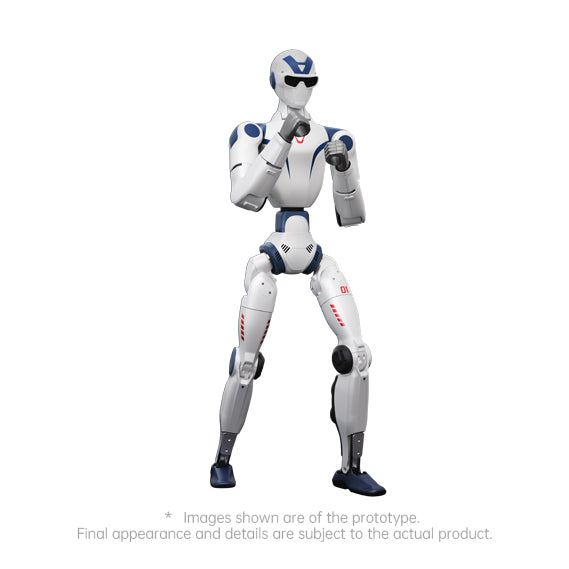 Unitree Robotics Unitree R1 | 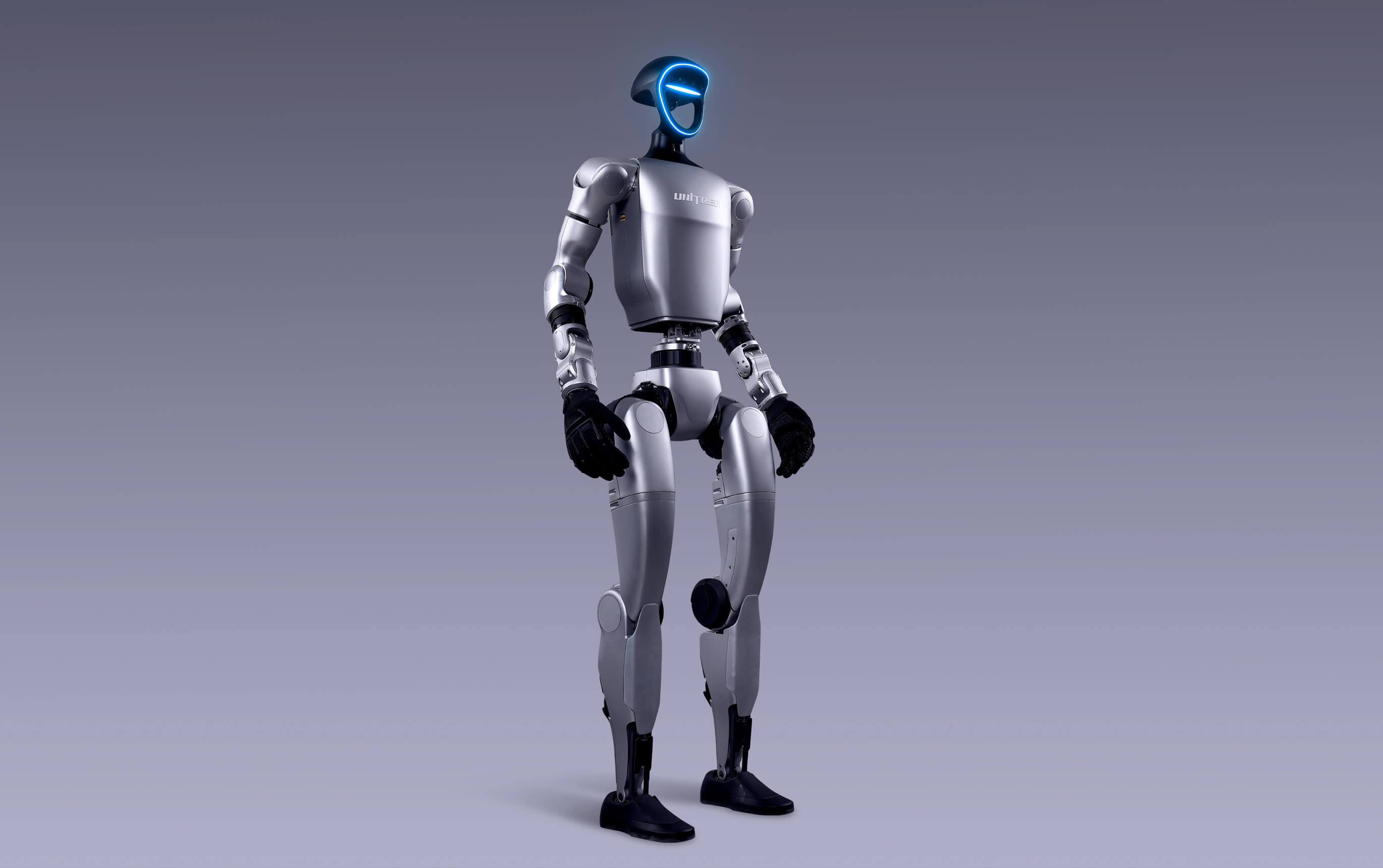 Unitree Robotics Unitree G1 | 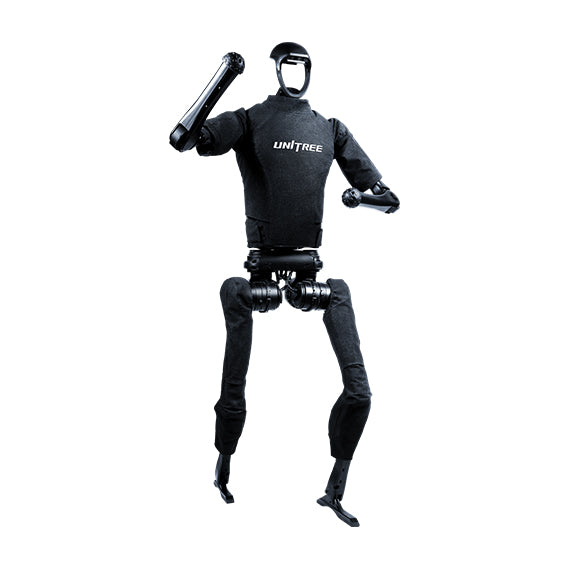 Unitree Robotics Unitree H1 | |
|---|---|---|---|---|
| Price (US) | ~$30,000 | $4,900 – $5,900 | $13,500 – $73,900 | ~$90,000 |
| Availability | Reservations open | On the market | On the market | On the market |
| Height | 1.83 m / 1.68 m by body variant | 1.23 m | 1.32 m standing | ~1.80 m |
| Payload | Unknown | Unknown | Arm ~2 kg | Not rated for H1 |
| DoF | 88 | 20 | 23 | ~19 |
| Buyer | Enterprise | Individuals | Individuals | Enterprise |
| Made in | China | China | China | China |
Every spec, grouped & sourced
Tap a group to expand. Values are labelled official vs third-party; unknowns are omitted, not guessed.
Body & movement▾
Power & endurance▾
Hands & senses▾
Brains & control▾
Claims vs evidence
On-board multimodal model for speech and vision; no verified general-task autonomy
Where it's working
Presale stage; no verified deployment
Intended use cases: Adults-only emotional/eldercare companion; lifelike interaction, conversation, presence
What owners, reviewers and the press say about the UBTech U1
Ratings and reception gathered from where this machine is actually sold and discussed. We summarise the signal — we don't republish anyone's reviews.
The line launched on 1 July 2026, deliveries to customers remain unverified by anyone independent, and no third-party retailer or owner community has accumulated a rating. UBTech's own reported order count is a company figure, not a customer score.
+Reviewers consistently praise
- high bionic joint count and facial realism for the price bracket
- clear product laddering across Lite, Pro and Ultra
- on-device processing pitched for privacy
- a large stated order book
!And consistently criticise
- promotional footage repeatedly accused of looking rendered
- emotion-recognition claims dismissed as unfalsifiable marketing
- no verified customer deliveries and almost nobody outside China has seen one
- the catalog's earlier U1 entry predates this line entirely
What owners and developers actually say
This is the thinnest Western community footprint of any high-demand robot in the catalog, and that is the finding. Two months after the 1 July 2026 launch the discussion had not moved past the announcement: no owner posts, no developer presence, no public code organisation, and the most engaged constituency is investors rather than roboticists. What criticism exists is specific and damaging — that UBTech's own promotional footage looks rendered rather than filmed — and the silicone-skin companion framing lands awkwardly with informed audiences.
r/singularity, r/robotics, r/Ubtech_investors · as of 2026-08-30
Consensus drawn from roughly ten launch and explainer videos published since the July 2026 unveiling (largest about 206K, 110K and 97K views) and a small set of announcement threads; no independent hands-on review exists anywhere.
UBTech U1: the claims, checked
preorder
Pre-orders opened 2 June 2026 on Chinese e-commerce platforms against a refundable RMB 3,000 deposit, and UBTech reported 13,361 cumulative orders by the 30 June 2026 launch. First deliveries were scheduled from 16 September 2026, so as of 30 August 2026 no unit had reached a customer and no independently tested example existed. Sales are China-only; no configuration holds a US FCC equipment authorisation.
as of 2026-08-30
- false“The UBTech U1 costs about $30,000”
The entry U1 Lite is RMB 119,800, roughly $16,700 to $17,600. The U1 Pro is RMB 169,800, around $24,000. The Ultra is RMB 880,000 to 990,000. No configuration is priced near $30,000.
- false“The RMB 119,800 U1 is a full-size walking humanoid”
RMB 119,800 buys the U1 Lite, a half-body unit consisting of head and torso with no arms or legs. The 183 cm and 168 cm body figures apply to the Pro and Ultra configurations above it.
- false“The U1 Pro can walk”
Chinese reporting from early July 2026 states directly that the Pro does not support walking, autonomous movement, high-dynamic motion or large-range locomotion. Only the U1 Ultra at RMB 880,000-990,000 is bipedal.
- misleading“UBTech presold 5,000 U1 units”
That figure was accurate around 18 June 2026 and was superseded within two weeks. UBTech reported 13,361 cumulative orders by launch day on 30 June 2026, all against RMB 3,000 refundable deposits with no paid-versus-binding split published.
- false“The U1 sold out in minutes”
No credible source reports a sellout. Pre-orders opened on 2 June 2026 and accumulated over four weeks to the 13,361 figure announced on 30 June.
- unverified“The U1 has 88 degrees of freedom”
It is a consistent manufacturer claim, appearing in UBTech's own release and repeated by Chinese state media, but no independent audit of the joint count exists and UBTech has published no test protocol.
- false“The battery lasts a full working day”
Two to four hours on every configuration including the RMB 990,000 Ultra. UBTech confirmed this publicly on 6 July 2026, arguing the figure reflects an industry-wide limit rather than disputing it. No charging method or recharge time has been published.
- false“You can buy a UBTech U1 in the US or Europe”
UBTech has announced no consumer release, pricing, warranty or order path outside China. The Western sites listing a U1 are affiliate directories with fabricated specifications; one has shown the same configuration at both $35,000 and $159,950.
- misleading“UBTech shipped 16,123 humanoid robots in the first half of 2026”
That figure appears in UBTech's own social posts while its financial reporting shows 921 full-size embodied-AI humanoids for the same period. The larger number almost certainly bundles small, educational and consumer-grade robots.
- unverified“UBTech's mass-delivery video of Walker S2 units was faked”
Figure AI's chief executive alleged on 14 November 2025 that reflections in the footage were inconsistent between the foreground robot and those behind it. UBTech responded with drone footage of hundreds of units in an industrial facility. No independent resolution exists either way.
UBTech Robotics in 2026
UBTech Robotics has the highest revenue per unit in Chinese humanoids and is still loss-making. Its first-half 2026 results, announced 28 August 2026, showed revenue of RMB 1.27 billion — about $189 million — up 104% year on year, with gross margin improving 9.7 points to 44.7% and net loss narrowing roughly 23% to RMB 339 million. The growth is industrial: 921 full-size humanoids sold in the half, generating RMB 590 million, up more than fourteenfold and now 46.5% of total revenue, while legacy logistics and education lines shrank 18.8%. Full-year 2025 gives the clearest pricing signal the company has disclosed — 1,079 full-size humanoids at an average selling price near RMB 760,000, about $106,000, at 54.6% gross margin. Cumulative Walker orders have passed RMB 800 million since early 2025, from customers including BYD, Geely, FAW-Volkswagen Qingdao, Audi FAW, BAIC New Energy, Foxconn, SF Express and Airbus. Capacity targets are 5,000 industrial humanoids a year in 2026 rising to 10,000 in 2027. The shares, listed in Hong Kong under 9880, traded at HK$82.95 on 27 August 2026 and HK$93.85 on 29 August against a 52-week range of HK$74.40 to HK$161.00, roughly 42% below the high. Analyst coverage is positive on direction; the company has not reached profitability.
What to watch next
- 16 September 2026 — first U1 deliveries begin; independent hands-on reports and teardowns should follow within weeks
- Watch for any published U1 warranty, service network or spare-parts pricing — none existed as of 30 August 2026
- Watch for the first independent measurement of the 88 DOF count and the published response-latency figures
- Watch for UBTech to publish a charging method and recharge time, which no source currently states
- Watch UBTech's full-year 2026 results against its raised Walker S-series shipment target of 5,000 units, up from 2,000-3,000
- Watch its stated capacity ramp from 5,000 industrial humanoids a year in 2026 to 10,000 in 2027
- Watch whether a refund wave follows delivery, given 13,361 refundable reservations against 2025 full-size output of 1,079 units
Should you consider the UBTech U1?
The UBTech U1 is a real machine from a manufacturer with a real industrial record, and the price everyone quotes describes a torso. RMB 119,800 buys a head and upper body with no limbs; RMB 169,800 buys limbs that do not walk; locomotion starts at RMB 880,000. Runtime is two to four hours across the entire range, which UBTech has confirmed rather than contested, and no charging or swap mechanism has been specified. There is no SDK, no published warranty, no service network, no parts pricing, and no route to purchase outside China. Nothing had reached a customer as of 30 August 2026, so every specification remains a vendor claim. As a fixed-position service unit in China the Pro is defensible for what it actually is. For anything requiring movement, programmability or work output, UBTech's own Walker S2 — 921 units sold into Audi, BYD and Geely plants in the first half of 2026 at around $106,000 apiece — is where the company's engineering plainly went.
Score reflects stated criteria (availability, data confidence, US relevance) — not hands-on testing or user ratings. We're an independent review & comparison site; we don't sell robots. *Financing figure is illustrative.
How we know this
Data confidence 40/100 · last verified 2026-08-30. Specs are labelled official vs third-party and dated; unknowns are omitted, not guessed.
UBTech U1 — your questions, answered in full
How much does the UBTech U1 robot cost?+
Three configurations. U1 Lite is RMB 119,800 (about $16,700), U1 Pro is RMB 169,800 (about $24,000), and U1 Ultra is RMB 880,000 to 990,000 depending on body variant (roughly $123,000 to $146,000). The widely quoted "$30,000" matches no configuration in the range.
What is the UWORLD U1?+
The same product as the UBTech U1. UWORLD is a consumer sub-brand of UBTech Robotics, the Shenzhen manufacturer listed in Hong Kong under 9880. The series launched at UBTech's 2026 Global Launch Event in Shenzhen on 30 June 2026.
Can the UBTech U1 walk?+
Only the U1 Ultra, at RMB 880,000 to 990,000. The RMB 119,800 Lite has no limbs at all, and the RMB 169,800 Pro has limbs but does not support walking or autonomous movement. Where walking exists it is taught gait patterns on flat indoor surfaces.
How tall is the UBTech U1 and how much does it weigh?+
Two body variants on the full-body configurations: 183 cm at 42 kg, and 168 cm at 35.2 kg, both built to 1:1 human proportions. Those figures do not describe the half-body Lite, which is head and torso only.
How many degrees of freedom does the UBTech U1 have?+
88 is the manufacturer's figure, applying to the full-body configurations and repeated consistently in UBTech's own release and Chinese state media. No independent audit of the joint count exists and UBTech has published no test protocol, so treat it as a claim rather than a measurement.
How long does the UBTech U1 battery last?+
Two to four hours per charge on every configuration, including the RMB 990,000 Ultra. UBTech confirmed this publicly on 6 July 2026 after the figure became a widely circulated complaint, arguing it reflects an industry-wide limit. No charging method or recharge time has been published.
When does the UBTech U1 ship?+
First deliveries were scheduled from 16 September 2026, with pre-sale terms promising no later than 15 September. Pre-orders opened on 2 June 2026 against a refundable RMB 3,000 deposit, and UBTech reported 13,361 cumulative orders by the 30 June launch.
Can I buy a UBTech U1 in the United States?+
No. UBTech has announced no US release, pricing, warranty or order path, and no configuration holds an FCC equipment authorisation. FCC Public Notice DA 26-786 of 28 July 2026 blocks new authorisations for covered foreign-produced mobile robots, so the remaining route is a case-by-case conditional approval — none of which had been granted as of early August 2026.
Does the UBTech U1 have an SDK?+
No evidence of one. UBTech describes UWORLD as a fully proprietary end-to-end stack with an agent-based operating system, and no SDK, API, ROS support or developer documentation appears anywhere. If you need a programmable humanoid, UBTech's Tien Kung Xingzhe research platform at RMB 299,000 is the relevant product instead.
UBTech U1 vs Unitree G1 — which should I buy?+
On price against capability the G1 wins comfortably. It costs $13,500 from Unitree's own store, walks, runs, and is programmable in its EDU configuration. The U1 Pro costs roughly twice that and does not walk. The U1's advantages are upper-body articulation and local-first data handling, which matter in fixed-position service roles and little else.
How much does a UBTech Walker S2 cost?+
UBTech has never published a list price, and every USD figure in circulation traces to affiliate directories rather than the company. The only defensible anchor is UBTech's disclosed 2025 average selling price across full-size humanoids of about RMB 760,000, roughly $106,000, which blends configurations and bundled services.
Which Chinese companies actually ship humanoid robots?+
By first-half 2026 volume: AgiBot at 9,700 units and a 43% share, Unitree at over 7,000 and 31%, Galbot at over 1,100, UBTech at over 1,000 and 4.4%, and Leju at 650, out of roughly 22,000 shipped globally. UBTech is fourth by volume but sells the most expensive units by a wide margin, at around $106,000 each into named vehicle plants.
Peer-reviewed research on the UBTech U1
Published academic work — peer-reviewed papers and preprints — involving this robot or its maker's systems, indexed in scholarly databases (OpenAlex, arXiv). Not blog posts or press write-ups.
- Force-feedback based Whole-body Stabilizer for Position-Controlled Humanoid RobotsShunpeng Yang, Hua Chen, Zhen Fu, Wei Zhang · 2021 · IEEE/RSJ IROS 2021 (arXiv:2108.06652)
- Dynamic Balancing of Humanoid Robot with Proprioceptive Actuation: Systematic Design of Algorithm, Software, and HardwareYan Xie, Jiajun Wang, Hao Dong, Xiaoyu Ren, Liqun Huang, Mingguo Zhao · 2022 · Micromachines (Basel), 13(9):1458 · DOI 10.3390/mi13091458
Academic references are factual citations from open scholarly indexes; listing is not endorsement.