UBTech Walker S2 Robot
Not if you are in the United States. UBTech publishes no list price for the Walker S2; its FY2025 filings imply roughly $106,000 per full-size Walker delivered, resellers quote $115,000-$180,000 with integration, and a service contract runs about $5,000 a month. It is sold by enterprise inquiry with no storefront. The Walker S2 has no US authorization on record, so the FCC's 28 July 2026 Covered List addition blocks new US imports and sales outright. Figures as of 30 August 2026.
US buyers: no new imports — this model has no US authorization on record, and the July 2026 rule closes that route.
UBTech's Walker S2 has no US authorization on record and is deployed in Chinese factories, so the July rule turns an informal absence into a legal one. New imports and US sales are barred unless UBTech obtains a Department of War conditional approval, which it has not announced. Anything already in the US — and there is very little — can keep operating.
Chinese factory deployments continue and UBTech's Asian business is unaffected.
As of 2026-08-30 · medium confidence — verify before you commit funds
What is the UBTech Walker S2 Robot?
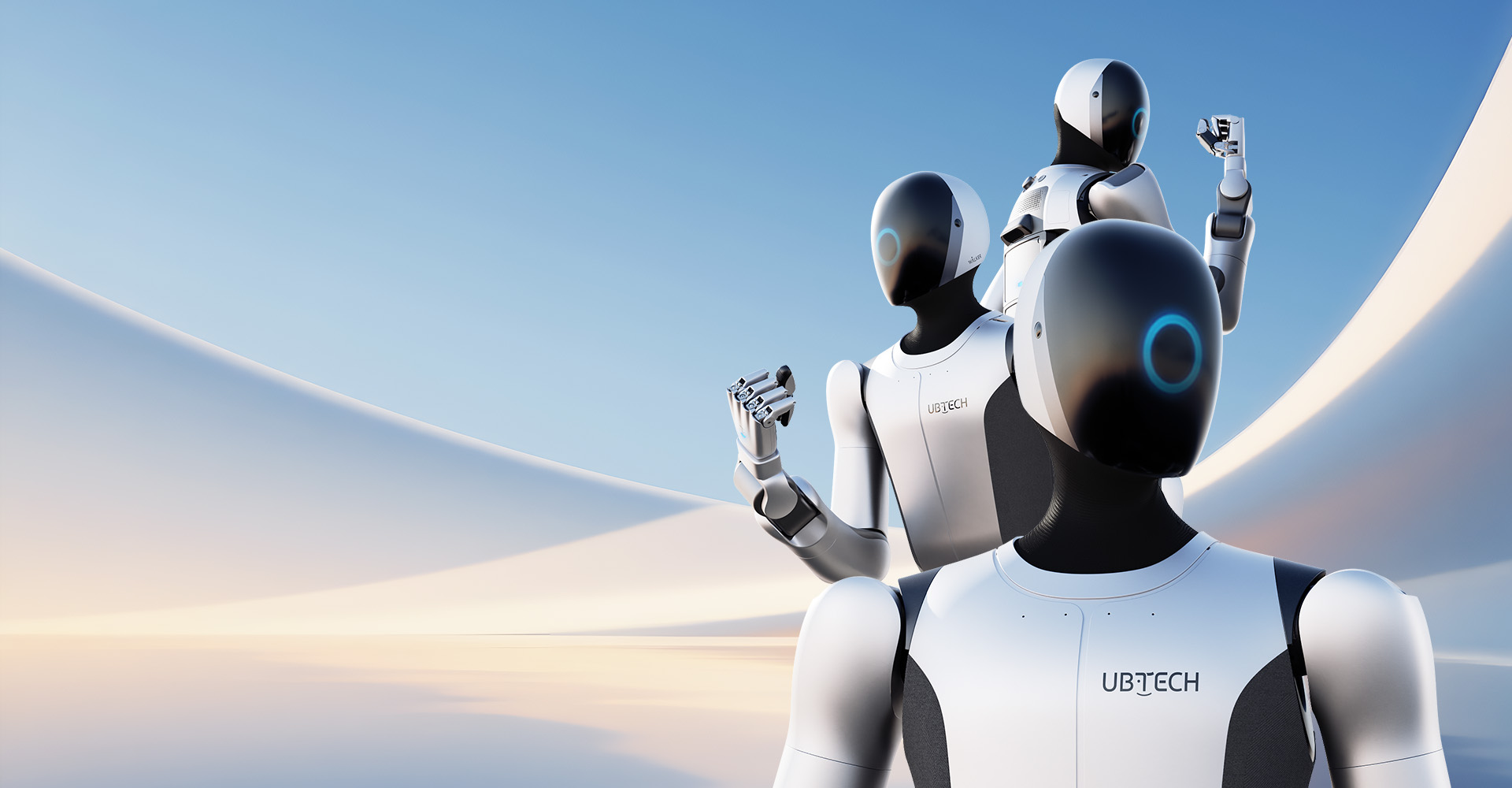
The Walker S2 is the UBTech robot aimed squarely at factories — the one that changes its own battery instead of stopping to charge.
The Walker S2 is the humanoid robot that comes closest to having an actual job. Not a demonstration, not a pilot with a press release attached - a shift. UBTech began mass production and delivery on 17 November 2025 with Walker-series orders already past 800 million yuan, and by the end of that year had delivered 1,079 full-size units. The customer list is the kind other humanoid makers put on a roadmap: BYD, Foxconn, Geely, Dongfeng, FAW-VW, Audi FAW, BAIC, SF Express. In January 2026 Reuters reported an agreement with Airbus to expand robot use in aviation manufacturing.
Its defining feature is not the 52 degrees of freedom or the 11-DOF hands. It is a hatch in its back. The Walker S2 swaps its own battery, autonomously, in about three minutes, without a human and without leaving the floor. Every other humanoid in this catalogue has a duty cycle bounded by its battery. This one, in principle, does not - which is why UBTech markets it for 24/7 operation and why the machine is priced like industrial equipment rather than like a research platform.
There is one very large caveat, and it is regulatory rather than technical. The Walker S2 has no US equipment authorization on record. The FCC's 28 July 2026 Covered List addition means it cannot obtain one now. For a US buyer this robot is not expensive; it is unavailable. Everything below is written with that split in mind - it is a genuinely impressive machine that most readers of an English-language page cannot legally purchase.
What the UBTech Walker S2 can — and can't — do today
+Does this out of the box
- Swap its own battery autonomously in about three minutes from dual 48 V packs, with no human involvement - the feature that makes 24/7 operation structurally possible rather than aspirational
- Lift a rated 15 kg, with a waist servo giving roughly 162 degrees of rotation in each direction for twist-and-place assembly motions
- Walk at up to 2 m/s across an industrial floor
- Manipulate with fourth-generation five-fingered hands at 11 DOF each, quoted at sub-millimetre precision - enough for screw tightening and inspection tasks, not just pick-and-place
- Perceive through RGB binocular stereo vision, a depth camera, a fisheye camera, six-axis force sensing and an IMU, processed on an Intel Core i7-1185G7 with an NVIDIA Jetson AGX Orin at 275 TOPS
- Work inside a real production environment alongside AMRs, AGVs and factory cloud systems - demonstrated at BYD, Foxconn, Geely, Dongfeng, FAW-VW, Audi FAW, BAIC and SF Express
- Be delivered in volume: 1,079 full-size units in 2025, an audited figure from a listed company
!Doesn't do, whatever the demo shows
- Be imported or sold in the United States - the Walker S2 has no US authorization on record, and the 28 July 2026 FCC Covered List addition blocks it from obtaining one
- Be bought at a published price; UBTech operates no storefront and no rate card, and bulk orders are individually priced
- Be evaluated on autonomy claims - Co-Agent and BrainNet 2.0, including the swarm-coordination claim, have no published methodology or third-party benchmark
- Be assessed on reliability, because UBTech publishes no MTBF, no hand replacement interval, no IP rating and no uptime statistics
- Do public-facing service or reception work; it is built for industry and it is not the machine for a lobby
- Be run unsupervised out of the box - every deployment described publicly involves factory-system integration and engineering support
The Walker S2 is an industrial humanoid and should only be compared with Agility's Digit and Apptronik's Apollo, not with research or service humanoids at a third the price. On delivered volume, named customers and audited numbers it leads that field - and it is the one machine in it that a US manufacturer cannot legally buy. Verified against UBTech's FY2025 filings, its 17 November 2025 mass-production announcement and dated third-party reporting, checked 30-31 August 2026.
What is the UBTech Walker S2?
The Walker S2 is UBTech's full-size industrial humanoid, built for factory floors rather than lobbies. It stands 176 cm and weighs about 73 kg fully equipped with its dual battery packs.
It carries 52 degrees of freedom, which is high for this class, with fourth-generation dexterous hands contributing 11 DOF each. Rated lift is 15 kg, handled through a waist servo with roughly 162 degrees of rotation in each direction - a detail that matters more than it sounds, because most factory manipulation is a twist-and-place motion rather than a straight lift. Walking speed is up to 2 m/s, comfortably brisk.
Sensing is built for industrial precision: RGB binocular stereo vision, a depth camera, a fisheye camera, six-axis force sensing and an IMU. Compute is an Intel Core i7-1185G7 paired with an NVIDIA Jetson AGX Orin rated at 275 TOPS. The hands are quoted at sub-millimetre precision, which is the specification that lets UBTech claim tasks like screw tightening and quality inspection rather than just pick-and-place.
What it is designed to do: automotive assembly, smart-factory work, logistics sorting and handling, screw tightening, quality assurance inspection. What it is not designed to do: talk to the public, host an event, or look impressive at a trade show. UBTech has other products for that.
The battery swap, which is the actual headline
Almost every humanoid specification sheet quotes a runtime and hopes you do not think about it too hard. Two hours, three hours - fine for a demonstration, useless for a shift.
The Walker S2 carries two 48 V packs and swaps them itself. The robot walks to a station, opens a hatch in its back, exchanges the depleted pack for a charged one, and returns to work. UBTech quotes about three minutes for the cycle, with no human involvement. That is what makes the 24/7 claim structurally credible rather than aspirational: the machine's duty cycle is bounded by maintenance intervals rather than by battery chemistry.
It is worth being precise about what this does and does not prove. It does not mean a Walker S2 runs unattended for a year. Joints wear, hands are the highest-wear component on any manipulator, and no humanoid maker publishes a mean time between failures. What it means is that the single most common practical objection to humanoids in production - that they stop every couple of hours - has an engineering answer here that nobody else has shipped at this scale.
AgiBot's A2 hot-swaps too, and used it to walk 106 km for a Guinness record. The difference is that the A2's swap is a human-assisted process supporting an endurance stunt, while the Walker S2's is autonomous and designed around a production schedule.
How much does a UBTech Walker S2 cost?
UBTech publishes no list price. There is no storefront, no configurator and no published rate card. Everything is enterprise quote, and volume matters - bulk orders are individually priced.
The most defensible single number is about $106,000. That is derived from UBTech's FY2025 filings: realised revenue divided across 1,079 full-size Walker units delivered during the year. It is an implied average across a real, audited delivery volume, which is a far better class of evidence than a rumour band. It is also an average, so it flattens configuration differences and bulk discounts, and it reflects Chinese domestic contracts.
European and international resellers quote higher - $115,000 to $152,000 for a typical configured unit, up to about $180,000 at the top with integration and deployment support bundled in. That gap is not a markup for its own sake; a humanoid on a production line needs commissioning, safety assessment, integration with factory systems and someone local to call.
A robots-as-a-service option is quoted by resellers at roughly $5,000 per month. That is the number to run first if you are evaluating: at $5,000 a month, three years of service costs about $180,000, which is roughly the top purchase quote. Below three years of intended use, service almost certainly wins - and it moves the maintenance risk onto someone who understands the machine.
Reading the price from filings rather than rumours
UBTech is a listed company, which makes it the rare humanoid maker whose numbers you can actually check, and it is worth explaining how to read them because the headline figures get misquoted constantly.
The order values UBTech discloses are in yuan. Walker-series orders exceeded CNY 800 million as of the 17 November 2025 mass-production announcement - about $119 million at 6.7209 CNY/USD, the rate as of 28 August 2026 - and cumulative orders have been reported around CNY 1.4 billion. Individual contracts include CNY 159 million for a data-collection centre in Zigong and a separate CNY 250 million deal.
Note what those are: orders, not deliveries, and not revenue. An order is a commitment that may deliver across several years. Coverage routinely converts an order figure into an implied unit count by dividing by a guessed price, which produces numbers that then circulate as fact.
The delivery figure is the one that means something: 1,079 full-size units in 2025, audited. Against roughly $115 million of realised full-size Walker revenue that gives the ~$106,000 average. UBTech has stated a capacity target of 5,000 industrial humanoids in 2026 rising to 10,000 in 2027, which if met would make it the highest-volume full-size humanoid producer in the world by a wide margin. Targets are targets. The 1,079 is a fact.
Where the Walker S2 actually works
This is where the Walker S2 separates from the field, because the deployment list is specific and dated rather than aspirational.
Automotive and electronics manufacturing is the core: BYD, Foxconn, Geely, Dongfeng, FAW-VW, Audi FAW and BAIC have all been named in UBTech's own announcements and in coverage of them, alongside logistics work with SF Express. On 21 January 2026 Reuters reported that UBTech had agreed a deal with Airbus to expand robot use in aviation manufacturing, with trade coverage describing early-stage production-line trials. UBTech has not published which Walker variant is involved or how many units, so read that as a real agreement of unspecified scale.
In July 2026 the Walker S2 turned up doing something genuinely new: live customs and crowd-control work at a China-Vietnam border crossing, reported by Interesting Engineering and others. That is a public-facing, safety-adjacent deployment rather than a caged industrial cell, and it is a meaningful escalation in trust.
Trade press reported on 31 July 2026 that UBTech humanoids had entered a South Korean automotive production line - the first Korean deployment reported for the company. UBTech has not named the customer, so treat the detail as trade reporting rather than confirmed.
A separate January 2026 report described Texas Instruments deploying humanoid robots on chip production lines. That surfaced in Walker S2 coverage, but we could not confirm the robots involved are UBTech's, and we are not going to assume it.
What 'mass production' actually means here
The phrase gets used loosely across this industry, so it is worth pinning down what UBTech has and has not demonstrated.
What is proven: 1,079 full-size Walker units delivered in 2025, an audited figure from a listed company's filings. First batch deliveries of several hundred units beginning 17 November 2025, phased across industrial customers. Named enterprise buyers. Contract values disclosed to a stock exchange.
That combination makes the Walker S2 arguably the most commercially proven humanoid in existence by delivered volume, and it is a genuinely different evidence category from a maker who has shipped a hundred units to universities. Nobody else in this catalogue can point at an audited four-digit delivery number for a full-size industrial humanoid.
What is not proven: what those robots do all day. Delivered is not the same as productive. UBTech publishes no independent productivity benchmarks, no cycle-time comparisons against human workers, no uptime statistics and no return rate. Chinese industrial policy actively subsidises humanoid adoption, so a proportion of these deliveries sit in showcase lines and data-collection centres rather than in economically load-bearing production - the CNY 159 million Zigong contract is explicitly for a data-collection centre.
Both things are true at once. This is the most real humanoid deployment programme running, and it is still not proof that humanoids pay for themselves on a factory floor.
Specifications: what's published, what's claimed
The hardware numbers are relatively well documented for this industry, and the software numbers are not documented at all.
Published and consistent across sources: 176 cm, about 73 kg fully equipped, 52 DOF, 11-DOF hands, 15 kg rated payload, waist rotation of roughly 162 degrees each way, up to 2 m/s, dual 48 V packs with about a three-minute autonomous swap, Intel Core i7-1185G7 plus NVIDIA Jetson AGX Orin at 275 TOPS, RGB binocular stereo vision with depth and fisheye cameras, six-axis force sensing and an IMU.
Claimed but unbenchmarked: UBTech's Co-Agent and BrainNet 2.0 software layer, credited with task planning, anomaly detection and swarm coordination across multiple robots. Swarm coordination in particular is an interesting claim - several Walkers dividing work in one facility - and there is no published methodology, no third-party evaluation and no reproducible result behind it. That is not an accusation, it is the standard state of autonomy claims across every maker on this site.
Not published at all: mean time between failures, hand replacement interval, IP rating, safety certification for operation alongside humans, or any figure for how much supervision a deployed Walker actually requires. If you are evaluating this machine for a plant, those are the questions to put in the RFP, and the answers will tell you more than the spec sheet.
Can a US company buy a Walker S2?
No, and this is the hardest regulatory position of any robot in this tier.
On 28 July 2026 the FCC added foreign-produced advanced robotic devices to its Covered List, following a National Security Determination issued the day before. The framing in most coverage - a ban on Chinese robots - is wrong in an important way. The text is country-neutral. A device is domestic only if it is manufactured in the US with more than 65% domestic component cost, rising to 75% from 2029, and US assembly of imported parts does not clear the bar. British, German and Japanese machines are foreign-produced under the same language.
What the listing does is block new FCC equipment authorization, and without authorization a device cannot lawfully be imported, marketed or sold in the US. Models authorized before 28 July 2026 are grandfathered and keep receiving updates until at least 1 January 2029 under a separate waiver.
The Walker S2 has no US authorization on record. It was never really sold into the US - its market is Chinese and Asian industry - so the rule converts an informal absence into a legal one. New imports and US sales are barred unless UBTech obtains a Department of War conditional approval, which it has not announced. Applications for those run to 1 January 2028 with no published review timeline.
Anything already in the US may keep operating, and there is very little. Outside the US none of this applies: UBTech's Chinese factory deployments continue, its Asian business is unaffected, and European buyers order under CE rules with no equivalent restriction.
Walker S2 versus the industrial humanoid field
Four machines are genuinely competing for factory work, and they are at different stages.
Agility Robotics' Digit is the closest Western analogue and the one a US buyer can actually get. It is deployed in logistics, is designed around tote handling rather than dexterous assembly, and comes with the regulatory and support position that a US-manufactured robot has. It is also less dexterous - Digit's end effectors are not five-fingered hands.
Apptronik's Apollo has automotive pilots and serious backing, and is a plausible US answer, but its published delivery volume is nowhere near four digits.
Tesla's Optimus generates roughly a hundred times the search interest of the Walker S2 and has delivered no units to external customers at all. On the specific question of humanoids doing paid work in factories today, that comparison is not close.
Figure 03 is the other name that comes up, and it is worth noting that Figure has never published a weight, payload, DOF count or speed for it - the specification tables circulating online are inferred.
So the honest summary is uncomfortable: on delivered volume, named customers and audited numbers, the Walker S2 leads the industrial humanoid field by a distance, and it is the one machine on that list a US manufacturer cannot buy.
Who should be looking at a Walker S2
Chinese and Asian manufacturers with high-mix, low-volume assembly work are the obvious buyers, and they are the ones actually buying. If your line already runs AMRs and AGVs and you have engineers who can integrate a new machine into an existing MES, the Walker S2 is the most proven option available and UBTech has done this a thousand times over.
European industrial buyers can purchase - CE rules apply, with no equivalent to the US restriction - and should start with the service contract at roughly $5,000 a month rather than a purchase. Three years of service is about the price of one bought unit, and the risk profile is completely different.
Anyone benchmarking the humanoid market should study UBTech's numbers whether or not they can buy, because they are the only audited full-size humanoid delivery figures in existence and every forecast in this sector is implicitly calibrated against them.
Who should look elsewhere: any US buyer, for whom this robot is not purchasable and no route has been announced. Anyone wanting a public-facing or service robot, since the Walker S2 is built for industry and AgiBot's A2 is built for people. Anyone wanting a research platform, where a Unitree H2 EDU costs a fifth as much. And anyone expecting a humanoid to arrive and start paying for itself unsupervised - nobody has demonstrated that yet, UBTech included.
What's next for the Walker S2
The capacity ramp is the number to watch. UBTech has stated a target of 5,000 industrial humanoids in 2026 rising to 10,000 in 2027, against 1,079 full-size units actually delivered in 2025. Hitting even half of the 2026 target would be a step change for the whole industry; missing it badly would say something important about how much of the current order book is policy-driven rather than demand-driven. UBTech's next set of filings will settle it, and unlike almost everyone else in this catalogue, it has to file.
The Airbus relationship reported by Reuters in January 2026 is the most strategically significant thread. Aviation manufacturing is high-mix, low-volume, tightly regulated and extremely quality-sensitive - if humanoids work there they work almost anywhere, and Airbus is not a customer that pilots things for publicity.
The border-crossing deployment from July 2026 is the one to watch for a different reason. Public-facing, safety-adjacent duty is a much harder trust threshold than a factory cell, and how it goes will shape what regulators everywhere think humanoids should be allowed near.
And the US question stays open. A Department of War conditional approval is the only announced route, applications run to 1 January 2028, and UBTech has said nothing about pursuing one. For now the most commercially proven humanoid in the world is one Americans can read about and not buy.
The UBTech Walker S2 on video
Hands-on reviews and teardowns, picked for what they actually show rather than how loud the thumbnail is.
The mass-delivery event itself — rows of finished units, which is rarer footage than it sounds
Independent walk-through of the hot-swap battery system that lets S2 run a full shift
Production-line footage behind the 1,000-unit milestone, useful for judging whether the volume claim is real
UBTech Walker S2 price ladder — and what the entry price leaves out
The headline number is almost never the number you pay. Here is each configuration, and what it does not include.
| Configuration | Price | What you get | What it excludes |
|---|---|---|---|
| Implied average from filings | ~$106,000 | UBTech's FY2025 realised revenue divided across 1,079 full-size Walker units delivered during the year. The most defensible single figure available, because it rests on audited delivery volume from a listed company rather than on a quote or a rumour. | It is an average, so it flattens configuration differences and volume discounts, and it reflects Chinese domestic contracts rather than export pricing. Not a quote you can hold UBTech to. |
| Typical configured range (reseller quotes) | $115,000-$152,000 | European and international reseller quotes for a working configuration. Varies with hands, sensor options and order volume. | Deep integration work, ongoing support and any US route - the robot cannot be imported into the United States. Bulk orders are priced individually and this band should not be assumed for a single unit. |
| Direct purchase, integration included | ~$180,000 | The highest quoted reseller figure, bundling deployment and integration support - commissioning, safety assessment, factory-system connection and local contact. | Nothing obvious, which is the point of the premium. Note that three years of the service contract below costs about the same. |
| Robots-as-a-service | ~$5,000 per month | Reseller-quoted service option. The right first step for almost any European buyer evaluating the platform: it moves maintenance and obsolescence risk onto the supplier. | Ownership. At $5,000 a month, three years costs about $180,000 - roughly the top purchase quote - so the crossover is around the three-year mark. |
UBTech discloses order values in yuan: Walker-series orders exceeding CNY 800M (about $119M at 6.7209 CNY/USD, rate as of 2026-08-28) and roughly CNY 1.4B cumulative. Per-unit figures above are reseller quotes already in USD.
Source: Realised revenue per unit derived from UBTech's FY2025 filings — approximately $106,000 across 1,079 full-size Walker units delivered — bracketed at the top by European and international reseller quotes of $115,000-$180,000 which bundle integration and deployment support. UBTech itself publishes no price. — estimate, not an official list price · as of 2026-08-30
What owning one actually costs
| Cost | Typical | Notes |
|---|---|---|
| Factory-system integration | Included in the ~$180,000 tier, extra below it | Commissioning, safety assessment, MES and cloud-dashboard connection, coordination with existing AMRs and AGVs. This is not optional work and it is the reason reseller prices sit above the filing-implied average. |
| Second and spare battery packs | Not published | The autonomous swap needs charged packs waiting at a station. The 24/7 claim assumes an inventory of batteries and a swap station, neither of which appears in a headline price. |
| Dexterous hand replacement | Not published | Hands at 11 DOF with sub-millimetre precision are the highest-wear component on any manipulator. UBTech publishes no replacement interval or parts price. Put both in the RFP. |
| Robots-as-a-service alternative | ~$5,000 per month | Crosses over with purchase at roughly three years. Below that horizon, service is almost certainly the better financial shape and a much better risk shape. |
| US regulatory position | Not purchasable | No US authorization on record and no route to one under the 28 July 2026 listing, short of a Department of War conditional approval UBTech has not announced. Applications run to 1 January 2028. |
| Supervision and engineering time | Ongoing | No published figure exists for how much attention a deployed Walker needs. Every described deployment involves engineering support. Budget for a person, not for an appliance. |
Who the UBTech Walker S2 is — and isn't — for
+Where it shines
- Stated real-world payload (15 kg lift capacity).
!Watch-outs
- Sold to businesses only — not to private buyers.
How the UBTech Walker S2 stacks up
Side by side with similar robots — the one you're reading about is highlighted.
| This robot UBTech Robotics UBTech Walker S2 | 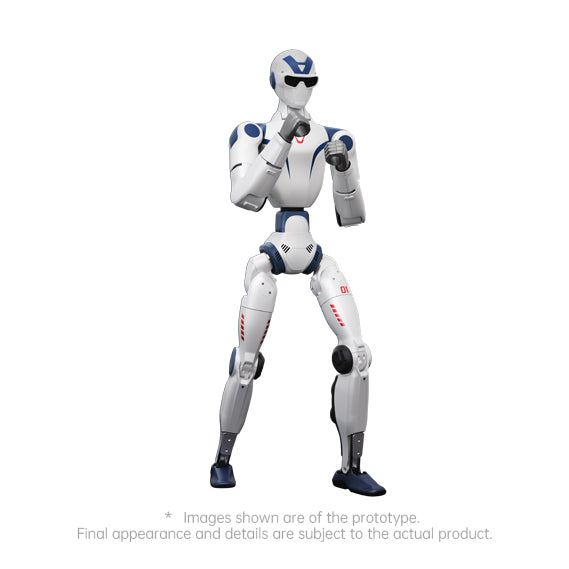 Unitree Robotics Unitree R1 | 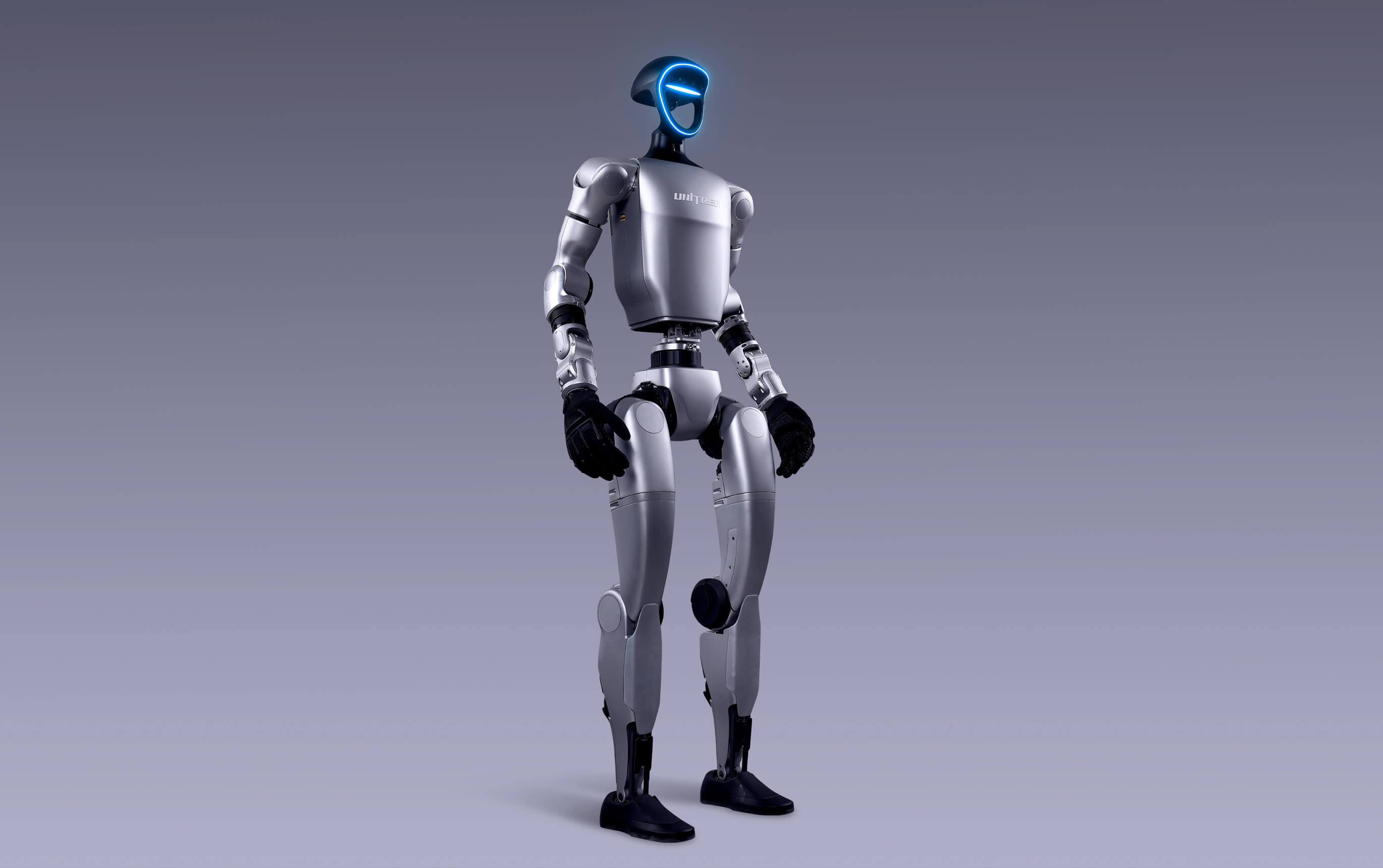 Unitree Robotics Unitree G1 | 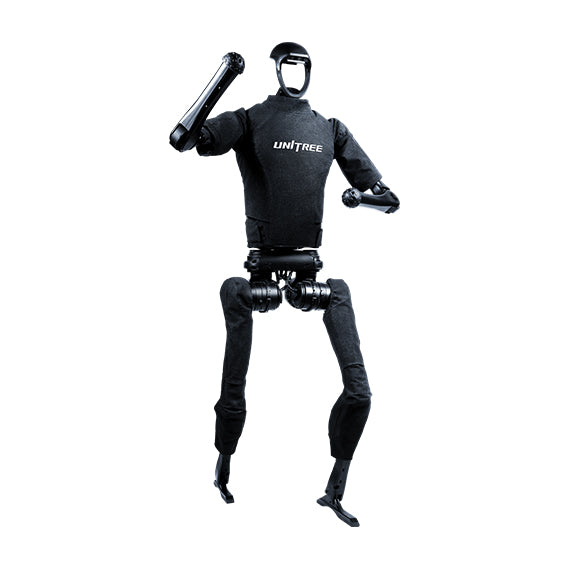 Unitree Robotics Unitree H1 | |
|---|---|---|---|---|
| Price (US) | $160,000 – $180,000 | $4,900 – $5,900 | $13,500 – $73,900 | ~$90,000 |
| Availability | In mass production and volume delivery; sold by enterprise inquiry, no public storefront | On the market | On the market | On the market |
| Height | 176 cm | 1.23 m | 1.32 m standing | ~1.80 m |
| Payload | 15 kg lift capacity | Unknown | Arm ~2 kg | Not rated for H1 |
| DoF | 52 | 20 | 23 | ~19 |
| Buyer | Enterprise | Individuals | Individuals | Enterprise |
| Made in | China | China | China | China |
Every spec, grouped & sourced
Tap a group to expand. Values are labelled official vs third-party; unknowns are omitted, not guessed.
Body & movement▾
Power & endurance▾
Hands & senses▾
Brains & control▾
Claims vs evidence
'Co-Agent' + 'BrainNet 2.0' task planning, anomaly detection, swarm coordination; not independently benchmarked
Where it's working
BYD, Foxconn, Geely, Dongfeng, FAW-VW, Audi FAW, BAIC, SF Express; cumulative orders >800M yuan
Intended use cases: Industrial: automotive assembly, smart factories, logistics, sorting/handling, screw tightening, QA inspection
What owners, reviewers and the press say about the UBTech Walker S2
Ratings and reception gathered from where this machine is actually sold and discussed. We summarise the signal — we don't republish anyone's reviews.
Walker S2 is sold business-to-business into factories by contract, so no retail listing or owner rating platform carries it despite the shipping volume.
- TechSpot — reported in 2026 that the deployed robots work at roughly half a human's pace and still need an operator to swap end-effectors between tasks · 2026-08-30
- TechTimes — noted in 2025 that UBTech's mass-march video drew authenticity accusations from rivals · 2026-08-30
+Reviewers consistently praise
- autonomous battery swap in about three minutes enables near-continuous operation
- genuinely shipping in volume to named industrial customers
- first credible mass-delivery story in the category
!And consistently criticise
- works materially slower than a human doing the same job
- hands and tools still swapped manually
- promotional videos repeatedly accused of being staged or CGI
What owners and developers actually say
Walker S2 is one of the few humanoids whose discussion is about factory deployment rather than demos, and the numbers UBTech publishes — units shipped, customers named — drive most threads. Sentiment splits between people who treat mass delivery as the industry's first real milestone and people who read the marching videos as staged. There is even a dedicated investor subreddit, which tells you the audience is as much financial as technical.
r/singularity, r/robotics, r/Ubtech_investors, LinkedIn industry discussion · as of 2026-08-30
Consensus drawn from two trade-press assessments plus around eight company and third-party videos, the largest at roughly 712K and 578K views.
UBTech Walker S2: the claims, checked
In mass production and volume delivery, sold by enterprise inquiry with no public storefront and no published price. Deployed in named automotive and electronics plants and, since July 2026, in live customs work at a China Vietnam border crossing. Not available in the United States: no US authorization on record and no route to one under the 28 July 2026 FCC listing.
UBTech's 17 November 2025 announcement of mass production and first-batch delivery with Walker-series orders past CNY 800 million; FY2025 filings showing 1,079 full-size Walker units delivered; a Reuters report dated 21 January 2026 of an Airbus agreement; July 2026 reporting of Walker S2 units on live customs duty at the Vietnam border; trade reporting dated 31 July 2026 of entry onto a South Korean automotive line, customer unnamed.
as of 2026-08-30
- true“The UBTech Walker S2 costs about $106,000.”
As an implied average, yes: UBTech's FY2025 filings show roughly that per full-size Walker unit across 1,079 delivered during the year. It is not a quotable price - UBTech publishes none - and international resellers quote $115,000-$180,000 with integration included. Read $106,000 as the audited average of what buyers actually paid, mostly in China.
- misleading“The Walker S2 runs 24/7.”
The battery constraint is genuinely solved: dual 48 V packs and an autonomous three-minute self-swap, with no human involvement. That is real and nobody else ships it at this scale. But continuous operation also depends on joint wear, hand replacement intervals and failure rates, and UBTech publishes no MTBF or uptime data at all. The battery problem is solved; the reliability question is unanswered.
- true“UBTech has delivered over 1,000 Walker robots.”
1,079 full-size Walker units delivered in 2025, from UBTech's FY2025 filings as a listed company. This is the only audited four-digit delivery figure for a full-size humanoid anywhere in this catalogue.
- true“Walker-series orders exceed 800 million yuan.”
Stated in UBTech's 17 November 2025 mass-production announcement - about $119 million at 6.7209 CNY/USD as of 28 August 2026 - with cumulative orders since reported around CNY 1.4 billion, including a CNY 159 million Zigong data-collection-centre contract and a separate CNY 250 million deal. Note these are orders, not deliveries or recognised revenue.
- false“A US factory can buy a Walker S2.”
The Walker S2 has no US equipment authorization on record, and the FCC's 28 July 2026 Covered List addition blocks foreign-produced robotic devices from obtaining new authorization. Without it, import, marketing and sale in the US are unlawful. The only announced route is a Department of War conditional approval, which UBTech has not sought publicly; applications run to 1 January 2028.
- true“UBTech has an Airbus deal for humanoid robots.”
Reuters reported on 21 January 2026 that UBTech agreed a deal with Airbus to expand robot use in aviation manufacturing, with trade coverage describing early-stage production-line trials. UBTech has not published which Walker variant, how many units, or at which sites, so the scale is unspecified.
- unverified“Walker S2 robots coordinate as a swarm.”
UBTech credits its Co-Agent and BrainNet 2.0 layer with task planning, anomaly detection and multi-robot swarm coordination. No methodology, third-party benchmark or reproducible result has been published. This is the normal state of autonomy claims across the industry, not a specific failing of UBTech.
- unverified“Texas Instruments deploys Walker S2 robots on its chip lines.”
A January 2026 report described Texas Instruments deploying humanoid robots on chip production lines, and it surfaces in Walker S2 news coverage. We could not confirm that the robots involved are UBTech's, and neither company appears to have stated it. Treat as unconfirmed.
UBTech Robotics in 2026
UBTech Robotics, founded 2012 in Shenzhen, listed in Hong Kong and often described in Chinese coverage as the first humanoid robot stock. That listing is the most useful thing about it for anyone assessing this market: UBTech has to file audited numbers, so its delivery volumes, order book and contract values are checkable in a way that no privately held humanoid maker's are. The company began as a consumer and education robotics business before pivoting hard into industrial humanoids with the Walker line. It reported Walker-series orders above CNY 800 million by November 2025, roughly CNY 1.4 billion cumulatively since, and 1,079 full-size units delivered in 2025, with a stated capacity target of 5,000 industrial humanoids in 2026 rising to 10,000 in 2027. In January 2026 Reuters reported an agreement with Airbus covering aviation manufacturing. Its exposure is almost entirely Chinese and Asian industry, which is both its strength - real customers, real shifts - and its constraint, since the July 2026 US rule closes the American market to it entirely.
What to watch next
- Whether UBTech approaches its stated 5,000-unit capacity target for 2026, against 1,079 full-size units actually delivered in 2025 - the filings will show it, and few competitors have to disclose anything
- How far the Airbus relationship reported in January 2026 develops; aviation manufacturing is the hardest quality environment a humanoid has been pointed at
- The China-Vietnam border deployment, which puts a humanoid in public-facing, safety-adjacent duty rather than a factory cell
- Whether UBTech pursues a Department of War conditional approval for the US market - the only announced route, with applications running to 1 January 2028
- Any independently published productivity or uptime data, which would be the first of its kind in the industry and would settle whether these deliveries are economically load-bearing
Should you consider the UBTech Walker S2?
The UBTech Walker S2 is the closest thing this industry has to a humanoid that goes to work, and for most readers of an English-language page it is unbuyable. Both halves of that sentence matter. UBTech delivered 1,079 full-size units in 2025 - an audited figure from a listed company, the only four-digit delivery number for a full-size humanoid anywhere in this catalogue - to customers with names you recognise: BYD, Foxconn, Geely, FAW-VW, SF Express, and per Reuters an Airbus agreement signed in January 2026. The autonomous three-minute battery swap is the real engineering achievement, because it removes the objection that has kept humanoids off production schedules everywhere else. The implied price of about $106,000 from the filings is a far better number than the rumour bands attached to most machines here, and the roughly $5,000 a month service option is the sensible entry point for anyone who can legally buy at all. Set against that: UBTech publishes no MTBF, no uptime, no productivity benchmark and no methodology behind its Co-Agent autonomy claims, so what those 1,079 robots do all day remains genuinely unknown, and Chinese industrial subsidy means some of them are showcases rather than workers. And the FCC's 28 July 2026 listing closes the US market completely - no authorization on record, no route to one announced. So the honest verdict is a split one. If you manufacture in Asia or Europe, this is the most proven industrial humanoid you can buy and you should start with the service contract. If you manufacture in America, the most commercially proven humanoid in the world is something you can only read about.
Score reflects stated criteria (availability, data confidence, US relevance) — not hands-on testing or user ratings. We're an independent review & comparison site; we don't sell robots. *Financing figure is illustrative.
How we know this
Data confidence 62/100 · last verified 2026-08-30. Specs are labelled official vs third-party and dated; unknowns are omitted, not guessed.
UBTech Walker S2 — your questions, answered in full
How much does a UBTech Walker S2 cost?+
UBTech publishes no price. Its FY2025 filings imply roughly $106,000 per full-size Walker unit across 1,079 delivered - the most defensible number, because it rests on audited volume. International resellers quote $115,000 to $152,000 for a typical configuration and about $180,000 with integration bundled, and a robots-as-a-service contract runs around $5,000 a month. All figures as of 30 August 2026.
Can a US company buy a UBTech Walker S2?+
No. The Walker S2 has no US equipment authorization on record, and the FCC's 28 July 2026 Covered List addition prevents foreign-produced robotic devices from obtaining new authorization - which makes import, marketing and sale unlawful. UBTech would need a Department of War conditional approval, which it has not announced; applications run to 1 January 2028. Anything already in the US can keep operating, and there is very little.
Does the Walker S2 really change its own battery?+
Yes. It carries dual 48 V packs and swaps them itself in about three minutes, autonomously, without a human and without leaving the floor. That is the machine's defining feature and the reason UBTech markets 24/7 operation. What it does not settle is joint wear, hand replacement intervals or failure rates, none of which UBTech publishes.
How much can the UBTech Walker S2 lift?+
15 kg rated, through a waist servo with roughly 162 degrees of rotation in each direction. The rotation matters as much as the lift, because most factory manipulation is a twist-and-place motion. For comparison, AgiBot's A2 manages about 2 kg per arm and Unitree's H2 about 7 kg.
Which companies actually use the Walker S2?+
BYD, Foxconn, Geely, Dongfeng, FAW-VW, Audi FAW, BAIC and SF Express have all been named in UBTech's announcements or coverage of them. Reuters reported an Airbus agreement in January 2026 for aviation manufacturing, scale unspecified. Since July 2026, Walker S2 units have also been doing live customs work at a China-Vietnam border crossing.
Is the Walker S2 better than Tesla Optimus?+
On the only question that can currently be answered - which humanoid is doing paid work in factories today - it is not close. UBTech delivered 1,079 full-size units in 2025 to named industrial customers, an audited figure. Tesla has delivered none to external customers. Optimus generates roughly a hundred times more search interest. Those are different competitions.
Can I lease a Walker S2 instead of buying?+
Yes, at roughly $5,000 a month from resellers. Run the crossover before deciding: three years of service costs about $180,000, which is around the top purchase quote. Under three years of intended use, leasing wins on cost and wins much more clearly on risk, since maintenance and obsolescence stay with the supplier.
How fast does the Walker S2 walk?+
Up to 2 m/s, which is a brisk human walking pace and unusually quick for a 73 kg full-size humanoid carrying dual battery packs. It stands 176 cm and carries 52 degrees of freedom, with 11-DOF hands.
Is the Walker S2 actually autonomous?+
Partly, and the claims are unverified. UBTech credits its Co-Agent and BrainNet 2.0 stack with task planning, anomaly detection and multi-robot swarm coordination, running on an Intel i7 plus an NVIDIA Jetson AGX Orin at 275 TOPS. No published methodology or independent benchmark backs any of it. Every described deployment also involves factory-system integration and engineering support, so treat this as supervised automation rather than an autonomous worker.
Why is UBTech's data more trustworthy than other humanoid makers'?+
Because it is listed in Hong Kong and has to file. Delivery volumes, order values and contract sizes are audited and disclosed, which is why we can derive a ~$106,000 implied price rather than repeat a rumour band. Almost every other maker in this catalogue is private and publishes only what flatters it.
Are the Walker S2's factory deployments economically real?+
Partly, and it is worth being honest about the uncertainty. The deliveries are audited and the customers are named, which is more than anyone else can show. But delivered is not the same as productive, Chinese industrial policy subsidises humanoid adoption, and some contracts are explicitly for data collection rather than production - the CNY 159 million Zigong deal is a data-collection centre. UBTech publishes no productivity or uptime data.
What is the difference between the Walker S2 and the Walker S1?+
The S2's headline addition is the autonomous battery hot-swap, which is what turns a shift-limited machine into one marketed for continuous operation, along with fourth-generation 11-DOF hands and the Co-Agent software layer. UBTech has not published a detailed side-by-side, so treat comparisons beyond those points with caution - and if the distinction matters to a purchase, ask UBTech to put it in writing.