Unitree G1 Robot
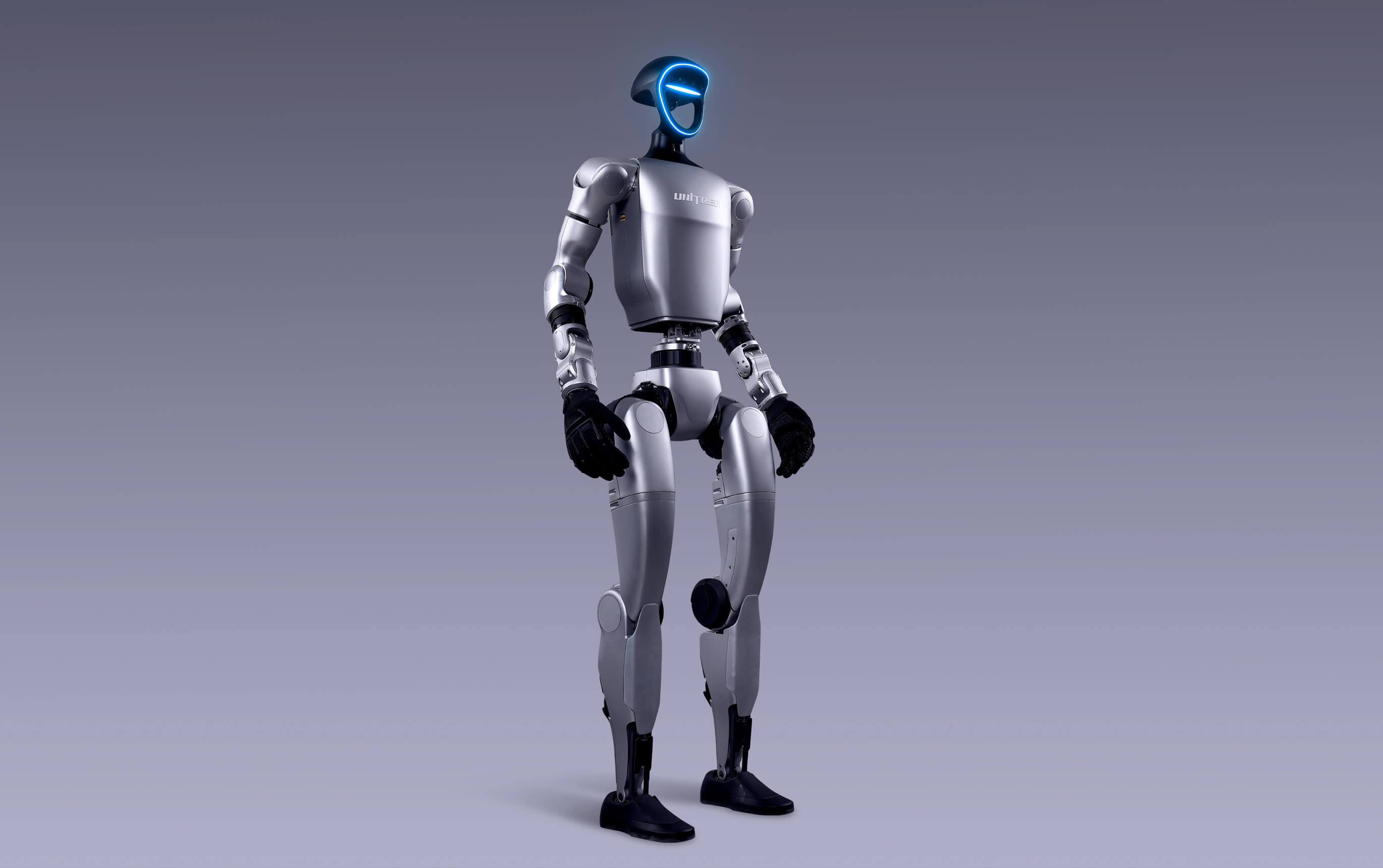
The Unitree G1 lists at $13,500 direct from Unitree, but that unit explicitly does not support secondary development - you cannot write code for it. A programmable G1 EDU runs $43,900 to $73,900 through US resellers. Both are still legally purchasable in the US as of 30 August 2026.
US buyers: still orderable — the G1 held FCC authorization before the July 2026 cutoff, so imports and sales continue.
The FCC rule blocks new authorizations rather than existing ones, and the G1 was already authorized, so US dealers can keep importing and selling it and owners can keep using and updating theirs. Two caveats a buyer should know: the Pentagon designated Unitree a Chinese military company on 8 June 2026, which shuts it out of federal and defense procurement regardless of the FCC position, and any future G1 hardware revision would need a fresh authorization it could not obtain without a Department of War conditional approval. So the model you can buy today is, in effect, the last one.
The FCC listing is a US measure only. Unitree opened commercial sales in Europe on 22 July 2026, and EU/UK buyers order under CE and UKCA rules with no equivalent restriction.
As of 2026-08-30
What is the Unitree G1 Robot?
The G1 is the Unitree robot that put a walking humanoid inside a research budget instead of a national lab.
The Unitree G1 is the robot that made "affordable humanoid" a real phrase, and it is also the most widely misunderstood price in the category. The $13,500 headline is genuine - we pulled it live from Unitree's own store on 30 August 2026 and it has not moved since launch. What almost nobody mentions is that Unitree's own product page says, in plain text, that this product does not support secondary development. You cannot program it. You cannot upgrade it to a version you can program.
The robot that university labs actually buy is the G1 EDU, and through US resellers that starts at $43,900 and runs to $73,900 for the top configuration with tactile dexterous hands. That is a three- to five-fold difference from the number in every headline, and it is the single most useful fact on this page.
The G1 also had an extraordinary month. Unitree listed on the Shanghai STAR Market on 19 August 2026 and jumped more than 600% intraday before losing roughly a third of that within a week. The FCC added foreign-produced advanced robotic devices to its Covered List on 28 July 2026, blocking new equipment authorisations - though existing models, the G1 among them, are grandfathered. And on 27-29 August 2026 a security researcher published two unauthenticated root exploits against the G1, one of which works over Bluetooth with no pairing. All three of those change what you should think before buying one.
What the Unitree G1 can — and can't — do today
+Does this out of the box
- Walk, balance and recover from shoves autonomously using reinforcement-learned gait control
- Run pre-programmed motion routines - dance, martial-arts sequences, acrobatics - from a remote controller
- Accept full ROS 2, C++ and Python control via unitree_sdk2 on EDU configurations only
- Run sim-to-real workflows through unitree_mujoco and NVIDIA Isaac/IsaacLab examples
- Carry roughly 2 kg per arm on the base unit and about 3 kg per arm on EDU
- Support full-body VR teleoperation through a PICO 4 Ultra kit sold separately at $6,000
- Fit dexterous 7-DOF Dex3-1 force-controlled hands and MID360 3D LiDAR as options
!Doesn't do, whatever the demo shows
- Be programmed at all in the $13,500 base configuration - Unitree states it does not support secondary development, and it cannot be upgraded
- Perform household or workplace tasks autonomously; there is no task-level autonomy stack included
- Run for a full working day - budget roughly one hour of useful dynamic work per battery
- Lift meaningful loads; per-arm capacity is around 2-3 kg with no rated whole-body payload
- Be safely deployed on a sensitive network as of 30 August 2026, with two unpatched-firmware root exploit chains disclosed
- Guarantee a US-legal successor model, since new equipment authorisations for foreign-produced advanced robotic devices were blocked on 28 July 2026
The single most important distinction on this page: the $13,500 G1 is a demonstration machine, and the $43,900+ G1 EDU is the research robot. They look identical in photographs. Verified against Unitree's own store text and US dealer listings on 30 August 2026.
What is the Unitree G1 and what does it do out of the box?
The G1 is a compact bipedal humanoid: 1.32 m tall standing, folding down to about 0.69 m, weighing roughly 35 kg with battery. That size is deliberate, and it matters more than it sounds. It is safe enough to work around without a cage, light enough for two people to move, and cheap enough to build that Unitree could price it where it did.
The base unit has 23 degrees of freedom - six per leg, five per arm, one at the waist - with no hands, just fixed end effectors. It walks at about 2 m/s, balances well, recovers from shoves, and runs canned motion routines from a remote controller. It takes over-the-air updates. It has a depth camera and 3D LiDAR, a four-microphone array and a 5 W speaker.
What it does not do is anything you tell it to do in code. Unitree's store page carries the line verbatim: this product does not support secondary development, and for customisation you should select the EDU edition. The Amazon listing is literally titled with "(No Secondary Development)" in the product name.
So the honest description of a $13,500 G1 is this: a very good, very impressive animatronic. It is a superb machine for a trade-show stand, a museum foyer, a film shoot or a marketing campaign. As a research platform it is a non-starter, because you cannot put your own controller on it.
The EDU is the actual robot. It goes to 23-43 degrees of freedom depending on configuration, adds a 2-DOF waist option, wrists, 7-DOF Dex3-1 force-controlled three-finger hands, an NVIDIA Jetson Orin module, higher knee torque - 120 N·m against the base unit's 90 N·m - and, critically, the SDK.
How much does the Unitree G1 cost in 2026?
Every price below was pulled live on 30 August 2026, so it is current rather than repeated from a launch article.
Direct from Unitree, the G1 lists at $13,500 with shipping quoted separately at $300 to $1,200, and the customer responsible for all customs duties, taxes and clearance. That price has not changed since the May 2024 launch, when it was 99,000 RMB. The store page carries a backorder note even while the stock flag reads available, so treat lead time as uncertain.
Through the US reseller channel, the same base robot is $17,990. That roughly $4,500 spread is the clearest picture you will get of what tariffs, freight and channel margin actually add to a Chinese humanoid landing in America.
The EDU ladder, US channel: G1 EDU Standard (U1) at $43,900. EDU Plus (U2) at $53,900. The Ultimate tiers run $63,900 to $73,900 depending on hand and sensor configuration, with Ultimate D at the top. There is a G1 Pro at $28,950, a G1 Comp "Athletic" build at $46,900, and - genuinely - a G1 EDU Combat Boxing configuration at $63,900. Fixed-base and wheeled dual-arm variants, the G1-D series, run $38,800 to $66,300.
Unitree itself will not quote EDU publicly; the official channel is contact sales. That is why the widely repeated "$16,000 EDU" figure survives - it comes from May 2024 launch coverage and is wrong by roughly three times against today's street prices.
One more number worth knowing: Unitree's own R1 EDU is $10,500, and it has an SDK. If your budget is the constraint and you need programmability rather than a bipedal humanoid specifically, that undercuts the G1 EDU by more than four times.
What does the entry price exclude?
More than you'd expect, and this is where G1 budgets go wrong.
At $13,500 you are excluded from writing software at all, which is the big one. But even on an EDU purchase, several things people assume are included are not.
Shipping is separate: $300 to $1,200 from Unitree direct. Import duty and customs clearance are on you, explicitly. The base US HTS rate on robotics sits around 2.5%, and Section 301 tariffs on Chinese-origin goods add substantially on top; a worked example circulated for the $5,900 R1 put duties and tariffs near $1,932 on a $6,900 landed value, plus roughly $150 in broker fees. The clean way to see the whole stack is the $13,500 direct price against the $17,990 US dealer price.
Hands are extra unless bundled. A Dex3-1 force-controlled three-finger hand is $8,680. A MID360 3D LiDAR module is $3,800. A head module with a RealSense D455 depth camera is $3,800. A Jetson AGX Orin backplane dock is $7,600; the newer AGX Thor dock is $15,200.
Spares are not optional in practice. A G1 battery is $700 from Unitree and $750 through dealers. A charger is $120. A remote controller is $350-$370. A development gantry - the safety rig that stops a $50,000 robot faceplanting during a controller test - is $850.
And warranty is shorter than most buyers assume: 8 months on the base unit, 18 months on EDU. Months, not years.
What does a working G1 setup really cost?
Add it up honestly and the entry point for a functioning research installation is around $50,000, not $13,500.
Start with a G1 EDU Standard at $43,900 through the US channel. Add two spare batteries at $750 each, because you will not get a working day out of one. Add a gantry at $850. Add shipping in the $300-$1,200 band if you are importing direct rather than buying from a dealer who has already absorbed it. You are at roughly $46,500 to $47,500 before you have written a line of code.
If your work is manipulation rather than locomotion, you need hands, and you are looking at the Ultimate tiers at $65,900-$73,900, or a Dex3-1 pair added later at $8,680 each.
Running costs are modest but not zero. Batteries are consumables; lithium packs cycled hard in a lab will need replacing. The one concrete repair figure we could find anywhere is a $1,000 repair and diagnostic deposit listed by a US dealer - that is a deposit, not a quote, and turnaround times are not published by anyone. Charger electrical specifications beyond the $120 SKU are not published either.
Budget realistically: $50,000 for a working locomotion research setup, $75,000-$80,000 if you need dexterous manipulation, and plan for a battery line item every year. And factor in that support runs through a Chinese manufacturer with an 8-to-18-month warranty and no published service-level commitment.
How autonomous is the Unitree G1 really?
The balance and locomotion are genuinely autonomous, and genuinely impressive. Reinforcement-learned gait controllers keep the G1 upright over uneven ground, and it recovers from shoves in a way that still looks slightly uncanny in person. That part is real and it is not a trick.
Everything above that is your job. There is no task autonomy shipped with a G1. It does not have a home model that decides what to do. It does not pick up unfamiliar objects on request. The famous kung fu and dance videos are choreographed motion playback or reinforcement-learned skills replayed on command, not a robot deciding to fight.
The kickboxing events are the clearest example. Unitree's "Iron Fist King" bout on 25 May 2025 in Hangzhou was the world's first humanoid kickboxing event, with four G1 units - each controlled in real time by a human operator team, with pre-programmed exhibition combinations between rounds. It was a teleoperation showcase, marketed as a fight. There is now a productised G1 EDU Combat Boxing SKU at $63,900, which tells you the events were a sales channel.
Battery reality shapes what you can attempt. The specification says roughly 2 hours from a 9,000 mAh 13-series pack, quick-swappable, with charging around 45 minutes. Under real dynamic load that falls sharply - community reports and dealer listings converge on roughly 1 to 2 hours, and one US dealer's own top-tier EDU listing carries a "1 hour max battery life" line alongside the 2-hour claim. Plan for about an hour of useful dynamic work per pack.
What can you actually build on a G1 EDU?
Quite a lot actually, and the software story is the strongest part of the whole product.
Unitree publishes its SDK openly. unitree_sdk2 is the C++ SDK covering the G1 on real hardware, with unitree_sdk2_python providing bindings. unitree_ros2 is genuinely native ROS 2 - the low-level layer speaks ROS 2 messages directly, so you can command joints without wrapping the SDK, which is a real convenience over vendors who bolt a bridge on top.
Simulation is where it gets good. unitree_mujoco is a MuJoCo simulator built on the same SDK, in both C++ and Python versions, so a program written against the real robot drops into simulation unchanged. Reinforcement-learning examples exist for NVIDIA Isaac and IsaacLab covering the G1. That sim-to-real continuity is worth more to a research group than most of the hardware differences between configurations.
Unitree also open-sourced UnifoLM-WMA-0, its first world-model-action architecture, with weights published in base and dual variants. It serves two purposes: generating synthetic training data, and policy enhancement, and it is cross-embodiment rather than G1-specific.
For teleoperation, a full-body VR kit built around the PICO 4 Ultra with SDKs sells for $6,000 standalone, or bundled into higher EDU tiers. Third-party packages exist too, including community ROS 2 wrappers.
None of this touches the $13,500 unit. All of it requires EDU. If you buy the base robot expecting to grow into the software, you have bought the wrong machine and it cannot be converted.
Has the Unitree G1 been hacked?
Yes. Twice, by named researchers, with assigned CVE identifiers, and the second disclosure landed the day before this page was written.
In September 2025, Andreas Makris and Kevin Finisterre disclosed what became known as UniPwn, tracked as CVE-2025-35027. The root cause was a single hardcoded AES key identical across every Unitree G1, H1, R1, Go2 and B2. An attacker within Bluetooth range could encrypt a known string to bootstrap a session, then inject shell commands through malformed Wi-Fi credentials to obtain root. The researchers described self-propagating botnet potential. Unitree acknowledged the issue at the end of September 2025 and said most fixes were complete. The disclosure process went badly enough that Makris publicly stopped reporting privately to Unitree.
On 27-29 August 2026, researcher Olivier Laflamme published two more, tracked as CVE-2026-76639 and CVE-2026-76640. The first is a path traversal in the robot's AI chat service that allows arbitrary file write and chains to root code execution on the locomotion computer. The second is worse: an unauthenticated Bluetooth write leads to a cloud API decrypting a bootstrap blob without verifying device ownership, then a buffer overflow in the provisioning server yields unauthenticated root from Bluetooth range with no pairing at all. The researcher reports it is wormable robot-to-robot, tested on two units in one room.
Confirmed on G1 firmware through at least V1.5.2. The testing was on an EDU, but the researcher states EDU and standard units share the same vulnerable software stack, so headlines saying "EDU only" understate it. Unitree patched the cloud-side ownership check between July and 6 August 2026 and paid a $5,000 bounty. Firmware-level fixes for the Bluetooth chain were still pending at publication and no fixed firmware version number has been published.
The practical mitigation researchers recommend is blunt: keep the robot on Wi-Fi and turn Bluetooth off.
Does the Unitree G1 phone home to China?
Something is transmitted — and the contents have never been established. Both halves of that sentence matter.
The finding is real and attributed. In September 2025, in the course of the UniPwn work, Makris and Finisterre reported that the G1 sends data to servers in China roughly every five minutes, without notifying the user. That is the factual seed of every "Unitree spies on you" headline you have read.
What was never published is what is in that traffic, which endpoints it reaches, or whether it can be disabled. No packet analysis with a public write-up exists that we could find. So "the G1 transmits undisclosed telemetry to servers in China on a five-minute interval" is supported. "The G1 is spying on you" is an inference layered on top of it.
The regulatory context is separate and firmer. Unitree appears on the Pentagon's Section 1260H list of Chinese military companies, a designation Beijing rejects. The FCC's July 2026 action treated foreign-produced advanced robotic devices as a class posing an unacceptable national-security risk - a category finding, not a device-specific one, and one that is country-neutral rather than aimed at China alone.
For a hobbyist or a media production this is largely irrelevant. For a government lab, a defence contractor, a hospital or anything touching critical infrastructure, the combination of undisclosed telemetry, two unauthenticated root exploits and a Section 1260H listing is disqualifying regardless of your politics. Put it on an isolated network or do not put it on your network.
Can you still buy a Unitree G1 in the US?
Yes, as of 30 August 2026 - and almost everything you have read about why is slightly wrong, so it is worth being precise.
The instrument is FCC Public Notice DA 26-786, released 28 July 2026, which added foreign-produced advanced robotic devices to the Covered List. Two things about it are routinely misreported. First, it is not China-specific. The text is country-neutral: 'foreign-produced' means the device fails the Buy American domestic-end-product test, which requires US manufacture plus more than 65% domestic component cost. UK, EU, Japanese, Korean and Canadian robots are caught by the same language, and assembling imported parts in the US does not clear the bar. Second, it is not an import ban and not a recall. It blocks new FCC equipment authorisation, and it is the loss of authorisation that then blocks import, marketing and sale.
The consequence for existing products is the part buyers care about. Models authorised before 28 July 2026 are grandfathered. Import, sale, ownership and resale all continue, and a waiver lets grandfathered devices keep receiving firmware and security updates until at least 1 January 2029 - which matters a great deal given the root exploits disclosed in August 2026. In its updated IPO prospectus filed 31 July 2026, Unitree named the G1, H2, R1, Go2, B2 and A2 as already FCC-authorised and still permitted for US sale.
So the G1 is orderable, not blocked, and the R1 is in the same position. US dealers showed every EDU tier in stock when we checked. What is closed off is the future: a successor model would need a conditional approval, which requires a detailed, time-bound plan to establish or expand US manufacturing plus ownership disclosure and supply-chain documentation, against a referenced application deadline of 1 January 2028. Unitree's own prospectus flags the further risk that the FCC could revoke existing authorisations or extend the restriction to already-authorised models.
The practical read: you can buy a G1 today, but you are buying into a product line with no guaranteed US roadmap. If you are buying at all, ask the dealer for the FCC ID in writing and confirm the grant predates 28 July 2026.
Where are Unitree G1s actually working?
Overwhelmingly in labs, and Unitree's own numbers say so. TIME reported on 30 July 2026 that 74% of Unitree humanoid sales go to universities, research institutions and developers. That is the most commercially honest fact about this robot.
Named deployments beyond academia are thin but real. The Forsyth County Sheriff's Office in North Carolina unveiled a G1 in July 2026 for hostage negotiation, door breaching and interior reconnaissance, developed with the University of North Carolina School of the Arts and the Center for Design Innovation - the most-cited US law-enforcement pilot. YY Group Holding announced on 9 June 2026 that it was deploying G1 EDU Ultimate B units into enterprise facility management, covering commercial sanitation and maintenance in shopping malls, hotels and commercial real estate, with training-data collection stated as an explicit secondary purpose.
On the academic side, a peer-reviewed deployment paper published in May 2026 documented two G1 EDU units with tactile hands taken from commissioning through teleoperation to SDK and ROS 2 work - a genuinely useful read for anyone budgeting the first six months. MIT lists a G1 EDU on a research group wiki.
The spectacle side is larger than the industrial side. G1 units took gold in the 100 m obstacle course at the first World Humanoid Robot Games in Beijing in August 2025, with a time of 33.71 seconds. The second edition ran 22-26 August 2026 with 666 teams from 16 countries and more than 2,000 robots; notably, the headline 100 m record that week was set by Tiangong Ultra, not a Unitree machine, and Unitree did not win the 2025 Beijing half-marathon either.
If you are buying a G1 expecting to join a mature commercial ecosystem, there isn't one yet. You are buying into a research community.
Unitree G1 vs R1 vs H2: which one should you buy?
Unitree's own lineup is the G1's most serious competition, and the ladder changed materially in 2025-26.
R1 Air is $4,900, R1 is $5,900 and R1 EDU is $10,500. The R1 is 1.21 m and about 25 kg, 26 degrees of freedom, binocular vision, four-mic array, roughly an hour of battery, with fixed fist hands and no dexterous manipulation. It does cartwheels, handstands and spin kicks. And R1 EDU has an SDK at $10,500 - which makes it, by a wide margin, the cheapest programmable humanoid Unitree sells. For a teaching lab, a course, or a first embodied-AI project, that undercuts the G1 EDU by more than four times and deserves serious consideration before anyone signs a $43,900 purchase order.
The G1 earns its premium on degrees of freedom, hands and sensing. 23-43 DOF against the R1's 26, real dexterous hand options, 3D LiDAR, Jetson Orin compute, and a waist. If your research is manipulation, or you need a platform with tactile hands and depth sensing, the R1 cannot substitute.
H2 sits above both at $29,900 on Unitree's store, unveiled around October 2025 - roughly 1.82 m, about 70 kg, 31 degrees of freedom, with a lifelike face. It is the full-size industrial-facing sibling, and North American EDU pricing runs considerably higher. If you need reach, height and payload, that is the machine, but it puts you back into the mass class where a fall damages the robot and possibly the room.
A reasonable rule of thumb: R1 EDU to learn, G1 EDU to research manipulation, H2 if you specifically need a full-size platform. The $13,500 base G1 belongs in a completely different column, alongside display and event equipment.
What about Unitree Superman and the IPO?
Two August 2026 events that changed how the company is perceived, neither of which changes what a G1 does.
Superman was unveiled on 16 August 2026, three days before the IPO. The claims: a 12.66 m/s sprint and a 2 m standing vertical jump, from legs only 0.85 m long, developed in just over three months. For scale, Usain Bolt's peak velocity during his 2009 world record was about 12.42 m/s - so the claim is "faster than Bolt at peak," not faster over 100 m. Verification status matters here: the figures come from a company demonstration video with no disclosed test protocol, no payload, no surface, no repeatability data. Superman has no hands or grippers. It is a locomotion testbed, not a product, and its timing relative to the listing is worth noting.
The IPO is more consequential. Unitree priced on 6 August 2026 at ¥150.80 per share, raising about ¥6.1 billion - roughly $904 million - against a ¥4.2 billion target, at an implied valuation near $9 billion. Retail was oversubscribed more than 8,000 times, a STAR Market record. The debut on 19 August 2026 peaked at ¥1,100 intraday, up more than 629%, and closed up around 460%. Then it fell: by 29 August 2026 the shares were around ¥585, roughly 47% below the peak and about 31% below the debut close, within seven trading days.
The prospectus is the useful part. 2025 revenue of ¥1.70 billion against ¥392.77 million in 2024, and net profit of ¥278.21 million - Unitree is the first scaled humanoid maker to list while profitable. More than 5,000 humanoid units shipped in 2025, plus over 33,000 cumulative quadrupeds. The number that broke the stock was reported on 25 August 2026: adjusted net profit fell 53% to about ¥40 million in Q1 2026, with H1 growth decelerating. Reuters, SCMP and Caixin all ran bubble coverage that week.
For a buyer, the relevant read is that Unitree now has public-market disclosure obligations and a share price that punishes a bad quarter. That is a mixed blessing for a research customer who wants a stable roadmap.
Who should buy a Unitree G1, and who shouldn't?
Buy the EDU if you are a funded university robotics or AI lab, a manipulation or vision-language-action research group, or an embodied-AI team that needs real hardware this year. At $43,900 nothing Western is close on price for a bipedal platform with 3D LiDAR, Jetson compute, native ROS 2 and a MuJoCo sim-to-real path. Seventy-four percent of Unitree humanoid sales already go to exactly this buyer, which is a strong signal that the product fits them.
Buy the base unit at $13,500 or $17,990 if you want a crowd machine. Exhibitions, retail, film, live events, marketing. It walks, it looks extraordinary, it needs no code, and nothing else at the price does what it does in a room full of people.
Do not buy it if you expect a useful worker. Roughly 2 kg per arm on the base unit, 3 kg on EDU, an hour or two of battery, and 1.32 m of height. There is no out-of-box autonomy stack for real tasks and building one is a multi-year research programme.
Do not buy the $13,500 unit intending to program it. You cannot, and it cannot be upgraded. If budget is the constraint, R1 EDU at $10,500 gives you an SDK for a quarter of the G1 EDU price.
And do not buy it into a security-sensitive environment. Two unauthenticated root exploits, one reachable over Bluetooth with no pairing and reported wormable, a shared hardcoded AES key across the product line, undisclosed five-minute telemetry to China, an FCC national-security determination and a Section 1260H listing. For government, defence, healthcare or critical infrastructure that stack is disqualifying, and no amount of network segmentation makes a procurement officer comfortable signing it off.
The Unitree G1 on video
Hands-on reviews and teardowns, picked for what they actually show rather than how loud the thumbnail is.
Sandy Munro's team strips the G1 to the actuators — the best evidence anywhere for how the $16k price is possible
CNET drives the G1 themselves, which is the fastest way to see how responsive the controller really is
Box to first steps in six minutes — watch this before you buy, not after
The launch film, kept here because it is where the $16,000 figure originally came from
Unitree G1 price ladder — and what the entry price leaves out
The headline number is almost never the number you pay. Here is each configuration, and what it does not include.
| Configuration | Price | What you get | What it excludes |
|---|---|---|---|
| Unitree R1 EDU (context - cheapest programmable Unitree humanoid) | $10,500 | 1.21 m, ~25 kg, 26 DOF humanoid with SDK access and secondary development supported. Binocular vision, 4-mic array, roughly 1 hour battery. | Dexterous hands (fixed fists only), 3D LiDAR, Jetson compute, waist articulation. Shipping and duty. |
| G1 base - Unitree direct | $13,500 | 23 DOF bipedal humanoid, 1.32 m, ~35 kg, depth camera, 3D LiDAR, 4-mic array, 5 W speaker, 9,000 mAh quick-swap battery, remote control, OTA updates, 8-month warranty. | ALL software development - Unitree states this product does not support secondary development. Also excludes hands, Jetson compute, shipping ($300-$1,200) and all customs duty and clearance. |
| G1 base - US reseller channel | $17,990 | The identical base robot with US-channel logistics, duty and support already priced in. | Same functional exclusions as above - still no secondary development. The roughly $4,500 premium over Unitree direct is the practical cost of landing one in the US. |
| G1 Pro | $28,950 | Mid-tier configuration positioned between the base unit and the EDU research tiers. | Top-tier dexterous hands and the full Ultimate sensor stack. Confirm SDK scope directly with the dealer before ordering. |
| G1 EDU Standard (U1) | $43,900 | Full secondary development and SDK access, higher 120 N·m knee torque, ~3 kg per-arm load, NVIDIA Jetson Orin compute option, 3D LiDAR, 18-month warranty. This is the real entry point for research use. | Dexterous hands, additional waist DOF, spare batteries, gantry, teleoperation kit, shipping and duty. |
| G1 EDU Plus (U2) | $53,900 | Higher EDU configuration with expanded articulation and sensing over the Standard tier. | Top-tier tactile hands. Spares and accessories still separate. |
| G1 EDU Ultimate range (U3-U8) | $63,900-$73,900 | Top research configurations, up to 43 DOF, 3-DOF waist, wrists, and tactile dexterous hands depending on tier. Ultimate D at $73,900 is the top listed configuration. | Spare batteries at $750 each, gantry at $850, teleoperation kit at $6,000, shipping and duty. |
| G1 EDU Combat Boxing | $63,900 | A productised configuration derived from Unitree's humanoid kickboxing events. | Autonomy - the original events were controlled in real time by human operator teams. |
| G1-D dual-arm variants (fixed base / wheeled) | $38,800-$66,300 | Non-bipedal G1 derivatives on a fixed or wheeled base, from two-finger grippers up to Dex3-1 tactile hands. | Bipedal locomotion entirely - these are manipulation platforms. |
What owning one actually costs
| Cost | Typical | Notes |
|---|---|---|
| Shipping & import duty | $300-$1,200 shipping, plus duty | Unitree quotes shipping in this band and states the customer is responsible for all customs duties, taxes and import clearance. US base duty on robotics is around 2.5% with Section 301 tariffs on Chinese origin adding materially on top. The $13,500 direct versus $17,990 US dealer spread of roughly $4,500 is the cleanest real-world measure. |
| Spare batteries | $700 direct / $750 US channel each | Not optional. Real dynamic runtime is closer to one hour than the two-hour specification, so two to three packs is the normal working set for a lab. |
| Charger | $120 | Listed as a separate SKU. Detailed electrical specifications beyond the part number are not published anywhere we could find. |
| Development gantry | $850 | The safety rig that catches the robot during controller development. Effectively mandatory if you are writing locomotion code. |
| Dexterous hands (Dex3-1) | $8,680 each | 7-DOF force-controlled three-finger hand. Included in higher EDU tiers; bought separately at this price. |
| 3D LiDAR module (MID360) | $3,800 | Included in EDU configurations. A head module with a RealSense D455 depth camera is also $3,800. |
| Compute expansion | $7,600 Jetson AGX Orin dock / $15,200 AGX Thor dock | Orin compute is bundled into EDU tiers. The Thor backplate is a substantial standalone upgrade. |
| Teleoperation kit | $6,000 | Full-body VR teleoperation built around a PICO 4 Ultra headset with SDKs, sold standalone or bundled into higher EDU packages. |
| Repair & diagnostics | $1,000 deposit | A US dealer lists a repair and diagnostic deposit at this figure. It is a deposit, not a quoted repair cost. Turnaround times are not published by Unitree or by any dealer we checked. |
| Warranty | Included | 8 months on the base G1 and 18 months on EDU. That is months, not years, and is unusually short for equipment at this price. No published service-level agreement. |
| Electricity | Negligible | A 9,000 mAh 13-series pack recharging in roughly 45 minutes is a rounding error against every other line in this table. |
Who the Unitree G1 is — and isn't — for
+Where it shines
- You can actually buy or reserve it as an individual, at a consumer price.
- Among the most affordable humanoids on the market right now.
- Open developer access (SDK/API) — good for builders and labs.
- Stated real-world payload (Arm ~2 kg).
!Watch-outs
- Some demos rely on teleoperation, not full autonomy.
How the Unitree G1 stacks up
Side by side with similar robots — the one you're reading about is highlighted.
| This robot Unitree Robotics Unitree G1 | 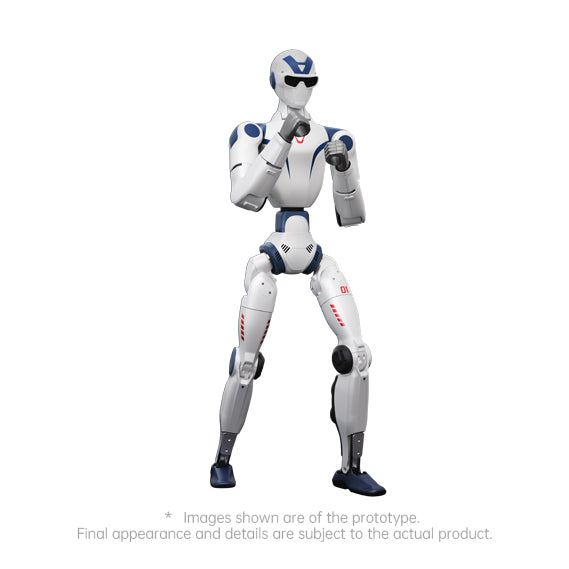 Unitree Robotics Unitree R1 | 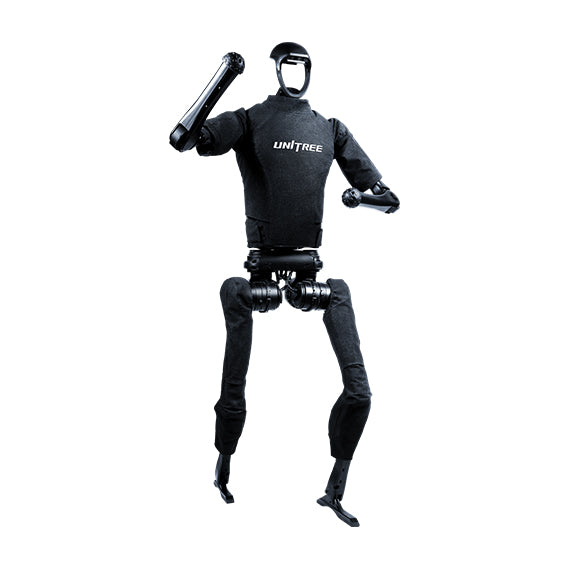 Unitree Robotics Unitree H1 |  Dobot (Shenzhen Yuejiang) Dobot Atom | |
|---|---|---|---|---|
| Price (US) | $13,500 – $73,900 | $4,900 – $5,900 | ~$90,000 | $27,500 – $79,000 |
| Availability | On the market | On the market | On the market | On the market |
| Height | 1.32 m standing | 1.23 m | ~1.80 m | ~1.53 m |
| Payload | Arm ~2 kg | Unknown | Not rated for H1 | 5-20 kg |
| DoF | 23 | 20 | ~19 | Atom |
| Buyer | Individuals | Individuals | Enterprise | Individuals |
| Made in | China | China | China | China |
Every spec, grouped & sourced
Tap a group to expand. Values are labelled official vs third-party; unknowns are omitted, not guessed.
Body & movement▾
Power & endurance▾
Hands & senses▾
Brains & control▾
Claims vs evidence
Imitation & RL; OTA; UnifoLM integration (unverified)
Where it's working
University/research labs and developer community; no verified large-scale commercial deployment
Intended use cases: Research & education platform for embodied AI/locomotion/manipulation; EDU for dev
What owners, reviewers and the press say about the Unitree G1
Ratings and reception gathered from where this machine is actually sold and discussed. We summarise the signal — we don't republish anyone's reviews.
Beyond that one Amazon rating, no channel has accumulated a meaningful sample: the maker's own store, the main Western robotics resellers and the marketplace listings all showed zero customer reviews when checked on 30 August 2026. Buyers of a machine at this price do not leave star ratings.
- MotorTrend — reported on Munro & Associates buying a base G1 and finding it arrived buggy, needing several software updates before it would do much of anything, 2026 · 2026-08-30
- IEEE Spectrum — described the 2025 Bluetooth exploit against Unitree fleets as the first major public exploit of a commercial humanoid platform · 2026-08-30
- The Hacker News — reported two fresh G1 EDU flaws in August 2026 giving root remote code execution, one chain reached over Bluetooth · 2026-08-30
+Reviewers consistently praise
- genuinely buyable and genuinely hackable
- SDK, MuJoCo models and RL gym repos usable by real labs
- agility and fall recovery impress even sceptical roboticists
- has become the default affordable research biped
!And consistently criticise
- headline-price unit is a stripped demo machine with no SDK access
- recurring firmware, DDS setup, spare-part and cable-harness complaints
- viral clips widely read as choreography rather than autonomy
- two public security disclosures in a year, and almost nobody defended the vendor
What owners and developers actually say
This is the one robot in the catalog with a genuine support-desk layer underneath the spectacle — a dedicated development subreddit where owners debug camera streams over LAN and Python SDK scripts that will not run. The maker's public code is the clearest proof: its GitHub organisation carries dozens of repositories, the reinforcement-learning gym alone past 3,500 stars, and a site-wide search returns hundreds of third-party projects built on the G1. The persistent complaint is the tiering — the headline price buys a low-degree-of-freedom unit with no hands and no SDK — and, since 2025, firmware and network security.
r/UnitreeG1, r/unitree, r/robotics, Hacker News, GitHub, ROS Discourse · as of 2026-08-30
Consensus drawn from an engineering-consultancy teardown covered by a national outlet, one national-outlet hands-on drive, roughly a dozen owner and reseller videos (largest about 1.25M and 491K views), a launch discussion of 195 points and 123 comments on Hacker News, and hundreds of public third-party code repositories.
Unitree G1: the claims, checked
shipping
The G1 has been in production and on sale since 2024 and remains purchasable. Unitree's official store listed it at $13,500 with an available stock flag when checked on 30 August 2026, and US resellers listed every EDU tier in stock. Unitree shipped more than 5,000 humanoid units during 2025 per its IPO prospectus. Availability in the US rests on grandfathered FCC authorisations predating the 28 July 2026 Covered List addition, which blocks new equipment authorisation rather than existing grants; successor models would need a conditional approval.
as of 2026-08-30
- misleading“The Unitree G1 costs $16,000”
That figure comes from May 2024 launch coverage of the 99,000 RMB price. Unitree's actual list has been $13,500 since then and had not changed when we checked on 30 August 2026; the US dealer price is $17,990. More importantly, neither number buys a programmable robot - a G1 EDU starts at $43,900.
- false“The $13,500 G1 can be programmed”
Unitree's own store page states that this product does not support secondary development and directs customisation buyers to the EDU edition. The Amazon listing carries '(No Secondary Development)' in the product title. The base unit cannot be upgraded to EDU.
- true“Unitree robots phone home to servers in China”
Researchers Andreas Makris and Kevin Finisterre reported in September 2025 that the G1 transmits to China-based servers roughly every five minutes without notifying the user. What is transmitted, to which endpoints, and whether it can be disabled were never published - so the transmission is documented, but its contents are not.
- false“The G1 does kung fu autonomously”
Unitree's 'Iron Fist King' kickboxing event of 25 May 2025 used four G1 units, each controlled in real time by a human operator team, with pre-programmed exhibition combinations between rounds. The viral martial-arts clips are choreographed or reinforcement-learned motion playback. Balance recovery, by contrast, is genuinely autonomous.
- false“The G1 does backflips out of the box”
Acrobatic routines run on EDU and competition-class units with SDK access and higher 120 N·m knee torque, against the base unit's 90 N·m. The $13,500 unit explicitly does not support secondary development.
- true“The Unitree G1 has been hacked”
Twice. CVE-2025-35027, disclosed 20 September 2025 by Andreas Makris and Kevin Finisterre, exploited a hardcoded AES key shared across the entire Unitree line to obtain root over Bluetooth. CVE-2026-76639 and CVE-2026-76640, disclosed 27-29 August 2026 by Olivier Laflamme, are two further unauthenticated root chains, one reachable over Bluetooth with no pairing and reported wormable, confirmed on firmware through V1.5.2.
- false“You can no longer buy a Unitree G1 in the US after the July 2026 ban”
FCC Public Notice DA 26-786, released 28 July 2026, blocks new equipment authorisation - which is what then blocks import, marketing and sale - rather than banning imports directly, and it is country-neutral rather than China-specific. Models authorised before that date are grandfathered, with import, sale, ownership and resale all continuing and a waiver covering firmware and security updates until at least 1 January 2029. Unitree's updated prospectus of 31 July 2026 names the G1 among models still permitted for US sale, and US dealers showed EDU tiers in stock on 30 August 2026.
- misleading“The G1 runs for two hours on a charge”
Two hours is the specification for the 9,000 mAh 13-series pack, and it holds only under light demonstration duty. Community reports and dealer listings converge on roughly one to two hours in practice, and one US dealer's own top-tier EDU listing carries a one-hour maximum battery figure alongside the two-hour claim.
- unverified“Unitree Superman sprints faster than Usain Bolt”
Unitree announced a 12.66 m/s sprint and a 2 m standing jump on 16 August 2026, three days before its IPO. Bolt's peak velocity in his 2009 world record was about 12.42 m/s, so the claim concerns peak speed rather than a 100 m time. The figures come from a company demonstration video with no disclosed test protocol, no repeatability data, and the machine has no hands.
- misleading“Unitree is worth $9 billion”
About $9 billion was the implied valuation when the IPO priced at ¥150.80 on 6 August 2026. On the 19 August 2026 debut the shares closed up around 460%, implying a far higher figure, then fell to roughly ¥585 by 29 August 2026 - about 47% below the intraday peak. Any single valuation figure for Unitree needs a date attached to it.
Unitree Robotics in 2026
Unitree Robotics - legally Yushu Technology, based in Hangzhou - is now a public company, and that changes the risk profile of buying from it in both directions. It listed on the Shanghai STAR Market on 19 August 2026, having priced on 6 August at ¥150.80 per share and raised roughly ¥6.1 billion, about $904 million, against a ¥4.2 billion target. Retail demand oversubscribed the book more than 8,000 times, a STAR Market record. The stock peaked more than 629% up intraday on debut, closed around 460% up, and had fallen to roughly ¥585 by 29 August 2026.
The prospectus is the most substantial disclosure the humanoid industry has produced. Revenue of ¥1.70 billion in 2025 against ¥392.77 million in 2024, net profit of ¥278.21 million, gross margin around 60%, more than 5,000 humanoids shipped in 2025 and over 33,000 cumulative quadrupeds. Unitree is the first scaled humanoid maker to reach public markets while profitable. It also disclosed that overseas revenue exceeds 40%, with the US share falling from 19.54% to 13.30% across recent reporting periods, and flagged the FCC restrictions as a risk to future models.
The pressure points are visible. Adjusted net profit fell 53% to about ¥40 million in Q1 2026, with first-half growth decelerating, which triggered a week of bubble coverage from Reuters, SCMP and Caixin in late August 2026. And the company's security-disclosure record is mixed: researchers publicly abandoned private reporting after the 2025 UniPwn process, though the 2026 disclosure was handled far better, with a bounty paid and a cloud-side fix shipped inside two months.
What to watch next
- Immediate - firmware fixes for CVE-2026-76639 and CVE-2026-76640; the cloud-side ownership check was patched between July and 6 August 2026 but no fixed firmware version has been published, and the Bluetooth chain remained open at the 29 August 2026 disclosure
- Ongoing through 2026-2027 - whether the FCC extends its 28 July 2026 restriction to already-authorised models, the exact risk Unitree flagged in its 31 July 2026 prospectus; that would end US resale of existing G1 stock
- 1 January 2028 - the referenced deadline for conditional-approval applications under the FCC regime, requiring a time-bound US manufacturing plan
- 1 January 2029 - the current end of the waiver that lets grandfathered devices keep receiving firmware and security updates; given the August 2026 root exploits, that date is a hard ceiling on how long an existing G1 stays patchable
- Next quarterly results - the first post-IPO earnings report, which will show whether the 53% Q1 2026 adjusted profit decline was a blip or a trend
- Watch for US dealer stock-outs - grandfathered inventory is finite and cannot be replenished with new models; stock-outs are the leading indicator of practical US unavailability
- Whether Superman, unveiled 16 August 2026, becomes a shipping product or stays a demonstration; it currently has no hands and no independently verified test protocol
- Any move on the $13,500 base price, which has held since May 2024 while R1 EDU at $10,500 now undercuts G1 EDU on programmability by more than four times
Should you consider the Unitree G1?
The Unitree G1 is the best-value bipedal research platform on the market and the most misrepresented price in the industry, and both statements are true at once. If you are a funded lab that needs real hardware this year, a G1 EDU at $43,900 buys something nothing Western comes close to matching - native ROS 2, Jetson compute, 3D LiDAR, dexterous hand options, and a MuJoCo sim-to-real path that will save your team months. Just budget $50,000 rather than $13,500, and understand that the cheap unit in every headline cannot run your code and cannot be upgraded so that it can. Then weigh the rest honestly: two unauthenticated root exploit chains disclosed in the last week of August 2026, one over Bluetooth with no pairing; undisclosed five-minute telemetry to China that nobody has ever characterised; and a US market position that rests on grandfathered authorisations with no guaranteed successor. For a university lab on an isolated network, that is an acceptable trade for the price. For anything touching government, defence, healthcare or critical infrastructure, it isn't, and no discount changes that.
Score reflects stated criteria (availability, data confidence, US relevance) — not hands-on testing or user ratings. We're an independent review & comparison site; we don't sell robots. *Financing figure is illustrative.
How we know this
Data confidence 82/100 · last verified 2026-08-30. Specs are labelled official vs third-party and dated; unknowns are omitted, not guessed.
Unitree G1 — your questions, answered in full
How much does a Unitree G1 cost?+
The base G1 lists at $13,500 direct from Unitree and $17,990 through US resellers, as checked on 30 August 2026. But that unit cannot be programmed. A G1 EDU, which supports secondary development, runs $43,900 for the Standard configuration up to $73,900 for the top Ultimate tier. Budget around $50,000 for a working research setup once you add spare batteries, a gantry, shipping and duty.
Why does everyone say the Unitree G1 is only $16,000?+
Because that was the figure in the May 2024 launch coverage, converted from the 99,000 RMB price. It has been repeated ever since. Unitree's actual list price is $13,500 and has not moved, and neither number buys a programmable robot. This is the single most common misconception about the G1.
Does the Unitree G1 come with an SDK?+
Only the EDU editions. Unitree's own product page states that the base G1 does not support secondary development and directs customisation buyers to EDU. The base unit cannot be upgraded later. EDU units get unitree_sdk2 in C++ and Python, native ROS 2 support, and a MuJoCo simulator with sim-to-real continuity.
Can you buy a Unitree G1 in the US right now?+
Yes, as of 30 August 2026. FCC Public Notice DA 26-786, released 28 July 2026, added foreign-produced advanced robotic devices to the Covered List, but it blocks new equipment authorisation rather than existing grants, and it is country-neutral rather than China-specific - it turns on the Buy American domestic-end-product test. Models authorised before that date, the G1 among them, are grandfathered: import, sale, ownership and resale continue, and a waiver covers firmware and security updates until at least 1 January 2029. US dealers showed stock across EDU tiers when we checked. Ask for the FCC ID in writing and confirm the grant predates 28 July 2026.
How long does the Unitree G1 battery last?+
The specification is roughly 2 hours from a 9,000 mAh 13-series quick-swap pack, with charging around 45 minutes. In practice, under dynamic load, expect closer to one hour - one US dealer's own top-tier EDU listing shows a one-hour maximum alongside the two-hour figure. Spare packs are $700-$750 each and most labs run two or three.
What is the difference between the Unitree G1 and the R1?+
The R1 is smaller and cheaper - 1.21 m, about 25 kg, 26 degrees of freedom, fixed fist hands, roughly an hour of battery - at $5,900, or $10,500 for R1 EDU with an SDK. The G1 is 1.32 m and 35 kg with 23-43 degrees of freedom, dexterous hand options, 3D LiDAR and Jetson compute. For pure programmability on a budget, R1 EDU at $10,500 undercuts G1 EDU at $43,900 by more than four times.
Is the Unitree G1 secure?+
No, not as of 30 August 2026. Two unauthenticated root exploit chains, CVE-2026-76639 and CVE-2026-76640, were disclosed on 27-29 August 2026, one reachable over Bluetooth with no pairing and reported wormable between robots. They follow CVE-2025-35027 from September 2025, which exploited a hardcoded AES key shared across the whole Unitree product line. The cloud-side fix has shipped; firmware fixes had not been confirmed at disclosure. Researchers recommend disabling Bluetooth and using Wi-Fi only.
How much are import duties and customs on a Unitree G1?+
Unitree quotes shipping at $300-$1,200 and states the customer pays all duties, taxes and clearance. The base US rate on robotics is around 2.5%, with Section 301 tariffs on Chinese-origin goods adding substantially. The most practical measure is the spread between Unitree's $13,500 direct price and the $17,990 US dealer price - roughly $4,500 for the whole landed-cost stack.
What can the Unitree G1 actually do?+
It walks, balances, recovers from shoves, folds down to about 0.69 m for transport, runs pre-programmed motion routines from a controller, and takes OTA updates. On EDU configurations you can add dexterous hands, LiDAR and Jetson compute and write your own controllers in C++, Python or ROS 2. What it does not do is any useful task by itself - there is no task-level autonomy included, and per-arm load is only 2-3 kg.
Is the Unitree G1 a good home robot?+
No. It is a research and demonstration platform with no household autonomy, an hour or two of battery, 2-3 kg per arm and, on the base model, no ability to run your code at all. It will not clean, cook or fetch. If you want a humanoid aimed at homes, that is a different category entirely, and nothing in it has actually been delivered to a customer yet.
Can I buy Unitree stock?+
Unitree listed on the Shanghai STAR Market on 19 August 2026 under its legal name Yushu Technology. That is a mainland Chinese exchange, so access depends entirely on your broker and jurisdiction; many international retail investors cannot trade STAR Market shares directly. The shares had fallen roughly 47% from their debut-day intraday peak by 29 August 2026.
How does the G1 compare to Tesla Optimus or Figure 03?+
The G1 is the only one of the three you can actually buy. Tesla has never published an Optimus price and told analysts in August 2026 that external sales begin no earlier than H2 2027. Figure has no price and no preorder. Unitree shipped more than 5,000 humanoids in 2025, roughly ten times Tesla's or Figure's output. What the G1 gives up is autonomy - Figure's Helix stack and Tesla's FSD-derived controller are aimed at task autonomy the G1 leaves entirely to the buyer.
Peer-reviewed research on the Unitree G1
Published academic work — peer-reviewed papers and preprints — involving this robot or its maker's systems, indexed in scholarly databases (OpenAlex, arXiv). Not blog posts or press write-ups.
- ASAP: Aligning Simulation and Real-World Physics for Learning Agile Humanoid Whole-Body SkillsTairan He, Jiawei Gao, Wenli Xiao et al. · 2025 · arXiv preprint (cs.RO) · DOI 10.48550/arXiv.2502.01143
- AMO: Adaptive Motion Optimization for Hyper-Dexterous Humanoid Whole-Body ControlJialong Li, Xuxin Cheng, Tianshu Huang et al. · 2025 · arXiv preprint (cs.RO); RSS 2025 · DOI 10.48550/arXiv.2505.03738
- UniTracker: Learning Universal Whole-Body Motion Tracker for Humanoid RobotsKangning Yin, Weishuai Zeng, Ke Fan et al. · 2025 · arXiv preprint (cs.RO) · DOI 10.48550/arXiv.2507.07356
- KungfuBot: Physics-Based Humanoid Whole-Body Control for Learning Highly-Dynamic SkillsWeiji Xie, Jinrui Han, Jiakun Zheng et al. · 2025 · arXiv preprint
Academic references are factual citations from open scholarly indexes; listing is not endorsement.