Unitree H1 Robot
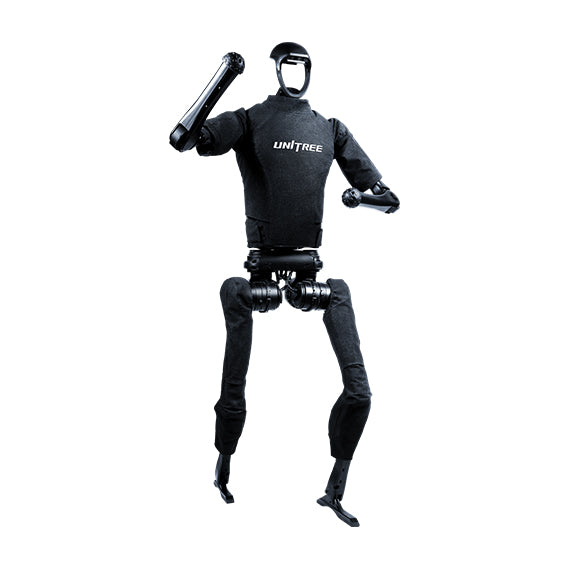
The Unitree H1 is a 180 cm, 47 kg research humanoid listed at $90,000 on Unitree's own store, marked contact-us-for-the-real-price. US resellers ask $94,905 to $122,000 and the largest shows it sold out. It has been superseded by the $29,900 H2, and no H1 FCC authorisation is visible.
US buyers: the H1 has no separate authorization on public record, unlike the rest of the Unitree line — check the FCC ID before ordering.
Unitree's G1, R1 and H2 all appear in the pre-cutoff authorization records; reporting on the H1 says no distinct grant is visible under Unitree's grantee code. That is suggestive but not conclusive, since grants are sometimes held under a contract manufacturer's code. What it means in practice is that a US dealer offering a new H1 should be able to show you the specific FCC ID it is being sold under. Units already in the country are unaffected, and the H2 is the authorized successor if you need certainty.
The FCC listing is a US measure only. Unitree opened commercial sales in Europe on 22 July 2026, and EU/UK buyers order under CE and UKCA rules with no equivalent restriction.
As of 2026-08-30 · medium confidence — verify before you commit funds
What is the Unitree H1 Robot?
The H1 is the full-size Unitree robot — taller, faster and far pricier than the G1 that followed it.
The Unitree H1 was the robot that made a full-size humanoid a thing a university could actually order. It came out in 2023 at a price that undercut everything Western, it set a running record that made the rounds on every tech site, and it has appeared in more academic papers than any other humanoid of its generation. If you have seen a picture of a Chinese humanoid dancing on a stage or sprinting across a track, there is a decent chance it was an H1.
In August 2026 it is a legacy machine, and the honest advice is more complicated than a price. It is still listed at $90,000 on Unitree's own store, but the listing says contact us for the real price and has no checkout. The largest US reseller shows it sold out. Unitree's own H2, launched in October 2025, does the same job at $29,900 with 31 degrees of freedom instead of 18.
There is also a regulatory wrinkle that no other Unitree model has. When the FCC closed the door on new equipment authorisations for foreign robots on 28 July 2026, Unitree had pre-cleared its lineup — the G1, R1, H2, A2, Go2 and B2 all hold grants issued before the deadline. The H1 does not appear under Unitree's grantee code. That does not automatically make an existing unit illegal, but it makes importing a new one in 2026 a question to answer before you spend $90,000, not after.
What the Unitree H1 can — and can't — do today
+Does this out of the box
- Walk and run on complex terrain, with a company-claimed 3.3 m/s from a March 2024 demonstration video
- Balance, recover from pushes and handle uneven ground using blind proprioceptive locomotion
- Perceive its surroundings through a 3D LiDAR and depth camera giving 360-degree coverage
- Be driven from a handheld remote, a mobile app or a PC out of the box
- Be programmed through unitree_sdk2 in C++ under BSD-3-Clause, with official ROS 2 driver and URDF models
- Train in simulation via unitree_rl_gym on Isaac Gym or MuJoCo, with a documented sim-to-real path
- Deliver roughly 1.5 to 2 hours per 864 Wh quick-swap battery
- Reproduce published research from Stanford, Carnegie Mellon and UC San Diego on identical hardware
!Doesn't do, whatever the demo shows
- Grasp anything as shipped — base arms are 4 DOF with no hands, and hands cost $6,500 to $19,000 extra
- Navigate, plan or manipulate autonomously; no navigation, manipulation or task-planning stack is included
- Be bought with a card — the official listing is quote-only and the largest US dealer shows it sold out
- Show a visible FCC equipment authorisation under Unitree's grantee code, unlike the G1, R1, H2, A2, Go2 and B2
- Offer any published warranty terms from Unitree or any dealer we could find
- Operate safely around unbriefed people; a 47 kg running robot has no fenceless-operation story
- Be considered patched against the September 2025 UniPwn vulnerabilities, which name the H1 explicitly
The H1's remaining advantage is the published research base built on it. Everything else about the platform — price, degrees of freedom, compute, regulatory status — has been overtaken by Unitree's own H2 at a third of the price.
What does the Unitree H1 actually do out of the box?
It stands, walks, runs, balances on uneven ground, recovers from pushes, and streams 360-degree perception from a 3D LiDAR and a depth camera. You drive it from a handheld remote, a mobile app or a PC, and it exposes ROS 2 and Unitree's SDK for anything beyond that.
That is a complete description of the product. Unitree markets the H1 as being able to walk and run autonomously in complex terrain, and that claim is fair as far as it goes — it refers to blind, proprioceptive locomotion plus obstacle perception, which is genuinely hard and genuinely solved here. It is not task autonomy. There is no navigation stack you point at a building, no manipulation stack, no task planner, no teleoperation system and no vision-language-action model included. Unitree's own developer tutorials list navigation, manipulation and simulation as topics the buyer implements.
The arms make the point sharply. Base H1 arms have four degrees of freedom each and no hands at all. Anything involving picking something up requires buying hands separately and writing the control yourself.
So the realistic answer to "what do I get on day one" is: a very fast, very capable pair of legs with a sensor head, an SDK, and a research programme's worth of work ahead of you. Unitree's own IPO prospectus confirms this is who buys them — 73.6% of its humanoid revenue over the first nine months of 2025 came from research and education, 17.4% from commercial and display use, and just 9.01% from industry.
How much does the Unitree H1 cost in 2026?
The listed figure is $90,000 on Unitree's own store, checked 30 August 2026, under a product title that literally reads "contact us for the real price". There is no online checkout. You email sales and get a quote.
Resellers are where the real numbers live, and they are higher. The largest US dealer lists the H1 at $99,900 and shows it sold out with a notify-me button. Another US seller lists the H1-2 variant at $122,000 with an active cart. In Europe, a French distributor quotes €93,496 excluding VAT, or €112,195 including it, with delivery times on request. A US listing at $94,905 appears in search results but we could not verify it on the page itself.
What that spread tells you is that the H1 is being sold out of remaining inventory at whatever the channel will bear, not manufactured to order at a list price. The $150,000 figure that appears on some aggregator sites has no primary source and looks like an error; the 2023 launch coverage put the robot below $90,000.
The comparison that actually matters is internal. The H2, launched October 2025, is $29,900 on the same store — 180 cm, 31 degrees of freedom, 360 N·m joint torque, 2,070 TOPS of compute, a bionic face and over-the-air updates. The H2 Plus is $100,000. The G1 is $13,500. Against that ladder, a $90,000-to-$122,000 H1 with 18 to 19 degrees of freedom is priced as a legacy artifact rather than as a product.
What does the H1 price include, and what does it exclude?
Included, per the dealer listings: the robot, a remote control and one battery. Distributor documentation adds the 3D LiDAR and depth camera, ROS compatibility, remote, app and PC control, Unitree's APIs and SDKs, and pre-shipment quality control.
Excluded, and this is where the budget goes:
Hands. The base robot has none. Unitree's Dex3-1 three-finger force-control hand is around $6,500 from a US dealer, an H1-2 dexterous hand is listed at $10,000, and Inspire-class hands run to roughly $12,000. Across the Unitree ecosystem, hand options span about $6,500 to $19,000 per configuration.
Compute. The standard platform is an Intel Core i5; an i7 or an NVIDIA Jetson Orin NX are upgrade options. Neither upgrade is priced by any seller we found.
Batteries. One pack ships with the robot. Spares list around $1,500 at resellers, and you will want two or three for a working lab day. One caution: reseller listings describe the pack as 28.8 V and 15,000 mAh, which computes to 432 Wh, while Unitree's own specification says 15 Ah at up to 67.2 V, or 864 Wh. Those cannot both be right. Confirm the pack chemistry and capacity before ordering spares.
Warranty. Not stated on any H1 listing we could find, from Unitree or from any dealer. That is unusual and worth asking about explicitly.
Everything else. Shipping is not itemised on H1 listings. Training is not offered as a package. Integration, fixtures, safety engineering, insurance and support are all on the buyer.
Can you still buy an H1, or has it been discontinued?
Neither, quite. It is a legacy SKU in a state of managed decline.
It is still listed on Unitree's official store at $90,000, quote-only. It was still on stage in February 2026, performing parkour, Drunken Fist and nunchaku routines at the Spring Festival Gala alongside the newer H2 doing a sword act. But the main US reseller shows it sold out, the H1-2 has vanished from the official store and survives only through dealers, and Unitree's product messaging has moved entirely to G1, R1, H2 and whatever Superman becomes.
A claim that the H1 reached end of life in March 2026 circulates on robot catalogue sites. We could not verify it — there is no Unitree announcement to that effect, and the product remains listed. Treat it as unconfirmed rather than repeating it as fact.
The practical situation for a 2026 buyer is that you would be acquiring a superseded platform, probably from remaining channel inventory, at three to four times the price of its replacement, with no published warranty and an unresolved US import question. There are good reasons to do that — a lab standardising on hardware that matches published papers is the obvious one — but they need to be good.
Is the Unitree H1 really the fastest humanoid robot?
It was, briefly, in a specific sense, and the claim has been overtaken twice — once by Unitree itself.
The 3.3 m/s figure printed on Unitree's own specification page comes from a video released on 1 March 2024. It is a company claim based on that footage. It is not a Guinness World Record; no Guinness entry names the H1, and outlets that wrote "Guinness" were being loose with the word. The venue of the run has never been disclosed. The certified bipedal 100 m record remains Oregon State's Cassie at 24.73 seconds, set in 2022.
In April 2026 Unitree released video claiming 10.1 m/s peak speed in a 100 m sprint. The caveats matter: that is peak, not average, no total time was released, the robot visibly wandered off a straight line, the test unit was roughly 1.78 m and 62 kg rather than a stock 47 kg H1, and Unitree itself said a measurement error was possible.
Then on 16 August 2026, three days before its Shanghai listing, Unitree unveiled a new machine called Superman claiming a 2 m standing high jump and 12.66 m/s top speed on 0.85 m legs, developed in a little over three months. No test protocol, no payload data, no surface, no repeatability, no independent verification, no hands and no product. It is a prototype timed for an IPO week.
For an H1 owner, none of this changes anything functional. Superman shares no announced hardware, firmware or SDK path with the H1. What it does is confirm that Unitree's R&D attention has left this platform entirely.
What can you build on the H1 — SDK and software
This is the H1's strongest remaining argument, and it is a real one: more published research runs on this robot than on anything else in its class.
The core SDK is unitree_sdk2, C++ under BSD-3-Clause, targeting Ubuntu 20.04 on aarch64 and x86_64. Unitree's own open-source materials describe it as the package used to develop Go2, B2 and H1 robots. ROS 2 support comes via a published driver, and there are official URDF models — which is where the 19-degree-of-freedom count comes from, versus the 18 you get counting five per leg and four per arm on the product page. Both numbers are Unitree's, from different layers, and the discrepancy is benign.
For reinforcement learning there is unitree_rl_gym, which explicitly supports Go2, H1, H1-2 and G1 across Isaac Gym and MuJoCo, with a sim-to-real deployment path — roughly 3,500 stars and nearly 600 forks, which for a robotics repository is a genuine community. Two adjacent projects are commonly confused with it and shouldn't be: unitree_rl_lab is built on Isaac Lab rather than Isaac Gym, and unitree_rl_mjlab targets MuJoCo's newer environment tooling.
The academic record is the payoff. Stanford's HumanPlus full-stack shadowing and imitation work ran on an H1 and published in June 2024. Carnegie Mellon's LeCAR Lab built H2O and OmniH2O on an H1 EDU, published through 2024. UC San Diego's ExBody whole-body control paper states plainly that it adopted the Unitree H1. If your lab wants to reproduce or extend that line of work on identical hardware, that is a coherent reason to buy an H1 in 2026 and essentially the only one.
One caveat we could not resolve: Unitree gates secondary development behind EDU versions across its range — its H2 page states that only the EDU version supports development — and we could not confirm whether a base, non-EDU H1 carries the same restriction. Ask before ordering.
How dangerous is an H1, and what goes wrong?
A 47 kg robot that can run at 3.3 m/s has no fenceless-operation story, and the incident record backs that up.
In February 2025, at a festival in Tianjin, an H1 lunged toward spectators. Unitree described it as an accident caused by a software setting or a malfunctioning sensor. The clip went viral as evidence of robot menace, which it wasn't, and as evidence that these machines need a controlled cell, which it was.
In May 2025 factory footage showed a hoisted H1 thrashing near handlers; that one was never officially explained. In July 2025 a crane-suspended H1 lashed out, and the explanation given was that a full-body control policy was running while the feet weren't touching the ground — the policy operating well outside its training distribution. At the World Humanoid Robot Games in August 2025 the field as a whole crashed extensively, with robots tripping and, in the 1,500 m, reportedly running into people.
The pattern is consistent and reassuring in one narrow sense: these are control policies encountering conditions they were not trained for, not anything emergent or unpredictable in a deeper way. But the practical implication for a buyer is firm. Plan for a fenced or tethered test cell, a hard emergency stop within reach of a human at all times, and a written procedure for what happens when a policy runs outside its envelope. Do not plan to operate an H1 near people who have not been briefed.
What are the security risks of owning a Unitree H1?
This is the section that has changed most since our last update, and unlike most Unitree models, the H1 is named directly in the older and more damaging disclosure.
In September 2025, researchers Andreas Makris and Kevin Finisterre, with Konstantin Severov, published UniPwn — four vulnerabilities tracked as CVE-2025-35027, CVE-2025-60017, CVE-2025-60250 and CVE-2025-60251, affecting the Unitree Go2, G1, H1 and B2 on all firmware current at the time. The mechanism was as bad as it sounds: a hardcoded AES key shared across every device, authentication satisfied by encrypting the literal string "unitree", and then unsanitised command injection through the Bluetooth Wi-Fi provisioning fields straight into system calls in a Wi-Fi restart script. Root, over Bluetooth, with no user interaction. It is wormable — a compromised robot can scan for others in Bluetooth range and infect them.
Unitree's handling was poor. Disclosure attempts began in May 2025, the company said fixes would require quarters or years, removed the researchers from email threads, and stopped responding in late July 2025. On 29 September 2025 it said publicly it was aware and had completed the majority of fixes. No H1-specific fix has been publicly announced since.
Then on 27 August 2026 Olivier Laflamme published two further root-level flaws, CVE-2026-76639 and CVE-2026-76640, the second exploitable over Bluetooth without pairing by chaining a permissive GATT characteristic, a cloud endpoint that returned device keys to accounts that did not own the robot, and a buffer overflow in the Bluetooth server. Those were confirmed on the G1 only. The researcher explicitly declined to claim that shared software stack proves other models are affected, and the H1 is not named in either CVE. But the attack surface is the same Bluetooth Wi-Fi provisioning subsystem the 2025 flaws lived in, so assume shared-architecture risk rather than safety.
Separately, security reporting from October 2025 described Unitree units transmitting data to servers in China at roughly five-minute intervals, naming the Go2, B2, G1 and H1 as affected by the underlying vulnerability set. The destination host and payload have not been characterised publicly. The Pentagon has also added Unitree to a list of firms it says have ties to or aid the Chinese military.
The practical position: treat an H1 as a hostile device on your network. Isolated VLAN, no route to anything sensitive, Bluetooth radios disabled outside provisioning, and physical control of who gets within Bluetooth range of it. If your institution has an information security review process, this robot needs to go through it.
Can you legally import a Unitree H1 into the US?
For an existing unit, yes. For a new import in 2026, this needs a real answer before you spend the money.
On 28 July 2026 the FCC released Public Notice DA 26-786, adding foreign-produced advanced robotic devices to its Covered List. The effect is that covered new or previously unauthorised robot models cannot receive FCC equipment authorisation, which is required to import, market or sell a radio-equipped device in the US. Scope is mobile ground robots over about 2 kg with environmental sensing, network connectivity and control software — humanoids, quadrupeds and warehouse AMRs. Fixed industrial arms are excluded. The test is country-neutral: "foreign-produced" means failing the Buy American domestic-end-product standard of US manufacture with more than 65% domestic component cost, so European, Japanese and Korean robots sit inside the same wording.
The rule is prospective and existing owners are explicitly fine. It is not a customs ban and not a recall. Machines with FCC authorisation before 28 July 2026 remain legal to import, market, sell, own and resell, no authorisations were revoked, and there is no restriction on continued use of units already in the country. A companion order also guarantees that authorised devices can keep receiving software and firmware updates through at least 1 January 2029, which matters given the outstanding security work above.
Here is the H1-specific problem. Unitree cleared its current lineup in the weeks before the deadline. Published grant dates under its grantee code cover the G1 in March 2025, Go2 in May 2024, B2 in October 2024, the R1 on 22 June 2026, and the H2 and A2 quadruped both on 30 June 2026. No separate authorisation is visible for the H1. That is suggestive but not conclusive: absence from a public database is not proof, and filings can sit under a different legal entity. Treat the H1's status as unresolved, and put the burden on the seller to show you the grant.
So: read the FCC ID off the physical label of any H1 you are offered and check it before payment. If a dealer cannot produce a grant, you are being asked to import a robot whose legal status you cannot establish. On top of that sits a reported 25% Section 301 duty on Chinese robots, which is the stable part of the import cost. Budget for a compliance review, not just for shipping.
Unitree itself has publicly dismissed the impact of the FCC rule, pointing to its authorised G1, H2, R1, Go2, B2 and A2. Note which model is missing from that list.
Where have H1 units actually been used?
In labs and on stages, and the stage appearances are more often misattributed than any other fact about this robot.
Academically, the H1 has a strong and verifiable record: Stanford's HumanPlus in June 2024, Carnegie Mellon's LeCAR Lab H2O and OmniH2O work on an H1 EDU across 2024, and UC San Diego's ExBody expressive whole-body control paper in February 2024. Beyond published papers, no dated list of institutional purchasers exists — Unitree does not publish customers and procurement records are not indexed — so treat any confident list of universities owning H1s with suspicion.
On stage: the 16 robots that performed Zhang Yimou's Yangge dance segment at the CCTV Spring Festival Gala on 28-29 January 2025 were H1s, not G1s. That is the single most misattributed appearance in Chinese robotics. At the 2026 Gala on 16 February, the H1 performed parkour, Drunken Fist and nunchaku while the newer H2 did a sword routine.
In competition: at the World Humanoid Robot Games in Beijing in August 2025 the H1 won gold in both the 1,500 m and the 400 m, with Unitree taking four golds and eleven medals overall. The 1,500 m time is reported inconsistently across outlets — figures from 6:29 to 6:34 circulate — so cite it as approximately six and a half minutes rather than picking one.
Two corrections worth carrying: the Iron Fist King boxing event of May 2025 used G1s, not H1s, as Unitree's own event page makes clear. And the H1 did not win the Beijing humanoid half-marathon — the 2025 winner was Tiangong Ultra, and the 2026 winner was a machine from a Shenzhen firm.
Commercially, there are no disclosed H1 deployments. Unitree's own prospectus supports that: industrial use is around 9% of its humanoid revenue and that is overwhelmingly G1-class hardware.
H1 vs H2, G1 and the wider field
Within Unitree's own range the H1 is now the worst value in the catalogue, and it is not close.
The H2 at $29,900 is taller-equal, has 31 degrees of freedom against the H1's 18 to 19, 360 N·m joint torque, 2,070 TOPS of onboard compute, a bionic face and over-the-air updates. It also holds an FCC grant dated 30 June 2026. US dealers price it at $40,900 commercial and $68,900 for the EDU version, which is still below the H1's dealer pricing. The G1 at $13,500 covers most research needs at half the H1's degrees of freedom but a sixth of the price. The H2 Plus at $100,000 is the flagship.
The H1-2 is a different trade rather than an upgrade: 178 cm, 70 kg, 27 degrees of freedom with seven per arm, a 7 to 21 kg payload and roughly two hours of runtime — but under 2 m/s. It swaps the H1's speed for arms and carrying capacity, and it is sold only through dealers now, around $122,000.
Outside Unitree at similar money: Fourier's GR-2 is reported around $125,000 and the GR-3C around $85,000, both from catalogue sources rather than the manufacturer. Booster's T1 is quoted around $34,000 by distributors. Agility's Digit is not sold outright to most buyers — the model is a lease at roughly $8,500 a month. Apptronik's Apollo has no public price at all, though the company raised $520 million at a $5 billion valuation in February 2026 and runs pilots at Mercedes-Benz and GXO. Figure, Atlas and Optimus publish nothing.
So the H1's competitive position is: outclassed inside its own product line at a third of the price, priced above better-specified alternatives outside it, and carrying a regulatory question none of them have.
Is Unitree a safe company to buy an obsolete robot from?
The company has never been stronger financially, which cuts both ways for an H1 buyer.
Unitree listed on the Shanghai STAR Market on 19 August 2026 under ticker 688836, priced at ¥150.80 a share for a valuation near ¥61 billion — about $9 billion — raising roughly ¥6.1 billion. Retail demand oversubscribed the offering more than 8,000 times, a STAR Market record. On debut the stock peaked at ¥1,100 intraday, up about 629%, and closed at ¥845, up 460%, briefly valuing the company around $66 billion. It then slumped: by 25 August it was roughly 45% below the peak, and it closed 28 August at ¥585 with a market capitalisation near ¥237 billion, about $33 billion.
The prospectus numbers explain both the enthusiasm and the correction. Revenue went from ¥159 million in 2023 to ¥393 million in 2024 to ¥1.70 billion in 2025, with 2025 net profit of ¥278 million and gross margin around 60%. Humanoid units sold went from 5 in 2023 to 412 in 2024 to 5,215 in 2025. Overseas revenue was 43.65% of main-business revenue in 2025. Founder Wang Xingxing retains around 20%, which made him China's first humanoid robot billionaire several times over.
The number that matters for an H1 buyer is the average selling price, which collapsed from around $85,000 in 2023 to about $25,000 over the first nine months of 2025. That is the H1-to-G1 mix shift in a single figure, and it tells you exactly where Unitree's volume, engineering and support attention now sits. R&D also fell from 31.4% of revenue in 2023 to 7.7% over nine months of 2025.
Translation for a buyer: Unitree is not going anywhere, but the H1 is a rounding error in its business. Do not expect firmware attention, parts priority or a security fix schedule for a platform that represents a tiny fraction of a company shipping thousands of $13,500 robots a year.
Should you buy a Unitree H1 in 2026?
For most people, no, and the reason is not the robot — it's the arithmetic.
Buy one only if you are a research group deliberately standardising on the exact hardware behind the HumanPlus, OmniH2O or ExBody line of work, you can verify the FCC grant on the physical unit before payment, you have an information security process that can accept a device with unpatched wormable Bluetooth vulnerabilities from 2025, and you have a fenced test cell with a hard emergency stop. Under those four conditions the H1 is a defensible, even sensible, purchase, and the published research base behind it is genuinely unmatched.
Don't buy one if you want the most capable Unitree humanoid: that is the H2 at $29,900, with more degrees of freedom, far more compute, over-the-air updates and a clean FCC grant. Don't buy one if you want value: the G1 at $13,500 covers most research at a sixth of the price. Don't buy one if you want manipulation: the base arms have four degrees of freedom and no hands, and the H1-2 exists precisely because the H1 was the wrong shape for that work. Don't buy one expecting household or commercial tasks; there is no vendor claim, no demonstration and no included stack, and Unitree's own revenue split confirms nobody is doing it.
And don't buy one because it is the fastest humanoid in the world. That claim was defensible for a full-size humanoid in 2024, and Unitree has since beaten it twice with other hardware. It is a lovely piece of engineering with a real place in the history of this field. It is just not a 2026 purchase for most of the people searching for it.
The Unitree H1 on video
Hands-on reviews and teardowns, picked for what they actually show rather than how loud the thumbnail is.
The launch video that set H1's original sub-$90k positioning
The record run itself, and the clearest demonstration of what H1's leg power actually buys you
Puts H1 next to the smaller G1 so you can see where the extra money and mass actually go
Unitree H1 price ladder — and what the entry price leaves out
The headline number is almost never the number you pay. Here is each configuration, and what it does not include.
| Configuration | Price | What you get | What it excludes |
|---|---|---|---|
| Unitree H1 — official store listing | $90,000 | Robot, remote control, one battery, 3D LiDAR and depth camera, ROS compatibility, Unitree APIs and SDKs | Quote-only, no online checkout; listing is titled contact-us-for-the-real-price. No hands, no compute upgrade, no spare battery, no stated warranty |
| Unitree H1 — largest US reseller | $99,900 | Same configuration, imported, with a domestic point of contact | Shows as sold out with a notify-me button as of 30 August 2026 |
| Unitree H1-2 — US reseller | $122,000 | 178 cm, 70 kg, 27 DOF with 7 per arm, 7-21 kg payload, roughly 2 h runtime | Under 2 m/s — trades the H1's speed for arms and payload. Delisted from Unitree's own store; dealer channel only |
| Unitree H1 — European distributor | €93,496 ex-VAT (€112,195 inc-VAT) | Same base configuration, delivery times on request | VAT treatment varies by member state; hands, compute upgrades and spares all extra |
| Unitree H2 — the successor, for comparison | $29,900 | 180 cm, 31 DOF, 360 N·m joint torque, 2,070 TOPS, bionic face, over-the-air updates. FCC grant dated 30 June 2026 | Only the EDU version supports secondary development; US dealers list $40,900 commercial and $68,900 EDU |
What owning one actually costs
| Cost | Typical | Notes |
|---|---|---|
| Shipping & import duty | Not itemised; a 25% Section 301 duty is reported on Chinese robots | More important than the duty: no H1 FCC authorisation is visible, so a new 2026 US import needs the grant verified off the physical label before payment |
| Dexterous hands | $6,500-$19,000 | Base H1 arms are 4 DOF with no hands. Dex3-1 around $6,500, an H1-2 hand listed at $10,000, Inspire-class around $12,000 |
| Spare batteries | ~$1,500 each | One pack included; plan on two or three. Reseller listings describe 432 Wh while Unitree's spec says 864 Wh — confirm before ordering |
| Compute upgrade | Not published | Standard is an Intel Core i5; i7 or NVIDIA Jetson Orin NX are options and no seller prices them |
| Warranty | Unknown | No warranty term appears on any H1 listing from Unitree or any dealer. Ask in writing before ordering |
| Safety cell and engineering | Varies | A 47 kg robot running at 3.3 m/s needs a fenced or tethered cell and a hard emergency stop; incident history includes a February 2025 lunge toward spectators |
| Security review | Staff time | The H1 is named in the September 2025 UniPwn vulnerabilities with no publicly announced H1-specific fix. Budget for network isolation and an infosec sign-off |
| Engineering time | The dominant cost | No navigation, manipulation or task stack ships with the robot. Every useful application is a project measured in months |
Who the Unitree H1 is — and isn't — for
+Where it shines
- Open developer access (SDK/API) — good for builders and labs.
- Stated real-world payload (Not rated for H1).
- Specs are well-sourced — high data confidence.
!Watch-outs
- Sold to businesses only — not to private buyers.
How the Unitree H1 stacks up
Side by side with similar robots — the one you're reading about is highlighted.
| This robot Unitree Robotics Unitree H1 | 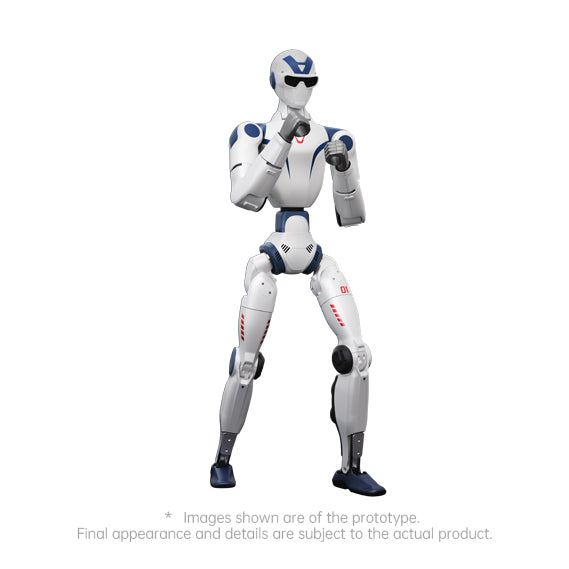 Unitree Robotics Unitree R1 | 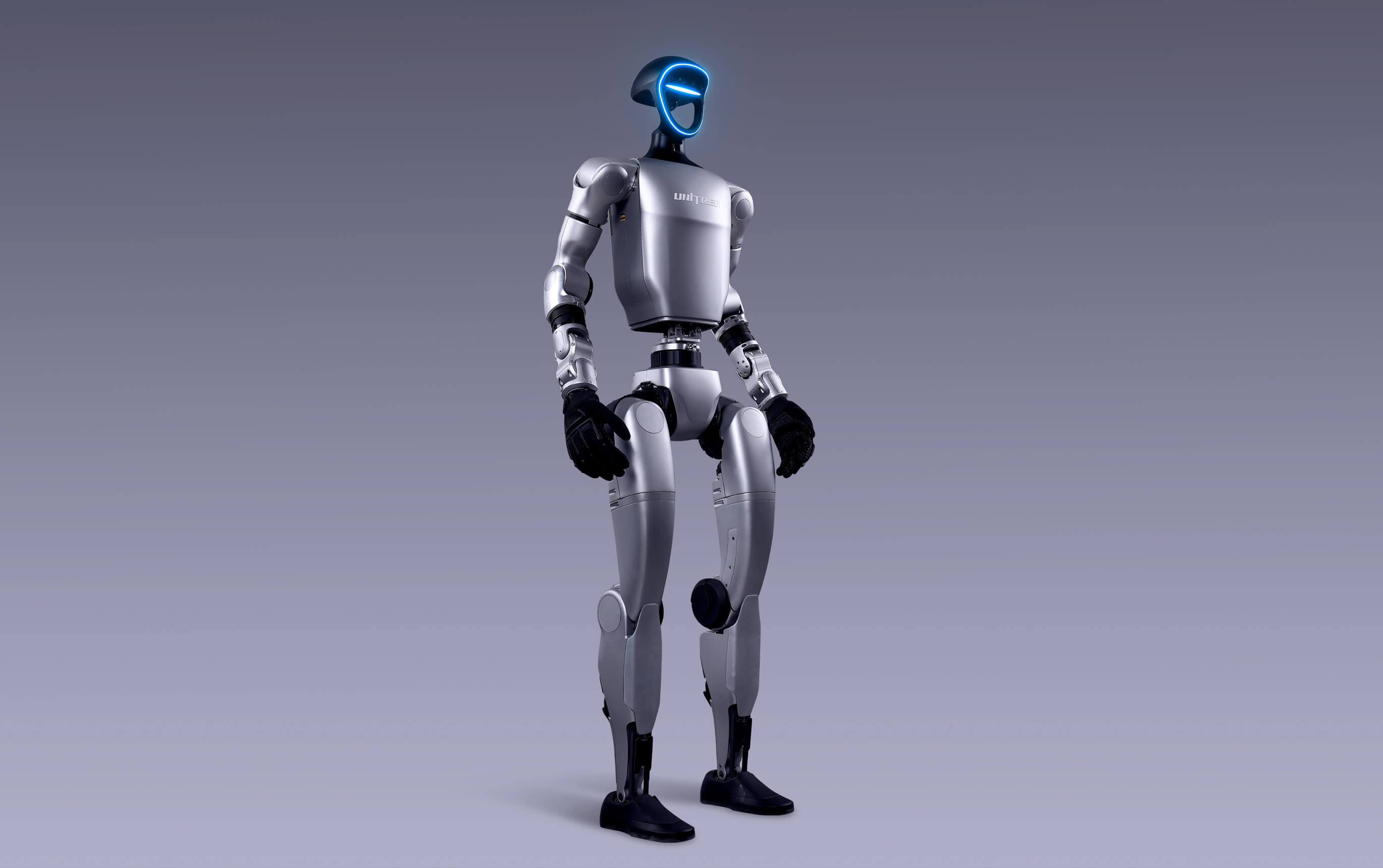 Unitree Robotics Unitree G1 | 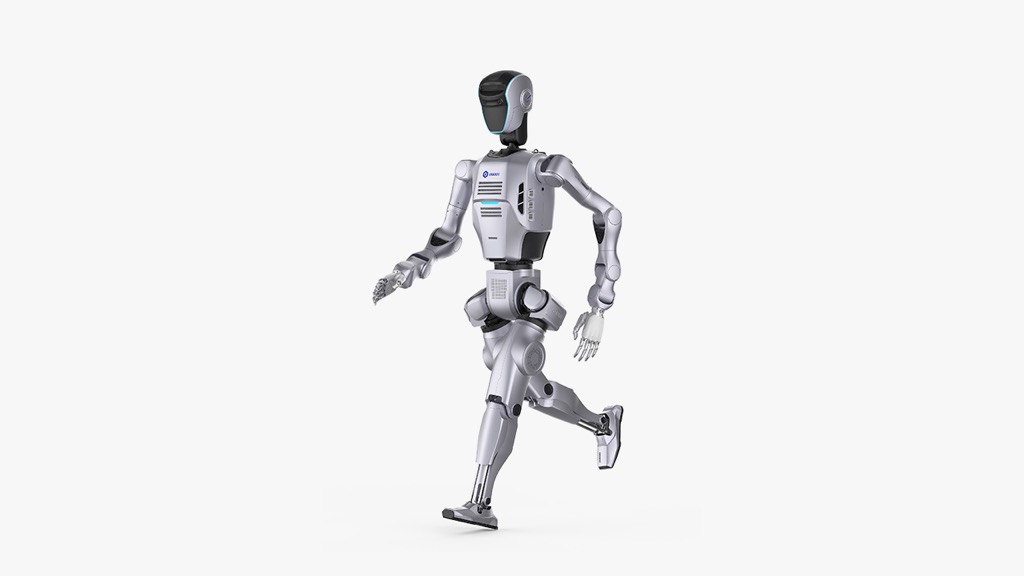 Dobot (Shenzhen Yuejiang) Dobot Atom | |
|---|---|---|---|---|
| Price (US) | ~$90,000 | $4,900 – $5,900 | $13,500 – $73,900 | $27,500 – $79,000 |
| Availability | On the market | On the market | On the market | On the market |
| Height | ~1.80 m | 1.23 m | 1.32 m standing | ~1.53 m |
| Payload | Not rated for H1 | Unknown | Arm ~2 kg | 5-20 kg |
| DoF | ~19 | 20 | 23 | Atom |
| Buyer | Enterprise | Individuals | Individuals | Individuals |
| Made in | China | China | China | China |
Every spec, grouped & sourced
Tap a group to expand. Values are labelled official vs third-party; unknowns are omitted, not guessed.
Body & movement▾
Power & endurance▾
Hands & senses▾
Brains & control▾
Claims vs evidence
Locomotion + 360-deg perception; marketed as research/dev platform; no verified general-task autonomy
Where it's working
Demos/research; running-speed-record demos; no verified large commercial deployment
Intended use cases: R&D, AI/locomotion research, education, industrial inspection demos
What owners, reviewers and the press say about the Unitree H1
Ratings and reception gathered from where this machine is actually sold and discussed. We summarise the signal — we don't republish anyone's reviews.
Sold as a roughly ninety-thousand-dollar research platform through direct sales and specialist resellers; every listing checked on 30 August 2026 carried zero reviews. No consumer rating exists for this class of buyer.
- The Robot Report — reported the H1 taking the first gold of the 2025 World Humanoid Robot Games in the 1,500 m with a record 6:34.40 · 2026-08-30
- CNBC — covered Unitree dominating the same 2025 games, where its robots took four golds and eleven medals overall · 2026-08-30
+Reviewers consistently praise
- locomotion performance treated as real and repeatable
- understood and judged as a research platform rather than a product
- credited with putting dynamic bipedal locomotion within reach of labs that could not previously afford it
!And consistently criticise
- choreography fatigue — videos widely read as pre-programmed routines
- public failures get more attention than the successes
- roughly ninety thousand dollars puts it well beyond hobbyists
- substantially eclipsed by the newer, cheaper G1
What owners and developers actually say
The H1 is the clearest case here of a robot whose community moved on: the technical users migrated to the cheaper G1, and what remains in public discussion is largely spectacle, with the failure clips — a fall at the Beijing half-marathon, a collision during a race — drawing more traction than the wins. A genuine but narrow developer base persists in university and corporate labs rather than on forums, visible as roughly a hundred public third-party repositories, an order of magnitude below the G1's. The sharpest recurring criticism is choreography fatigue: a widespread belief that the videos are pre-programmed routines rather than autonomy.
r/unitree, r/robotics, r/singularity, GitHub · as of 2026-08-30
Consensus drawn from competition reporting from two business and trade outlets, around eight overview videos, community threads reaching about 1,000 upvotes with 148 comments, and roughly a hundred public third-party code repositories.
Unitree H1: the claims, checked
shipping
Still listed on Unitree's own store at $90,000, quote-only with no checkout, and available through European and US dealers at €93,496 to $122,000 — but the largest US reseller shows it sold out as of 30 August 2026, the H1-2 has been delisted from Unitree's own store, and the platform has been superseded by the $29,900 H2. Verified use is academic: Stanford, Carnegie Mellon and UC San Diego have all published research on H1 hardware. No commercial deployments are disclosed.
as of 2026-08-30
- false“The Unitree H1 holds the Guinness World Record for fastest humanoid”
No Guinness entry names the H1. The 3.3 m/s figure on Unitree's own spec page comes from a company video released 1 March 2024, with the venue undisclosed. The certified bipedal 100 m record is still Oregon State's Cassie at 24.73 seconds from 2022.
- misleading“The H1 runs at 10 m/s”
Unitree released video in April 2026 claiming 10.1 m/s peak in a 100 m sprint. That is peak rather than average, no total time was released, the line was visibly not straight, the test unit was around 1.78 m and 62 kg rather than a stock 47 kg H1, and Unitree said a measurement error was possible.
- false“The dancing robots at the Chinese New Year Gala were G1s”
The 16 robots performing Zhang Yimou's Yangge segment at the CCTV Spring Festival Gala on 28-29 January 2025 were H1 units. At the 2026 Gala the H1 performed parkour, Drunken Fist and nunchaku while the newer H2 did a sword routine.
- false“H1 robots fought in Unitree's boxing event”
The Iron Fist King: Awakening event of May 2025 used G1 robots — Unitree's own event page names the G1. Pre-event coverage speculated it might be G1 or H1, and the speculation stuck.
- misleading“You can buy a $90,000 humanoid robot”
$90,000 is a real official listing, but it is quote-only with no checkout, the largest US dealer shows the robot sold out, other dealers ask $94,905 to $122,000, and Unitree's own H2 covers the same form factor at $29,900.
- false“The Unitree H1 launched at $150,000”
That figure appears only on aggregator sites with no primary source. Launch coverage in 2023 put the price below $90,000, which matches the current official listing.
- false“The H1 can do household tasks”
There is no vendor claim, no demonstration and no included manipulation stack; base arms are 4 DOF with no hands. Unitree's own prospectus shows 73.6% of humanoid revenue coming from research and education and about 9% from industry.
- unverified“The H1 was discontinued in March 2026”
No Unitree announcement exists and the product was still listed on 30 August 2026. It is de facto superseded by the H2 and shows sold out at the main US dealer, but end-of-life is not confirmed.
- unverified“The H1 is affected by the August 2026 Bluetooth root RCE”
CVE-2026-76639 and CVE-2026-76640 were confirmed on the G1 only, and the researcher declined to claim other models are affected. However, the H1 is explicitly named in the September 2025 UniPwn vulnerabilities that live in the same Bluetooth provisioning subsystem, and no H1-specific fix has been publicly announced.
- misleading“Unitree IPO'd on 23 August 2026 at a $9 billion valuation and rose 600%”
The debut was 19 August 2026 on the Shanghai STAR Market under ticker 688836. The $9 billion figure was the IPO pricing valuation; the shares closed the first day up 460% at ¥845, having peaked up about 629% intraday. By 28 August the stock was at ¥585, roughly 45% below the peak.
Unitree Robotics in 2026
Unitree Robotics listed on the Shanghai STAR Market on 19 August 2026 under ticker 688836, pricing at ¥150.80 a share for a valuation near ¥61 billion — about $9 billion — and raising roughly ¥6.1 billion. Retail investors oversubscribed the offering more than 8,000 times, a record for the exchange. The stock peaked at ¥1,100 on debut, up around 629%, closed the day at ¥845 for a 460% gain, and then fell hard: by 28 August it closed at ¥585, roughly 45% below the peak, for a market capitalisation near ¥237 billion or about $33 billion. Underneath, the growth is real. Revenue rose from ¥159 million in 2023 to ¥393 million in 2024 to ¥1.70 billion in 2025, with ¥278 million of net profit in 2025 and gross margin near 60%. Humanoid units sold went 5, then 412, then 5,215. Overseas revenue was 43.65% of main-business revenue in 2025. Two figures should shape an H1 buyer's expectations. The average selling price of a Unitree humanoid fell from around $85,000 in 2023 to roughly $25,000 across the first nine months of 2025, which is the H1-to-G1 shift in one number. And R&D fell from 31.4% of revenue in 2023 to 7.7% over the same nine months. Founder Wang Xingxing retains about 20% of a company that no longer depends on this platform.
What to watch next
- Watch for any H1-specific firmware fix for the September 2025 UniPwn vulnerabilities, which remain publicly unaddressed for this model
- Watch whether an H1 FCC equipment authorisation surfaces; none is visible under Unitree's grantee code, unlike the G1, R1, H2, A2, Go2 and B2
- Watch the FCC's guarantee that authorised devices keep receiving software and firmware updates through at least 1 January 2029
- Watch whether Unitree formally end-of-lifes the H1; the March 2026 EOL claim circulating on catalogue sites is unverified
- Watch remaining channel stock: the largest US dealer already shows the H1 sold out and the H1-2 is off Unitree's own store
- Watch whether the Superman platform unveiled 16 August 2026 becomes a product; as of now it has no price, no hands and no independent verification
- Watch Unitree's first results as a listed company after a debut that gave back roughly 45% within a week
Should you consider the Unitree H1?
The Unitree H1 earned its place — it put a full-size humanoid within reach of a university budget, and Stanford, Carnegie Mellon and UC San Diego all built published work on it. In 2026 it is a legacy platform being sold out of remaining stock. The official $90,000 listing is quote-only with no checkout, dealers ask up to $122,000, the biggest US reseller shows it sold out, and Unitree's own H2 does more for $29,900 with a clean FCC grant. Three risks compound that. No H1 authorisation is visible under Unitree's grantee code, which makes a new US import a question you must answer before paying. The H1 is named directly in the September 2025 UniPwn vulnerabilities, with no publicly announced fix, so it belongs on an isolated network. And Unitree's average humanoid selling price has fallen from about $85,000 to $25,000, which tells you where support attention now goes. Buy an H1 only to match hardware behind specific published research, with the FCC grant verified and a security review done. Everyone else should buy the H2.
Score reflects stated criteria (availability, data confidence, US relevance) — not hands-on testing or user ratings. We're an independent review & comparison site; we don't sell robots. *Financing figure is illustrative.
How we know this
Data confidence 82/100 · last verified 2026-08-30. Specs are labelled official vs third-party and dated; unknowns are omitted, not guessed.
Unitree H1 — your questions, answered in full
What is the price of the Unitree H1 robot?+
Unitree's own store lists $90,000 under a title reading contact us for the real price, with no online checkout. US resellers ask $94,905 to $122,000 for the H1 and H1-2, and the largest shows the H1 sold out. A European distributor quotes €93,496 excluding VAT. All figures checked 30 August 2026.
Can you buy a Unitree H1 in the US?+
Existing units are unaffected — FCC Public Notice DA 26-786 of 28 July 2026 blocks new equipment authorisations and is neither a customs ban nor a recall, and grandfathered models stay legal to import, sell, own and resell. The wrinkle is H1-specific: the G1, R1, H2, A2, Go2 and B2 all hold pre-deadline grants, while no separate H1 authorisation is visible under Unitree's grantee code. That is suggestive rather than conclusive, so treat it as unresolved and verify the FCC ID off the physical label before paying.
Is the Unitree H1 still being sold?+
Technically yes, practically it is winding down. It remains listed at $90,000 quote-only, but the main US dealer shows it sold out, the H1-2 has been delisted from Unitree's own store, and the $29,900 H2 has replaced it in every product message. A claim that it reached end of life in March 2026 is unverified.
How fast is the Unitree H1?+
Unitree's specification says 3.3 m/s, described as a world record, from a video released 1 March 2024. It is a company claim, not a Guinness record, and the venue was never disclosed. Unitree claimed 10.1 m/s peak from a modified heavier unit in April 2026, and 12.66 m/s from its new Superman prototype in August 2026 — neither independently verified.
How long does the Unitree H1 battery last?+
Roughly 1.5 to 2 hours on its 864 Wh quick-swap pack, per Unitree's own specification of 15 Ah at up to 67.2 V. One pack ships with the robot and spares list around $1,500. Note that some reseller listings describe a 432 Wh pack, which conflicts with Unitree's figure — check before ordering.
How many degrees of freedom does the Unitree H1 have?+
18 or 19 depending on which Unitree document you read. The product page counts five per leg and four per arm, giving 18; the official URDF adds a torso yaw joint for 19. Both are Unitree's own numbers from different layers. By comparison the H1-2 has 27 and the newer H2 has 31.
Is the Unitree H1 safe to put on my network?+
Treat it as untrusted. The H1 is explicitly named in the UniPwn vulnerabilities disclosed in September 2025 — a hardcoded AES key shared across devices and command injection through Bluetooth Wi-Fi provisioning, giving root with no user interaction and spreading between nearby robots. No H1-specific fix has been publicly announced. Isolate it on its own VLAN and disable Bluetooth outside provisioning.
Unitree H1 vs H2 — which should I buy?+
The H2, unless you specifically need H1 hardware to match published research. At $29,900 it has 31 degrees of freedom against the H1's 18 to 19, 360 N·m joint torque, 2,070 TOPS of compute, over-the-air updates and an FCC grant dated 30 June 2026 — for roughly a third of what an H1 costs through a dealer.
Are Unitree robots better than Boston Dynamics?+
They compete on different axes. Boston Dynamics' Atlas carries 50 kg, reaches 2.3 m and is IP67-rated, and no third party can buy one in 2026. A Unitree H1 or H2 arrives at your loading dock for a fraction of the price with a published SDK. For research access Unitree wins outright; for industrial work Atlas is a different class of machine.
Are the Unitree dancing robots real?+
Yes. The 16 robots that performed the Yangge dance at the CCTV Spring Festival Gala on 28-29 January 2025 were real Unitree H1 units running choreographed routines, not CGI. What they were not is autonomous — the routines were programmed and rehearsed, which is exactly how any staged robot performance works.
Can the Unitree H1 pick things up?+
Not as shipped. Base arms have four degrees of freedom each and no hands. Adding hands costs $6,500 to $19,000 depending on configuration, and you write the manipulation control yourself. If grasping and payload are the point, the H1-2 with 27 degrees of freedom and a 7 to 21 kg payload exists for exactly that reason.
Which universities have used the Unitree H1?+
Stanford published HumanPlus on H1 hardware in June 2024, Carnegie Mellon's LeCAR Lab built H2O and OmniH2O on an H1 EDU across 2024, and UC San Diego's ExBody paper from February 2024 states it adopted the H1. Beyond published papers there is no dated list of institutional owners; Unitree does not publish customers.
Peer-reviewed research on the Unitree H1
Published academic work — peer-reviewed papers and preprints — involving this robot or its maker's systems, indexed in scholarly databases (OpenAlex, arXiv). Not blog posts or press write-ups.
- Expressive Whole-Body Control for Humanoid RobotsXuxin Cheng, Yandong Ji, Junming Chen et al. · 2024 · Robotics: Science and Systems (RSS) 2024 · DOI 10.48550/arXiv.2402.16796
- HumanoidBench: Simulated Humanoid Benchmark for Whole-Body Locomotion and ManipulationCarmelo Sferrazza, Dun-Ming Huang, Xingyu Lin et al. · 2024 · Robotics: Science and Systems (RSS) 2024 · DOI 10.48550/arXiv.2403.10506
- Learning Human-to-Humanoid Real-Time Whole-Body Teleoperation (H2O)Tairan He, Zhengyi Luo, Wenli Xiao et al. · 2024 · IEEE/RSJ IROS 2024 · DOI 10.48550/arXiv.2403.04436
- HumanPlus: Humanoid Shadowing and Imitation from HumansZipeng Fu, Qingqing Zhao, Qi Wu et al. · 2024 · Conference on Robot Learning (CoRL) 2024 · DOI 10.48550/arXiv.2406.10454
Academic references are factual citations from open scholarly indexes; listing is not endorsement.