Unitree H2 Robot
Yes, you can buy a Unitree H2 today. Unitree's own store lists it in stock from $29,900, the North American distributor prices pre-orders at $40,900 with a $2,500 deposit, the development-access EDU edition runs $68,900, and the new H2 Plus - NVIDIA's Isaac GR00T reference humanoid - lists at $100,000. All figures as of 30 August 2026, all before shipping, duty and hands. US import is legal: the H2 was authorized in June 2026, before the FCC's 28 July cutoff.
US buyers: still orderable — the H2 was authorized in June 2026, so it stays legal to import and sell.
The H2 was authorized shortly before the cutoff and is therefore grandfathered. In practice it reaches US customers through third-party distributors rather than direct Unitree sales, so lead times and pricing vary by reseller and you should confirm the FCC ID on the exact unit quoted. Federal and defense buyers are excluded by the separate Pentagon designation.
The FCC listing is a US measure only. Unitree opened commercial sales in Europe on 22 July 2026, and EU/UK buyers order under CE and UKCA rules with no equivalent restriction.
As of 2026-08-30 · medium confidence — verify before you commit funds
What is the Unitree H2 Robot?
The H2 is the newest full-size Unitree robot, and the first the company gave a face.
The Unitree H2 is the machine that made the rest of the humanoid industry look expensive. A 180 cm, roughly 70 kg bipedal robot with 31 degrees of freedom, a three-hour quick-swap battery and a list price that starts at $29,900 - roughly a fifth of what a comparable Western full-size humanoid costs, and less than a well-optioned pickup truck. It is not a toy, and it is not a research curiosity either. Unitree ships these in volume.
But $29,900 is a headline, not an invoice. The base H2 arrives with placeholder hands rather than dexterous ones. It ships from China, so shipping, duty and local tax sit on top. The North American channel prices the same robot at $40,900, and the configuration most research buyers actually need - the EDU edition with open SDK access and NVIDIA Jetson compute - is $68,900. Above that sits the H2 Plus at $100,000, which did not exist in our June snapshot and is now, as of the 1 June 2026 announcement, NVIDIA's reference humanoid platform for academic research.
Two things changed around this robot in August 2026 that any buyer should factor in. Unitree listed on the Shanghai STAR Market in mid-August, opened up around 600% and then gave a large part of it back inside the first trading week - Global Times reported over 200 billion yuan of market value shed by 27 August. And on 29 August, security researchers disclosed two flaws in the Unitree G1 EDU that allow root remote code execution, one of them reachable over Bluetooth. Neither event changes the H2's spec sheet. Both change how a serious buyer should think about the company behind it.
What the Unitree H2 can — and can't — do today
+Does this out of the box
- Walk, turn, climb stairs and recover balance after a push, using whole-body control refined over a decade of shipping legged machines
- Execute complex pre-authored motion sequences - martial arts, dance, expressive gesture - with 31 degrees of freedom including a 3-DOF waist and 2-DOF neck
- Run for approximately 3 hours on a 972 Wh quick-swap smart battery, and be returned to service in minutes with a second pack rather than a charge cycle
- Lift roughly 7 kg rated per the manufacturer, with brief peaks quoted around 21 kg
- Be developed on through open SDKs and public code repositories - EDU edition only
- Run NVIDIA Isaac GR00T policies on Jetson-class compute, up to 2,070 TOPS on the EDU and H2 Plus tiers
- Be fitted with force-controlled DEX5-1 or DEX3-1 dexterous hands as a paid option
- Receive over-the-air software updates, and continue receiving them in the US until at least 1 January 2029 under the FCC's waiver
!Doesn't do, whatever the demo shows
- Grasp anything out of the box - the base machine ships with placeholder hands, not dexterous ones
- Be developed on at the $29,900 tier; SDK access is the $68,900 EDU edition
- See in depth as standard - no LiDAR and no depth camera on the base sensor suite
- Take a spoken instruction and improvise a solution; autonomy claims are marketing language, not benchmarked capability
- Be quoted a walking speed, an IP rating or an MTBF figure, because Unitree has published none of them for this model
- Be purchased by US federal or defence buyers, who are excluded by a separate Pentagon designation
- Be shipped as a future hardware revision into the US, since a revised model would need new FCC authorization it cannot now obtain
The H2 is a development platform and a presence machine, not a labour robot. Its closest honest comparison is the Unitree H1 it replaces and the research humanoids from Booster and EngineAI, not Walker S2 or Digit, which are sold to do factory work. Verified against Unitree's own store listing, the North American distributor's tiers and the 1 June 2026 H2 Plus announcement, checked 30-31 August 2026.
What is the Unitree H2?
The H2 is Unitree Robotics' full-size bipedal humanoid, the successor to the H1 that first put the company on the humanoid map. It stands about 180 cm tall - some distributor listings round this to 182 cm - and weighs roughly 70 kg with its battery in.
Articulation is where the H2 separates from the H1. Unitree publishes 31 degrees of freedom: six per leg, seven per arm, three at the waist and two in the head. Leg joints are rated around 360 N·m of torque, arms around 120 N·m. That waist and neck articulation matters more than it sounds. It is the difference between a robot that walks and a robot that can turn, look at you, bend and reach off-axis, which is most of what makes the demo footage look human.
Power comes from a 972 Wh, 75.6 V smart battery pack rated for about three hours and designed for quick swapping rather than sit-down charging. Standard compute is an Intel Core i5 or i7; the EDU edition swaps in NVIDIA Jetson hardware. Sensing on the base machine is a wide-field-of-view binocular camera, an IMU, a microphone array and a speaker. There is no LiDAR and no depth camera as standard, which is worth internalising if you have watched the marketing video and assumed otherwise.
How much does a Unitree H2 cost, exactly?
There are four real numbers, and which one applies to you depends entirely on where you are and what you intend to do with the robot.
$29,900 is the manufacturer's own store price. As of 30 August 2026 the H2 is listed in stock at that figure. It is a genuine, published, orderable price - which already makes the H2 unusual, because most full-size humanoids in this catalogue are sold by quote and publish nothing.
$40,900 is the North American distributor pre-order price, backed by a $2,500 deposit with phased deliveries. The $11,000 gap over the store price is not a markup for its own sake; it covers import, duty, local warranty handling and the fact that Unitree does not sell direct into North America.
$68,900 buys the H2 EDU. This is the edition with open SDK access through Unitree's public code repositories and the NVIDIA Jetson compute option, and it is the one almost every university lab and serious R&D buyer actually ends up needing. The base machine is app-driven and pre-programmed; you cannot develop on it in any meaningful sense.
$100,000 buys the H2 Plus, announced 1 June 2026 and listed in stock on Unitree's store. NVIDIA named it the Isaac GR00T reference humanoid for academic research. That is a different product tier, not an options package.
What the $29,900 price does not include
The single most common mistake buyers make with Unitree pricing is reading the store number as a delivered cost. It is not.
Excluded from $29,900: shipping from China, import duty, local sales tax or VAT, and - the big one - dexterous hands. The base H2 ships with placeholder end effectors. Unitree's force-controlled DEX5-1 and DEX3-1 hands are a paid add-on, and if your application involves grasping anything, you need them. Also excluded: SDK access. That is what the $68,900 EDU tier is.
Excluded in practice, though nobody writes it on an invoice: the person who can operate it. A full-size bipedal humanoid is not a plug-and-play appliance. Budget for an engineer who is comfortable with ROS-style robotics stacks, a space you can safely fall a 70 kg machine in, and a spares relationship with whoever sold it to you.
One more thing that catches North American buyers. A pre-order deposit is not a delivery date. Deliveries have been phased since roughly April 2026, and lead times vary by reseller. Confirm in writing which batch you are in before you wire anything.
H2 versus H2 Plus - and why NVIDIA's involvement matters
The H2 Plus is the more interesting machine, and at $100,000 it should be.
Unitree announced it on 1 June 2026 as an NVIDIA Isaac GR00T reference humanoid for academic research, alongside NVIDIA's own announcement of the reference-humanoid programme. Being a reference platform is a real distinction: it means the robot is the hardware that NVIDIA's humanoid foundation-model stack is developed and validated against, so GR00T policies, Isaac Lab training and Jetson Thor deployment are meant to work on it out of the box rather than after six months of integration work.
The practical difference is compute and hands. The H2 Plus carries NVIDIA Jetson Thor-class onboard compute - the EDU documentation cites up to 2,070 TOPS - against the Intel i5/i7 in the base machine. Third-party spec pages also list optional high-DOF tactile hands with per-fingertip sensing in the thousands of taxels. We could not confirm those tactile numbers on any Unitree-published page, so treat them as aggregator figures rather than specification.
If you are buying to do foundation-model robotics research, the Plus is the machine. If you are buying to have a humanoid walk around a trade stand, you are spending $70,000 extra on compute you will never load.
H2 versus H1, G1 and R1: where it sits in Unitree's line
Unitree now sells four humanoids at four price points, and the differences are not subtle.
The R1 is the entry machine, small, cheap and aimed squarely at hobbyists and classrooms. The G1 is the volume seller and the most searched humanoid robot on earth after Tesla's Optimus - a compact, roughly 130 cm platform that has become the default research humanoid worldwide. The H1 was the original full-size machine, faster in a straight line than most humanoids and known for a running record.
The H2 is what happens when you take the H1 concept and spend the extra DOF on dexterity instead of speed. More joints in the waist, more in the neck, seven per arm instead of the H1's simpler shoulder chain. That is why H2 demo footage leans on martial-arts sequences, dance and expressive motion rather than sprinting.
Here is an oddity worth flagging: Unitree publishes a walking speed for the H1 but, as of 31 August 2026, has not published one for the H2. Aggregator sites fill the gap with numbers. We are not going to, because there is no primary source for them.
What the H2 can actually do, and what the demo videos leave out
Unitree's H2 footage is genuinely impressive and genuinely misleading, in the way almost all humanoid footage is.
What is real: the balance and whole-body control. The H2 recovers from pushes, executes choreographed martial-arts and dance sequences, walks over uneven ground and gets back up after falling. Unitree's locomotion controllers are among the best-proven in the industry precisely because they have shipped thousands of legged machines since 2016 and iterated on real hardware rather than simulation alone.
What the footage does not show you: those sequences are largely pre-authored or teleoperated. Unitree markets support for "diverse intelligent models" and over-the-air updates, and the EDU platform genuinely can run learned policies - but a base H2 out of the box is a pre-programmed machine driven from a mobile app. It does not receive a spoken instruction and improvise a solution. Nothing at this price point does.
What it also does not show: the tether-free duty cycle. Three hours is a battery rating under unspecified load, not three hours of dynamic motion. Dynamic humanoid motion is brutally power-hungry, and every operator we have seen report real numbers reports less.
Speed, payload and battery: what Unitree publishes and what it doesn't
Payload is published: around 7 kg rated, with brief peaks quoted up to roughly 21 kg. Read the rated figure, not the peak. Peak numbers on humanoids describe a static hold in a favourable posture, not something you can build a work cell around.
Battery is published: 972 Wh at 75.6 V, quick-swap, approximately three hours. The quick-swap design is the meaningful part - it means an H2 in a research setting can run more or less continuously with two packs on rotation, which is not true of humanoids that need to sit on a charger.
Walking speed is not published. This is a real gap, and it is the sort of gap that aggregator sites paper over with invented figures. Unitree's own H2 materials, as of 31 August 2026, do not state a maximum walking or running speed. If a spec sheet gives you one, ask where it came from.
Also unpublished: IP rating, operating temperature range, mean time between failures, and any independently benchmarked autonomy metric. That is normal for this industry and it is not a knock on Unitree specifically. It is a reason to run your own acceptance test.
Can US buyers still get an H2 after the July 2026 FCC rule?
Yes - and this is the question we get asked most, usually in a form that has the underlying rule wrong.
On 28 July 2026 the FCC added foreign-produced advanced robotic devices to its Covered List, acting on a National Security Determination issued the day before. The press framed this as a ban on Chinese humanoid robots. The text is country-neutral: a device counts as domestic only if it is built in the United States with more than 65% domestic component cost. British, German and Japanese machines are caught by exactly the same language.
What the listing does is narrower than the headlines. It blocks new FCC equipment authorization. Without authorization a device cannot be lawfully imported, marketed or sold in the US. It is a gate on new models, not a recall, not a customs seizure and not a ban on ownership.
The H2 was authorized in June 2026, before the cutoff. It is therefore grandfathered: importable, sellable, ownable and - under the FCC's separate waiver - eligible for security and firmware updates until at least 1 January 2029. Two caveats. Ask any reseller for the FCC ID on the exact unit being quoted, because a newer hardware revision does not inherit the grant. And federal and defence buyers are excluded by a separate Pentagon designation regardless.
The August 2026 security disclosures, and what they mean for H2 owners
On 29 August 2026 security researchers publicly disclosed two vulnerabilities in the Unitree G1 EDU that allow root-level remote code execution, one of them reachable over Bluetooth. That is about as bad as an embedded-device finding gets: root, remote, and over a radio that is typically enabled by default.
The disclosures name the G1, not the H2. We have found no published research claiming the same flaws in the H2, and we are not going to imply otherwise. But the two machines share a vendor, a firmware lineage and, broadly, an approach to on-device services, so a security-conscious buyer should assume the H2 warrants the same scrutiny until someone has actually looked.
What to do about it, practically: keep the robot off any network that matters, disable Bluetooth when it is not in use, put it on an isolated VLAN, and apply Unitree's firmware updates promptly rather than deferring them. If you are procuring for an institution, ask Unitree in writing what the patch status is for your specific model and firmware build, and put the answer in the file.
This is, incidentally, an argument in favour of the EDU tier for anyone doing anything sensitive. Open SDK access means you can inspect what the machine is doing on the wire. The base app-driven unit gives you far less visibility.
The IPO, the slump, and whether it should change your decision
Unitree listed on the Shanghai STAR Market on 19 August 2026. The debut was extraordinary - reporting put the first-day move around +600%, with a valuation near $9 billion - and the retreat was almost as fast. Global Times reported on 27 August that the company had shed over 200 billion yuan of market value in its first trading week, with analysts describing it as rational repricing. The word "bubble" appeared in a great deal of the coverage.
For a buyer, the honest answer is that this mostly does not matter, with one exception. A newly public company with a large cash raise is, if anything, a safer counterparty for warranty and spares than a private one. That is the good news.
The exception is roadmap risk. Public companies chase visible wins. Unitree unveiled a machine informally called "Superman" on 16 August 2026 claiming a 12.66 m/s sprint and a 2 m standing jump, and a GD01 mecha concept surfaced in late August. That is a company optimising for headlines. If you are buying an H2 as a five-year platform, ask directly about the support lifecycle for the model you are buying, because Unitree's product cadence is fast enough that your machine will not be the newest thing for long.
Unitree's own CEO told Chosun in late August that a genuine humanoid breakthrough could still take ten years. Worth reading that alongside the stock chart.
Who the Unitree H2 is actually for
Buy an H2 EDU if you run a robotics lab, a university course, or an industrial R&D group that needs a full-size bipedal platform to develop on and cannot justify $150,000+ for a Western equivalent. This is the H2's real market and it serves it better than anything else at the price.
Buy an H2 base if you need a full-size humanoid to appear at events, in a showroom, or in a marketing shoot, and you are content with pre-authored motion driven from an app. Plenty of buyers want exactly this and there is nothing wrong with it - just do not buy the base unit expecting to develop on it later, because you will end up paying the EDU delta anyway.
Buy an H2 Plus if your work is foundation-model robotics and you want the platform NVIDIA's GR00T stack is validated against. If that sentence does not describe your project, do not spend the money.
Do not buy any H2 if you want a robot that does useful physical work unsupervised, if you need a warranty channel with local field service, or if you are a US federal or defence buyer. And do not buy one because a video showed it doing kung fu. It genuinely can - after someone spent a long time authoring the sequence.
What's next for the H2
Three things are worth watching over the next two quarters.
H2 Plus deliveries. Announced 1 June 2026 and listed in stock, but global shipping is reported as ramping through late 2026. If you order one, expect the delivery date to be softer than the listing implies.
Security follow-through. The G1 disclosures landed on 29 August 2026 and the researchers' full write-ups are recent. Whether Unitree ships timely patches, and whether anyone turns the same attention on the H2, is the single most informative thing that could happen to this product in the next six months.
The US channel. Grandfathering protects the current H2 authorization, not future revisions. If Unitree ships an H2 hardware refresh, that refresh will need its own FCC authorization and will not get one under the 28 July listing. In plain terms: the H2 you can buy in the US today may be the last H2 you can buy in the US for some time. That is an argument for buying sooner rather than later if the US market is where you sit, and an argument for getting the FCC ID in writing either way.
The Unitree H2 on video
Hands-on reviews and teardowns, picked for what they actually show rather than how loud the thumbnail is.
The H2 reveal — heavily produced, but it is the only complete look at the 1.8 m frame from the maker
A robotics-education channel laying out which Unitree model fits which job, with no hype in it
News-agency footage of H2 in routine training rather than in a launch edit
Unitree H2 price ladder — and what the entry price leaves out
The headline number is almost never the number you pay. Here is each configuration, and what it does not include.
| Configuration | Price | What you get | What it excludes |
|---|---|---|---|
| Unitree H2 - manufacturer store | $29,900 | One H2 humanoid, 31 DOF, 972 Wh quick-swap battery, Intel Core i5/i7 compute, binocular camera, IMU, mic array and speaker. Listed in stock on Unitree's own store as of 30 August 2026, quoted directly in USD. | Shipping from China, import duty, local sales tax or VAT, dexterous hands (DEX5-1 / DEX3-1 are paid options), SDK access, LiDAR, depth camera, and any form of local field service. |
| Unitree H2 - North America | $40,900 | The same machine sold through the North American distribution channel, on deposit-backed pre-order at $2,500 down, with phased deliveries. Import, duty and local warranty handling are inside this price. | Dexterous hands, SDK access, and a firm delivery date - deliveries are batched. Confirm the FCC ID on the specific unit quoted, since only pre-28-July-2026 authorizations are grandfathered. |
| Unitree H2 EDU - North America | $68,900 | Development-access edition: open SDKs through Unitree's public repositories, NVIDIA Jetson compute option (Orin NX or AGX Thor), and the configuration research buyers actually need to run their own policies. | Dexterous hands remain a paid add-on. No published field-service contract. Still subject to the same US authorization and Pentagon-exclusion caveats. |
| Unitree H2 Plus | $100,000 | The higher tier announced 1 June 2026 and listed in stock on the manufacturer store. NVIDIA named it the Isaac GR00T reference humanoid for academic research; carries Jetson Thor-class compute cited up to 2,070 TOPS. | Global shipping is reported as ramping through late 2026, so the in-stock listing should not be read as an immediate ship date. Optional tactile hand specifications circulating on aggregator sites are not confirmed on any Unitree-published page. |
All figures are quoted directly in USD by the manufacturer store and by the North American distributor. No conversion applied.
Source: Manufacturer's own online store listing, checked 2026-08-30, cross-checked against the North American distributor's published pre-order tiers · as of 2026-08-30
What owning one actually costs
| Cost | Typical | Notes |
|---|---|---|
| Import duty, freight and local tax | Not quoted by Unitree | The $29,900 store price ships from China. North American buyers who want this handled pay the $40,900 distributor price instead, which is roughly the same money once landed costs are counted. |
| Dexterous hands (DEX5-1 / DEX3-1) | Paid option, price not published | Mandatory if the robot needs to grasp anything. The base unit's placeholder hands are for appearance and gesture. Get the option price in the same quote as the robot. |
| SDK / development access | $39,000 delta (base to EDU, North America) | Not an accessory - it is a different SKU. Buying base and upgrading later is not a route; you buy the EDU or you don't develop on the machine. |
| Second battery pack | Not published | The quick-swap design is only worth having if you own two packs. Otherwise you have a three-hour robot with a charge cycle attached. |
| Operator time | One competent robotics engineer | This is the real recurring cost and nobody puts it on a quote. Budget an engineer comfortable with ROS-style stacks, plus a safe fall space for a 70 kg machine. |
| Network isolation and firmware discipline | Staff time | Following the 29 August 2026 root-RCE disclosures against the G1 EDU, treat any Unitree machine as a device that belongs on an isolated VLAN with Bluetooth off when idle. Ongoing, not one-off. |
Who the Unitree H2 is — and isn't — for
+Where it shines
- Open developer access (SDK/API) — good for builders and labs.
- Stated real-world payload (~7 kg rated; up to ~21 kg briefly).
!Watch-outs
- Some demos rely on teleoperation, not full autonomy.
- Sold to businesses only — not to private buyers.
How the Unitree H2 stacks up
Side by side with similar robots — the one you're reading about is highlighted.
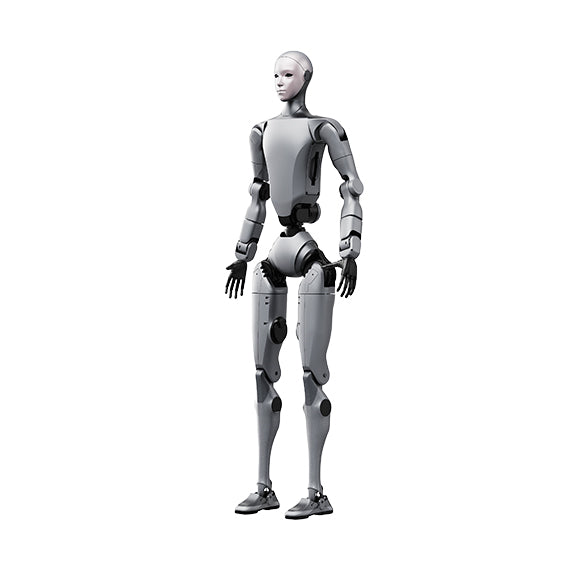
| This robot Unitree Robotics Unitree H2 | 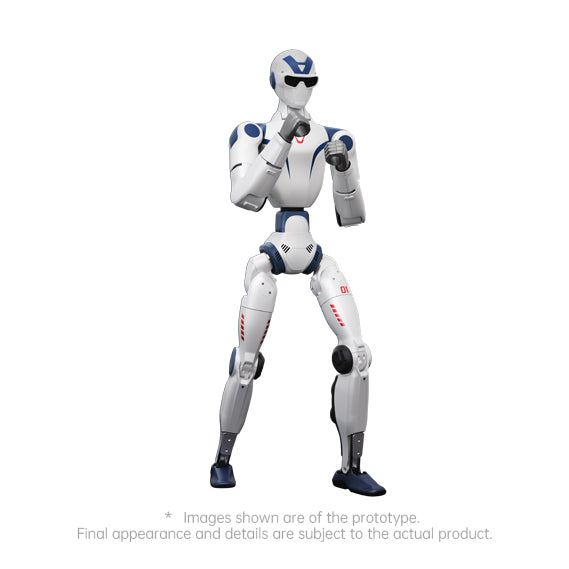 Unitree Robotics Unitree R1 | 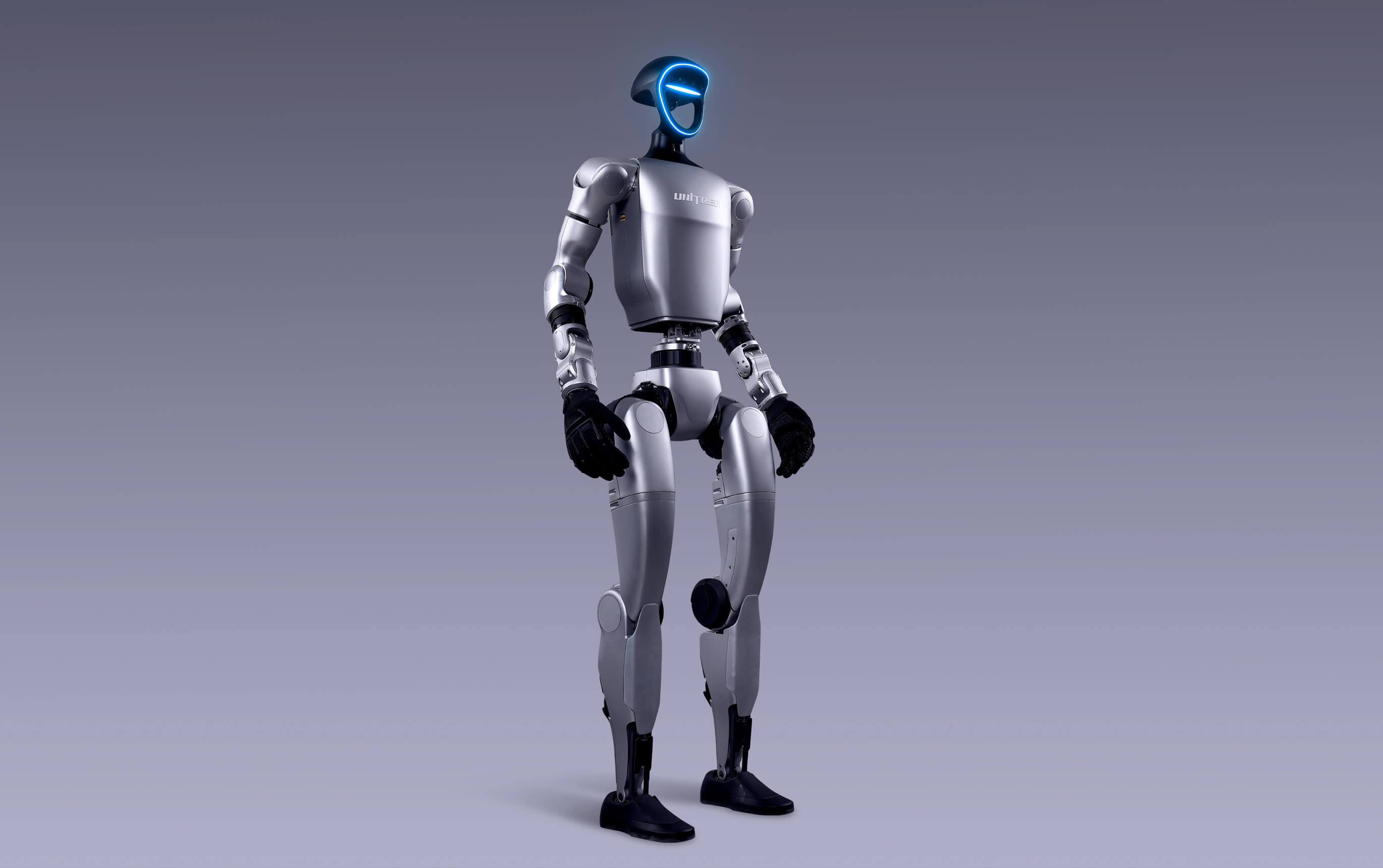 Unitree Robotics Unitree G1 | 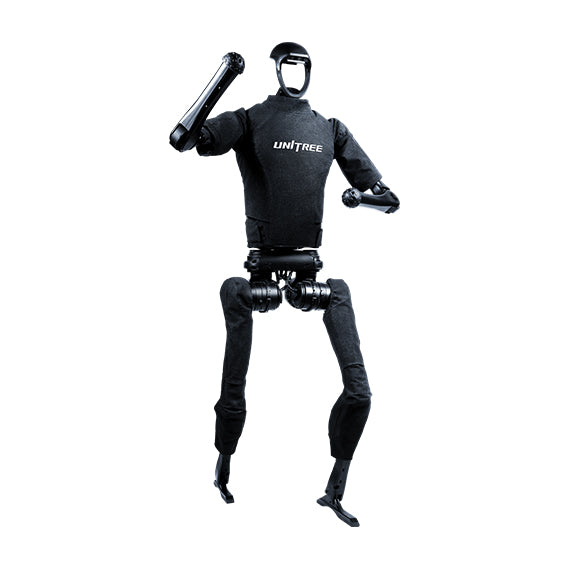 Unitree Robotics Unitree H1 | |
|---|---|---|---|---|
| Price (US) | $29,900 – $68,900 | $4,900 – $5,900 | $13,500 – $73,900 | ~$90,000 |
| Availability | Available to buy now (manufacturer store lists H2 and H2 Plus in stock); North American units on deposit-backed pre-order, and US import is now exposed to the 30 July 2026 FCC restriction | On the market | On the market | On the market |
| Height | 182 cm | 1.23 m | 1.32 m standing | ~1.80 m |
| Payload | ~7 kg rated; up to ~21 kg briefly | Unknown | Arm ~2 kg | Not rated for H1 |
| DoF | 31 | 20 | 23 | ~19 |
| Buyer | Enterprise | Individuals | Individuals | Enterprise |
| Made in | China | China | China | China |
Every spec, grouped & sourced
Tap a group to expand. Values are labelled official vs third-party; unknowns are omitted, not guessed.
Body & movement▾
Power & endurance▾
Hands & senses▾
Brains & control▾
Claims vs evidence
Supports 'diverse intelligent models', OTA, up to 2070 TOPS (EDU); base limited to pre-programmed
Where it's working
unknown
Intended use cases: Research/education (EDU), industrial pilots, warehouse/logistics testing, teleop R&D, events
What owners, reviewers and the press say about the Unitree H2
Ratings and reception gathered from where this machine is actually sold and discussed. We summarise the signal — we don't republish anyone's reviews.
Sold direct and through specialist resellers with no accumulated reviews on any listing checked on 30 August 2026.
+Reviewers consistently praise
- motion smoothness closer to science fiction than to the H1
- taller full-adult form factor
- meaningful gains in onboard computing over the H1
!And consistently criticise
- launch footage widely accused of being CGI
- no independent hands-on anywhere
- price is a large step up from the G1 class
What owners and developers actually say
H2 discussion is spectator-heavy and split between genuine admiration for the motion quality and a running accusation that the launch material is computer-generated — the same charge now reflexively aimed at every Chinese humanoid launch film. Almost nobody in these threads has seen one in person. What technical discussion exists compares it to the H1 on height, compute and usability rather than reporting hands-on use.
r/robotics, r/Futurology, r/singularity, RobotShop community forum · as of 2026-08-30
Consensus drawn from around eight overview and reaction videos; the maker's own launch film sits near 4.7M views while third-party breakdowns run in the low thousands.
Unitree H2: the claims, checked
Shipping in volume. In stock on the manufacturer's own store at a published price, with a live North American pre order channel and phased deliveries running since roughly April 2026. The H2 Plus tier is listed in stock but global shipping is reported as ramping through late 2026.
Unitree store listing showing H2 and H2 Plus in stock; North American distributor pre-order tiers at $40,900 / $68,900 with $2,500 deposits; the 1 June 2026 H2 Plus announcement naming it NVIDIA's Isaac GR00T reference humanoid; Unitree's 19 August 2026 Shanghai STAR Market listing and the subsequent first-week repricing reported 27 August 2026.
as of 2026-08-30
- misleading“You can buy a Unitree H2 for $29,900.”
The figure is real and published on Unitree's own store, in stock as of 30 August 2026. But it excludes shipping from China, duty, local tax, dexterous hands and SDK access, and it is not the price offered in North America - that channel lists $40,900, or $68,900 for the EDU edition most buyers actually need.
- false“The Unitree H2 is banned in the United States.”
The FCC's 28 July 2026 Covered List addition blocks new equipment authorization for foreign-produced robotic devices. The H2 was authorized in June 2026 and is grandfathered - importable, sellable and eligible for firmware updates until at least 1 January 2029. It is not a recall, not a customs ban, and not country-specific in its text. Federal and defence buyers are separately excluded.
- true“The H2 Plus is NVIDIA's reference humanoid robot.”
Unitree announced the H2 Plus on 1 June 2026 as an NVIDIA Isaac GR00T reference humanoid for academic research, alongside NVIDIA's own announcement of the reference-humanoid programme dated 31 May 2026.
- unverified“The H2 walks at a specified top speed.”
Unitree has published no maximum walking or running speed for the H2 as of 31 August 2026, despite publishing one for the H1. Speed figures on third-party spec pages have no traceable primary source.
- misleading“The H2 performs martial arts autonomously.”
The motion is real and the balance control is genuinely excellent. The sequences are pre-authored or teleoperated. Unitree markets support for 'diverse intelligent models' but publishes no benchmarked autonomy result, and the base unit is explicitly app-driven and pre-programmed.
- true“The H2 has 31 degrees of freedom.”
Six per leg, seven per arm, three at the waist, two in the head, per Unitree's published configuration. Leg torque is quoted around 360 N·m and arm torque around 120 N·m.
- misleading“Unitree robots have a known remote root vulnerability.”
True of the G1 EDU specifically. On 29 August 2026 researchers disclosed two flaws enabling root remote code execution, one reachable over Bluetooth. No published research extends those findings to the H2. Shared vendor and firmware lineage make it a reasonable procurement question, not an established fact about this model.
Unitree Robotics in 2026
Unitree Robotics, founded 2016 in Hangzhou, China. It built its business on quadrupeds before moving into humanoids, and that history is the reason its locomotion control is better proven than most - the company has shipped legged machines in volume for the better part of a decade. It is now the most commercially visible humanoid maker outside Tesla, with the G1 established as the default research humanoid worldwide. Unitree listed on the Shanghai STAR Market on 19 August 2026, opening around +600% before shedding over 200 billion yuan of market value inside the first trading week. NVIDIA selected Unitree hardware as the reference platform for its Isaac GR00T humanoid stack. The company's own CEO cautioned in late August 2026 that a genuine humanoid breakthrough could still be a decade away - a notably sober line from a founder whose stock had just quadrupled.
What to watch next
- H2 Plus global deliveries ramping through late 2026 - the in-stock listing is not the ship date
- Whether the 29 August 2026 G1 root-RCE research gets extended to the H2, and how fast Unitree patches
- Any H2 hardware revision, which would need fresh FCC authorization it cannot obtain under the 28 July listing - meaning today's H2 may be the last US-importable version
- The 'Superman' platform unveiled 16 August 2026 (claimed 12.66 m/s sprint, 2 m standing jump) and where it lands in the product line
- Whether post-IPO scrutiny slows Unitree's product cadence or accelerates it
Should you consider the Unitree H2?
The Unitree H2 is the most honest deal in full-size humanoids, provided you read the price ladder rather than the headline. $29,900 is a real published number on a real in-stock listing, which already puts Unitree ahead of most of this category on transparency, but the machine you probably want is the $68,900 EDU with SDK access and Jetson compute, and the hands cost extra on every tier. What you get for that is genuinely good hardware: 31 degrees of freedom, a 3-DOF waist that most rivals skip, a quick-swap 972 Wh pack, and locomotion control refined across a decade of shipping legged robots. What you don't get is autonomy, depth sensing as standard, a published walking speed, an IP rating, or a field-service relationship. Two things arrived in August 2026 that a serious buyer has to weigh. The IPO and the immediate repricing say Unitree is now optimising in public, which is good for its balance sheet and bad for roadmap stability. The G1 root-RCE disclosures on 29 August say the firmware deserves scrutiny that nobody has yet applied to the H2. Neither is disqualifying. Both belong in the procurement file. And for US buyers there is a clock running quietly in the background: the current H2 is grandfathered under its June 2026 authorization, but any future revision will not be. If a full-size research humanoid is on your roadmap and you are in the US, the case for buying this year rather than next is stronger than the price alone suggests.
Score reflects stated criteria (availability, data confidence, US relevance) — not hands-on testing or user ratings. We're an independent review & comparison site; we don't sell robots. *Financing figure is illustrative.
How we know this
Data confidence 62/100 · last verified 2026-08-30. Specs are labelled official vs third-party and dated; unknowns are omitted, not guessed.
Unitree H2 — your questions, answered in full
How much does a Unitree H2 cost?+
$29,900 on Unitree's own store, listed in stock as of 30 August 2026. In North America the same robot is $40,900 on deposit-backed pre-order, the development-access EDU edition is $68,900, and the H2 Plus is $100,000. Store prices exclude shipping from China, duty, local tax and dexterous hands.
Can I buy a Unitree H2 in the US?+
Yes. The H2 received FCC authorization in June 2026, before the 28 July 2026 Covered List cutoff, so it is grandfathered and remains legal to import, sell and own, with firmware updates protected until at least 1 January 2029. It reaches US buyers through third-party distributors rather than direct sales. Ask for the FCC ID on the exact unit quoted. US federal and defence buyers are excluded by a separate Pentagon designation.
What's the difference between the H2 and the H2 EDU?+
Development access. The base H2 is driven from a mobile app and runs pre-programmed behaviour. The EDU edition, $68,900 in North America, adds open SDK access through Unitree's public repositories and NVIDIA Jetson compute (Orin NX or AGX Thor). If you intend to write your own control policies, the EDU is not optional. You cannot upgrade a base unit into one.
Is the H2 Plus worth $100,000?+
If your work is foundation-model robotics, probably yes - it is the platform NVIDIA's Isaac GR00T stack is validated against, announced 1 June 2026, with Jetson Thor-class compute cited up to 2,070 TOPS. If you want a humanoid for demonstrations or events, no. You would be paying roughly $70,000 for compute you will never load.
How fast does the Unitree H2 walk?+
Unitree has not published a walking or running speed for the H2 as of 31 August 2026, which is unusual given it published one for the H1. Any speed figure you find on a spec-aggregator page has no traceable primary source. This is a genuine gap in the public record, not something we can fill honestly.
How long does the H2's battery last?+
Approximately three hours from a 972 Wh, 75.6 V pack, per Unitree. The pack is designed for quick swapping, so with a second battery the robot runs more or less continuously. Treat three hours as a rating under unspecified load - sustained dynamic motion draws considerably more, and operators consistently report less.
Does the H2 come with hands?+
Not dexterous ones. The base machine ships with placeholder end effectors. Unitree's force-controlled DEX5-1 and DEX3-1 hands are paid add-ons and Unitree does not publish their price. If your application involves grasping, get the hand price quoted at the same time as the robot, not afterwards.
How much can the Unitree H2 lift?+
Around 7 kg rated, with brief peaks quoted up to roughly 21 kg. Build your planning on the 7 kg figure. Peak numbers on humanoids describe a static hold in a favourable posture and are not a duty cycle you can design work around.
Is the Unitree H2 safe to put on my network?+
Treat it carefully. On 29 August 2026 researchers disclosed two vulnerabilities in the Unitree G1 EDU allowing root remote code execution, one reachable over Bluetooth. Those findings name the G1, not the H2, and no published research has extended them. But the machines share a vendor and firmware lineage, so put any Unitree robot on an isolated VLAN, disable Bluetooth when idle and apply firmware updates promptly.
H2 or Unitree G1 - which should I buy?+
The G1 is compact, much cheaper and has become the default research humanoid worldwide; it is the right answer for most labs. The H2 is the full-size machine, and you want it specifically when human-scale reach, a 3-DOF waist or full-height presence matters to the work. Buying the H2 for the badge rather than the height is a common and expensive mistake.
Did Unitree's IPO change anything for buyers?+
Not much directly. Unitree listed in Shanghai on 19 August 2026, spiked around +600% and then shed over 200 billion yuan of value in its first trading week. A well-capitalised public company is if anything a safer warranty counterparty. The real risk is roadmap churn - the product cadence is fast enough that your machine will be superseded quickly, so ask about the support lifecycle for your specific model.
Can the H2 do useful work in a factory?+
No, and it is not sold for that. The H2 is a research and demonstration platform. Machines built for industrial duty - UBTech's Walker S2, Agility's Digit - carry force sensing, safety certification, factory-system integration and a service contract that the H2 does not have. Compare the H2 against the H1 and other research humanoids, not against factory robots.
Peer-reviewed research on the Unitree H2
Published academic work — peer-reviewed papers and preprints — involving this robot or its maker's systems, indexed in scholarly databases (OpenAlex, arXiv). Not blog posts or press write-ups.
- Expressive Whole-Body Control for Humanoid RobotsXuxin Cheng, Yandong Ji, Junming Chen, Ruihan Yang, Ge Yang, Xiaolong Wang · 2024 · Robotics: Science and Systems (RSS) 2024
- HugWBC: A Unified and General Humanoid Whole-Body Controller for Versatile LocomotionYufei Xue, Wentao Dong, Minghuan Liu, Weinan Zhang, Jiangmiao Pang · 2025 · Robotics: Science and Systems (RSS) 2025
- HumanoidBench: Simulated Humanoid Benchmark for Whole-Body Locomotion and ManipulationCarmelo Sferrazza, Dun-Ming Huang, Xingyu Lin, Youngwoon Lee, Pieter Abbeel · 2024 · Robotics: Science and Systems (RSS) 2024
Academic references are factual citations from open scholarly indexes; listing is not endorsement.