Unitree R1 Robot
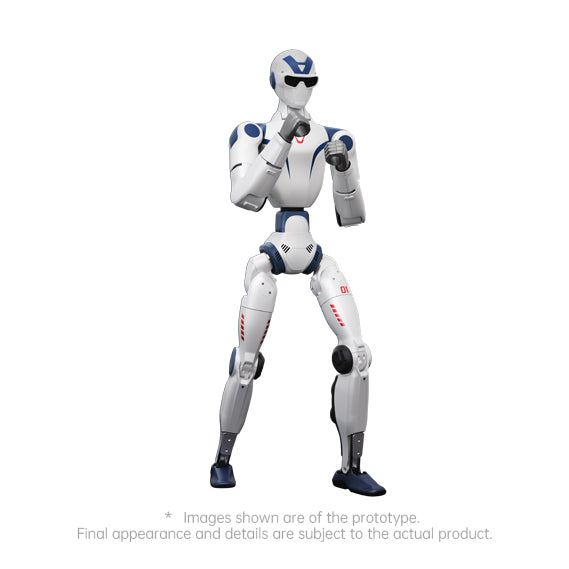
The Unitree R1 is a 123 cm bipedal humanoid from Unitree Robotics. Unitree's own store lists R1 AIR at $4,900, R1 at $5,900 and R1 EDU at $10,500 as of 30 August 2026. Only the EDU version can be programmed; the two cheaper models cannot grasp objects and have no SDK.
US buyers: still orderable — the R1 was authorized in June 2026, weeks before the cutoff, so US sales continue.
The R1 slipped under the wire: its FCC grant predates 28 July 2026, so import, sale, ownership and firmware updates all remain lawful. At its entry price it stays the cheapest realistic route into a full humanoid for a US developer or lab. The same two caveats apply as to the rest of the line — no federal or defense procurement after the Pentagon's June designation, and no new hardware revision can be authorized.
The FCC listing is a US measure only. Unitree opened commercial sales in Europe on 22 July 2026, and EU/UK buyers order under CE and UKCA rules with no equivalent restriction.
As of 2026-08-30
What is the Unitree R1 Robot?
The R1 is the cheapest full-size Unitree robot yet, and the one that made the $5,000 humanoid a real price point.
The Unitree R1 is the robot that broke the price barrier, and it is also the robot most people misunderstand. The headline of $4,900 is real — it is on Unitree's own store, in stock, as of 30 August 2026. What that money buys is a 123 cm biped with 20 degrees of freedom, two fixed fists, a single camera, and no way whatsoever to write software for it.
That gap between what the videos show and what the cheap SKU is has driven a lot of confusion. The cartwheels, handstands and spin kicks in Unitree's footage are genuine hardware running trained motion policies — nobody is faking them — but they are triggered by an operator holding a controller, not decided by the robot. The most-asked question about the R1 on Google right now is literally whether it is real. It is. The follow-up question, which fewer people ask, is what happens after the first afternoon of demos.
Since our last check in June the picture has moved in several directions at once. Unitree cut the Chinese price from 39,900 to 29,900 yuan on 24 June 2026 and moved the R1 from pre-order to in-stock. It quietly gave the EDU version a public price of $10,500 rather than leaving it behind a sales contact. It floated on the Shanghai STAR Market on 19 August, spiked 629% and then gave back nearly half of it. And a security researcher published two root-level remote code execution flaws in the sibling G1 on 27 August. All of that matters if you are about to spend money, so it is all below.
What the Unitree R1 can — and can't — do today
+Does this out of the box
- Walk, run, balance on uneven ground and stand back up after falling
- Play back a library of athletic motions — cartwheels, handstands, kip-ups, spin kicks — triggered from a handheld controller
- Hold a spoken conversation and answer questions about what its camera sees, via an onboard multimodal model
- Run roughly one hour on a 199 Wh quick-release battery, swappable in seconds
- Accept low-level per-joint control (position, velocity, torque, stiffness, damping) on the EDU tier
- Talk to ROS 2 directly over CycloneDDS without wrapping the SDK, on the EDU tier
- Carry about 2 kg of arm payload maximum, posture-dependent
!Doesn't do, whatever the demo shows
- Be programmed at all on the $4,900 AIR or $5,900 standard SKU — no SDK, no exceptions, no upgrade path
- Grasp or manipulate objects without the EDU tier plus optional dexterous hands
- Perceive a task and carry it out autonomously — every routine is operator-triggered
- Map or navigate a space: no LiDAR and no depth camera on the biped R1 line
- Do any household chore, despite consumer-facing marketing in China
- Work a full shift on one battery — plan on two or three at $500 each
- Be returned; Unitree does not accept returns, and warranty is 6 to 12 months by tier
The single decision that defines R1 ownership is AIR/standard versus EDU. It is not a trim level, it is the difference between a controlled demonstrator and a development platform, and it cannot be changed after purchase.
What does the Unitree R1 actually do out of the box?
Unbox an R1 AIR or a standard R1 and you get a robot that walks, runs, balances, gets itself back up after a fall, and plays back a library of athletic moves — cartwheels, handstands, kip-ups, punches, spin kicks, downhill running — from a handheld controller. There is a four-microphone array, a speaker, and an onboard multimodal model that handles speech and image interaction, so you can talk to it and it will answer.
That is the whole list. It cannot pick anything up: the AIR and standard R1 have fixed, non-articulated fists, and dexterous hands are an EDU-only option. There is no LiDAR and no depth camera on the biped R1 line. There is no pre-installed software for household tasks, no navigation stack you can point at a room, and no way to add one, because neither of the two cheaper SKUs supports secondary development. Unitree's own store says so in one line: only the EDU version supports secondary development.
A British newspaper summed it up in April 2026 with a headline about the robot that performs cartwheels but can't do the dishes, and that is fair. Arm payload is around 2 kg maximum and posture-dependent. Battery is a 199 Wh quick-release pack good for roughly an hour, with one in the box.
So what is the $4,900 machine for? Demonstrations, outreach, filming, a physical anchor for a robotics course, and getting a room full of people interested. Those are real uses. They are just not the uses most buyers have in their head when they click buy.
How much does the Unitree R1 cost in 2026?
Unitree's own online store, checked 30 August 2026, lists three biped configurations: R1 AIR at $4,900, R1 at $5,900, and R1 EDU at $10,500. All six colour variants showed as in stock. The Chinese price is 29,900 yuan after a 10,000 yuan cut on 24 June 2026, down from a 39,900 yuan launch price set in July 2025.
The $10,500 EDU figure is worth pausing on, because it is the single most misreported number in this market. Unitree's specification page still says contact sales for the EDU, and a lot of catalogue sites still print a rumoured figure of $35,000. The store itself lists $10,500 for the EDU Standard Edition. Anything above that from a reseller is a dealer-configured bundle — hands, an Orin compute module, training, support — not Unitree's price.
What separates the tiers is not cosmetic. The AIR has 20 degrees of freedom, four per arm, no waist joints, no head joints, and a monocular camera. The standard R1 has 26 DOF, five per arm, two in the waist and two in the head, and a binocular camera. The EDU has 26 to 40 DOF, keeps the binocular camera, and is the only one that accepts dexterous hands, an optional NVIDIA Orin module at 40 to 100 TOPS, and the SDK. Warranty scales too: six months on the AIR, eight on the R1, twelve on the EDU including secondary-development support.
One genuine cheaper option exists and is often confused with the biped. The R1-D family, announced 30 April 2026 from 26,900 yuan and listed from $4,290, is a dual-arm mobile manipulator on a fixed or wheeled base — it is not a bipedal humanoid, and every variant showed out of stock on 30 August 2026.
What does the entry price actually exclude?
Four things, and together they are the difference between a toy and a platform.
The SDK. On the $4,900 and $5,900 SKUs there is none. Unitree markets the R1 with a line about fully open control interfaces for joints and sensors, which is true of the EDU and misleading on the cheaper models. If you intend to write a single line of code for this robot, your entry price is $10,500, not $4,900.
Hands. Fixed fists on AIR and standard. Dexterous hands are an EDU option and Unitree does not publish an accessory price list — you email sales. Reseller bundles with five-finger or tactile hands sit in the high twenties to low thirties of thousands, which tells you the order of magnitude even if it is not a Unitree price.
Batteries. One 199 Wh pack in the box, roughly an hour of runtime. A spare is $500 on Unitree's store, listed as a standalone item since 4 June 2026. Any serious session needs two or three, so add $500 to $1,000.
Getting it to you. Unitree quotes shipping between $300 and $1,200 and states plainly that the customer is responsible for all customs duties, taxes and import clearance. For a US buyer in 2026 that has meant roughly 2.5% base duty plus a 25% Section 301 tariff on a Chinese-origin robot, which is why owner reports cluster around a 27% uplift. A $5,900 R1 self-imported lands nearer $8,000 to $9,000 all in — which is almost exactly what US dealers charge at $8,990, only they handle the paperwork and give you someone to call.
How autonomous is the R1 really?
As shipped, essentially not at all, and this deserves to be said clearly because the marketing sits right on the edge of it.
The athletic routines are real reinforcement-learning motion policies running on real hardware. That is not the question. The question is who decides to run them, and the answer is a person with a controller. The R1 does not perceive a task, plan it, and execute it. It has no task autonomy, no manipulation autonomy, and on the AIR and standard SKUs no route to acquiring any, because you cannot install software on it.
The onboard multimodal model handles conversation and image understanding — you can ask it what it sees. That is interaction, not agency. There is a real distance between a robot that can describe a cup and a robot that can pick one up, and the R1 does not cross it without an EDU, dexterous hands, and somebody's months of work.
Unitree's own founder Wang Xingxing put the industry ceiling more bluntly than most vendors would, telling CNBC on 19 August 2026 that the ChatGPT moment for humanoid robots could be ten years away. He was talking about the category, not the R1 specifically, but the message applies. Buy this machine for what it does today, in a lab or a classroom, with a competent person driving it. Do not buy it against a roadmap.
What can you actually build on the R1 EDU?
Quite a lot, provided you accept where the documentation stops.
The main SDK is unitree_sdk2, written in C++ and published under the permissive BSD-3-Clause licence. As of 30 August 2026 it contains a dedicated R1 example directory with audio, high-level and low-level subfolders, which is the clearest signal that the R1 is a first-class target rather than an afterthought. There is a Python wrapper with a matching interface, pinned to a specific CycloneDDS release. Because the transport underneath is CycloneDDS, ROS 2 messages can talk to the robot directly without wrapping the SDK, and Unitree publishes a ROS 2 repository for that — though its README currently lists Go2, B2 and H1, not the R1.
Two control levels are exposed. High-level gives you task-space control — locomotion mode, posture, velocity — with the balancing safeguards left on. Low-level gives you per-joint position, velocity, torque, stiffness and damping, with no safety overrides at all, which is exactly what a research group wants and exactly what will break a robot in the hands of an undergraduate. The robot lives on a 192.168.123.x subnet over gigabit ethernet and your development machine has to join it.
The honest gap is simulation. Unitree maintains MuJoCo, Isaac Lab and Isaac Gym repositories, and none of their READMEs list the R1 — they cover Go2, H1, H1-2 and G1. A model repository reportedly includes R1 description files, but sim-to-real for this specific robot does not look first-class yet. If your project depends on training in simulation and deploying to hardware, verify that before you order.
The wider ecosystem is healthier than the R1-specific tooling: an XR teleoperation project, a LeRobot fork for imitation learning, world-model and VLA repositories, and an app-template repository all sit under Unitree's GitHub organisation with meaningful star counts.
Is the Unitree R1 a security risk?
This is the section that changed most in the last week of August 2026, and the accurate answer is more nuanced than either the headlines or the vendor would like.
On 27 August 2026 the researcher Olivier Laflamme published two vulnerabilities in the Unitree G1 EDU, tracked as CVE-2026-76639 and CVE-2026-76640, both giving root. The first is a path traversal in a knowledge-base upload workflow that writes a file into a whitelist directory which is then executed as root. The second is worse in practice: a Bluetooth GATT characteristic accepts writes with no pairing and no authentication, and a Unitree cloud endpoint would hand back a robot's key material to any logged-in account without checking that the account owned that robot. Chained with a buffer overflow in the Bluetooth server, that gives unauthenticated root code execution on any G1 within Bluetooth range. Researchers describe the result as wormable — a compromised robot can attack other robots nearby with no extra setup.
Whether the R1 is affected is genuinely unresolved. Laflamme confirmed the flaws on G1 firmware only, reproduced on four G1 units, and explicitly declined to claim that similarity of software stack proves every Go2, B2 or R1 build is vulnerable. That restraint is worth respecting. The only reporting that names the R1 alongside the vulnerable models is secondary coverage of the earlier UniPwn research from September 2025, which found a single hardcoded AES key shared across units in the Bluetooth Wi-Fi provisioning flow.
Unitree's response was faster than its reputation suggests: the cloud ownership check was patched by 6 August 2026 and a $5,000 bounty was paid, split $4,000 for the Bluetooth chain and $1,000 for the other. As of 29 August 2026 no fixed firmware release had been confirmed for the on-device flaws.
Separately, security reporting and an academic preprint have described G1 units transmitting telemetry to servers in China at short intervals, with fallback channels including a mesh through other Unitree devices on the same network. That reporting is secondary and Unitree has not confirmed it, but it is the substance behind the regulatory action described below. Practical advice regardless of model: put the robot on an isolated VLAN, keep Bluetooth off when not provisioning, and do not run it on a network that touches anything you care about.
Is the Unitree R1 banned in the US?
No — and this is one of the most confidently wrong claims circulating right now.
On 28 July 2026 the FCC released Public Notice DA 26-786, adding foreign-produced advanced robotic devices to its Covered List, with press coverage running 28 to 30 July. Chairman Brendan Carr framed it as securing critical supply chains, citing supply-chain and cybersecurity risk. The rule is country-neutral on its face: "foreign-produced" means failing the Buy American domestic-end-product test — US manufacture with more than 65% of component cost domestic — so European, Japanese and Korean machines are caught by the same wording. The scope reaches mobile ground robots above roughly 2 kg that carry environmental sensing, some autonomy and connectivity above 200 kbps — humanoids, quadruped robot dogs and warehouse AMRs — and the same action covered power inverters. Fixed industrial arms and medical devices are outside it.
The crucial detail is the mechanism. It blocks new FCC equipment authorisations. It is not a customs ban and it is not a recall: it does not revoke existing grants, it does not stop continued use of devices already in the country, it does not stop the sale or resale of models that were already authorised, and a companion order guarantees that authorised devices keep receiving software and firmware updates through at least 1 January 2029. Unitree said as much in its own IPO prospectus filed 31 July 2026, naming the G1, H2 and R1 humanoids and the Go2, B2 and A2 quadrupeds as models that may continue to be sold in the US, while flagging the risk that future models could be barred and that existing authorisations could in principle be revoked later.
So an R1 bought today is legal to import, own and use in the US. What is uncertain is next year's model. Unitree also disclosed that its US revenue share has fallen to 13.30% from around 18-19% in earlier periods, and the Pentagon has added the company to its list of firms with ties to the Chinese military — which matters if your institution takes federal money and has a procurement policy that follows those lists. Check that before you order, not after.
Where are R1 units actually working today?
In classrooms and research departments, almost exclusively.
The best-documented deployment in North America is St. Clair College in Windsor, Ontario, which announced on 21 July 2026 that it was the first college on the continent to take delivery of an R1. The unit went to the Research and Innovation Department, funded through an NSERC Applied Research Tools and Instruments grant and purchased via the Canadian robotics firm InDro Robotics. The stated uses are process monitoring, quality inspection, materials handling, workforce training and predictive maintenance. Local coverage on 23 July 2026 put the cost at about $26,000, which is well above Unitree's list and consistent with a dealer-configured EDU rather than a store order.
The largest single order made public is educational too. On 24 July 2026 the US coding-education franchise iCode announced R1 EDU units going to 16 campuses for an eight-week mentor-led programme aimed at high-school students, with the specification quoted at 24 to 40 DOF and a 100 TOPS Jetson Orin module.
What is missing from the record is any named commercial or industrial company running R1s in production. We looked and did not find one. That is not damning — the robot has only been shipping since around April 2026 — but it does tell you what this machine is currently for.
The market context supports the same reading. Unitree stated in January 2026 that it shipped more than 5,500 humanoids in 2025 out of more than 6,500 produced, and that approximately 70% went to universities and research institutions. Education is not a side channel for this company. It is the business.
Unitree R1 vs Booster K1 and the rest of the sub-$10k field
The R1's real competitor is not the Tesla Optimus or anything with a Boston Dynamics badge. It is Booster Robotics' K1, which starts at $5,999 and — this is the whole argument — ships with SDK access at every tier. The K1 is smaller at 95 cm and 19.5 kg, and it won the KidSize division of RoboCup 2025, so its locomotion is competition-tested rather than demo-tested. If your budget is around six thousand dollars and you intend to program the robot, the K1 gives you that for $99 more than an R1 you cannot program.
Unitree's answer within its own range is to move you up. The G1 is $13,500 on the store, but the G1 EDU with SDK runs $43,900 or more at US distributors. Against that, the R1 EDU at $10,500 is the cheapest programmable biped Unitree sells, and it is genuinely competitive.
Further up, Unitree's store lists the H2 at $29,900, the H2 Plus at $100,000 and the older H1 at $90,000. EngineAI's PM01 is around 188,000 yuan. Booster's T1 sits somewhere between $22,000 and $75,000 depending on which source you believe — we could not resolve that and would not quote a figure.
One headline worth defusing: Forbes reported on 18 August 2026 that a San Francisco company, Nori Robotics, launched a US-made robot at $1,688 with delivery this autumn. It is real, it began shipping units in July 2026, and it has 19 degrees of freedom and a 55 kg lift. It also has a wheeled base, so it is not a bipedal humanoid and does not compete with the R1 on the thing the R1 is for.
What does owning an R1 actually cost over a year?
Start with the robot at list. Add $300 to $1,200 shipping from Unitree, plus duty and clearance if you are importing yourself, which in the US has been running around 27% on Chinese-origin robots. Add one or two spare batteries at $500 each, because an hour of runtime is not a working day. That is your first invoice, and for a US buyer on a standard R1 it lands somewhere near $9,000 to $10,000.
Then the parts nobody quotes. Warranty is six, eight or twelve months by tier — short by Western industrial standards. Unitree does not accept returns. There is no published out-of-warranty service rate, no published spare-part price list for limbs or joints, and no published repair turnaround; we could not verify any of these, and buyers outside China should assume parts availability is a genuine unknown rather than a formality. Individual motors are listed on the store — the A1 motor at $500, a smaller unit at $369 — which at least suggests some component-level supply exists.
Then the largest cost, which is people. An R1 EDU is a research platform; every review that has actually used one says the same thing, that it needs an operator with a technical background and a clear deployment plan. The only structured figure available anywhere is iCode's eight-week mentor-led curriculum for high-school students, which gives you a sense of the ramp for a taught programme rather than a research one.
Budget honestly: robot plus roughly 60-80% again in the first year once import, spares, and someone's time are counted. If that number does not work, the cheaper SKU will not rescue it — it will just give you a robot that does less.
Is Unitree a stable company to buy from?
More stable than it was, and more volatile than the price chart of the last two weeks suggests.
Unitree listed on the Shanghai Stock Exchange's STAR Market on 19 August 2026 under ticker 688836, having priced at 150.80 yuan a share for a valuation around 61 billion yuan — roughly $9 billion — and raised about 6.1 billion yuan. Retail demand was extraordinary, oversubscribed on the order of 8,000 times. The stock opened at 1,100 yuan, up 629%, and closed the first day at 845 yuan, up 460%.
Then it fell. It dropped 18.7% on 20 August, and by 25 August had touched 588 yuan intraday — down 45 to 48% from the debut peak, with roughly 200 billion yuan of market value erased. Trailing P/E at that point was around 877 times against a STAR Market industry average near 38.6, and Nomura's target price of 370 yuan implied a further 40% fall. Chinese state media called it rational repricing; Western wires called it a bubble deflating. Both descriptions fit.
The underlying business is real and growing, with one number that should give a buyer pause. 2025 revenue was about 1.70 billion yuan, up 335%, with net profit around 278 million yuan and gross margin near 60%. But first-half 2026 revenue of 1.152 billion yuan, up 48.5%, came with core net profit down 19.3% year on year. Growth is decelerating and margin is being spent. For a customer, the relevant reading is that Unitree is very well capitalised for the next few years and under real pressure to keep shipping new models — which is good for your roadmap and bad for the resale value of the one you buy.
What is the Unitree Superman, and does it affect the R1?
On 16 August 2026, three days before its Shanghai debut, Unitree unveiled a robot it called Superman, claiming a top speed of 12.66 m/s and a two-metre standing vertical jump on legs only 0.85 m long. The company said it was developed in a little over three months and that the hardware still has significant room for improvement.
The comparison everyone reached for is Usain Bolt, whose peak speed during his 2009 world record was about 12.2 m/s. That comparison does not hold up. Every Superman figure comes from a company demonstration video, no third party has measured it, no source reports the robot completing a 100 m run, and matching a robot's instantaneous peak against a human's peak inside a race is not a like-for-like measurement. Treat it as an unverified capability demo timed for an IPO week.
For an R1 buyer the practical answer is: it changes nothing. Superman has no announced price, no availability and no SKU, and no source establishes whether it shares the R1's actuators, chassis or control stack. It is not an R1 variant, and nothing about it should factor into a purchase decision this year.
Who should buy an R1, and who should walk away?
Buy the R1 EDU at $10,500 if you are a university lab, a college programme, a school district running a serious robotics curriculum, or a company that wants a real bipedal platform for locomotion research or teleoperation work and has someone on staff who writes C++ or Python and is comfortable on a Linux network stack. At that price, with BSD-licensed SDKs and an active repository, it is arguably the best value in programmable bipedal hardware, and the deployment record — a Canadian college, sixteen US campuses — is exactly this profile.
Buy the R1 AIR at $4,900 or the standard R1 at $5,900 only if you want a demonstration object. Trade shows, open days, filming, a museum piece, a very expensive way to make a room go quiet. Those are legitimate, and the machine is genuinely impressive at it.
Don't buy any R1 if you want a robot that does something useful around a house or a warehouse; it cannot pick anything up on the cheap SKUs and has no task autonomy on any of them. Don't buy the cheap SKUs if you plan to program later — there is no upgrade path, you would be buying the EDU twice. Don't buy at all if your institution's procurement rules track federal restricted-vendor lists, without checking first. And if you want a programmable biped for under $6,000, look hard at Booster's K1 before you commit; on that specific requirement it beats the R1 on the only axis that matters.
The Unitree R1 on video
Hands-on reviews and teardowns, picked for what they actually show rather than how loud the thumbnail is.
CNET handling the R1 in person and asking the obvious question: what does $6,000 actually get you
The current official listing video, and the source of the $4,900 figure now quoted everywhere
Seventeen minutes with a bought unit in 2026 — battery life, noise, and what breaks
A calm, detailed owner's review rather than a reaction video
Unitree R1 price ladder — and what the entry price leaves out
The headline number is almost never the number you pay. Here is each configuration, and what it does not include.
| Configuration | Price | What you get | What it excludes |
|---|---|---|---|
| Unitree R1 AIR | $4,900 | 20 DOF, 4 DOF per arm, monocular camera, 4-mic array, speaker, WiFi 6, Bluetooth 5.2, one 199 Wh quick-release battery, ~27 kg, 6-month warranty | No SDK or secondary development, no waist or head joints, no dexterous hands, no LiDAR or depth camera, no spare battery, shipping and duty |
| Unitree R1 (standard) | $5,900 | 26 DOF, 5 DOF per arm, 2 waist and 2 head joints, binocular camera, same audio and radios, one battery, ~29 kg, 8-month warranty | Still no SDK or secondary development, still fixed fists, no LiDAR, no spare battery, shipping and duty |
| Unitree R1 EDU (Standard Edition) | $10,500 | 26-40 DOF, binocular camera, secondary development enabled, 12-month warranty including development support, 8-core CPU | Dexterous hands and the 40-100 TOPS NVIDIA Orin module are optional extras quoted by sales, not published; spare batteries, shipping and duty |
| Unitree R1 (China domestic) | 29,900 CNY | Cut from a 39,900 CNY launch price on 24 June 2026, when the R1 moved from pre-order to in-stock | Domestic Chinese pricing; not the price a Western buyer pays after shipping and duty |
| US dealer price (typical) | $8,990 | Same robot, imported, duty paid, with a domestic point of contact for support | Still no SDK unless you specify EDU; roughly matches the true landed cost of self-importing |
| Unitree R1-D (not a biped) | From $4,290 / 26,900 CNY | Dual-arm mobile manipulator, 15-31 DOF, 5 or 7 DOF per arm, fixed or wheeled base, gripper or dexterous hand options | This is a different product family, not a bipedal humanoid; all variants showed out of stock on 30 Aug 2026 |
What owning one actually costs
| Cost | Typical | Notes |
|---|---|---|
| Shipping & import duty | $300-$1,200 shipping, plus roughly 27% for US buyers | Unitree states the customer pays all customs duties, taxes and clearance. US buyers have faced ~2.5% base duty plus a 25% Section 301 tariff on Chinese-origin goods |
| Spare battery | $500 each | 199 Wh, 33.12 V, quick-release; runtime is about an hour, so two or three packs is normal for real use |
| Dexterous hands (EDU only) | Not published | Quoted by Unitree sales. Reseller bundles with five-finger or tactile hands sit in the high $20,000s to low $30,000s, which indicates scale rather than Unitree's price |
| NVIDIA Orin compute module (EDU only) | Not published | 40-100 TOPS option; needed for meaningful onboard perception work, quoted by sales |
| Warranty | Included | 6 months on AIR, 8 on standard R1, 12 on EDU including secondary-development support. Unitree does not accept returns |
| Out-of-warranty repair and spare parts | Unknown | No published service rates, part prices or turnaround times. Buyers outside China should treat parts availability as an open question |
| Operator time | The largest real cost | The EDU needs someone comfortable with C++ or Python, Linux networking and a 192.168.123.x subnet. The only published structured programme is an eight-week mentored curriculum |
Who the Unitree R1 is — and isn't — for
+Where it shines
- You can actually buy or reserve it as an individual, at a consumer price.
- Among the most affordable humanoids on the market right now.
- Open developer access (SDK/API) — good for builders and labs.
- Specs are well-sourced — high data confidence.
!Watch-outs
- Early-stage product — expect rapid spec changes.
How the Unitree R1 stacks up
Side by side with similar robots — the one you're reading about is highlighted.
| This robot Unitree Robotics Unitree R1 | 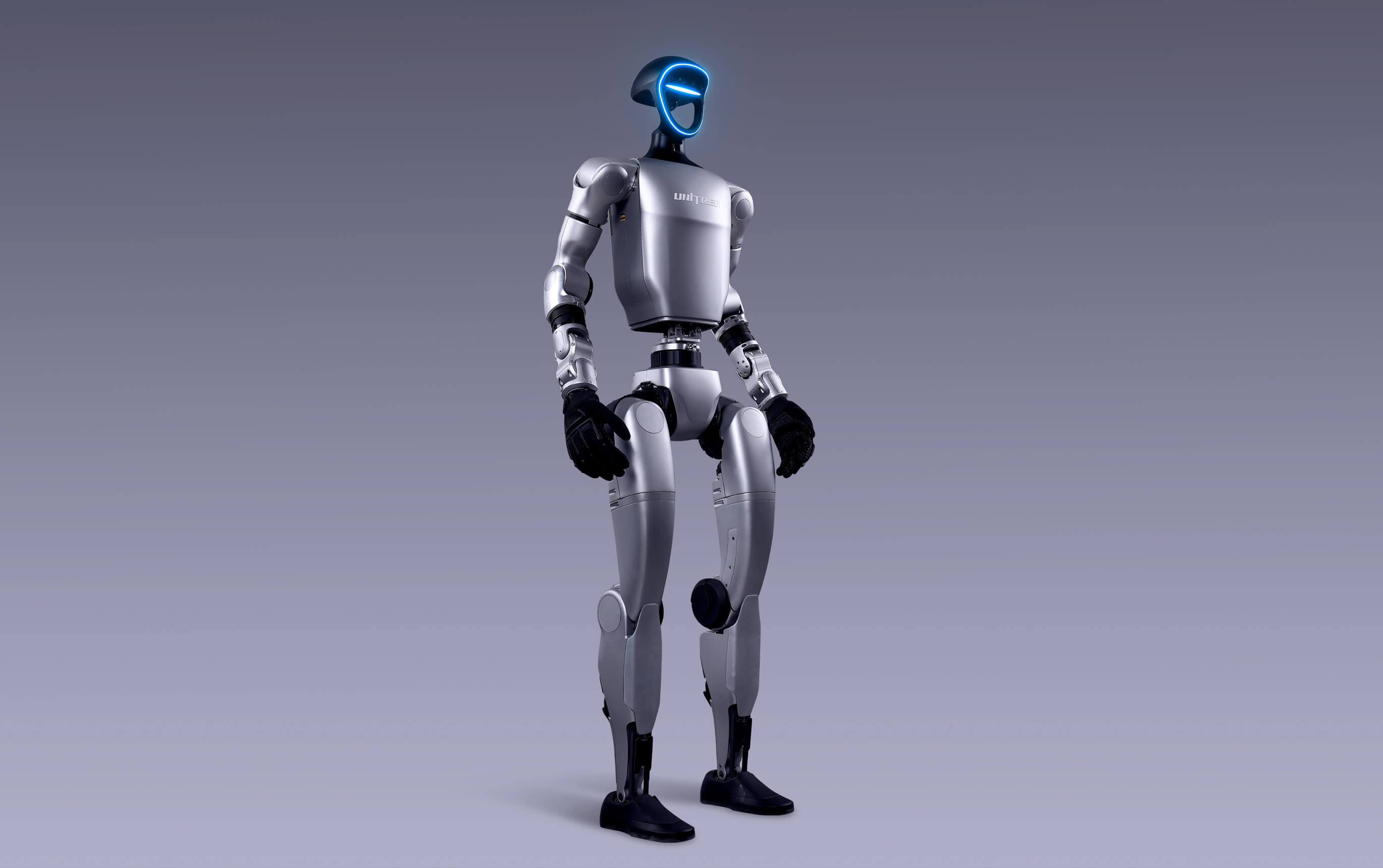 Unitree Robotics Unitree G1 | 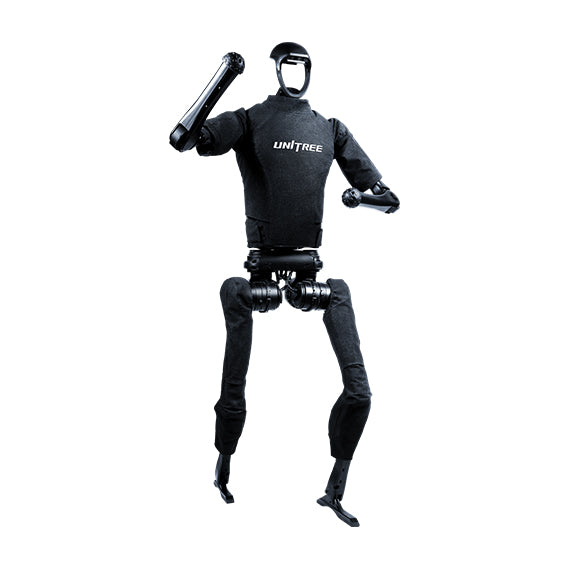 Unitree Robotics Unitree H1 | 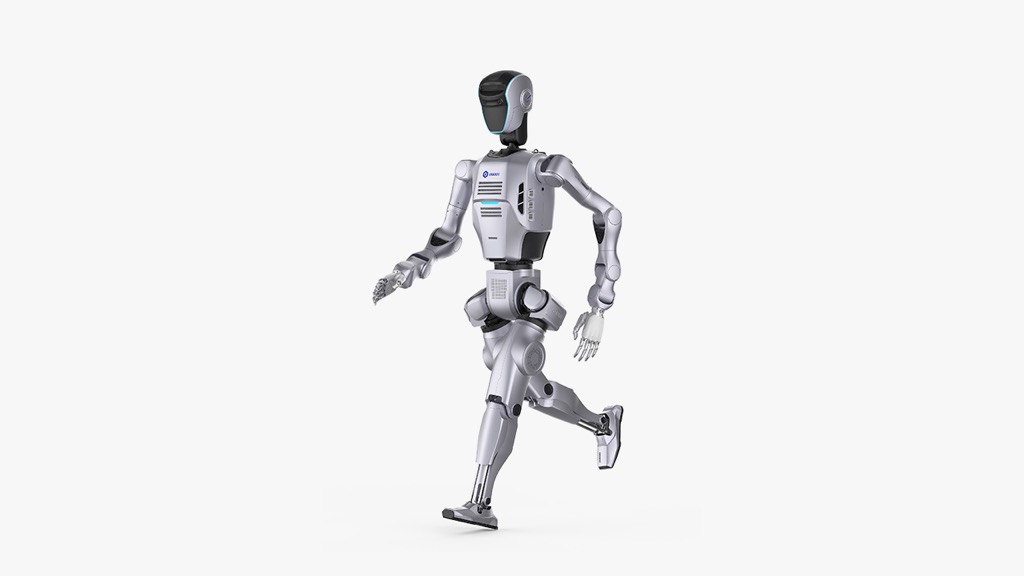 Dobot (Shenzhen Yuejiang) Dobot Atom | |
|---|---|---|---|---|
| Price (US) | $4,900 – $5,900 | $13,500 – $73,900 | ~$90,000 | $27,500 – $79,000 |
| Availability | On the market | On the market | On the market | On the market |
| Height | 1.23 m | 1.32 m standing | ~1.80 m | ~1.53 m |
| Payload | Unknown | Arm ~2 kg | Not rated for H1 | 5-20 kg |
| DoF | 20 | 23 | ~19 | Atom |
| Buyer | Individuals | Individuals | Enterprise | Individuals |
| Made in | China | China | China | China |
Every spec, grouped & sourced
Tap a group to expand. Values are labelled official vs third-party; unknowns are omitted, not guessed.
Body & movement▾
Power & endurance▾
Hands & senses▾
Brains & control▾
Claims vs evidence
Integrated Large Multimodal Model for voice/image; 8-core CPU; optional NVIDIA Orin (40-100 TOPS); athletic motions demoed; no verified full task autonomy
Where it's working
unknown
Intended use cases: Research, education, developer/secondary-development platform; not for practical household tasks (base lacks dexterous hands)
What owners, reviewers and the press say about the Unitree R1
Ratings and reception gathered from where this machine is actually sold and discussed. We summarise the signal — we don't republish anyone's reviews.
Checked across the maker's official store, a marketplace listing and the main Western robotics resellers on 30 August 2026: every channel that sells the R1 showed zero customer reviews. It is bought by labs and early adopters who discuss it in forums rather than rate it.
+Reviewers consistently praise
- price is the entire story — a sub-six-thousand-dollar walking biped reads as a category break
- light and portable
- buyable through ordinary retail channels
- inherits Unitree's existing SDK and simulation ecosystem
!And consistently criticise
- entry tier widely expected to be crippled, following the G1 pattern
- demo videos suspected of being choreographed
- no clear answer to what an owner actually does with it
- inherits the Unitree line's firmware and security concerns
What owners and developers actually say
The R1's reception is a value argument, and it is being had by people who are actually placing orders — threads carry landed cost to the US, customs, and first impressions rather than speculation. The dominant prediction, drawn explicitly from the G1 experience, is that the advertised entry price buys a crippled unit and the useful configuration costs several times more. Third-party code around it is still almost non-existent, so the community sits at the 'is it worth it' stage rather than the 'here is my repo' stage.
r/robotics, r/unitree, r/singularity, Hacker News · as of 2026-08-30
Consensus drawn from one national-outlet hands-on drive at roughly 118K views, about eight reseller and owner reviews, an unveiling thread of roughly 2,200 upvotes and 703 comments, and buyer threads where individual purchasers posted landed costs; the maker's own launch film sits near 11.9M views.
Unitree R1: the claims, checked
shipping
All six R1 biped variants showed in stock on Unitree's own store on 30 August 2026, and the Chinese listing moved from pre-order to in-stock with a price cut on 24 June 2026. Documented deliveries include St. Clair College in Ontario (announced 21 July 2026) and 16 iCode campuses in the US (announced 24 July 2026). No named commercial or industrial production deployment could be verified.
as of 2026-08-30
- true“You can buy a full humanoid robot for $4,900”
Unitree's own store listed the R1 AIR at $4,900 in stock on 30 August 2026. What the price omits is the point: 20 DOF, monocular camera, fixed fists, no waist or head joints, no SDK, and a 6-month warranty.
- misleading“The R1 does kung fu, cartwheels and spin kicks”
The motions are real hardware running trained reinforcement-learning policies, not CGI. But they are triggered by an operator with a handheld controller, not chosen by the robot, and they are not evidence of task autonomy.
- false“The Unitree R1 EDU costs about $35,000”
Unitree's own store listed the R1 EDU Standard Edition at $10,500 on 30 August 2026. Higher figures are dealer-configured bundles that add hands, Orin compute and support, or they are stale estimates from when the EDU was contact-sales only.
- false“The R1 is 127 cm tall and weighs 35 kg”
Unitree's specification gives 1230 x 357 x 190 mm and 27 kg for the AIR, 29 kg for the standard and EDU, both figures including the battery. The 127 cm / 35 kg numbers circulated in launch coverage and were never Unitree's.
- false“The R1 is banned in the United States”
The FCC's 28 July 2026 Covered List addition blocks new equipment authorisations prospectively. Unitree's own IPO prospectus filed 31 July 2026 names the R1 among models with existing authorisation that may continue to be sold in the US, and devices already in use are unaffected.
- unverified“The R1 has the Bluetooth root RCE vulnerability disclosed in August 2026”
CVE-2026-76639 and CVE-2026-76640 were confirmed on Unitree G1 EDU firmware only, reproduced on four G1 units. The researcher explicitly declined to claim that shared software stack proves the R1 is affected. Only secondary coverage of the earlier UniPwn research names the R1.
- unverified“Unitree's Superman robot outruns Usain Bolt”
The 12.66 m/s figure comes from a company demonstration video released 16 August 2026, three days before Unitree's IPO. No third party has measured it, no 100 m run has been reported, and Unitree itself said the hardware remains unfinished.
- misleading“Unitree stock is up 600% since its IPO”
True only of the 19 August 2026 opening print, which was +629% intraday before closing +460%. By 25 August the shares had fallen 45-48% from that peak, wiping roughly 200 billion yuan, with trailing P/E around 877 times.
- misleading“The R1 has fully open control interfaces for joints and sensors”
This is Unitree's own marketing line, and it is accurate for the EDU. On the $4,900 and $5,900 SKUs it is contradicted by Unitree's own store text stating that only the EDU version supports secondary development.
- misleading“You can buy a Unitree humanoid for $4,290”
That is the R1-D, a dual-arm mobile manipulator on a fixed or wheeled base, not a bipedal humanoid. All R1-D variants showed as out of stock on Unitree's store on 30 August 2026.
Unitree Robotics in 2026
Unitree Robotics of Hangzhou is now a listed company: it floated on the Shanghai Stock Exchange's STAR Market on 19 August 2026 under ticker 688836, pricing at 150.80 yuan for a valuation near 61 billion yuan and raising about 6.1 billion yuan. Retail demand was oversubscribed roughly 8,000 times, the stock opened 629% up and closed its first day 460% up — then fell 18.7% the next session and by 25 August was 45-48% below its peak, shedding around 200 billion yuan. Trailing P/E sat near 877 times against a STAR Market average close to 38.6, and Nomura published a 370 yuan target implying a further steep fall. The business underneath is real. 2025 revenue was about 1.70 billion yuan, up 335%, with roughly 278 million yuan of net profit and gross margin near 60%, and the company shipped more than 5,500 humanoids in 2025 with around 70% going to universities and research institutions. The number that deserves attention is the first half of 2026: revenue up 48.5% to 1.152 billion yuan while core net profit fell 19.3% year on year. Two other facts matter to a buyer. The Pentagon has added Unitree to its list of firms with ties to the Chinese military, which affects institutional procurement. And the company's US revenue share has already fallen to 13.30% from around 18-19% earlier, which tells you where its priorities will sit if regulation tightens further.
What to watch next
- Watch for fixed R1 and G1 firmware addressing CVE-2026-76639 and CVE-2026-76640 — as of 29 August 2026 no confirmed release existed for the on-device flaws
- Watch whether the FCC extends its 28 July 2026 Covered List action retroactively; Unitree itself flagged revocation of existing authorisations as a risk in its 31 July 2026 prospectus
- Watch Unitree's first results as a listed company, given first-half 2026 core net profit fell 19.3% while revenue grew 48.5%
- Watch for R1 support appearing in Unitree's MuJoCo and Isaac Lab simulation repositories — as of 30 August 2026 none of their READMEs list the R1
- Watch whether the Superman platform revealed 16 August 2026 becomes a product with a price, or stays a demonstration
- Watch R1-D stock: every variant of the dual-arm manipulator line showed out of stock on 30 August 2026
- Watch for the first named commercial or industrial R1 deployment; as of 30 August 2026 every documented one is educational or research
Should you consider the Unitree R1?
The Unitree R1 is two products sharing a name. At $4,900 or $5,900 it is a very good demonstration object and a poor investment: no SDK, no hands, no autonomy, no upgrade path. At $10,500 the EDU is arguably the best-value programmable biped anyone sells, with a permissively licensed C++ and Python SDK, ROS 2 compatibility, and a real install base in colleges and research departments — St. Clair College in Ontario and sixteen iCode campuses are the documented examples. Budget for the real number, not the headline: shipping, roughly 27% US import cost, and $500 spare batteries push a standard R1 to about $9,000 landed. Security is the genuine open risk, with root-level flaws confirmed on the sibling G1 in August 2026 and R1 exposure unconfirmed either way. Buy the EDU, isolate it on its own network, and ignore the $4,900 headline unless a walking robot in a lobby is genuinely what you need.
Score reflects stated criteria (availability, data confidence, US relevance) — not hands-on testing or user ratings. We're an independent review & comparison site; we don't sell robots. *Financing figure is illustrative.
How we know this
Data confidence 88/100 · last verified 2026-08-30. Specs are labelled official vs third-party and dated; unknowns are omitted, not guessed.
Unitree R1 — your questions, answered in full
Is the Unitree R1 real?+
Yes. It is a shipping product, in stock on Unitree's own store on 30 August 2026 at $4,900 for the AIR version, and units have been delivered to St. Clair College in Ontario and to 16 iCode campuses in the US. The acrobatic videos are real hardware too — they are just operator-triggered rather than autonomous.
How much does the Unitree R1 robot cost?+
Unitree lists R1 AIR at $4,900, R1 at $5,900 and R1 EDU at $10,500 as of 30 August 2026, plus $300-$1,200 shipping and buyer-paid customs. For a US buyer, a standard R1 realistically lands around $8,000-$9,000 self-imported; US dealers charge about $8,990 with the paperwork handled.
What can a Unitree R1 do?+
Walk, run, balance, recover from falls, and perform a library of athletic moves on command from a controller. It talks and answers questions about what it sees through an onboard multimodal model. It cannot pick anything up on the AIR or standard versions, and it has no autonomous task capability on any version.
Can you program the Unitree R1?+
Only the EDU version, at $10,500. Unitree's store states plainly that only the EDU supports secondary development. There is no upgrade path from the cheaper SKUs, so if you intend to write code, buy the EDU first time. The SDK is C++ with a Python wrapper, BSD-3-Clause licensed, and speaks ROS 2 over CycloneDDS.
Can you buy Unitree robots in the US?+
Yes. FCC Public Notice DA 26-786 of 28 July 2026 blocks new equipment authorisations rather than revoking existing ones, and it is not a customs ban or a recall. Unitree's own prospectus from 31 July 2026 names the R1 among models that may continue to be sold, and existing units are unaffected. Future models that have not yet been authorised are the open question, not this one.
What is the difference between the R1 and the R1 AIR?+
The AIR has 20 degrees of freedom, four per arm, a monocular camera, no waist or head joints and a 6-month warranty. The standard R1 has 26 DOF, five per arm, two waist and two head joints, a binocular camera and an 8-month warranty. Neither can be programmed. The gap is $1,000.
How long does the Unitree R1 battery last?+
About an hour on its 199 Wh quick-release pack, and one pack ships in the box. Spares are $500 each on Unitree's store. Anyone planning a demo day or a lab session should budget for two or three.
Is Unitree a Chinese company?+
Yes — Unitree Robotics is based in Hangzhou and listed on the Shanghai Stock Exchange's STAR Market on 19 August 2026 under ticker 688836. That matters for procurement: the Pentagon has added Unitree to its list of firms with ties to the Chinese military, so institutions that follow federal restricted-vendor lists should check policy before ordering.
Is the Unitree R1 better than the G1?+
Cheaper and lighter, not better. The G1 is $13,500 on Unitree's store, is more capable, and has broader support in Unitree's simulation repositories. But the G1's programmable EDU version runs $43,900 or more at US distributors, versus $10,500 for an R1 EDU — so for a lab on a budget the R1 EDU is often the sensible choice.
Are Unitree robots better than Boston Dynamics?+
They are not competing. Boston Dynamics' Atlas is a 90 kg industrial humanoid with a 50 kg payload that nobody outside Hyundai and Google DeepMind can buy in 2026. The R1 is a 29 kg research and education platform you can order today for under $11,000. Unitree wins on access and price by an enormous margin; Atlas wins on everything a factory measures.
Which humanoid robot is the best to buy right now?+
For programmable hardware under $6,000, Booster Robotics' K1 at $5,999 with SDK included at every tier is the strongest case. For a programmable full-size-ish biped, the R1 EDU at $10,500 is hard to beat. If you only want a demonstrator that walks and does stunts, the $4,900 R1 AIR does that better than anything at the price.
Is the Unitree R1 safe to put on my network?+
Treat it as untrusted. Two root-level flaws in the sibling G1 were published on 27 August 2026, one exploitable over Bluetooth without pairing, and security reporting has described Unitree units sending telemetry to servers in China. R1 exposure to those specific CVEs is unconfirmed — the researcher declined to claim it. Isolate the robot on its own VLAN, keep Bluetooth off outside provisioning, and do not bridge it to anything sensitive.