UniX AI Wanda 2.0 Robot
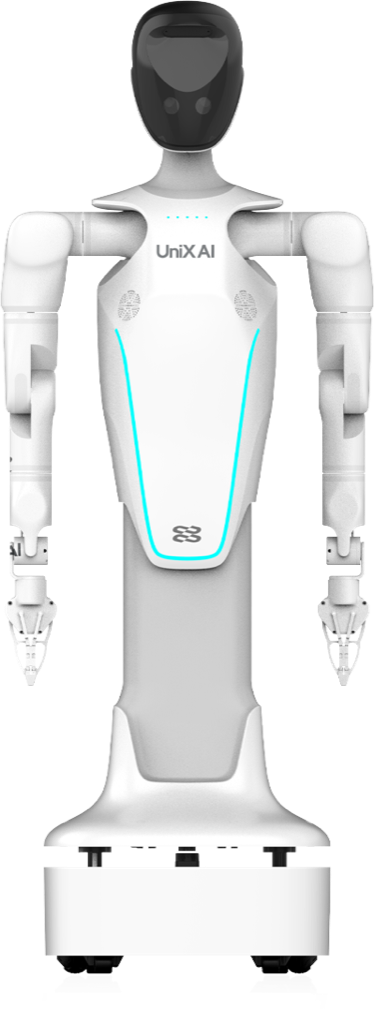
The UniX AI Wanda 2.0 is a full-size home-and-service humanoid built to handle chores — dishwashing, tidying, hotel room turnover and similar tasks. Notably it's wheeled rather than bipedal, using a mobile base with two 8-DoF bionic arms for stability and long runtime (8–16 hours). UniX, based in Shanghai, is shipping units (reportedly ~100/month) and brought a 'delivered' Wanda 2.0 to CES 2026, but there's no public consumer price — it's quote-based, and buyers today are mostly commercial, education and research.
US buyers: no new imports — this model has no US authorization on record, and the July 2026 rule closes that route.
Wanda ships within China and its US reach was never confirmed. Without a pre-cutoff authorization it cannot be newly imported or sold in the US.
Chinese shipments continue.
As of 2026-08-30 · medium confidence — verify before you commit funds
What is the UniX AI Wanda 2.0 Robot?
Wanda 2.0 is the chore-focused UniX AI robot — wheeled, two-armed, and aimed at the kitchen sink.
Wanda 2.0 is one of the more grounded takes on a home robot, and that's meant as a compliment. Instead of chasing the hardest problem in robotics — a fully autonomous walking biped — UniX AI put the robot on wheels. Less flashy, more sensible: a wheeled base is stable, runs for ages, and carries a decent payload, which is exactly what you want for hours of indoor chores.
The company, UniX AI, is Shanghai-based and pitches Wanda at homes, hotels, retail and workplaces. The 2.0 version leans on some genuinely interesting hardware — what UniX calls the world's first mass-produced 8-DoF bionic arm, adaptive grippers, and a tactile 'UniTouch' system so it can manipulate things gently around people. UniX made a point of bringing a delivered (not just prototype) Wanda 2.0 to CES 2026.
So this is a real, shipping robot — but let's be precise about what that means. It's mainly going to commercial and research buyers via quotes, not sitting on a shelf with a consumer price tag, and like every humanoid its most complex skills lean on teleoperation and supervision. Here's the full, honest picture.
What is the UniX Wanda 2.0 and what can it do?
Wanda 2.0 is a full-size, wheeled humanoid — a torso, head and two arms mounted on a mobile wheeled base rather than legs. That's a deliberate design choice: the base gives it stability, long battery life, and payload capacity without the balance headaches of bipedal walking. It's aimed at real household and service chores.
The standout hardware is the arms. UniX equips Wanda with what it describes as the world's first mass-produced 8-DoF bionic arm on each side, plus adaptive intelligent grippers, giving roughly 6 kg of payload per arm for reasonably precise manipulation. Combined with its UniTouch tactile-intelligence system, the idea is that Wanda can do long-sequence tasks — dishwashing, tidying up, hotel room turnover — carefully and safely near people.
Uses UniX highlights include homes, hotels, property management, retail, security, plus research and education. It's a practical chore-and-service robot rather than a novelty, though as always the reliability of any given task in a real messy home is the open question.
How much does the UniX Wanda 2.0 cost?
There's no official public consumer price. UniX AI sells Wanda 2.0 on a quote basis, so what you pay depends on configuration, software features, support package and region.
Third-party listings have floated indicative figures in the low tens-of-thousands of dollars (some references put it around the $14k-and-up tier, tied to tens-of-thousands of yuan), but I'd treat those as ballpark rather than gospel — they vary by reseller and often reflect education, pilot or research SKUs. The real, all-in cost for a configured unit with training, spares and on-site support will realistically land higher.
Bottom line: if you want a number, you'll need to request a formal quote from UniX or an authorised distributor, and pin down exactly what hardware and support are included. Don't assume the cheapest listing price is the true delivered cost.
Is the UniX Wanda 2.0 available to buy?
Yes, it's genuinely shipping — this is not vaporware. UniX AI has said it reached a stable delivery capacity of roughly 100 units per month, and it brought a delivered (production, not prototype) Wanda 2.0 to CES 2026, which is a meaningful signal.
The honest caveats: it's a Shanghai-based, China-first company, and the buyers today are overwhelmingly commercial and institutional — hotels, property management, retail, security, plus research and education — rather than walk-in home consumers. There's no simple consumer checkout; you go through a sales/quote process. For buyers outside China, expect import considerations and to work through a distributor.
If you're a business or institution in the target scenarios, Wanda is realistically obtainable now. If you're an individual hoping to order one for your kitchen, it's possible in principle but you'll be treated as a commercial-style buyer.
How autonomous is the Wanda 2.0, and how does it work?
Wanda combines multimodal perception (vision plus its UniTouch tactile system) with compliant, high-DoF arms to carry out multi-step manipulation tasks. The wheeled base handles navigation on level indoor floors, and the tactile intelligence is what lets it grasp and handle objects gently rather than crudely.
On autonomy, keep expectations realistic. UniX demonstrates impressive chore sequences, but across the industry these polished demos frequently involve teleoperation or heavy supervision, especially for delicate, variable real-world tasks. UniX collects real task data to train its policies, which is the right long-term approach, yet a Wanda you deploy today should be assumed to need supervision and setup rather than pure hands-off operation.
One genuine strength worth repeating: because it's wheeled, its 8–16 hour runtime and stability make it well suited to long indoor shifts — arguably more dependable for sustained service work than a battery-hungry biped.
UniX Wanda 2.0 vs bipedal home humanoids like 1X Neo
The interesting contrast is Wanda's wheeled approach versus bipedal home humanoids such as 1X's Neo. Bipeds can, in theory, go anywhere a person can — stairs, uneven ground — which matters in a real home. But they're harder to balance, run shorter on battery, and carry less. Wanda flips those trade-offs: no stairs, but far more stability, endurance and payload.
For structured, level environments — hotels, single-floor homes, retail floors — Wanda's wheels are arguably the smarter engineering choice, and its dual 8-DoF arms are seriously capable for manipulation. For a multi-storey house or anywhere legs are genuinely needed, a biped has the edge (once the tech matures).
Both categories still rely on supervision/teleop for hard tasks today, so the choice really comes down to your environment. If your space is flat and you value uptime, Wanda's design ages well; if you need to climb, look at bipeds.
Is the UniX Wanda 2.0 worth it, and who should buy it?
For the right buyer, it's a sensible, practical machine. Wanda 2.0 makes the most sense for hotels, property managers, retail and service operators, plus research and education institutions — anyone with flat indoor spaces and repetitive manipulation tasks who can work through a commercial procurement process.
Its wheeled design, long runtime and strong dual-arm manipulation are real advantages for sustained service work, and the fact that it's actually delivering units (not just demoing) counts for a lot in a field full of announcements. That reliability of supply is a genuine point in its favour.
Who should hold off: individual consumers wanting a fully autonomous, plug-and-play home robot for a fixed sticker price. There's no consumer pricing, tasks still need supervision, and outside China there's import friction. As a commercial/research service robot it's worth serious consideration; as a finished household appliance, it's not there yet — nor is anything else.
The UniX Wanda 2.0 on video
Hands-on reviews and teardowns, picked for what they actually show rather than how loud the thumbnail is.
The second-generation launch, with the wheeled full-size configuration shown properly
Seven uncut minutes of hotel work — no cuts means no hidden resets, which is worth more than a trailer
Wanda working a CES stand for days, which is a harsher test than a scripted demo
Who the UniX Wanda 2.0 is — and isn't — for
+Where it shines
- Among the most affordable humanoids on the market right now.
- Stated real-world payload (6 kg per arm).
!Watch-outs
- Sold to businesses only — not to private buyers.
- Public data is thin; verify key figures before relying on them.
How the UniX Wanda 2.0 stacks up
Side by side with similar robots — the one you're reading about is highlighted.
| This robot UniX AI UniX Wanda 2.0 | 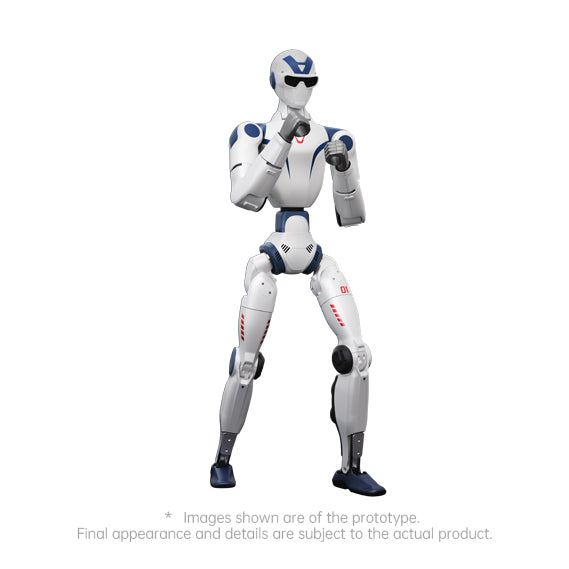 Unitree Robotics Unitree R1 | 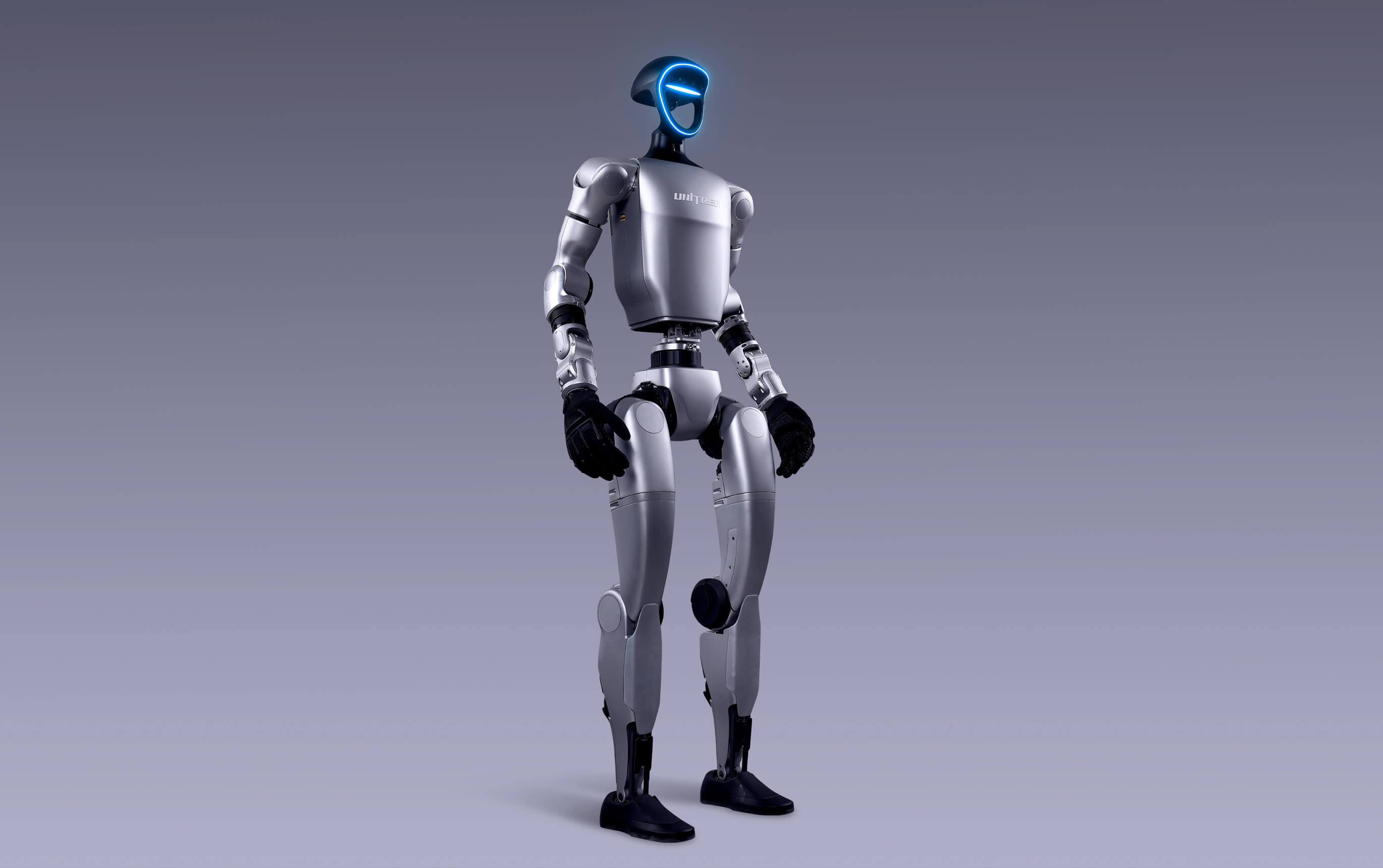 Unitree Robotics Unitree G1 | 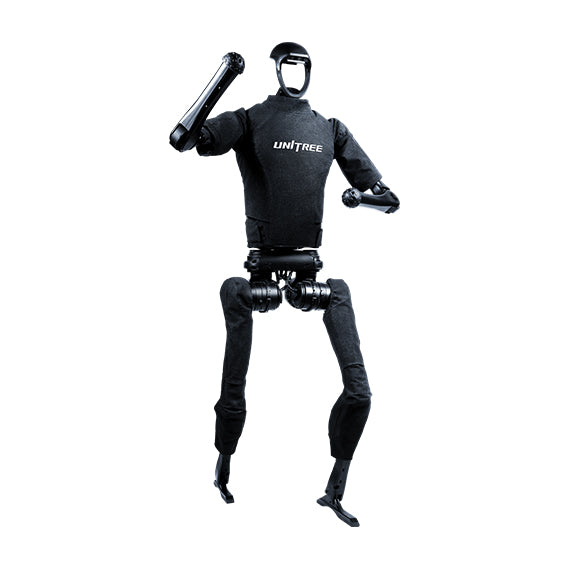 Unitree Robotics Unitree H1 | |
|---|---|---|---|---|
| Price (US) | ~$14,000 | $4,900 – $5,900 | $13,500 – $73,900 | ~$90,000 |
| Availability | On the market | On the market | On the market | On the market |
| Height | 1.42-1.68 m | 1.23 m | 1.32 m standing | ~1.80 m |
| Payload | 6 kg per arm | Unknown | Arm ~2 kg | Not rated for H1 |
| DoF | 23 | 20 | 23 | ~19 |
| Buyer | Enterprise | Individuals | Individuals | Enterprise |
| Made in | China | China | China | China |
What the UniX Wanda 2.0 costs — and how to get one
Wanda 2.0 ~$14k+ tier (tens-of-thousands yuan); China shipping.
Unknown
Leasing / RaaS: unknown
Every spec, grouped & sourced
Tap a group to expand. Values are labelled official vs third-party; unknowns are omitted, not guessed.
Body & movement▾
Power & endurance▾
Hands & senses▾
Brains & control▾
Claims vs evidence
Embodied home AI
Where it's working
No verified large-scale deployment
Intended use cases: Household chores and home assistance (full-size home humanoid)
Should you consider the UniX Wanda 2.0?
Wanda 2.0 is a pragmatic, genuinely shipping service humanoid — wheeled for stability and endurance, with strong dual-arm manipulation, ideal for hotels, retail and flat indoor homes. It's a commercial/quote-based buy, not a fixed-price consumer product, and hard tasks still need supervision, but for the right operator it's one of the more realistic options out there.
Score reflects stated criteria (availability, data confidence, US relevance) — not hands-on testing or user ratings. We're an independent review & comparison site; we don't sell robots. *Financing figure is illustrative.
How we know this
Data confidence 38/100 · last verified 2026-06-30. Specs are labelled official vs third-party and dated; unknowns are omitted, not guessed.
UniX Wanda 2.0 — your questions, answered in full
How much does the UniX Wanda 2.0 cost?+
UniX AI prices Wanda 2.0 by quote, so there's no fixed public price. Third-party listings suggest a low tens-of-thousands-of-dollars ballpark (around the $14k-and-up range in some references), but a fully configured unit with support will likely cost more. Request a formal quote for a real figure.
Is the Wanda 2.0 a walking robot?+
No — Wanda 2.0 is wheeled, not bipedal. It uses a mobile wheeled base with a full-size torso and two arms. That design trades stair-climbing ability for much better stability, an 8–16 hour runtime, and higher payload, which suits long indoor service shifts.
What can the UniX Wanda 2.0 do?+
It's built for household and service chores such as dishwashing, tidying and hotel room turnover, using two 8-DoF bionic arms with adaptive grippers and tactile 'UniTouch' sensing. UniX targets homes, hotels, retail, property management, security, and research/education.
Can I buy a UniX Wanda 2.0?+
Yes, it's shipping — UniX reports around 100 units/month capacity and showed a delivered unit at CES 2026. But buyers are mostly commercial and institutional via a quote process, and it's a China-first product, so individuals outside China should expect a sales process and import considerations.
How long does the Wanda 2.0's battery last?+
UniX quotes a runtime of roughly 8 to 16 hours depending on workload. The long endurance is a benefit of the wheeled base design and makes Wanda suited to extended service shifts in hotels, homes and retail.
Is the Wanda 2.0 fully autonomous?+
Not fully. It has strong perception and manipulation hardware, but complex real-world tasks across the industry typically still rely on teleoperation and supervision. Assume a deployed Wanda needs setup and oversight rather than truly hands-off operation for now.
Who makes the Wanda 2.0 robot?+
It's made by UniX AI, a Shanghai-based robotics company developing general-purpose humanoids for homes, hotels and workplaces. The Wanda platform is its flagship, with the 2.0 version featuring its mass-produced 8-DoF bionic arms.