Wandercraft Calvin 40 Robot
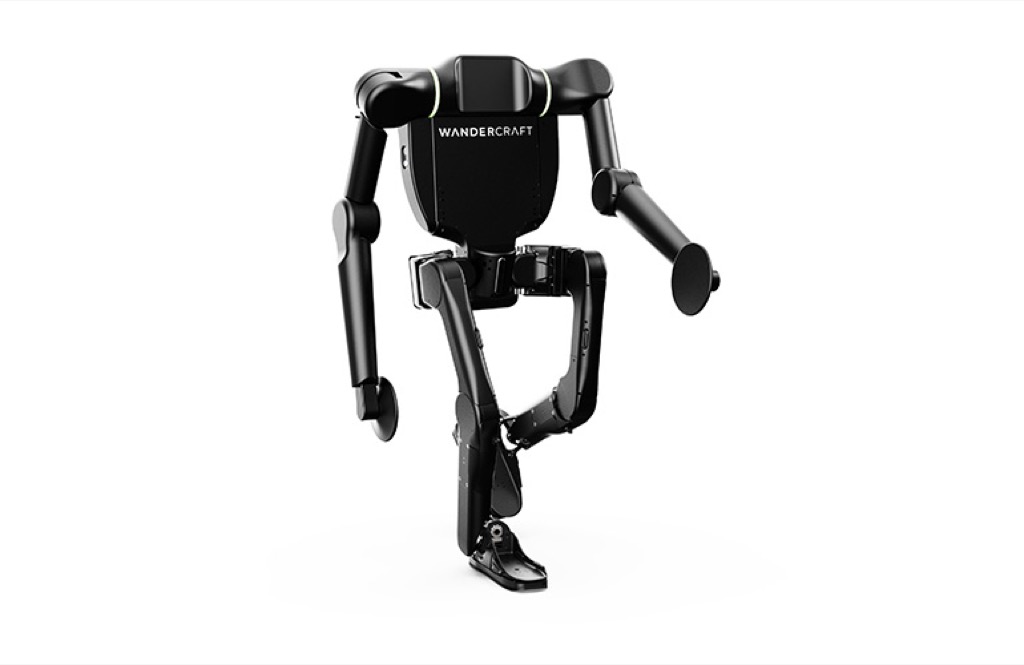
The Calvin-40 is a headless industrial humanoid from French robotics firm Wandercraft, purpose-built for heavy, repetitive factory work like moving car tires. It's already running real shifts at Renault's Douai plant in France, not just doing demos. There's no public price, its sold through direct deals with industrial partners, and full-scale deployment is still ramping through 2027.
US buyers: Calvin is French-built, so the July 2026 rule applies on its wording — the medical carve-out may not cover it.
The FCC listing exempts FDA-regulated medical devices, which is how Wandercraft's exoskeleton work is normally classified, but Calvin is an industrial humanoid rather than a medical device and should not be assumed to inherit that exemption. It reaches customers through pilots — the Renault programme is the visible one — rather than sale. How a US pilot would be handled is not something Wandercraft has addressed publicly.
French and wider European pilots are unaffected.
As of 2026-08-30 · medium confidence — verify before you commit funds
What is the Wandercraft Calvin 40 Robot?
Calvin 40 is the Wandercraft robot — from an exoskeleton company that already knew how to make legs carry weight.
Most humanoid robots you read about are still doing carefully staged demos on a stage somewhere. The Wandercraft Calvin-40 is a bit different. It's actually on a factory floor, hauling heavy tires for electric cars like the Renault 5 and Scenic, and it has been since early 2025.
What makes Calvin unusual isn't just that it works, its where it came from. Wandercraft spent more than a decade building self-balancing exoskeletons that help people with mobility impairments walk again. That balance and gait know-how got poured straight into an industrial robot, and the first Calvin was reportedly put together in about 40 days, which is where the "40" comes from.
This page walks through what Calvin-40 actually does, who's using it, the (fuzzy) pricing picture, and whether it matters if you're tracking the industrial humanoid race in 2026.
What is the Wandercraft Calvin-40?
Calvin-40 is a bipedal industrial humanoid robot designed for physically demanding, ergonomically nasty jobs, the kind of lifting and carrying that wears human bodies down over a shift. It can handle payloads up to roughly 40 kg (about 90 lb), and Wandercraft says it can lift that load several hundred times a day without needing a break.
The most eye-catching design choice is that Calvin has no head. Instead of mounting cameras and sensors up high where a face would go, Wandercraft put them lower, closer to the tools, parts and surfaces the robot works with. The claimed benefit is better visibility of the actual task, plus the robot fits under equipment and between shelves more easily.
Under the skin it inherits Wandercraft's real-time balancing and gait control from their exoskeleton work. The company also describes AI-powered navigation, a certifiable safety system that lets it operate without cages or barriers, and voice control for setting tasks.
How much does the Calvin-40 cost?
There's no sticker price, and that's the honest answer. Wandercraft has declined to give a figure publicly, and pricing is being negotiated directly with each industrial partner rather than sold off a shelf.
CEO Matthieu Masselin has said the ROI case is "compelling to everyone we are speaking with," which is the sort of thing a CEO says, but it does line up with the deployment momentum. For now, if you want a Calvin-40 you're talking to Wandercraft's sales team about a pilot or a fleet, not adding one to a cart. Treat any specific dollar figure you see online as unconfirmed.
Where is Calvin-40 being deployed?
Renault is the headline customer and also an investor. In June 2025 Renault took a minority stake in Wandercraft, reportedly investing around $75 million to help industrialize the robot. Calvin units have been working on the supply line at Renault's Douai factory, moving heavy tires.
The roadmap Wandercraft has floated is ambitious: on the order of ten robots in place by the end of 2026, then scaling toward 350 units across French and Spanish factories by end of 2027. Wandercraft has also signed with SAPA, a Tier 1 automotive supplier, making it one of the first robotics firms to land both an OEM and a supplier in the same industry within months.
So it's real, but it's still early. "Deployed at Renault" today means a modest number of units in specific tasks, not hundreds of robots everywhere.
Is Calvin-40 autonomous or teleoperated?
Wandercraft describes Calvin as autonomous for its core tasks — real-time balancing, AI-powered navigation, moving loads from point A to point B without a human driving each step. The certifiable safety system is a big deal here, because operating alongside people without barriers is exactly what factories need.
That said, industrial humanoid deployments in 2026 generally involve human oversight, remote monitoring and a fairly constrained set of tasks. Calvin isn't improvising new jobs on its own. It's very good at a defined loop of heavy, repetitive work, which frankly is where the value is right now anyway.
Calvin-40 vs Tesla Optimus and Figure
Compared to Tesla's Optimus or Figure's robots, Calvin-40 takes a narrower, more grounded approach. Optimus and Figure are pitched as general-purpose humanoids that will eventually do almost anything; Calvin is unapologetically an industrial workhorse aimed at heavy material handling.
Wandercraft's edge is that decade-plus of exoskeleton balance and gait engineering, plus a real paying customer already using the robot in production. Where Optimus generates more headlines and a broader vision, Calvin has arguably more boring-but-real factory hours logged. For a plant manager, boring and real is a feature.
Is Calvin-40 worth it, and who is it for?
Calvin-40 isn't a consumer product and it's not something you can price out today. It's for large manufacturers, automotive especially, that have punishing material-handling tasks and want to reduce injury and turnover on those roles.
If that's you, Calvin is one of the more credible options because it's already doing the job at Renault rather than promising to. If you're a hobbyist, developer or small business, this one isn't for you — there's no dev kit and no published price. Keep an eye on it as a barometer for how fast industrial humanoids are actually maturing.
The Wandercraft Calvin-40 on video
Hands-on reviews and teardowns, picked for what they actually show rather than how loud the thumbnail is.
The launch of a robot built in forty days, from the exoskeleton company that already ships walking hardware
Eleven minutes inside Renault's Douai plant on how Calvin was specced for a real production line
Regional news talking to the workers on the line next to Calvin, which nobody else bothered to do
Who the Wandercraft Calvin-40 is — and isn't — for
+Where it shines
- Stated real-world payload (40 kg).
!Watch-outs
- No public list price — you'll need a quote.
- Sold to businesses only — not to private buyers.
- Public data is thin; verify key figures before relying on them.
How the Wandercraft Calvin-40 stacks up
Side by side with similar robots — the one you're reading about is highlighted.
| This robot Wandercraft Wandercraft Calvin-40 | PNDbotics PNDbotics Adam | 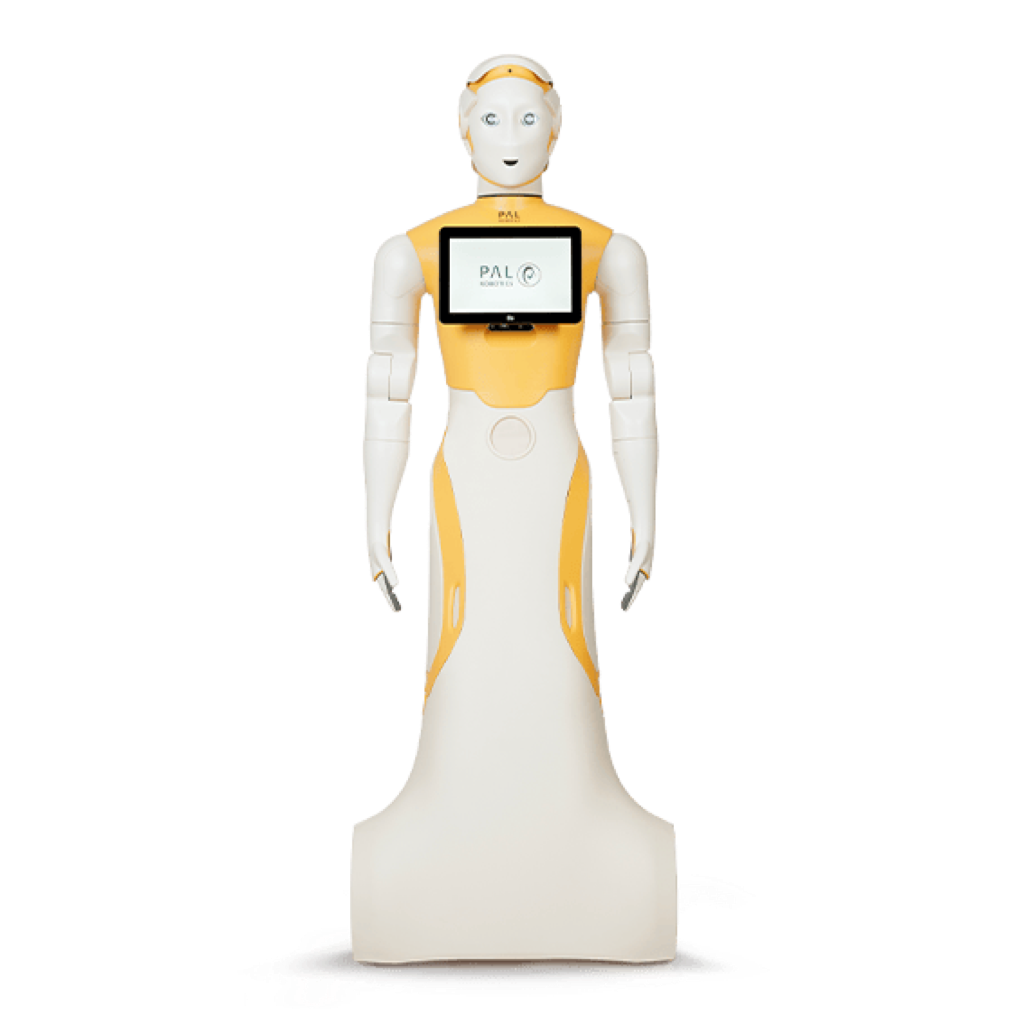 PAL Robotics PAL Robotics ARI | 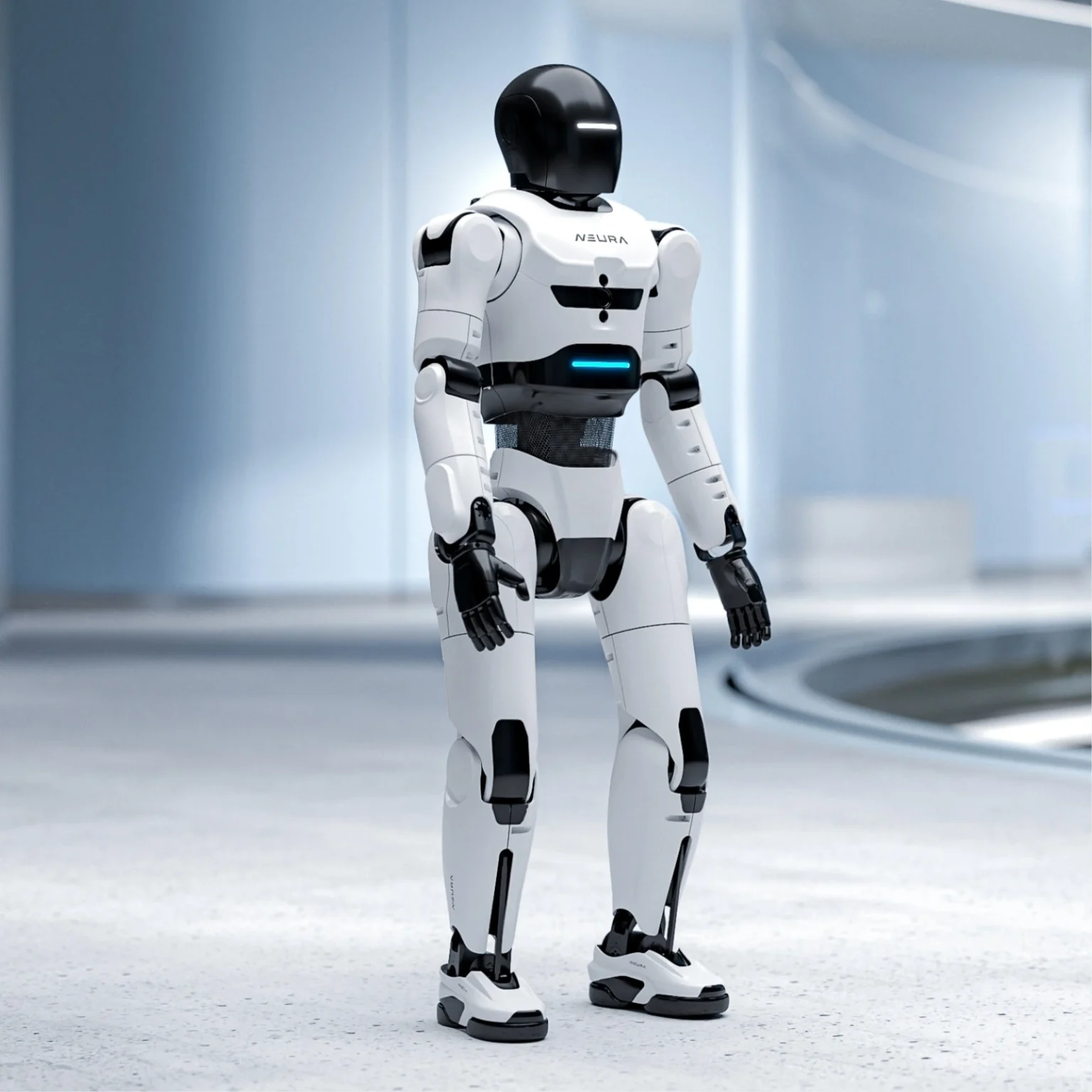 NEURA Robotics NEURA Robotics 4NE-1 | |
|---|---|---|---|---|
| Price (US) | Inquiry | $99,999 – $145,000 | $35,000 – $90,000 | $65,000 – $105,000 |
| Availability | Pilot programs | On the market | On the market | Reservations open |
| Height | Unknown | 1.67 m | 1.65 m | 180 cm |
| Payload | 40 kg | ~5 kg | ~0.5 kg per arm | Arms rated ~20 kg; up to 100 kg lifting in leg-supported/full-body configurations |
| DoF | Unknown | Lite | ~12 | Hands |
| Buyer | Enterprise | Enterprise | Individuals | Enterprise |
| Made in | Other | Other | Other | Other |
What the Wandercraft Calvin-40 costs — and how to get one
Calvin-40 bipedal industrial; Renault pilot (inquiry).
Unknown
Leasing / RaaS: unknown
Every spec, grouped & sourced
Tap a group to expand. Values are labelled official vs third-party; unknowns are omitted, not guessed.
Body & movement▾
Power & endurance▾
Hands & senses▾
Brains & control▾
Claims vs evidence
Industrial autonomy
Where it's working
No verified large-scale deployment
Intended use cases: Industrial manufacturing (bipedal)
Should you consider the Wandercraft Calvin-40?
Calvin-40 is one of the few industrial humanoids that's genuinely earning its keep on a real factory floor rather than a demo stage. There's no public price and the fleet is still small, but as a signal of where industrial humanoids are heading, it's about as credible as they come in 2026.
Score reflects stated criteria (availability, data confidence, US relevance) — not hands-on testing or user ratings. We're an independent review & comparison site; we don't sell robots. *Financing figure is illustrative.
How we know this
Data confidence 40/100 · last verified 2026-06-30. Specs are labelled official vs third-party and dated; unknowns are omitted, not guessed.
Wandercraft Calvin-40 — your questions, answered in full
Is the Wandercraft Calvin-40 available to buy?+
Not off the shelf. It's deployed through direct partnerships and pilot programs with industrial customers like Renault and SAPA. If you're an enterprise interested in it, you'd contact Wandercraft directly.
How much can Calvin-40 lift?+
Up to about 40 kg (roughly 90 lb), and Wandercraft says it can do that lift several hundred times a day without resting.
Why does Calvin-40 have no head?+
The headless design lets Wandercraft mount cameras and sensors lower, closer to the tools and parts the robot handles, and it helps the robot fit under equipment and between shelves.
Who makes the Calvin-40?+
Wandercraft, a French robotics company that spent over a decade building self-balancing medical exoskeletons before pivoting that expertise into industrial humanoids.
Is Calvin-40 actually working at Renault?+
Yes. Calvin units have been running real shifts on the supply line at Renault's Douai plant in France, moving heavy tires. Renault is also a minority investor in Wandercraft.
How many Calvin robots will there be?+
Wandercraft's stated roadmap is roughly ten units by end of 2026, scaling toward 350 across French and Spanish factories by end of 2027. Those figures are targets, not guarantees.
How much does a Calvin-40 cost?+
Wandercraft hasn't published a price. Deals are negotiated per partner, so any specific figure online should be treated as unconfirmed.
Peer-reviewed research on the Wandercraft Calvin-40
Published academic work — peer-reviewed papers and preprints — involving this robot or its maker's systems, indexed in scholarly databases (OpenAlex, arXiv). Not blog posts or press write-ups.
- Towards Restoring Locomotion for Paraplegics: Realizing Dynamically Stable Walking on ExoskeletonsThomas Gurriet, Sylvain Finet, Guilhem Boeris, Alexis Duburcq, Ayonga Hereid, Omar Harib, Matthieu Masselin, Jessy Grizzle, Aaron D. Ames · 2018 · 2018 IEEE International Conference on Robotics and Automation (ICRA) · DOI 10.1109/ICRA.2018.8460647
- Versatile Dynamic Motion Generation Framework: Demonstration With a Crutch-Less Exoskeleton on Real-Life Obstacles at the Cybathlon 2020 With a Complete Paraplegic PersonVaiyee Huynh, Guillaume Burger, Quoc Viet Dang, Raphaël Pelgé, Guilhem Boéris, Jessy W. Grizzle, Aaron D. Ames, Matthieu Masselin · 2021 · Frontiers in Robotics and AI · DOI 10.3389/frobt.2021.723780
Academic references are factual citations from open scholarly indexes; listing is not endorsement.