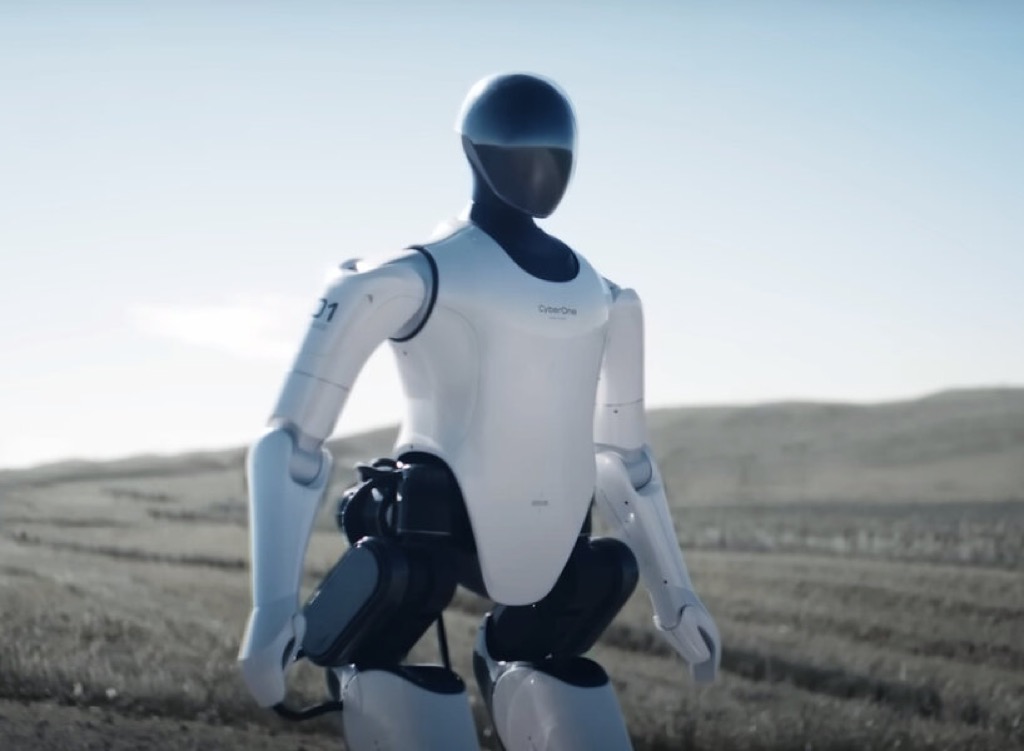
Xiaomi CyberOne Robot
You cannot buy a Xiaomi CyberOne. It has never been for sale, at any price, in any market, and Xiaomi's president restated in March 2026 that the company is not selling it. The $89,000-$104,000 figure you will find everywhere is not a price - it is Xiaomi's founder describing a 2022 per-unit build cost of CNY 600,000-700,000, restated at today's exchange rate. A second-generation CyberOne was unveiled at the World Robot Conference in Beijing on 19 August 2026 after roughly four months working on Xiaomi's own car assembly line, with no price, no release date and no specification sheet.
This page covers the second-generation CyberOne shown working in Xiaomi's Beijing car plant during 2026 and unveiled publicly at the World Robot Conference on 19 August 2026, not the 2022 original whose 1.77 m / 52 kg / 21-DOF figures still circulate. Xiaomi has published no specification sheet for the new machine, so this entry is short on purpose: press reports from the unveiling give approximately 1.70 m, 66 kg and 66 degrees of freedom, and nearly everything else is undisclosed.
US buyers: no new imports — this model has no US authorization on record, and the July 2026 rule closes that route.
CyberOne has always been a research prototype rather than a product — Xiaomi never sold it to anyone. The July rule adds a second obstacle on top of that: a Chinese-built humanoid launched now cannot obtain US authorization without a Department of War conditional approval. Expect no US availability.
Not for sale in China either; this is a demonstrator.
As of 2026-08-30 · medium confidence — verify before you commit funds
What is the Xiaomi CyberOne Robot?
CyberOne is the Xiaomi robot — announced with a stage demo in 2022, and still not a product four years on.
This page is deliberately shorter than the others in this catalogue, and it is worth saying why up front. Xiaomi has released almost nothing about the second-generation CyberOne: no specification sheet, no price, no release date, no availability. Writing three thousand words about it would mean inventing most of them. What follows is what can actually be supported, and an explicit account of what cannot.
The story so far, briefly. CyberOne was unveiled by Lei Jun on 11 August 2022, a week after Tesla's Optimus reveal and framed by nearly every outlet as a response to it. It walked awkwardly, claimed emotion recognition nobody has independently tested, and then went quiet for the better part of four years. In that time it became the canonical example of a demonstration that never became a product.
Then it came back. From spring 2026 a new CyberOne was shown working inside Xiaomi's own EV plant in Yizhuang, Beijing; Xiaomi's CEO posted footage of it running pilot shifts on 15 July 2026; and on 19 August 2026 the second-generation machine was publicly unveiled at the World Robot Conference in Beijing after roughly four months of assembly-line training. Xiaomi released performance numbers from that work. It did not release specifications, and it did not announce a sale.
What the Xiaomi CyberOne can — and can't — do today
+Does this out of the box
- Work on a live car assembly line - Xiaomi reports roughly four months of training at its Yizhuang plant from spring 2026
- Install self-tapping nuts with a reported 90.2% success rate rising to 98% at a 76-second takt (Xiaomi figures, August 2026)
- Sort centre-console side covers and fold material bins, each at about 90% success (Xiaomi figures, August 2026)
- Follow live spoken commands and recognise scenes through a large model, according to Chinese trade press reporting from the 19 August 2026 unveiling
- Walk bipedally - the 2022 machine was rated around 3.6 km/h with a quoted maximum near 7.2 km/h
!Doesn't do, whatever the demo shows
- Be bought, at any price, in any market - it has never been for sale and Xiaomi's president restated in March 2026 that it is not being sold
- Be specified: Xiaomi has published no height, weight, degree-of-freedom count, battery, sensor or compute figures for the second generation
- Be imported into the US - no authorisation is on record, and the 28 July 2026 FCC restriction closes that route for a machine seeking certification now
- Demonstrate the emotion-recognition capability claimed in 2022, which has never been independently tested
- Be evaluated independently at all; no third party has had access to either generation
CyberOne is a research prototype that became an internal factory tool. Judging it against purchasable humanoids is a category error - the comparison it invites, against Tesla Optimus, is the one the 2022 launch timing deliberately provoked and the one the intervening four years have made least useful. Status verified 30 August 2026.
Can you buy a Xiaomi CyberOne?
No. Not in China, not internationally, not through a distributor, not second-hand through any legitimate channel. CyberOne has always been internal research and, more recently, internal factory use.
Xiaomi's president stated in March 2026 that the company is not selling the product, and Xiaomi has confirmed that its robotics business has no independent external revenue. That last detail is the most reliable evidence available: a listed company reporting no revenue from a business line is not quietly selling robots.
The second-generation unveiling on 19 August 2026 came with no price, no release date and no order channel. Xiaomi's own framing put the near-term application in smart-manufacturing production lines - its own, in the first instance - rather than in a market.
If a listing offers you a CyberOne, it is not selling you a CyberOne.
The $89,000 price that is not a price
Almost every page about this robot carries a figure in the region of $89,000 to $104,000. It traces to exactly one source, and it is not a price.
At the 2022 unveiling Lei Jun said the per-unit build cost was CNY 600,000 to CNY 700,000. That is a manufacturing cost statement about a research prototype, made by a founder explaining why the machine was not a product. Converted at 6.7209 CNY/USD, the rate as of 28 August 2026, it comes to roughly $89,300-$104,150 - which is where the numbers on those pages come from.
So: a 2022 cost figure, restated at a 2026 exchange rate, presented as a 2026 retail price. It is the single most common error made about this machine, and it has been repeated so widely that it now looks like a fact.
No MSRP has ever existed for CyberOne. Xiaomi has not published one for the second generation either.
What Xiaomi has and has not published about generation two
This is the section that decides how much of anything else on this page you should trust.
Published by Xiaomi: task performance from the factory training. Self-tapping nut installation succeeded 90.2% of the time, rising to 98% at a 76-second takt; centre-console side-cover sorting ran at about 90%; material-bin folding at about 90%. Those are Xiaomi's own figures, dated August 2026, from its Yizhuang plant.
Not published by Xiaomi: height, weight, degrees of freedom, actuator specifications, battery capacity, runtime, sensor list, compute, price, availability. Chinese trade press covering the 19 August unveiling described the new machine at about 1.70 m and 66 kg with 66 degrees of freedom, 33 of them concentrated in the hands, and reported that it follows live spoken commands and recognises scenes through a large model. Those figures are press reporting from the event, not a Xiaomi spec sheet, and we have not seen them confirmed by the company.
The specification table on this page therefore still carries the 2022 first-generation numbers - 1.77 m, 52 kg, 21 degrees of freedom - because those are the only figures Xiaomi itself has ever put its name to. If the press numbers are right, the second generation is shorter, heavier and roughly three times as articulated, with most of the increase in its hands. We will update the table when Xiaomi publishes, and not before.
The factory numbers, and what they are worth
The four months on the Yizhuang line are the most substantive thing that has ever happened to this programme, and the numbers deserve reading carefully rather than dismissing.
A 98% success rate on self-tapping nut installation at a 76-second takt is a real industrial claim. Takt time is the pace the line moves at, so the figure says the robot kept up rather than merely completed the task eventually. The rise from 90.2% to 98% over the training period is the more interesting number: it shows a learning curve, not a fixed capability.
The caveats are the usual ones and they are not small. All figures are Xiaomi's own, released for a product unveiling, with no independent verification and no published definition of what counts as a success. Two per cent failure on a line at 76-second takt is a failure roughly every hour, and what happens then - who intervenes, at what cost - is the question a manufacturer would ask first and the one nobody has answered.
Still, a company running its own robots on its own production line for four months, then publishing a success rate, is doing something different from a stage demonstration.
Generation one versus generation two
The 2022 machine was 1.77 m and 52 kg with 21 degrees of freedom, upper-limb actuators rated at 500 g and 30 Nm, a grip strength of about 1.5 kg per hand, a walking pace around 3.6 km/h with a quoted maximum near 7.2 km/h, Xiaomi's Mi-Sense depth module alongside an Intel RealSense D455, and a curved OLED display for a face. Xiaomi claimed emotion and voice recognition. Reviewers were unconvinced: IEEE Spectrum covered the debut with open puzzlement about what the machine was for, and Mashable noted that it walked oddly despite the emotion-recognition claims.
The second generation, on press reporting rather than company disclosure, is shorter and heavier with far more articulation concentrated in the hands - which is exactly the change you would expect from four months of assembly work, where hands matter and gait does not. The consistent praise for the 2026 machine, among people who follow this closely, is that the hand and tactile-sensing upgrades look like a genuine advance rather than a restyle.
What has not changed in four years: it is still not a product.
Can US buyers get one?
No, on two separate grounds.
The first is simply that it is not for sale to anyone. The second is regulatory, and worth stating correctly because the press version is wrong. FCC Public Notice DA 26-786, issued 28 July 2026, added equipment to the Covered List. The text is country-neutral - it turns on 'foreign-produced', meaning a failure of the Buy American test of US assembly plus more than 65% domestic content, which catches British, EU and Japanese machines as well. It blocks new FCC certification only; it is not a customs ban and not a recall, and equipment certified before 28 July keeps selling and updating until 1 January 2029.
CyberOne has no US authorisation on record and never has. A Chinese-built humanoid seeking certification now would need a Department of War conditional approval to get it. Expect no US availability, and treat any US-facing listing accordingly.
Reports in late August 2026 suggested CyberOne would make an overseas appearance at IFA in Berlin. We could not confirm that against a Xiaomi announcement, and an exhibition appearance would not be a sale in any case.
Why this page is short
Most catalogue pages for this robot run to several thousand words. Almost all of that length is padding around three real facts: it exists, it is not for sale, and the price everyone quotes is a cost figure from 2022.
We would rather say that plainly. Xiaomi has published four years of imagery and roughly one page of specifications, and the second-generation machine that actually matters arrived on 19 August 2026 with performance numbers and nothing else. Any page giving you confident detail about the new CyberOne's battery, sensors, compute, price or release date is filling gaps with guesswork, and in a category where aggregators routinely turn a founder's remark into an MSRP, that is not a harmless habit.
Our confidence score for this entry is 40 out of 100 and the spec source quality is low. Both of those are accurate and we are leaving them there until Xiaomi publishes something. When it does, this page gets longer.
The Xiaomi CyberOne on video
Hands-on reviews and teardowns, picked for what they actually show rather than how loud the thumbnail is.
The original Lei Jun reveal, still the only full demo of the first CyberOne
Both 2022 reveals back to back, which is how the CyberOne story is usually framed
The 2026 refresh and its full-palm tactile hand — the only current CyberOne coverage worth the time
Xiaomi CyberOne price ladder — and what the entry price leaves out
The headline number is almost never the number you pay. Here is each configuration, and what it does not include.
| Configuration | Price | What you get | What it excludes |
|---|---|---|---|
| CyberOne, first generation (2022) | Never sold | Research prototype only. Lei Jun quoted a per-unit build cost of CNY 600,000-700,000 at the unveiling - about $89,300-$104,150 at 6.7209 CNY/USD, rate as of 28 August 2026. | This is a manufacturing cost statement, not a price. No MSRP has ever existed. Presenting the converted figure as a 2026 retail price is the single most common error made about this machine. |
| CyberOne, second generation (unveiled 19 August 2026) | No announced price | Unveiled at the World Robot Conference in Beijing after roughly four months of assembly-line training at Xiaomi's Yizhuang EV plant. | No price, no release date, no specification release, no order channel. Xiaomi reports no independent external revenue from its robotics business. |
CNY 600,000-700,000 is about $89,300-$104,150 at 6.7209 CNY/USD, rate as of 2026-08-28. This is a 2022 cost figure restated at today's rate, not a 2026 price — presenting it as a price is the single most common error on this machine.
Source: Xiaomi's CEO stated a per-unit build cost of CNY 600,000-700,000 at the 2022 unveiling; that cost figure is what every '$89K CyberOne' headline traces back to. Xiaomi's president reconfirmed in March 2026 that the company is not selling the product. No MSRP has ever existed. · as of 2026-08-30
What owning one actually costs
| Cost | Typical | Notes |
|---|---|---|
| Not applicable | No ownership costs exist | CyberOne cannot be owned outside Xiaomi. There is no purchase, lease, rental or research channel, so there are no running costs to report - and any page listing maintenance or service pricing for it is describing something imaginary. |
Who the Xiaomi CyberOne is — and isn't — for
+Where it shines
- Stated real-world payload (1.5 kg grip strength per hand).
!Watch-outs
- Sold to businesses only — not to private buyers.
- Public data is thin; verify key figures before relying on them.
How the Xiaomi CyberOne stacks up
Side by side with similar robots — the one you're reading about is highlighted.
| This robot Xiaomi Xiaomi CyberOne | 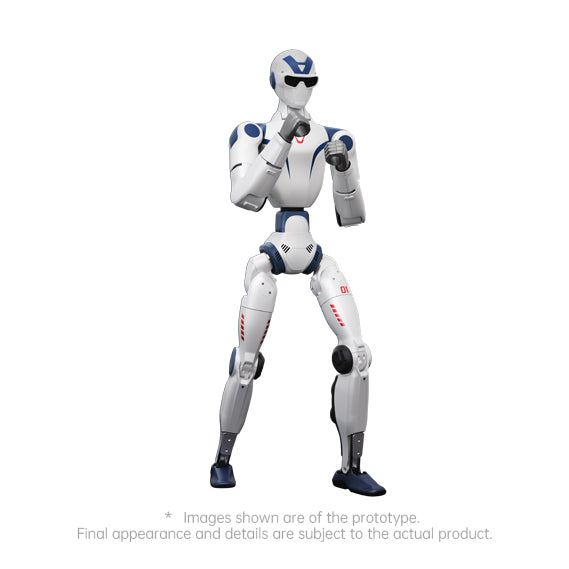 Unitree Robotics Unitree R1 | 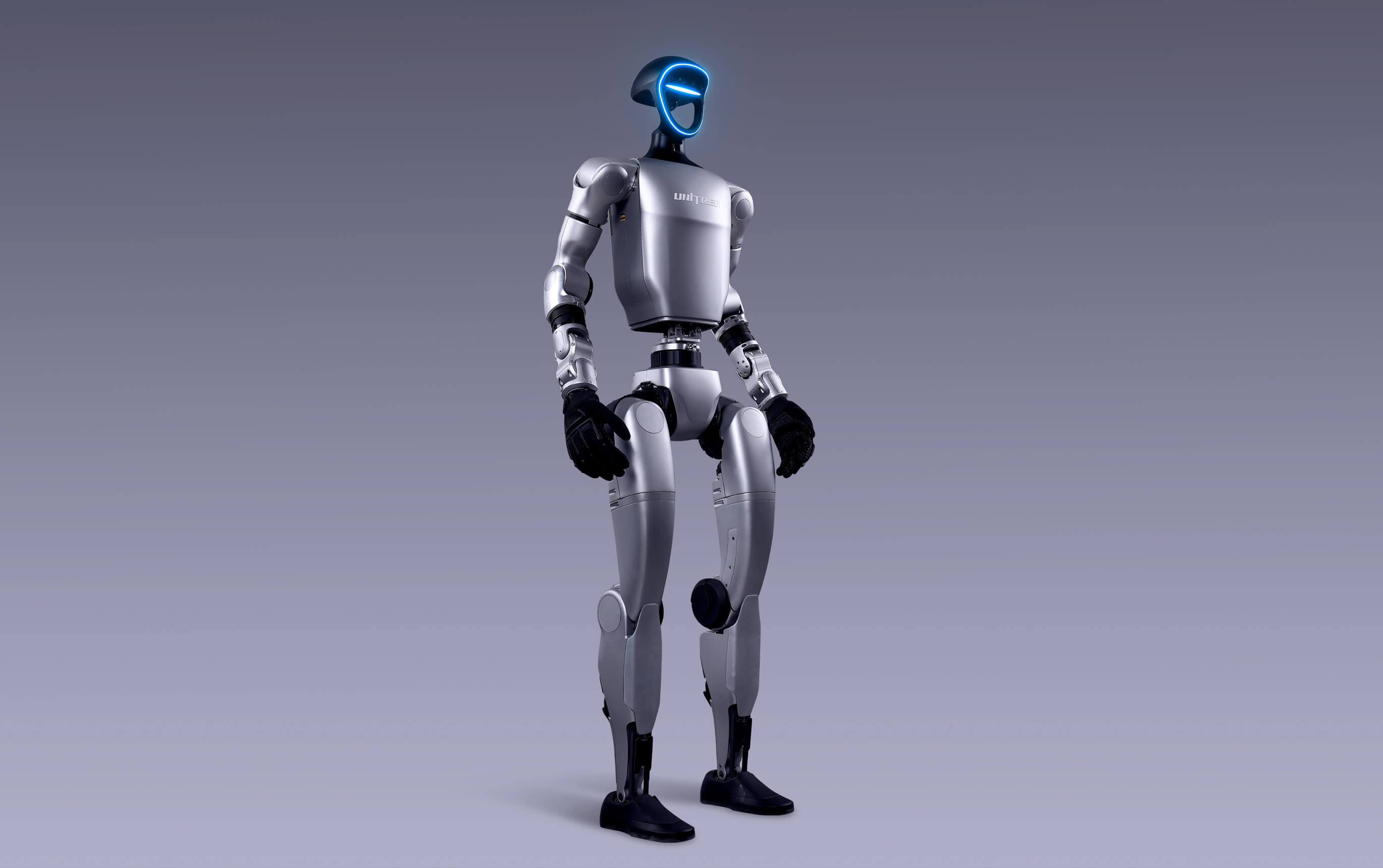 Unitree Robotics Unitree G1 | 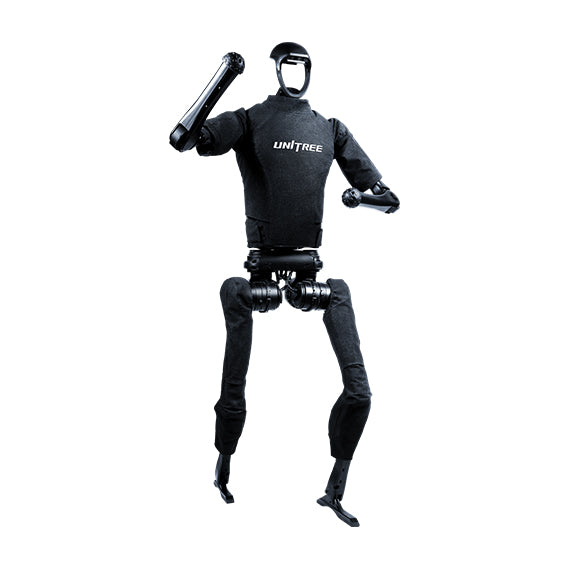 Unitree Robotics Unitree H1 | |
|---|---|---|---|---|
| Price (US) | Not for sale. The widely quoted $89,000-$104,000 is a 2022 production-cost statement, not a price | $4,900 – $5,900 | $13,500 – $73,900 | ~$90,000 |
| Availability | Not for sale — internal research and factory pilot use only | On the market | On the market | On the market |
| Height | 1.77 m | 1.23 m | 1.32 m standing | ~1.80 m |
| Payload | 1.5 kg grip strength per hand | Unknown | Arm ~2 kg | Not rated for H1 |
| DoF | 21 | 20 | 23 | ~19 |
| Buyer | Enterprise | Individuals | Individuals | Enterprise |
| Made in | China | China | China | China |
Every spec, grouped & sourced
Tap a group to expand. Values are labelled official vs third-party; unknowns are omitted, not guessed.
Body & movement▾
Power & endurance▾
Hands & senses▾
Brains & control▾
Claims vs evidence
Xiaomi AI; emotion/voice recognition (demo)
Where it's working
Xiaomi's own EV plant, Yizhuang, Beijing - roughly four months of assembly-line training from spring 2026. Reported task success: self-tapping nut installation 90.2% rising to 98% at a 76-second takt; center-console side-cover sorting ~90%; material-bin folding ~90% (Xiaomi figures, Aug 2026).
Intended use cases: General-purpose and companion humanoid (demonstrated); home use a long-term ambition
What owners, reviewers and the press say about the Xiaomi CyberOne
Ratings and reception gathered from where this machine is actually sold and discussed. We summarise the signal — we don't republish anyone's reviews.
CyberOne has never been offered for sale; the price figure circulating online is a 2022 production-cost estimate from Xiaomi's founder, not a retail price, and no rating platform lists it.
- IEEE Spectrum — covered the 2022 debut with open puzzlement about what the machine was actually for · 2026-08-30
- Mashable — noted in 2022 that the robot walks oddly despite the emotion-recognition claims · 2026-08-30
+Reviewers consistently praise
- fully self-developed by Xiaomi's own robotics lab
- hand and tactile-sensing upgrades shown in 2026 are a real advance
- 3D spatial perception credible for 2022
!And consistently criticise
- walking gait visibly awkward
- emotion-classification claims never independently tested
- four years on it is still not a purchasable product
What owners and developers actually say
CyberOne drew a big burst of attention at its 2022 reveal and has been treated ever since as a demonstration that never became a product. Threads are sceptical: the emotion-recognition claim is generally read as marketing, and the gait was mocked from day one. Renewed interest in 2026 around hand upgrades has been modest, and no price has ever been published — the widely-repeated figure is a founder's production-cost remark, not a sale price.
r/robotics, r/Futurology, r/singularity · as of 2026-08-30
Consensus drawn from two named outlet assessments plus around eight videos; unusually for a major brand, most third-party clips sit in the hundreds to low thousands of views, and one r/robotics thread on the prototype carried roughly 377 upvotes and 88 comments.
Xiaomi CyberOne: the claims, checked
Research prototype in internal factory use not a product
A second-generation CyberOne worked inside Xiaomi's own EV plant at Yizhuang, Beijing, for roughly four months from spring 2026; Xiaomi's CEO posted footage of pilot shifts on 15 July 2026, and the machine was publicly unveiled at the World Robot Conference in Beijing on 19 August 2026 with reported task success rates. Against that: no specifications released, no price, no release date, no order channel, no external revenue from the robotics business, and no independent access to either generation by any third party. Four years after the first reveal it remains internal.
as of 2026-08-30
- false“The Xiaomi CyberOne costs about $89,000”
That figure is Lei Jun's 2022 statement of per-unit build cost - CNY 600,000-700,000, about $89,300-$104,150 at 6.7209 CNY/USD as of 28 August 2026 - not a price. CyberOne has never been sold and no MSRP has ever existed. Every '$89K CyberOne' headline traces back to this one cost remark.
- false“Xiaomi is selling or about to sell the CyberOne”
Xiaomi's president stated in March 2026 that the company is not selling the product, and Xiaomi reports no independent external revenue from its robotics business. The second-generation unveiling on 19 August 2026 came with no price, no release date and no order channel.
- unverified“The second-generation CyberOne is 1.70 m tall with 66 degrees of freedom”
Chinese trade press covering the 19 August 2026 unveiling reported about 1.70 m, 66 kg and 66 degrees of freedom with 33 in the hands. Xiaomi has published no specification sheet for the second generation, so these are event reporting rather than company figures. The specification table on this page retains the 2022 first-generation numbers because those are the only ones Xiaomi has stated itself.
- unverified“CyberOne achieved a 98% success rate on a car assembly line”
Xiaomi published this in August 2026 for self-tapping nut installation, rising from 90.2% to 98% at a 76-second takt, alongside roughly 90% on centre-console sorting and bin folding, from four months at its Yizhuang plant. The figures are Xiaomi's own, released for a product unveiling, with no independent verification and no published definition of success.
- unverified“CyberOne can recognise human emotions”
Claimed by Xiaomi at the 2022 launch and never independently tested. Contemporary coverage was sceptical - Mashable noted the awkward gait against the emotion-recognition claims, and IEEE Spectrum expressed open puzzlement about the machine's purpose. Community discussion has generally read the claim as marketing.
- false“You can buy a CyberOne in the US”
It is not for sale anywhere, and separately has no US authorisation on record. FCC Public Notice DA 26-786 of 28 July 2026 blocks new certification for foreign-produced equipment on a country-neutral test, and a Chinese-built humanoid seeking certification now would require a Department of War conditional approval.
Xiaomi in 2026
Xiaomi is a Chinese consumer electronics and, since 2024, electric vehicle manufacturer, and CyberOne comes out of its own robotics lab rather than an acquisition - a point consistently made in its favour. The programme's arc is unusual: a high-profile reveal on 11 August 2022, a week after Tesla unveiled Optimus and framed by most coverage as an answer to it, followed by four years of near-silence, followed by the machine reappearing not as a consumer product but as a tool on Xiaomi's own car assembly line. That trajectory is more coherent than it looks. Xiaomi has a factory, a labour problem it can measure, and no need to sell a robot to anyone in order to learn from one. The company reports no independent external revenue from robotics and its president said in March 2026 that it is not selling the product, which together are the clearest statement of intent available: for now, CyberOne is infrastructure, not inventory.
What to watch next
- Whether Xiaomi ever publishes a specification sheet for the second generation - the single thing that would let anyone assess it properly
- Whether the factory pilot expands beyond the Yizhuang plant, which would be the first evidence the programme scales
- Any statement on commercial availability; nothing Xiaomi has said in 2026 points toward one
- Reports that CyberOne would appear overseas at IFA in Berlin in September 2026 - unconfirmed against any Xiaomi announcement, and an exhibition is not a sale
- Independent access of any kind; four years in, no third party has assessed either generation
Should you consider the Xiaomi CyberOne?
CyberOne is not a product and, after four years, gives little sign of becoming one. What changed in 2026 is that it stopped being a stage demonstration and started being a tool: a second-generation machine worked roughly four months on Xiaomi's own car assembly line, and the company published task success rates - 98% on nut installation at a 76-second takt - rather than another sizzle reel. That is a meaningful shift, and it is also the entire body of new evidence. Xiaomi released no specifications, no price, no date and no availability, restated in March 2026 that it is not selling the machine, and reports no revenue from the business. So the answer to every purchasing question here is the same one it was in 2022, and the $89,000 figure attached to it in a thousand places is a build cost the founder mentioned once.
Score reflects stated criteria (availability, data confidence, US relevance) — not hands-on testing or user ratings. We're an independent review & comparison site; we don't sell robots. *Financing figure is illustrative.
How we know this
Data confidence 40/100 · last verified 2026-08-30. Specs are labelled official vs third-party and dated; unknowns are omitted, not guessed.
Xiaomi CyberOne — your questions, answered in full
How much does the Xiaomi CyberOne cost?+
It has no price, because it has never been for sale. The $89,000-$104,000 figure circulating online is Lei Jun's 2022 statement of per-unit build cost - CNY 600,000-700,000, about $89,300-$104,150 at 6.7209 CNY/USD as of 28 August 2026 - not an MSRP.
Can I buy a Xiaomi CyberOne?+
No. Not in China, not internationally, not through any distributor. Xiaomi's president restated in March 2026 that the company is not selling it, and Xiaomi reports no external revenue from its robotics business. The second-generation unveiling in August 2026 came with no price and no order channel.
What is the second-generation CyberOne?+
A new CyberOne shown working inside Xiaomi's own EV plant at Yizhuang, Beijing, from spring 2026 and publicly unveiled at the World Robot Conference on 19 August 2026 after roughly four months of assembly-line training. Xiaomi released task success rates from that work but no specifications, price or release date.
What are the CyberOne's specifications?+
The only figures Xiaomi has ever published are the 2022 first-generation ones: 1.77 m, 52 kg, 21 degrees of freedom, roughly 1.5 kg grip per hand, walking around 3.6 km/h. Chinese trade press reported the new machine at about 1.70 m, 66 kg and 66 degrees of freedom with 33 in the hands, but Xiaomi has confirmed nothing, so we have not moved the table.
Does the CyberOne actually work in a factory?+
Xiaomi says so and published numbers: self-tapping nut installation at 90.2% rising to 98% at a 76-second takt, plus about 90% each on centre-console side-cover sorting and material-bin folding, over roughly four months at Yizhuang. Those are Xiaomi's own figures with no independent verification and no published definition of success.
Can CyberOne really recognise emotions?+
Xiaomi claimed it in 2022 and nobody has independently tested it. Contemporary coverage was sceptical, and the claim is generally read in robotics discussion as marketing rather than a measured capability.
Is the Xiaomi CyberOne available in the US?+
No, on two grounds. It is not for sale to anyone, and separately it has no US authorisation on record - FCC Public Notice DA 26-786 of 28 July 2026 blocks new certification for foreign-produced equipment on a country-neutral test, so a Chinese-built humanoid seeking certification now would need a Department of War conditional approval.
How does CyberOne compare to Tesla Optimus?+
The comparison was baked in by timing - CyberOne was revealed a week after Optimus in August 2022 - and it has not aged well for either machine. Neither is purchasable. The one difference worth noting is that Xiaomi has published measured task performance from four months on its own production line, which Tesla has not done in comparable form.
Why is this page shorter than other robot pages?+
Because Xiaomi has published almost nothing about the machine that matters. There is no specification sheet, no price, no release date and no independent access. Pages that run to several thousand words on this robot are filling those gaps with guesswork, and in this category guesswork is how a 2022 cost remark became a 2026 price.
Does the CyberOne have a rating or reviews?+
No. It has never been offered for sale, no rating platform lists it, and no third party has ever had one to test. Any star rating you see attached to it belongs to something else or was invented.