XPENG IRON Robot
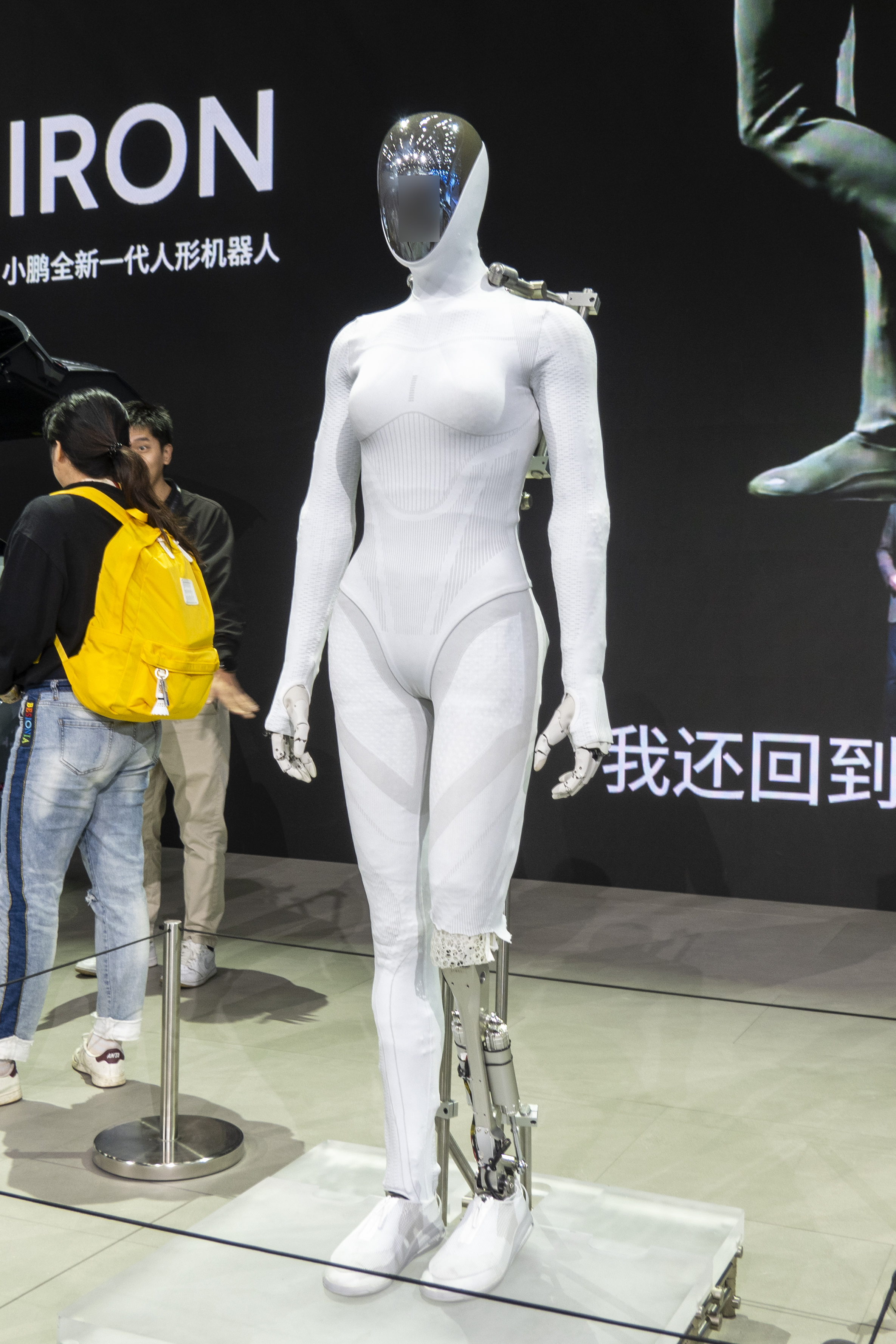
XPENG IRON is a humanoid robot from Chinese EV maker XPeng, with 76 body degrees of freedom, 21 per hand and 2,250 TOPS of in-house compute as of August 2026. XPeng has never published a price and has delivered zero units. Mass production is targeted for end-2026, customer deliveries for 2027.
US buyers: no new imports — this model has no US authorization on record, and the July 2026 rule closes that route.
IRON is being deployed into XPENG's own Chinese retail and factory operations, with no confirmed North American distribution. It has no US authorization on record, so new imports and sales are barred. XPENG has said nothing about seeking a conditional approval. For a US buyer this is not orderable and there is no waitlist that leads anywhere.
Chinese deployment continues; XPENG's plans elsewhere are unaffected by the US measure.
As of 2026-08-30 · medium confidence — verify before you commit funds
What is the XPENG IRON Robot?
IRON is the XPENG robot — the carmaker's bipedal humanoid, and the one whose gait was mistaken for a person in a suit.
The XPENG IRON is the humanoid that made half the internet accuse a car company of putting a dancer in a costume. On 5 November 2025 at XPeng's AI Day in Guangzhou, the next-generation IRON walked across a stage with a hip-swinging gait so smooth that more than half the online comments insisted a person was inside. Within about twenty-four hours XPeng had unzipped the robot's back on video and then cut open its leg with scissors, on stage, while it was powered on.
That answered the wrong question extremely well. IRON is unambiguously a real robot. What it is not, as of 30 August 2026, is a product. XPeng has never announced a price in any market. It has not opened pre-orders. It has delivered zero units to anyone. Its own product pages carry a line saying they exist for technical demonstration purposes only.
In between those two facts sits a company that just raised more than $900 million for the robotics unit at a valuation above $6.3 billion — while losing its robotics product head, its robotics business head and its AI infrastructure chief within three months, forcing founder He Xiaopeng to run the division himself. This page covers what the hardware actually is, where the $150,000 figure everyone quotes came from (nowhere), why the US market is now closed to it, and what would have to happen for you to buy one.
What the XPENG IRON can — and can't — do today
+Does this out of the box
- Walk with a smooth biomimetic gait on flat indoor surfaces, demonstrated repeatedly on stage since November 2025
- Manipulate objects with hands carrying 21 degrees of freedom each at roughly 1:1 human scale
- Run a vision-language-action model on-device across three in-house Turing chips at 2,250 TOPS effective
- Hold a conversation and interact through a curved display in place of a face
- Sense contact through flexible electronic skin across the body
- Perform the reception, retail-guide and patrol behaviours XPeng has demonstrated in showroom settings
!Doesn't do, whatever the demo shows
- Be bought, reserved or priced — there is no channel, no price and no pre-order anywhere in the world
- Be legally sold in the United States; it holds no FCC equipment authorisation and new ones are foreclosed
- Be programmed by third parties — the announced SDK has no portal, documentation, repository or licence
- Demonstrate any published autonomy benchmark, intervention rate or long-duration unattended run
- Point to a single operational deployment; the Baosteel inspection pilot remains an announcement
- Confirm its own height and weight — XPeng has never published either for the current generation
Everything known about IRON's capability comes from XPeng's own staged demonstrations. No independent party has tested one, because no independent party has one.
What is the XPENG IRON and what does it actually do?
IRON is a full-size bipedal humanoid built by XPeng, the Chinese EV manufacturer, using hardware and software developed for its cars. That lineage is the whole design argument: the same in-house Turing AI chips that run XPeng's driver-assistance stack run the robot, and the company says more than 85% of its robot supply-chain partners overlap with its automotive suppliers.
What it does, based on everything shown publicly, is walk, talk, gesture, and handle objects with unusually capable hands. XPeng's stated commercial scope is deliberately narrow: sales assistance and tour-guide functions in retail and service settings. Chinese state media coverage from November 2025 listed reception, shopping assistance and patrolling. Not factories at launch, and explicitly not homes.
The headline hardware features are a bionic spine and muscle-like actuation, flexible electronic skin, a 3D curved display where a face would be, and hands at roughly 1:1 human scale using what XPeng calls the industry's smallest harmonic joint. It also claims an industry-first application of all-solid-state batteries in a humanoid, which if it holds up is genuinely notable — solid-state cells are what the entire EV industry is chasing.
The honest limitation is that nobody outside XPeng has ever used one. Every capability description on this page, including that list, comes from staged demonstrations and company materials. There is no independent test, no benchmark, no customer report, because there is no customer.
How much does the XPENG IRON cost?
There is no price. Not a provisional one, not a regional one, not a pre-order deposit. XPeng's own IRON product pages, checked 30 August 2026, carry marketing copy and no specifications, no price and no order path, plus a disclaimer that the page exists for technical demonstration purposes only.
The $150,000 figure that appears on virtually every robot catalogue site is worth tracing, because it is instructive. The earliest version we could find is a robotics blog post from 28 April 2025 stating that IRON is "currently priced at approximately $150,000". That post cites no source, and its accompanying spec table is demonstrably wrong on the DOF count, joint count and height. It reads as an author's estimate. It then propagated across aggregator and SEO sites until it acquired the appearance of a fact. No XPeng primary source supports it.
The $120,000 "in stock, add to cart" listings are worse — those are unauthorised marketplace pages with no relationship to XPeng, and there is no channel through which they could deliver a robot. A YouTube claim of an "official price of $45,000" has no corroboration anywhere and appears fabricated. There is also a memecoin using the IRON name; it has nothing to do with the company.
The only genuine pricing signal came on XPeng's Q2 2026 earnings call on 24 August 2026, when management said that because IRON is a general-purpose robot with very limited supply in the market, its hardware gross margin will definitely be better than the existing automotive business — which ran at 12.1% vehicle margin that quarter — with additional higher-margin recurring revenue from AI model upgrades, software and subscriptions. That tells you XPeng intends to make money on the hardware. It does not tell you the number, and no 2027 volume guidance was given.
He Xiaopeng's only on-record framing is about cost rather than price: that humanoid manufacturing cost could eventually approach that of a car, with software making up more than half the value from day one.
Why has XPeng never published a price — and when might it?
The absence is not an oversight, and it is not XPeng being coy. There are five reasons, and together they say more about where IRON stands than any number would.
Nothing is for sale yet, so nothing needs a price. XPeng's own sequence, stated in its 25 August 2026 release, is capacity first: mass production at the end of 2026, then deployment into its own stores and campuses, then official launch with deliveries in China and overseas during 2027. A price normally arrives alongside an order path. IRON has neither, and its product pages — checked 30 August 2026 — say in writing that they exist for technical demonstration purposes only.
The company talks about cost, not price. He Xiaopeng's only on-record framing is that humanoid manufacturing cost could eventually approach that of a car, with software making up more than half the value from day one. He has also said he wants the retail figure to end up similar to car prices and reachable by households within about five years. Those are aspirations with no date attached to the number, and a cost target is not a quote.
The only pricing-adjacent figure XPeng has given is a margin. On the Q2 2026 earnings call of 24 August 2026, management said IRON's hardware gross margin will be better than the automotive business — which ran a 12.1% vehicle margin that quarter — with additional recurring revenue from AI model upgrades, software and subscriptions. That tells you XPeng intends to make money on each unit. It does not tell you what a unit costs, and no 2027 volume guidance was given either.
The bill of materials is not settled. A full solid-state battery, three in-house Turing chips at 2,250 TOPS, full-body electronic skin, 76 body degrees of freedom and 21 per hand are all first-generation parts with no volume manufacturing history behind them. Nobody knows what the second thousand units cost, including XPeng. Publishing a number before the line runs would be guessing in public, and it would be quoted back forever.
And a price is now a valuation event. The robotics unit was carved out as Dogotix and raised more than $900 million at a post-money valuation above $6.3 billion in August 2026 — roughly 53% of XPeng's entire market capitalisation, on Goldman Sachs's reckoning, for a pre-revenue business. A price that lands badly is no longer just a marketing problem.
So when? XPeng has never named a date for pricing IRON. The realistic window is the 2027 launch, in yuan, for China first — and until then, the accurate answer to "how much does an XPENG IRON cost" is that the company has not said, which is a different and much more useful fact than a number somebody made up in April 2025.
What are the real XPENG IRON specs — and why did they change?
This is a detail almost nobody has noticed, and it matters if you are comparing spec sheets.
XPeng's own English release of 5 November 2025 stated 82 degrees of freedom throughout the body, a 22-DOF hand, three Turing AI chips and "3000 TOPS" of effective computing power. XPeng's own release of 25 August 2026, together with its Q2 earnings call the day before, states 76 degrees of freedom across the body, 21 degrees of freedom in each hand, and three Turing AI chips at 2,250 TOPS effective.
So the published spec moved downward, and XPeng has not explained why. Part of it may be a counting convention — the newer figure states hand DOF per hand, so the earlier 82 may have been body-inclusive-of-hands and the two may not be strictly comparable. But the TOPS change is not a convention question. Each Turing chip delivers 750 TOPS effective, three of them make 2,250, and the 3,000 figure corresponds to the four-chip configuration used in XPeng's G7 robotaxi platform, not in IRON. Every XPeng source since has used 2,250. Treat 3,000 TOPS as an error that escaped into an English press release and then never died.
Height and weight are less settled than the internet believes. The widely quoted 178 cm and 70 kg are verified for the earlier IRON, detailed in April 2025 alongside a figure of 62 active degrees of freedom — a different, older robot. XPeng has never published height or weight for the November 2025 next-generation IRON. Press figures range from 173 to 178 cm and 65 to 70 kg. Anyone stating 178 cm as a confirmed next-gen spec is guessing.
Other numbers you will see — around four hours of runtime, 4 km/h walking, 20 kg lift, 720-degree vision — trace to the earlier robot or to aggregator pages, not to XPeng's current materials.
Was there a human inside the XPENG robot?
No, and the way that got settled is a small classic of crisis communications.
The demo was on 5 November 2025 at XPeng's AI Day in Guangzhou. IRON walked a catwalk-style gait that looked, to a lot of viewers, impossibly organic. Chinese tech press reported that more than half of online comments claimed a person was inside a suit. One widely shared comment that He Xiaopeng himself reposted said Tesla's robot can't walk this smoothly, so there's no way this is possible.
On the morning of 6 November, He posted a single-take, unedited video on Chinese social platforms. He stood next to the robot and pointed out the internal cooling-fan noise, the 1:1-scale small hands and the microphone-array indentations near the ears, and a technician unzipped the covering on its back to show the mechanical torso, the lattice muscles and the harmonic joints in the hand. His comment was that this genuinely left the robotics team both delighted and amused.
Later the same day, at a separate event, engineers cut open IRON's leg with scissors while the robot stood powered on, slicing through several layers of fabric skin to expose actuators, wiring and metal joints. That is the footage most people have seen, and it is worth correcting a detail almost every article gets wrong: the leg-cutting was on 6 November, the day after AI Day, not during the keynote.
One further data point cuts against the suspicion in a different way. On 9 February 2026, at its first public stage appearance of that event, IRON fell over while raising a hand. He Xiaopeng addressed it on social media the next day, comparing it to how children learn to walk — they fall, get up, and are soon running. A person in a costume does not fall like that.
How autonomous is the XPENG IRON really?
Claimed: fully. Verified: not at all, by anyone outside XPeng.
XPeng says IRON is the first robot equipped with its first-generation physical world large model, combining vision-language-touch, vision-language-action and vision-language-model components for conversation, walking and interaction, running on-device on 2,250 TOPS. It rolled out VLA 2.0 in March 2026, architected for L4 autonomy in a single stack spanning L2 to L4, and showed it at Auto China 2026 in April and at CVPR 2026. The differentiation it claims is running a billions-of-parameters model on the robot rather than in the cloud.
What exists in public is stage demonstrations. XPeng has not published an autonomy benchmark, an intervention rate, a long-duration autonomous run, or any third-party validation for IRON. The contrast that makes this stark is Figure, which has published a verified 200-hour autonomous package-sorting run. XPeng has published nothing comparable.
Were the demos teleoperated? Nobody knows, and that is the accurate answer. XPeng explicitly claims on-device autonomy and has never said the demos were driven. No journalist or third party has confirmed or refuted it either. Industry humanoid demonstrations routinely lean on teleoperation or scripted routines, and this claim will only be testable once IRON is in someone's hands rather than on a stage. The one piece of indirect evidence pointing away from full scripting is the February 2026 fall — a fully pre-scripted routine is less likely to fail in that particular way, though that is inference rather than proof.
Is there an XPENG IRON SDK for developers?
Announced, yes. Existing, no evidence.
At AI Day on 5 November 2025 He Xiaopeng said XPeng would open-source its physical world model and make IRON's SDK available to global developers, positioning the company explicitly against Tesla's closed Optimus — the Android of the humanoid era, as the framing went. Developers would be able to buy the robots and train them for commercial purposes. Some coverage reported this as XPeng having released the SDK.
As of 30 August 2026 we could not locate an SDK download, a developer portal, API documentation, a public repository, licence terms or a registration page. XPeng's own English press releases of 5 November 2025 and 25 August 2026 do not mention an SDK at all. Its public IRON product pages have no developer section. No physical-world-model weights have been released.
The most likely reading is that the announcement described an intention and possibly a licensing arrangement with other companies rather than an open developer programme, and that any actual SDK will track the 2027 commercial launch. If you are evaluating IRON as a research platform, treat developer access as unproven and ask for it in writing before committing to anything.
Where are XPENG IRON units actually working?
Nowhere. This is the cleanest fact on this page and the one most catalogue entries get wrong.
Zero IRON units are confirmed to be doing real work for anyone as of 30 August 2026. Every deployment you will read about is either an announcement or a 2027 target.
The XPeng showroom deployment, where IRON works as a sales assistant, is targeted for the first quarter of 2027 according to reporting from July 2026, and XPeng's own 25 August 2026 release places initial deployment in its stores and campuses only after end-2026 mass production. Overseas retail follows in the second quarter of 2027. Households are a 2028 target.
The Baosteel industrial inspection pilot is the one that deserves particular scrutiny, because it appears in almost every IRON write-up as though it were operational. It was announced on stage at AI Day on 5 November 2025 by Baosteel's chairman Zou Jixin, who said IRON would be deployed to explore inspection and other complex industrial scenarios. In the roughly ten months since, no installation date, unit count, task scope or result has been published. The announcement is verified. The pilot is not.
The Guangzhou factory is real — roughly 110,000 square metres in Tianhe District, broken ground in the first quarter of 2026, covering R&D validation through to large-scale manufacturing. It is a building, not output.
When will the XPENG IRON actually ship?
XPeng's own sequence, reaffirmed on both 24 and 25 August 2026, is: mass production by the end of 2026, then initial deployment into XPeng's own stores and campuses, then official launch and deliveries in China and overseas during 2027.
On the Q2 2026 call management said monthly capacity could ramp rapidly to several thousand units in 2027 in response to demand, while declining to give any 2027 volume guidance on the grounds that commercialisation is at an early stage. Reporting in July 2026 attributed to people familiar with the plan put capacity above 1,000 units a month by the end of 2026, with a long-term ambition of a million units by 2030.
Treat the end-2026 date as a target that has not yet slipped rather than an achievement. The factory only broke ground in Q1 2026. Nothing has shipped. And the leadership churn during the run-up is the part a buyer should weigh most heavily: the robotics product lead resigned on 5 June 2026, the robotics business head had already departed, He Xiaopeng named himself CEO of the robotics business around 10 June, and the AI infrastructure chief left for OpenAI's embodied-AI effort around 20 July. Losing three senior people from one division in three months, in the run-up to a first mass-production deadline, is the sort of thing that moves timelines.
One clarification on "mass production": XPeng defines the milestone as production capacity and internal deployment, not customer deliveries. Customers get robots in 2027 at the earliest.
Can you buy an XPENG IRON in the US or Europe?
No, and for a US buyer the door is now bolted rather than merely shut.
There is no pre-order programme anywhere, no dealer channel, no distributor, no configurator and no waitlist. XPeng runs IRON marketing pages for markets including Germany and Australia, both carrying the technical-demonstration disclaimer. Earliest availability anywhere is 2027, and even then the first units go into XPeng's own retail footprint rather than to third-party buyers.
For the US specifically, the 28 July 2026 FCC action closed the route. Public Notice DA 26-786 added foreign-produced advanced robotic devices to the Covered List, blocking new equipment authorisations for covered devices — mobile ground robots over about 2 kg with onboard sensing, some autonomy and connectivity above 200 kbps. Without an authorisation, a radio-equipped robot cannot lawfully be marketed or sold in the US. Two things it is not: it is not country-specific, since "foreign-produced" means failing the Buy American domestic-end-product test of US manufacture plus more than 65% domestic component cost, which catches European, Japanese and Korean machines too; and it is not a customs ban or a recall. Models authorised before 28 July 2026 are grandfathered for import, sale, ownership and resale, with firmware updates permitted through at least 1 January 2029, which is why Unitree's G1, R1, H2 and quadrupeds are unaffected — they cleared authorisation in the weeks before the deadline.
IRON never had an authorisation, because it never launched commercially. It missed the window entirely. The remaining paths are a case-by-case conditional approval requiring disclosure of beneficial ownership, a supply-chain risk assessment and a time-bound US onshoring plan, with an application deadline of 1 January 2028 — or building the robot in America. Given that more than 85% of IRON's supply chain is shared with XPeng's Chinese automotive suppliers, onshoring is a very heavy lift.
XPeng has said nothing publicly about the FCC action. Its 24 and 25 August 2026 materials, both a month after the decision, repeat "China and overseas markets in 2027" without qualification and without mentioning the US. XPeng does not sell cars in America and has no US retail network, so the near-term commercial cost may be small — but a US buyer should read the silence as an answer.
One warning worth repeating: several storefronts currently list IRON for sale at around $120,000 with stock indicators and quote-request forms. None of them are authorised, none of them can deliver, and this is the single highest-risk item on this page.
XPENG IRON vs Unitree, Figure and Tesla — where does it stand?
Against the competition, IRON's problem is not capability. It is that everyone else has something it doesn't.
Unitree has product and a public market. It listed on Shanghai's STAR Market on 19 August 2026, opened 629% up and closed its first day 460% up before shedding roughly 45% from that peak within a week. It sells a G1 at $13,500, an H2 at $29,900 and an H2 Plus at $100,000, all with published prices and delivery. Its H2 Plus was selected by NVIDIA in June 2026 as a reference platform for its humanoid foundation-model work. And critically, it holds pre-ban FCC authorisations.
Figure has deployment evidence. More than 350 third-generation units delivered as of mid-2026, a live installation at BMW's Spartanburg plant, and a published 200-hour autonomous package-sorting run — the only sustained autonomy figure in this comparison that has been characterised independently. It is US-built, so the FCC rule does not touch it. It has no public price either.
UBTech has factory revenue: 921 full-size humanoids sold in the first half of 2026 into named car plants, at an average selling price around 760,000 yuan. It shares IRON's US problem, with no FCC authorisation visible for its Walker S2.
Tesla's Optimus is the one competitor doing worse on timelines. As of mid-August 2026 the third generation had not been revealed, production had not been announced as started, and the $20,000-$30,000 target price remains a target.
So the honest placement: IRON is the only major named humanoid in this group with zero units shipped, zero published price and zero legal US path. Its differentiators — the solid-state battery, the electronic skin, on-device compute at 2,250 TOPS — are real engineering claims that have never been validated in a working deployment.
Is XPeng a safe company to be waiting on?
Financially yes, organisationally less clear.
XPeng's second quarter of 2026, reported 24 August, showed revenue of 19.74 billion yuan, up 8% year on year and 51.5% on the quarter, on 103,295 vehicle deliveries — essentially flat year on year. Gross margin improved to 20.7%, but vehicle margin fell to 12.1% from 14.3%, and net loss nearly tripled to 1.34 billion yuan. Cash was 40.48 billion yuan at the end of June. The stock fell about 7% on the day; the robotics story did not offset the miss.
The robotics unit was carved out as a separate company, Dogotix, and on 24-25 August 2026 announced it had raised more than $900 million at a post-money valuation above $6.3 billion — the largest single private financing in China's embodied-AI sector. IDG Capital led, with Gaorong Ventures and strategic participation from Tencent and Alibaba. XPeng retains around 82% and will spin the unit out over roughly eighteen months. The financing came with a clock: an IPO within seven years, or a buyback. Dogotix's own net loss widened to 369 million yuan in 2025 from 87 million in 2024.
Analysts reacted with respect and unease in equal measure. Goldman Sachs pointed out that the robotics valuation equals roughly 53% of XPeng's entire market capitalisation as of 21 August 2026 — the market is being asked to price a pre-revenue unit at over half the company. Morgan Stanley called the $6.3 billion figure high-end among unlisted humanoid robotics companies.
For someone deciding whether to wait for IRON, the practical read is: XPeng is not going to run out of money, and it has every incentive to ship. But it has monetised the story ahead of the product, its car business is losing more as it grows, and its robotics leadership bench was emptied three months before the deadline.
Who should be watching IRON, and who should look elsewhere?
Watch it if you are a large Chinese retail, service or industrial buyer who could plausibly be in the first commercial cohort in 2027, or an investor trying to price the sector, or a competitor benchmarking hand dexterity and solid-state battery integration. Those are legitimate reasons to follow this robot closely, and the hardware claims are ambitious enough to be worth tracking.
Do not wait for it if you need a humanoid working this year, or next. Nothing has shipped, the first units go to XPeng's own stores, and the first external deliveries are a 2027 promise from a company that just lost three senior robotics people.
Do not plan around it at all if you are in the United States. It has no FCC authorisation, the July 2026 rule forecloses new authorisations for covered devices, no conditional approval has been granted to anyone, and XPeng has not publicly acknowledged the issue.
And if what you actually want is a programmable humanoid you can order and receive, that market exists and IRON is not in it. Unitree's G1 at $13,500 and H2 at $29,900 are purchasable today with FCC clearance in hand, Booster's K1 starts near $6,000 with an SDK, and for industrial work Agility's Digit is the only humanoid in the West with published customer operating hours behind it. Buy something you can take delivery of.
How do you spot fake XPENG IRON listings and claims?
Four tells, all of which appear right now in search results for this robot.
A price. XPeng has published none. Any site showing a number for IRON is either repeating the uncited $150,000 estimate from an April 2025 blog post, or inventing one. A page that shows both $35,000 and $159,950 for the same product — which does happen on affiliate directories in this niche — is not a retailer.
Stock indicators and cart buttons. There is no distribution channel for IRON in any country. "In stock" is impossible, so it is a lie by construction.
Spec tables that don't match XPeng's. The current official figures are 76 body DOF, 21 DOF per hand and 2,250 TOPS from three Turing chips. Listings still quoting 62 DOF and 60 joints are describing the April 2025 robot; listings quoting 3,000 TOPS are repeating an error from XPeng's own November 2025 English release.
A ticker symbol. There is a Solana memecoin trading under an IRON XPeng name with a market capitalisation in the low thousands of dollars. It has no connection to XPeng. If you want equity exposure to this programme, the listed entity is XPeng itself; Dogotix is private, roughly 82% owned by XPeng, and contractually pointed at an IPO within seven years.
The XPENG IRON on video
Hands-on reviews and teardowns, picked for what they actually show rather than how loud the thumbnail is.
XPENG answering the accusation that IRON had a person inside, with the spine and skin construction shown
An engineer's read of IRON's joint layout and solid-state battery claims, independent of XPENG's framing
The AI Day announcements condensed and dubbed, so you get the specs without the two-hour keynote
The most recent official IRON footage, from August 2026, showing the current production-intent body
XPENG IRON price ladder — and what the entry price leaves out
The headline number is almost never the number you pay. Here is each configuration, and what it does not include.
| Configuration | Price | What you get | What it excludes |
|---|---|---|---|
| XPENG IRON — official price | Not published | Nothing is purchasable. XPeng's own product pages carry no specification, no price and no order path, and state they exist for technical demonstration purposes only | No pre-order, no deposit, no configurator, no dealer channel in any market |
| The widely repeated "$150,000" | Not credible | Traced to an uncited robotics blog post of 28 April 2025 whose accompanying spec table is wrong on DOF, joint count and height | No XPeng source supports it. It propagated through aggregator sites until it looked like a fact |
| "$120,000, in stock" marketplace listings | Fake | Unauthorised marketplace pages with add-to-cart or quote-request flows | No relationship with XPeng and no means of delivery. One such page has listed the same product at two wildly different prices |
| Only official economic signal (Q2 2026 earnings call) | Hardware gross margin guided above XPeng's 12.1% vehicle margin | Management cited limited market supply plus recurring higher-margin revenue from AI model upgrades, software and subscriptions | No unit price, no 2027 volume guidance |
| He Xiaopeng's cost framing | Manufacturing cost "could eventually approach that of a car" | A long-run cost aspiration with software making up more than half of value from day one | This is a cost statement, not a price, and carries no date for when it would apply |
What owning one actually costs
| Cost | Typical | Notes |
|---|---|---|
| Shipping & import duty | Not applicable | There is no channel to import from. For a US buyer the FCC Covered List addition of 28 July 2026 forecloses new equipment authorisation entirely |
| Purchase price | Unknown | XPeng has never published one; the only guidance is that hardware margin will exceed its 12.1% Q2 2026 vehicle margin |
| Software subscription | Expected but unpriced | Management has said recurring revenue will come from AI model upgrades, software services and subscriptions at much higher margin. Budget for a licence you cannot yet size |
| SDK and developer access | Unknown | Announced in November 2025 as open to global developers; no portal, documentation, repository or licence terms exist as of 30 August 2026 |
| Warranty and service | Not published | No service network, spare-parts pricing or warranty terms exist in any market |
| Regulatory and compliance review | Significant for any US entity | A conditional approval requires disclosure of beneficial ownership, a supply-chain risk assessment and a time-bound US onshoring plan, with applications due by 1 January 2028 |
Who the XPENG IRON is — and isn't — for
+Where it shines
- Open developer access (SDK/API) — good for builders and labs.
!Watch-outs
- Sold to businesses only — not to private buyers.
How the XPENG IRON stacks up
Side by side with similar robots — the one you're reading about is highlighted.
| This robot XPENG XPENG IRON | 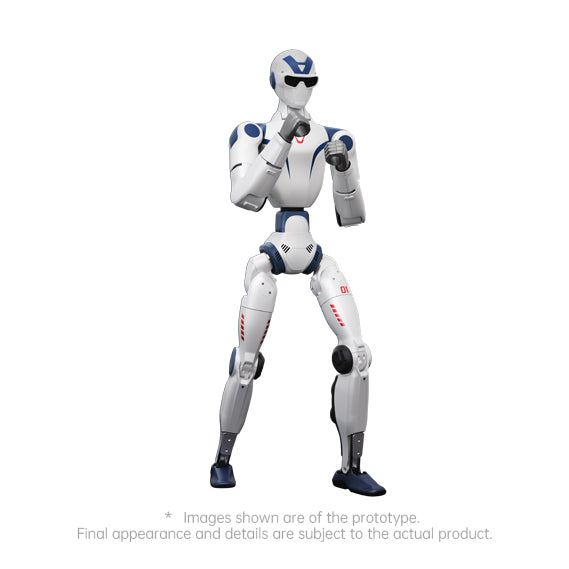 Unitree Robotics Unitree R1 | 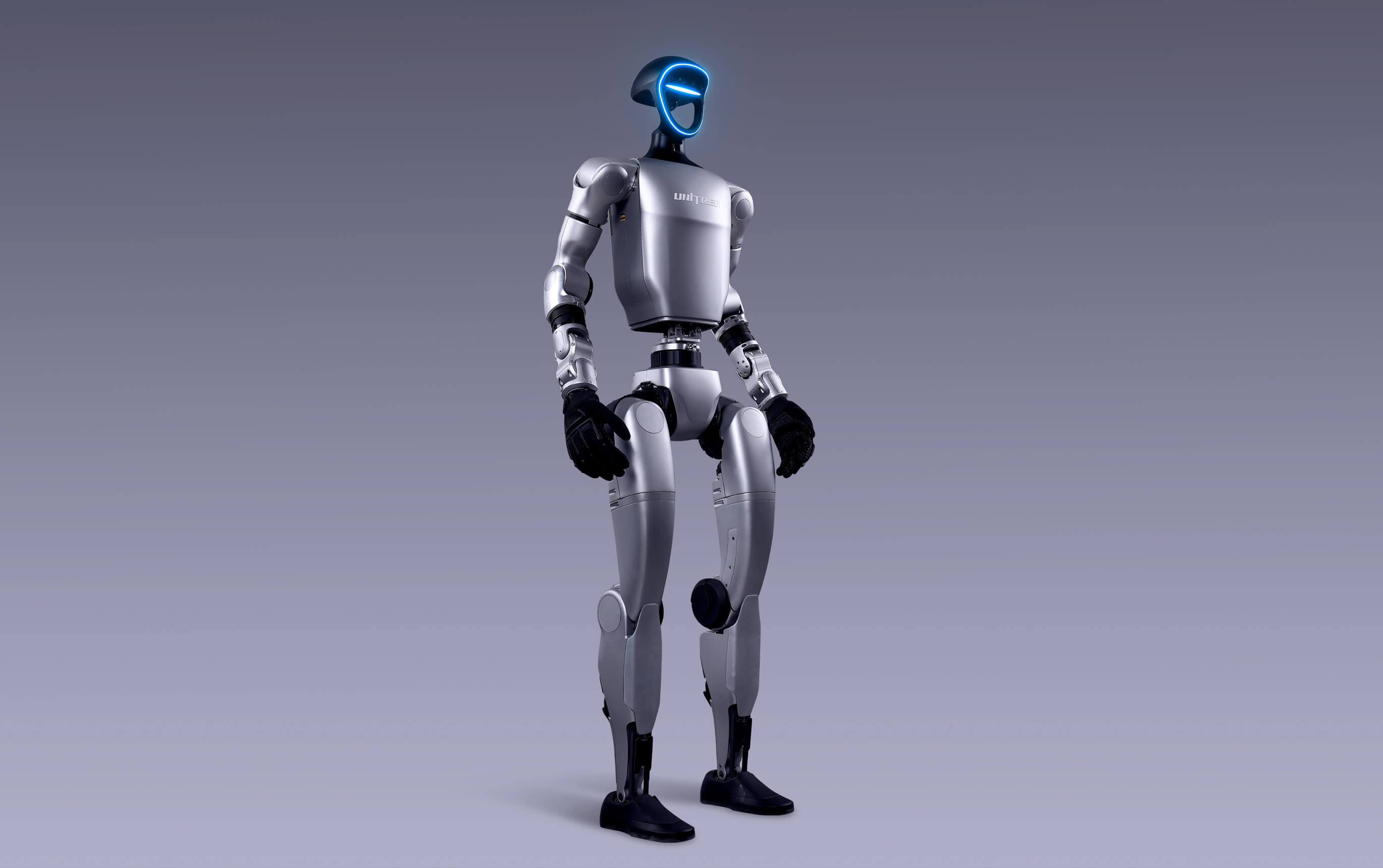 Unitree Robotics Unitree G1 | 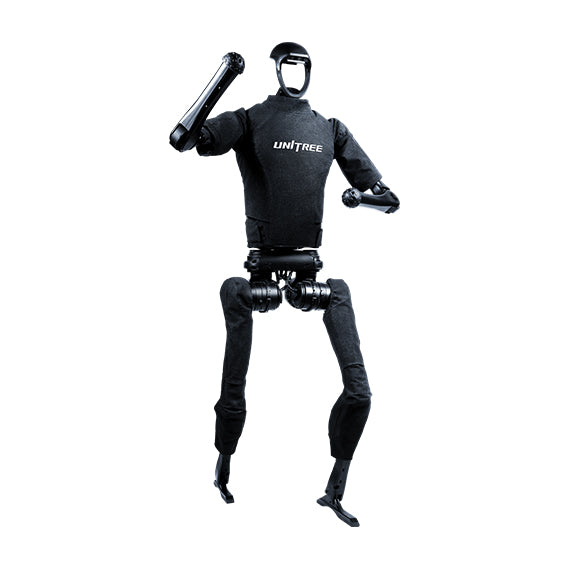 Unitree Robotics Unitree H1 | |
|---|---|---|---|---|
| Price (US) | No price published by XPeng in any market | $4,900 – $5,900 | $13,500 – $73,900 | ~$90,000 |
| Availability | Enterprise inquiry | On the market | On the market | On the market |
| Height | 178 cm | 1.23 m | 1.32 m standing | ~1.80 m |
| Payload | Unknown | Unknown | Arm ~2 kg | Not rated for H1 |
| DoF | 76 | 20 | 23 | ~19 |
| Buyer | Enterprise | Individuals | Individuals | Enterprise |
| Made in | China | China | China | China |
Every spec, grouped & sourced
Tap a group to expand. Values are labelled official vs third-party; unknowns are omitted, not guessed.
Body & movement▾
Power & endurance▾
Hands & senses▾
Brains & control▾
Claims vs evidence
XPENG Physical World Large Model (VLT+VLA+VLM); 2,250 TOPS per XPeng's Aug 2026 materials (the 3,000 TOPS figure is the four-chip G7 robotaxi configuration)
Where it's working
Planned: XPENG showrooms/factories (late 2026); Baosteel inspection pilot; none operational yet
Intended use cases: Commercial service: tours, retail/shopping guidance, reception, crowd guidance, security patrol, industrial inspection
What owners, reviewers and the press say about the XPENG IRON
Ratings and reception gathered from where this machine is actually sold and discussed. We summarise the signal — we don't republish anyone's reviews.
IRON is a manufacturer prototype aimed at a 2026 production target; it has never been sold, and no rating platform lists it.
- South China Morning Post — reported the founder unzipping the robot's skin on stage in 2025 to disprove claims of a human inside · 2026-08-30
- Mashable — saw the unit up close at a private demo after the viral episode and treated it as real hardware, 2025 · 2026-08-30
+Reviewers consistently praise
- the most natural-looking walk of any humanoid, which is exactly why people assumed it was a person
- solid-state battery and in-house silicon interest the technically inclined
- willingness to prove the hardware live
!And consistently criticise
- a meaningful share of the audience still does not believe the demonstration
- upper body and arms called stiff and disconnected from the impressive legs
- read as marketing rather than capability
- an on-stage fall in early 2026 deflated much of the earlier awe
What owners and developers actually say
For a few days in November 2025 IRON was the loudest robot on the internet, and the noise was an argument about whether a human was inside it — one clip reached tens of thousands of upvotes and thousands of comments in a general-interest community. Cutting the leg open on stage is generally conceded to have been effective theatre, and backhandedly the highest compliment the crowd could pay, but the argument never fully resolved: a persistent objection holds that the calf shown in the walking footage does not match the leg that was opened. Expert engagement is close to zero — one unstarred third-party repository, effectively nothing on Hacker News.
r/robotics, general-interest subreddits, investor subreddits · as of 2026-08-30
Consensus drawn from two named outlet close-ups, around eight comparison and explainer videos (largest roughly 372K and 201K views), and viral community threads reaching tens of thousands of upvotes with thousands of comments.
XPENG IRON: the claims, checked
demo only
Zero units delivered to any customer as of 30 August 2026. XPeng's own 25 August 2026 release places mass production at end-2026, initial deployment into its own stores and campuses after that, and official launch with deliveries in China and overseas in 2027. The Guangzhou factory broke ground in Q1 2026. Every public demonstration to date has been staged by XPeng.
as of 2026-08-30
- false“There was a human in a suit inside the XPENG IRON”
On 6 November 2025 He Xiaopeng posted a single-take video showing the robot's back unzipped to expose the mechanical torso, and later that day engineers cut open its leg with scissors on stage while it stood powered on, revealing actuators, wiring and metal joints.
- misleading“XPeng cut the robot open on stage at AI Day”
AI Day was 5 November 2025 in Guangzhou. The leg-cutting happened at a separate event on 6 November, after the unzipping video posted that morning. Most coverage compresses the two days into one.
- false“The XPENG IRON costs about $150,000”
XPeng has never published a price. The figure traces to an uncited robotics blog post of 28 April 2025 whose spec table is wrong on several counts, and it spread through aggregator sites from there.
- false“You can buy an XPENG IRON now for $120,000”
Those listings are unauthorised marketplace pages. XPeng has no dealer channel, no pre-order programme and no distributor anywhere, and has delivered zero units to any customer as of 30 August 2026.
- false“IRON has 3,000 TOPS of computing power”
Each XPeng Turing chip delivers 750 TOPS effective and IRON carries three, giving 2,250 TOPS. The 3,000 figure corresponds to the four-chip G7 robotaxi configuration. XPeng's own English release of 5 November 2025 said 3,000, but every XPeng source since — including 24 and 25 August 2026 — says 2,250.
- unverified“IRON is 178 cm tall and weighs 70 kg”
Those figures are verified for the earlier IRON detailed in April 2025, which had 62 active degrees of freedom. XPeng has never published height or weight for the November 2025 next-generation robot; press figures range from 173 to 178 cm and 65 to 70 kg.
- unverified“XPeng released the IRON SDK to global developers”
He Xiaopeng announced the intention on 5 November 2025, and some coverage reported it as released. No SDK download, developer portal, API documentation, repository or licence could be located as of 30 August 2026, and XPeng's own press releases do not mention an SDK.
- unverified“IRON is deployed at Baosteel doing industrial inspection”
Baosteel's chairman Zou Jixin announced the intention on stage at AI Day on 5 November 2025. In the ten months since, no installation date, unit count, task scope or result has been published by either company.
- unverified“XPENG IRON enters mass production in 2026”
It remains XPeng's stated target, reaffirmed on 24 and 25 August 2026, but nothing has shipped, the factory only broke ground in Q1 2026, and XPeng defines the milestone as capacity plus internal deployment. Customer deliveries are a 2027 commitment.
- false“The IRON XPENG token gives you exposure to the robot”
That is a Solana memecoin with a market capitalisation in the low thousands of dollars and no connection to XPeng. The robotics unit, Dogotix, is private and roughly 82% owned by XPeng.
XPENG in 2026
XPeng reported second-quarter 2026 revenue of 19.74 billion yuan on 24 August 2026, up 8% year on year, on 103,295 vehicle deliveries that were essentially flat against a year earlier. Gross margin improved to 20.7% but vehicle margin slipped to 12.1% from 14.3%, and net loss nearly tripled to 1.34 billion yuan. Cash stood at 40.48 billion yuan. The shares fell about 7% on the day. The robotics division has been carved out as a separate company, Dogotix, which announced the day after that it had raised more than $900 million at a post-money valuation above $6.3 billion — led by IDG Capital with Gaorong Ventures and strategic money from Tencent and Alibaba, the largest single private round in China's embodied-AI sector. XPeng keeps around 82% and will spin the unit out over roughly eighteen months; the terms reportedly commit Dogotix to an IPO within seven years or a buyback. Dogotix's own 2025 net loss widened to 369 million yuan. Goldman Sachs noted that the robotics valuation equals roughly 53% of XPeng's market capitalisation, meaning the market is pricing a pre-revenue unit at more than half the company. The organisational picture is the weak point: the robotics product lead resigned on 5 June 2026, the robotics business head had already gone, He Xiaopeng named himself CEO of robotics around 10 June, and the AI infrastructure chief left for OpenAI around 20 July.
What to watch next
- End of 2026 — XPeng's stated mass-production milestone, defined as capacity plus internal deployment rather than customer deliveries
- Q1 2027 — reported target for IRON working as a sales assistant across XPeng's China showrooms
- Q2 2027 — reported expansion into XPeng's overseas retail footprint; note the US is not part of it
- 2027 — official launch and first customer deliveries in China and overseas, per XPeng's 25 August 2026 release
- 2028 — reported target for entering households
- 1 January 2028 — deadline for conditional-approval applications under the FCC rule; XPeng has neither filed nor commented publicly
- Watch whether XPeng publishes an autonomy benchmark or intervention rate for IRON, which it has never done
- Watch for an actual IRON SDK portal, licence or repository — announced in November 2025 and still absent
- Watch Dogotix's IPO clock: the financing reportedly requires a listing within seven years or a buyback
Should you consider the XPENG IRON?
IRON is a genuine piece of engineering wrapped in a product that does not exist yet. The robot is real — XPeng settled that by cutting it open on camera in November 2025 — and the hardware claims are ambitious: 76 body degrees of freedom, 21 per hand, three in-house chips at 2,250 TOPS, an industry-first solid-state battery. What is missing is everything on the commercial side. No price has ever been published, nothing has shipped, the Baosteel pilot is still an announcement ten months on, the promised SDK has no portal, and the July 2026 FCC action means a US buyer has no legal route at all. XPeng meanwhile raised over $900 million for the robotics unit at a $6.3 billion valuation while losing three senior robotics leaders in three months. Follow IRON if you are pricing the sector or benchmarking hand dexterity. Do not plan an operation around it, do not believe a $150,000 figure that nobody sourced, and do not send money to any site claiming to have one in stock.
Score reflects stated criteria (availability, data confidence, US relevance) — not hands-on testing or user ratings. We're an independent review & comparison site; we don't sell robots. *Financing figure is illustrative.
How we know this
Data confidence 62/100 · last verified 2026-08-30. Specs are labelled official vs third-party and dated; unknowns are omitted, not guessed.
XPENG IRON — your questions, answered in full
How much does the XPENG IRON robot cost?+
XPeng has never published a price, in any market, as of 30 August 2026. The $150,000 figure that appears everywhere traces to an uncited blog post from April 2025 and has no XPeng source behind it. The only official signal is management guidance that hardware gross margin will exceed the 12.1% vehicle margin XPeng recorded in Q2 2026.
Why is there no price for the XPENG IRON?+
Because nothing is on sale. XPeng's stated sequence is mass production at the end of 2026, then deployment into its own stores, then launch with customer deliveries in 2027 — a price normally arrives with an order path, and IRON has neither. The company has only ever discussed cost (He Xiaopeng: manufacturing cost could eventually approach that of a car) and margin (Q2 2026 call, 24 August 2026: hardware gross margin above its 12.1% vehicle margin). XPeng has never named a date for announcing a price.
Are XPENG robots real?+
Yes. The human-in-a-suit accusation after the November 2025 demo was answered within a day: He Xiaopeng posted a single-take video of the robot's back being unzipped to show the mechanical torso, and engineers later cut its leg open on stage with scissors while it was powered on.
Can I buy an XPENG IRON?+
No. There is no pre-order, no deposit, no dealer and no distributor anywhere in the world. XPeng's own product pages state they exist for technical demonstration purposes only. Any site showing stock or a cart button for IRON is unauthorised and cannot deliver a robot.
When will the XPENG IRON be released?+
XPeng targets mass production by the end of 2026, then deployment into its own stores and campuses, then official launch with deliveries in China and overseas during 2027. Reported plans put showroom units in Q1 2027, overseas retail in Q2 2027 and households in 2028.
How many degrees of freedom does the XPENG IRON have?+
76 across the body and 21 in each hand, per XPeng's materials from 24-25 August 2026. Its November 2025 release said 82 body DOF and a 22-DOF hand. XPeng has not explained the change, and part of it may be a counting convention around whether hands are included in the body total.
How tall is the XPENG IRON?+
Unknown for the current generation. The widely quoted 178 cm and 70 kg are verified for the earlier IRON detailed in April 2025, which had 62 active degrees of freedom. XPeng has never published height or weight for the November 2025 robot; press figures span 173 to 178 cm and 65 to 70 kg.
Can the XPENG IRON be sold in the US?+
Not on its current timeline. FCC Public Notice DA 26-786 of 28 July 2026 added foreign-produced advanced robotic devices to the Covered List, blocking new equipment authorisations. The test is country-neutral — it turns on US manufacture and domestic component content — and models authorised before that date are grandfathered. IRON never held an authorisation because it never launched commercially, so it missed the window; the remaining route is a case-by-case conditional approval.
XPENG IRON vs Tesla Optimus — which is further ahead?+
Neither has shipped to a customer. IRON has the more impressive public hardware demonstration and a firmer stated timeline; Optimus has a target price of $20,000-$30,000 and a US manufacturing base that keeps it outside the FCC rule. As of mid-August 2026 Optimus's third generation had not been revealed and production had not been announced as started.
Does the XPENG IRON have a solid-state battery?+
XPeng claims an industry-first application of all-solid-state batteries in a humanoid, stated in its November 2025 release. No runtime figure has been officially published for the current generation, and the roughly four hours quoted on aggregator sites traces to the earlier robot.
Is the XPENG IRON autonomous or teleoperated?+
XPeng claims on-device autonomy through its physical world large model and VLA 2.0, and has never said any demo was teleoperated. No third party has verified or refuted it, and XPeng has published no benchmark, intervention rate or long-duration unattended run. Treat the autonomy claim as unverified rather than false.
Can developers program the XPENG IRON?+
Not today. An SDK for global developers was announced on 5 November 2025, but no download, portal, documentation, repository or licence exists as of 30 August 2026, and XPeng's own press releases do not mention it. Any developer access will likely track the 2027 commercial launch.
Should I wait for the XPENG IRON or buy a Unitree?+
If you need a robot, buy something you can take delivery of. Unitree's G1 at $13,500 and H2 at $29,900 are purchasable with pre-ban FCC authorisations in hand. IRON has no price, no channel, no shipped unit and no US legal path, and its first external deliveries are a 2027 promise.