Flourish 1 Home Robot
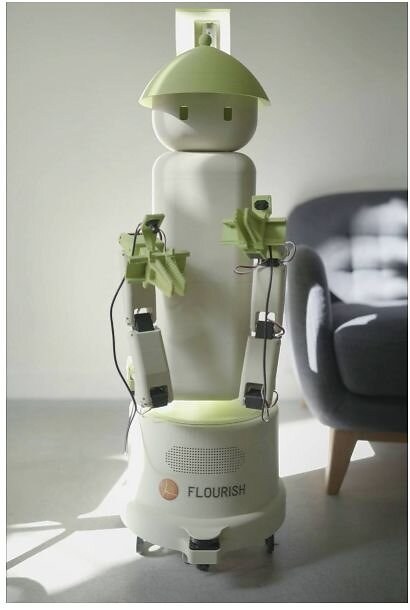
Flourish 1 is a $3,555 wheeled home robot with two arms, sold on pre-order in the US since 29 September 2026. Only 50 numbered units are on offer, deliveries are scheduled to start in December 2026, and owners teach it chores through a phone app. It lifts about 1.5 kg and is slow by design.
US buyers: reservable now for December delivery, but Flourish has not said where the robot is built - ask for the FCC ID before final payment.
Flourish Robots is a San Francisco company selling directly to US households, and launch coverage described the first 50 units as a US sale. The FCC Covered List entry of 28 July 2026 is country-neutral, though: a robot counts as domestic only if manufactured in the US with more than 65 percent domestic component cost, and anything else needs an FCC equipment authorization or a Department of War conditional approval. Flourish has not published its manufacturing location or an FCC ID as of 13 Nov 2026. The $200 deposit is refundable until shipping, so the practical advice is to reserve if interested and confirm the authorization before the balance is due.
No shipping regions outside the US have been published, despite the company's Paris presence.
As of 2026-11-13 · medium confidence — verify before you commit funds
What is the Flourish 1 Home Robot?
Flourish 1 is the cheapest two-armed home robot a US household can reserve: $3,555, taught by phone, shipping from December 2026.
Flourish 1 is the first product of Flourish Robots, a San Francisco startup with a Paris presence that came out of stealth on 29 September 2026. It is a waist-high-to-chest-high machine on wheels, with two arms on a torso that rises and lowers, and it costs $3,555. That is roughly a sixth of what 1X asks for NEO.
The pitch is narrow on purpose. The company is not claiming a general-purpose butler. It is selling a robot that picks shoes, clothes and toys off the floor, wipes a table, loads a dishwasher, waters plants and scoops a litter box, after the owner has shown it how once. Founder and CEO Antoine Marcel has been open that it is slow and that its grippers are basic.
This page covers what the company has published, what launch coverage added, what is still missing, and what a US buyer is actually committing to with a deposit. Everything here is as of 13 November 2026, when no Flourish 1 had yet been delivered to a customer.
What the Flourish 1 can — and can't — do today
+Does this out of the box
- Pick up light items such as shoes, clothes and toys from the floor (company demonstration)
- Wipe tables and counters, water plants and fetch small objects within its 35-inch reach
- Load items into a dishwasher and scoop a cat litter box (company claim)
- Learn a new chore from one phone-guided demonstration in about 30 minutes, with no coding
- Run taught chores on a schedule or on voice request
- Run up to 12 hours per charge (manufacturer claim)
!Doesn't do, whatever the demo shows
- Climb stairs or work on more than one floor without being carried
- Lift more than 3.3 lb (1.5 kg), or handle breakable objects
- Work near water or outdoors
- Fold laundry, cook or do tasks it has not been taught
- Move quickly - the company and reviewers describe it as slow
- Ship before December 2026; no customer deliveries confirmed as of 13 Nov 2026
What Flourish 1 is, physically
Strip away the soft-toy styling, the green hat-like head cover and the pastel colours, and Flourish 1 is a mobile manipulator: a round wheeled base, a vertical column that lifts the torso, and two arms that end in simple grippers. The company lists it at 3 ft 7 in tall and 44 lb. Its arms reach from the floor up to about 35 inches, which covers a kitchen counter, a coffee table and the bottom shelf of most cabinets but not a wall cupboard.
The lifting limit is 3.3 lb, or 1.5 kg. The official page does not say whether that is per arm or for both together; The Robot Report described it as per arm in its launch coverage. Either way it is small, and the company treats that as a feature, arguing a household robot does not need the strength of a factory machine and is safer without it. A full laundry basket, a cast iron pan or a filled watering can of any size are out.
For sensing, launch coverage lists cameras and a LiDAR unit, and says the arms stop moving when a person comes within reach. Flourish has not published a degrees-of-freedom count, a top speed, battery capacity or the exact camera layout. The 12-hour runtime is a company figure that nobody outside the company has been able to test yet.
How teaching by phone works
The central idea is that the owner, not the company, decides what the robot does. To add a chore you guide the robot through it once while recording with the phone app, which takes about 30 minutes according to the company, and needs no code. After that the robot can repeat the task on command or on a schedule, for example counters after dinner or the litter box at 11 every morning. Tasks that another owner has already taught can be installed in about five seconds, which suggests Flourish is building a shared library of skills.
Under the hood, the company says it fine-tunes existing open AI models to each home, its objects and its routines, instead of trying to train one model that works everywhere. Coverage has also described the onboard compute as Raspberry Pi based, which goes some way to explaining the price. The trade-off is obvious enough: a robot taught one routine in one room is not going to improvise a new one in a different room, and Flourish has not published success rates for taught tasks.
Voice requests are part of the package too. The official page gives examples such as fetching a drink or setting a reminder, and lists morning routines like putting shoes away, refilling a pet's water bowl and reading out the weather.
The price, and what it does not include
The headline price is $3,555 for one of the first 50 units, each numbered 01 to 50. As of 13 November 2026 the official page takes a $200 deposit at checkout and says it is fully refundable until shipping. Some coverage from early October quoted a $1,555 deposit; the lower figure is what the company shows now.
The robot price is not the whole cost. Flourish includes six months of cloud AI compute, after which it charges an optional $50 a month. The alternative is to run the models on your own GPU, which is a realistic choice only for technically confident buyers. Over three years the cloud option adds $1,500 to the bill, so the honest comparison price is closer to $5,000 for someone who keeps the subscription.
No warranty terms, repair policy or shipping charges were published on the product page when we checked. Those are worth asking about in writing before the deposit converts into a full payment, especially for a first product from a company that has disclosed only a pre-seed round.
Where it sits among home robots
Flourish 1 is the cheapest robot with two arms and a humanoid upper body that a US household can currently reserve. The comparisons that matter are 1X NEO at $20,000 or $499 a month, Weave Isaac 1 at $7,999 or $449 a month, and SwitchBot's onero H1, listed at $9,999 but still marked coming soon. Unitree's R1 is cheaper to buy but is a developer platform, not a chore robot.
What Flourish gives up to reach its price is clear. It has no legs, no dexterous hands, a very low payload and modest speed. NEO and Isaac aim at broader tasks and back them with remote human operators when autonomy runs out. Flourish takes the opposite route: fewer tasks, taught by the owner, and no remote pilot in the loop according to launch coverage. Whether that is a better bet depends on which chores you actually want gone. For tidying floors and wiping surfaces it might be enough, for laundry folding it is not designed at all.
Safety, children, pets and privacy
A robot that is sold to parents and pet owners has to be safe around small bodies that do not follow instructions. Flourish's main argument here is physical: at 44 lb with arms that lift at most 1.5 kg, the machine simply cannot exert much force. Launch coverage also reports that the arms halt when a person enters their reach, using the cameras and LiDAR. No third-party safety certification has been announced, and the company has not said how the base behaves if a toddler leans on it or a dog blocks its path.
Privacy is the larger open question. Teaching works by recording demonstrations on a phone, and the default setup runs AI models in the cloud for the first six months. That means images of the inside of your home leave the house unless you choose the run-it-yourself GPU route. The product page links a general privacy policy but, when we checked on 13 November 2026, gave no robot-specific detail on what footage is stored, for how long, or whether shared tasks carry any images from the home where they were taught.
None of that is unusual for a launch-stage product, it is just worth knowing before you put a camera-equipped machine in a child's bedroom. Asking the company directly is reasonable, and the founders advertise a direct line for exactly that kind of question.
Who is behind it
Flourish Robots is led by founder and CEO Antoine Marcel, described in the launch announcement as a repeat founder with a previous exit. The pre-seed round was led by Families Fund, founded by Kartik Sathappan; the amount was not disclosed. The company is headquartered in San Francisco with a presence in Paris, according to launch coverage.
That is a thin financial base for a hardware company, which is one reason the first batch is limited to 50 units. Small, numbered first runs are a common way for young robot makers to collect real-world data and feedback before committing to tooling for larger volumes. It also means delays are possible and buyers should treat December 2026 as a target rather than a promise.
US buyers and the July 2026 FCC rule
Flourish is an American company selling to American homes, but that alone does not settle its status under the FCC Covered List entry of 28 July 2026. The rule is country-neutral: a mobile robot counts as domestic only if it is manufactured in the US with more than 65 percent domestic component cost. A robot designed in San Francisco but assembled from imported parts, or built abroad, is treated as foreign-produced and needs an FCC authorization or a conditional approval before it can be sold.
Flourish has not said where Flourish 1 is built or what share of its parts are domestic, and we found no published FCC ID for it as of 13 November 2026. That does not mean there is a problem, only that the question is open. Buyers can reasonably ask the company for the FCC ID before final payment.
What is still unknown
The list is long, which is normal for a product announced six weeks ago. Flourish has not published a degrees-of-freedom figure, top speed, battery capacity, gripper force, noise level, warranty terms or a privacy policy specific to the robot's cameras and recordings. There are no independent hands-on tests, no task success rates and no confirmed customer deliveries.
The things to watch in December are simple: whether the first numbered units ship on time, whether owners can teach tasks in roughly the time claimed, and whether taught chores hold up when a shoe lands in a slightly different place. We will update this page when the first deliveries are confirmed.
The Flourish 1 on video
Hands-on reviews and teardowns, picked for what they actually show rather than how loud the thumbnail is.
Launch-day coverage from a robotics trade publication, showing the robot moving and stating the US price and the 50-unit first batch.
Founder Antoine Marcel explains the low-price, teach-it-yourself approach in his own words.
Who the Flourish 1 is — and isn't — for
+Where it shines
- You can actually buy or reserve it as an individual, at a consumer price.
- Among the most affordable humanoids on the market right now.
- US-based company, with local support.
- Open developer access (SDK/API) — good for builders and labs.
!Watch-outs
- Early-stage product — expect rapid spec changes.
How the Flourish 1 stacks up
Side by side with similar robots — the one you're reading about is highlighted.
| This robot Flourish Robots Flourish 1 | 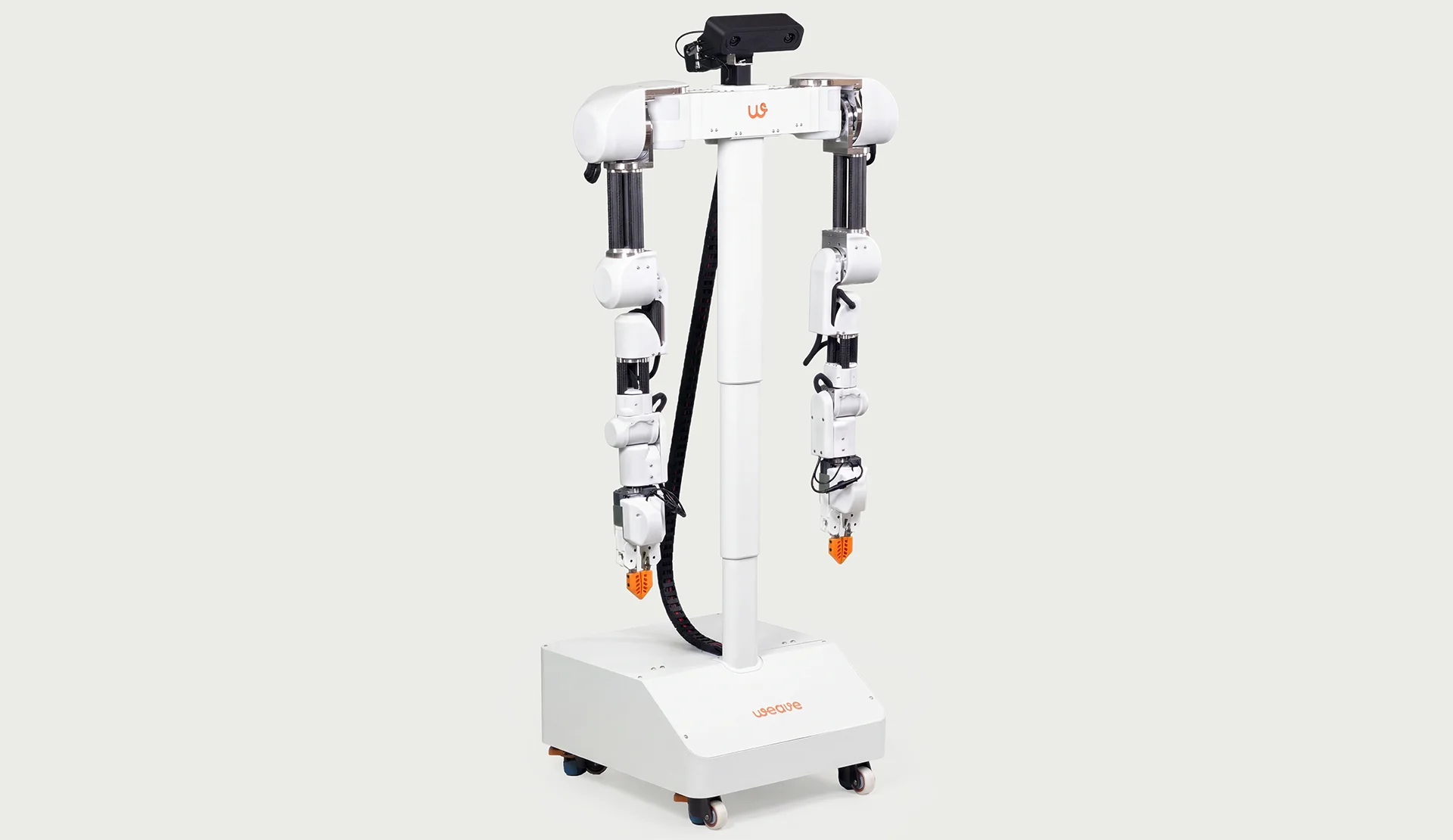 Weave Robotics Weave Isaac | 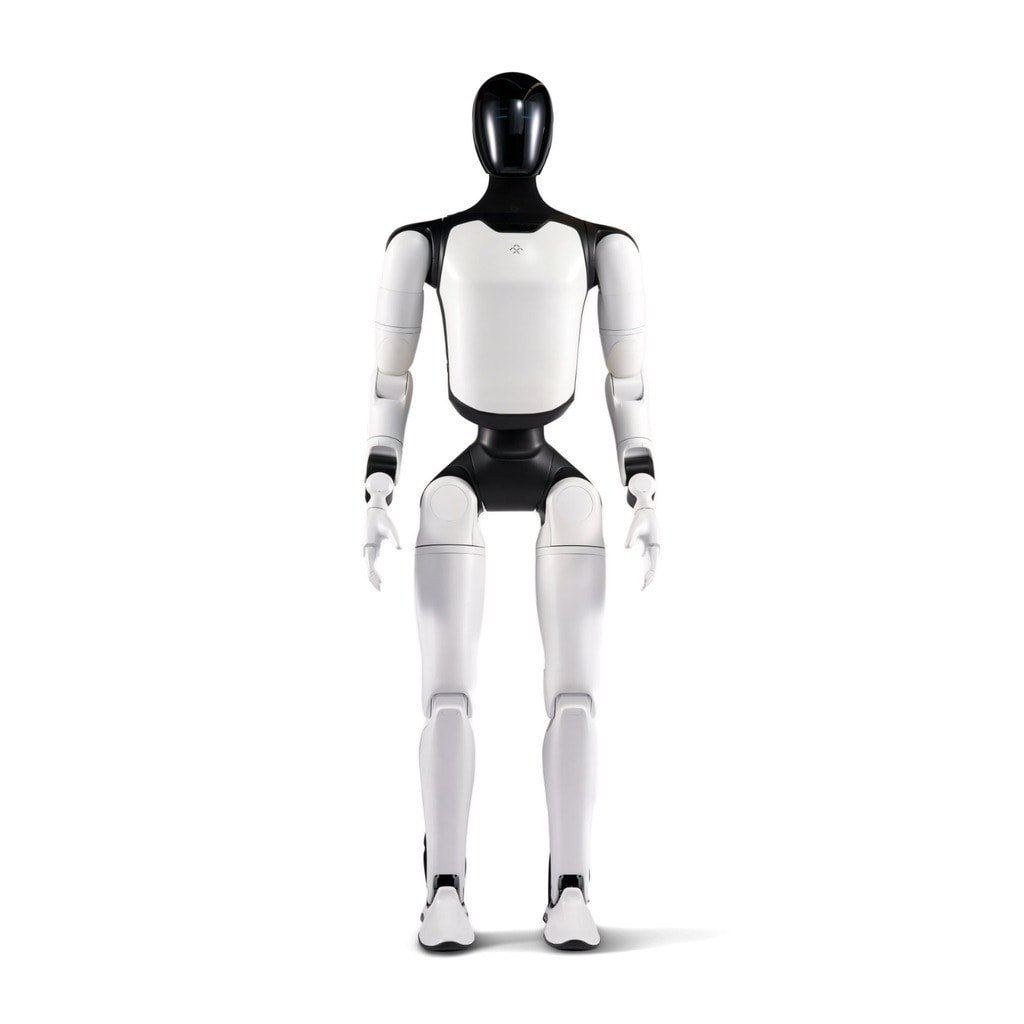 Faraday Future Faraday Future All-New Futurist |  1X Technologies 1X NEO | |
|---|---|---|---|---|
| Price (US) | ~$3,555 | $3,999 – $7,999 | ~$89,900 | ~$20,000 |
| Availability | Reservations open | On the market | On the market | Reservations open |
| Height | 3 ft 7 in | Isaac 1: telescoping, 3 ft to 5 ft 9 in | 1.73 m | ~1.68 m |
| Payload | 3.3 lb | Unknown | Not officially specified; peak knee-joint torque quoted at 320 Nm | Carry 25 kg |
| DoF | Not | Isaac | 31 | Hands |
| Buyer | Individuals | Individuals | Enterprise | Individuals |
| Made in | US | US | US | US |
What the Flourish 1 costs — and how to get one
Official pre-order price for the first 50 numbered units, 13 Nov 2026; optional $50/month cloud compute after six months not included
Direct consumer pre-order on the company website
Leasing / RaaS: No lease or rental. Optional $50/month cloud compute after the first six months
Every spec, grouped & sourced
Tap a group to expand. Values are labelled official vs third-party; unknowns are omitted, not guessed.
Body & movement▾
Power & endurance▾
Hands & senses▾
Brains & control▾
Claims vs evidence
Owner teaches a chore once by demonstrating it through a phone app (about 30 minutes, no code), or installs a task someone else has taught (about 5 seconds). The company says it fine-tunes existing open models to each home rather than relying on one general model, and that taught tasks then run autonomously and can be scheduled. Launch coverage described the compute as Raspberry Pi based
Where it's working
None public. The company has shown demonstration footage only; no customer homes confirmed as of 13 Nov 2026
Intended use cases: Light, repetitive household chores taught by the owner: picking up shoes, clothes and toys, loading a dishwasher, wiping tables, watering plants, fetching items, scooping a cat litter box, refilling a pet water bowl, plus scheduled reminders and voice requests
Should you consider the Flourish 1?
Flourish 1 is the most affordable way for a US household to reserve a two-armed home robot in late 2026, and the company is unusually candid about its limits: slow, weak, simple grippers, one floor. Treat it as an early-adopter device for floor tidying and surface wiping, not a housekeeper. The $200 refundable deposit makes reserving low-risk; the real test is whether the first 50 units ship in December and whether taught chores hold up in messy homes.
Score reflects stated criteria (availability, data confidence, US relevance) — not hands-on testing or user ratings. We're an independent review & comparison site; we don't sell robots. *Financing figure is illustrative.
How we know this
Data confidence 62/100 · last verified 2026-11-13. Specs are labelled official vs third-party and dated; unknowns are omitted, not guessed.
Flourish 1 — your questions, answered in full
How much does Flourish 1 cost?+
$3,555 for one of the first 50 numbered units, as of 13 November 2026. The checkout takes a $200 deposit that the company says is refundable until shipping. Six months of cloud AI compute are included, then it is an optional $50 a month.
When will Flourish 1 ship?+
The company says deliveries begin in December 2026. As of 13 November 2026 no unit had been delivered to a customer, and only 50 units are in the first batch.
Is Flourish 1 a humanoid robot?+
Partly. It has a humanoid upper body with two arms and a head, but it rolls on a wheeled base instead of walking. That puts it in the same wheeled-humanoid group as Weave Isaac and SwitchBot onero H1.
What chores can Flourish 1 do?+
The company lists picking up shoes, clothes and toys, loading the dishwasher, wiping tables, watering plants, fetching items and scooping a litter box. Each chore has to be taught once by the owner through the phone app, unless someone has already shared it.
Does a remote person control Flourish 1?+
Launch coverage reported that taught tasks run autonomously, without remote operators, and the company has not announced a remote-assistance service. That is different from 1X NEO, which uses an optional remote operator mode.
Can Flourish 1 carry heavy things or climb stairs?+
No. Its lifting limit is 3.3 lb (1.5 kg) and it moves on wheels, so it stays on one floor. The company also says it should not handle breakable objects or be used around water.
Is Flourish 1 available outside the US?+
The company has not published shipping regions. Launch coverage described the first 50 units as going on sale in the US, and Flourish has not announced a European launch despite its Paris presence.