Noetix Bumi (Boomy) Humanoid Robot
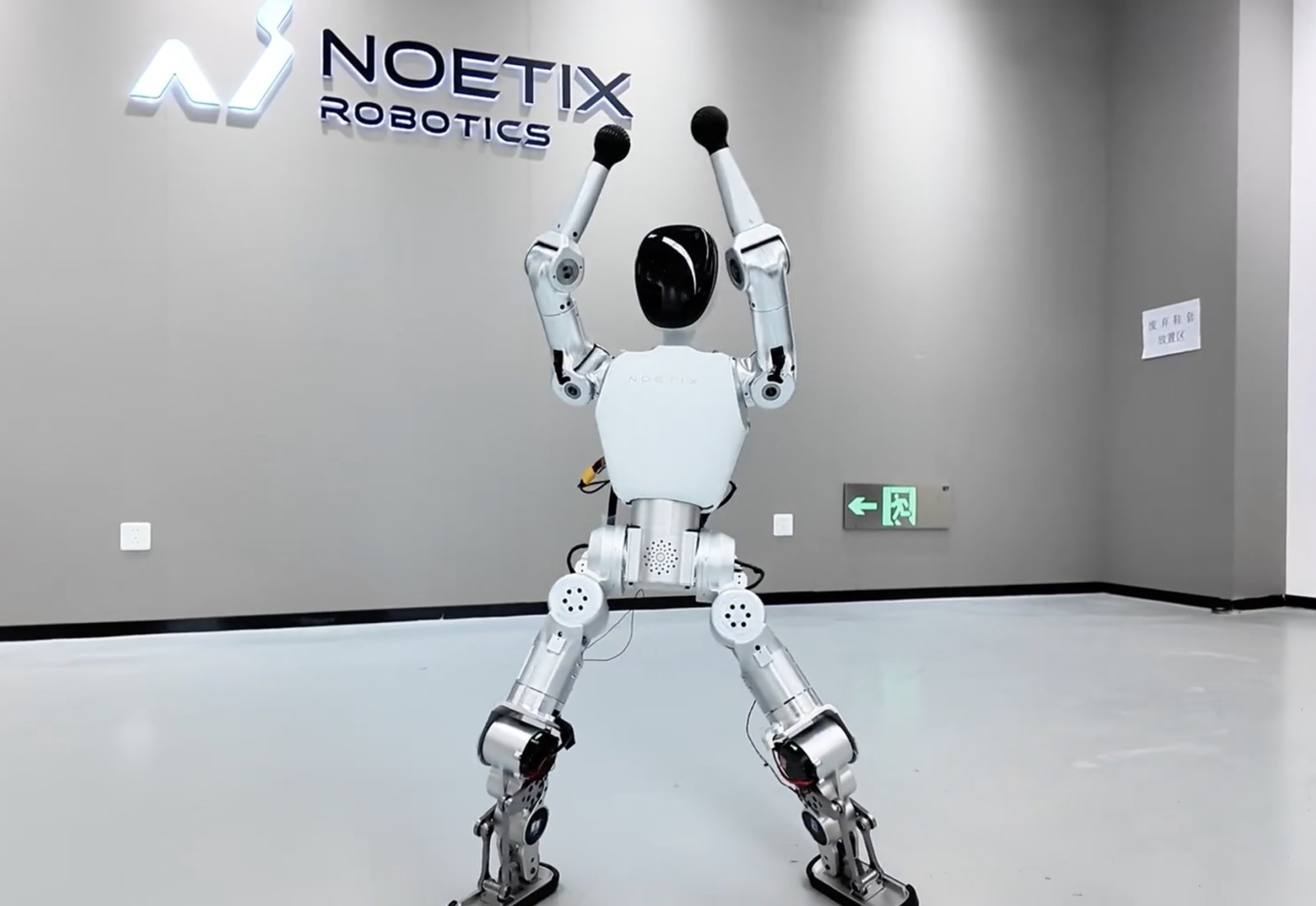
Bumi is a 94 cm, 12 kg walking humanoid from Beijing's Noetix Robotics, sold in China since late 2025 for RMB 9,998, about $1,400. It is a programmable companion and teaching robot, not a chore robot. For the US it is being relaunched as Boomy via a Kickstarter marked coming soon as of 13 November 2026.
US buyers: no direct sale yet - the Boomy Kickstarter is coming soon, and resellers charge about four times the China price. Confirm the FCC ID first.
Noetix sells Bumi in China at RMB 9,998 and is preparing an international Kickstarter under the Boomy name, which had not opened as of 13 Nov 2026. A US reseller lists Bumi Standard at $5,995. The FCC Covered List entry of 28 July 2026 is country-neutral and applies to foreign-produced mobile robots over 4.4 lb with AI control and wireless connectivity; Bumi, at about 12 kg, falls inside it. New units can be lawfully imported and sold only under an FCC equipment authorization granted before 28 July 2026 or a Department of War conditional approval. We found no published FCC ID for Bumi or Boomy, so the status cannot be confirmed. Units already in the US are unaffected.
On sale in China through retail and education partners. Noetix has named Europe, the Middle East, Southeast Asia, Japan and South Korea as overseas targets; the Boomy campaign is expected to be the first official route.
As of 2026-11-13 · medium confidence — verify before you commit funds
What is the Noetix Bumi (Boomy) Humanoid Robot?
Noetix Bumi is the $1,400 walking humanoid from Beijing, a programmable family robot now heading abroad as Boomy.
Noetix Bumi made headlines in October 2025 as the first walking humanoid priced like a smartphone. At RMB 9,998, roughly $1,400, it undercut every other full-body humanoid on the market, and early sales reports from China suggested hundreds of units went in the first hours. A year later it is still the price benchmark for small consumer humanoids.
It is also easy to misread. Bumi is child-sized, has 21 joints and no grasping hands, and its jobs are walking, dancing, chatting and being programmed by kids. It will not tidy a room. That makes it a family robot in the sense of an educational toy with real robotics inside, not a household helper.
In autumn 2026 Noetix started showing an international version called Boomy, with an unboxing video at the end of October and a launch video on 11 November, and a Kickstarter page announced as coming soon. This page separates the China price from what US buyers can actually do today, as of 13 November 2026.
What the Noetix Bumi can — and can't — do today
+Does this out of the box
- Walk on two legs at up to 1 m/s and balance on flat indoor floors (manufacturer figure)
- Perform preset dances, gestures and routines, and record new motions posed by hand
- Hold voice conversations through a built-in language-model assistant
- Be programmed with drag-and-drop blocks, Python or C++, and through a ROS 2 SDK
- Be controlled from a phone app
- Run up to 3 hours per charge with swappable batteries (manufacturer claim for Boomy)
!Doesn't do, whatever the demo shows
- Grasp or carry household objects - it has no hands or grippers
- Do chores such as tidying, laundry or cleaning
- Climb stairs or handle rough outdoor ground reliably
- Be bought directly from Noetix in the US as of 13 Nov 2026 - only resellers or the upcoming Kickstarter
- Operate as an autonomous household assistant beyond scripted behaviours and conversation
What Bumi is, and what it is not
Physically Bumi is a scaled-down biped. Noetix gives the launch version a height of about 94 cm and a weight of about 12 kg, so it stands roughly as tall as a four-year-old. The company's own breakdown lists 21 active joints: six in each leg, four in each arm and one in the waist. That is enough for convincing walking, kicking, waving and dance routines, which is what most of the marketing shows.
What it lacks is hands. The arms end in simple fixed pieces rather than grippers or fingers, so Bumi cannot pick up a toy, open a cupboard or carry a cup. It is closer in spirit to a programmable robot kit than to 1X NEO or Figure 03. Anyone shopping for a robot to reduce housework should look elsewhere; anyone shopping for a robot a child can program, or that can greet visitors and dance at a party, is the target.
Noetix pitches it for programming education and companionship. Drag-and-drop graphical programming is built in for younger users, there is a teaching mode where you pose the robot by hand and it records the motion, and older users can write Python or C++. Its body shell uses composite materials rather than metal for much of the structure, which the founder has said is one of the ways the company kept the cost down. Leaving out hands altogether presumably helps too.
The specs Noetix has published
At launch Noetix described a 48 V battery of more than 3.5 Ah giving one to two hours of use. The Boomy page now claims up to three hours with fast battery swapping, and a walking speed of up to 1 m/s, both manufacturer figures. All versions carry an RGB camera, a microphone array and a speaker, and connect over Wi-Fi and Bluetooth with over-the-air updates.
There is more than one Bumi. Resellers list Pro and EDU Pro variants at 98 cm and 17 kg, with the EDU Pro adding an NVIDIA Jetson Orin Nano Super module, and the Boomy page describes an EDU version with an Intel RealSense D435i depth camera and low-level access for researchers. The China headline price applies to the basic version only.
On software, Noetix publishes a ROS 2 interface SDK for Boomy on its public code repository, and the Boomy page mentions a built-in voice assistant based on a large language model. The company also offers some exterior part files for 3D printing, so owners can redesign shells. Payload and joint torque for the standard version are not published, and runtime figures have not been independently tested.
Price: $1,400 in China, much more elsewhere
The RMB 9,998 price is real and has held since the October 2025 launch, according to coverage through October 2026. It is the reason Bumi gets compared with phones rather than with other robots. Noetix set a goal at the March 2026 AWE exhibition of selling more than 10,000 Bumi units in 2026, and its founder said orders jumped after Noetix robots appeared in that year's Spring Festival Gala on Chinese television. Actual 2026 delivery totals have not been published.
Outside China the picture changes. A US reseller lists Bumi Standard at $5,995 and an EDU Air version at $9,995 as of 13 November 2026. Those are reseller prices that we could not tie to an official Noetix US price list, and they include import, support and margin. The European robotics marketplace that lists the Pro variants showed no price and marked the product unavailable in the US. Boomy, the international version, had no published price on its pre-launch page.
The honest summary: expect the Kickstarter price, when it appears, to be the first official non-China price. Until then, anything above $1,400 is somebody's markup or an estimate.
Boomy: the international relaunch
Through 2026 Noetix said it wanted to sell abroad, naming North America, Europe, the Middle East, Southeast Asia, Japan and South Korea as target regions when it spoke at CES in January. The concrete step came in autumn. On 30 October 2026 the official channel posted an unboxing of Noetix Boomy, and on 11 November a launch video billed it as your first programmable humanoid robot.
The Boomy name appears to cover the same 21-joint platform: the joint layout on the Boomy page matches the Bumi specification, and the developer SDK is published under the Boomy name. The site invites visitors to join an email list ahead of a Kickstarter campaign. As of 13 November 2026 that campaign had not opened, so there is no confirmed US price, shipping date or reward tier.
Crowdfunding is a reasonable route for a first overseas consumer launch, though it shifts risk to backers. Kickstarter pledges are not purchases, and delivery dates on hardware campaigns often slip. Anyone backing should treat it as such.
How it compares with other small humanoids
Bumi sits in a crowded little corner of the market: kid-sized or compact humanoids sold to families, schools and hobbyists. The closest comparisons in our catalog are Unitree's R1, Booster's K1 and Noetix's own larger N2.
Unitree R1 is taller at up to 1.23 m and is sold internationally, with US prices we track from $4,900 for the R1 AIR to $5,900 for the standard R1 and more for EDU editions. Booster K1 is almost exactly Bumi's height at 95 cm and starts from about $4,999, rising to around $12,500 fully configured. Noetix N2 stands 118 cm and sells for about RMB 39,900, roughly $5,500. Against all three, Bumi's China price is a fraction, which is the whole story of the product.
The gap narrows sharply once you leave China. At the $5,995 reseller price Bumi costs more than an R1 AIR, and the R1 and K1 both have established overseas sales channels and developer communities. What Bumi offers in return is a gentler, child-oriented software layer with block programming and a hand-posing teaching mode, plus a design aimed at the living room rather than the lab.
None of these robots does housework. If that is the goal, compare wheeled two-armed machines such as Flourish 1 or Weave Isaac instead, they are built around grasping rather than walking.
The company behind it
Noetix Robotics was set up in Beijing in September 2023 by Jiang Zheyuan, who left a doctoral programme at Tsinghua University to start it. Its larger N2 humanoid came second in the 2025 Beijing humanoid half-marathon, and the company says its early focus was on the robot's body and motion control rather than on AI.
That has been shifting. Noetix began building a dedicated intelligence team in July 2025, and in September 2026 it launched an embodied-intelligence sub-brand called Scalabot along with a world-model architecture it calls HERON. Backers include Chendao Capital, an investment platform associated with battery maker CATL. In October 2026 Chinese media reported that Noetix had confidentially filed for a Hong Kong listing, possibly targeting 2027; the company has not confirmed a timetable.
In China it sells through retail partners including the maternity and baby chain Kidswant, and through education partner Codemao, and it has placed robots in schools.
Can a US family buy one, and should they?
Right now a US buyer has two paths: a third-party reseller at several times the China price, or waiting for the Boomy Kickstarter. There is a third consideration as well. Under the FCC Covered List entry of 28 July 2026, which is country-neutral, any mobile robot made outside the US with AI control and wireless connectivity needs an FCC equipment authorization granted before that date, or a conditional approval, to be lawfully imported and sold. At 12 kg Bumi is well over the 4.4 lb threshold. We could not find a published FCC ID for Bumi or Boomy as of 13 November 2026.
That does not prove there is none, but it is exactly the question to ask any seller before paying, especially a reseller. Units already in the country are unaffected.
As a product, Bumi is good value for what it is in China. For a US family the case is weaker today: the reseller price puts it near better-supported developer robots, and the cheaper Kickstarter route is not open yet. A family that mainly wants a programmable walking robot for a child might wait for the campaign; one that wants help around the house should not be looking at Bumi at all.
The Noetix Bumi on video
Hands-on reviews and teardowns, picked for what they actually show rather than how loud the thumbnail is.
The official international launch video for Boomy, posted two days before this page was written.
Shows the actual retail packaging and the robot out of the box, useful for judging size and build before the Kickstarter.
The most-watched clip of the original China launch, with the walking and dance demos that made Bumi known.
Who the Noetix Bumi is — and isn't — for
+Where it shines
- You can actually buy or reserve it as an individual, at a consumer price.
- Among the most affordable humanoids on the market right now.
- Open developer access (SDK/API) — good for builders and labs.
!Watch-outs
- Early-stage product — expect rapid spec changes.
How the Noetix Bumi stacks up
Side by side with similar robots — the one you're reading about is highlighted.
| This robot Noetix Robotics Noetix Bumi | 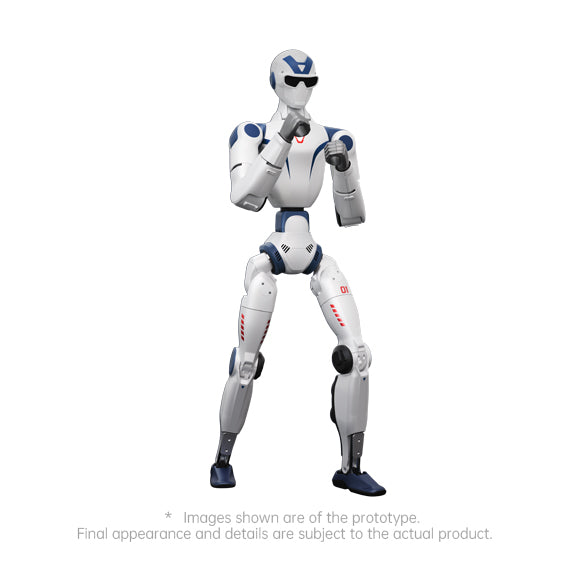 Unitree Robotics Unitree R1 | 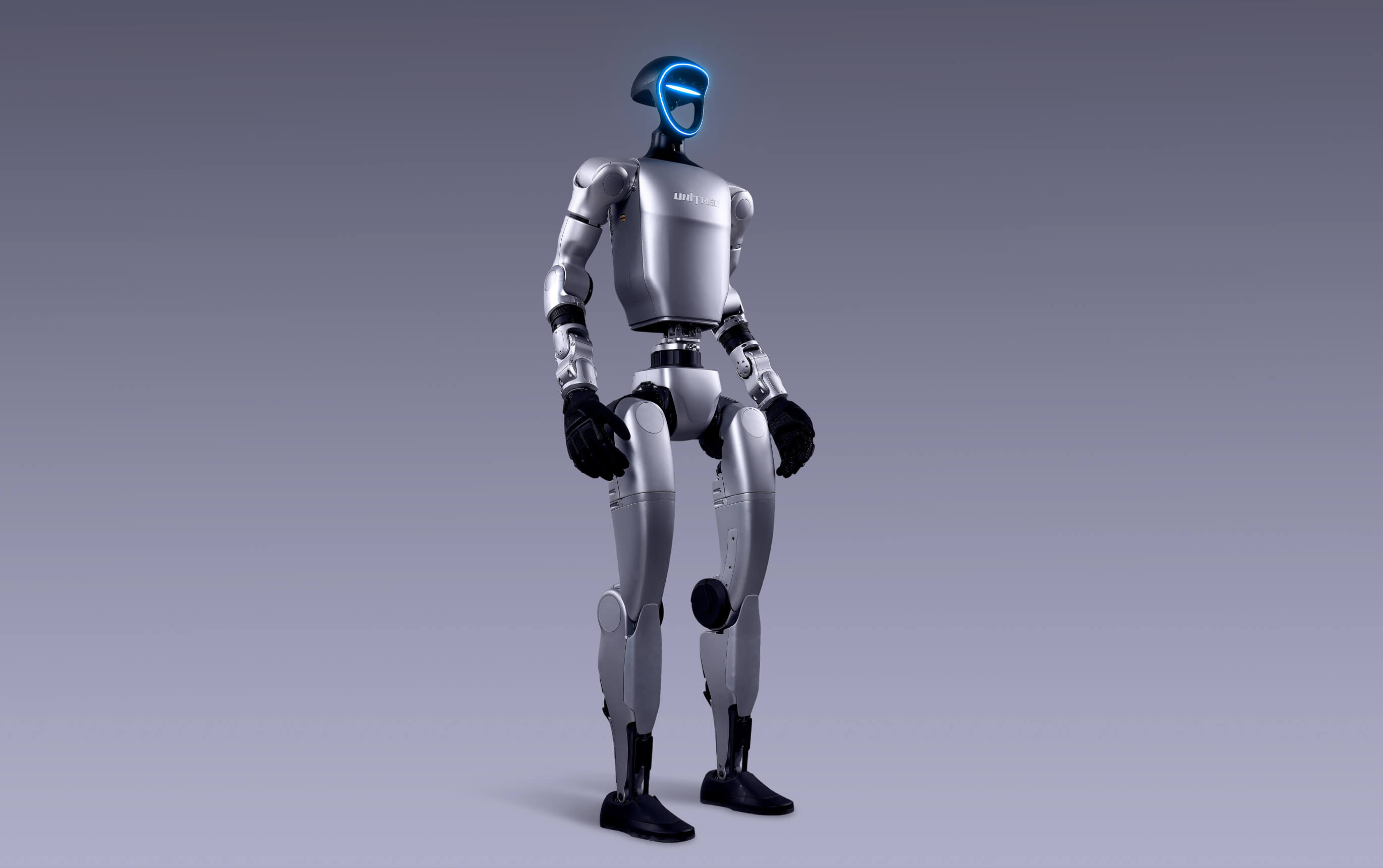 Unitree Robotics Unitree G1 | 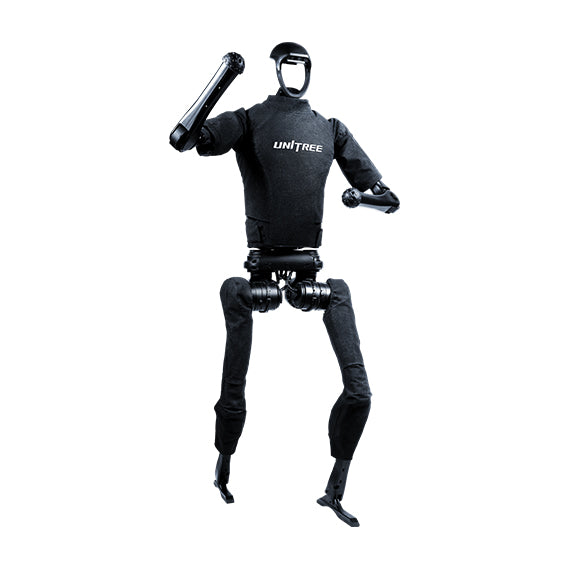 Unitree Robotics Unitree H1 | |
|---|---|---|---|---|
| Price (US) | $1,400 – $5,995 | $4,900 – $5,900 | $13,500 – $73,900 | ~$90,000 |
| Availability | On the market | On the market | On the market | On the market |
| Height | About 94 cm | 1.23 m | 1.32 m standing | ~1.80 m |
| Payload | Not published | Unknown | Arm ~2 kg | Not rated for H1 |
| DoF | 21 | 20 | 23 | ~19 |
| Buyer | Individuals | Individuals | Individuals | Enterprise |
| Made in | China | China | China | China |
What the Noetix Bumi costs — and how to get one
Low: official China price RMB 9,998 converted (Oct 2025, still current Oct 2026). High: US reseller listing for Bumi Standard, 13 Nov 2026, unverified
Consumer retail in China; international pre-launch email list for Boomy; education and reseller channels
Leasing / RaaS: None
Every spec, grouped & sourced
Tap a group to expand. Values are labelled official vs third-party; unknowns are omitted, not guessed.
Body & movement▾
Power & endurance▾
Hands & senses▾
Brains & control▾
Claims vs evidence
Voice conversation through a built-in large-language-model assistant, a teaching mode for hand-posed motions, persona customization, preset dances and actions; autonomy is limited to balance, walking and scripted behaviours
Where it's working
Retail and education partnerships in China reported with Kidswant and Codemao; units donated to and deployed in schools; Noetix robots appeared in the 2026 Spring Festival Gala
Intended use cases: Children's programming education, companionship and entertainment at home and in schools: walking, dancing, scripted actions, voice chat, graphical and code-based programming
Should you consider the Noetix Bumi?
Bumi is a real, shipping, genuinely cheap walking humanoid in China and a good programming and play robot for children there. It is not a household helper. For US buyers the sensible move as of November 2026 is to wait for the official Boomy Kickstarter price and to confirm FCC authorization, rather than paying a reseller four times the China price.
Score reflects stated criteria (availability, data confidence, US relevance) — not hands-on testing or user ratings. We're an independent review & comparison site; we don't sell robots. *Financing figure is illustrative.
How we know this
Data confidence 66/100 · last verified 2026-11-13. Specs are labelled official vs third-party and dated; unknowns are omitted, not guessed.
Noetix Bumi — your questions, answered in full
How much does the Noetix Bumi cost?+
RMB 9,998 in China, about $1,400, the price it launched at in October 2025 and still carries as of November 2026. In the US a third-party reseller lists Bumi Standard at $5,995 as of 13 November 2026, which is a reseller price, not an official Noetix US price.
Is Bumi the same robot as Noetix Boomy?+
Boomy is the name Noetix is using for its international launch in late 2026. The published joint layout, 21 active joints with four per arm, six per leg and one in the waist, matches Bumi, and the developer SDK is published under the Boomy name. Noetix has not published a side-by-side comparison.
Can I buy Bumi in the United States?+
Not directly from Noetix as of 13 November 2026. The Boomy Kickstarter was marked coming soon, and third-party resellers list Bumi at several times the China price. Ask any seller for the FCC ID before paying, because new foreign-produced robot models need an FCC authorization under the July 2026 rule.
How tall is the Bumi robot?+
About 94 cm, roughly 3 ft 1 in, and about 12 kg for the standard model, per Noetix's launch figures. Reseller listings for the heavier Pro variants give 98 cm and 17 kg.
Can Bumi do household chores?+
No. Bumi has no hands or grippers, so it cannot pick things up, clean or tidy. It is designed for programming education, companionship and entertainment.
Is Bumi the cheapest humanoid robot?+
At RMB 9,998 it is the cheapest full-body walking humanoid we track that is sold by its maker, as of November 2026. Unitree's R1 is the closest rival and is sold internationally, but at a higher price outside China.
How many Bumi robots has Noetix sold?+
Noetix has not published a verified total. Early reports from launch week in 2025 spoke of hundreds of units in the first hours, a company executive later said orders were in the thousands, and the company set a goal of more than 10,000 sales in 2026. None of those figures are audited.