Zeroth M1 Home Humanoid Robot
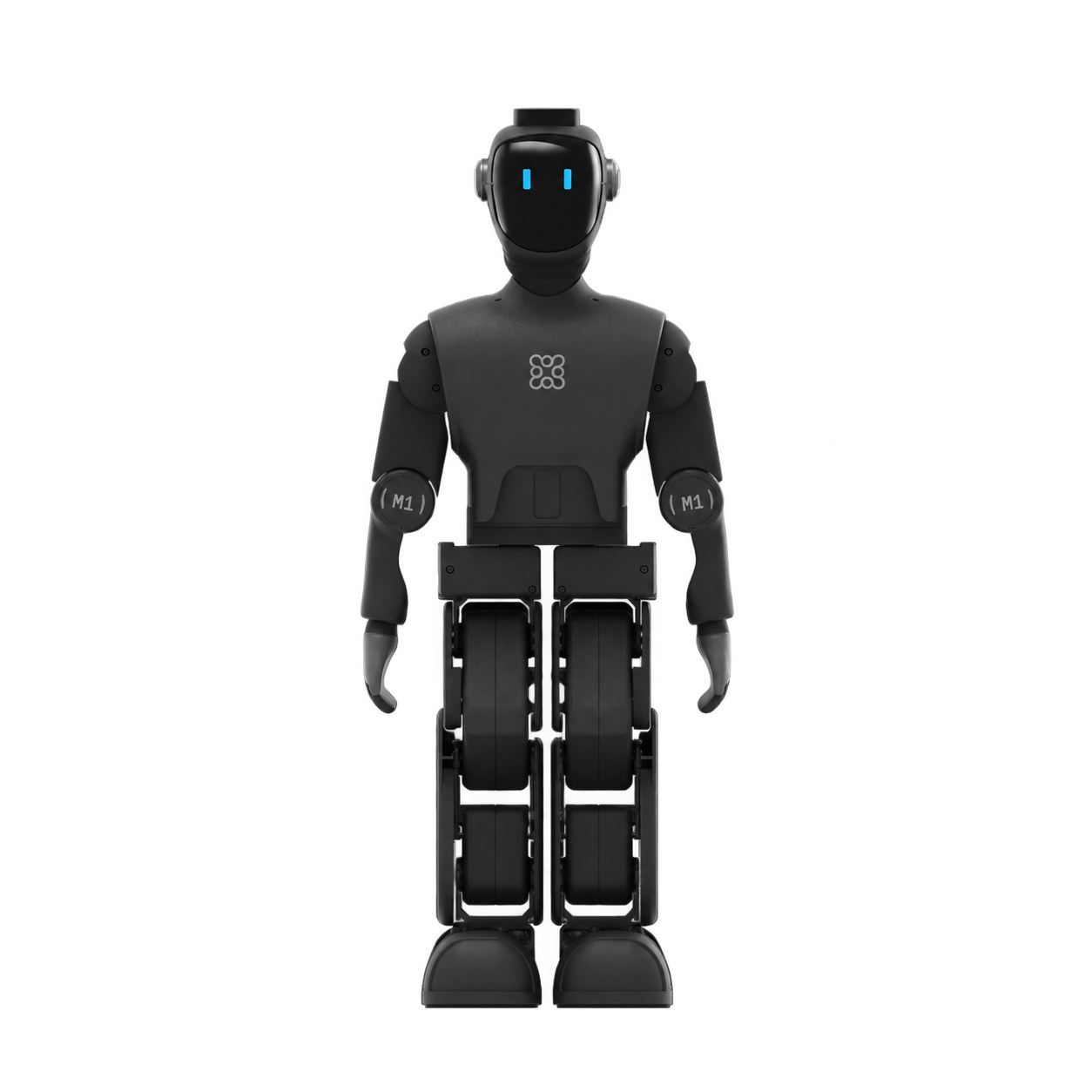
Zeroth M1 is a 19.5-inch walking companion robot from Zeroth Robotics, launched for US homes at CES 2026 at $2,899. It is now listed around $2,499, with a $1,999 promotion reported, for Q4 2026 shipping to US addresses only. As of 13 November 2026 no customer deliveries have been verified.
US buyers: sold on pre-order to US addresses only, but we found no FCC ID for the M1 - confirm authorization before paying in full.
Zeroth targets the US directly and its store ships only to the United States, with Q4 2026 shipping listed for the M1 EDU Combo. Under the FCC Covered List entry of 28 July 2026, which is country-neutral, foreign-produced mobile robots over 4.4 lb with sensors, connectivity and AI control need an FCC equipment authorization granted before that date, or a Department of War conditional approval, to be lawfully imported and sold. The M1 with its base weighs about 9 lb. No FCC grant for it was publicly identifiable as of 13 Nov 2026, so whether new units can legally arrive is unresolved.
No international store confirmed; some coverage cites a China price, but Zeroth's consumer focus is the US.
As of 2026-11-13 · low confidence — verify before you commit funds
What is the Zeroth M1 Home Humanoid Robot?
Zeroth M1 is a 19.5-inch walking companion humanoid sold only to US homes, on pre-order around $2,499.
Zeroth M1 is small. At about 49 cm tall and under 3 kg without its wheeled base, it stands on a desk as easily as on the floor. Zeroth Robotics, a company founded in 2024 and linked to Suzhou JoyIn Intelligent Technology in China, introduced it at CES in January 2026 as the first of five robots it planned to bring to American consumers that year.
The pitch is companionship and light help rather than chores. Zeroth talks about reminders and check-ins for older relatives, routine support for families and an open platform for people who want to program a humanoid. The M1 can walk on its own legs or ride a small wheeled base when it needs to cover ground faster.
The product has drifted since CES. The promised April 2026 release slipped, the price has come down at least twice, and the version on offer is now sold as an EDU Combo with a Q4 2026 shipping estimate. This page tracks what is known as of 13 November 2026.
What the Zeroth M1 can — and can't — do today
+Does this out of the box
- Walk on two legs at low speed and ride a wheeled base at up to 0.6 m/s (manufacturer figures)
- Hold multilingual voice conversations and respond to commands
- Map and navigate a room with LiDAR and a depth sensor
- Give reminders and run simple routines through its app (company claim)
- Act as a programmable platform for Python, VR and reinforcement-learning experiments
- Run about two hours per charge (manufacturer claim)
!Doesn't do, whatever the demo shows
- Pick up, carry or tidy household objects
- Reach counters or tables from the floor - it is 19.5 inches tall
- Climb stairs
- Ship outside the United States, per the current store terms
- Show verified customer deliveries as of 13 Nov 2026
What the M1 is
The M1 is a miniature bipedal humanoid with a dark shell, a screen-like face and short arms. The figures circulated from Zeroth's launch materials put it at about 494 mm tall, with a body weight of 2.8 kg plus a 1.4 kg mobility base. That base is the clever part. Walking robots this size are slow, and the reported walking speed is just 0.05 m/s, so for moving around a room the M1 rides the base at up to 0.6 m/s instead.
The arms are for expression, not work. Zeroth has not described grippers or a payload, and none of the demonstrations we reviewed show the M1 carrying household objects. It belongs with companion robots and programmable humanoid kits, not with the two-armed chore machines like Flourish 1 or Weave Isaac.
The body is reported at about 20 degrees of freedom, with 12 in the legs. Sensing is surprisingly complete for the size: a laser distance sensor for mapping, an iTOF depth sensor, a camera, an IMU and a three-microphone array for voice. The battery is quoted at about two hours of use and roughly one hour to reach 80 percent. All of those are company figures that have not been independently tested.
For scale, the whole robot on its base weighs about as much as a full watering can, and it is shorter than most kitchen chairs. Zeroth says the design relies on actuators it engineered in-house to keep the joints small without giving up too much performance, a claim that is hard to check until teardown or owner reports appear.
What Zeroth says it can do at home
At launch Zeroth described three audiences. For older adults, the M1 would give reminders and light assistance. For families, it would help with schedules and routines. For hobbyists and students, it would be an open platform for programming, VR integration and reinforcement-learning experiments. Built-in skills were promised at launch, with more added through an app-based store.
In practice, the use that fits the hardware best is a talking, moving companion that can follow you from room to room on its base, answer questions and keep an eye on the house through its camera. Several reviewers have described it in exactly those terms. What it cannot do is physical help: it cannot fetch, tidy or carry, and at its height it cannot see over a kitchen counter without being placed on one.
Zeroth has not published a list of shipping skills with their autonomy level, nor any success rates. Treat feature lists on reseller and review sites as claims until owners report back.
Price: why there are three numbers
Zeroth's CES announcement put the M1 at $2,899. By spring, review sites were quoting $2,399 to $2,499 from the company's US store, and a September 2026 explainer video used $2,499 in its title. A promotional post in search results now advertises the M1 EDU Combo at $1,999, described as a $500 saving, though we could not see when it was posted.
We were not able to load the store page directly on 13 November 2026, so we cannot say which price checkout shows today. The fair reading is a list price of $2,499 with discounts that come and go. The bundle naming also matters. EDU Combo is the version now sold, aimed at learning and development, and Zeroth has not said whether a separate home edition will follow at a different price.
The reservation flow earlier in the year referenced a Kickstarter-style deposit and cashback terms, according to a buyer's guide that examined it. Anyone ordering should read the current terms closely, in particular whether the payment is a deposit, a pledge or a purchase.
The missed April date
In January Zeroth said pre-orders would open in the first quarter and general availability would follow in April 2026. That did not happen in a visible way. By October, trackers that checked the store found the M1 EDU Combo on pre-order with expected shipping in Q4 2026, limited to US addresses, and none of them could verify a completed delivery.
A slip of six months or more is common for first-generation consumer robots, so it is not damning by itself. It does mean the M1 has not been tested by ordinary owners yet. The only long-form reviews we found are based on launch materials and trade-show demos, and one of them advised waiting for reviews of production units before buying, which is sensible.
Q4 2026 ends in seven weeks from the date of this page. If units arrive before the end of December, that will be the first real data point.
How it compares with other small humanoids
The M1 is the smallest robot in our catalog that we still count as a humanoid. Its natural rivals are the kid-sized walkers: Noetix Bumi at 94 cm, sold in China for about $1,400 and offered by US resellers from $5,995, Booster K1 at 95 cm from about $4,999, and Unitree R1 at up to 1.23 m from $4,900 for the R1 AIR.
Against those, the M1 is far lighter, far slower on foot and much cheaper in the US. It is also the only one of the group whose maker sells it directly to American consumers as a home product rather than a developer or education platform, which is the reason it belongs in this catalog at all. The wheeled base is a practical answer to a real weakness of small bipeds, they are tiring to watch shuffle across a living room.
The trade-off is capability. The bigger walkers can at least be programmed for full-body motion research, while the M1's appeal is mostly conversational and social. If you want a robot that walks well, Bumi or R1 are better machines. If you want something that lives on a desk, talks and follows you around the flat, the M1 is closer to the brief.
What to check before ordering
Three things are worth getting in writing. First, whether your payment is a refundable deposit, a crowdfunding-style pledge or a full purchase, because the M1's reservation flow has changed during the year. Second, the shipping date for your order and what happens if Q4 2026 slips again. Third, the FCC authorization, covered below.
It is also worth asking what data the robot sends to Zeroth's servers. The M1 has a camera, a depth sensor and microphones and is pitched partly for home monitoring, yet we found no robot-specific privacy policy in the material we reviewed.
The rest of Zeroth's line-up
The M1 is one of five robots Zeroth showed at CES. The W1 is a wheeled helper styled after the Pixar character WALL-E, with prices reported between $4,999 and $7,999 across sources, and a trade-show report from IFA in September 2026 described it as on sale in the US and China. A separate WALL-E companion robot was developed with Disney and Pixar. The A1 is a wheeled mobile manipulator for universities, and Jupiter is a full-size humanoid that combines autonomous navigation with remote operation, listed by one aggregator at $89,999.
Only the M1 and W1 were working demonstrations at CES; the others were shown as previews. That spread is ambitious for a company that emerged from stealth this year, and it is fair to ask how much engineering attention each product gets.
US buyers and the FCC rule
Zeroth sells the M1 to US addresses only, which makes it one of the few small humanoids explicitly aimed at American homes. Its legal status is the open question. The FCC Covered List entry of 28 July 2026 is country-neutral and covers foreign-produced mobile robots heavier than 4.4 lb that have sensors, wireless connectivity and AI control. With its base, the M1 weighs about 4.2 kg, or roughly 9 lb, so it falls inside the rule unless it is manufactured in the US with more than 65 percent domestic content, which nothing suggests.
New units can be imported and sold only if the model received an FCC equipment authorization before 28 July 2026, or later gets a Department of War conditional approval. We could not find a published FCC ID for the M1 as of 13 November 2026. That is a question to put to Zeroth before paying, and a reason to prefer a payment method with buyer protection.
The Zeroth M1 on video
Hands-on reviews and teardowns, picked for what they actually show rather than how loud the thumbnail is.
Independent hands-on look at the M1 and the W1 at CES, showing the real size of the robot next to people.
A robotics retailer's walk-through of the whole Zeroth line-up, useful for seeing which products were working demos.
The company's own recap, with the scenarios it says the robots are meant for.
Who the Zeroth M1 is — and isn't — for
+Where it shines
- You can actually buy or reserve it as an individual, at a consumer price.
- Among the most affordable humanoids on the market right now.
- Open developer access (SDK/API) — good for builders and labs.
!Watch-outs
- Public data is thin; verify key figures before relying on them.
How the Zeroth M1 stacks up
Side by side with similar robots — the one you're reading about is highlighted.
| This robot Zeroth Robotics Zeroth M1 | 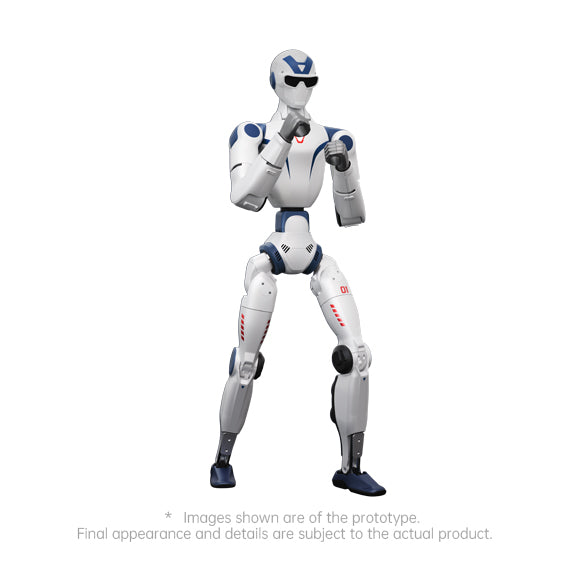 Unitree Robotics Unitree R1 |  Unitree Robotics Unitree G1 | 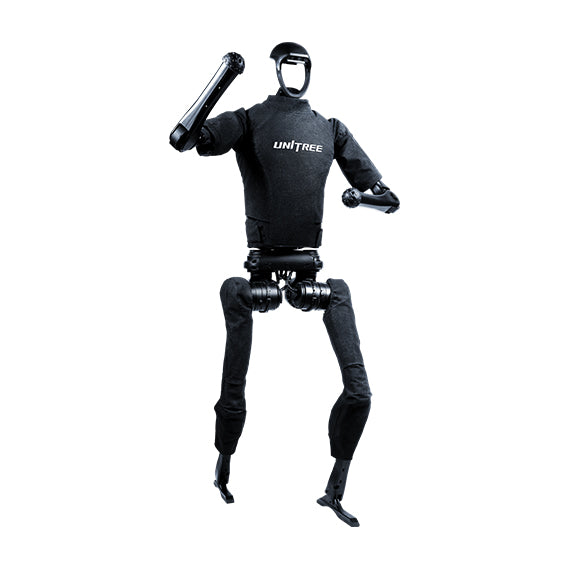 Unitree Robotics Unitree H1 | |
|---|---|---|---|---|
| Price (US) | $1,999 – $2,899 | $4,900 – $5,900 | $13,500 – $73,900 | ~$90,000 |
| Availability | Reservations open | On the market | On the market | On the market |
| Height | About 49.4 cm | 1.23 m | 1.32 m standing | ~1.80 m |
| Payload | Not published | Unknown | Arm ~2 kg | Not rated for H1 |
| DoF | About | 20 | 23 | ~19 |
| Buyer | Individuals | Individuals | Individuals | Enterprise |
| Made in | China | China | China | China |
What the Zeroth M1 costs — and how to get one
Low: reported promotional price for M1 EDU Combo (undated, seen 13 Nov 2026). High: CES January 2026 launch price. List around $2,499
Direct consumer pre-order online (US only); earlier reservation flow referenced a Kickstarter-style deposit
Leasing / RaaS: None
Every spec, grouped & sourced
Tap a group to expand. Values are labelled official vs third-party; unknowns are omitted, not guessed.
Body & movement▾
Power & endurance▾
Hands & senses▾
Brains & control▾
Claims vs evidence
Multilingual conversational AI, onboard perception, an integrated safety stack, app-based skill store with updates; open platform for programming, VR integration and reinforcement-learning training (company claims)
Where it's working
None verified. Shown at CES 2026 and at later trade events
Intended use cases: Tabletop and floor-level home companion: conversation, reminders and light check-ins for older adults, routine support for families, home monitoring, and a programmable robotics platform for hobbyists, students and reinforcement-learning experiments
Should you consider the Zeroth M1?
Zeroth M1 is a real, small, well-sensored companion humanoid aimed squarely at US homes, and at around $2,500 it is one of the cheaper ways to own a walking robot. It is not a helper with chores, its April launch slipped to Q4, and its price keeps moving. Wait for the first owner reports and confirm FCC authorization before paying in full.
Score reflects stated criteria (availability, data confidence, US relevance) — not hands-on testing or user ratings. We're an independent review & comparison site; we don't sell robots. *Financing figure is illustrative.
How we know this
Data confidence 55/100 · last verified 2026-11-13. Specs are labelled official vs third-party and dated; unknowns are omitted, not guessed.
Zeroth M1 — your questions, answered in full
How much is the Zeroth M1?+
It launched at $2,899 at CES in January 2026. Since then the US store has listed it around $2,499, and a $1,999 promotional price for the M1 EDU Combo has been reported. We could not confirm the checkout price directly on 13 November 2026.
When will the Zeroth M1 ship?+
The original April 2026 date passed. The M1 EDU Combo is listed with Q4 2026 shipping to US addresses, and no completed customer delivery had been verified as of 13 November 2026.
How big is the Zeroth M1?+
About 49 cm or 19.5 inches tall, with a 2.8 kg body and a 1.4 kg wheeled base, according to figures from the company's launch materials.
Is Zeroth M1 a real humanoid robot?+
Yes, it is a working miniature biped with arms, a head and its own sensors, shown live at CES 2026. It is a companion and programming robot rather than a household helper, because its arms cannot grasp objects.
Who makes the Zeroth M1?+
Zeroth Robotics, a company founded in 2024 and described in launch coverage as Chinese and connected to Suzhou JoyIn Intelligent Technology. It entered the US market at CES 2026 with five robots, including the M1, the WALL-E-styled W1 and the full-size Jupiter.
Can I buy the Zeroth M1 outside the US?+
Not from the US store, which ships only to the United States. Zeroth has also referred to a China price in some coverage, but no international store has been confirmed.